Sunday, April 26, 2020

A Golden Encounter

I had a golden encounter this covidious afternoon. To wit, I was out in the front yard mowing the lawn with my hand reel mower - I roll that way. I was wearing the face mask The Wife had sewn for me out of my old Hanes undershirts. Mowing was going fine...

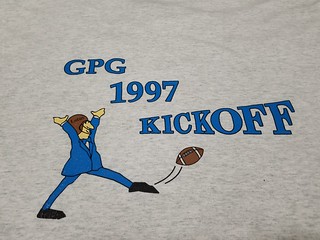
Sidenote: I was wearing my Presentation Pete t-shirt from my old Lotus Freelance days that I had found in the box in the garage that we were going to donate to Goodwill, but that, in our covidious era, I decided actually sparked joy. I wore the shirt proudly...

I. Presentation Pete (An Entertainment)


The Secret Life of Presentation Pete is quite the twisted tale; evocative, it put me in a good mood.

II. A Golden Encounter


Back to my golden encounter, where was I? Oh yes, there I was minding my business mowing my front lawn with my hand reel mower. I was wearing the face mask The Wife had sewn for me out of my old Hanes undershirts. Mowing was going fine...

The searing Austin sun meant that I was getting a good sweat going. I was a little worried that one of the bolts had come off the hand mower and so was treading gingerly with it. I didn't fancy making a trip to Home Depot - self isolation and all that, you know.

A white SUV passed on the other side of the street and made a hasty U-turn. Working as I now do at a car company, I was quite proud of myself for identifying the model, one of ours, a 2018 Chevy Tahoe LT. This guy essentially got me last year's bonus.

The car pulled up just by my mailbox and stopped. The driver rolled down his window. He beckoned to me. Intrigued but, well, observing social distancing I stopped mowing, took my gloves off, and took a step towards him. He beckoned to me almost impatiently again.

I noted that he wasn't wearing a mask. I took a step back, out of covidious practice. He was holding something in his hand.

"Yes... What is it?".

The thought crossed my mind that perhaps I shouldn't be talking to Johnny Random Driver Who Does a U turn When He Sees Your Black Ass Mowing the Lawn.

Whatever he was holding was shiny. I felt relief that it wasn't a gun. I haven't traveled all this way in life to die on my front lawn - and I knew The Wife would complain that I hadn't finished mowing (keeping up with the Joneses)

"Come. Come.", he was insistent, gruff even.

He was a middle eastern man, I could tell from the way he looked and the impatient accent. I know the type.

"What is it? How can I help you?"

"It's gold."

"Gold?"

"Yes gold. I need money."

Phew. I took a closer look, and, yes, it did indeed look to be a gold coin that he was dangling towards me. Still, I shook my head.

"No thanks, sir."

He looked irritated, but I made to turn back to the house.

I had tagged him as Lebanese or Syrian, a heavy set man, mid-40s. He made that pshew sound with his cheeks.

Definitely Lebanese, I thought.

I turned towards him, remembering for some strange reason that it was Ramadan. 3 pm is getting to be hunger time. I remember trying to shop at the Halal butchers around that time in our Before Coronavirus life. Impatience reigns in those hours. I greeted him, "Assalamu Alaikum".

He paused in consternation, as if to reassess his interlocutor. He ventured almost reluctantly a soft response, "Alaykumu s-salām".

I gave him the customary toli head nod. He drove off and made a dangerous u-turn on the street (our street is still surprisingly full of cars despite the shelter-in-place mantras). I wished him well on his future golden transactions.

"I need money" indeed.

I returned to my lawn mowing - it's great exercise. The Wife thinks all this covidious yard work is doing wonders for my body (hint hint).

Hey, what do you know, the kids didn't hang handkerchiefs over the Nest cam as they normally do (they don't believe in our tech surveillance capitalism present) so it captured some footage

A golden encounter

I suspect that if he came back 6 months hence, I would trade him the yams I planted in the backyard for some of his gold.

I knew what was going on. The first of the month is less than a week away. Mortgage, rent and car payments are due. People are trying to liquidate gold on the streets of Austin. Ah this covidious life. After this golden encounter, I think I'll stick to my backyard.

A golden encounter playlist

Adapted from some pandemic toli

See also: The Mosquito Principle

6 weeks later, the bolts disappeared, it was back to basics for me. See Nuts and Bolts

File under: , , , , , , , , , , , , , , , ,

The Secret Life of Presentation Pete

I had a golden encounter this covidious afternoon. To wit, I was out in the front yard mowing the lawn with my hand reel mower - I roll that way. I was wearing the face mask The Wife had sewn for me out of my old Hanes undershirts. Mowing was going fine...

Sidenote: I was wearing my Presentation Pete t-shirt from my old Lotus Freelance days that I had found in the box in the garage that we were going to donate to Goodwill, but that, in our covidious era, I decided actually sparked joy. I wore the shirt proudly.

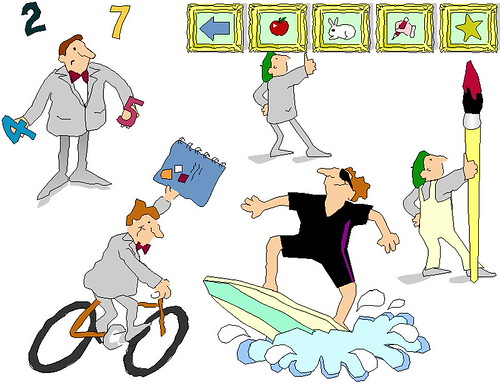
Here's Presentation Pete in his glory

Presentation Pete - Leaping Pete

Here's the t-shirt. Some of my old Lotus folks will remember. This was the kickoff to the Coltrane Release where Lotus went all out to embrace the "World Wide Web". We would implement "Publish to Web" well before Powerpoint got around to it.

Presentation Pete kicks of Lotus's Graphical Products Group 1997 effort

Digression upon a digression: I have a draft of a short story somewhere titled The Secret Life of Presentation Pete. The idea has been percolating for nigh 13 years now - a high concept joint about the inner life of stock photograph characters or something.

Arrgh, it deserved neglect, let's tweet instead.

The Secret Life of Presentation Pete

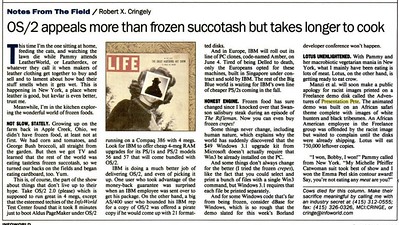
I wasn't there at his conception - I believe Joanne Meirovitz might have been the mother, however, Presentation Pete had a very inauspicious debut. The scandalous toli would be chronicled by Cringely in an aside in InfoWorld (June 1 1992). Our Bob titled it "Lotus Unenlightened". Call it a youthful indiscretion.

The Adventures of Presentation Pete - Lotus Unenlightend - Cringely Infoworld June 1992

As the story goes,

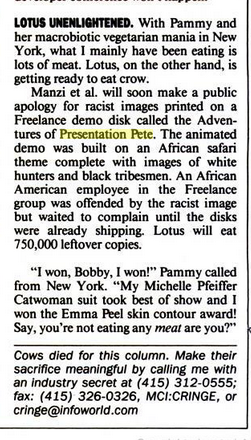
"Lotus CEO Jim Manzi et al will soon make a public apology for racist images printed on a Freelance demo disk called The Adventures of Presentation Pete. The animated demo was built on an African Safari theme complete with images of white hunters and black tribesmen."

Something along these lines perhaps?

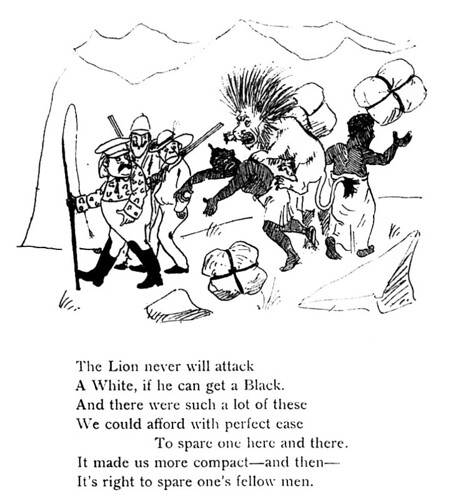
Lions attack the modern traveller

Here's the detail that gets me:

"An African American employee in the Freelance group was offended by the racist image but waited to complain until the disks were already shipping. Lotus will eat 750,000 leftover copies"
The Adventures of Presentation Pete - Lotus Unenlightend - Cringely Infoworld June 1992 (2)

I believe I know who that African American employee was, although I can't remember the name - even as he gave me much shrewd career advice - there weren't many of us darker than blue at Lotus back then (or even now in software). I loved that he waited before pouncing. I still admire the nerve.

I can only imagine the contents of the safari themed disk of The Adventures of Presentation Pete that had to be pulped. I would pay good money for a bootleg of that disk. Surely one of those 750,000 leftover copies still exists? I demand especially to see those African tribesmen.

Scratch that. Here's my artist's rendition of the African safari themed disk of The Adventures of Presentation Pete that had to be pulped. A quarter century later, I still have a copy of Freelance on my laptop.

Presentation Pete - safari pete

Digression: was it a floppy disk or a cd-rom? Freelance's PRZ file format was quite famous for being more efficient than Powerpoint's PPT format and could fit on floppies.

I now understand why there was so much trepidation 6 years later when I brought up the issues I observed when integrating clip art in the Coltrane release. Lotus had been primed for Cultural Sensitivity in Technology

I first met Presentation Pete in his prime when I joined Lotus in 1995. As noted, he had already led a storied life by that young age. He was a natty dresser

Presentation Pete - Natty Dresser Pete

Presentation Pete was passionate about office life. The title in the Freelance clip art chooser read "Hardworking Pete"

Presentation Pete - Hardworking Pete

Still, office life could sometimes be overwhelming for Presentation Pete. Cue the clip art title "Scared Pete":

Presentation Pete - Scared Pete (Office Life)

Presentation Pete was a renaissance man.

Presentation Pete - Renaissance Man Pete

In his Christmas and Santa personas, Presentation Pete was full of zest. He was a fair referee also

Presentation Pete - Santa and Referee Pete

In short, Presentation Pete was a man for all seasons

Presentation Pete - Man for all Seasons Pete

Pete's co-workers loved him. I think one of them, his office wife perhaps, was modeled on Ruth Seltzer who hired me at Lotus. Or perhaps it was her sister. Whatcha think @iustinianus ?

Presentation Pete - Pete's co-workers

Presentation Pete was all about collaboration and groupware, what we now call social software.

Presentation Pete - Collaboration Pete

Pete was a pioneer of remote screen show. You say Zoom, I say Presentation Pete

Presentation Pete - Presenting Remotely

I learned heady lessons about work-life balance under Presentation Pete's tutelage

Presentation Pete - Work Life Balance Pete

The four years we spent together collaborating were the best years of my professional life.

Pete's job was offshored to India once IBM ceded the office suite market to Microsoft circa 1999. Lotus would stagger on as a brand for another decade but the thrill was gone. The remnants of a still-profitable Lotus were finally sold off by IBM in December 2018.

Presentation Pete - Information Superhighway Pete

I helped train Presentation Pete's replacements in India before switching to work on software for the ill-fated Network Computer. Lotus eSuite, remember that? For you young ones, a precursor to Google Suite.

Presentation Pete - Really Remote Presentation Pete

Surfer Pete was one cool cat. Presentation Pete had more than 9 lives.

Presentation Pete 15 - Surfer Pete

Presentation Pete was a man in full, his legend proved to be iconic in software history. Presentation Pete Lives.

Presentation Pete - Leaping Pete

Adapted from some covidious toli

Next in Part II: A Golden Encounter

Previously: The Mosquito Principle

File under: , , , , , , , , , , , , , , , ,

Monday, April 06, 2020

The Mosquito Principle

"As they say, mosquitos don't discriminate... We're all singing the West Nile Blues these days. Some call it globalization; I know it as the Mosquito Principle."

— extract from The Books of Nima

Honam mu nni nhanoa
(Humanity has no boundary)

— Akan proverb

Takes behaviour to get along.
Lots of behaviour to get along.
Do you really, really know that?
Social Living is the best

Do you know?
Social Living is the best

— Burning Spear - Social Living

II. Insatiable Appetites

"...Some have insatiable appetites & are never satisfied (politics?)."

— Donald Trump ostensibly complaining about the governors of certain states, but perhaps rather projecting his impulses onto others. (April 2 2020)

The U.S. allegedly snatched a planeload of 60 million Chinese-made medical masks that were initially intended for France, a French official said.

"A French order was bought out with cash by Americans on the tarmac, and the plane that was to fly to France took off for the U.S. instead".

— Snatched from the tarmac. (April 2 2020)
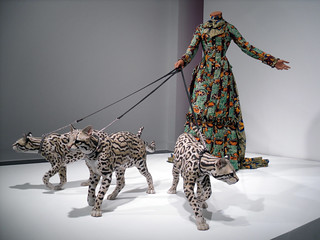
Yinka Shonibare MBE at Brooklyn Museum

We need the masks. We don't want other people getting them.

— Donald Trump, April 3 2020


Insatiable Appetites


The German capital ordered 200,000 special FFP2 and FFP3 masks that are used to protect emergency staff and care workers from infection with coronavirus.

Andreas Geisel, Berlin's interior minister, confirmed that the consignment had been “confiscated” in Bangkok and never reached Berlin.

"We consider that an act of modern piracy," he said. "You don't treat your transatlantic partners like that."

— US swoop sees 3M masks allegedly diverted from Berlin (April 3 2020)

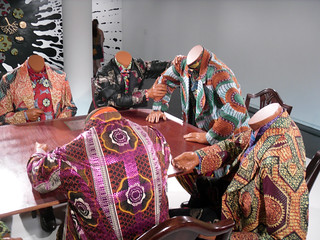
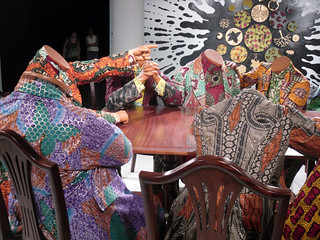
Yinka Shonibare MBE at Brooklyn Museum

— Scenes from The Berlin Conference of 1894
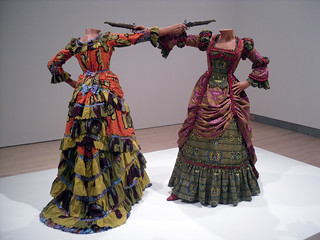
Scramble for Africa by Yinka Shonibare at Brooklyn Museum (2005) - credit: DK

III. Manifest Destiny

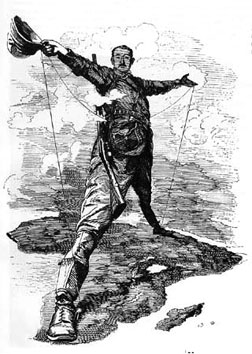
cecil rhodes astride africa

From Cairo to Cape Town, The Rhodes Colossus (Punch 1892)

"I contend that we are the finest race in the world and that the more of the world we inhabit the better it is for the human race. Just fancy those parts that are at present inhabited by the most despicable specimens of human beings what an alteration there would be if they were brought under Anglo-Saxon influence, look again at the extra employment a new country added to our dominions gives...

We know the size of the world we know the total extent. Africa is still lying ready for us it is our duty to take it. It is our duty to seize every opportunity of acquiring more territory and we should keep this one idea steadily before our eyes that more territory simply means more of the Anglo-Saxon race more of the best the most human, most honourable race the world possesses."

— Confession of Faith by Cecil Rhodes (1877)


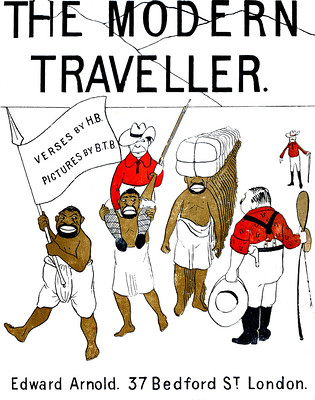
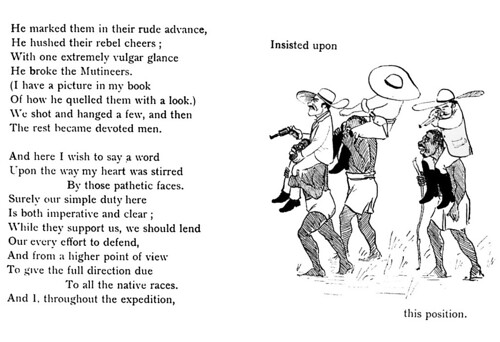
The Modern Traveller by Hilaire Belloc

Surely our simple duty here
Is both imperative and clear;
While they support us, we should lend
Our every effort to defend,
And from a higher point of view
To give the full direction due
To all the native races.
And I, throughout the expedition
Insisted upon

To give the full direction due to all the native races - the modern traveller

              this position.

— The Modern Traveller by Hilaire Belloc (1898)

The modern conservative is engaged in one of man's oldest exercises in moral philosophy; that is, the search for a superior moral justification for selfishness.

— John Kenneth Galbraith (1963)

The modern Republican Party is the result of collusion between a movement to take U.S. jurisprudence to the pre-Depression era, and a movement to take culture back to the pre-Enlightenment era. It is doomed because the latter would like a theocratic state to regulate culture, and the former want to smoke dope and look at dirty pictures.

— Maxspeak Maxim IX, Max Sawicky (2006)

IV. The Mosquito Principle (Redux)

"You don't make the timeline, the virus makes the timeline"

- Anthony Fauci on the novel coronavirus

Later: "There is no region in the country, in my mind, that's going to be exempt from an outbreak"


If you win mainly by convincing THEM that they are losers, and convincing them to give up fighting — and all of us, not just Trump, do this sort of adversarial reality distortion to a degree — what do you do when THEY is a virus? What do you do when there are no credible substitutes?

— taken from a discourse on our current global narrative collapse in Plot Economics

See also: You Can't Gaslight a Virus

In these days of insecticides and drained swamps, those of us who live in the rich, temperate world have become accustomed to the luxury of not thinking very much about mosquitoes and the risks they carry. But the insects are still killing more than eight hundred thousand people a year, primarily in Africa.

— How Mosquitoes Changed Everything

Item: The exact origin, locations, and natural reservoir of the Ebola virus remain unknown. Current suspicions are founded on cynomolgous monkeys, civets or bats...

Dig: The pressure of marauding warlords roaming the bush has forced many to start eating animals that had previously been left alone in the bush.

— Ebola and Marburg virus musings in Angola

Europe turned into a petri dish and travel from there impacted the world, with its most damaging effect in Africa and Latin America. “The colonial legacy lives in viral movements. I wasn’t surprised that Belgian travel preceded DRC’s first known case,”

— Coronavirus Started in China, but Europe Became the Hub for Its Global Spread
Walking the pets

V. Pandemic Toli

Mosquitos don't discriminate

Previously: "You welcome the US to the fun of the Third World" - West Nile Blues

Virus lays bare the frailty of the social contract
— The Financial Times editorial page ostensibly advocating for social insurance and a rebalancing of modern economies. A Road to Damascus moment. (April 4 2020)

The mitigation strategies have varied throughout humanity's long shared history with malaria and other mosquito-borne diseases. There has been genetic adaptation (sickle cell disease), the observation that colder climates are less hospitable to mosquitos, quinine from the bark of a cinchona tree, good sanitation, (of late) artemesin, bed nets and an entire panoply of public health measures.

Only occasionally do we get a glimpse of the universality of the struggle (see the spread of Zika that threatened Rio's Olympics, outbreaks of chikungunya, Dengue fever and the like). That's when you'd read: "The mosquito is ubiquitous... You don’t need to travel to get the disease". Consider also the spread of West Nile Virus in California that resulted from Delinquent Mortgages and Neglected Swimming Pools in the aftermath of the Great Recession. Collateral damage of huhudious financial malpractice.

Rapacious vultures at the Berlin Conference by Yinka Shonibare

Still, to a large extent in the West, a sort of natural equilibrium has been established, even as we operate elsewhere under Mosquito Rules. Structurally, malaria and other mosquito-borne dieseases have been contained in the First World through strenuous public health efforts. In the third world, however, mosquitos remain a poverty tax.

Diseases like Ebola that jumped hosts and spread disastrously in repeated outbreaks in recent decades are thought to be confined, to the global, poorer south. The 3 years of Ebola epidemic that affected 10 countries and decimated 3 countries that could hardly afford it (recovering as they were from gruesome civil wars) didn't make a lasting impression. Similarly SARS and MERS were big scares in recent memory but, at length, they too were largely contained. The West was largely unscathed fron the calculus of contagion.


Hilaire Belloc had keen insight about the complacency in the face of a common enemy, and the almost liquidationist impulse that drives the Social Darwinist attitudes, and Empire writ large. Think about the past several months squandered in the face of clear and present danger. The following panel perhaps captures the insouciance, and the attempts to deny, or cage, the dangers of the predator. Call it the herd immunity strategy.
Lions attack the modern traveller - p.50
The Lion never will attack
A White, if he can get a Black
And there were such a lot of these
We could afford with perfect ease
To spare one here and there.

It made us more compact - and then -
It's right to spare one's fellow men.

If COVID-19 is the pandemic disease of the moment, the novel coronavirus, SARS-CoV-2, is just a virus; it is not a parable or extended metaphor. Like the plasmodium falciparum, and the mosquito that transmits it through its bite, this coronavirus doesn't discriminate. Whether spread by symptomatic or asymptomatic carriers, it is no respector of princes or prime ministers. It is oblivious to all boundaries, navigating between its unknown primary host (bats?), its intermediate hosts (say that initial pangolin or civet in the Wuhan wild animal market or that tiger at the Bronx zoo), and the human prey that it afflicts with COVID-19. It merely reproduces, evolves, and occasionally mutates its RNA as it navigates between hosts.

The current flight to safety in this covidious depression may be to US bonds - that, after all, is the financial norm that befits the US having the world's reserve currency. The literal airplane flights, and the longer-term larger scramble, however, may now be to China. The evidence is already there: if that Cairo to Cape Town railway is indeed ever built, it will be financed by China's belt and road initiative. In just a few more weeks, Wuhan province may well prove to be safer than New Orleans and Catalonia. Just weeks ago, African elites were precipitously withdrawing their children from European boarding schools. Thousands of Chinese students are yearning to be repatriated from the US rather than take their chances, uninsured in America where bad faith actors keep beaches open against all sense.

Rapacious vultures at the Berlin Conference by Yinka Shonibare

We are all passengers on cruise ships (operated by soon-to-be bankrupt Princess Lines, flying their Liberian flags of convenience). The underpaid crew (essential workers with compromised immune systems) labor to find a port of respite working with creaking infrastructure, hollowed by austerity policies, offshoring and deferred maintenance. We pray that we are being piloted by sensible Captains (no Ahabs or Blighs). Some of us, however, have been dealt the mayor from Jaws preaching herd immunity and necessary sacrifice, hucksters touting quack remedies, or contrarian chancers with no naval experience save navel gazing.

We are all rather wishing we were being steered by no-nonsense Taiwanese or Singaporeans crisis managers. At this stage, locked down and self isolating in windowless interior cabins, we'd gladly accept plane shipments of personal protective equipment from China or South Korea. We worry and look askance at Italian or Spanish tourists, and especially the quiet Americans (quiet, perhaps, in dismay at the observed competence of their political leaders measured in the mounting, grim body count). Africans facing the pandemic would gladly substitute the gunboat diplomacy of yore for Asian supply chain competence, German engineering efficiency, and a Danish social safety net. Such is life in a state of narrative collapse this season of coronavirus. Our lifeboats are soap and running water, face masks, social distancing and, in extremis, ventilators. We can't breathe.

By all rights, solidarity should overcome rapacious hoarding or looting. There are tensions between the demands of capital, labour and now public health. If power is never given up willingly, it is clear the costs of the pandemic we are facing are human lives, thousands already, and perhaps millions of them. There is a marketplace of ideas and cooperation, human ingenuity, and the systematic application of science and operational excellence ought to be our guiding posts, acknowledging our common humanity

There is an emergency on planet earth. As far as coping strategies go in dealing with the Mosquito Principle, I suggest we revisit The Great Game, eschew the insatiable appetites of Manifest Destiny, and embrace Social Living.

Soundtrack for this note

I give you fifty songs on the theme starting out with Burning Spear's take. He had it right: Social Living is the best. I'm also quite fond of Amel Larrieux's injunction to "tap into your magic" and D'Angelo's ecological lament, 'Til it's done.

Bonus playlists:
  • Manifest Destiny (liner notes)
    A soundtrack of irony
  • Insatiable
    You can't go wrong between Prince and Omar
  • Contagious
    From Taja Sevelle's infectious pop confection, Love is Contagious, to The Isley Brothers and Chanté Moore's soap opera (the record's producer is currently muted and worried about the coronavirus in federal jails), and The Whispers' shiny 80s electro-funk.

And the band played on...

This note is part of the Things Fall Apart series under the banner of Social Living.

Previously: Ode to Betty Brown

File under: , , , , , , , , , , , , , , , , , , , , , , ,

Monday, October 07, 2019

Ode to Betty Brown

She overheard the name in Waitrose as she picked up the groceries. Betty Brown. She liked it; she adopted it. It was as simple as that. Betty Brown. The name said something, and there was a nice sound about it. After the attacks, what we read in the obituaries were those other names, those legal names, those names that had been quickly discarded in that moment at the store. Well, Betty Brown was how some of us first came to know her. And she was named in Waitrose, next to the row of tinned tomatoes.

Names were important where she came from so this wasn't a light step. It is a brave Ghanaian woman that discards the protection of the names given at her outdooring. The new name was a touch of whimsy - like a Betty Blue or even a Betty Boop, and it fitted her laugh. Call it the reinvention aesthetic. And cathartic too. It was something to hold onto as the hard knocks kept coming, for, truth be told, there was much to forget in her past.

That whimsical name was the detail I returned to when she died on that Seventh of July, blown up on the Number 30 bus in Tavistock Square. And here I should pause a little and try to forget that awful day, for my aim is not for a lament, rather I need to conjure an ode.

Betty had an uproarious laugh, so infectious that you wanted to hear it all over again, and yet, try as you might, you could never photograph her wearing a smile. It was quite a puzzle how this elemental laugh would magically stop as the camera lens swung towards her face. It was uncanny, that unerring instinct for the approaching window onto the soul.

That aspect of her spirit was, thus, only experienced in the flesh - powerful and endearing at once, and guarded and resolute at the other. She was ever encouraging and optimistic to her friends and family - a source of a one-way flow of unrequited positivity. Try as one might, it was hard to be jaded in the presence of Betty Brown, her laughter and love overcame all obstacles.

A pause in our narrative, a return to that moment in that grocery store. We should contemplate a newborn woman, newly outdoored and newly named. Two musical words, Betty Brown, ringing in her ears as she voiced them in the air for the first time. Music, and magic too perhaps. Welcome magic, for she had entered at a low point, her employers having refused to return her passport. Your garden variety tale of abusive domestic servitude perhaps, the ordinary cruelties suffered by house girls. An announcer came up on the store intercom. "There's a special on cakes and pies, treat yourself to some ice cream too". Betty knew what to do: vanilla ice cream and some apple crumble to celebrate her name. She returned to the house, her spirit fortified. The Madam couldn't quite understand the aura of sunshine from someone she thought she had long since broken.

Months later, she overheard them in that same store, walking through the aisles speaking Ewe; her country people. She gambled, grabbed her opportunity, and accosted M and D. Haltingly, she explained her plight, conveying her desperation. It all came out quickly once she started speaking. Their concern was apparent as the words poured forth and her saga of woe unfolded. She'd never told her story before, not to anyone, not even to herself in the mirror and certainly never in this way.

After those long years in Ghana, they had brought her to London when the boy needed medical care. First they wanted to discard her, then The Madam said they should keep her, but they wouldn't pay her or give her passport. This was the first time they had let her out in two weeks. She told everything - even the most humiliating details, the beatings, the forced labour, no holidays, the virtual slave thing and so forth. Saying the words out loud made her realize just how close she'd come to the abyss. She could see the mounting alarm in their eyes as she talked, but she carried on, the story had to be told. They listened, first warily, then concernedly, and then carefully as if all of this testimony should be committed to memory. Finally they asked her name. She laughed, "Call me Betty Brown, but I'm also known as [redacted]". She laughed again. It was the laugh and that melodious name that did it and drew them into her comfort suite.

"Pleased to meet you Sister Betty. God-willing we'll get through all this."
"Betty Brown. That's a powerful name."

They offered their help and she took the opportunity. They agreed to meet later, the family still needed her do the groceries, so she was sure she'd be able to get out. The shadows lifted.

And so, M and D were the ones who took her in. In the Hackney home, the dining room became her bedroom. Later she would insist that they let her rent a room, pay her way. Her story was whispered throughout the community and not just because it confirmed every prejudice we had against 'those Lebanese', 'those Saudis' and they way they treated us back home, and even here in London. K stepped in later to help with the confiscated passport, to give his customary legal advice, to give comfort above all.

So, she had come from nothing, had been the lowliest of servants, and had been brought even lower. That first morning when she woke up at 5am, she realized that all she had were the clothes she had on and the few belongings she had been able to smuggle out. Well, it was a temporary inconvenience; she simply got to work, cleaning and tidying up.

But she didn't dwell on the past. Rock bottom is always a matter of perspective and she always put the hard days behind her. Looking forward and disdaining pity, she simply wondered what the next day of work would be. And it was work that was her lot. She aimed to please. Self-esteem was not simply an afterthought, it was a never-thought. Throughout her life, she knew only work.

And there was violence undoubtedly, she had been treated most brutally by them, and had the scars to prove it, scars that were occasionally glimpsed in that matter-fact manner in which she moved her body. Some would have her be the woman who walked into doors. That was a facile characterization, after all a hard life is not all about violence. Her reality, as those closer to her knew, was rather life as the empress of the splendid season. She wasn't content to be a cautionary tale or an object of concern: she lived, she worked - that's all.

Poverty is always relative yet her hometown, Avenui-Awudome, was poor even in a poor part of a poor country. It was a spec of a hamlet, not quite a village like Taviefe. It wasn't even worthy of the prospect of an advance guard of the E.P. Church seeking out forlorn souls in the Volta Region. The tale is told of that boy from Awudome who managed to get a scholarship to Mawuli School, the first to even make it to secondary school in the environs and that was 1959. The family was so poor that the whole village had to take up a collection to buy him proper shoes so that he could walk to the school. Well, that older boy was the lucky one in the clan. By the time Betty came of age to go to secondary school, the options, and the goodwill, had long since dwindled. The money simply wasn't there. And so she began, or rather continued, that trajectory of burden that had been hers from birth. Sleep to work to sleep. Not that there was any choice, for there were other children coming up behind her.

As it turned out, farm work suited her, she never minded following Papa into the forest to their little plot. As the forest diminished, and the farms suffered, it became harder and harder to make do. The family's farm barely provided enough yams and cassava to eat, let alone sell. They had had to push in deeper into the thinning forest to eke out something to harvest. They ran through all the various vegetables they could think of; nothing seemed to work anymore. So she was loaned out to work in nearby villages and then sent to Ho.

Hard-working was the constant refrain about Betty on the construction sites. The cement blocks, she was able to carry without complaint. Fetching water and carrying had always come easily to her. When even work in Ho dwindled, it naturally followed that she should try her luck in Accra. She became a kayayei in the city. The slums of Nima were her proving ground. Sleeping rough, hustling, carrying and fighting ferociously for the slightest coin or banknote. She first found work carrying for the market women. And then it was construction sites again - less drama, although the physical toll was punishing. The years went by and she faithfully sent her contribution home for the younger ones - every cedi made a difference in Awudome. Eventually she was recommended to the Lebanese family as a housegirl for she had a way with cooking. On the streets, she was known for being able to manufacture a tasty dish from even the most wretched garden eggs or leaves of nkontomire.

Street girl to house girl; she'd taken care of the boy happily and cheerfully. When he fell ill after five years, she followed them from Accra to Riyadh, and then to London as they sought hospital treatment. It hurt that they took out their frustration on her as his health worsened for, certainly, no one cared for him, nor knew him, as well as she did. Perhaps it was jealousy too, for he loved her songs and stories and would only sleep at night if he knew she was close. One wonders if they even know what happened to her after they were done with her...

At length, she regularized her situation in London and even found love in the community. Her architect. Her man. Others would complain and suggest that he wasn't pulling his weight - after all there he was with all his degrees working as a security guard, if indeed he could be found to work. She dismissed those concerns. It wasn't easy. She knew it wasn't easy to be an immigrant, to have your qualifications nullified for lack of a stamp in some passport, to be condescended to at best, and to face everyday invisibility. She was clear-eyed even as she heard the exasperation in friends' voices. "You're being taking advantage of. Do something for yourself, not for others". And that day at the outdooring, that long disappearance, stepping out to pick up drinks at the off-license. All those last straws. All that drama. All that hand wringing from the naysayers counted for naught. None of that mattered. She didn't make excuses. She simply loved. She saw the light in his soul. She kept the faith. She would work additional jobs to make it work.

And well, she did. She made it work. For almost 18 years, she would effectively be the sole breadwinner even as they raised themselves up from the margins. She raised the children in faith and moved mountains to spare them any taste of deprivation. She had finally brought something worthy into the world and would do anything for them. She loved unconditionally, she loved unreservedly, she loved wholly.

I can see her on that bus, that morning, catching her breath after the all-night shift at the cleaning job at University College. She was on her way to Shoreditch for that housing management college course - self improvement. Then that afternoon, she would pass by the African Development Agencies in Hackney to volunteer as was her wont - there were others coming up behind her, and they needed help, before yet another job that evening. I see Betty, stout and middle-aged, part of that immigrant unseen, a member of the tribe that gathers at the crack of dawn, those who clean with no benefits, those who give definition to that phrase, menial labour. Well she worked, she was a worker, she was a cleaner. She got on with it.

Later, I saw the picture of the children and her husband standing with the President. It must have been when he passed by their home in Essex after the attacks on his way back to Ghana, official solace in their hour of grief. Their red eyes were those of the walking wounded. It broke my heart. It breaks my heart. The absence of her flesh and blood, it was all too much. A grievous loss, a soul snatched away arbitrarily.

They took her body home to Ghana for the funeral. Thousands came to pay their respects, Ghanaians don't need prompting to attend funerals but who could resist that of their countrywoman who died in Babylon at the hands of Al Qaeda.

Her blurry photo stares at me from the news websites. Smudged pixels that haunt me. It doesn't reveal much of her. She didn't have many photos of herself in any case, preferring to look outwards. That fugitive glimpse of her in the stories was fitting. Yes, that was Betty Brown, self-effacing even in her obituary. The words would reveal more about those who survived her than about her complicated story full of twists and turns. Well, her story deserves to be told, even if in these refracted fragments, a journey of pathos, ultimately distilled into tragedy.

Complaining was not her style. She put up with more setbacks than anyone this side of Job and that Count of Monte Christo fellow, and yet she gave new meaning to the term resilience. This is an elegy rather than a lament, for such thoughts never crossed her mind. This is an ode for a woman in full, a spirit heaven-sent.

I often think of Betty in those quiet moments in the autumn of life, when the cleaners walk by with their carts at the office - humming, when the nannies gather their charges in the park, back home with those street girls hustling in the Adabraka traffic instead of going to school. I hear her voice, her infectious patter, her tics, and her teasing manner, the way she always affected to be absent-minded to draw you in. And the laugh. The heart aches. I think of her, not as a stray or as a victim, but as a force of nature. Some of us stepped in when we could, worried about her, but we couldn't save her; it really wasn't up to us, rather she saved herself. And she stood strong. She fought, God knows she fought. And now she's gone.


catford sidewalk painting


This is the final part of a trilogy on Ghanaian connections to the London bombings of 2005, in this instance, the eponymous casualty. The first piece, Identity Theft, dealt with collateral damage on the periphery, an immigrant's stolen identity. The second note, Of No Fixed Abode, concerned the "fourth man": the fifth bomber.

An entry in the Things Fall Apart Series.

File under: , , , , , , , , , , , , , , , ,

Wednesday, April 17, 2019

Brexit, a playlist

We don't have a Plan B by Redhead Kingpin
Stuck on you by Lionel Richie
Can't stand losing you by The Police
Looking at the front door by Main Source
Chaos and Disorder by Prince
Let's stay together by Al Green
I can't see myself leaving you by Aretha Franklin
Stay with me by El Debarge
Knockin' at the wrong door by The Rollers
Mistake by Fela Kuti

Bonus beats:

Weary by Amel Larrieux
Let's call the whole thing off by Ella Fitzgerald and Louis Armstrong

Liner notes:

I was an early victim of Theresa May's 'hostile environment' immigration policy, and lost my notional residency in Her Majesty's lands some time ago, hence I'm quite ambivalent about the exhausting spectacle of self harm that the past three years of English politics have provided. True, the political sketch writers have been having a field day as everyone has done their worst - with the promise of more to come. Satire is a soothing balm for dysfunction, but to paraphrase Theresa May, dysfunction means dysfunction.

The closing track of this playlist, Mistake, recorded live at the Berlin Jazz Festival, was originally meant to be part of the appropriately named Zombie album (prescience about "the withdrawal agreement"?). As is typical for a Fela track, languorous horns float in and out atop the loping drums throughout, and it is only after 8 minutes that Fela gets to decrying colonial thinking.

Mistake you go make, people go laugh at you.
After they laugh at you, them go smile again

Still, he is quite optimistic in the end: "after mistakes... everything's all right". As for the rest of the tracks, they are self evident. Nominations for additions are welcome.


Brexit, a playlist

File under: , , , , , , , ,

Monday, March 11, 2019

Side by Side

A few juxtapositions briefly noted - part of an occasional series.

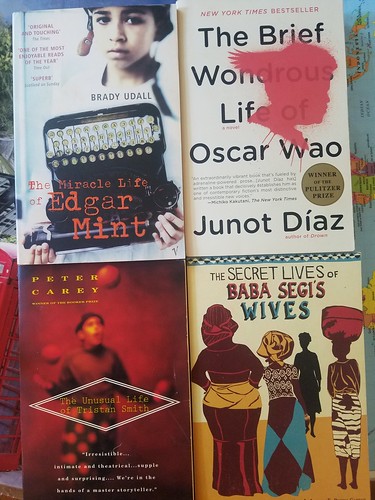
Novelistic Lives


novelistic lives
  • The Miracle Life of Edgar Mint by Brady Udall
  • The Unusual Life of Tristan Smith by Peter Carey
  • The Brief Wondrous Life of Oscar Wao by Junot Díaz
  • The Secret Lives of Baba Segi's Wives by Lola Shoneyin
Another candidate on the same bookshelf was Milan Kundera's Life is Elsewhere.

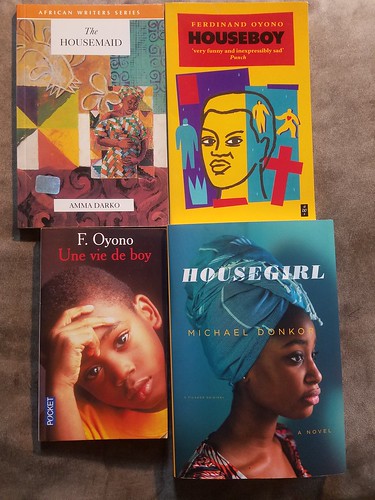
House Readings


House readings
  • La vie de boy (Houseboy) by Ferdinand Oyono
  • Housegirl by Michael Donkoli
  • The Housemaid by Amma Darko
My favourite book on much the same theme is Empress of the Splendid Season by Oscar Hijuelos.

Office Tales


Office life, office politics, the organization man, managing humans, the bad child's book of beasts
  • Office life by Keith Waterhouse
  • Office Politics by Wilfrid Sheed
  • The Organization Man by William H Whyte, Jr
  • Managing Humans by Rands in Repose
  • The Bad Child's Book of Beasts by Hilaire Belloc
Belloc's inclusion turns these office tales into a survival guide.

Contrasting Fortunes

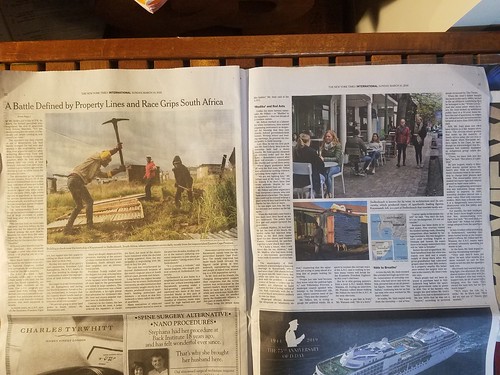
I grew up in a newsroom hence print newspapers retain their fascination for me. In this age of declining print journalism, I am still cheered that there are some stories whose impact is best dealt with in newsprint. The touch of a great editor melding words and images is a thing to behold.

apartheid legacies in Stellenbosch

Surprisingly, although it was part of the same story, it was not the front page display of last Sunday's New York Times that was vital to me, nor indeed the online version, A battle defined by Property Lines and Race. Rather it was the contrast between the images of those erecting a shack on page 12 and the relaxing tourists in the streets of Stellenbosch on 13 that silently made the poignant case. The complexities of the enduring legacies of apartheid were succinctly illustrated. Who gets to share in the wages of wine and spoils of the soil?

In the same vein, I had a strong sense that the Brexit referendum would go the way it did simply by reading the inside pages of the Daily Mail in January 2016, something that amounted to Tickling John Bull's Lizard Brain. There, skillful juxtaposition had a visceral impact even on a jaundiced reader.

The most effective juxtaposition I can remember was executed in the war context in the reporting of the Israeli attacks on Lebanon in 2006. The accompanying article, In Beirut, an Abyss Between Elegance and Chaos, didn't need much more that the contrasting photos.
"One man struggles, while another relaxes", goes the refrain in Massive Attack's Hymn of the Big Wheel. This is the nature of The Great Game.

Colors - a playlist


File under: , , ,

Wednesday, December 05, 2018

Legacies (Munhango to Kennebunkport)

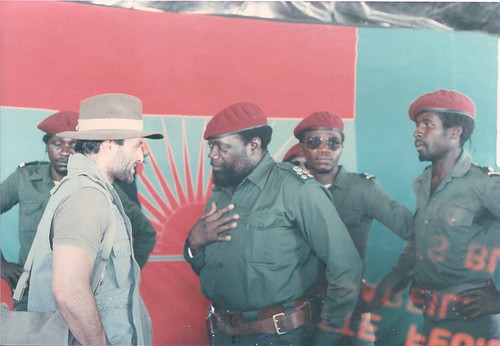
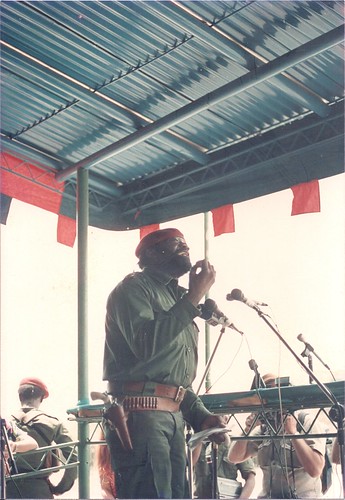
My proudest bit of publishing was an alternate history centered on Angola that someone gifted me late one night. "Here's to bad men" was the takeaway of that fevered dossier, a strand of the story of what historians now brand the "lost decades" in Africa and elsewhere. Stories are always unfinished, and the late KB Mensah shared some photos of Jonas Savimbi from his BBC archives that would have fleshed out that script. Also illuminating was Chester Crocker’s High Noon in Southern Africa (thank goodness for vanity, and used book stores). Its title and duel framing was inadvertently revealing; the outlook of cowboy diplomacy hard to resist. We have occasion to revisit the legacies of these political actors. If the prevailing view from Kennebunkport was of a cold-blooded, Cold War, on the ground in Munhango and Cuito Cuanavale, however, there were warm bodies that bore the brunt of abstractions: domino theories, linkage and containment. Collateral damage aside, the rest of us bear witness.
Jonas Savimbi

Apparently enough time has passed since the death of Jonas Savimbi that we are now urged to take a more nuanced view of his legacy. The caricature that was memorialized in the video game, Call of Duty: Black Ops II while apt for a rogues gallery of pulp fiction is said to be too simplistic.

Jonas Savimbi crowd

His family even sued for defamation at the blunt portrayal:

A lawyer for Activision Blizzard, Etienne Kowalski, has rejected the claim, stating that the game represents Savimbi as a "good guy" – and that he is portrayed fairly, "for who he was... a character of Angolan history, a guerrilla chief who fought the MPLA".
Jonas Savimbi gun address

The case was dismissed. The legacy remains contested.

The elder Bush in death will face similar contests despite the patrician image, New England privilege and attendant Yale legacy. Reputations need to be managed.

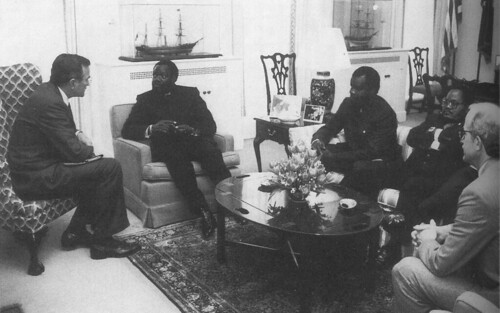
George Bush, Jonas Savimbi & Chester Crocker 1986

— Chester Crocker looked on as Vice President George Bush met with Jonas Savimbi in the Oval Office in January 1986 to discuss the United States' continued assistance to UNITA in the Angolan civil war.

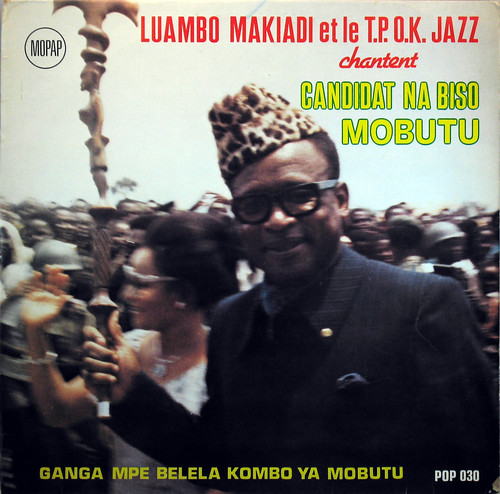
Item: Joseph Mobutu (a.k.a. Mobutu Sese Seko amongst other honorifics) was the most prized CIA asset in Africa from the 1960s until his death in 1997. He was a friend to every CIA director in his lifetime.

Dig: The Bush and Mobutu families spent vacations together.

The late Barbara Bush would recall in her memoir the visits with "President Mobutu, who wears a leopard skin hat and carries a tribal stick. He is very flamboyant, but charming."

Franco et le T.P. OK Jazz sing for Mobutu

High Noon in Southern Africa makes a quite long winded defense of US foreign policy, arguing that it was all in service of "making peace in a rough neigbourhood". Diplomats often have do such things: putting lipstick on a pig or, to mix metaphors, making palatable the unsavoury. Still Crocker doth protest too much. It was never about clean hands, it was naked self interest. Being on the wrong side of history, supporting apartheid, propping up dictators will always be thrown back at one's face.

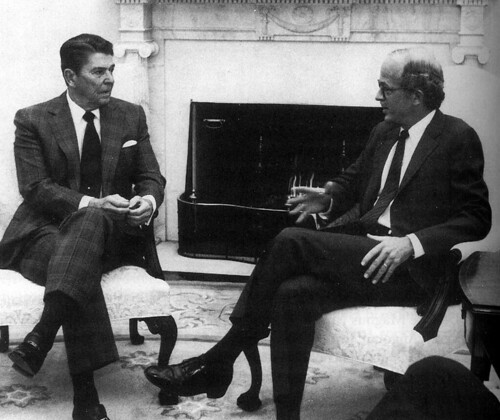
Ronald Reagan and Chester Crocker

— Ronald Reagan and Chester Crocker at the Oval Office in November 1984 discussing the US policy to vigorously oppose sanctions on the South African apartheid regime.

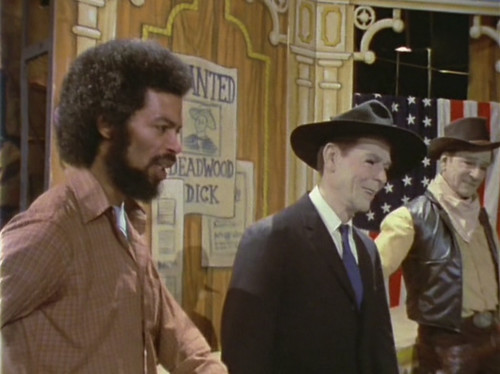
While Ronald "Ray Gun" was the ostensible target of Gil Scott-Heron's classic 1981 track 'B' movie, there was also this observation:

'The screenplay will be adapted from the book called "Voodoo Economics" by George "Papa Doc" Bush.'

Prescient as always, our Gil, and then this:

... all of a sudden we have fallen prey to selective amnesia - remembering what we want to remember and forgetting what we choose to forget.'

Ah right, Papa Doc and the Tontons Macoutes that ruined Haiti. Lest we forget.

gil scott-heron ronald reagan and john wayne - b movie american nostalgia

Squalid murder for the left of us, flowers to the right.

We've since learned of Donald Rumsfeld's notions that informed Bush the Younger's catastrophic reign:
Reports that say that something hasn't happened are always interesting to me, because as we know, there are known knowns; there are things we know we know. We also know there are known unknowns; that is to say we know there are some things we do not know. But there are also unknown unknowns – the ones we don't know we don't know. And if one looks throughout the history of our country and other free countries, it is the latter category that tend to be the difficult ones

The obvious problem with the Rumsfeld taxonomy of knowledge is that it ignores the "unknown knowns", that is, the unconscious biases that underlie an issue. This willed blindspot is the working mechanism of selective amnesia. We are living in a moment where nostalgia is key and we're anesthetizing ourselves with transactional, cowboy politics.

There was a recent clarification which reminded me of the title of an episode of The Wire: moral midgetry.

America First!

The world is a very dangerous place!

... the purchase of military equipment from Boeing, Lockheed Martin, Raytheon and many other great U.S. defense contractors

... maybe he did and maybe he didn’t!

— Statement from President Donald J. Trump on Standing with Saudi Arabia, November 2018

Arms sales (and preferably ours).

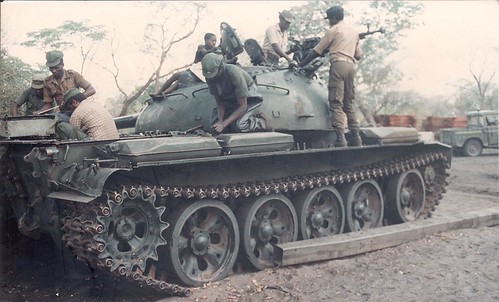
Jonas Savimbi angola tank

The B movie theory: manifest destiny revisited as farce. The politics of rehabilitation, reputation scrubbing, and legacies of blood and sin.

Soundtrack for this note

File under: , , , , , , , , , , , , , , , ,

Tuesday, December 04, 2018

Readings

In lieu of writing (checks to see the alarming length of time since I last clicked publish) as the parental cone of silence has enveloped those routines, I have managed to do some reading of late (and by reading I mean books, not the omnivorous web consumption that is our new normal) (and by books, I mean paperbacks - it's my practice to ensure that I am always behind the latest literary fashion). I've been pleasantly surprised that this past year's crop of books has nothing that should be best left unread, and indeed I recommend all of these. Herewith my year in books.

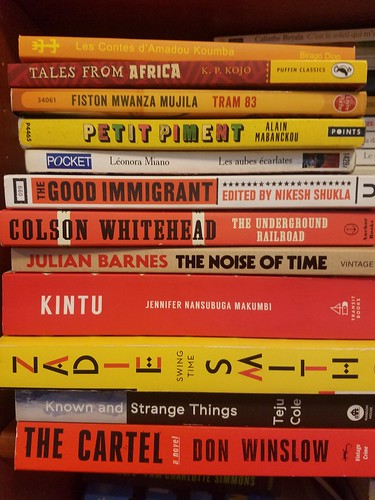
Readings 2018
  • Tram 83 by Fiston Mwanza Mujila

    An entertainment and a tour-de-force. The sheer bravado, humour and joy at work is remarkable. With every page, I grew ever more convinced that the future of the African novel is in good hands. Sidenote: it is so well crafted that it elicited the finest book review I've read in years. Apparently there's a good translation that manages to capture the frenetic energy and linguistic fireworks. There's a musical rhythm to the writing, classically one might call it a Greek chorus, but I would rather ascribe it to the swirling multitudes of Papa Wemba. Taking a broader, pan-African view, I imagine a soundtrack by T.P. Orchestre Poly-Rythmo. When paired with Alain Mabanckou's wonderful earlier Verre Cassé (with which it almost rhymes), it is clear that we have been gifted a great cultural movement: literary sapeurs of the two Congos.

  • Petit Piment by Alain Mabanckou

    The master is always more impressive when he writes in a personal mode. The focus on the young protagonists expands the range of the customary humour. Congo's Dickens is at work sketching journeys from the orphanage to gritty streets. Oliver Twist or Great Expectations.

  • Tales from Africa by K.P. Kojo

    Nii Ayikwei Parkes' second collection of children's stories was a nighttime favourite for the kids. Encore!

  • Les aubes écarlates by Léonora Miano

    A Cameroonian take on the child soldier narrative. Haunting stuff that made for gripping reading. I will nitpick the ending - although I later realized that I had missed the fact that this was the third novel in a series. I'm with the 99%.

  • The Good Immigrant edited by Nikesh Shukla

    Modern Britain is yet to come to terms with race and the probing essays in this collection broaden the perspective, lucid without being didactic, personal yet universal. I await the follow up on that deals with this side of the Atlantic.

  • The Underground Railroad by Colson Whitehead

    Hey, Oprah recommended it and man did he deliver. Applause all around. There was a vibrant literary scene at Harvard just as the dot com boom got going. Kevin Young, the late Philippe Wamba, and others all had oblique takes our modern condition. Colson Whitehead remains one of the most original of that cohort.

  • Kintu by Jennifer Nansubuga Makumbi

    Uganda sliced every which way. Read it. Savour it. Then read it again.

  • Swing Time by Zadie Smith

    A crowd pleaser from our greatest writer. Every detail works. Even this musical obsessive couldn't play gotcha. How's that, not even one anachronism; it isn't fair.

  • The Noise of Time by Julian Barnes
  • Late era Barnes is no less ambitious than the young lion who gave us A History of the World in 10 1/2 Chapters. Pointillist precision on display.

  • Known and Strange Things by Teju Cole

    A late pass as ever, I'm forever fascinated by what he omits in his published works while grateful for what we do get. Here's willing him back to the blogging front. As Abbey Lincoln sang: Throw it Away.

  • The Cartel by Don Winslow

    Epic in scope like its dark predecessor. The definitive take on the drug wars that are our ongoing predicament.

  • Les Contes d'Amadou Komba by Birago Diop

    I am savouring these modern Senegalese folktales with all their delicious twists. Having been brought up on Ananse stories and Arabian Nights, this is right up my alley. I treat myself to Diop's tasty morsels. He's my Peggy Appiah.

File under: , , , , , , , ,