Showing posts with label reggae. Show all posts

Monday, February 27, 2006

Comfort Food and Rare Groove

I was recently re-reading Food Culture in Sub-Saharan Africa by Fran Osseo-Asare - a book I've been meaning to review since it came out last year. Briefly, it's nothing less than a comprehensive overview of the culture and history of food in Africa. It covers the continent, dipping into all the regional flavours. There's lots of historical insight about the types of ingredients used, the crops, animals, fisheries etc. It's one of those books you can open at any page and find lots of to chew on (pun intended, tongue in cheek etc). Most culinary books concentrate on recipes but this goes beyond that into the cultural and social significance of food (from who prepares it, traditions surrounding it, special meals etc). Anyway I'll return to it at length shortly, shall we say that it deserves a fuller digestion. I'm rather concerned in this note with rare groove.

Food Culture in Sub-Saharan Africa


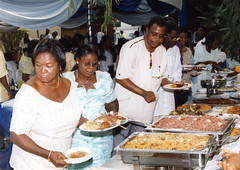
As normally occurs when matters literary and gastronomical coincide, my salivary glands began to do their thing after barely 5 minutes of reading. Much like that recent article on street food in Ghana, my immediate reaction was to think of smells, sounds and kitchens. Oh the smells! As my mouth started watering, my mind started wandering and I was thinking about Auntie Becky's roadside kelewele (fried ripe plantains) in North Labone which is the first place I head to when I land in Accra. Auntie Becky has been cooking outside a house for thirty odd years and has a devoted and international following. Indeed she married the owner of the house which is one way of romancing I suppose - Like Water For Chocolate as they say. The marriage got her the hookup to household gas replacing the previous charcoal fires... In any case, my lunch companions were 20 minutes away thus to distract the incipient hunger pangs, I dipped into my musical library and compiled the following menu of comfort food and rare groove. Hope you enjoy it.

A Hungry Playlist (Listen here)


Chef's Specials


  • Common - The Food
  • Herbie Hancock - Cooking Session
  • Stephanie Mills - Ain't No Cookin'
  • Amadou & Mariam - Sénégal Fast Food
  • Omar - Confection (ft Mica Paris)
    (see also Tasty Morsel for bite-sized portions)
  • Horace Silver - Cookin' At The Continental
  • Charles Wright - Cooking Session
  • Goodie Mob - Soul Food
  • Miles Davis - Steamin'
    (Note: album sized, you may substitute Miles Davis - Cookin' if you prefer)

Snacks

  • Charlie Parker - Salt Peanuts
  • James Brown - Mother Popcorn

food

Main Course


  • Charles Mingus - Eat That Chicken
  • Anthony Hamilton - Cornbread, Fish & Collard Greens
  • Kruder & Dorfmeister - Lamb, Trans Fatty Acid
  • Booker T & The MG's - My Sweet Potato
  • Jimmy Smith - Pork Chop
  • Musical Youth - Pass The Dutchie
  • Cannonball Adderley - Afro-Spanish Omlet
  • Dwele - Flapjacks
  • Freddie Hubbard - Cold Turkey
  • Kenny Burrell - Chitlins Con Carne
  • Lee Morgan - Cornbread
  • Roy Hargrove - Greens At The Chicken Shack
  • James Brown - The Chicken
  • Soul Runners - Grits 'N' Corn Bread
  • Miles Davis - Fishermen, Strawberry and Devil Crab
  • King Curtis - Memphis Soul Stew
  • Ohio Players - Jive Turkey
  • Jimmy Smith - Back At The Chicken Shack
  • Prince - Starfish and Coffee
  • Main Source - Live at the Barbeque
  • MC Serch ft Chubb Rock, Nas - Back To The Grill
  • Ella Fitzgerald & Louis Armstrong - Crab Man
  • Meshell NdegeOcello - Oysters
  • Rufus Thomas - Funky Hot Grits
  • The Meters - Chicken Strut
fish

Dessert

  • Sade - Cherry Pie
  • Dexter Gordon - Cheese Cake
  • Herbie Hancock - Watermelon Man
  • Mtume - Juicy Fruit
  • Duke Ellington - Arabesque Cookie
    (from the Nutcracker Suite no less)
  • Charlie Parker - Scrapple From the Apple
  • Charles Mingus - Song With Orange
  • Dave Bruebeck - Tangerine
  • Hugh Masekela - Strawberries
  • The Time - Ice Cream Castles
  • Billie Holiday - Strange Fruit
    (also available Cassandra Wilson or Nina Simone style)
  • Wendy & Lisa - Fruit At the Bottom
  • Erykah Badu - Appletree
  • The Brothers Johnson - Strawberry Letter 23
  • Prince - Raspberry Beret
  • Amel Larrieux - Berries and Cream
cake goodness

Secret Ingredients


  • Loose Ends - A Little Spice
  • Lizz Wright - Salt
  • Booker T & The MG's - Green Onions
  • The Time - Chili Sauce
  • Lou Donaldson - Nice 'N' Greasy
  • Marlena Shaw - Spice of Life
  • D'Angelo - Chicken Grease
  • Count Basie - Honeysuckle Rose
  • Booker T & The MG's - Soul Dressing

Sweets

  • D'Angelo - Brown Sugar
  • Cassandra Wilson - Tupelo Honey
  • Kool & The Gang - Chocolate Butter Milk
  • Cameo - Candy
  • Nina Simone - I Want A Little Sugar In My Bowl
  • Jill Scott - Honey Molasses
  • Johnny Hammond - Los Conquistadores Chocolates
  • Bob Marley - Guava Jelly
  • Lo-Key - Sweet On You
  • A Tribe Called Quest - Butter
  • Parliament - Chocolate City
  • Beres Hammond - Sugar You Want
  • Ohio Players - Sweet Sticky Thing
kebabs

Beverages


  • Fela Kuti - Water No Get Enemy
  • Jimmy Mcgriff - Blue Juice
  • E.T. Mensah & The Tempos - Tea Samba
  • The Roots - Water
  • Thelonious Monk - Tea For Two
  • Kelis - Suga Honey Iced Tea
  • Duke Ellington - Chocolate Shake
  • The Manhattan Project - Old Wine, New Bottles
  • Duke Ellington - Sugar Rum Cherry
  • UB40 - Red Red Wine
  • Tha Alkaholiks - Only When I'm Drunk
  • Tony Rich Project - Red Wine
  • Snoop Doggy Dogg - Gin and Juice
  • Busta Rhymes - Pass The Courvoisier
  • Bennie Maupin - Water Torture
  • Lester Young And Oscar Peterson - Tea For Two

Supplements

  • Baby Cham - Vitamin S (Fiesta Riddim)
  • Booker T & The MG's - 'Mo Onions
drinks

Liner Notes

  • Do not listen to this playlist on an empty stomach or you may have a case of jazz-funk Water Torture ala Bennie Maupin.
  • On matters of etiquette, feel free to use your hands when partaking of toli comfort food, remember though that it is best to use only one hand unless it's chicken or ribs of course. The only other advice you'll need is Musical Youth's, namely "Pass The Dutchie 'Pon The Left Hand Side".
  • Surpisingly there isn't much else on food culture and, no, Charles Mingus' The Shoes of the Fisherman's Wife doesn't count. Neither does Scratch's hilarious 3 Barstools Away, might I add.
  • From the evidence of this playlist, it is clear that the chicken came before the egg. The earthy music I tend to listen to tends to celebrate our hens more than their eggs, other than the one Afro-Spanish omelette, the chickens rule the roost. (I discarded Disjam's Softboiled for being imprecise. The Time's The Bird, The Roots' Duck Down and Bob Marley's Three Little Birds were disqualified for the same imprecision).
  • Prince's Starfish and Coffee comes with "Maple Syrup And Jam, A Butterscotch Cloud, A Tangerine, A Side Order Of Ham", he is a special one. His Sticky Wicked collaboration with Chaka Khan and Miles Davis is only available on the adult menu as is R Kelly's Chocolate Factory, positive id is required. Oscar Peterson's The Honeydripper is discounted for reasons of messiness.
  • Of course I've noted before that eating people is wrong thus with a track like Miles Davis's Fishermen, Strawberry and Devil Crab, you don't get the fishermen. Sorry, but I believe in truth in advertising. I omitted The Coup's Fat Cats, Bigger Fish out of similar cultural sensitivity.
  • Surprisingly for a playlist heavy on soul food, there aren't too many stews, gumbo or fish on the menu and unfortunately we're out of soup in the toli kitchen; as Troop would have it "I'm Not Soupped". You might also ask, where's the beef, goat or black sheep? The answer is that my musical collection isn't that extensive.
  • The artist historically most concerned with food is strangely unrepresented in this food playlist. Jill Scott punctuates almost every song with lyrics about grits, collard greens and the like yet it's only Honey Molasses that I'm highlighting. However her Family Reunion song about barbecues deserves an honorary mention as does Joy and Pain by Maze featuring Frankie Beverly which comes with most backyard grills.
  • Memphis's finest band Booker T and the MG.s contribute the most tracks to the menu and no wonder, they live in a melting pot.
  • An update: as pointed out in the comments, I completely missed a meal and it is rather Louis Jordan and his Tympany 5 that take the cake. Well that's what happens if you have Five Guys Named Moe, I suppose.

Yesterday, after lunch of course, I listened to this almost 6 hour multi-course meal and it all fits together remarkably well, a balanced diet of soul, jazz and funk (metaphor overload: "a cornucopia of extra-sensory nuggets"). It put me in an anticipatory mood for dinner which I wolfed down voraciously - gusto was written all over my face. There's a lot of humour in all the music since food culture is mostly celebatory - the funniest track being Mingus' Eat that Chicken - what a chorus. I've been told that my musical obsession is far out, or as Eric Dolphy would have put it, I'm Out to Lunch but bear with me and, above all, enjoy your meal. As always menu suggestions are welcome.

See also: "We Eat First With Our Eyes" her take on Ghanaian Cuisine. In my case, I eat first with my ears.
food


Comfort Food and Rare Groove, a playlist

File under: , , , , , , , , , , , , , , , ,

Sunday, August 01, 2004

King of Dancehall

There's a long profile of Beenie Man dancehall's reigning crown prince. As I've noted recently, I've been listening to reggae more closely of late, mostly in the more traditional vein (ska, roots, lovers and dub) or with the concious message but of course there is always the dancehall. In Jamaica, it is always been about the dance and about the riddim. Beenie Man would be a Hall of Fame performer simply on the basis of "who am I?" or the Fiesta riddim from last year. Anyway he's apparently back in business after a near fatal car accident unconscious for something like seven hours. Like Kanye West's Through the Wire (hip-hop), or Anthony Burgess being diagnosed as having a cerebral tumor, and given twelve months to live with the consequent flood of novels, it seems there's nothing like a near-death experience to focus one's creative juices and produce great art.

But mostly, he performs. Beenie Man, now 32, has been chanting on microphones in Kingston dancehalls since he was 5. He's charted a whopping total of 62 No. 1 hits in Jamaica, with occasional crossover success here. After "Who Am I," Beenie Man became a go-to guy for pop, hip-hop and R&B artists looking to boost their street credentials by collaborating with dancehall artists. He's recorded with Janet Jackson, Wyclef Jean, Lil' Kim, Mya and Kelis.

Dancehall is fiercely competitive and its core audience is both fickle and unforgiving, which is why few artists are able to hang on to the kind of success that Beenie Man has sustained for 13 years. It's easy to explain his long run: For one thing, he is prodigiously talented, clever at wordplay and brilliant at placing his voice within spare rhythm tracks. For another, he is daring, stretching beyond the parameters of dancehall to other genres. His exceptional 1997 album on the small VP Records label, "Many Moods of Moses," one of the greatest single-artist dancehall albums ever, included traditional reggae, gospel and a country track recorded in Nashville with Garth Brooks' backup band.

But perhaps most important, even when he has courted international audiences, Beenie Man has always been careful to cater to his core audience back home in Jamaica. He releases a seven-inch single there every two weeks, and regularly turns out dub plates or "specials," recordings made expressly for mobile sound systems. These homegrown industries are more important to Jamaicans than the American major labels and the albums they release.

"Jamaica don't pay your album no mind, yunno, they pay what you doin' in Jamaica mind," he says. "If they see you on the TV, well great. He's on BET, he's on MTV, he's on VH1. . . . But what you do in Jamaica, that's what count. You could be the biggest thing in America, if you not doing nothing in Jamaica, you're not remembered."

There's another secret to Beenie Man's success: One of his favorite song subjects, sex, is also of great interest to many listeners. Like many Beenie Man tracks before it, "Dude" celebrates Beenie's sexual prowess -- "You want a proper fix, call me / You want to get your kicks, call me," he announces as the song opens. And in the chorus, a young woman who goes by "Ms. Thing" praises Beenie as "a dude with the wickedest slam" and "a one, two, three holler man."

Set to an infectiously chirpy rhythm track known as "Fiesta," "Dude" worked its way to the mainstream the same way as dancehall crossovers before it, including Sean Paul's breakthrough hit, "Gimme the Light." First it was played in Jamaican dancehalls as a seven-inch single. Then hip-hop clubs and hip-hop radio stations on the East Coast picked it up; by December it was getting airplay on New York's influential Hot 97 and Miami's Power 96. From there it went to what's known in the industry as "rhythm" stations, such as Washington's WPGC 95.5-FM.

"It pretty much peaked around June, but as it's peaking in some areas, it keeps growing in others -- Top 40 radio has just discovered it," says Beenie Man's manager, Patrick Moxey. "BET got the video, played it to death, and dropped it as MTV was just discovering it."

It's very possible that Sean Paul's international success gave Beenie Man the freedom to make his current album the way he wanted to, but that's something the self-proclaimed "King of the Dancehall" isn't ready to admit. He says he had planned "Back to Basics" before "Dutty Rock" had become a hit.

Beenie Man's manager, Moxey, is more circumspect. "I think Sean Paul's success opened a lot of doors for reggae music and for Beenie Man included," he says.

Moxey says that Beenie Man was the only dancehall artist signed to a major label for four years before Sean Paul broke through. "When Beenie Man was keeping the torch for reggae alive with the mainstream, that helped Sean Paul get a leg up as well. Sean Paul walking in the door and having this smash . . . has helped make a legitimate slot now at every urban rhythm and Top 40 station for a reggae record on their playlist, and that's definitely helping all reggae artists." [...]

In 1991, at the age of 21, Beenie Man performed at a concert in Kingston honoring Nelson Mandela, when he made a misstep that could have cost him his career. He performed "Green Arm," about people with malodorous armpits. "I think I sing the wrong song at the wrong time," he says. The audience booed him offstage.

"I never felt it. I just came off the stage and said, 'Love, respect, manners, I see you next time.' " But he swore to himself that he would never be booed off the stage again. He disappeared for a year or so, and when he came back, it was with a string of extraordinary hits -- including "Slam," "World Dance," "Modelling," "Stop Live in a de Pass," that turned him into a superstar at home and earned him a cult following elsewhere when they were released on the 1995 album "Blessed." Unlike many dancehall deejays of the time, Beenie Man didn't growl. Instead he singsonged his way through chants and rhymes, punctuating them with squeaks, squawks and signature phrases -- "Oh, na, na, na, na!" and "God knows!"

"Slam," which suggests that ghetto girls are sexually superior to their uptown counterparts, caused some controversy in Jamaica, where distinctions between uptown and downtown are sharply drawn. The Jamaica Gleaner newspaper damned it as "one of the most spectacular lies of the 1990s." Beenie Man chuckles. "The uptown girls not gonna like to know that the ghetto girls can have sex better than them," he says.

Does he really think that's true?

He shrugs and smiles. "Not really. It's just things like that sells. Controversies always work. Trust me."

The most enduring tempest of his career has to do with his on-again, off-again feud with another dancehall star, Bounty Killer, which dates back to the early '90s, when Bounty Killer accused Beenie of lifting his style. Since then, the two have gone after each other onstage and on record, most famously in a 1993 "clash" at the annual Sting dancehall festival.

When "Who Am I" became a huge hit for Beenie Man, Bounty Killer raised a stink about the song's lyrics, seemingly just wordplay about a BMW: "Zim zimma, who got the keys to my bimma / Who am I, the girls dem sugar /How can I make love to a fella/ In a rush, pass mi da keys to my truck." At issue was the ambiguous line "How can I make love to a fella." It all came down to punctuation -- did "in a rush" modify "make love to a fella" or the request for the keys? No big deal anywhere but in Jamaica, where homosexuality is illegal and performers often record and perform songs with homophobic lyrics.

"That was started by player haters tryin' to be haters," Beenie says now. "How can I make love to a fella in a rush? I don't make love to fellas, whether in a rush or take time or outside or nuttin'. You know, I'm 'de girls dem sugar,' that's what I do."

Several years later, it was Beenie Man's turn to take the low road when Bounty Killer appeared on No Doubt's "Hey Baby." In the song's video, drummer Adrian Young appears naked, anathema for hard-core dancehall fans. Bounty Killer "gave me a hard time -- for nuttin' . . . for nuttin' whatsoever," says Beenie Man. "For all the years this man be cussing me, calling me all different type of names, callin' me a gay, everyt'ing in the world that he think would hurt me. And then -- boom! Here you come with a naked man in your video. That's crazy, yunno. The hard-core bad boy Bounty Killer with a naked man in his video. That's funny."

Americans unfamiliar with the island's institutionalized and often virulent homophobia may be puzzled by this kind of back-and-forth, but in Jamaica, it makes headlines.

"I think Jamaica is not a world dat open to the rest of the world, it's enclosed. It's not like me that go out in the world and know that, okay, gay people are born to be gay. . . . This is their ways; you cannot change it. There's nothing they can do to help themselves, yunno. Just like a man love woman, you got man love man," he says.

"But Jamaica is a spiritual country, like I explain it to you how my grandfather explain it to me. My grandfather said, 'If a man make love to a man, the life that we know cease to exist because man cannot have kids. And if a woman make love to a woman, a woman cannot get a woman pregnant, so life as we know cease to exist. There'd be no life."

Perhaps this emphasis on the creation of life is an outgrowth of the extreme poverty endured by so many Jamaicans. "So many people are dying, too," says Beenie. "I think that's a big part of it."

Slightly more than a month after the car accident, Paul Tyrell, Beenie Man's longtime road manager and executive director of his Shocking Vibes production company, was murdered in a drive-by shooting. According to newspaper accounts, Beenie Man was so deeply shaken by the news that he was readmitted to the hospital.

Asked about it now, Beenie Man has little to say. "Nuttin' I can tell you about it, yunno, more than people try to bring you down, so they try to kill people around you. That's how Jamaica stay at times," he says quietly.

Is he worried about his own safety?

"In Jamaica, it's not good to fear, to have fear. When you think about fear, things happen to you."

Calm Amid the Storm

Beenie Man may embroil himself in controversies big and small, but he's also earned a measure of respectability. In Kingston, he was painted alongside Bob Marley on a sidewalk mural. He has received a doctorate from the University of the West Indies in Jamaica, hence the title of his 1999 album, "The Doctor." "I had a whole little cap and gown, everything," he says. "It was great. Then we had a show after."

In Craig Town, he has built schools and organized football competitions. "We fix up the community," he says. "We have everything to keep the community going."

Last December, just a few weeks before Beenie Man's accident, the annual Sting concert collapsed into violence. As the audience hurled bottles at the performers, Vibz Kartel, an up-and-coming artist, physically assaulted dancehall veteran Ninjaman onstage. According to published reports, more than 20 people were injured in the melee that ensued both on and off stage.

Amid the chaos, Beenie Man took the stage and calmed the crowd.

"I just walk on the stage and stop everyt'ing. But I know I can do that because Jamaica love me. Yeah, it's like I'm getting the same love that they used to give Dennis Brown or Bob Marley in Jamaica," says Beenie Man. "So when the people love you, you have to show your powers."

By stepping on the stage that night, Beenie Man may have been taking his life in his hands. But he was willing to take that risk.

"This is dancehall music," he says. "You have to save the music. It's not save the show, it's save the music."
File under: , , , , , , , ,

Wednesday, July 14, 2004

Shuffle serendipity

When you have a large record music collection like mine - checking my library in Winamp, I note that I have 8706 songs taking up 60GB on my hard drive - and this is just the songs I like, I didn't bothered to rip the occasional filler on some of the albums I possess - you often just put it on shuffle instead of relying on playlists. Oftentimes the shuffling will juxtapose songs that just seem to fit together. There's even software that attempts to analyze your listening patterns, figure out what you like, and when and how you like it. Other programs use some collaborative filtering based on user ratings to figure out what would make a good mix. I haven't tried to use these, preferring randomness to prevail.

In any case, I just had a case of 'thematic' serendipity. 3 of the last 4 songs that just played were basically about remembering the good old days:

Mavis Staples - The Old Songs from Time waits for no one (Paisley Park 1989)

"turn the radio on / they're playing the old songs / how to bring back memories / of the way love used to be / backtrack along with me / to that old sweet melody"

Prince - Musicology (2004)

"don't you miss the feeling music gave ya back in the day / Let's Groove, September: Earth, Wind and Fire / Hot pants by James / Sly's gonna take U higher"

Beres Hammond - Rockaway (2001)

"those were the days/ oh I miss those days / I miss those days / remember the songs that make you rockaway / those were the days / when love used to reign / we danced all night to the songs they played / we can came again / do it just the same"

These are very different songs: Mavis's is just an old school soul jam reminiscing of her time with the Staple Singers, Pops and all - it even quotes the melody from Ben E. King's Stand by me. Prince's cut is just a funk groove in the vain of James Brown. Beres's is pure Lovers Rock. And yet, like the liner notes for Beres' album say, they are all "waxing nostalgic for a bygone era... evoking a time when great singers like Patti Labelle, Stevie Wonder and Aretha Franklin were in the prime".

Intermixed amongst these songs was Ronnie Foster's Mystic Brew - the classic jazz funk instrumental that was sampled to perfection by A Tribe Called Quest in Electric Relaxation which from the first seconds it played took me back to November 1993 driving down to Yale for the Harvard/Yale game with the rest of the African students from HASA and the various parties we attended at which this was the jam. There is still the controversy about what the chorus is - whether it's: Relax yourself girl, "please set-tle down", "peace-out Premier", "be so clear", ""preset plan" or some other variant. I guess this song also fit the mood of reminiscing.

Other rare shuffle juxtapositions are old soul classics to be followed by the hip-hop records that sample them - perfect fodder for a crate digger like me.

Shuffle Serendipity, a playlist


File under: , , , , , , , ,

On Dub, Roots and Rockers

I've always been partial to reggae; it wasn't your garden-variety dilettante appreciation (ergo start with Bob Marley's Legend, stir in some Jimmy Cliff, a few scoops of maybe UB40's Red, Red Wine) but my love wasn't as informed as others. Sure, I knew about the importance of ska, Rastafarinism, Peter Tosh, the influence of say Curtis Mayfield and the Impressions (see One Love/People Get Ready), that it was producer-driven, that the Riddim was the thing, that the soundclash and dancehall were what mattered... But that's because I'm a music junkie - digression: Nick Hornby's High Fidelity was written for people like me - digression on digression: the movie version didn't grab me as much as the novel, I thought the whole point was the incongruity of the British boy/man in love with 'black' soul music who would go back and forth with you about Alexander O'Neal's Hearsay album and the Minneapolis sound; John Cusack transplanting the movie to Seattle is ok but having the music taste be grunge and standard Elvis Costello, Velvet Underground fare lost me (the complexity of the character came from the fact that his taste was 'complicated' thus justifying his snobbishness).

Back when I was "comping" for WHRB, Phillipe headed up the reggae department. He gave the lecture - a full afternoon worth, almost 5 hours of crate digging for the most obscure Desmond Dekkers, Lee Perry or King Tubby track and a whole historical lesson about reggae, its various trends, adaptability in short. He had a theory about the acceptability of reggae to the mainstream i.e. Bob Marley being picked up/marketed by the record labels instead of Peter Tosh who he thought was more vital.

Hmmn.. Anyway, I listened to the lecture and was able to pass the comp, not because I had absorbed anything he laid out, but mainly because I happened to have been playing KRS-One's The Bridge Is Over and a Sly and Robbie track he hadn't heard before when he had come in to the Radio station (the dank basment of Memorial Hall). He thought I knew my reggae for some reason.

At the time, I was more interested in the soul side of things (Isley Brothers, Teddy Pendergrass, The O'Jays, Marvin Gaye), and seemed to be spending most of my money on the Swingbeat men (Guy and Teddy Riley's various projects, Keith Sweat, Al B. Sure, New Edition etc) and of course on hip-hop (Native Tongues, Kool Moe Dee, Public Enemy) like everyone else. I did follow reggae/dancehall but I comped more for the club classics angle and Street Beat (the hip-hop show that spawned The Source magazine). Back then (1991-5), the first sustained incursions of Dancehall were hitting clubs in the US and so Shabba Ranks, Buju Banton, Supercat (especially Supercat) were my main things. Like everyone else, I loved Dancehall but I could only stand it in moderation ("DJ, half and hour of dancehall is enough, give me some hip-hop or soul classic"). Phillipe believed that you needed a good couple of hours to really appreciate the music and the message... I think commented about the influence of Ganja in Jamaica on this aspect of the reggae culture. I'm sure marijuana mellows and slows you down...

In any case for some reason, I've gotten into a reggae phase of late and have been buying up a bunch of Dub, Roots and Rockers. Walking around London last week, this was my soundtrack/playlist:


I only knew Burning Spear from "Mi Gi Dem" from 1992, which I played a lot on my show. I know that he was very influential in Jamaica: his consciousness, talk about Marcus Garvey, Rastafari, and the old 'Slavery Days' and that his concerts were almost religious experiences. I clearly missed out on him; this is such a strong compilation. He certainly took the mantle from Bob in the late 70s. He takes his time and does a slow burn. It's hard to pick highlights since almost everything is a classic, here goes though: all the tracks from the various Marcus Garvey albums ('no one remember old Marcus Garvey"), Nyah Keith, Make We Dweet. Social Living is now certified as my favourite dub song. I need to get the original albums.

Dennis Brown - Crown Prince of Reggae, The Best of Dennis Brown

Dennis had so many grooves, this compilation only covers his Island years so I'm going to be buying a lot more of him. There are so many songs that he graced. I'm reminded that Finlay Quaye Massive Attack covered Man Next Door which I loved. Dennis's original is simply perfect I can't say much than that: the groove, the voice, the melody, the strange effects in the background, the social commentary about the neighbour from hell:
he gets in so late at night
always a-fuss and fight
all through the night
I've got to get away from here
This is not a place for me to stay
I've got to take my family
and find a quiet place


I remember seeing Beres with Nana Twum-Danso at the Roxy in Boston. One of the few times I joined her and Phillippe on their reggae expeditions. I had fairly low expectations (Lovers' Rock wasn't quite my thing) but his show made me a believer. The best part was towards the end, around 1am the lame people at the Roxy wanted to shut down the concert (Boston is lame like that) but then Beres went into a zone and refused to stop. The thing to note is that he's going blind and so no one was going to drag him off the stage. He kept a groove up for the next 70 minutes bringing out not just all his hits but also throwing in the odd curveball those old songs that you loved. It reminded me of how A.B. Crentsil would throw a verse of English nursery rhyme (say 'London Bridge is falling down') in the middle of a long highlife jam and it would make perfect sense.

His voice is a weapon, borne of experience, it's slightly brassy with just enough to make you feel his pain or let him into the door, or bed. A great compilation showing why he is the ultimate loverman of rockers.


Conscious roots by the stongest and longest lived reggae band, I'll just mention that 'Satta Massagana', 'Jah Glory' hit the spot. Their version of The O'Jays' Now that we found love was their breakout international hit, pretty much the prototype for the Heavy D's cover in the 90s. I would have liked more of their early work however, there's a little too much of their overpolished 80s stuff.


Their impact on reggae is that of Caribbean immigrants to the UK. Their riddims were not exactly nostalgic of the Jamaica some of them had left, it was hinted at but reinterpreted. It's the exile theory I guess; the epitomy of Rastafari - once removed (first they have to return to the Caribbean, before they return to the promised land on Africa). I think of them as the precursors to UB40. A solid collection.


The Dub band par excellence. With Sly and Robbie as your rhythm section, you can't go wrong what with all their skewering of the sounds (gunshots as your percussion, car horns for your chorus). They were the first reggae band to win a Grammy which says it all. This double album captures their essence. The strong lyrics and blend of voices (they almost sound like family) I think it was important to have the female voice in the mix. All the tracks from the Dub Factor and Chill Out are dub as its best.


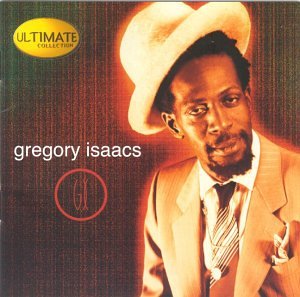
Along with Dennis Brown, the voice of reggae for the past 30 years. There was a lot of craft in his songs (see Black a Kill Black, Mr Cop or Rough Neck). For some reason, I first heard the Kruder and Dorfmeister remix of Night Nurse, 20 years after the original, which stands as as one of the great bedroom come-ons of all time with the plaintive voice:
tell her try her best just to make it quick
woman tend to the sick
for there must be something she can do
this heart is broken in two
tell her it's a case of emergency
there's a patient by the name of Gregory

Night Nurse
only you alone can quench this here thirst

old WHRB basement
About the comp
WHRB, Harvard's radio station, has a very long and involved process--they call it a "comp"--that involves extensive training, music "assignments" (e.g., listen to the Germs' first album until you love it), and music history "tests" (e.g., "How much heroin was in the Germs' Darby Crash at his time of death?). Four months after this sort of hoop-jumping, you are most likely rejected by fiat anyway, because the old music director decided he didn't like you. But if you should pass the test, becoming the next music director is a long process of connections, self-aggrandizement, and self-proclaimed non-conformity.
Update

Dub, Roots and Rockers, a playlist


A soundtrack for this note

File under: , , , , , , , , , ,