Showing posts with label Harvard. Show all posts

Friday, August 20, 2021

Scramble for Africa

Remembering the collective whiff of apprehension in the Harvard administration back in 1994 at the mere prospect of Winnie Mandela speaking at our African students conference. She tended to concentrate the mind.

Preparing for the 21st Century

Approaches were made, alternatives were immediately suggested, right thinking Harvard got into gear. I was sounded out by someone in the US State Department about our invitation. Unlike her husband, there was no good reason to deny her a visa but it was certainly being considered.

Recall that the ANC, per Ronald Reagan and George Bush, was officially designated a terrorist organization. Winnie's husband would need waivers, even post Nobel Prize, to visit the US and address the UN.

Hysteria to the left of us, amnesia to the right. (De Klerk would be feted years later at the Kennedy school). In any case, the pressure was on. The College Republicans had a new target. This was the first time I heard of Jack Abramoff.

Soundtrack: The Pressure by Sounds of Blackness

Some of us had a very different reading of Ronald Reagan's Forward for Freedom speech. It is an article of faith for me. It was written in Angola

In the event, Winnie had bigger fish to fry (the mother of all elections for one) and we went with less controversial speakers.

I wanted truth and reconciliation, and an end to apartheid and all I got out of it was a lousy t-shirt.

South Africa 1994, The mother of all elections

Still, I remember some administrator wondering aloud why we needed to bring all these "mid-level" African professionals (Ellen Johnson-Sirleaf, Djibril Diallo etc.) to the conference [to speak to African students] when an expert like Samuel Huntington was available (and local)

There was a silver lining, I applied for my first credit card in order to finance the conference, and got some whimsical toli out of it

Call it A Debt Foretold

My enduring theme is cultural memory, the legacies of men and woman, what we choose to remember and, crucially, what we choose to forget. I hew to the skeptic's credo and am determined to bear witness.

How else could they laugh
Like they do when they should weep;
Remembering the voiceless days of the past.

— Kwesi Brew, African Panorama
The antidote to the scramble for Africa is Truth and Reconciliation:

Recall that well before Winnie's husband had assumed the mantle,
Long before the ink was dry on South Africa's new constitution
Their spokesmen were already calling apartheid ancient history
And, well, de Klerk would later join Kissinger in the rogues' gallery
Call it, of cold blooded murderers that have won the Nobel Peace Prize
The three musketeers of fate: irony, infamy and goddamn lies

A Temporary Inconvenience, a playlist


Let's have a minor soundtrack to celebrate my time as a temporary inconvenience to Harvard. Some South African music, sadly many of these great musicians are no longer with us (spotify version). ...

Timing is everything
Observers are worried

File under: , , , , , , , , , , , , , ,

Writing log: March 20, 2021

Thursday, June 09, 2005

Harvard Graduations and Okyeame

Harvard Graduations and Okyeame


So I attended The Girlfriend's graduation at Harvard today capping the end of 6 years for a PhD in the History of Science department (having read her work, I will write separately about it and dispassionately but enthusiastically about her achievement). I took lots of photos but being a 35mm film and scanner Luddite, they'll take a while to get posted to Flickr, for now you can see the dissertation photoset.

[Update] Graduation Photo Album.

Her cousin was also graduating from the college so there was a lot of Africans-at-Harvard pride and the family's achievement is undoubtedly wonderful. I'm proud to be joining them. The wider American part of her family weren't able to make it but those from the other side of the Atlantic celebrated double for them.

It was also 10 years to the day since I had myself graduated from Harvard so there was a little nostalgia as I walked around the yard and took in the familiar sights. A little bittersweet since I'd since seen many of these things take place ever since and back then it was all so exciting. I've come a long way. The bitter is also that I was wondering what was happening at work as the great cull was about to begin and some of the other iconoclastic people I work with would be targeted by sharp-elbowed bureaucratic discretion and what the lay of the land would be in coming months. I met one of my old friends who was back for our 10 year reunion, which I hadn't thought about but which I might now attend. Given that I am still living 10 minutes from my freshman dorm, I really don't have any excuse. It was great to reminisce about the vicissitudes of life and all that jazz... One of the speeches at the graduation, by Peter Ellison, dean of the Graduate School of Arts and Sciences was about being humble but also about being bold as opposed to being arrogant and/or clawed with self-doubt the last 2 of which I have fallen prey to at times. I'm going to take that admonition to heart, be humble in your achievements and respect for others but also be bold, be fearless.

It did make me think however of this email that I wrote to Okyeame right after I took leave of the ceremony and got a little time away from the family. I recently happened upon it in my archives. Okyeame being the first mailing list for Ghanaians started by my good friends at MIT, Mawuli Tse and others. Okyeame is still going strong but these days web forums like Ghana Think are more easily accessible.

If you read it, you'll get a sense of where my head was during those days, you'll see that journalistic impulse at work and also the withering and searching tone to my writing - I was even more jaundiced if you can believe that. While other people were simply celebrating, Koranteng was seeking out some toli. The framework was the same, I'd start out on a seeming small point, in this case VAT and then explore it in my long, winding way (but I was briefer then)... Anyway I hope this doesn't prove to be an exercise in nostalgia or navel-gazing. And The Girlfriend is a historian so maybe if she ever does a history of the effects of exile on diasporic communities this could be a minor footnote. I just cleaned up the formatting a little.

On VAT, Graduation And Ghanaian Politics


Date: Fri, 9 Jun 1995 03:06:52 -0400 (EOT)
From: Koranteng Ofosu-Amaah
To: Okyeame@MIT
Subject: On VAT, graduation and Ghanaian politics

On Thu, 8 Jun 1995 Kwaku wrote apropos VAT:
The lesson has to do with what happens when a government fails to listen to its own people. It also shows clearly the dangers of a leader who surrounds himself with yes-men. Further, it shows clearly that the government is out of touch with the economy of Ghana.

Several of us on this net were quick enough to point out the problems of VAT, in spite of our absence from Ghana. How then could the government not have anticipated that VAT was inimical to the interests of Ghana?
To expand on this, one should note the very clear failures of our so-called parliamentary democracy in this whole fiasco.
  1. The government introduced a VAT bill in Parliament - without really providing any motivation for it (that would come later)
  2. Opposition points out obvious flaws in the scheme and raises vigorous criticism. The political atmosphere of the country is such that the government does not want to even consider dialogue. The authoritarian instincts of "those who know best" are aroused.
  3. The parliament debates the bill and introduces 42 amendments that any reasonable person can clearly see will worsen further the actual implementation of the, already IMO ill-justified and ill-conceived, scheme.
At this stage in a functioning democracy, and with a competent government, alarm bells should be ringing. I submit that we have neither in Ghana. Given the level of opposition, a competent government might pause to reconsider its proposal. Also I believe that a competent government would withdraw its proposal if even its rubber-stamp parliament so modifies its proposal as to make it unworkable. Anyway we have been arguing for over a year about VAT and others have similarly pointed out the numerous ironies and flaws in the whole matter and at greater length...

At my graduation today (oh did I mention I was graduating :), I was listening to Vaclav Havel, the Czech president, deliver a beautiful speech about amongst other things
  • the importance of human rights
  • the responsibility of politicians to those they serve and
  • cautioning about those who let their image and personal ambition rule all else...
In my champagne-afflicted haze, my jumbled thoughts turned to Ghana. In my mind I was imagining Jerry Rawlings giving a speech at a Harvard Commencement and obviously I burst out in kotokious laughter upsetting the pomp and ceremony of the occasion (visions of a Head of State incoherent, swearing and ignoring protocol). I stopped myself though, after all there are few people in this world let alone presidents who have the intellect or the moral authority of a Vaclav Havel or a Nelson Mandela. Also, not everybody is a good speaker and one need not be a writer to be a good politician. Maybe I was becoming a Harvard snob. Havel however made a very good point that politicians often set the tone for the whole community. This rings truly in the context of Ghana where our first President had a penchant for self-aggrandizement and our current is intolerant and doesn't believe in democracy.

Then I reflected about the news I had heard earlier about VAT being suspended "with immediate effect" and the tragicomedy of the whole affair. I thought of the countless similar affairs that have occurred since the first and especially the second coming of this regime. When half-baked ideas or poorly thought out lunacies pass for government policy. Also I thought back to childhood memories of this bunch of idealists who used to sit in our house and argue about how corrupt Kutu and co. were, these uncles who would take us horse riding and talked about fast cars, flying and what needed to be done to this country. I contrasted the high-falutin talk these idealists would spout, even to impressionable children, with what we have seen.

The utter mediocrity of the jokers who are ruling us boggles the mind. Their idiosyncrasies, pettiness, moral failings, violence or personal corruption aside, they are a truly incompetent bunch. It is sad to say this and maybe other politicians are/will be no better. But since those who rule us set the tone in a country, their impact is felt in our family homes in Jamestown, Aburi or even Abutia-Teti and all over the country. I am always amazed Ghana still keeps ticking despite the hardships of our situation and how badly we are being managed. In a sense, I am glad the VAT affair has occurred because it perfectly illustrates the many facets of the ineptitude of this administration.

But let me stop venting, I have been fairly quiet on Okyeame for the past four years and perhaps I am exposing myself. Food for thought though is food anyway and what is Okyeame if not to vent... Let me return to champagne and debauchery.

--
Koranteng Ofosu-Amaah
'95 til infinity; Outta Here
File under: , , , , , , , , , , , , , , ,

Saturday, April 02, 2005

How To Hand Over To Yourself

As I listened to reports of the results of the voting in Zimbabwe's Parliamentary elections supposedly anointing Robert Mugabe with enough of a majority to (yet again) modify the constitution at will and rule until the age of 100, I thought that there was a sense of deja-vu about all of this. Hence I looked into my archives and found the following article I wrote in 1993 for Roots & Culture magazine. Back then, I was a cynical Harvard man reflecting on the first batch of stage-managed and flawed elections in the democratic thaw of the early 1990s.

Surprisingly, a fair bit has changed in the intervening years in sub-Saharan Africa with some notable successes (Mali and Ghana, for example, have emerged with robust democracies after decades of misrule) while other countries are works in progress (say Mozambique) and some are frankly catastrophes (Sierra Leone, Liberia, Congo and Zimbabwe being the worst). We'll see what transpires in Togo in the coming months (post-Eyadema The First) and cross our fingers that things might work out there. Yet if even Ukraine (modulo poisonings), or the more recent Kyrgyzstan (modulo opportunist politicians) can see change, maybe there's cause for some tentative (if limited) optimism.

Not that I care for the Heritage's foundation's libertarian politics or their methodology with the primacy being given to economic (as in their peculiar free-market-when-it-suits-us dogma) rather than political freedom, but this year's chart of their Index of Economic Freedom is a decent stand-in for the state of the sub-region. By their reckoning with the notable exceptions of Senegal and South Africa, most countries fall into the "mostly unfree" or the frankly "repressed" categories. I prefer to use the UNDP's Human Development Report or the World Bank's World Development Report to assess the state of the world but the broad strokes that these kinds of reports outline speak to how far Africa needs to go.

It was a fun article to write yet sadly, as I contemplate the tragicomedy of Robert Mugabe's reign in Zimbabwe, it's still relevant today. Herewith then the article:

How To Hand Over To Yourself

Helpful Hints From African Dictators


In this, the last decade of a tumultuous century, change, political and otherwise, seems to be on the agenda in most parts of the world. The post-Cold-War era sees the reawakening of democracratic sentiments long suppressed for reasons of political expediency. The consensus seems to be that governments must perform what they are supposed to, or at least display a certain measure of respect for the common-folk of their countries. The West, after looking for so long to containment in the East, has begun the process of looking inwards. However during this transition period, donor nations look towards former battlegrounds in the South with some disquiet. The existence of such a large number of dictators, plain thugs, and thieves of all sorts, installed, and sustained by shortsighted foreign policies, is an embarrassment few leaders can afford at such times. The scrutiny of donor nations, looking to a normalization of economic and political processes in the south, will consequently be most severe during the next few years. The "trustworthy" dictators and strongmen of southern nations have thus arrived at potentially hazardous crossroads.

African rulers, whose excesses have arguably been the most destructive, seem to have a restricted number of options at their disposal when faced with this unusual examination. A possible avenue they may choose is simply to ignore the West and carry on plundering, albeit at a more restrained pace. This, though, is problematic since it leaves open the door to further tightening of donors' purses. Add to this the very likely prospect of further riches once this unfortunate period is past, and one might reasonably predict only a few takers to this proposal. The other option, though, will tend to be more palatable to the temperamental and theatrically-minded characters that have governed African nations for a good number of years. The plan is to generously allow the good people, on whom you have been trampling for so long, to consecrate you and ask you to stay on. By handing over to yourself, you appease the donors and quash the cries of the opposition movements in the country at one stroke. The fruits of appearing legitimate are plainly evident. The unspoken plan is, of course, to declare a State of Emergency in a year's time, and shut down the irritating parliament.

Such an ingenious option will probably be the only conceivable one to people who have already done the impossible by "conquering" a whole country. Certainly it does not require a great leap of faith to imagine Houphouet-Boigny of Ivory Coast, Eyadema of Togo and other venerable old men of the continent proceeding down this avenue. Why, Daniel Arap Moi of Kenya, and even President (for Life) Banda of Malawi (!!!), have announced elections!!! The quest to legitimize oneself will undoubtedly attract its fair share of harassed leaders. An examination of the tactics of the pseudo-democratic Paul Biya of Cameroon, and the "mercurial" Flight-Lieutenant Jerry Rawlings of Ghana in their recent elections, may prove instructive as we await similar events all over the continent.

From the outset, 'leaders' start off with advantages that are nigh insurmountable. For all, the method is simply to tilt the playing fields in the desired direction using deceit, intimidation, or any other means. Plain intimidation would probably be a thug's instinctive action and indeed, the nearly-fatal attempt on the life of Silvio Olympio, the popular Togolese opposition figure, should be seen along the lines of Eyadema reverting to type. In Ghana, the laws allowing detention-without-charges on the order of the Executive, were still in place a month prior to the elections.

Rawlings built on this foundation by simultaneously being a candidate, judge, as well as the jury of the electoral process. He was able to force his own timetable on the process, and, like Biya, started his 'campaign' a year before official campaigning was supposed to begin. Political parties, on the other hand, were given less than six months to form and were only allowed to start campaigning three months before the elections. In any case, the Flight Lieutenant was the only one who knew when the elections would be scheduled, packed the Electoral Commission with lackeys and, the best stroke, chose to hold elections on November 3, the day of the American presidential elections. A strongly-worded condemnation by State Dept officials would clearly be impossible on that date and therefore suspicious results could be entered in through the back door. The recent attempt by Moi of Kenya to hold elections barely months after allowing political parties to form, is an ominous development along the same lines. Another possible path might be to cajole some money out of the World Bank and/or the I.M.F. to help your campaign. It was announced two months before the Ghanaian elections that all public servants would enjoy a 50(!!!) percent pay rise: the first pay rise in 11 years of military rule.

If all these gestures fail to bring any tangible popularity, the obvious thing to do is simply rig the elections. After all, the intention is to pretend to submit to the democratic process. For Rawlings this was in the main achieved by adding almost 2 million fictitious voters to the electoral register and by denying a large number of potential voters the chance to register. The use of pre-marked ballot papers is another option that should not be discounted and indeed appears to have been used extensively in both the Cameroonian and Ghanaian elections. In the latter case though, the level of vote rigging seems to have been a touch unsubtle: in some parts of the country, fully 100 percent of the votes were supposed to have been cast in Rawlings' favour; the implication being that even the opposition candidates voted for him in their wards. Fraud though, could be conducted with greater subtlety; the sight of 99.99 % election results might strain donors' credulity too far.

With a little fine-tuning of the above methods and perhaps a little improvisation, one might expect incumbents to win by relatively comfortable margins in a number of forthcoming elections. It is not implausible that many leaders overcome their current difficulties and live to chuckle even louder at their good sense. Indeed with such advantages, it is hard to imagine other outcomes.

As for the people? Well Africans have long seen frauds come and go. It would be almost out of character for them to rise up and put an end to the plain nonsense played out daily by many of their 'leaders'. Still, the continent-wide apathy towards politics and central authority gives cause for concern because it goes against the grain of traditional African life. Community government has always been an integral part of African culture, and it should continue to be important to all in the new Africa. Reassuringly though, there are signs that the slumbering African giant is being awoken, more angry than ever. The spontaneous rioting in many parts of Ghana after the extent of Rawlings' vote-rigging became apparent is probably an indicator of things to come. Similarly in Cameroon, the shock and immediate anger at the announcement of the 'official' results might indicate that an unspoken line has been crossed. Handing over to oneself might well break the camel's back.

Taken from Root & Culture magazine, Spring 1993. Vol. 1 No.2

A publication of the Harvard-Radcliffe Carribbean Club and the Harvard African Students Association

(Roots & Culture was a precursor to the latest publication from
HASA, The Harvard African)

See later: File under: , , , , , , , , , , , , , , , , ,

Wednesday, July 14, 2004

On Dub, Roots and Rockers

I've always been partial to reggae; it wasn't your garden-variety dilettante appreciation (ergo start with Bob Marley's Legend, stir in some Jimmy Cliff, a few scoops of maybe UB40's Red, Red Wine) but my love wasn't as informed as others. Sure, I knew about the importance of ska, Rastafarinism, Peter Tosh, the influence of say Curtis Mayfield and the Impressions (see One Love/People Get Ready), that it was producer-driven, that the Riddim was the thing, that the soundclash and dancehall were what mattered... But that's because I'm a music junkie - digression: Nick Hornby's High Fidelity was written for people like me - digression on digression: the movie version didn't grab me as much as the novel, I thought the whole point was the incongruity of the British boy/man in love with 'black' soul music who would go back and forth with you about Alexander O'Neal's Hearsay album and the Minneapolis sound; John Cusack transplanting the movie to Seattle is ok but having the music taste be grunge and standard Elvis Costello, Velvet Underground fare lost me (the complexity of the character came from the fact that his taste was 'complicated' thus justifying his snobbishness).

Back when I was "comping" for WHRB, Phillipe headed up the reggae department. He gave the lecture - a full afternoon worth, almost 5 hours of crate digging for the most obscure Desmond Dekkers, Lee Perry or King Tubby track and a whole historical lesson about reggae, its various trends, adaptability in short. He had a theory about the acceptability of reggae to the mainstream i.e. Bob Marley being picked up/marketed by the record labels instead of Peter Tosh who he thought was more vital.

Hmmn.. Anyway, I listened to the lecture and was able to pass the comp, not because I had absorbed anything he laid out, but mainly because I happened to have been playing KRS-One's The Bridge Is Over and a Sly and Robbie track he hadn't heard before when he had come in to the Radio station (the dank basment of Memorial Hall). He thought I knew my reggae for some reason.

At the time, I was more interested in the soul side of things (Isley Brothers, Teddy Pendergrass, The O'Jays, Marvin Gaye), and seemed to be spending most of my money on the Swingbeat men (Guy and Teddy Riley's various projects, Keith Sweat, Al B. Sure, New Edition etc) and of course on hip-hop (Native Tongues, Kool Moe Dee, Public Enemy) like everyone else. I did follow reggae/dancehall but I comped more for the club classics angle and Street Beat (the hip-hop show that spawned The Source magazine). Back then (1991-5), the first sustained incursions of Dancehall were hitting clubs in the US and so Shabba Ranks, Buju Banton, Supercat (especially Supercat) were my main things. Like everyone else, I loved Dancehall but I could only stand it in moderation ("DJ, half and hour of dancehall is enough, give me some hip-hop or soul classic"). Phillipe believed that you needed a good couple of hours to really appreciate the music and the message... I think commented about the influence of Ganja in Jamaica on this aspect of the reggae culture. I'm sure marijuana mellows and slows you down...

In any case for some reason, I've gotten into a reggae phase of late and have been buying up a bunch of Dub, Roots and Rockers. Walking around London last week, this was my soundtrack/playlist:


I only knew Burning Spear from "Mi Gi Dem" from 1992, which I played a lot on my show. I know that he was very influential in Jamaica: his consciousness, talk about Marcus Garvey, Rastafari, and the old 'Slavery Days' and that his concerts were almost religious experiences. I clearly missed out on him; this is such a strong compilation. He certainly took the mantle from Bob in the late 70s. He takes his time and does a slow burn. It's hard to pick highlights since almost everything is a classic, here goes though: all the tracks from the various Marcus Garvey albums ('no one remember old Marcus Garvey"), Nyah Keith, Make We Dweet. Social Living is now certified as my favourite dub song. I need to get the original albums.

Dennis Brown - Crown Prince of Reggae, The Best of Dennis Brown

Dennis had so many grooves, this compilation only covers his Island years so I'm going to be buying a lot more of him. There are so many songs that he graced. I'm reminded that Finlay Quaye Massive Attack covered Man Next Door which I loved. Dennis's original is simply perfect I can't say much than that: the groove, the voice, the melody, the strange effects in the background, the social commentary about the neighbour from hell:
he gets in so late at night
always a-fuss and fight
all through the night
I've got to get away from here
This is not a place for me to stay
I've got to take my family
and find a quiet place


I remember seeing Beres with Nana Twum-Danso at the Roxy in Boston. One of the few times I joined her and Phillippe on their reggae expeditions. I had fairly low expectations (Lovers' Rock wasn't quite my thing) but his show made me a believer. The best part was towards the end, around 1am the lame people at the Roxy wanted to shut down the concert (Boston is lame like that) but then Beres went into a zone and refused to stop. The thing to note is that he's going blind and so no one was going to drag him off the stage. He kept a groove up for the next 70 minutes bringing out not just all his hits but also throwing in the odd curveball those old songs that you loved. It reminded me of how A.B. Crentsil would throw a verse of English nursery rhyme (say 'London Bridge is falling down') in the middle of a long highlife jam and it would make perfect sense.

His voice is a weapon, borne of experience, it's slightly brassy with just enough to make you feel his pain or let him into the door, or bed. A great compilation showing why he is the ultimate loverman of rockers.


Conscious roots by the stongest and longest lived reggae band, I'll just mention that 'Satta Massagana', 'Jah Glory' hit the spot. Their version of The O'Jays' Now that we found love was their breakout international hit, pretty much the prototype for the Heavy D's cover in the 90s. I would have liked more of their early work however, there's a little too much of their overpolished 80s stuff.


Their impact on reggae is that of Caribbean immigrants to the UK. Their riddims were not exactly nostalgic of the Jamaica some of them had left, it was hinted at but reinterpreted. It's the exile theory I guess; the epitomy of Rastafari - once removed (first they have to return to the Caribbean, before they return to the promised land on Africa). I think of them as the precursors to UB40. A solid collection.


The Dub band par excellence. With Sly and Robbie as your rhythm section, you can't go wrong what with all their skewering of the sounds (gunshots as your percussion, car horns for your chorus). They were the first reggae band to win a Grammy which says it all. This double album captures their essence. The strong lyrics and blend of voices (they almost sound like family) I think it was important to have the female voice in the mix. All the tracks from the Dub Factor and Chill Out are dub as its best.


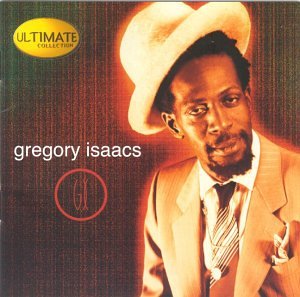
Along with Dennis Brown, the voice of reggae for the past 30 years. There was a lot of craft in his songs (see Black a Kill Black, Mr Cop or Rough Neck). For some reason, I first heard the Kruder and Dorfmeister remix of Night Nurse, 20 years after the original, which stands as as one of the great bedroom come-ons of all time with the plaintive voice:
tell her try her best just to make it quick
woman tend to the sick
for there must be something she can do
this heart is broken in two
tell her it's a case of emergency
there's a patient by the name of Gregory

Night Nurse
only you alone can quench this here thirst

old WHRB basement
About the comp
WHRB, Harvard's radio station, has a very long and involved process--they call it a "comp"--that involves extensive training, music "assignments" (e.g., listen to the Germs' first album until you love it), and music history "tests" (e.g., "How much heroin was in the Germs' Darby Crash at his time of death?). Four months after this sort of hoop-jumping, you are most likely rejected by fiat anyway, because the old music director decided he didn't like you. But if you should pass the test, becoming the next music director is a long process of connections, self-aggrandizement, and self-proclaimed non-conformity.
Update

Dub, Roots and Rockers, a playlist


A soundtrack for this note

File under: , , , , , , , , , ,