Strange Bedfellows And The Journalistic Impulse
I am the son of an African journalist. I grew up in a newsroom and some of my earliest, and fondest, memories are of seeing feet from underneath my mother's desk at the Daily Graphic in Accra, Ghana. My babysitters were hack reporters. My most cherished amusement came from settling down with a pad of paper and scribbling under a conference room table while editors and others would discuss stories as they worked together to shape the configuration of that day's main edition.
Editorial judgements were my mainstay, and my introduction to nuance: that fine choreography of which stories to highlight. The horse-trading between the different departments of the paper passed for entertainment in my mind. I made friends while looking over people's shoulders as they sweated to produce a story on deadline. Similarly I loved running errands to call so-and-so to the meeting to report on his progress (or lack thereof) or to fetch new typewriter ribbons from the storeroom.
Watching my mother peck out a story with her two fingers was the apogee of my day. The clacking of manual typewriters, those huge IBM ones of yore, was my musical soundtrack. To this day, I still derive considerable comfort seeing her at her desk with a keyboard on hand, surrounded by books, notepads and a confusion of pens. Where the scales fall from children's eyes about the existence of Father Christmas or the Tooth Fairy, I've instead had journalistic interventions and back stories. I learned that horoscopes were bunk by episodically watching my mother rush to the archives to pull older horoscopes when the daily horoscope had failed to be delivered from the temperamental, and hence unreliable, astrologers employed by the Graphic.
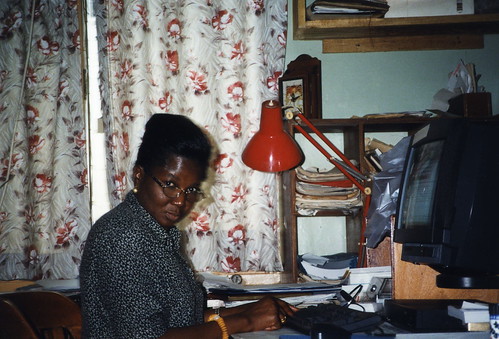
My first summer job in the early 80s in London was attaching mailing labels to Talking Drums magazine and helping our stringers come up with ideas for their tardy columns. I'd even propose or write a paragraph or two. Later as a teenager, it was always fun to spend a day in Bush House at the BBC seeing how Focus on Africa got produced and considering the differences between radio production and print media. At Harvard, I "comped" at WHRB although that was more for music than for news. Thus the editorial imperative is in my blood, albeit an untrained imperative and all instinct at that. The delicacy with which a paper is put together, the minutiae and daily drudgery of a newsroom, of checking and double-checking a fact, the skilled effort to conjure up news, all of that amounts to nostalgia for me.
I mention all this as a response to feedback I've received from old (and newfound) friends and family alike over the course of my ten months of writing on this blog, particularly about the African toli although some of the technology and literary toli get similar comments. People want to know why in recounting the events of a Ghanaian Presidential Inauguration, I included the issue of female Libyan bodyguards and their role in Gaddafi's mischief in Liberia and Sierra Leone. Why would I write full-blown case histories of software products in the midst of unprovoked arguments with myself? And so forth. True they'll say those pieces have came off well but why spend the time and care to weave these strands together? This recent comment in particular set me off thinking about this tendency of mine:
Great article, great writing. I'm commenting, though, to express amazement about the Libyan role in the awful atrocities. I had no idea. 500 channels, news stations everywhere, and even someone like me who pays attention has never heard of this. Blogs will change the world perhaps even more than the printing press.Ethan's recent valentine (thanks by the way and since we're in the same town perhaps we'll cross paths one day) also contained the revealing and perceptive phrase, "his Africa reporting".
My parents worry that I'm willing to expound on every topic imaginable, chasing delightful juxtapositions and seeking out the strange bedfellows of this world. Don't I have a fulltime job, they'll ask? Even when you'll be 50 years old, your parents will still be fussing over you, that's their job. Still, since this appears to be a recurring comment, I thought that I'd try to elucidate things further.
The short answer is that it's simply the way my mind works:
I'm in the grip of the journalistic impulse.The long answer, and if you've read me before, you know there's a long answer coming (ala DrunkenBlog), is what this post is about. Consider then, this rant's subtitle:
100 issues that the journalist in me feels the media should investigate
- "Always Start With A Hook"
- Tangled Webs
- An African's Perspective
- Questions, Questions and More Questions
- Strange Bedfellows
- A Skewed Outlook on Life
- Personal Backstories
- Christmas in Accra
- Determined to Bear Witness
- Plumbing the Depths
- What They Have Wrought
- Histoire Insolite
- The Journalistic Impulse
- The Necessity of Permanent Outrage
- Sensational Fruity Delights
"Always Start With A Hook"
I should first explain that the particular brand of journalism I am afflicted with is one which is situated in the experience of life in a small country whose history has, on the whole, been characterized by misrule. Over the past couple of centuries it has been a succession of
- God, Gold and Glory seekers: the British and the German colonials. Was Rule Britannia benign enlightenment or rather a blight?
- Self-aggrandizing adventurers: our first president, Kwame Nkrumah. And though I'd acknowledge that he was a "Great Man" in the historical scheme of things, he also happened to be a great fraud - One Party State and President for Life indeed!
- Incompetent rogues and thieves: Kutu Acheampong's regime of the 1970s. Sure his reign was less malignant than the contemporaneous, and similarly buffoonish, Idi Amin of Uganda but why have we only had 2 or so years of sensible George Washington types?
- Outright vicious scoundrels and pernicious thugs: this last, the vindictive hyenas, Flight Lieutenant Jerry Rawlings and his co-conspirators, feeding on us from 1979 until 2000
Going further back in history is an exercise left to the reader, but I trust you wouldn't find much comfort in our antecedants (our dealings with the wily Portuguese, Dutch, Danes or Swedes etc).
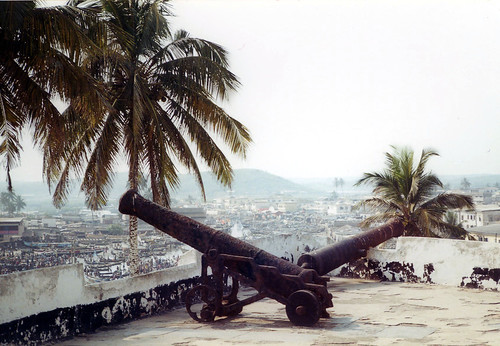
When Westerners come to Ghana, they'll unfailingly comment about how well-informed even the most modest person is, how we all listen to the radio, fluently discuss the minutiae of US congressional politics or the latest policies of the Bundesbank. Where most American schoolchildren have only the vaguest notions of where Afghanistan is on the world map, a Ghanaian child will be curious to a fault and pepper you with questions about that "exciting place called Kansas City", she might even throw in a little fact about when it was a wide open town during the 1920s and 1930s. Small talk in my childhood was all about politics which meshes well with the prevailing stereotype of Ghanaians in the sub-continent: that they are intensely political but have blindspots about everything else. One of my favourite words is Kalabule, that 1970s Ghanaian byword for corruption, it literally means "doing things in a shady way" as was common under Acheampong. A rampant curiosity about back-alley transactions is consequently firmly imprinted on my psyche.
The impulse I follow is akin to that of the grass in the oft-repeated Angolan proverb:
"When two elephants fight, it is the grass that suffers."This is a reaction to the reality of our history which shows that we are treated as pawns or proxies in The Great Game of life and the Cold (and Hot) Wars of the past and this here present. That urge to locate these strange bedfellows is much like that of Albert Camus trying to imagine Sisyphus happy at that brief instant at the foot of the mountain, just before he attempts to roll the rock back up for the inevitable return that capricious gods have ordained.

Tangled Webs
The discussions stirred up around George Kennan's passing in recent weeks are appropriate signposts about the legacy of the Cold War. The retired Belgian military operatives who have talked in recent years about their roles in Patrick Lumumba's grisly demise come to mind. When will their counterparts in the CIA be similarly candid? Are they waiting for George Bush Snr., or others unknown, to die before unburdening themselves of their heavy tales of black psy-ops. I'm sure there are many like me who didn't enjoy being the grass trampled upon repeatedly - even if the "right" elephant eventually won the fight. Thus I'm writing my Long Telegram home.
So when I watched the recent protests in Kyrgyzstan, I thought not to the recent people-power outings in Ukraine and Georgia or even to the collective courage that led to the fall of the Berlin Wall (not pope-inspired by the way). Rather I thought back to Christmas 1990 sitting in Nancy, France, watching images from Bucharest alongside a true-believer socialist as his worldview finally succumbed to that ineffable and unrelenting pull of gravity. It is no comfort to have learnt, as I did a few years later, that there were Ghanaians who died fighting for that reptilian man, Nicolae Ceausescu, alongside his Securitate during the Romanian overthrow of that macabre communist regime. I thought about the kind of world in which someone would send young Ghanaian men to train in interrogation techniques in far-flung places like Cuba, East Germany and Romania to come back and oppress their people. I thought about what it meant for a young man to find himself in that position, in a foreign land, dodging bullets and shooting at people, in their own country mind you, trying to overthrow a rotten regime. I thought about how miserable and brutish their lives must have been to have undergone that kind of journey. And what about their peers who did come back from their various schools of grist to wreck havoc on their compatriots. I'm sure that some of these trained killers are among those who carry out weekly armed robberies in our towns.
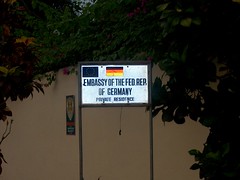
Why did I recall that when contractors were building new roads in Accra in the late 90s, they discovered a hitherto undocumented, secret communications link going from The Castle, the seat of the Ghana government, straight to the East German embassy? All this was treated very hush-hush, one didn't want to embarrass the President. I'm sure that the West Germans after reunification were very interested in the strange webs their Eastern brethren had weaved. Such however are the war stories that journalists will recount when they up-the-ante in late-night conversations. In Ghana, we thought it was simply military thugs ruling us, little did we realize that they were turning Ghana into an integral battleground in someone else's war.
I vividly remember the summer of 1986 after the Chernobyl Disaster when there were rumours in Ghana about how members of the ruling PNDC were no longer eating beef. The toli was that they had allowed someone to pay a bribe to let in a shipment of Ukrainian meat that had arrived at the port of Tema. We discounted that rumour in my household (paranoia is a feature of life under a dictatorial regime) but it certainly sounded plausible. I accordingly preferred eating fish during that month's holiday, my first trip home since exile had begun.
Thus I am concerned that Rawlings periodically makes covert visits to that gun-running rogue, Sassou-Nguesso, who heads Congo-Brazzaville, what with his Cobra militia and guns for hire. Those entrusted with Ghana's security say not to worry, they confronted them about these trips and are fully on top of things. But still, it's a little conspiratorial wouldn't you think? Or are they just good friends reminiscing about looteries past? Thus I continually worry about those other fellow travelers of the Cold War who quickly recognized Ghana's military government in the 1980s, the Cubans or the Nicaraguans, making their presence felt across the Atlantic ocean in Ghanaian lives. Or the nearer Colonel Gaddafi for that matter.
It's like Denzil Washington's excellent delivery of Easy Rawlins' line in the film of Walter Mosley's Devil in a Blue Dress:
"Everyone was peeing on my head and telling me it was rain"The urgency I feel is hence a recognition of the fact that there are convinced ideologues amongst these rogues I abhor. They don't deserve to be caricatured, these are thoroughly serious people, professional zealots who wanted to foist Permanent Revolution ala Ceylon on us. They even came with plans to abolish renting of private property in 1982 and only the most vigourous resistance prevented them. People were killed during Rawlings' "revolution" because they walked to work in "bourgeois" political suits. I rue those who are complacent about their current twilight because if history has shown anything, our grip is very tenuous. Ask the Vietnamese, ask the Cambodians or even the Angolans about being collateral damage and mere dominoes in someone's theory.

Editorial Decisions
The world goes on. By and large, we grow up, fall in and out of love, marry, have children, enjoy our families and all. We worry about jobs, school fees, health care, our commutes, cars, mortgages and the like. But as a member of a class of people whose historical footing has been so precarious, pardon me while I inquire about these things.
Because the story is right there, if you read, if you listen, if you scour, if you cultivate, you can get people to recount it to you. Human beings are social beasts, gregarious by nature. We are also insecure and prone to loose lips and boasting. If you ask the right question, you can often get the real story. Or if that fails, they'll leave a paper trail.
Much as everyone in America wants to forget it, the story of Abu Ghraib is there, it's being told in black and white and horrific pixels, and yes, it's an abyss of pestilence. In Iraq yesterday, Shiites were re-enacting the horrible poses from Abu Ghraib during the demonstrations called by Moqtada Al-Sadr. I doubt you would have seen that detail on CNN Headline News or whatever TV news outlet you favour. The BBC to their credit pointed it out in the linked report. Perhaps it will be buried in the back pages of the New York Times. Surely this is an embarrassing black eye for Americans to have their country thought of in this way? Still it seems that we don't really want to know that Stephen Cambone, Donald Rumsfeld and Gen. Ricardo Sanchez ordered torture. We avert our eyes from their misdeeds. They in turn are barely embarrassed and not even chastened. After all there was that referendum, the November elections, with the results we know. So now they're even getting payoffs; Paul Bremer, George Tenet and Tommy Franks were awarded the Presidential Medal of Freedom. Was it a reward for a job well done or rather a more refined form of hush money to keep quiet about their roles in the disaster that is Iraq? Paul Wolfowitz too now gets to lead the World Bank!
I recently watched Errol Morris' great documentary, The Fog of War, in which Robert MacNamara self-servingly expounds on his life and on the Vietnam war. It's true that in his case, the service he later rendered for the World Bank was an exemplary penance for his earlier misdeeds. Still, when you think about the exorbitant and ongoing human costs of the Vietnam misadventure, you wonder how people like him, and especially the Henry Kissingers of this world, manage to sleep at night.
500 channels is all well and good but with the exceptions of parts of the print media (say Seymour Hersh or Anthony Shadid) how many American media outlets actually produce the kind of searching inquiry or curiosity that would truly inform a populace. Other than say the "boring" PBS folks like Gwen Ifill and Jim Lehrer, how many thinking journalists does the average American encounter? The sheep-like reporting and rah-rah flagwaving of the past 4 years says a lot on that point.
Political and civic apathy however is what you get once you've solved all the basic problems of your society. Then you have the luxury to concentrate on the real higher purpose of this life of ours:
- Entertainment and that thing we call consumerism
- Sedation ala Prozac
- Beautification by Botox
- Erection by Viagra
- Psychotherapy ala Woody Allen
- Those modern ills: bulimia and anorexia.
Per contra, a few years ago, an uncle of mine noted that he was one of 3 psychiatrists tending to the mental health of the 20 million citizens of Ghana. Things are not far improved these days and one wonders where the few hundred psychiatrists that he has taught, or the several thousand that Ghana has trained in the past few decades, are making their living. There are many in the Gulf States, in Europe and here in Anytown, USA. Perhaps, in their relative poverty, Ghanaians don't have the luxury of suffering from mental illness. Are they like the Nigerians, the happiest people in the world?
Back to America though, when you hear about The El Salvador Option being floated to deal with the problem of Iraq shouldn't warning bells be ringing? I ask, is there no historical memory in this society? Will the US depredations in Latin America be like the Phoenix Program, now safely consigned to the memory hole. What about that great euphemism that the CIA has contributed to our lexicon: plausible deniability? What about those lawyers, those right-thinking, fine churchgoing people who thought that because "the rules have changed after September 11th" they were obliged to author those infamous Torture Memos (From John Yoo, to Bybee to Gonzales) surely it's the banality of evil at work here.
An African's Perspective
I got many complaints when I wrote sentences such as these:
Africans are no strangers to social dislocation. In many ways upheaval is our close companion...Why not focus on the positive, I'm asked? People live in Africa after all and most just get on with it. They don't have the option of blogospheric conversation and pontificating at length like you do.
As an African immigrant, I tend to keep a low profile (borne of years of seeing the radioactive effect of carrying a Ghanaian passport which loudly advertises economic desperation)
It gives me great pause to write such things but I feel that someone has to write them down. Our voices need to be heard in this global conversation otherwise we'll be marginalized as ever. Furthermore, train wrecks these days are not simply Michael Jackson (or Terri Schiavo). Train wrecks in a very real way are about Mohammed Atta and company in apartments in Berlin, immigrants radicalized to unleash what we have seen. Going back in history, it's about Pol Pot returning from a nice interlude in colonial Paris to foist Year Zero on his compatriots in the Killing Fields of the new Kampuchea. Africans can't afford such things
Knowing as I do that one of the Al Qaeda plotters passed through Ghana on his way to the 1998 US embassy bombings in Kenya and Tanzania, and stayed overnight in a government safehouse is frankly frightening. (Al Qaeda types typically disperse and take circuitous routes to their target before an operation). Apparently those who have discreetly investigated the matter don't believe that the Ghanaians involved in putting him up knew who he was or what he was about to do. But did the hundreds of dead and maimed Tanzanians and Kenyans, not to mention those tourist economies, deserve that awful outcome?
If you add to that nugget, the sight of an 8 year old girl running around the streets of Osu in Christmas 2001, dirt on her face and tattered sandals on her feet, wearing a yellow shirt bearing Osama Bin Laden's hectoring face, I would hope that that image would give you cause for as much queasiness as it did for me. Luckily I haven't seen her like since nor that T-shirt vendor who had been selling such items openly at Danquah Circle.
If you shared my symptoms, you would have been sure to notice the 30 seconds of video footage of Eritrean soldiers amongst the cache of videos and cds found in Afghan safehouses, as opposed to the clip from the "exclusive video" that CNN keeps repeating, whenever ratings flag, of Bin Laden's coming-out press conference in 1998. I frankly experienced whiplash when I saw those fleeting glimpses of Eritrean mujahadeen. And no one has commented on it so far as I can tell, not even Peter Bergen who's about as well informed as anyone on these matters. Really? Eritrea has a muslim insurgency? Protesting what exactly? I've heard about Somali, Sudanese, Nigerian and even American Taleban, but Eritrean? No wonder that there were biblical pitched battles in the border wars that were disastrously fought with Ethiopia over the past decade. I mean with that kind of foment and global jihadists in your midst, its no wonder that there is now a large American presence in nearby Djibouti to monitor things even if this last is couched in terms of a "small contingent of military adviser and civilian-affairs coordinators".
So I'm interested in what is going on in Indonesia (what happens once that cleric finishes his very lenient sentence). I wonder how Nepal is going to work out what with a King who's gone authoritarian and Maoist rebels controlling most of the state (another Congo in prospect?). And speaking of Kings, I believe in Tradition and Modernity and all that, but what's the deal with the Swazi King? I mean his excesses are beyond obscene especially in such a poor country. Haven't the Swazis heard about de-stooling a chief? Isn't this the 21st century?
Questions, Questions and More Questions
If you've lived with journalists you'll recognize the particularly jaundiced outlook they have and its consequent effect as social maladjustment. This malady is a component of my fever. Often journalists consider the story more interesting even than the people involved. It takes a very particular strain of insanity to speculatively head into the jungles of Thailand for months on end to record the Last days of Pol Pot like the intrepid Nate Thayer did. I've met Nate and he struck me as a Christopher Columbus adventurer type, out to sniff a story for Glory and "the last great interview on the planet".
So yes, I'm interested in the Lebanese businessmen who seem to have funded Charles Taylor. I want to read the contents of the various confidential UN reports on the Liberia and Sierra Leone crises that were given to the Security Council about them. What are the outlines of their lives? I'm interested in that Russian millionaire arms dealer, Victor Bout and his compére, that Israeli-Ukrainian businessman, Vadim Rabinovich, who seem to turn up at every hotspot dispensing their armored largesse for whatever currency is en vogue. I'm interested in the dogs-of-war from the apartheid regime in South African. Coups on the Solomon Islands? I'm interested in the shadowy world of the Bosnian (and Serbian) mercenaries who are now popping up as soldiers-of-fortune in Ivory Coast. Do they fight on the same side these days, I wonder? And what about the remnants of Jonas Savimbi's miscreant UNITA movement - those who the republican senators long celebrated as "Anti-Communist Freedom Fighters". Now that he is dead, what will these people who have only known war do? Would they be like the Mozambiquans who, after a 20 year civil war, have quietly returned to their farms and classrooms - very sensible those Mozambiquans? Or will their society be wrenched, like the South African one is, with a legacy of violence, rape, alcoholism and HIV? And still on Angola, where is the oil money going now that their civil war has wound down? Inquiring minds want to know.
Strange Bedfellows
As I consider arms dealers, I contemplate the question of Rwanda 11 years on. I want to ask the very astute human rights activist Alison Des Forges again the question I asked her a decade ago: what about the French in all of this? Surely there's something fishy about their behaviour in Rwanda? I want her answer to be not just the diplomatic diversion "you are extraordinarily well informed" she gave in that public forum. I really want to know she thought about what the French did or didn't do. I want to know why they first (like the US) demanded withdrawal of UN troops and then intervened only after the 100 day bloodbath and then only to prevent a complete rout of those Hutu génocidaires. Their protestations about humanitarian intervention at that point simply don't gel; there's too much smoke here.
In the intervening years, there have been numerous UN reports and investigations and the story is no less murky. In France, Francois Mitterrand's son Jean-Christophe has received slaps on the wrists for his part in various arms deals and cronyism with their client-states in Africa. There are mounds of documentation that the Hutu regime were his clients, isn't there? Let's think numbers, which companies supplied the machetes necessary to hack 900,000 people? I mean this was low-tech, participatory slaughter, they only dealt bullets on those poor Belgian peacekeepers and others on the first weeks or so. Who was getting bonuses for the "bumper shipments of farm equipment"? Have prosecutors really dug into Monsieur Mitterrand's disquieting role in these affairs? If I then mentioned that Capt. Kojo Tsikata, Rawlings' enforcer and chief conspirator, runs in those same arms circles, would that scare you? Or is this web simply too unseemly to be pursued. Will journalists look at this? All it takes is asking the right question.

Friends will shake their heads about why I keep harkening to the 13 different countries whose armies have been in the Congo in the past decade. 13 countries? (and that's before the UN got there). Surely there's something going on in the Congo, something worth covering? It's the most richly endowed country in Africa. I want to know about life in the copper, coltan and diamond mines that have continued operating at full bore even as the state has so thoroughly failed. I want to know why exactly soldiers from Chad, which isn't even a neighbour, were sent to Congo and what they did while they were there. What's behind this Great Scramble? Is it God, Gold, and Glory again? I suppose it's fairly clear why Zimbabwe sent their troops: basically to loot for Mugabe. But why Chad? If your enemy's enemy dives in, do you also have to follow suit? What would Sun-Tzu say?
And in this vein, I definitely want to hear the full story behind the Equatorial Guinea coup plot that Mark Thatcher and others recently pleaded guilty to and the British, South African and Zimbabwean connections. I know that Equatorial Guinea is sitting on oil that makes everyone salivate given the current prices. What did MI5 or the CIA know and when? Is that too much to ask?
Now that the US is again selling F-16s to Pakistan, I'm at a loss for words. Does that desperate emblem of malarkey and failed statehood called Pakistan really need more weapons? Or is this simply the wages of the War Economy? Isn't there a direct line from the mischief fomented by the CIA in Afghanistan to blowback in the form of 9/11? Or am I missing something? I suppose it's only appropriate that in return Spain is mulling selling arms to Venezuela.
The one thing that all the developed countries in the world insist upon is that they have the right to sell you weapons systems. They'll disagree about aid, their protective tariffs or debt relief, but if your poor country needs guns, by God, it's your right to find a supplier (and preferably ours).
And speaking about Venezuela, I want to know why Hugo Chavez gave Rawlings and co. several million dollars to spend in these past elections in Ghana. Was that payback for ideological solidarity or some past murky business deal? And given the unexpectedly high showing of that shell of a party, what's going to happen in the 2008 elections if there's instead a late infusion of $100 million into the campaign. Am I really going to leave things up to people who can't provide enough chairs for a Presidential Inauguration.
"Please, I beg!"
A Skewed Outlook on Life
Watching 1 million people gathering in Rome for the Pope's funeral, I first wondered if the pickpockets were celebrating that heavenly turnout. When I saw photos of people clinging to each other in sleeping bags in the great plazas of that city, I started thinking about how many babies there'll be nine months hence since contraception is obviously not a concern. I also appreciated the spectacle of the ultimate opportunist, Robert Mugabe, breaking EU sanctions and flying in to mourn his Pope, false piety if ever there was (much like that of many American senators I might add).
It's a sad commentary on your outlook on life that in considering the good pope's demise, your thinking immediately latches onto the question of whether additional hookers had been bused or flown in for the occasion to service the large crowds, much like what happened at the last Olympics in Athens or occurs at any heavyweight championship bout in Las Vegas.
I thought also about how my banker aunt felt when she recounted talking to an Italian banker after working with him for a week (she got her MBA in Milan), who in an unguarded moment, let slip that he was so surprised to discuss deep economic issues with an intelligent Ghanaian woman. You see, his only previous experience of Ghanaian or Ivorian women were strictly cash affairs with the numerous prostitutes that ply Italian hotel rooms. And what about those prostitutes? What kind of stories were they telling their families in the village about their life in Italy when they sent their monthly remissions. How did they end up in Milan in the first place? Who lured them there? Was it the usual tale: a promise of jobs in the textile industry? And how are these African women dealing with the influx of nubile Eastern Europeans competitors from say nearby Albania? The logic of outsourcing is the drive to the bottom of the barrel.
Personal Backstories
But maybe you're getting a sense of what goes through my mind just in these past couple of hours. Perhaps you're getting scared at what you see: the paranoid style in action. Your world likely has far fewer complications. Or maybe not. Maybe your issues are of a different, more pragmatic bent. Or perhaps you feel that all this is much ado about nothing.
You should know then that such worrying comes from both sides of my genes. Half a lifetime ago, my father was responsible for the security of Ghana during the too-brief Busia regime (1970-72). I know that his was a mostly hopeless task: if the Army as an institution decides that it is going to take over the reigns of power (as say in almost all of Nigeria's history), there is very little you can do except to push your position papers in their faces and appeal to reason with your human-rights arguments. They have the monopoly of power and 2 years was not enough time to put them firmly under civilian control, especially when the temptations of power were so great. In the US today, I don't see anyone questioning the vast increases in the Pentagon's budget even as schools are being squeezed. Objecting to the military-industrial complex is like questioning Israeli expansionism in the Occupied Territories, the ultimate taboo in American political life.
Being pragmatic types, my parents won't dwell on the historical failures that have characterized our small country. They're far too busy getting on with that messy business of development. Still when a reflective type like me looks at the glorious footage of Ghana at Independence and listens to the exuberance of the music of that period, I can only consider that it could all have been far, far different. The recurring comparisons of Ghana and Malaysia, 48 years after independence, is a similar exercise in missed opportunities. It's a tale of unnecessary upheaval and turmoil in the everyday lives of a country.
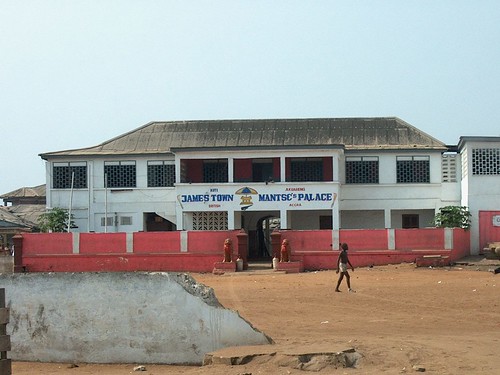
Being right in politics or in history is no consolation. In fact it can even accentuate the depth of one's depression. The same thing holds in many other areas. The technology world is littered with similar tales about timing being everything. If Apple's iPod is eating everyone's lunch these days, I wonder how the folks at Creative feel. When people start putting new names to techniques that you helped pioneer 6 years previously, you might feel a slight twinge of jealousy rather than congratulating yourself on in your foresight or whining. Of course, if you had written about your experiences however you'd know that your name might be a footnote when these histories are later written instead of incidental roadkill on the busy roads of history.
At age 16, my parents sat me down and forbade me their respective professions (law and journalism). It is clear though, that I can't ignore their influences, the impulses that guide my outlook on life. It's a case of eternal vigilance, of getting better informed, of feeding a voracious appetite for information. I want to stew in all of it to make sense of the world.
I hope everyone will be able to hear the stories that were ringing in my ears growing up. How do you interview an African strongman who puts his AK-47 on the coffee table pointing at you as he welcomes you into his office? What's it like to be shot at by Chief Buthelezi's thugs in South Africa? What about the competition and rush of adrenaline when all the Fergal Keanes and Christiane Amanpours are along in the hunt for the story? Why at the height of the Liberian madness would Charles Taylor or Prince Johnson stop their troops right on the clock to wield their satellite phones to give you their respective updates on how their nasty civil war was progressing? Maybe once she's done with politics, she'll write these and other stories up but somehow I doubt it.
The journalistic impulse is not the historical impulse, nor is it the novelistic impulse.
For now there are mere fragments to share.
- The Nigerian Elections - A matter of confidence, a look at the psyche of a people under stress, taking baby steps to emerge from military rule: a life of depredations by Unknown Soldiers and the Coffins for Head of State they leave in their wake.
- In The Public Eye, her talk about the life of African journalist, not that of the mere amateur you are currently reading.
Christmas in Accra
I recently noted Evelyn Waugh's great zinger:
"Charm is the great English blight... It spots and kills anything it touches. It kills love, it kills art; I greatly fear, my dear Charles, it has killed you.".In much the same manner, I would venture that this search for strange bedfellows can kill romance and one's relationships much like musical obsession does.
"There's something not quite right" with people in grip of the journalistic impulse.
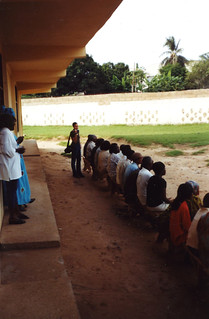
The Girlfriend at one point wistfully recalled her experience on Christmas Day in the year 2000, the first that she spent with my family. It was an election year and we were between the first and second rounds. True, John Kufuor had won the first round but not by enough of a margin to end things. We couldn't really celebrate, indeed everyone in the country was holding their breath. Everyone expected Rawlings' incumbent pawn to simply fix things - he now knew how many votes he'd need to manufacture and as we know
"It's Not Who Votes That Counts, It's Who Counts the Votes".
My mother was in the bush in her constituency in the Volta Region. A few months earlier she had taken leave of the BBC, and come to offer her services to the opposition in Ghana. She told all and sundry that she had come after 18 years in exile to help remove Rawlings by the power of the ballot box. Everyone laughed.
Now I was somewhat ambivalent about all this, I know all about how to hand over to yourself. We'd all seen what had transpired in 1992 and 1996. I had also seen the pitiful attendance and disorganization of the political meetings in our cramped and dreary London flats. I desperately wanted for things to work but was wary about what continued disappointment might do to our emotional make-up. For us who'd lived the exiled life, it seemed my uncle's services might be needed.
Throughout the day, we were hearing radio reports about violence in the country, concentrated particularly in the Volta Region. Sidenote: the role of the availability of mobile phones and the presence of competitive radio stations in ensuring that the elections weren't flawed has been much overlooked. Indeed the only phone conversation we'd had with her, before her cell phone got alarmingly cut off, was about one of the young men in her campaign who'd been assaulted by government thugs on a rampage to make sure that people "voted correctly". He was unconscious and en route to Ho hospital several miles away in a dodgy pickup over awful roads.
It can't have been fun that night to watch a father and son turn to drink to assuage their jitters about the undoubted danger of the moment.
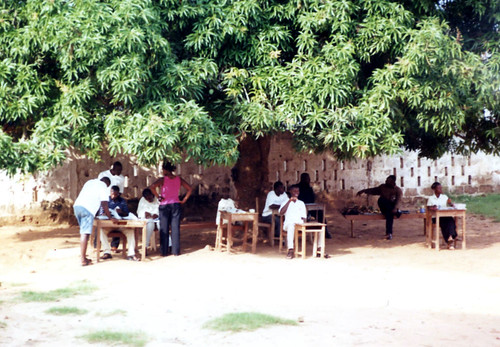
But maybe it was worse earlier in the day when there was no unpacking of presents or light holiday banter as the rest of the family came round for the Christmas meal. Not a chance. The talk in the Ofosu-Amaah house was of the kind of toli that you are now reading: filled with lacerating fascination with the lugubrious stories-behind-the-stories. It was about who was really behind the serial killings that were taking place in previous months in Accra and how in desperation, Rawlings was using them as a campaign issue incredibly blaming it on Kufuor. A rural and illiterate electorate might be persuaded by such things. Then the conversation turned to speculation that these killings were rather the work of Rawlings's commandos (they after all were the ill-disciplined militia enforcers that we all had to bear). As this talk, and worse paranoia, carried on, she almost screamed, the stress showed in her voice: "This is not a normal Christmas!". I try to be sensitive to most things but this was a blind spot. I'll admit that such conversations are a bit out there, but they are not too far from my daily bread.
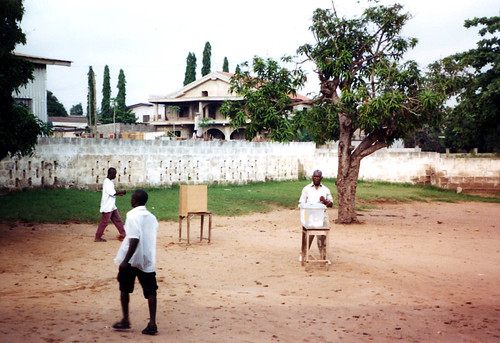
Determined to Bear Witness
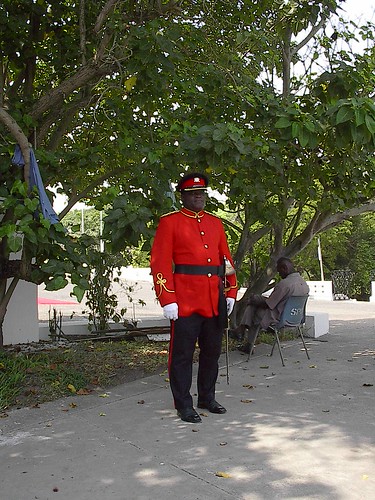
And truth be told, I really am a case in point. 5 years later, what did I do but spend most of this past Christmas break doing basically the same thing? Much of my holiday reading, along with the dozen or so novels I had brought along, consisted of the final report of Ghana's National Reconciliation Commission. No Robert Ludlum for me. I waded through the thousands of pages of the proceedings, digesting the mostly unbearable testimony: a steady accumulation of the mundane details of casual oppression:
"I was sacked from my job for no reason. I was working at the office on a Sunday when my wife called me. She said that there was an announcement on the radio. That I was an Imperialist Saboteur and that I was fired 'with immediate effect'... I finished my work and went home... [pause] I loved my job that's all."Ad nauseum.
"The soldiers stopped me at a roadblock; they just beat me up took my car... They said I was wearing a suit. I know it's 21 years later but I want my Benz back".
"I was taken to Burma Camp and beaten till I passed out... They shaved my head with broken bottles... then they tied my hands and blindfolded me and put me in a chair in front of a 'Tribunal'... I heard maybe 5 voices, people sitting in front of me. They said I should confess. I said I they should tell me what I had done. The soldier behind me gave me slaps. He gave me big dirty slaps to the back of my head... I asked why they were doing this... One of them said, "He's just wasting our time". They hit me again. I'm sorry, I'm sorry your honours, I lost control of my bowels... [witness sobs]... They wouldn't tell me what I was there for..." [witness loses control... end of testimony].
Plumbing the Depths
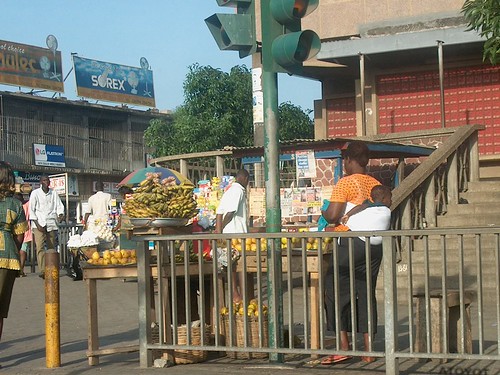
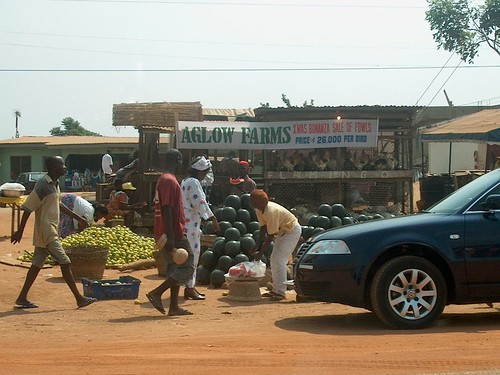
And the stories of the market women! These are women who are up at 3 am in the morning at the farm negotiating with farmers in order to fetch produce. They'll ride at the back of the trucks enjoying our potholed and barely tarred roads, crunched with the tomatoes or whatever they've found. They need to do this out of fear of theft or because they can't trust the lazy truck drivers to work without supervision. All this in order to sell at the town market for measly profits. These women, who constitute the hardest working sector of our society, weren't mere collateral damage of Rawlings' regime. Rather they were convenient scapegoats for the madness that transpired in Ghana. They were easy targets to blame for the high prices of food, for kalabule and for one's own poverty and lack of industry. In 1979, they were simply stripped and beaten in the streets ("Let the blood flow!") In 1982, this was repeated ("We no go let them pass") and their market stalls were burned down (as if food would magically reappear as manna from heaven).
Shame is about the most powerful impulse in human society and, in African societies in particular, as in Asian ones, it plays a very significant role. In this sense, some things that have been done in Ghana were beyond the pale. And these other things were barely present in the commission's report. And who can blame the victims? Would you testify, even in camera, about the lowest moment in your life? Take this story for example:
Soldiers take middle-aged women from their homes to Gondar Barracks and make them serve them food and drinks as naked waitresses for 2 whole weeks (and some for a month or more) because they were "powerful businesswomen", "enemy" market women.That's the kind of thing I can't, I won't, flinch from. Looking away is too easy. This, and "they", must be confronted head-on. A full frontal stare into their abyss is mandated.
There was a method to the madness of these folks, it would be too easy to rape (although much of that went on, as say in the Rwandan Genocide). Perversity is to be expected and "they" tolerated that from the lower-ranking soldiers they set upon us. Rather though, this was about humiliation. I can't think of worse outrages one could do to a middle-aged African woman. This was about conquering a country and thoroughly breaking its spirit. Such things can only be achieved by a calculated and systematic pandering to a society's baser instincts.
What They Have Wrought
So it was on Christmas Day itself that my reading took me to the bit about the murders of the fetish priests in the Volta region in early 1982. From my reading, the evidence seemed incontrovertible that the Flight Lieutenant had ordered these foul murders (simply because he'd heard rumours that they had put a curse on him for going ahead with his coup). It was a dry run for the later June murders of the 3 High Court Judges that so traumatized Ghana (pregnant women amongst others, taken from their family homes, shot and left to burn like chickens in some field). If the providential rain hadn't intervened, we'd still be having journalists like Victoria Brittain, then of The Guardian, lecturing us, on the word of the "charismatic" Flt. Lieutenant, that this was the work of "counter-revolutionary saboteurs". It was too painful and so I stopped reading and headed down to greet the family and eat my fufu and light soup...
This is about as awful as learning about the dozens of bodies that were dumped in abandoned mineshafts in the Obuasi Goldfields... Or those dropped from helicopters into the Atlantic Ocean, fodder for sharks...
And while I'm on the subject of bodies being thrown from helicopters, it was indeed on this past Christmas night that my parents and I sat on a bed and settled down to watch that extraordinary documentary about Mobutu - King of Zaire in which similar episodes were recounted in gruesome detail. That's the one in which you see megalomania and the Cult of Personality done right, with full multimedia accoutrements, lush costumes and dancing (all that great soukous music that was written in celebration of the all conquering Mobutu Sese Seko), even beyond what Stalin could conceive. That's when you'll see a long procession of Western dignitaries wining and dining this great freedom-fighter on the Riviera or in their or his lush villas. You'll see the Belgians, French, British and Americans all in attendance. You'll see Chirac, you'll see Jesse Helms, you'll see George Bush Snr., who was one of Mobutu's handlers at the CIA and with whose family the Mobutus frequently spent their vacations (echoes of Bandar Bush). You'll see all of these folks explain fluently and at length why Mobutu was such a great ally in that fight for freedom. It's positively sickening yet fascinating in the way of the aftermath of a disaster.
Histoire Insolite
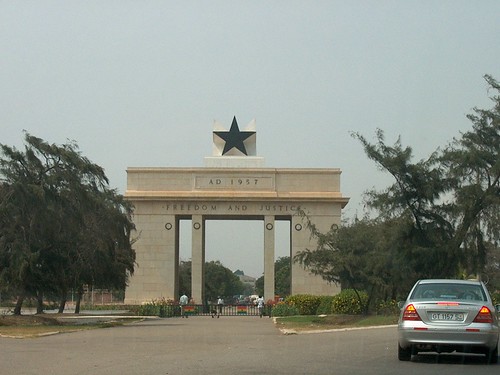
I don't have the magnanimity of the Nelson Mandela types of this world who can forgive these things. Reconciliation is what we are told we need and better people than me know what the country, or as the phrase goes, the body politic, can handle. Things like Reconciliation Commissions are not cathartic for me. I need Freedom, Truth and Justice before I can be reconciled. At the same time I should add, it's not about Revenge! ala Mingus. Yes it's true that I want to shame these bastards and shine a light on the dark and diseased corners of their lives. In reality though, that's only a small part of it. It's rather that there are stories there begging to be told, of everyday life under these regimes when people simply got on with it. The soul-cleansing aspect of my writing is strictly a fringe benefit.
I want to write the stories of the strange journeys that my countrymen and others have taken.
- How did so many Ghanaians get to Germany or Holland and who knew there would be so many routes?
- Why are there Africans in Greenland or in Alaskan oilfields?
- How did Ghanaians get into the US construction industry competing with Native Americans for skyscraper jobs?
- Why are the cleaning staff and managers of almost every London subway station Ghanaian or Nigerian?
- Why are all the taxi drivers in Cambridge Haitian?
- How did Somalis come to have a monopoly on parking garages and toll booths in Boston?
I want to continue the discussion I had with that Pakistani cab driver today about growing up in Kandahar and the traditional way in which they resolved conflicts; traditions that have been upstaged by the easy availability of guns. Hence the landmarks in some Pakistani or Afghan child's life are no longer their first kiss, rather it's their first AK-47. Surely that's something that has some bearing on what has been taking place near the Afghan border these past few decades? I want to know about those old Chinese women I see on the banks of the Charles River practicing their Tai-Chi. They lived through the Cultural Revolution, I want to hear their stories about its effect on their lives. I want to know about the social dislocation they feel living in the West when, like me, they ply the Chinatown bus ($15 for a Boston/New York roundtrip) to see family. I want to know all that and more.
In short, these and other stories are out there in plain sight. I simply need to put them on paper, and outline this web of juxtapositions and strange bedfellows. It's by finding ongoing marriages-of-convenience, tracing through those fleeting adventures in nefariousness that I am able to explore the world. The french adjective, insolite, (normally and very unsatisfyingly translated in english as "strange") captures what I'm in search of.
The Girlfriend recently talked about and how in getting to know me she had to start reading the news more frequently. Intelligent talk about current affairs was the only way to draw me out in the early stages of our relationship. The benefits about being au courant and well informed are things that she presumably appreciates. As it turns out, my editorial eye will be much needed as her magnum opus dissertation gets completed in the next week. Hopefully the journalistic impulse can be put in the service of the history of science. But she's right when she adds "not everybody thinks like you or has the kind of conversations you do". Again that's spot on: gregariousness and small talk are not my forte although I try these days since the culture of corporate America requires that you push and self-promote.
The Journalistic Impulse
What gets my juices flowing is thinking about why it is that Crest no longer makes Smooth Mint Gel replacing it with a multitude of junk bundled with Scope mouthwash! I spend hours thinking about why so many companies these days are tinkering with the formula of their products, worsening things just slightly (but calling the result new and improved) and testing the waters to figure out just how cheap they can make things before it has an noticeable impact on the bottom line. Is that just run-of-the-mill capitalism at work or are we at a historical moment?
And what about the impact of the ongoing flood of cheap Chinese goods, clothing, costume jewelry and more. Will the market react (as say in the shoe business) and continue to give Italian artisans their due in a flight to quality. Or is it really a race for the bottom and what does that bode? It's been noted by others that part of Apple's success with the iPod has been that it has sought out quality components. Others have skimped and taken the flight to commodities and this has shown in the kind of products available in the consumer electronics world. Technology has progressed but in many areas, the product that you bought 10 years ago had better construction. Or is that having a Luddite's attitude?
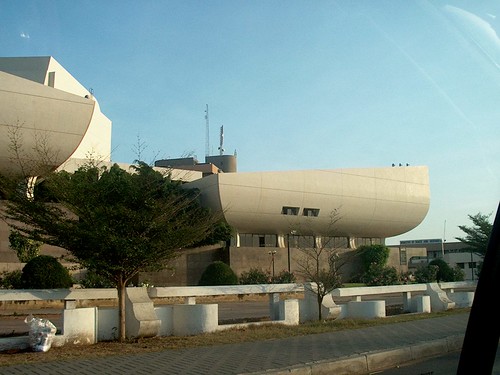
You see, I ruminate about all of this because in Africa, we get the worst goods in the world flooding our markets. The cheapest and shoddiest things that China and the rest of the world produce are those that are hawked by intrepid youths in the middle of traffic jams on our urban streets. Those are the things we fight over in our "bend-down" markets. From lightweight Korean cars that almost collapse if 4 people sit in them, all the way through plastic dog collars (!!!), to batteries that die after 5 minutes (as my mother keeps retelling), we get the worst of the worst. Why don't we get the best? So the Chinese can build us a National Theatre (why can't we do it ourselves by the way?). And then one finds out that there's no parking space!!! For a National Theatre? Who got the bribe to let by that bright idea? Why do the kitchen blenders that we spend our hard-earned money to buy fall apart after 2 months use? And on the theory of Harvard's Larry Summers, we should continue to be a dumping ground and let more toxic waste come our way? Chernobyl beef is the least of it. I dissent.
The Necessity of Permanent Outrage
Thus I worry about why it's taken so long for the developing world to actually start being effective counterparts in the world trade talks. Why was it only in the past few years that Brazil, India and others have joined ranks to formulate common positions when negotiating with the US and the EU, Russia, Japan and China. And why aren't the Africans getting their act together. I mean why isn't there a sense of urgency in trying to catch up? The Cold War ended 15 years ago and they're only now waking up to the New World Order? Really, do we believe that we should stay quiescent in somebody's grand theory of The End of History or The Clash of Civilizations? Are we simply floor mats, I ask myself?
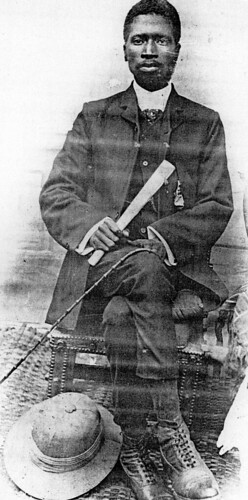
If in my family's village, there are still dozens of people living the way my great-grandfather did back in the 1890s, should I be content that I'm making a living working on the cutting edge of technology in the great US of A?
Why do so many of my contemporaries in Ghana aspire to leave their country? Talking with them, my protestations about the trauma and social dislocation of life of an exile in cold Europe are simply brushed aside. I "didn't grow up in Ghana during the lean years" when the talk was of the Rawlings Chain. To explain, during the near famine caused by his policies between 82 and 86, people lost so much weight that their visible neckbones passed as necklaces, much to the gruesome bemusement of all others in the region, who would chuckle at how desperate Ghanaians would fight for a tin of corned beef. And it's true, I didn't grow up with curfews and arbitrary detentions, rank intimidation and capricious firings "with immediate effect". My growth wasn't stunted and I didn't face the vanishing possibilities for education and employment. Despite all my perceived difficulties, I got France (oui-oui), England (God save the Queen), boarding school (and even Harvard) so I should shut up! And I do shut up when this is thrown back at me.
That being said, why can't we be like the Indians for whom it increasingly makes a lot of sense to stay put back home or to even head back from abroad?
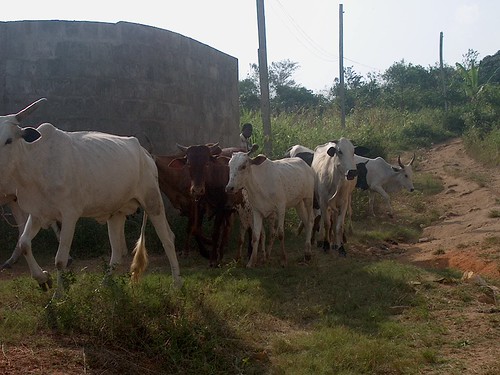
The messy business of development is about countries where three centuries of history are simultaneously taking place. The challenge is to creatively find ways to move the laggards into this century and the next. Giving goat herders mobile phones is only a first step.
Why should World Bank and IMF types be startled when an Agriculture or Finance Minister has actually read the briefs being presented to them and has crossed out all the unnecessary overhead and numerous "workshops" therein - as has happened in Ghana since 2000? Shouldn't it be business as usual to expect that a minister, who after all has a full staff at their disposal, would come with their own counter-proposal that concentrates instead on what makes sense for their country. They'll tell you confidentially
"He's very tough your minister, you know. Very sharp, but very tough, you know".After dealing with, and dictating to buffoons for 20 or more years - people who would just sign whatever you put in front of them without you even having to reach for Backup Plan E, let alone Plan B, have they simply forgotten about their job descriptions (raising people out of poverty). I mean really? Are we forever consigned to be putting thumb prints and crosses on parched manuscripts like the illiterate Indian chiefs in the Americas or the African chiefs in the 1800s? For God's sake, the Web has been in widespread availability for a decade, anybody can get informed.

Or is it simply that they think of their jobs as bureaucratic sinecures? A way to live the expatriate life on fat consultancies in lavish bungalows in Accra attended to by drivers, servants and all. The only concern is to produce an occasional stack of Powerpoint slides based on the $2,000 you paid to a local university professor who did the real legwork and who moonlights for you, generating the figures you need at the expense of his students, because that's the only way he's able to make ends meet, to pay school fees and fulfill the numerous obligations to the village and to the extended family that all Ghanaians have. Was it like much of French "Foreign Aid", simply a means of recycling campaign contributions from friends and political supporters ala Elf-Aquitaine (or Halliburton for that matter) with 90% overhead and recipient countries actually receiving only 5% of the "aid" (after the elite you bribed took their 5% cut of the loot)?
I'm afraid the journalistic impulse is that of the permanently outraged and, on the daily evidence in my eyes, there is far much too much go round in this world.
Sensational Fruity Delights
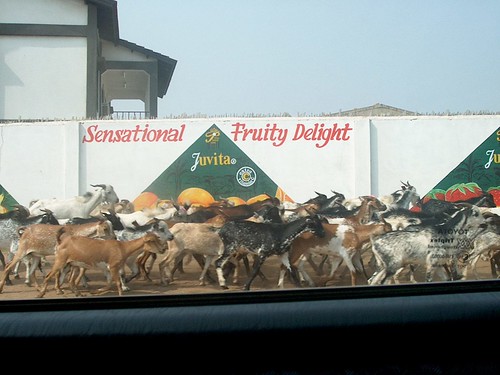
Lastly, to conclude this rant on an upbeat note, apropos this topic of strange bedfellows, it's been pointed out to me repeatedly how unromantic it can be to fall asleep, like I've always preferred to, to the lilting sounds and clipped Queen's English of Lise Doucet and other BBC World Service presenters (although of late, with the Beeb experimenting with different types of voices, the sounds have been more "culturally diverse" shall we say). There is much truth to this notion of romantic downsides in the journalistic impulse, and I'm slowly, and grudgingly, changing my habits away from previous creature comforts. From most points of view, I'm now inclined to agree, a blanket of soul is far preferable.
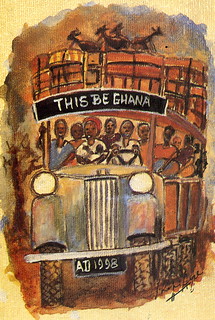
See also the photo essay: This Be Ghana. This Be Koranteng. and Koforidua Fever (or Naki does Ghana).
File under: Africa, toli, journalism, history, culture, politics, writing, obsession, memory, Ghana, Congo, Rwanda, Angola, Iraq, Nigeria, Pakistan, Afghanistan, military, mother, family, dad, memoir, rant, Cambridge