Showing posts with label lotus. Show all posts

Thursday, July 14, 2005

The France IBM Connection

An allegorical foray wherein I suggest that one of the better analogies for IBM, and particularly its Software Group, is to consider it akin to France. Sacré bleu: a touch of whimsy on Bastille Day. As they say

Liberté, Égalité, Fraternité

The French Connection


I've been getting a little reflective as my 10 year anniversary at Lotus/IBM comes up next week. I'm not normally one for anniversaries but lots of things have been coming together (or falling apart) that make this a good time for some musing.

As I've written previously, this is an interesting moment in the technology world. After a quite severe retrenchment and some stagnation, all of a sudden there is a glimmer of light. Many companies are lighting a fire of innovation and building useful things on the web based on very simple primitives. We have absorbed the lessons of 10 years of Moore's Law in the data center, and as Joe Kraus has noted, it is a great time to be an entrepreneur (Mark Fletcher has piped in too). Still, lots of companies have lemons to sell and are falling back onto the hard sell of tone-deaf marketing to compensate for a lack of substance.

As an amateur historian of technology, I've been trying to consider where my company falls within this continuum. I like arguments by analogy and hence have been searching for a metaphor to describe the tribes of IBM.

The Governor of Redmonk characterized IBM as a broad church, a bazaar and melting pot
All views are present (and correct). All views are tolerated.
Others would have it be a cathedral, full of dogma and staid and obsolete blue-shirted mandates. In the 1990s, as that self-congratulatory pablum from Lou Gerstner went, it was about "trying to make an elephant dance", slashing and burning jobs, focusing on services and huge outsourcing deals rather than products and technology (the reviews in the previous link are quite revelatory). All of these characterizations are unsatisfactory, yet each have a grain of truth as with all coinages. Big Blue is all of these things and much more.

In conversations with colleagues and in reading the internal forums and blogs at IBM, there is an undercurrent of introspection and lot of soul searching. Sometimes this is even more critical and severe than from the outside. A sample:
Caring only about making the work numbers add up rather than actually improving the product doesn't seem to be real great way to a) run a business or b) get your developers to be passionate about their work.

Hopefully all of you will win your own innovation vs. mediocrity skirmishes in the future, and help that stock price edge higher :)

When I meet new people and tell them what I do for a living and who I work for, they are universally impressed yet each will have some story about how we could do better.

Cringely recently commented on dropping an applet developed by IBM and had this to say
"There was nothing wrong with IBM. Far from it - IBM Research was a terrific partner. But big companies have big licensing issues and smaller organizations sometimes give more personal support."

Might this be a trend, who knows? One must admit however that there is a perception of complexity, unnecesary layers or of bureaucratic overhead.

My only comment about a strategy that focuses on services is that
  • There is a straight line from complexity to consultants
  • No one really wants consultants
Per contra, as someone hired by Lotus, I have always wanted to work on things that people inherently want to use and buy rather than something they grudgingly accept. Aside from the effect in the market, there's that little matter of motivation for the day job in what is ultimately a creative endeavor.

In observing IBM Software Group's dealing with the Lotus portfolio over the years, I can say that it hasn't always been pretty and that the things that seem to be rewarded are very different from the aesthetic that actually seems to be "getting things done". In an era of mass layoffs and belt-tightening (raises anyone?), this is a little puzzling. Still it is a work in progress and we should simply strive to be more effective advocates and lead with running code as we play The Great Game. Thus I come to the France-IBM connection...

During my recent trip to London, I came across an article that I believe best expresses some of what I've been thinking about IBM, I reproduce it below. It is actually also one of the most illuminating pieces about France in the current moment. In reading it with my French cousins, we remarked that it was ironic that we had to read something so perceptive about France in English, and in London rather than in France. 5 very crucial years of my life were spent in France thus I empathize with the sentiment of the piece.

I'm suggesting then, that the correct analogy for IBM is to consider it akin to France.

Like all analogies, the France-IBM connection has its problems and I should say at the outset that it more precisely fits the IBM Software Group which is only a sliver of IBM. There are many parts of IBM that are completely alien to me. Handwaving a little, one can start by saying that France, like IBM in the technology world, is a Great Power with much clout. The grass typically pays close attention to what elephants are doing. Still, it is also the case that as a Great Power, it has seen better days and it can't fall back on the gravy trains of yore from its colonies and the dwindling list of post-colonial proxies. Its dirigiste economy might be like the "mandates from on high" and "Roadmaps ™" that I hear about but never actually read, or indeed follow. A colleague recently quipped that it was typical of IBM that a "roadmap would be put in place for radical simplification".

In my whimsical story, PITTs: Naming an Aesthetic where I struggled to label my own outlook on technology, I mentioned that William Pitt The Elder's ingenuity in The Seven Year War
"destroyed the military prestige which repeated experience has shown to be in France as in no other country the very life of monarchy, and thus was not the least considerable of the many influences that slowly brought about the French Revolution."

The analogue of England and Pitt for France, might be the rise of Microsoft, Intel and Sun in the past and all of those snappy web companies in the present for IBM. This has meant that the "No one ever got fired for buying IBM" line is no longer quite so true. In times of retrenchment, we are all picky about what we choose and will build it ourselves if possible.

I don't know much about the hardware side of IBM, but one could perhaps also handwave a little and compare IBM's losing out to Intel on supplying Apple to be reminiscent of Paris losing the bid for the Olympics to London. In this analogy, like France we were ever confident that we had the better facilities and roadmap, we were all about the enterprise and the high end. Perhaps with a touch of noblesse oblige, we ignored The Low End Theory. Was IBM simply Marie-Antoinette saying "Let them eat cake"?

In any case, this is just an allegory, let's see how well it works.
"Aux armes citoyens."

Why we are rebelling against the old guard

As France prepares to turn its back on the latest vision of Europe, a French writer vents his fury with his country's 'arrogant' elite.

by Renaud Fessaguet
The Observer, Sunday May 29, 2005
The old guard
I travelled recently to London with a French television crew to try to discover what makes Britain such a success story. Sounds unlikely? Thirty years ago, British journalists used to cross the Channel in search of inspiration from the French. Does it mean that we are in urgent need of inspiration and of new models? Perhaps.

I've been thinking about the various approaches to software development inside IBM and comparing them to what our competitors and especially our users actually do when they put technology to work for them. Many others have been advocating pragmatism internally and that IBM should do business much like the rest of the world is doing.
More certainly, it signifies that the republican model is experiencing a profound crisis. Oddly enough, France remains one of the wealthiest countries in the world, one that everyone lauds for the quality of its workforce and infrastructures.

IBM is the largest technology company in the world. Annual revenues tend to be around $100 billion.
But it is also true that l'esprit France doesn't work any more. The passion and energy have gone. The Gauls are tired, depressed and entrenched in their 'village'. Above all, the French are afraid of everything: the summer heat, the outside world ... and the stirring rhetoric that has guided us for so long.

See also: overheard. 13,000 employees laid off. Beating inflation these days?
Liberalism, pragmatism, flexibility ... all have become tainted and entered into the already chunky dictionary of taboos. For so many things are taboo in modern France. For instance, it is taboo to point out that our political elite is ageing, arrogant and cynical. Like most French people, it takes no interest in new technology, in sharing power or knowledge - remember President Chirac, puzzled by a computer mouse?

What's the web? What's a feed? What's RSS/Atom? What are blogs? What are wikis?
It is taboo to claim the French elite has recklessly seized all the levers of power and is running the country in an inefficient, if not inept, way.

"What feature is it you might ask? there was no way to bookmark anything in WebSphere Portal?"
Hundreds of French leaders, including diplomats and the Minister of Foreign Affairs, don't speak English, an ignorance which makes them unable to understand the buzz of the global world, forcing them to depend on secondhand information.

What does it mean to be on the web?
It is taboo to say the French elite has found shelter in comfortable niches high up within the administration or on big company boards, both private and public. Isn't it amazing, for instance, that none of the leaders of the left-wing parties campaigned against the increase in food prices after the euro launch in 2002, which has resulted in increases as high as 6.5 per cent.

Buzzwords, buses, frameworks.
The dictatorship of diplomas, the system which demands a formal qualification for any job, which ignores raw talent, however extraordinary it might be, has produced a terrible paradox, empowering mediocrity and irresponsibility, a whole mentality overshadowing the schools, judiciary, media and, ultimately, our national life.

For diplomas, substitute patents and a concern for good products.

This last, the tyranny of patents is worth dwelling on. If one looks at software as a fungible thing and just as a springboard for career advancement, then you will have the notion of viewing the development organization as merely a technology incubator and treat it accordingly. There appear to be perverse incentives in what is rewarded by the organization. These incentives leads to a lack of balance between innovation as expressed in amassing a portfolio of defensive software patents, and innovation that comes from developing lightweight solutions and products that solve problems. The result is technology for technology's sake in other words, and a plethora of frameworks and buzzwords that ignores the effects of said technology on those who are simply trying to get on with things and have problems to solve. A little too often and, as the indoctrination of new hires attests, what is loudly trumpeted is that the way to advance, the way to grab the Fistful of Dollars at IBM, is by filing patents. Those slow pokes contemplating solid products and services are so passé.

See also: Why You Need a Degree to Work For BigCo
It is taboo to point out that the media establishment is timid and has surrendered to the politicians for economic reasons, since it lives mainly on public subsidies and junkets.

It is taboo to discuss the sacred retirement age of 55 or 60, when growing life expectancy will create a tremendous disruption in the pensions system.

We have inherited the most stubborn unions - does that sound familiar to you? - together with the stingiest of employers. In an obscene complicity, they are fossilising the whole social system and perpetuating one of the most rigid labour markets. But mentioning this is again taboo.

Just a paycheck, non?

Non. Chirac.

It is considered unacceptable to argue for easier procedures for company start-ups, and unheard of to complain about the heavy, complicated and inefficient tax system.

File under bureaucracy. See also: "Make sure to call the legal department before you ______." Breathe?
It is vulgar to say that technical skills might be useful for new generations. French families will prefer to call on the famous Polish plumber - or his Ukrainian colleague - obviously paid for in the black economy.
Busloads of consultants or software that enables Glue Layer People? I volunteer a few of these good folks and various others as the Polish plumbers of IBM (some even look the part).

Polish Plumber


Will they get turned away from Bordeaux like those Romanians who come to help with the wine crop are? To give some context, the French have erected internal border posts at the gates of Bordeaux to triage "Eastern European foreigners coming to work". Unlike the Brits who are welcoming new ideas and labour, the French are navel-gazing.
But one of the biggest indignities is inflicted upon French youth, viewed by the elite with contempt. Youngsters are the usual and permanent suspects to the establishment, which prefers parking them at extremely high social and financial cost in crammed and impoverished universities - mentally and structurally. The list of taboos is endless.
"We seem to only be hiring interns these days" - [redacted]
"The word is is that they can be more easily 'molded'." - [redacted]

The interns and the new hires (mostly computer scientists these days) are being treated as cannon fodder, made to work insane hours and to forget about the big picture... Any glory that comes will be on the manager who found them who can bask in the glow of being the only grown up around. You then hear talk about "One of so-and-so's 'finds'". As a colleague put it in another poetic analogy,
"At the end-of-summer country fair, managers will get to show off their prize vegetables. He who has the best manured fields claims the prize."
I asked, "do those people actually eat those vegetables or is it just for show?". The reply
Usually the larger they get the less flavor they have. All looks, no substance. Like California strawberries in February, great color on the outside, not flavor on the inside.
With tongue in cheek I would submit that it's a case of "The man from Del Monte, he said 'Yes'".
I belong to a generation impatiently fidgeting at the gates of innovation, modernity and creation. No wonder that more and more courageous and talented French people don't waste time with the unreal political scene. Don't expect them to vote on the referendum. They will most probably enjoy today meeting new challenges all over the planet.

Tessa reluctantly wrote about pragmatism, and I'll quote her again, if she doesn't mind, she is ever-quotable.

"I do whatever works. I strive to fail faster. It's the results that matter, and simplicity (stripping layers) is celebrated because time is precious. We don't have time to waste on complexity and buzzwords; we're already behind on inventing the future."
I have met remarkable French men and women in China, South Africa, America and now in London, where 250,000 of them live and work. This is a very new rift among the French: between those risking to take their chances on the global front and those clinging to a fossilised society at home.
Kubi, Bowstreet...
This crisis suggests that France is just waking up from a long dream and facing the fact that the old myths of the postwar era and of the Resistance - social security, public jobs, a certain idea of fraternity and solidarity - are no longer enough.

I just hit 45 and I am not ready to live without dreams or expectations in a stuffy France. This is why I will voice a frank and staunch yes to the European constitution.

We urgently need fresh air, the winds of modernity and pragmatism blowing on the banks of the Seine. But who will dare open the window?
I repeat my challenge:
"Are we prepared to change our corporate structure and have profits come more from well-designed and usable software as opposed to consultantware? Are we prepared to eat our babies and make products that have much lower operational costs?"

Renaud Fessaguet is a television journalist and producer.

Postscript


Even though the French said non on the inconsequential EU treaty, there's a great chance they will continue to reward Chirac and his cronies in the next elections. As a quote, put it,
Danielle shrugs: 'Les Français, ils sont un peu con. Ils sont jamais contents.' Roughly translated: 'They're awkward sods, the French. They're never happy.'

I am happy however. I was raised by a village called Lotus. As a native son, I make my own call to arms to that village and hopefully I will find fertile soil. The rest of France, well that is for others.

Le Cinema


The French will never let us forget that it was Les frères Lumière who invented le cinema. Still on this Bastille day, I'll rather celebrate France not with Truffaut, Melville or Godard but rather with a list of films by foreigners.
  • Paths of Glory

    Stanley Kubrick's masterpiece and one of the best war films. It also happens to be one of the most-powerful anti-war films I've seen. Quite relevant apropos central command, cannon fodder, the career advancement imperative, sacrifice, and idées fixes. The story of the French elite during the First World War is much the same today, this time however it is sclerotism and unemployment rather than those muddy trenches and mustard gas.
  • A View to a Kill

    This great B-movie, the prototypical James Bond flick isn't all about France even if the Tour Eiffel is among the scenic locations where Roger Moore fights it out with Christopher Walken & Grace Jones. Still the good and bad guys pass France by. Instead of being the name of the game it is just an occasional backdrop. Also note Duran Duran's excellent theme song of hubris.
  • L'Afrance

    L-Afrance


    L'Afrance is Alain Gomin's wonderful 2001 film about France, Africa, immigration and ultimately alienation. It is simply the best African film of the past 5 years and perhaps even the past decade. A no-frills parable about identity, culture and belonging, it continues to resonate strongly with me. Perhaps because it's the African immigrant who through bureaucratic ineptitude finds himself "out of status" and becomes an illegal alien. A great view of the frayed ends in French and African societies much like Dirty Pretty Things illuminated the underbelly of London. You can order the French dvd if you can handle dvd region coding.
  • The French Connection & The French Connection II

    french connection


    In each of these classic films, France is the subtext. In the first, the French villains are aloof, methodical and malevolent but the action takes place in the US. Director, William Friedkin, serves us the best and most manic car chase of all time. In the sequel, Gene Hackman's driven cop is lured over to France as bait in pursuit of those who got away, but gets caught by the bad guys and loaded up with drugs. The scenes of him trying to kick the heroin habit are among the most harrowing ones the silver screen has seen. Ironically, the chase that ends it all is of him on foot chasing cars and boats. John Frankenheimer is a genius.

La Bibliotheque


Some further reading on the France IBM connection:
  • The Soul of a Company
  • Act your age
    The key is to find a Pragmatist who is desperate, or as Moore says, a "Pragmatist in Pain". They have a problem, and they need it solved very badly. In fact, they are so desperate for a solution that they are willing to break ranks with their Pragmatist peers and be the first of their kind to try your product.
    I'm wishing that IBM were a pragmatist in pain, instead I've been seeing only pain from my lowly vantage point.
  • The Organization Man by William H. Whyte
    Thanks Tessa for the pointer to this book and that chapter about "The Fight Against Genius". Very illuminating.
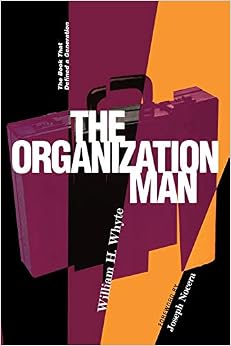
    organization man
  • Office Politics by Wilfred Sheed

    I came across this novel through a delightful appreciation piece in the Washington Post and it seemed like a parable of sorts. I had to order immediately even though it has gone out of print. I don't know why reading this synopsis hit home, it couldn't possibly have wider applicability. It's just a novel after all and anyway it's not about France so I hope you'll pardon this juxtaposition.
    "...George is no longer sure there's much at the Outsider worth believing in. Its charismatic editor, a transplanted Brit named Gilbert Twining, has loads of facile charm and wields a keen editorial pen, but whether there's anything behind the charm is open to question. The rest of the magazine's tiny staff is a conglomeration of oddballs and misfits "hand-picked" by Twining, apparently "on some principle of interlocking incompatibility." One editor, Brian Fine, is "chubby and small" and, beneath a veneer of amiability, seethes with bitterness and frustrated ambition. Another, Fritz Tyler, is thin, supercilious and cynical. The accountant, Olga Marplate, longs to be a tyrannical efficiency expert, while the advertising man, Philo Sonnabend, wanders around in a fog of dotty incompetence.

    Individually and collectively they are spineless -- if Twining raised an eyebrow in his direction, "Brian Fine would topple over like a doll with a round base" - yet the office positively crackles with rivalry and intrigue. Brian invites George to lunch one day and lays out the alignment of forces - the alignment, that is, as Brian chooses to see it - in the course of which he says that Twining suffers from the "weakness of great men to keep their subordinates from growing." George is nonplussed. He thinks:

    "Wait a minute, you're supposed to be on their side. Don't you understand the game? Olga and Philo and one editor against Twining and me and the office boy. George found that the game, as game, was getting a stronger grip on him. CBS politics had been played on too large a field, so you couldn't see the players at the far end. This stadium was just the right size."

    So off they all go, conniving and conspiring and back-stabbing and all the other things that make life in the office - any office - so endlessly delightful and produce such delicious streams of office gossip. George tries to explain it to his wife: "Let's take an example: the office. A, let's say, wants to get rid of B. C agrees, but not on A's terms. They both approach D --" and when she interrupts with what he regards as quibbling objections, he insists that "the equation goes on all over town." Okay, he says, "just go down to any playground, and what do you find? A, B and C again. One leader, one whiner, one mischief-maker. . . . Sometimes there's a tricycle to fight about on the playground, and sometimes there's a nickel on the ground. But the jockeying of ego is the real story."
  • Why smart people defend bad ideas
  • Flaubert's Parrot by Julian Barnes
    Flaubert Parrot

    C'est moi.
    This remains one of my favourite novels.
  • The Myth of Sisyphus by Albert Camus
    I leave Sisyphus at the foot of the mountain! One always finds one's burden again. But Sisyphus teaches the higher fidelity that negates the gods and raises rocks. He too concludes that all is well. This universe henceforth without a master seems to him neither sterile nor futile. Each atom of that stone, each mineral flake of that night filled mountain, in itself forms a world. The struggle itself toward the heights is enough to fill a man's heart. One must imagine Sisyphus happy.
  • "Sharp-elbowed bureaucratic maneuvering"
  • On the limitations of Lotus Notes on the web
  • Les Misérables by Victor Hugo
    Well you can't exactly leave the bibliotheque without Hugo, that's like England without Dickens.

Le Cabaret


We need a cabaret soundtrack for this histoire. Évidemment.

Have a bottle of Bordeaux today. A bientôt...

File under: , , , , , , , , , , , , , , , , , ,

Monday, June 20, 2005

On Iframes, WSRP, REST and Portals

I'm still getting lots of good feedback to my presentation on REST - the web style (background) which I will summarize shortly. One of the more curious responses was to something that I didn't even dwell on in the presentation; indeed I think I skipped past it in my concern to get the big picture articulated. I suppose it was the proximity of yet another acronym, WSRP, to a couple of slides about complexity in the IBM technology stack, and a very public case study bemoaning the fact that Websphere Portal only added bookmarking after 3 years that raised a little concern. This was part of my subsequent response to one of those comments, slightly edited for clarity.

On Prescience


I fully agree, we should celebrate any and all who contributed to us internalizing the web style in WebSphere Portal. We should be very explicit about the pain we and our customers suffered and the evident gains that came once we learned our lesson.

The notion that it was still a struggle to get that simple feature (the ability to bookmark) included in the WebSphere Portal 5.1 release is actually a commentary on our previous attitude to the web style.

I would add to the list of those to be celebrated, those screaming Cassandras who were incredulous that we could ship a web product while ignoring url addressability and even tried to prototype some rudimentary addressability and sneak it in back when we had commit privileges to the core. If only we had had more nerve or had been able to better communicate the importance of this point... I know it normally takes 3 releases for a product to become useful, but sometimes magic can happen in the first release and with that comes thought leadership (Glory) and perhaps also some money (Gold).

On Iframes, WSRP, REST and Portals


Leading with the iframe invocation argument was always the weakest argument of those who I'll cast as the "K-stationers" in the early days of WebSphere Portal. After all, and like you note, even though iframes may provide
  • easy integration of existing content
  • multi-threaded download in the browser to lower the latency for the user
  • caching closer the client (indeed in the client)
  • offloading the portal by removing a layer of indirection in the portlet -> portal server -> client browser route
  • introducting the possibility of moving aggregation to the client (leveraging Moore's law and bandwidth increases to the client)
  • further recasting the "Portal Server" to a "Portlet server"(in other words there should be no difference between a "remote" and a local portlet) etc . That is the lesson of uniform interfaces in the web (e.g. URIs)

Now that's a pretty strong "weak argument" but we should acknowledge that Iframes also have downsides. Iframes mess with user expectations especially with respect to focus and some browser conventions are a little upset by them (e.g to bookmark, you need to right click on the frame in question). Browsers did solve the issues with the navigation history after a few years, but there was a little confusion in the interim with back button and refresh etc).

6 years on, I hope I have learnt to recognize the stronger aspects of an argument about systems design. What we didn't recognize or adequately evangelize was the value of the other aspect of an approach that more fully embraced the web, namely:
Basing the application semantics of the portal directly on URIs and the use of those 4 verbs that are the core of the web.

To explain, HTTP is an application-transfer protocol. It is something that works at the application layer. It has its native notion of how CRUD like operations are done (GET, POST, PUT, DELETE).

The REST proposition again:
  • Identification Of Resources
  • Manipulation Of Resources Through Representations
  • Self-Descriptive Messages
  • Hypermedia As The Engine Of Application State

I haven't kept abreast of WSRP in the past 5 years and thus my characterization of it was perhaps a little careless, but that's what you do when you make a presentation that borders on the provocative. In mitigation, I'll confess to being what I've termed a Layer Stripper.

Let me handwave a little... It strikes me that building an application protocol with CRUD like functionality that will typically (or even solely) be used over HTTP can lead to a little impedence if one is not careful.

To take my Technical Arteriosclerosis Terminator scalpel to WSRP, I would only ask:
  • Do the CRUD like operations in WSRP map one to one with HTTP's native semantics? In other words, is the moral equivalent of a PUT in the WSRP world implemented as a PUT when the "transport" is HTTP?
  • Is this true of at least those 3 verbs at the core of the Web (GET? POST? DELETE?). (I'll assume that WSRP adds perhaps more verbs in its applications semantics).
  • Are the security primitives going to be leveraging HTTP's native security features or are we rolling our own?
  • Are there any other "transports" other than HTTP? Is there a CORBA mapping for WSRP?


RFC 3205 On the use of HTTP as a Substrate should be required reading here.

I'll suggest that if we were starting from scratch we might do the following
  • Start with Resource Modeling and ask: what are the core resources that need to be identified in a remotely invoked portlet?
  • What representations need to be returned? For this we'd probably pick some standard Portal XML vocabulary or, for browser rendering, an XHTML format, for pervasive rendering some other Markup Language
  • What are the operations that need be performed on said resources?
  • What HTTP verbs are appropriate for each operation when we manipulate those resources?


Joe Gregario's Show Me The Code column has been going through this exercise with the example of a bookmarking service - well worth reading. A remote portlet may have more complex semantics but one should go through this to clarify our design and architecture. I assume that WSRP implementors went through such a process as that spec was standardized.

The result would be something like simple URI commands returning representations and manipulating them using well-worn HTTP semantics. I very much hope that is what WSRP has evolved into. We'd get:
  1. Visibility to HTTP intermediaries, first the caching proxies in the web sense. (like the page caching in the portal)
  2. Since we'd be using URIs, someone may think up new uses for our remote portlets and be able to easily embed them in their application through simple hyperlink and the use of the appropriate verbs etc. Third party Glue Layer people could "remix" our portlets through pipelining and filtering or whatever else those people do (I'll note that IBM recently bought Gluecode)


With this approach there is no API per se, the interface contract is explicitly manifested in the exchanged hypermedia and associated operations on the resources.
"What? No API?" "This RESTful stuff has no substance". "Where is the value add?"

That indeed is the paradox of the web style. The "API" is typically HTTP/URI/HTML/XML.

The fourth plank of the REST proposition is a difficult thing to internalize, I certainly couldn't express it adequately 6 years ago.
"Hypermedia as the engine of application state"

Ponder that for a few weeks.

[Update] James Snell adds: "HTTP is the programming model".

Some have suggested that one would additionally require some service description language, perhaps WSDL, for such a service. On that, the jury is still out. In the example I highlighted in the presentation, Google Maps didn't publish any WSDL. Craigslist didn't publish any WSDL. They simply had a clean URI api with well-defined parameters that were obvious to any developer with a week to spare and idle curiousity satisfied by the View Source impulse. It was obvious what verbs to apply: POST or GET, PUT (they don't delete their maps, but if they did, that is how one would proceed). Third party intermediaries simply figured out that url hierarchy and the associated verbs, the identified resources and what formats the representations were retuned in. Then they manufactured serendipity. Now there is no binding contract and things can get broken at any time but it wouldn't be in Google's interest in their competition with Mapquest or Terraserver to break people that compose applications on their platform and brings eyeballs and mindshare to their company.

This then is my argument for changing the frame of the debate:
There's a complexity and layering argument that naturally falls out of the REST viewpoint which should guide the applications that one builds.

The web is about identifying important resources and exchanging representional state. There are certain constraints that are made to enable global scope and evolution. Being on the web, is being an active participant in this scheme of things.

Identifiers lead almost to having the location field as the command line.

Resource modeling as your starting point sets you in direct consonance with this notion and exposes you to ease of composition.

e.g. Jon Udell's Library Lookup project

An information architecture that starts with hypemedia lends itself to the construction of simple interaction designs for both humans and machines, and there are huge amounts of tools readily available for this.

The question is then one of leverage; leverage in economic terms is all about making externalities work for you. The endpoint of this approach to system design is what I call a virtuous cycle of managed serendipity.


One response to this piece was that actually WSRP stood up quite well to those questions I had hand-waved in its direction, apparently it was not too complex, it addressed wider issues and use-cases etc. I think that is great and hopefully the leaks have been plugged in that spec so that it can be mapped reasonably to HTTP; I guess the argument is that it is not an unnecessary layer. I'm still unclear if WSRP is ever used with a "non-HTTP transport" or security, I'll dig into that at some point. In any case, the point of my talk was the same scrutiny should be brought to bear on all of IBM's technology stack and unnnecessay layers shed and/or leaky abstractions plugged to make them work better with the web style.

A later follow-up, privately-addressed, asked:
"Isn't a "portlet" fundamentally a presentation-level object? Why is the concept of "portlet remoting" not considered an oxymoron? Shouldn't we be talking instead about the simple expression of web services as data (with, perhaps, media-type detection as an enabler of polymorphism"
There was lots more and quite fulminant at that, I'd have to say that's all true and expressed more concisely than I did. It's good to know that there are like-minded people around. I didn't mention content-negotiation in my response but that is another aspect built into the web style that can be leveraged but that is constantly being reinvented at higher levels and layers. There's lots more to say but that's the lay of this technology world... In evangelism the first step is to get people sensitized, after that it's best to proceed one argument at a time.


P.S. I've been told there's been too much technology toli of late so I'll try to push some literary, musical or African toli to the head of the queue, it can be more fun and oftentimes more rewarding.

File under: , , , , , , , , , , , , , , , , , , , , , , , , , ,

On The Limitations Of Notes On The Web

In the week after Lotus announces lots of innovation in the forthcoming version of Lotus Notes, with lots of great screenshots and undoubted enhancements, it may seem weird to post a short article I had written a few weeks ago on the past limitations of said product in my internal IBM blog. I do this because I've been taking a historian of science's approach to my writing on technology and its effects. I am always interested in how organizations work and how they make decisions. And a certain amount of dirty laundry airing is healthy if only to pat ourselves on the back to show that now we have learnt our lessons and that there is a lot of introspection and thought in the company. Also my focus is not on the Notes client which has always sold itself, but on rather the web interfaces that product has had since the advent of Domino, its first embrace of the web. As you may know I am an unabashed believer in the web as the ubiquitous client. This piece should give some context to these three slides from my recent REST presentation. They weren't quite a twisting of the dagger but more a challenge to the development organization. I believe there's Joy in Repetition and with a hip-hop sensibility remix myself constantly. So here's the original version before the sample.

On The Limitations Of Notes/Domino On The Web


Joe Turic and others are pondering Lotus Notes vrs Gmail and coming down in favour of the latter.

The complaints are about "Why is the email program that we use internally so limited?" and some of it has to do with storage quotas and the fact that we have very low ones (even as the platform handles 49 GB mailboxes just fine as Ed Brill keeps pointing out when comparing it to Microsoft Outlook). Most of the reason for this hence is not technical but rather I suspect a hint about the direction of email retention policy.

Later David Crumpton asks "Does Notes offer a Webmail interface?"

And of course it does, and it even has two, the regular webmail interface and iNotes, the prettier dhtml version which should give a snappier performance with lower latency for the user. A third way of getting your notes mail in a browser is through a portlet in WebSphere Portal.

The question is, why did these web interfaces not get widely adopted?

Let's start with the question of investment.

1. Investment and Adoption


Plainly put, not everyone at IBM has bought into the web, html and http.

I would count Lotus/IBM's efforts over the past 7 years as half-hearted although now we are supposedly hardcore about the web, Linux and open source in general. The thing to take away is that, at the point that judicious investment could have been made, and leadership in thought, if not in software products, was possible, we blinked.

IBM does middleware and services and moves slowly due to a sense of innate conservatism. I think this is fair, there are parts of IBM that are bleeding edge and one has to get buy-in before the rest of the elephant moves. As someone who was advocating the web almost from the beginning, it has been a long road to convince others to buy-in. The fact that we are now moving (and quickly) is great but I think it is cause for rueing missed opportunities.

2. Innefficient IT structure at IBM


Jim Gray's Distributed Computing Economics (pdf) makes a devastating case for the relative innefficiency of many in the industry that haven't embraced the web style.
"Megaservices like Yahoo!, Google, and Hotmail have relatively low operations staff costs. These megaservices have discovered ways to deliver content for less that the milli-dollar that advertising will fund. For example, in 2002 Google had an operations staff of 25 who managed its two petabyte (2^15 bytes) database and 10,000 servers spread across several sites.

Hotmail and Yahoo! cite similar numbers - small staffs manage ~300 TB of storage and more than ten thousand servers."

Up until 2000, I believe the operational staff at Yahoo was 8 and included the founder Jerry Yang.

Google has embraced redundancy and written software to work around human fallibility and hardware reliability. Google File System is not too shabby, if may say so. We have efforts in the same arena whether it is the Grid and autonomic computing work and say the move to VOIP but are we eating that dogfood?

Are we prepared to change our corporate structure and have profits come more from well-designed and usable software as opposed to consultantware? Are we prepared to eat our babies and make products that have much lower operational costs?

Tim Bray had this to say $46,213,000,000.00
I looked up the answer to the question: What is IBM's consulting revenue? In 2004, IBM's gross revenue was $96B, of which $46B was Global Services, i.e. consulting. I see that basically as testimony to how our profession, the IT profession, has failed our customers. Nothing against IBM; in fact, as solution-providers go, my experience is that IBM GS is pretty good. But if you see IBM as a microcosm of the industry, it shouldn't cost $46B in consulting to deploy $50B worth of technology. It's not going to be easy to get there, and it's going to take a long time, but we just have to focus on making things simpler.

Now that Godfather Bray is at Sun, perhaps there's a little pleasure in tweaking us. But the question still remains. Have we bought into Radical Simplification?

3. Technology Adoption Takes Time


It takes time for the effects of technology to be felt and for people to get comfortable with the web. We have now had 10 years of Moore's Law in the Datacenter and so we have examples and success stories to pick from. It was a more uncertain world 5-10 years ago and perhaps as a corporation we were hedging our bets. When IBM moves it's a sign that something is ready to take off.

4. Fragility of the browser platform


One answer is that usability was a problem in webmail interfaces that are used daily. In the browser world 5-7 years ago, you had to handle that beast called Netscape 4.7 which meant that it was a case of lowest common denominator in the user interface and frequent browser round trips (read poor user interaction experience due to latency). It was controversial when iNotes was developed and proclaimed that it only supported MS Internet Explorer 5.0 and above only. The product manager who managed to get this dispensation approved deserves to be elevated to the highest levels. Many other managers didn't even bother fighting that battle. I'll hazard that even though IBM could have written something like GMail 7 years ago (and I certainly had a framework from K-station that would have made it possible with some work) it would have been a tough sell internally.

I've written about what was possible back then On Rich Web applications, AlphaBlox and Oddpost and On Gmail and DHTML architecture again

5. Transparency and Visibility


Joel Spolksy says that "it is easier to write code than to read code". This is what the Not Invented Here attitude betrays. We didn't have anything like community source where others might discover and find out about components that have solved similar problems.

(sidenote: when one asks about spending time to document one's component, one is often told that it is not mature enough, that we'd have to spend time supporting new users, we can't afford to slow down to support the one current users etc. There's a tendancy to keep everything close to our chests. Even if others will be able to help and flesh out flaws in our designs, it is thought that exposure to inchoate thinking will be a fatal flaw. This is a mindset that has to be overcome and on this, I am not so sure that it will happen, certainly I appear to me a lone voice in my parts of the wood)

See also Why Specs matter and the Law of Leaky Abstractions

Back to the subject of web interfaces for Notes... No one really invested in making great browser voodoo happen even though we had lots of great frameworks internally. Indeed I still see people grapple with problems that I have fixed before and keep digging up my old code to point them to. Ideally I would have been able to start an incubator at some site and others would have discovered it. Instead everyone is re-writing the same code all over. We haven't codified best practices or if we have, we haven't publicised them sufficiently.

6. Braindead "corporate standards"


Braindead "corporate standards" are another aspect of the problem. Back in 1999 when iNotes was just about usable and we were developing the Notes portlet for Lotus K-station (and subsequently WebSphere Portal), we were told that
  1. It was against "corporate best practices" for the http port to be enabled on Domino servers (because it increased the load on the server). Now it seemed weird for an HTTP server like Domino not to turn on its HTTP port, but let's leave that aside.
  2. If we got past that ridiculous plank, we were told that if the http port was to be enabled, that "corporate security standards" meant that it had to be SSL enabled, hence https had to be used. The idea is that the same HTTP basic authentication which we use in webmail and everywhere else in the web (other than when we're purchasing something) is too insecure for IBM mail (I've looked at my mail and perhaps only 3% should be confidential). Was it really so bad to just use good old HTTP?

We certainly paid a heavy price for this risk aversion.

  • We found that using SSL made thing 3-10 times slower. The server load of processing SSL was insuperable not to mention that that it degraded performance on the wire. Hence iNotes which was already pushing the dtml envelope at that point was nigh unusable. The same concern for server load raised in the first objection was in fact exacerbated.
  • As far as the portlet in K-station and WebSphere Portal went, where we were aggregating Domino's xml on a portal server and then marshalling it to the user, this was even worse because there was an extra level of indirection (mail server to portal server to the user's browser)
  • On servers where HTTP was disabled, one had to use CORBA (DIIOP and again the SSL variant of this), this wasn't tuned since the DIIOP api was essentially the same as the local notes api, meaning that we couldn't do coarse-grained calls, and instead had to call many apis in a row to get the data that one http request would have obtained.

Now of course we worked around all of these obstacles and made the best of things, lots of people toiled to get performance fairly reasonable (the CORBA api is now (slightly) more coarse-grained, we developed Collaboration Services for Portal so that others could reuse our code and hard-learnt lessons - now the most downloaded aspect of WebSphere Portal etc), but our efforts were hobbled in many ways. We certainly could have had more things going our way.

Summing up, first impressions matter, just ask Malcolm Gladwell (Blink)...

I f the pilot deployments of the various webmail interfaces internally had been reasonable (instead of awful experiences for the executives and other audiences who tried them), we would have been able to get more buy-in, more investment and with a bit of luck might have made comparable interfaces to the snappy Gmail that not only us but also our users and customers would have loved.

It is true that many things had to go right for this vision to have transpired but let's admit that we shot ourselves in the proverbial foot and also acknowledge that it was a failure of imagination and ultimately a failure of technical leadership.

Looking at today's opportunities and the various directions in which Lotus/IBM can go in, I only hope that we don't Get on the wrong Bus this time.

File under: , , , , , , , , , , , , , , , ,

Wednesday, June 15, 2005

Calling Things By Their Names

So I heard that sanity has returned to these parts. [1]

Our marketing folks are now going to call Lotus QuickPlace, QuickPlace instead of whatever bland and insipid name that had been previously mandated. IBM Lotus Team-Workplace-something or-the-other?

Similarly Sametime will now be called Sametime instead of "IBM Lotus Instant Messaging and Web Conferencing". For a while the Lotus in that designation had been deprecated.

This probably portends that our marketing teams now better understand how to sell the Lotus portfolio. A few years ago, the perception from the trenches where I live was that there was a rush away from the land of Lotus simply because (in my estimation) it wasn't understood or didn't mesh well with the compensation structure of our sales teams. Presumably we've adjusted and now understand what these products are capable of instead of dismissing them out of hand.

Now when belts tighten in the IT industry (and right now, it is a deep retrenchment), people fall back on things that work, whether it is the glue, spackle or wrenches that I keep referencing. And much in the Lotus portfolio works even if it isn't pretty sometimes. And it works especially in the SMB space that is in the Long Tail of software. See our recent acquisitions of more Glue Layer People or even my recent hand-waving thoughts on Lotus Notes:

"For those unfamiliar with Notes/Domino, my handwaving elevator pitch is that it is a platform essentially based on the fundamental insight that a huge class of applications can be built based on just a few compositional building blocks: Forms, Views and a standard file format, the note in Notes terms. The brouhahas made about messaging, security, directory services, and all that paraphernalia that marketing people throw about when they pitch the platform to you are all syntactic sugar around the core competency of Forms and Views and the client and server processes that can manage them. A whole cottage industry of business partners are doing very fine thank you building custom and evolvable applications for businesses, small and large, everywhere. The fact that email can be construed as a forms application is just a side benefit and detracts from the real focus of the platform. This is much misunderstood by people whose only encounter with Notes is as a Mail client. It's really just a forms and view app for people and processes. Incidentally this same platform is most likely what is funding my current work and much of the IBM Software Group, even as resources are spent on other "sanctioned" and more "strategic" approaches. C'est la vie."

So that's the good news.

The not so good news:

Coincidentally the [redacted] domain was removed from the internal dns without notice sometime in the last 2 weeks. I was wondering for a few days why I coudn't couldn't post to [redacted product] or vnc into my development servers from home. I thought it was a temporary flaw and added temporary entries to my hosts file. Of course I eventually realized that nothing in the internal [redacted] hierarchy would ever resolve again that this was part of the reason why [redacted product] moved away from [redacted domain]to its current location at [redacted new location]

Some of us who had to jump through hoops to get static ip addresses like [redacted] were a little disgruntled for a good 15 minutes. Mr Feinberg even brought Godwin's law into the mix albeit with a smiley at the end of that invocation.

I guess it was approriate that the hard drive for that twilight zone machine died 2 days later. Cosmic justice or Sign of the times. These are strange days...

Now this was probably just a case of run-of-the-mill miscommunication, but let's remember that simple things like naming bring out the tribal instinct in people with sometimes shocking reactions... A lot of goodwill could well be lost.

Take for example the time 5 years ago when it was not announced that Lotus Development Corporation had been deincorporated and a good 7,000 people suddenly received payslips from the IBM corporation saying that they had received only their thousand or so dollars year-to-date (and it was mid-year). Indeed it was only months later, after prompting by an atypically tough question in an Lotus all hands meeting and seeing the quite hurt and vociferous articulation of pent-up feeling that the question belied that this was acknowledged in a subsequent prickly corporate message. Perhaps we were being babies (after all we were still getting paid), why should we care about trivial things like the name on our paycheck? I didn't attend said meeting but I caught the fallout since I just became "reverse-mentor" to [redacted executive] and had to explain why such things would matter to us "[redacted] folks"...

The identity of a community is to be found in the most unlikely of things. The things that draw people together to form a cohesive whole are not the explicit things that one thinks, it's not a kind of warlike territoriality or dedication to some mission statement or other, it is rather in small insignificant items that the tribal instinct is articulated.
People will rally round the most surprising items (Elian Gonzalez, OJ Simpson, Teri Schiavo) and they quickly become litmus tests. Think of some of the most intractable political conflicts (say Serbia/Croatia/Bosnia or and here I hesitate, I wonder who else will have an Israel/Palestine category on Blogcentral) and wonder whether the political, religious or economic arguments were really the cause of the conflict or if there weren't instead some more mundane hurt feelings that then blossomed into what we have seen and subsequently rationalized by opportunist political or religious hacks.

Or take this example form my part of the woods: for the past 9 years, Northern Ghana has been in turmoil because of an argument at a market stall over a chicken or guinea fowl (the historians will have to figure this out at some point). Two ethnic groups, the Dagbons and the Kokonbas who have lived peacefully together for centuries are now in open dispute. Many, many lives have been lost, and a huge amount of money, goodwill, diplomacy, cajoling and outright bribing has had to to done to try to cool things down and to get that part of the country to begin to contribute again to the rest of the community. This in a place that can ill afford such distractions. Now in my analogy, the guinea fowl is the stand-in for the name or for a dns entry.

All this to say that when nurturing communities, it is best to keep such sensitivities in mind and call things by their names. If not all those Sensational Fruity Delights might come home to roost.

Things come home to roost


Editors note: I posted this piece on May 18 on my internal blog but now that the information is no longer a rumour but has received confirmation, I decided to remove the embargo since it speaks to the tribal instinct in communities, something that interests me as an anthropologist of social software

File under: , , , , , , , , , , , , , , , , , , , , , , , , , , , ,

Sunday, June 12, 2005

REST - The Web Style

I give you the slightly updated slides to a talk I gave on Friday to the Lotus Workplace Architecture Board.

The topic was REST - The web style

An argument about an outlook on technology, on complexity, layering and leverage.

(It's also available a Freelance Graphics presentation .prz)

This relates to a question in the presentation:
How did you get on the web?
My first web development was implementing the Publish to Web functionality in Freelance Graphics in '96-97 so I typically don't do Powerpoint... I'll try to get a pdf version at some point for printing for those who don't happen to be blessed with Freelance.

The presentation is a recasting of things I've been writing about here at the toli for the past few months. It was intended to be a little cri de coeur and slightly provocative and hopefully I'll be taken to task for some of my commentary both inside Lotus and externally. It draws on a few sources which I'll acknowledge below. It's always interesting to try to distill tens of thousands of words and countless discussions into an hour's talk. One should submit periodically to that kind of critical scrutiny to learn if there is value in one's content. I hope you enjoy it, nod your head or as the case may be, cross your hands and disagree furiously. In any case, here's to the ongoing conversation...

The subtitle is Why I am a RESTafarian

Some preliminary information.

REST stands for Representational State Transfer

The canonical work is Roy Fielding's dissertation. Roy led the effort to build the Apache web server and to define the HTTP specification.

Elevator Pitch version


REST is the architecture of the web

REST is the best of the lessons learned in developing the web.

REST embodies the design patterns of the web.

REST is defined by four interface constraints:
  • identification of resources
  • manipulation of resources through representations
  • self-descriptive messages
  • hypermedia as the engine of application state

[Update March 2006] Here's a fuller elaboration of the REST Elevator pitch.

Roy Fielding's Take


A presentation ostensibly about Designing a new protocol for the Web (ppt) but which is revelatory about the motivation of the web.

A short paper on REST (in case you don't want to read a dissertation)

Principled Design of the Modern Web Architecture

Roy Fielding's dissertation

Architectural Styles and the Design of Network-based Software Architectures

The meat is this chapter

It's Just Data


Sam Ruby is participating in an effort at IBM to simplify our technology stack

Attractive Nuisance (Sam Ruby on the View Source imperative, http, html, xml, unicode, encoding etc, excellent presentation)

Radical Simplification (Sam Ruby expounds on shedding layers of complexity in the IBM technology stack)

Adam Bosworth:
"the web succeeded because of Simple Sloppy Standards that Scale"
He's now at Google and also believes in Keep it Simple and Sloppy.

Koranteng's take on things


Serendipity


Craigslist + Google maps (the kind of magic that happens when you design for the web)

For those who think that bleach is new... (Lotus was right there in the mix in 1998-99)
The Horseless carriage (a great description of the social implications of the web, blogging etc)

The specs (if you really want to read them, sadly most don't)


Further reading


REST wiki (trying to document the web style and collect design patterns)

Second Generation Web Services

Show Me the Code - Joe Gregorio walks through creating RESTful applications

REST + SOAP

< a href="https://www.xml.com/pub/a/2004/12/01/restful-web.html">How to Create a REST Protocol

RFC 3205 - On the use of HTTP as a Substrate


My rest writings

File under: , , , , , , , , , , , , , , , , , , , , , , ,

Thursday, June 09, 2005

Strange Days

These are strange days...

Air Conditioner Season


The Girlfriend and I were looking at each other Sunday afternoon, the hottest day of the year to date. She, annoyed that I was on the computer, I, a little harried, and both of us getting a little irritated at being inside a hot apartment when it was so nice outside. Plus her family was about to make their presence felt later on the week, our respective apartments were disasters, and we were juggling that state of controlled chaos called marriage preparation. We were just at the point when sharp retorts and reciprocal disgust were about to be exchanged when we heard some insistent bangs from outside. Looking through the window, we saw that someone was trying to install an air conditioner on the window of their second floor apartment. They didn't seem to be proceeding with authority and were struggling, trying to secure it to the wood frame. There was lots of scraping and sounds of amateur handymen at work. Turning back to the computer, I muttered absent-mindedly, "I hope there's more than one person doing this".

From the Girlfriend's vantage point, it looked as if like there were 2 people at work.

I asked, "Do they have a book underneath to support it? Or a piece of wood or something?" We couldn't figure that out but assumed as much.

Anyway we thought no better of it and tried to recapture the thread of our frayed conversation: lists of guests, costs, scheduling tasting sessions, your garden-variety planning minutiae.

Anyway, we then heard a loud crash as the air-conditioner fell from that very second floor of the house under the influence of Newton's gravity. I actually caught the sight of the falling hunk of metal from the corner of my eye.

Silence in the house next door.

The Girlfriend laughed nervously and I quickly hushed her. Who knew how they would react to laughter or ridicule?

No sound in the house, not even a S**t, Damn, M**********, like D'Angelo would have expounded.

Others rushed to their windows at the commotion to inspect the fallout. We all counted our blessings that the little girl who used to live in that house, and play alongside it, had moved out, along with her mum (that last, the story of Cambridge where The Locals were being priced out by The Developers and consequently The Yuppies were moving in like those two in that apartment, but that's fodder for later toli).

Silence.

We speculated that beers were being consumed in the apartment, or the strongest of liquors.

Eventually someone walked down to inspect the damage, apparently it didn't look pretty, judging by the way The Girlfriend gasped.

But still there was not a sound as the mass of cooling metal was probed and prodded. No frustration, anger or shock.

Nada, Niet, Non, No, Nee.

That was the cue for The Girlfriend to leave my sorry apartment...
"We'll talk later."

Postscript:


A day later, she reported that her brother and his roommate had tried installing an air conditioner that same day and had dropped it too. In their case they were on the first floor and luckily it caught on something on the way down and hence there was not as great a scene as we had experienced and it could be patched together for whenever they attempted to re-install it. In that instance too, there was the almost immediate resort to drinking after they rescued the appliance - confirmation of our earlier surmise. I wonder what insurance company actuaries have to say about this time of year. Is there a statistically significant increase in injuries from falling objects? And what about alcohol consumption?

This must be prime beer drinking and air conditioner dropping season.

Billion Dollar Salary

"A US hedge fund manager was personally paid $1.02 billion last year, it was believed... Edward Lampert, founder of ESL investment..."
t is deemed un-American to say that anyone is too rich so there'll be no snarky comment about Gilded Age excess. Also I don't want to get on some list at the Department of Homeland Security (as for example anyone trying to pay cash for a plane ticket to the US, or trying to buy one-way plane tickets in these troubled days).
Still: $1,020,000,000!
In 1 year!

¿Se Habla Español?


We caught the last set of the amazing French Open final between Nadal and Puerta on NBC, one of the best matches I've seen, even better than the Safin/Federer match from a few months ago. What also piqued my interest was the coverage of the speeches afterwards. Both of the players spoke in Spanish, and get this, those Frenchies had the gall to translate their comments into French. I was quite shocked by the fact that NBC, knowing in advance that this was a final between a Spaniard and an Argentinian, couldn't find someone to translate what they said. Indeed it was only after the first speech that they managed to find someone to translate.

Still the Nothing Bad to report Corporation (NBC) surprised me in that
  1. They had no spanish translators for an all hispanic match
  2. The commentators were audibly shocked that these soon-to-be millionaires spoke in spanish and didn't even attempt english (although at the tail end of the ceremony there were a few phrases)
  3. what translation there was was only to French

Eventually they found someone who could translate the second speech but it was clear that it was someone who understood only French thus there was a great delay before we got a sense of what was being said: a triple translation gamut (long spanish rambling, slightly hesitant French and then the briefest of English sentences "He thanks everyone".
No inglés

Room 419


When we walked out of the History of Science department at the Science Center at Harvard after The Girlfriend's dissertation defense (abstract), we were confronted with Room 419 - our Nigerian friends would have something to say about that juxtaposition of scholarship with the mark of former oil officials, sons of General Abacha and scorn of unsuspecting Texas legal secretaries and run-of-the-mill California businessmen everywhere but let's leave that alone.

Room 419


Voodoo outside Bedroom


Imagine waking up one morning and seeing this Blair Witch when you look out of your bedroom window.

voodoo doll outside window


This "thing" is still staring at me a month later as I put on my clothes in the morning and before I go to sleep (it glows a little in the dark). It seems to change position every now and then, I suspect the passing squirrels and skunks run into it as they try to scavenge the nearby garbage bins. (Sidenote: I recently was confronted by a skunk as I was taking the garbage out. It was doing a mighty acrobatic maneuver trying to dig some food out of a slightly open garbage bin that perhaps validated Darwin's theory of evolution and notion of ingenuity born of necessity). I have decided that my voodoo doll it is meant to be a guardian angel. At least I hope so, that's the lesson of Eve's Bayou. I suspect some catholic affiliation in my neighbours thus the voodoo characterization is probably a little unfair. In any case, the "thing" is reminiscent of this scarecrow fetish piece I saw at an artist's retreat at Kokrobite beach a few years ago.

Overheard


Apropos the stories of impending layoffs (the 10,000 to 13,000 close to my Lotus/IBM home, not the 25,000 at GM), overheard at the office yesterday
"It's going to be a bloodbath."
Obviously no work is getting done as people ponder which favoured daughter will be given "opportunities" in other companies (however the undoubted forthcoming "action" is expressed). For my part, I'm basking in family and attending a Harvard graduation today, it's good to be among people who love you in uncertain times such as these.

Aburi Masks, Toy Story & Frosted Flakes


Ponder this collage if you will...

Aburi Masks Toy Story and Frosted Flakes


Aburi maskStrange Aburi maskAburi mask


Well I did say this was a piece about odd things... And Toy Story figures collected from Frosted Flakes cereal boxes (I never got much past Corn Flakes and Weetabix), lying alongside some of my Aburi masks (from that long tradition of wood carving in my native Ghana), laid out on top of a "Babablanket', those Adrinkra-decorated patch quilts of lush cotton, make for literal Strange Bedfellows (I have filled up almost every usable inch of my walls with paintings and masks - contributing to the exasperation of The Girlfriend - so these 3 haven't found a home yet). Said Girlfriend was wondering about my sanity when she happened upon these photos. The middle mask is one of my favourites, it should scare everyone. It certainly gave the customs officer who inspected my luggage a little pause (the curse of the hyphen again). It also seemed to blend felicitously into the colours of the reverse side of the blanket.

For more see the Aburi Masks Album

Strange Fruit


Lastly could someone with green thumbs let me know what the name of this fruit is? My aunt grows it in her garden in Ghana and I remember having some of its milky content as a child. It tasted strange but was the kind of thing you need to have to rejuvenate your palate every now and then.

proud gardener presents


milky fruitmilky fruitmilky fruitmilky fruit


[Update] Various kind souls name it soursup and give playlist suggestions to boot. Bernard Devlin goes one better by providing the obligatory link to a nice page on the soursup and its close cousin, the custard apple. Thanks all. It's been a while since I've tasted that strange confection and now I know the name, I'll be on the lookout for some.

Strange Books


Alienated reading for this piece

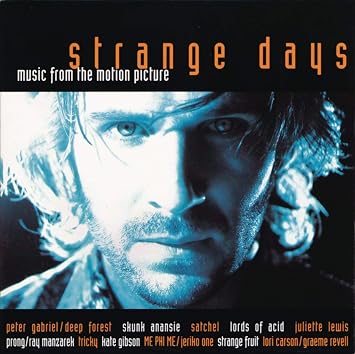
Strange Days


The obligatory cinematic reference:
  • Strange Days

    James Camerons' 1995 exercise in Pre-Millennium Tension and hustle par-excellence (before Titanic hubris set in). Ralph Fiennes and Angela "Tough" Bassett are riveting in this twisted tale of forlorn dreams and dreamers as the Millennium turns. Juliet Lewis purrs suitably and Tom Sizemore is appropriately sleazy. This is what the last two Matrix movies aspired to (and failed to hit).

    Strange Days


    The soundtrack had the ominous Overcome from Tricky's Maxinquaye (I should do a trip hop appreciation piece at some point) but the intent was better expressed in the later Pre-Millennium Tension album


Tricky - Pre-Millenium TensionStrange Days Soundtrack


A Strange Playlist


A soundtrack for this note.

  • Cameo - She's Strange
    "And I like It"
  • Ronnie Laws - Friends and Strangers
    Rare Groove heaven, sampled by everyone worth his salt
  • The Jimi Hendrix Experience - Little Miss Strange
    Straight from the basement of Electric Ladyland
  • Dave Brubeck Quartet - Strange Meadow Lark
    Paul Desmond's saxophone sounds sublime and oddly comforting
  • Kruder & Dorfmeister - Strange Cargo, Million Town
    Mellow trippy madness
  • Portishead - Strangers
    Ethereal theremones, zithers and industrial Bristol hip-hop break beats. The live version is wild.
    "Can anybody see the light?"
  • Fried - Love is a Stranger
    Lush New Orleans soul meets Fine Young Cannibals aesthetic. Her voice stimulates so many neurons.
  • Michael Jackson - Stranger in Moscow
    To my mind, his best song of the 1990s (even better than Remember the Time), that is until he got the Butterflies from Floetry
  • Billie Holiday - Strange Fruit
    A few years ago there was a push to move the center of gravity of Lotus away from Cambridge, and many of us Cambridge-types were being encouraged to move, first to the anonymous strip mall that is Westford and then, when that failed, to Raleigh and the great vistas of North Carolina. Young and unattached, I strongly considered it, but as you know I like to take the bus and the Research Triangle is strictly a car affair. Thus it was interesting that I read this past weekend about burning crosses on the lawns of Durham and Klan leaflets being distributed. There is ironic comfort in Lewis Allen's lyrics and Lady Day's haunting voice
    Strange Fruit Hanging From The Poplar Trees
    Pastoral Scene Of The Gallant South
    Now of course The Dirty South has no monopoly on misguided youth or deeply rooted chauvinism, and of course the temperature and people are more congenial for me (I love visiting the South). But I know my place in America (at the intersection of Tenuous St and Hired Immigrant Worker Alley) and accordingly keep a low profile, other than my blogospheric posturing, because the undertones of race are very close to the fabric of this young country. My antecedents wouldn't take kindly to my trans-Atlantic journey ending ala Emmmet Till
  • Nina Simone - Strange Fruit
    The notion that someone could add even more pathos and emotion to Lady Day's tune is quite amazing to me, but the High Priestess of Soul does it and with customary verve. It's like hearing the righteous indignation of Mississippi Goddamn. Goddamn.
  • Cassandra Wilson - Strange Fruit - the current queen of jazz adds some scratchy acoustic guitar and a melancholy take on this standard and comes off with a great reinvention of the song that maintains all the familiar landmarks but reconceived anew and refreshed. I love what she does.
  • Chaka Khan - Don't Talk to Strangers
    Speaking of Divas, Chaka is the best interpreter of Prince's songs in much the same way that Samuel L Jackson delivers the best rendering of Quentin Tarantino's words. There's an affinity and strange empathy between these two artists.
And finally a Prince medley, he is a strange one isn't he?
  • Beautiful Strange - download the bootleg. Why oh why didn't he release this joint? It really sounds beautifully strange and is better than most of his recent commercial outings.
  • Prince - Strange But True - This is the best track on Rave Un2 the Joy Fantastic which was a welcome return to the strange soundscapes of Linn Drum and one-man-band heroics that characterized the Dirty Mind and 1999 album. Much like "All the Critics Love U in New York".
  • Of course we should end with Sign O' The Times's Strange Relationship. At first listen, it seemed like a throwaway demo but after 4 listens you couldn't get it out of your head.
    Baby I Just Can't Stand To See You Happy
    More Than That, I Hate To See You Sad

    Honey If You Let My I Just Might Do Something Rash
    What's This Strange Relationship We Hold On To?

[Update] Some more obscure suggestions in the comments. Toli readers are indeed a strange breed. I love it.

File under: , , , , , , , , , , , , , , , ,