Showing posts with label France. Show all posts

Tuesday, September 12, 2023

Blue Sand

The headline was striking sixty odd years later
The dust was said to be returning to sender
Swirling dervishes on magic carpets, a blanket of fine particles
Radiation straight from the souk, the message in a bottle

A sixties affair held, not in Provence,
   but rather in the Sahara
Uncharted territory
   in what they then called French Algeria
A convenient location,
   just a few Berber nomads around at best
The fruits of settler colonialism,
   a prime spot for a nuclear test

A case of droit de seigneur, this was the desert after all
Proud of his entrée to the nuclear club was General de Gaulle
Still, it's not something that one could sweep under the rug,
   this thing
Indeed, the test rather embodied a literal carpet bombing

First, the sharp flash of the detonation
Then, later, shock waves and the almighty sound
The scientists marveled at the novel reaction
The blueish fire that preceded the mushroom cloud

Ground zero, the impact crater, the hole in the dunes
The military had assigned a codename: Gerboise Bleue
The desert rodent of Reggane would be baptized in blue
The blue of the tricolor harkened to Saint Martin de Tours

In the aftermath, as expected, came the fallout in all its forms
The uproar was swift,
   later tests would have to be moved underground
Expressions of surprise
   that radiation would drift west and south
Significant traces detected
   in Upper Volta, Ghana and even Senegal

Ballistic rockets launched primed for nuclear payloads
The initial fear was of fission and Strontium 90 isotopes
Decay was all, the main byproduct was rather Caesium
It is an ill wind that blows no good, this reckoning

We are all casualties in the torrid zone of this triangle of fire
That, in a new century, nature had decided to share the wealth
Donations of micro doses spreading irony across the land
A radioactive gift to posterity, a legacy of blue sand


After: Irony as Saharan dust returns radiation from French nuclear tests in the 1960s (March 1, 2021)

France, don't do it! Atomic bomb tests in Africa

Blue Sand, a playlist


A soundtrack for this note. (spotify version)
strontium 90 - future generations

...

The Wife's history of Atomic Junction dug up lots of interesting material. Here's a 1960 speech by by Tawia Adamafio denouncing French Nuclear Tests in the Sahara. See also a few more clippings from Ghanaian newspapers of the time.

File under: , , , , , , , , , , , , , , , , , , ,

Writing log: December 16, 2021

Tuesday, June 29, 2021

The Great Longing

To this type of writer, fidelity is not the concern
He strains for the lyrical in everything he observes
Comfortable with a tall-tale, or is it a hall of mirrors?
One shouldn't hew too closely to those paragraphs about Paris

He delights in fluttering from town to town
But there's acuity whenever he hits the ground
Picking out people to study and describe
It's no wonder this novel concerns a public scribe

His novels have that quality of floating above a city
All residents are fair game for his detached scrutiny
The fumes of memory are his proving ground
His task is recording the imprint of history's sound

Some writers are like this, they feel so deeply
Even when their work covers a terrain of uncertainty
Yet their commitment holds fast to that roving eye
A compulsion they cannot escape no matter how much they try

It's a sort of out-of-body performance, this authorial detachment
The critics would brand him the laureate of internal displacement
I'm minded of a line from a song called Human Nature
The knowing looks exchanged that the lyricist captured

He traces this compulsion to growing up as a sick child
Confined to bed and to home, experiencing life through others
Starting with imaginary affairs where he pictures himself running wild
Escaping his room and seducing the women who visit his mother

As an adult, in his own real relationships, there is always awkwardness
The flesh can never measure up to the erstwhile fictional goddesses
The determination to eschew participation in favor of bearing witness
Has a pervasive effect, in all engagements he is rendered feckless

He describes towns he has lived in, Fez, Tangiers, all full of traditions
Exquisite portraits, even if some of these places are not happy locations
Take the camp he is sent to as punishment for dissent as a young student
In maturity, in France he can only reminisce about the Morocco he left

A metaphor, perhaps, of the perils of life as a dissident
The squalid end that autocrats decree to crush dissent
The Moroccan antecedent was L'Affaire Ben Barka
The means, fear and blood, that marked such chapters

So who is this écrivain public? And how accurate is his narrative?
The author wears as his disguise a mask of words hidden in plain sight
The indirection of men of letters who craft their narratives of exile
This reader recognizes a fellow traveler bearing a splinter of ice

In days of yore, it was an honorable profession to write letters
To give voice to those requiring correspondence and editorial services
The public scribe took dictation or transformed words into print
From mundane business to, sometimes piquant, the most romantic

The later novels are what endeared him to the academy
But it is this early one that lingers in my memory
The sketches of childhoods with certainties written in sand
And the testimonies on the lack of mercy in the life of man

The lesson is that what matters is documenting the dislocation
We'll have time enough later to deal with truth and reconciliation
The spirit's rhythm of loss is the heart of the matter
The great longing is the main feature of nostalgia


On reading L'Écrivain Public by Tahar Ben Jelloun

brass glistens souk of marrakesh africa report 1966-06-058 portfolio of african holidays

The Great Longing, a playlist


A soundtrack for this note (spotify version) ...

Timing is everything
Observers are worried

See also: File under: , , , , , , , , , , , , , , , , , ,

Writing log. Concept: January 10, 2011; March 5, 2021

Monday, April 08, 2013

The Ways of the Porcupine

Notes on reading the novels of Alain Mabanckou.

I. Restraint


A writer who shows restraint on a topic that is prime for exuberant fireworks is a rarity. When that topic is the dislocation of a civil war, you start to wonder. When the writer is known for splendid wordsmithing atmospherics, you take notice at the muted tone you encounter. As you read and can palpably feel the wrenching of the conflicts that the Republic of Congo (Congo-Brazzaville that is) was subjected to, you are even more surprised by the self-effacing prose. As you observe the contrast between the close and personal observations - the subtlety in short of the text, and the groundswell of manic viciousness that sweeps a country, you ask yourself if he can keep it up. When the voices of the female characters are realized so poignantly, you scratch your head thinking back to the author's reputation for shrewd depictions of male worlds. What do we have here, you ask yourself? All is not quite what it seems.

When you are branded a young lion, it takes restraint to not growl. When you have been feted as a stylistic innovator, it takes restraint to write within the margins. And so I came to read Alain Mabanckou's Les Petits-Fils Nègres de Vercingétorix. And so I was drawn deep into his world. I had previously read his debut novel, Bleu Blanc Rouge (1998), a bravura work for sure (and more on that anon) and had already placed him in the vanguard of modern African literature. Reading Les Petits-Fils Nègres de Vercingétorix simply marked him as a singular talent tout court. I was plainly impressed by his remarkable restraint. Would that more African writers follow his lead; too often we aim for the epic when the delicate touch would be just as ambitious.

There is a certain virus that afflicts human societies that's ostensibly to do with identity - sometimes it's couched as nationalism, sometimes as tribalism, oftentimes it's plain jingoism. Demagogues feed on it, and sadly many politicians find it hard to resist. It's a seminal disease whose symptoms at its worst involve people who had previously been living alongside each other erupting into murderous violence. The last century was a particularly bloodthirsty exemplar of this. The former Yugoslavia was a notoriously teachable moment about the endurance of such tribalism (Europeans don't seem to like the word for whatever reason). Africans of course are not immune to this disease; indeed, some often paint the continent as a great incubator of vicious innovation in this sphere. In the politics of Congo-Brazzaville of the last thirty years, militias were its expression. Whether it was those favoured by Denis Sassou Nguesso or some of the other rogues that the country had the misfortune to be afflicted with, militias wrought havoc with gruesome efficiency.
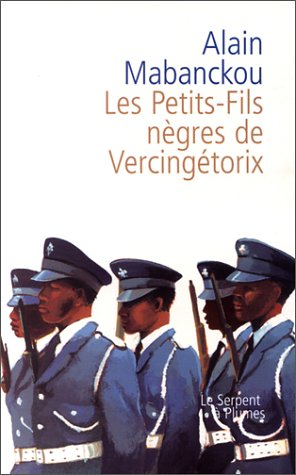
Les Petits-fils negres de Vercingetorix


The most interesting question to the reader in me is the form that the artistic response to such events takes. How does one write about topics as loaded as what we now brand as ethnic cleansing? And what kind of literature emerges in the wake of these uncivil wars? Surveying the scene - since similar tragedies have been plentiful in Africa, the literature, on the whole, has aimed for the epic. Sometimes the emphasis has been on the absurdity of the goings-on, other times writers have gone for sober reflection, always, however, the stories come out epic. Think of Ahmadou Kourouma's Allah n'est pas obligé, think of Emmanuel Dongala's Johnny, Chien Méchant, and, less successfully, Uzodinma Iweala's Beasts of No Nation in recent times as takes on the warlordism and child soldiering. On the other hand, I'd advance as paragons of epic sobriety Helon Habila's Measuring Time, Yvonne Vera's The Stone Virgins and, on Biafra, Chimamanda Ngozi Adichie's Half of a Yellow Sun. Standing essentially alone, Alain Mabanckou's strategy is restraint.
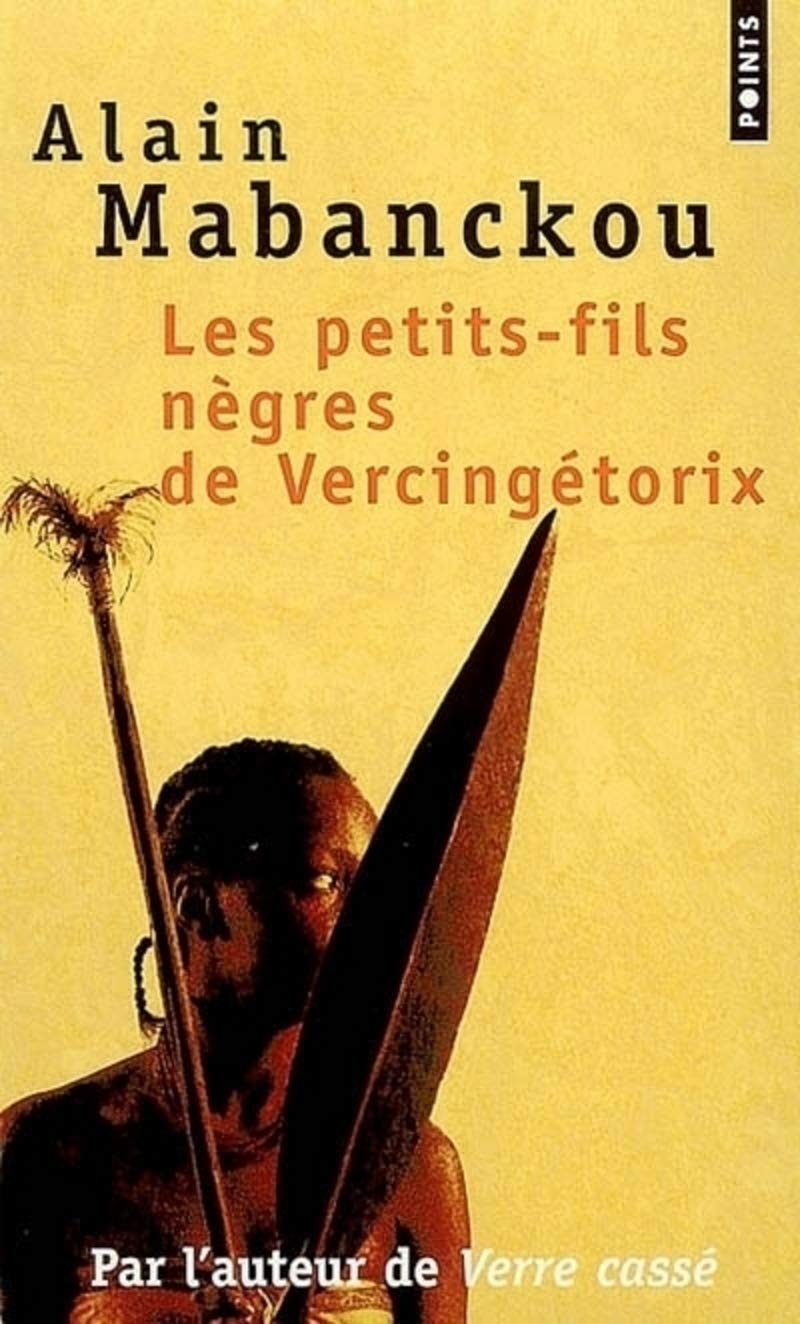
Les Petits-fils negres de Vercingetorix


Perhaps the most telling choice he makes is to do with the question of form. Les Petits-Fils Nègres de Vercingétorix is an episodic novel, written in the form of notebooks that a woman is writing to try and make sense of a life that has been upturned. It is about a barely disguised Congo-Brazzaville - a country placed into upheaval by militias and a North/South divide that affects families even to the extent of turning a man against his wife and even his own daughter. The inspired choice of diaries is at once a constraint - it almost obliviates grand storytelling and a kind of epic sweep - and a release, the narrower focus brings a intimate immediacy to the fore. The form allows for ellipses and the gaps are always telling, for when do we have the time and discipline to return to one's notebook? What is left unsaid can be inferred without much work on the reader's part, and, sometimes, the implications are so ominous that you wish that he had inserted a scene to salve the tension you feel.

Here is an African writer eschewing nativism and metaphorical excess a la Ben Okri. There is no fat, there is nothing to trim in the narrative. He doesn't traffic in arch constructions and just gives a story plainly told. The emphasis is on small scale journeys. Restraint in the form then serves to accentuate the dislocation that occurs.

It is a deeply felt book, I'd hazard even that it is the most personal of his books and it is the one in which he discarded the customary humourous mask he proffers. It is also the least 'literary' of his works which it makes it more satisfying to my mind - as he has been embraced by the academy, his novels have taken on more academic concerns. The novel considers what family and friendship mean when ethnicity becomes paramount and driven by parochial concerns. The lens is focused on two families that have crossed the ethnic divide and the repercussions they face as politicians ratchet up tensions. Perhaps the tale is best expressed by considering the two covers of the different editions: the one focusing on a woman and the other on a military parade. The latter, with the military in their shiny uniforms, perhaps representing the dissipation of so much of the continent's promise and energy. The cruelty of the militias that form is unrelenting and ugly and weighs on everyone.

It is fascinating that Mabanckou manages to give entire histories of these cruel militias and the men who used them as shock troops within the constraints of the novel's framework. You wouldn't expect that kind of pointillist historiography from mere diaries. It's as if Anne Frank's limited perspective from her Amsterdam hiding place grows to encompass the entire sweep of the world war. You don't notice it at first because there isn't an omniscient narrator at work, but all the players in Congo's madness are indelibly sketched, and vividly so. They could have been caricatures but instead are characterized with economical writing and steady accumulation of close observation.

I marvel at the power of this elegiac novel. Reading it, we learn that, with restraint, the tales of displacement that are part of the African story can be written with such delicate reflection. How does a seemingly clear-eyed society rend itself so thoroughly? And what are the costs to family and friendships? Restraint, indeed, is what that sterile modern phrase 'ethnic cleansing' deserves. Such is the way of the porcupine.

II. Empathy


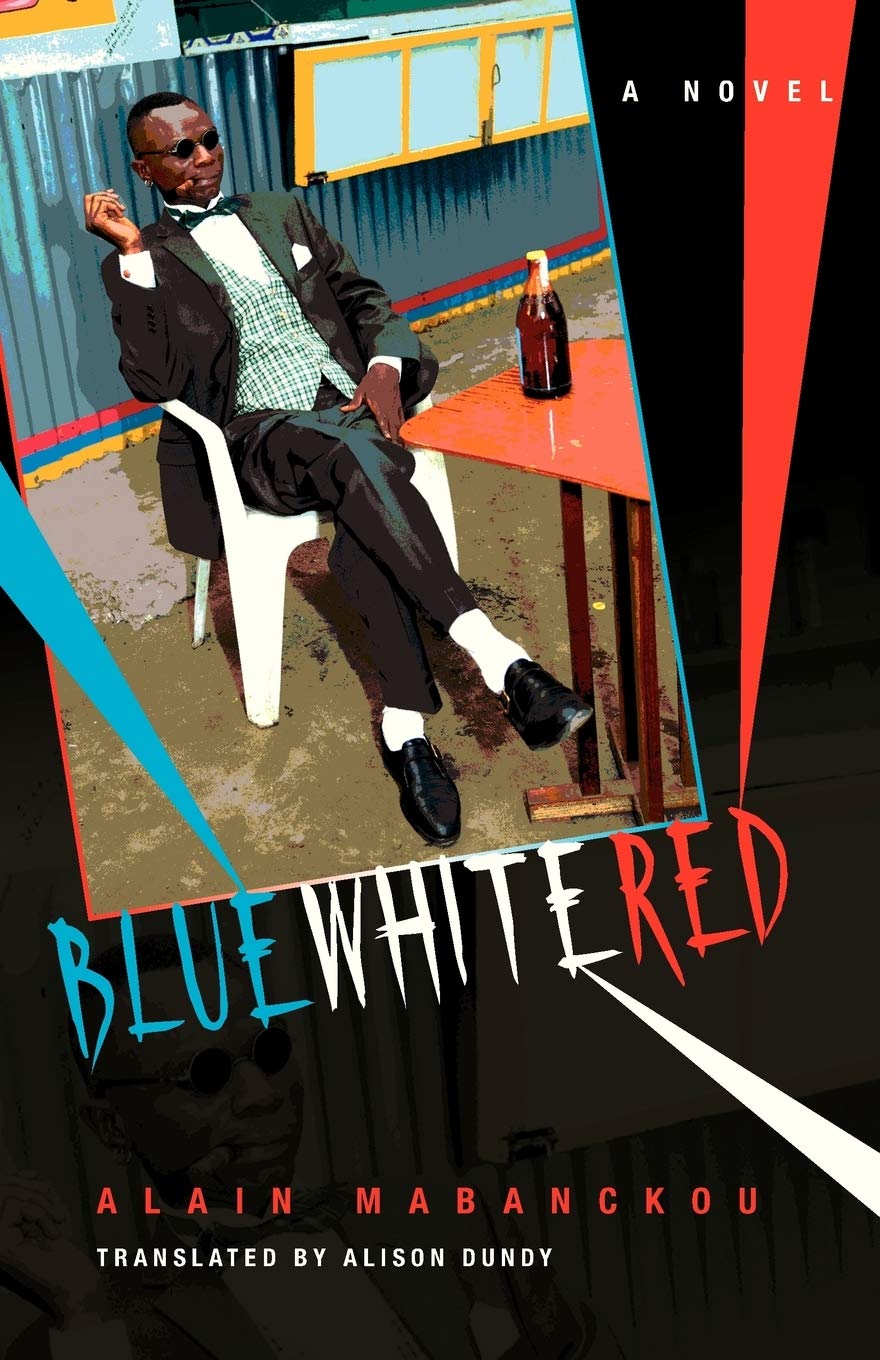
All that glitters is not bleu, blanc, rouge. That, in brief, was the message of Bleu-Blanc-Rouge, my introduction to the writings of the man I'll call the porcupine. And what a debut this 1998 novel was. I can't praise it highly enough, for it contains multitudes within it. Read it as a novel about yearning, read it as a novel about immigration, revel in the fond portrait of Congo - wrinkles and all, enjoy the comic set pieces, and laugh, above all, laugh. In all these ways, you will encounter a very assured writer who found his voice early on. In many ways, it is a testament to the anglophone myopia in African literature that this wonderful book is only now seeing a translation into English as Blue White Red.
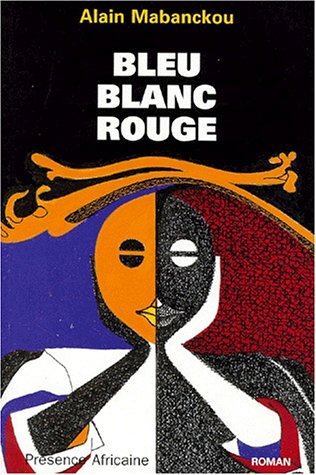
Alain Mabanckou Bleu Blanc Rouge


Bleu Blanc Rouge of course refers to the French flag; its embodiment in Parisian streets serves as a stand-in for the promised land (at least for those growing up in francophone Africa). Ostensibly then, there is this loving pull to leave one's land and head to streets paved with gold. "Abroad" is a message repeatedly hammered home to young Africans, and, along with its counterpart "The City", it has been one of the irresistible forces in post-colonial Africa. Our literature has followed accordingly, and the best treatments have always stemmed from authors who have great empathy.

The story of the African diaspora in France has universal echoes and, much like the story of any diaspora amidst their erstwhile colonizers, has built-in drama and comedy (the tension of exile, nostalgic longing and the process of adaptation to the funny ways of the locals etc.). The stories of Africans in England, Spain and Portugal touch on all these areas. Still I relate what Mabanckou does in Bleu Blanc Rouge most closely to what Samuel Selvon did in writing a great comic novel with sharp edges about the Caribbean diaspora in The Lonely Londoners, and with similar humour. Beyond that, Mabanckou appears to do what Krzysztof Kieslowski's Three Colors trilogy does in a different medium, illuminate an entire society. He is not content to simply concentrate on what happens once you leave your homeland, he intends to fully explore the life you were leading in said homeland. Indeed he captures so many textures you'd suspect him of being a seasoned anthropologist.

Structurally and thematically we can read the novel in three broad sections.
  • Bleu - the blues of aspiration. Why is the lure of going abroad so strong even when there isn't political exigency driving things?
  • Blanc - the color of snow and the cold life abroad with the Caucasian natives. The hustle of immigrant life is examined.
  • Rouge - the red of conflict and disappointment, in this case dealing with the quiet return home and even deportation.
The young narrator, although ostensibly middle class, has given up on his studies and is making do in his own desultory way. Presumably it is a measure of the futility he sees of getting highly educated only to join the ranks of the hordes of graduate unemployed on the lookout for patronage in a country where cronyism is how things run.

He is inevitably drawn to those who affect to be gentlemen of leisure. What makes the novel indelible is its portrait of the culture that we know as La Sape. The first part of the book might well be the most complete account of the rise of the sapeurs of Congo. La Societé des Ambianceurs et des Personnes Élégantes (La Sape) is the star of the novel.

Alain Mabanckou Blue White Red


Mabanckou grew up among these iconoclasts. Their sartorial choices were a brazen reaction against the Authenticité campaign that Mobutu had embarked on next door (a campaign echoed initially by Sassou Nguessou close to home). At the same time in their lifestyle, they had taken to heart the dictator's more direct edict: Débrouillez vous. He describes with considerable humour (and without judgment) their seeming cult of materialism, their love of designer labels, of style over substance perhaps, their playful way with language and their dedication to living by their wits.

He regales us with fond descriptions of the origins of the sapeurs, he is especially acute about the difference between the sapeurs of Brazzaville and Kinshasa. We learn about those who lived that life, and their effect on those who grew up among them. The sapeur lore is recounted: the exuberance of their competitions, the mixture of hubris and bravado at work in their core... The set pieces that punctuate the book are a comic delight.

The seduction is quite real and embodied in the character of Moki - Charles Moki, who looms larger than life throughout the novel. Moki, one of those 'Aristocrates' and the most legendary of the 'Parisiens', might be considered the king of those sapeurs. They return from Paris with bags of designer clothes that they sell and exchange, spread money around town, flaunt their peacock wares, and tell tall tales about their life abroad.

There is an acute analysis of their descriptions of the promised land. The appeal of going abroad to Paris or Bruxelles lies in the perception of gold-lined streets in Babylon. A running joke in Marguerite Abouet's Aya de Youpougon series is of the man who is always promising to take you to Paris. In her works, the response is always skeptical yet the comic hyperbole used by those who come back about how things are easy abroad (as rendered by Mabanckou) will wear down even the most skeptical. And so we head abroad.

Paris proves to be a rude awakening. The narrator finds that Moki in Paris is a quite different man and, more generally, that life in Paris is quite different (read difficult) from what he had been led to believe. The contrast between the relative ease of life back home in Congo (even in poverty) and the squalid lives that many immigrants lead is something to behold.

Like Calixthe Beyala whose Le Petit Prince de Belleville paved the way (translated as Loukoum), Mabanckou depicts the reality that immigrants find hustling in Paris. Whether it is living illegally in vacant housing, sleeping in shifts on the floor of a squat, working multiple menial jobs and in the case of many sapeurs, getting embroiled in check fraud and any manner of illegality. The hardships are many and pressure of this fraught existence can weigh on you.

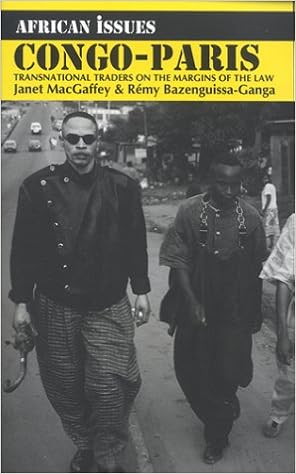
Congo Paris


Consider a sociological text like Congo-Paris: Transnational Traders on the Margins of the Law - a book that The Wife assigns in one of her African history classes. As an academic study of some of the same characters, it covers the same terrain exploring these men doing the gruntwork of globalization and capitalism. And yet I would hazard that far more insight, and indeed fun, would be gained by seeing things through Mabanckou's lens.

A Squatter's Tale by Ike Oguine is in the same vein, dealing with Nigerians who make it to the Bay Area in the US. A similar mix of bemusement and understanding suffuses the narrative. In another medium Alain Gomis's film L'Afrance tackles how one oversight can lead one to fall through bureaucratic cracks into the illegal immigrant category. With Mabanckou, however, one doesn't get the sense of a didactic point being made. The question of values is certainly on the agenda and one might well read this novel as a cautionary tale, but he wouldn't push you in that direction. The reason is his evident empathy for his characters and his ability to find humour even in the disillusionment about what one finds abroad: the drab immigrant life, the hustling for identity papers, the shadow life, the turn to crime etc. Indeed, when things go awry in the inevitable third act the authorial voice remains equanimous. The fall from grace is as entertaining as the rest of the novel.

If Mabanckou was not the first of the growing number of Immigrant Narratives in Contemporary France, he was certainly among the most assured and definitive. He revels in close observation and has a perfect ear for dialog. One finds in him a writer comfortable in his storytelling and deeply empathetic to his characters. One expects nothing less of a porcupine.

III. Provocation


African Psycho is a provocation. Try reading it in public, or leave it on your bus or subway seat, and observe the response of your fellow commuters. The title is pure agent-provocateur evoking, with a clin d'oeuil, Bret Easton Ellis. Everything about it demands attention, from the title, to the plot, the style of the prose and the inspired language. The English translation of African Psycho is serviceable although to my ear it doesn't capture the playful tone nor indeed the fireworks that Alain Mabanckou delivers in this novel.

African Psycho


The edition I have has a cover that showcases the madcap energy of the writing. The covers of other editions emphasize the youth aspect rather than the emotion. Mabanckou drops zingers every so often as if to keep you unbalanced throughout your reading. There is hardly a page without sentences make you gasp at their audacity or laugh at the goings-on.

The plot, such as it is, is detailed nonchalantly. It is the story of a street kid, an orphan sent from foster family to foster family. Self esteem is not on the agenda. He thinks he's ugly with repeated complaints about his 'tete rectangulaire'. A loser prone to self delusion, he is what you'd call minable in French. Full of resentment if not anger and poor as hell, he knows his shantytown well. Unlike many in the slums who seem to be getting on with life, he is a teeming mass of grievances. Looking out to 'le pays d'en face' across the river, there is resentment about the other Congo - Kinshasa, which is bigger and more famous than Congo-Brazaville, heck they even send their prostitutes over here. Our man's gripes echo the blind spots of Patrick Bateman's character in American Psycho although his are more legitimate than the latter's ludicrous obsession with labels, style and crass materialism.

The conceit of the novel is that he aspires to be a serial killer. You'll therefore note the explicit harkening to the themes of Dostoyevsky's Crime and Punishment or even Camus' L'étranger. Unlike those antecedents, the protagonist is all aspiration. He couldn't kill a mouse if he set himself up for it. He'd make elaborate plans and find repeated excuses for why the mouse escaped this time. It's rather like one of Donald Westlake's Dortmunder entertainments. It's as if he initially decided to draw you in with the titillation of the setup but changed his mind, and rather settled to entertain you with a comic meditation on inept aspiration. After all death is far too frequent in African life and literature. The vibrant and showy language also reminds me of Dany Laferrière's Comment faire l'amour avec un nègre sans se fatiguer. Literary young lions provoking readers and critics alike before getting down to business.

The porcupine, like the hedgehog in Isaiah Berlin's retelling, knows one one big thing. In that vein, it is plain that Alain Mabanckou cannot tell a bad story no matter how light the premise. He is blessed as a storyteller in much the same way that Evelyn Waugh had an unerring ear for satire. Like Waugh he also had quite prodigious early works (read Bleu Blanc Rouge as his Decline and Fall if you will). Oftentimes, however, to gain literary renown one must aim to be a fox. One never knows what critics or indeed the market will reward.

I have a pet theory that African Psycho was a throat clearing exercise, something he wanted to get out out his system before really stretching his shoulders and demonstrating his versatility beyond 'mere storytelling'. If my reading of the chronology is correct, he would next get a new publisher and start teaching literature in the US, gaining further insight into how to carve his place in the literary world. The provocative fireworks of African Psycho should then be seen as a transition or even a stepping stone. As such it has been a success, indeed, everything published since has been untouchable.

IV. Deception


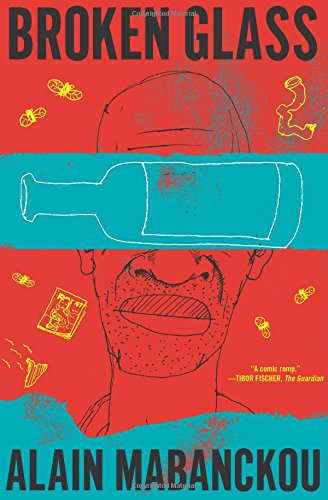
Well perhaps deception is too strong a word especially since the confounding of expectations was welcome. Call it sleight of hand and a very studied and knowing affair, Verre Cassé - now available in translation as Broken Glass, is a literary hall of mirrors, the titular broken shards of glass reflecting fabulous visions at the reader.

At first Mabanckou approaches you with what seems to be a grotesque sort of Arabian Nights - or perhaps we should refer to some of the bawdier tales spun by Chaucer's travelers in The Canterbury Tales. The nightly revelry takes place at a bar and, as you settle down for the latest story, the regulars compete to add outré twists as if to ask can you top this one. From sordid tales about cuckoldry to pissing contests, he literally leaves you in the merde.

Verre Casse


About halfway through however, you you realize that Mabanckou is actually more interested in his narrator than in the baroque folktales spun nightly by the bar regulars. It's the David Lodge sensibility, lovingly, ever so lovingly, dragged into the gutter. Lodge's The British Museum is Falling Down is the best model for what is at work. One could read the latter as a straight comic novel, but the real pleasure and the playfulness comes when you realize that it embeds parodies of some of the most august authors. Lodge's tome spins pitch perfect voicings of everyone from James Joyce, through Franz Kafka to Virginia Woolf and Joseph Conrad.

Verre Cassé is similarly full of wordplay and literary allusions dropped as the bar tales are told with the studied effort of seasoned drunkard. You'll find puns about Autumn of the Patriarch (Gabriel Garcia Marquez), The Old Man and the Medal (Ferdinand Oyono) and even Camara Laye's L'Enfant Noir. There are no sacred cows; these influences are deployed, probed and deconstructed fluidly. The reader can bask in the oral tradition of storytelling like that of Chamoiseau in the vein of Solibo Magnifique.


You learn that your narrator host is someone whose head is full of literature - a stand-in for the author perhaps, who at this point had come to be teaching French literature in the US. He's drawn you in with humourous observations and is such good company that you'll want to drink at the same bar and, dare I say, read the same books. He had found the formula in this novel and the critical acclaim and major prizes started flowing his way.

The old wives' tale is that the porcupine's quills can be thrown at advancing predators and form the ultimate defensive weapons. The reality is that the prickly exterior is best adapted for camouflage. In the dark recesses of our minds, we know to crouch instinctively when the porcupine gathers himself in a ball. Most of the time however we don't notice him, hidden as he is in the foliage. Such wry deception, you see, is the way of the porcupine.

V. Comfort


Mémoires De Porc-épic is the title of Alain Mabanckou's most magisterial entertainment. No wonder he won all those prizes in 2006. The control of tone shows someone at the peak of his powers. He can be loose and discursive at will and yet turn on a dime and focus the narrative. He'll turn from literary disquisition to plot intricacies that leave you hanging on. You can't call it Congolese Gothic - even if tempted by the plot; you can't call it "magic realism" although he provokes you in passing. No, this is probing, searching and vital storytelling. And yet what do we have in this novel, now translated as Memoirs of a Porcupine? A porcupine unburdens his soul to a baobab tree recounting his life as a double nuisible - an animal double of a man who turns out to be very far from sympathetic, if not outright horrific.
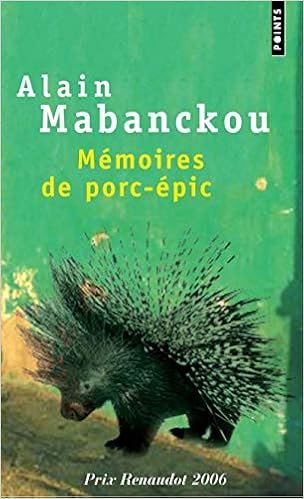
Memoires De Porc-epic


Ostensibly the novel is about the mix of rumour, gossip, jealousy that can overtake a village, the perceived slights - the accusations that poverty and faulty biology can foster. It is also about the compulsion to help one's double no matter what. The premise is surreal but all the outlandish happenings are dealt with in such a matter-of-fact manner that the reader goes along. It just happens. Think about it, a porcupine is talking to that great African confidant, the baobab tree, a porcupine moreover who is perhaps trying to make sense of things, why is he alive when his double has died?

The novel examines matters of identity (see the double motif) and the impact of rumour in traditional societies. If people in the village start dying mysteriously, there must be someone slighted. This leads to tests and various rituals in the community (for example drinking of potions). You would file this under the banner of belief systems, the kind that ethnologists from the West study - they'll call it social anthropology. The porcupine lampoons this kind of cultural subjectivity. Yes the porcupine narrator, in his sophisticated mode turns to lampooning academics. There you have it: the winking eye of Alain Mabanckou, the tall tale you've become engrossed in, the mix of pointed commentary, biting satire, observation of tradition in consonance with modernity, and then the provocation. You're in the realm of the porcupine, and a wily one at that.
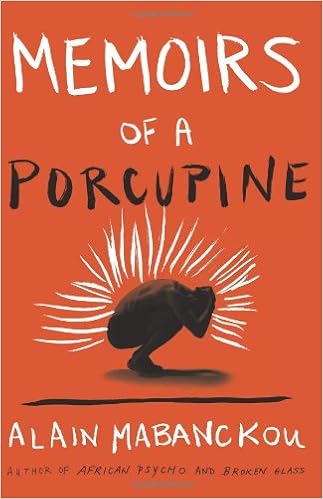
Memoirs of a Porcupine


The porcupine narrator is cowardly and needs to be suborned by his other self into violence. The missions accumulate, suspicion grows and disaster falls. Do these things actually happen? Or does he really tell the truth? Identity is refracted, myths are remade, language is made malleable, reflection, humour and violence intertwine. It's the literary hall of mirrors of Verre Cassé this time elevated into a universe that is Mabanckou's own, one that only intermittently relates to our own Milky Way. The novel is destined to be studied and dissected perennially. It goes far beyond Academy bait (it won the Prix Renaudot) into its own category. It was the intense experience of reading these 'memoirs' that led me to designate Alain Mabankcou as the porcupine of these notes.

The porcupine follows his own path. Like the squirrels he is related to, but with adorned with his protective spine, he is playful at once and prickly at the other. Aware that he needs to keep his wits around him, his is careful in his movements; a hard worker, he pays attention to his craft. He's a social creature engaging with his peers and is so comfortable in his skin that the moments of solitude never lead to loneliness.

VI. Musical


There is a certain rhythm to the writings of Alain Mabankcou, unhurried by default, it meanders at times, skipping occasionally or incorporating extra ideas but always returning to the beat like the best sebene. After two very successful novels (Verre Cassé and Memoirs de Porc-é epic) largely embraced by the academy that played with all kinds of highbrow literary subtexts, he returned to the musical storytelling that characterized his debut.

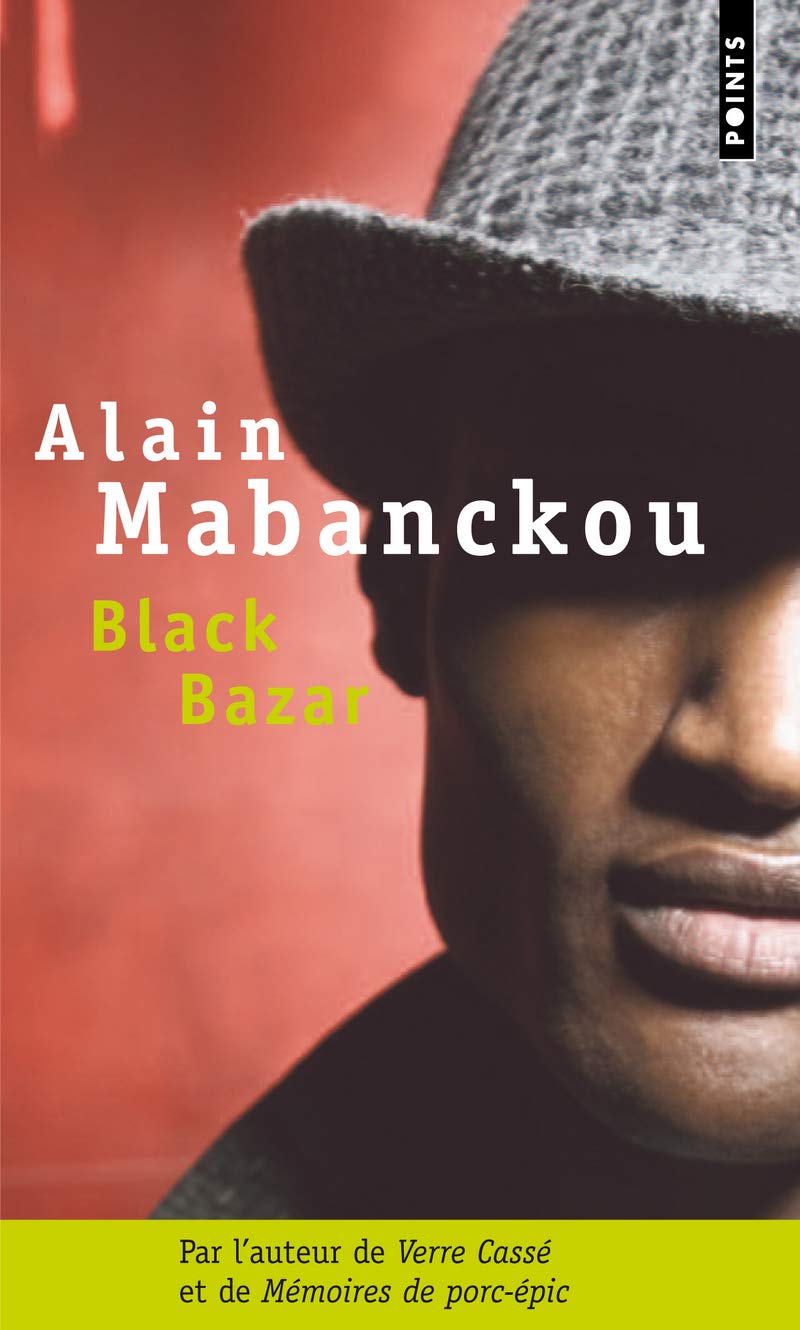
Black Bazar, the last novel of his I've read, is akin to a stroll down the streets of Chateau Rouge. It's a return to the themes of Bleu Blanc Rouge a decade later. The emphasis isn't so much on the sapeurs this time as on the entire immigrant community that has asserted itself at the heart of Paris.

Black Bazar fessologue butt aestheticBlack Bazar fessologue butt aesthetic


The chief narrator is nicknamed Fessologue, which I'd rather translate as connoisseur of fine female derrieres rather than what I've seen elsewhere. Sidenote: would you translate Fessologue as Buttocks Man? Wouldn't you instead go for something more delicate: Butt Aesthetician perhaps, or Professor Gluteal Maximus? Digression on a digression: this is the dilemma an English translator faces with sharp and witty Francophone writers like Mabankcou and Patrick Chamoiseau, how does one unpack the playful language of their musical riffs. One hopes the translators come to capture the delicate humour of their knowing argot.
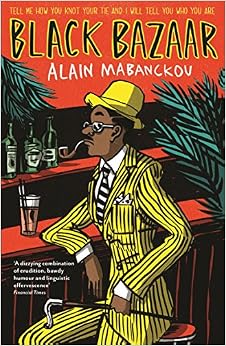


Fessologue then is a comic figure who verges on the tragicomic. A bon vivant sapeur with a heart of gold, he knows he is being used by his girlfriend - cuckolded even, as she has decamped to the Congo. Indeed he might even have been paying and caring for another man's child all these years. That betrayal is of no matter, he wants to do the right thing. The novel follows him his peripatetic attempts to reconcile the codes of his sapeur lifestyle (the constant need for different varieties of crocodile skin Weston shoes say) with the heavy responsibilities he has started to feel (making enough to send that Western Union transfer so that his daughter is cared for wherever she might be) and the pleading for his girlfriend's return. Like many of Mabankcou's characters he is no hero and is unreliable in all too recognizable ways. Hilarity ensues as one might expect. The complications do make indeed for a Black Bazaar.

Black Bazaar


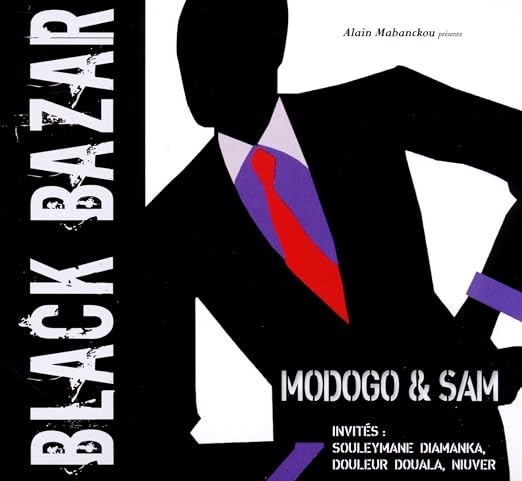
Black Bazar even has a musical afterlife with a wonderful album and a tour of a collective of rumba and soukous greats inspired by the novel (lots of videos here). It is fitting since the novel's language felt alive and seemed to move to its own soundtrack.

I have only read half of Mabankcou' novels and, prolific as he is, there is much more to his catalog. Apparently also the poetry and essays loom large for some critics. He is increasingly busy these days enjoying his prime as it were. His works have been already been adapted on the stage and Hollywood must surely be next. Recently he has translated Uzodinma Iweala's Beasts of No Nation into French, Bêtes sans patrie in a quite serendipitous meeting of minds. A highly adept wordsmith capturing the rhythms of another. The author of African Psycho - what with its vaguely aspirational homicidal street kid protagonist, was surely the right one to take on the child soldier.

His craft is undeniable and he is one of the best living African writers. I've found that most treatments of his work in English damn him with faint praise. I suppose this is because he writes in French and is pigeonholed accordingly. The obvious antidotes will be forthcoming as it seems the translations are now coming apace. I hope he is ready for the full glare of the attention that will surely be coming his way. I offer these running notes as a marker before the crowds arrive, an attempt at a reader's quiet appreciation. My only critique is that I have found more rewarding the novels that don't explicitly emphasize his literature professor guise. In these notes then, I have emphasized the works that have felt the most naturalistic.

I want to have a drink at the Credit a Voyage bar and exchange tall tales with its owner, l’Escargot Entêté. I want to share a few beers with mon pôte le porc-épic. I want to discuss exiled souls and the quality of wist in African life. I want to joke about the horde of Congolese barbers who loudly accost you when you step out of the metro station at Château d'Eau and contrast them with the lot at Château Rouge. What gives? Is it Brazzaville versus Kinshasa in the Parisian setting? I wonder about the soukous soundtrack that they seem to dance to as they gesticulate and beckon. I can only hope that my friend the porcupine continues weaving his tales. His latest novels are at the top of my wishlist. I'm going to savour them in the ever so fleeting moments when I can lose myself in a book. I'm digging the ways of the porcupine. A head nod in the direction of Alain Mabanckou.

File under: , , , , , , , , , , , , , ,

Monday, October 29, 2007

By Way of Ionesco

It must have been a few months ago, I was heading home after work; it was the usual thing, a perfectly ordinary evening. As usual, I was fumbling with my various bags, headphones and such. As I switched trains at Oakland, my sharp elbows ensured that I obtained a seat; I find it pays to be equipped at rush hour. I settled down, rummaged around and found my book. I opened it and relaxed; there's nothing like getting lost in a good book on the commute. A muffled announcement predicted a delay. Oh well, I settled in for the long haul. After a few moments, I heard someone muttering from across the aisle: "Ionesco" or something.

"Yes, yes", I gestured at the distinctive cover of my book, "Ionesco".

The guy continued talking but I couldn't quite hear him since I was listening to music. As I fumbled around with the controls to the cd player (no ipod as yet), it struck me that I had been speaking in French. What I had actually replied was "Oui. Oui. Ionesco... C'est La Cantatrice Chauve."

As I finally removed my headphones (those tangled wires), I realized that the other guy had also been speaking in French.

Well, no matter. If you're reading a French book on the subway, odds are that a passing Frenchman would notice and engage you. Perhaps you look vaguely francophone. It would stand to reason that you would start to speak in French also. Indeed the reason I had been reading that book was one of my periodic attempts to keep up my French. Still it was uncanny how I had unconsciously slipped into that other language, perhaps a switch had been involuntarily flipped as sometimes happens to polyglots (pdf). I don't get to speak the language much these days - I am awful about keeping up with the part of my family in France. True, every few months or so I dream in French (don't ask, don't tell) but I know that my fluency in conversational speech is at risk.

So anyway, there was a little pause as we both assessed each other. A couple of relatively thin thirtysomethings, hungry engineer types. Not many people chat on the subway, one is always wary about being solicited or otherwise bothered. As the song goes: don't talk to strangers. How often, however, does one find someone interesting on the commute?

Well, the conversation began in earnest. Ionesco it was. His plays, his ideas, the theatre.

What do you know, I was sitting across from someone who had directed four Ionesco plays; a fellow Ionesco afficionado no less. I'd acted in Les Chaises during my brief theatrical career at school. Heck I still sometimes view the world through his jaundiced lens. The guy was clearly a creative type, steeped in the stage. A man after my heart. And he knew his stuff it seemed.

Pretty soon we were getting into the intricacies of Ionesco's world. What we liked: the playfulness of the language, the sense of rhythm, the stacatto effects that leapt from the page. The often startling juxtaposition of mundane minutiae with profundity. The pauses and the fumbling to find meaning and the consequent resort to words that obscure rather than reveal. Heady stuff in other words.

My spoken french is a little rusty and, a couple of times, I too struggled to articulate some of these thoughts. It's one thing to write or read about the intricacies of art and another to verbalize them even forgetting the setting. Still it was coming back slowly: the quintessential abstractions of extinct philosophers. The accent too - I was a scion of la Lorraine, straining my 'ains'. Perhaps the long lamented fluency would be returning soon.

Somehow we got onto the nomadic element in Ionesco's writing and the fact that he was Romanian and first gained fame writing in french in a piece about observing the English. What is it about outsiders being such stylists? Why are they often the best bridges and windows on society? Perhaps the margins provide a good standpoint for cultural observation. But what are the downsides of the lives of exiled souls? Does multi-lingualism or the crossing of linguistic borders sharpen one's outlook? We weighed the evidence. I brought up Nabokov who in later life turned out to be perhaps one of the great stylists of the English language. He wasn't impressed, he felt that Ionesco got closer to the gypsy element of modernity than Nabokov ever did. I demurred, both, I thought, were modern travellers that disdained boundaries and pushed the forms in which they wielded their pens. The response: well Ionesco carried less baggage. Anyway we got back to the plays.

la cantatrice chauve

He liked Rhinoceros and Les Chaises for their theatricality but for him La cantatrice chauve was the most playful with the language. We went back and forth on whether it was a play best performed in French. He didn't like the English productions he'd seen and claimed that they got the zaniness all wrong. I thought that so long as you got into the spirit of things, it didn't matter. To him the confusion started with the way the play's title was translated: he preferred The Bald Prima Donna to The Bald Soprano. Thus we found ourselves seriously arguing away in French about which English translation of a nonsensical phrase a Romanian playwright had promulgated was truer to the essence of the play. I can't imagine how we must have sounded to the rest of the train car: flurries of French intermittently interupted by English exclamations: "The Bald Soprano" or "Mais non. The Bald Prima Donna". C'est ridicule, n'est-ce pas?

Funnily enough we never actually mentioned the word absurd although the theatre of the absurd was our ostensible subject. Nor indeed did we get to Beckett who looms large in such matters. To my mind, Ionesco is the more formidable pillar of that theatre, if only because his conceptions weren't as arch as those of Godot's father. The discongruities of modern life are presented simply and with wit. I love Beckett to death yet his edifices were intricate constructions. Ionesco makes the absurd more mundane, it is through almost imperceptible distortions that you find yourself in the realm of the improbable. Each step on that road makes sense.

There was a brief diversion onto Sartre - we discussed Huis clos, and judged him impractical. More to the point, his dilemmas weren't weren't of the everyday variety nor indeed did they work on the stage. No, not quite.

I hipped him to the show I'd seen in Boston a couple of years ago, Ionesco not Ionesco, three rarely performed plays. The takeaway message: Ionesco as the aspirin for modern day life, the playwright of the fringe, the governor of the borderlands. You are easily underestimated if there is a humour to your approach and many did underestimate the fugitive notions of the man.

I forgot myself for a moment, soaking in the discussion, and looked around. The rest of the car looked utterly bemused at the sight of these young men vigourously discussing French literature in their midst, throwing out existential themes — the left bank transplanted to the subway car, heck all we were missing were the berets. No matter.

It was the week of the French elections and I mentioned the story about those old campaign posters of Mitterand that were being resurrected twenty years later as ironic commentary on the choices facing the French. He liked the idea and applauded the juxtaposition. A François Mitterrand 2007 campaign seemed appropriate for this dark time. We wondered how many votes he would get.

The Cold War deserved a Ionesco. The nuclear age deserved a Ionesco. Gremlins and parasites, thine playwright is Ionesco.

ionesco collage

We wondered who were the heirs to Ionesco's ethos. We decided that there was something to be said for plays even in this TV and film era. That the stage often had the right level of pathos for the strange incongruities of the human condition. As we parted (he gave a card, I told him to google me), we resolved that we should get back to the theatre, support it in whatever way we could. Who knows maybe we'll put together a production some time soon. It need not be Ionesco. Heck we would write our own plays.

...

When a week or so later, I received that secret tape of Negroponte meeting Gaddafi, I was struck by the element of malign play among in their discourse and world views. As I transcribed, I found it was all there: words intended to obscure, words that ostensibly communicate were instead combined into phrases that mangle reality: constructive engagement, collateral damage and so forth.

The playground of misdirection is often dominated by politicians but others too have their niches. The lowly bureaucrat and the well-meaning citizen play their part is adopting the language of bromides. Ionesco would have loved the notion of recent non-specific general threats and the obfuscation of the language of homeland security.

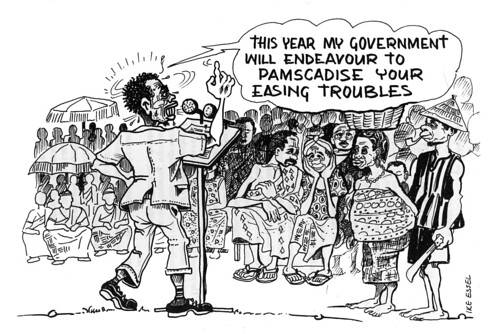
Pamscadise by kwesi yankah

In any case, it stands to reason that I am now being read by folks from both the US Navy Marine Corps and Libyan embassies around the world. I do try to bring people together in my writing. A belated welcome to the toli. Enjoy your stay. Excellent. Excellent discussions.

Salut Alex.

File under: , , , , , , , , , , , , , , ,

Wednesday, May 09, 2007

Briefly Noted

Deadlines are looming and it's also travel season, hence toli must be brief. Here then are some notes on the run...

I. Imperfect Analogies

Item: Before a certain column was published last Friday, a note I wrote used to be the top result for searches for IBM layoffs. I always worried that my musings might attract attention of The Authorities; thankfully, with Cringely taking the hyperbolical lead, they are now firmly (and hopefully permanently) under the radar... It's been almost two years and perhaps I should revisit the France IBM Connection. Back then, I predicted that despite the malaise in France, the French would re-elect the right after Chirac stepped down. Dig: Nicholas Sarkozy was elected president over the weekend in an election that saw record participation. French democracy is proving remarkably healthy. Although ostensibly elected on a mandate for reform, it is interesting that the old guard was the demographic group that voted for him en masse and put him over the top. In a similar vein I will not (cannot?) comment on rumours that IBM is about to decimate the ranks of its global services group and reform that business. One has to tread carefully in this lean corporate world, job (in)security and all that. I never answered the question later put to me: if IBM is France, who was it that was burning cars in the banlieues and would they survive? Implicit also was the issue of whether and how the French establishment would address the wider challenge, modernity and sundry taboos, or in the case of IBM, how it would deal with the web. My analogy was never perfect and I remain at a loss for answers on both fronts. Still, to mix a few sayings:
The stakes are high. Observers are worried. Closed due to computer problems.
closed due to computer problems

II. Special Treatment


Delta Airways recently (December 2006) began direct flights to Accra from JFK and Baltimore. By all accounts this has been a very successful endeavour for them. Their three weekly flights are fully booked. Clearly they are servicing pent-up demand. Ever since Ghana Airways went out of business, KLM and British Airways had been reaping the wages of monopoly pricing. It's not simply that Ghanaians are homesick or that we are now able to flex our economic muscles. The Nigerians, and others seeking convenient access to West Africa, are also patronizing these flights.

There is a little twist that I observed over the weekend. Delta has done their research well and paid attention to their market. They know all too well that Africans love luggage, what with Ghana must go bags and such, and will seek to haggle over the amount of luggage that they can check in and carry on board. Further, our crowds in airports are often unruly as fellow travelers will attest. Our relationship to authority and order was perhaps poorly served by having rogues rule us for a few decades.

Accra check-in

Thus I noted that there is a separate check-in area for travelers to Accra in the Delta terminal in New York. As I passed it on my way to San Francisco, I overheard a couple in the regular check-in area pointing and asking "What country is Accra in?" The reply: "I don't know, I don't envy them however". I looked over at the long line that was forming, the numerous bags spilling over, and heard the clamour arising from the check-in counters. The airline staff looked a little harried, and well, world-weary. Crowd control is a difficult thing especially when you are dealing with a culture that is all about conversation and the banter of marketplaces. Keep in mind that Kweku Ananse, the cunning and scheming spider, is Ghana's great cultural and literary gift to the world. They must have heard every story in the book, along with sundry inducements for bending of the rules on all forms of luggage, excess and otherwise. I was a little sad at first at our segregation, and embarrassed at being singled-out for cattle-herding. I thought it over for a while, rationalizing rather than wringing my hands, and then smiled: we have our own section, how many others can say that? Our people are being given the special treatment.

Accra check-in
Step right up
Baby steps, baby steps.

III. Triumph of the Penguin


A sidenote: a custom version of Redhat Linux is the operating system running the in-flight entertainment system on Delta flights. This was evident from the scrolling screen messages that we observed as the air hostesses had to repeatedly reboot the system so that the other side of the plane could get their 40 channels of satellite tv. It's heartening to see the spread of Linus' little penguin even if it is only visible when there are problems - the brief flashes of startup screens. The Pentium chip grew into the public's consciousness after its flaws with floating point calculations were exposed. Paradoxically Intel never looked back once it dealt with the initial fallout of that episode. Similarly, folks continue to photograph blue screens of death in machines running Windows say in ATM machines and the like. Again that is an ironic triumph, a display of the spread of Microsoft's software into areas that were formerly the lucrative province of others. As we observe the spread of Linux as core and ubiquitous infrastructure it is good that it is similarly an iconic brand. Infrastructure is normally invisible and only appreciated when things fall apart. In this respect, I should say:

I love infrastructure.
I love glitches.
Infrastructure

IV. Dark Brown


When I wrote my piece on Cultural Sensitivity in Technology, I alluded to a number of incidents involving glitches with Microsoft Word's dictionary or thesaurus. I never managed to track down a good reference to add before it was published. A few weeks ago however the perfect example came up, it concerned the colour dark brown. The headline read:

Offensive couch label traced to China

Toronto. Doris Moore was shocked when her new couch was delivered to her home with a label that used a racial slur to describe the dark brown shade of the upholstery.

The situation was even more alarming for Moore because it was her 7-year-old daughter who pointed out "n----- brown" on the tag.

The rest of the story is a tangled web especially apt these days as we all mind our P's and Q's and hold mock funerals.

It's a wonderful and layered example of the ramifications of small things. The fingerpointing that results in this globalized world of ours is also very interesting. Who is to blame? Is it the manufacturer of the software that translated 'dark brown' in Chinese to the n-word in English? Or is it the supplier of the upholstry that used said software? Or is it rather the furniture store that sold the couch? Who is ultimately responsible for making sure that such things don't occur? Who, if anyone, should apologize? Or are such things what we should expect, the logical endpoint of globalization?

So what do we have here? A simple glitch in the continuum of cultural sensitivity resulted in innocence lost all around the world. The Chinese companies are embarrassed and worried that they will lose business - they are furiously updating all their software, the furniture store is worried about being sued, the mother learned that you can't protect your kids from that thing known as race, the 7 year old learned what a complex world we live in, a world of words that hurt and can even kill.

I was also tickled by the huhudious claim of the Indian store owner that "I've been here (Canada) since 1972 and I never knew the meaning of this word". That is indeed as brazen as it gets.

The remaining absurdity lies in the visiting "friends over from St. Lucia" who "wouldn't sit on the couch." I wish I could meet said friends, they push this toli into sublime territory.

portia portfolio sunflower seed

A Brown Playlist


A soundtrack for this note, some music celebrating the darker shade... Liner notes to follow.

File under: , , , , , , , , , , , , , , , ,

Thursday, July 14, 2005

The France IBM Connection

An allegorical foray wherein I suggest that one of the better analogies for IBM, and particularly its Software Group, is to consider it akin to France. Sacré bleu: a touch of whimsy on Bastille Day. As they say

Liberté, Égalité, Fraternité

The French Connection


I've been getting a little reflective as my 10 year anniversary at Lotus/IBM comes up next week. I'm not normally one for anniversaries but lots of things have been coming together (or falling apart) that make this a good time for some musing.

As I've written previously, this is an interesting moment in the technology world. After a quite severe retrenchment and some stagnation, all of a sudden there is a glimmer of light. Many companies are lighting a fire of innovation and building useful things on the web based on very simple primitives. We have absorbed the lessons of 10 years of Moore's Law in the data center, and as Joe Kraus has noted, it is a great time to be an entrepreneur (Mark Fletcher has piped in too). Still, lots of companies have lemons to sell and are falling back onto the hard sell of tone-deaf marketing to compensate for a lack of substance.

As an amateur historian of technology, I've been trying to consider where my company falls within this continuum. I like arguments by analogy and hence have been searching for a metaphor to describe the tribes of IBM.

The Governor of Redmonk characterized IBM as a broad church, a bazaar and melting pot
All views are present (and correct). All views are tolerated.
Others would have it be a cathedral, full of dogma and staid and obsolete blue-shirted mandates. In the 1990s, as that self-congratulatory pablum from Lou Gerstner went, it was about "trying to make an elephant dance", slashing and burning jobs, focusing on services and huge outsourcing deals rather than products and technology (the reviews in the previous link are quite revelatory). All of these characterizations are unsatisfactory, yet each have a grain of truth as with all coinages. Big Blue is all of these things and much more.

In conversations with colleagues and in reading the internal forums and blogs at IBM, there is an undercurrent of introspection and lot of soul searching. Sometimes this is even more critical and severe than from the outside. A sample:
Caring only about making the work numbers add up rather than actually improving the product doesn't seem to be real great way to a) run a business or b) get your developers to be passionate about their work.

Hopefully all of you will win your own innovation vs. mediocrity skirmishes in the future, and help that stock price edge higher :)

When I meet new people and tell them what I do for a living and who I work for, they are universally impressed yet each will have some story about how we could do better.

Cringely recently commented on dropping an applet developed by IBM and had this to say
"There was nothing wrong with IBM. Far from it - IBM Research was a terrific partner. But big companies have big licensing issues and smaller organizations sometimes give more personal support."

Might this be a trend, who knows? One must admit however that there is a perception of complexity, unnecesary layers or of bureaucratic overhead.

My only comment about a strategy that focuses on services is that
  • There is a straight line from complexity to consultants
  • No one really wants consultants
Per contra, as someone hired by Lotus, I have always wanted to work on things that people inherently want to use and buy rather than something they grudgingly accept. Aside from the effect in the market, there's that little matter of motivation for the day job in what is ultimately a creative endeavor.

In observing IBM Software Group's dealing with the Lotus portfolio over the years, I can say that it hasn't always been pretty and that the things that seem to be rewarded are very different from the aesthetic that actually seems to be "getting things done". In an era of mass layoffs and belt-tightening (raises anyone?), this is a little puzzling. Still it is a work in progress and we should simply strive to be more effective advocates and lead with running code as we play The Great Game. Thus I come to the France-IBM connection...

During my recent trip to London, I came across an article that I believe best expresses some of what I've been thinking about IBM, I reproduce it below. It is actually also one of the most illuminating pieces about France in the current moment. In reading it with my French cousins, we remarked that it was ironic that we had to read something so perceptive about France in English, and in London rather than in France. 5 very crucial years of my life were spent in France thus I empathize with the sentiment of the piece.

I'm suggesting then, that the correct analogy for IBM is to consider it akin to France.

Like all analogies, the France-IBM connection has its problems and I should say at the outset that it more precisely fits the IBM Software Group which is only a sliver of IBM. There are many parts of IBM that are completely alien to me. Handwaving a little, one can start by saying that France, like IBM in the technology world, is a Great Power with much clout. The grass typically pays close attention to what elephants are doing. Still, it is also the case that as a Great Power, it has seen better days and it can't fall back on the gravy trains of yore from its colonies and the dwindling list of post-colonial proxies. Its dirigiste economy might be like the "mandates from on high" and "Roadmaps ™" that I hear about but never actually read, or indeed follow. A colleague recently quipped that it was typical of IBM that a "roadmap would be put in place for radical simplification".

In my whimsical story, PITTs: Naming an Aesthetic where I struggled to label my own outlook on technology, I mentioned that William Pitt The Elder's ingenuity in The Seven Year War
"destroyed the military prestige which repeated experience has shown to be in France as in no other country the very life of monarchy, and thus was not the least considerable of the many influences that slowly brought about the French Revolution."

The analogue of England and Pitt for France, might be the rise of Microsoft, Intel and Sun in the past and all of those snappy web companies in the present for IBM. This has meant that the "No one ever got fired for buying IBM" line is no longer quite so true. In times of retrenchment, we are all picky about what we choose and will build it ourselves if possible.

I don't know much about the hardware side of IBM, but one could perhaps also handwave a little and compare IBM's losing out to Intel on supplying Apple to be reminiscent of Paris losing the bid for the Olympics to London. In this analogy, like France we were ever confident that we had the better facilities and roadmap, we were all about the enterprise and the high end. Perhaps with a touch of noblesse oblige, we ignored The Low End Theory. Was IBM simply Marie-Antoinette saying "Let them eat cake"?

In any case, this is just an allegory, let's see how well it works.
"Aux armes citoyens."

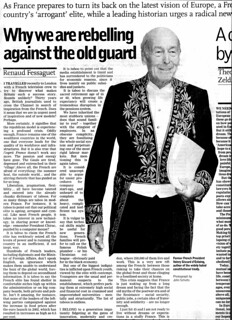
Why we are rebelling against the old guard

As France prepares to turn its back on the latest vision of Europe, a French writer vents his fury with his country's 'arrogant' elite.

by Renaud Fessaguet
The Observer, Sunday May 29, 2005
The old guard
I travelled recently to London with a French television crew to try to discover what makes Britain such a success story. Sounds unlikely? Thirty years ago, British journalists used to cross the Channel in search of inspiration from the French. Does it mean that we are in urgent need of inspiration and of new models? Perhaps.

I've been thinking about the various approaches to software development inside IBM and comparing them to what our competitors and especially our users actually do when they put technology to work for them. Many others have been advocating pragmatism internally and that IBM should do business much like the rest of the world is doing.
More certainly, it signifies that the republican model is experiencing a profound crisis. Oddly enough, France remains one of the wealthiest countries in the world, one that everyone lauds for the quality of its workforce and infrastructures.

IBM is the largest technology company in the world. Annual revenues tend to be around $100 billion.
But it is also true that l'esprit France doesn't work any more. The passion and energy have gone. The Gauls are tired, depressed and entrenched in their 'village'. Above all, the French are afraid of everything: the summer heat, the outside world ... and the stirring rhetoric that has guided us for so long.

See also: overheard. 13,000 employees laid off. Beating inflation these days?
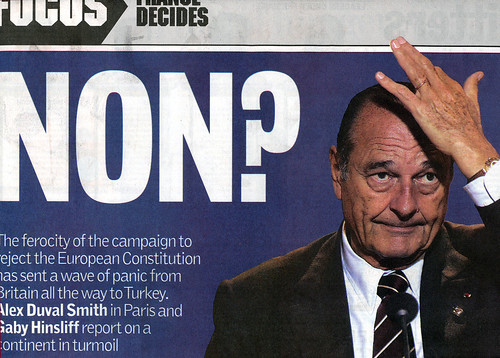
Liberalism, pragmatism, flexibility ... all have become tainted and entered into the already chunky dictionary of taboos. For so many things are taboo in modern France. For instance, it is taboo to point out that our political elite is ageing, arrogant and cynical. Like most French people, it takes no interest in new technology, in sharing power or knowledge - remember President Chirac, puzzled by a computer mouse?

What's the web? What's a feed? What's RSS/Atom? What are blogs? What are wikis?
It is taboo to claim the French elite has recklessly seized all the levers of power and is running the country in an inefficient, if not inept, way.

"What feature is it you might ask? there was no way to bookmark anything in WebSphere Portal?"
Hundreds of French leaders, including diplomats and the Minister of Foreign Affairs, don't speak English, an ignorance which makes them unable to understand the buzz of the global world, forcing them to depend on secondhand information.

What does it mean to be on the web?
It is taboo to say the French elite has found shelter in comfortable niches high up within the administration or on big company boards, both private and public. Isn't it amazing, for instance, that none of the leaders of the left-wing parties campaigned against the increase in food prices after the euro launch in 2002, which has resulted in increases as high as 6.5 per cent.

Buzzwords, buses, frameworks.
The dictatorship of diplomas, the system which demands a formal qualification for any job, which ignores raw talent, however extraordinary it might be, has produced a terrible paradox, empowering mediocrity and irresponsibility, a whole mentality overshadowing the schools, judiciary, media and, ultimately, our national life.

For diplomas, substitute patents and a concern for good products.

This last, the tyranny of patents is worth dwelling on. If one looks at software as a fungible thing and just as a springboard for career advancement, then you will have the notion of viewing the development organization as merely a technology incubator and treat it accordingly. There appear to be perverse incentives in what is rewarded by the organization. These incentives leads to a lack of balance between innovation as expressed in amassing a portfolio of defensive software patents, and innovation that comes from developing lightweight solutions and products that solve problems. The result is technology for technology's sake in other words, and a plethora of frameworks and buzzwords that ignores the effects of said technology on those who are simply trying to get on with things and have problems to solve. A little too often and, as the indoctrination of new hires attests, what is loudly trumpeted is that the way to advance, the way to grab the Fistful of Dollars at IBM, is by filing patents. Those slow pokes contemplating solid products and services are so passé.

See also: Why You Need a Degree to Work For BigCo
It is taboo to point out that the media establishment is timid and has surrendered to the politicians for economic reasons, since it lives mainly on public subsidies and junkets.

It is taboo to discuss the sacred retirement age of 55 or 60, when growing life expectancy will create a tremendous disruption in the pensions system.

We have inherited the most stubborn unions - does that sound familiar to you? - together with the stingiest of employers. In an obscene complicity, they are fossilising the whole social system and perpetuating one of the most rigid labour markets. But mentioning this is again taboo.
Just a paycheck, non?

Non. Chirac.

It is considered unacceptable to argue for easier procedures for company start-ups, and unheard of to complain about the heavy, complicated and inefficient tax system.

File under bureaucracy. See also: "Make sure to call the legal department before you ______." Breathe?
It is vulgar to say that technical skills might be useful for new generations. French families will prefer to call on the famous Polish plumber - or his Ukrainian colleague - obviously paid for in the black economy.
Busloads of consultants or software that enables Glue Layer People? I volunteer a few of these good folks and various others as the Polish plumbers of IBM (some even look the part).

Polish Plumber


Will they get turned away from Bordeaux like those Romanians who come to help with the wine crop are? To give some context, the French have erected internal border posts at the gates of Bordeaux to triage "Eastern European foreigners coming to work". Unlike the Brits who are welcoming new ideas and labour, the French are navel-gazing.
But one of the biggest indignities is inflicted upon French youth, viewed by the elite with contempt. Youngsters are the usual and permanent suspects to the establishment, which prefers parking them at extremely high social and financial cost in crammed and impoverished universities - mentally and structurally. The list of taboos is endless.
"We seem to only be hiring interns these days" - [redacted]
"The word is is that they can be more easily 'molded'." - [redacted]

The interns and the new hires (mostly computer scientists these days) are being treated as cannon fodder, made to work insane hours and to forget about the big picture... Any glory that comes will be on the manager who found them who can bask in the glow of being the only grown up around. You then hear talk about "One of so-and-so's 'finds'". As a colleague put it in another poetic analogy,
"At the end-of-summer country fair, managers will get to show off their prize vegetables. He who has the best manured fields claims the prize."
I asked, "do those people actually eat those vegetables or is it just for show?". The reply
Usually the larger they get the less flavor they have. All looks, no substance. Like California strawberries in February, great color on the outside, not flavor on the inside.
With tongue in cheek I would submit that it's a case of "The man from Del Monte, he said 'Yes'".
I belong to a generation impatiently fidgeting at the gates of innovation, modernity and creation. No wonder that more and more courageous and talented French people don't waste time with the unreal political scene. Don't expect them to vote on the referendum. They will most probably enjoy today meeting new challenges all over the planet.

Tessa reluctantly wrote about pragmatism, and I'll quote her again, if she doesn't mind, she is ever-quotable.

"I do whatever works. I strive to fail faster. It's the results that matter, and simplicity (stripping layers) is celebrated because time is precious. We don't have time to waste on complexity and buzzwords; we're already behind on inventing the future."
I have met remarkable French men and women in China, South Africa, America and now in London, where 250,000 of them live and work. This is a very new rift among the French: between those risking to take their chances on the global front and those clinging to a fossilised society at home.
Kubi, Bowstreet...
This crisis suggests that France is just waking up from a long dream and facing the fact that the old myths of the postwar era and of the Resistance - social security, public jobs, a certain idea of fraternity and solidarity - are no longer enough.

I just hit 45 and I am not ready to live without dreams or expectations in a stuffy France. This is why I will voice a frank and staunch yes to the European constitution.

We urgently need fresh air, the winds of modernity and pragmatism blowing on the banks of the Seine. But who will dare open the window?
I repeat my challenge:
"Are we prepared to change our corporate structure and have profits come more from well-designed and usable software as opposed to consultantware? Are we prepared to eat our babies and make products that have much lower operational costs?"

Renaud Fessaguet is a television journalist and producer.

Postscript


Even though the French said non on the inconsequential EU treaty, there's a great chance they will continue to reward Chirac and his cronies in the next elections. As a quote, put it,
Danielle shrugs: 'Les Français, ils sont un peu con. Ils sont jamais contents.' Roughly translated: 'They're awkward sods, the French. They're never happy.'

I am happy however. I was raised by a village called Lotus. As a native son, I make my own call to arms to that village and hopefully I will find fertile soil. The rest of France, well that is for others.

Le Cinema


The French will never let us forget that it was Les frères Lumière who invented le cinema. Still on this Bastille day, I'll rather celebrate France not with Truffaut, Melville or Godard but rather with a list of films by foreigners.
  • Paths of Glory

    Stanley Kubrick's masterpiece and one of the best war films. It also happens to be one of the most-powerful anti-war films I've seen. Quite relevant apropos central command, cannon fodder, the career advancement imperative, sacrifice, and idées fixes. The story of the French elite during the First World War is much the same today, this time however it is sclerotism and unemployment rather than those muddy trenches and mustard gas.
  • A View to a Kill

    This great B-movie, the prototypical James Bond flick isn't all about France even if the Tour Eiffel is among the scenic locations where Roger Moore fights it out with Christopher Walken & Grace Jones. Still the good and bad guys pass France by. Instead of being the name of the game it is just an occasional backdrop. Also note Duran Duran's excellent theme song of hubris.
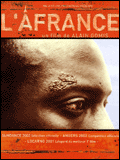
  • L'Afrance

    L-Afrance


    L'Afrance is Alain Gomin's wonderful 2001 film about France, Africa, immigration and ultimately alienation. It is simply the best African film of the past 5 years and perhaps even the past decade. A no-frills parable about identity, culture and belonging, it continues to resonate strongly with me. Perhaps because it's the African immigrant who through bureaucratic ineptitude finds himself "out of status" and becomes an illegal alien. A great view of the frayed ends in French and African societies much like Dirty Pretty Things illuminated the underbelly of London. You can order the French dvd if you can handle dvd region coding.
  • The French Connection & The French Connection II

    french connection


    In each of these classic films, France is the subtext. In the first, the French villains are aloof, methodical and malevolent but the action takes place in the US. Director, William Friedkin, serves us the best and most manic car chase of all time. In the sequel, Gene Hackman's driven cop is lured over to France as bait in pursuit of those who got away, but gets caught by the bad guys and loaded up with drugs. The scenes of him trying to kick the heroin habit are among the most harrowing ones the silver screen has seen. Ironically, the chase that ends it all is of him on foot chasing cars and boats. John Frankenheimer is a genius.

La Bibliotheque


Some further reading on the France IBM connection:
  • The Soul of a Company
  • Act your age
    The key is to find a Pragmatist who is desperate, or as Moore says, a "Pragmatist in Pain". They have a problem, and they need it solved very badly. In fact, they are so desperate for a solution that they are willing to break ranks with their Pragmatist peers and be the first of their kind to try your product.
    I'm wishing that IBM were a pragmatist in pain, instead I've been seeing only pain from my lowly vantage point.
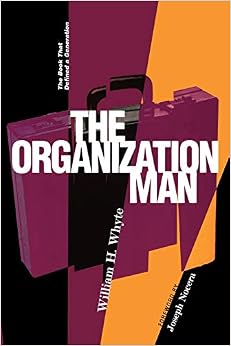
  • The Organization Man by William H. Whyte
    Thanks Tessa for the pointer to this book and that chapter about "The Fight Against Genius". Very illuminating.

    organization man
  • Office Politics by Wilfred Sheed

    I came across this novel through a delightful appreciation piece in the Washington Post and it seemed like a parable of sorts. I had to order immediately even though it has gone out of print. I don't know why reading this synopsis hit home, it couldn't possibly have wider applicability. It's just a novel after all and anyway it's not about France so I hope you'll pardon this juxtaposition.
    "...George is no longer sure there's much at the Outsider worth believing in. Its charismatic editor, a transplanted Brit named Gilbert Twining, has loads of facile charm and wields a keen editorial pen, but whether there's anything behind the charm is open to question. The rest of the magazine's tiny staff is a conglomeration of oddballs and misfits "hand-picked" by Twining, apparently "on some principle of interlocking incompatibility." One editor, Brian Fine, is "chubby and small" and, beneath a veneer of amiability, seethes with bitterness and frustrated ambition. Another, Fritz Tyler, is thin, supercilious and cynical. The accountant, Olga Marplate, longs to be a tyrannical efficiency expert, while the advertising man, Philo Sonnabend, wanders around in a fog of dotty incompetence.

    Individually and collectively they are spineless -- if Twining raised an eyebrow in his direction, "Brian Fine would topple over like a doll with a round base" - yet the office positively crackles with rivalry and intrigue. Brian invites George to lunch one day and lays out the alignment of forces - the alignment, that is, as Brian chooses to see it - in the course of which he says that Twining suffers from the "weakness of great men to keep their subordinates from growing." George is nonplussed. He thinks:

    "Wait a minute, you're supposed to be on their side. Don't you understand the game? Olga and Philo and one editor against Twining and me and the office boy. George found that the game, as game, was getting a stronger grip on him. CBS politics had been played on too large a field, so you couldn't see the players at the far end. This stadium was just the right size."

    So off they all go, conniving and conspiring and back-stabbing and all the other things that make life in the office - any office - so endlessly delightful and produce such delicious streams of office gossip. George tries to explain it to his wife: "Let's take an example: the office. A, let's say, wants to get rid of B. C agrees, but not on A's terms. They both approach D --" and when she interrupts with what he regards as quibbling objections, he insists that "the equation goes on all over town." Okay, he says, "just go down to any playground, and what do you find? A, B and C again. One leader, one whiner, one mischief-maker. . . . Sometimes there's a tricycle to fight about on the playground, and sometimes there's a nickel on the ground. But the jockeying of ego is the real story."
  • Why smart people defend bad ideas
  • Flaubert's Parrot by Julian Barnes
    Flaubert Parrot

    C'est moi.
    This remains one of my favourite novels.
  • The Myth of Sisyphus by Albert Camus
    I leave Sisyphus at the foot of the mountain! One always finds one's burden again. But Sisyphus teaches the higher fidelity that negates the gods and raises rocks. He too concludes that all is well. This universe henceforth without a master seems to him neither sterile nor futile. Each atom of that stone, each mineral flake of that night filled mountain, in itself forms a world. The struggle itself toward the heights is enough to fill a man's heart. One must imagine Sisyphus happy.
  • "Sharp-elbowed bureaucratic maneuvering"
  • On the limitations of Lotus Notes on the web
  • Les Misérables by Victor Hugo
    Well you can't exactly leave the bibliotheque without Hugo, that's like England without Dickens.

Le Cabaret


We need a cabaret soundtrack for this histoire. Évidemment.

Have a bottle of Bordeaux today. A bientôt...

File under: , , , , , , , , , , , , , , , , , ,