Showing posts with label Chaka Khan. Show all posts

Saturday, June 29, 2024

Baby Me by Chaka Khan - One Track Mind

More musings on music have been requested (apparently weekly playlists and poems are not enough) so I'm inaugurating an occasional series I'm calling One Track Mind. I'll pick a song, nothing too obvious, and see where the discussion leads.

Baby me by Chaka Khan is my first pick.

Chaka Khan CK 1988


Chaka Khan announces herself. May God preserve her. Her musical chops are undeniable, she's every singer's favorite singer (Ask Joni). She was recently (finally! belatedly!) inducted into the Rock and Roll Hall of Fame. She doesn't need more flowers and yet I come to sing her praises.

Beyond that voice, that immaculate voice, that awesome weapon, there's that unerring sense of funk. You've seen those videos of her drumming, right?

Chaka Khan also has impeccable taste. The story goes that she told Stevie Wonder that she wasn't feeling the song he'd written for her and that he should go back and try better. (This was 1974-vintage Stevie, the greatest songwriter in his prime period)

Of course he then wrote Tell me Something Good

The point being that Chaka Khan has exceedingly high standards.

By this stage in her career - 1988, she had nothing to prove to anyone. Every project she took on was an all-star affair, akin to a Minnie Riperton album - an event, and everyone scrambles to get in on it. The voice and talent are so compelling that you want to throw your hand in.

The sessions for the C.K. album were no different. The A-side is an embarrasment of riches.

First, a cover of Stevie Wonder's Signed Sealed Delivered featuring the man himself on harmonica reprising his guest appearance on I Feel For You

Soul Talkin' is next, written by the peerless Brenda Russell who also supplies background vocals. Bobby McFerrin joins in the fun, channeling the sound of a saxophone with his own vocals.

It's my Party brings the joyous sounds of Womack & Womack to the table. This was the first single of the album.

And then Prince supplies Sticky Wicked (featuring Miles Davis, Eric Leeds and Atlanta Bliss) a nouveau funk affair, and then offers Eternity one of his effortless ballads (Chaka and David Frank produce the latter)

On the B-side, she continues her jazz explorations paying homage to Billie Holiday with The End of a Love Affair and I'll Be Around again bringing in inspired collaborators: George Benson, Marcus Miller, Dave Grusin, Steve Ferrone and Miles Davis again.

Chris Jasper of the Isley Brothers also crafts a tune, Make it Last. Frankly we are spoilt for choice.

And yet Baby Me, the third single, is what we should focus on. Let's have a listen (also on spotify)


A few preliminaries to save you to trip to Wikipedia or Discogs. The legendary Russ Titelman is the producer, Rob Mounsey arranges and plays keyboards. Holly Knight, Billy Steinberg are the songwriters. Chaka Khan, of course, does all the vocal arrangements

Russ Titelman was trying to capture the magic he'd witnessed when he had her and Rufus in the studio during the sessions for the Stompin' at the Savoy album in 1983, especially the performance on Ain't Nobody. You can read some of his memories of the time

Baby me is a deceptively simple love song. The lyrics are of longing, tenderness and vulnerability. After all, who doesn't want to be babied and treated with care? "The world is crazy and sometimes cruel / So baby me and I'll baby you"

(Incidentally, I fully believe in the power of misheard lyrics so I'm serving notice that I'll ignore any stickler who might bring up that "sometimes cruel" is probably not how the line goes. That's what I heard and I'm sticking to it)

It's a keyboard driven song, much like Ain't Nobody, the hit that capped her reunion with Rufus in 1983, and which serves as a kind of blueprint.

It's a fairly restrained affair to start with, bouncing between the keyboards and her voice, and punctuated by Paul Pesco's guitar fills. The lyric in the refrain goes "When you touch me, I come undone", and then carries on asking "Do you do this to every one?"

Then the excitement builds. "Take me in your arms / Rock me tonight"

Observe the way she sells the "Rock me tonight" line.

Then the chorus changes as if to emphasize the mounting infatuation:

"When you touch me I come undone / You better not do that to everyone".

Is this the pleasure principle speaking or resignation at being lost in love?

Then to the bridge, the bridge that un-mans me. For she goes in flight with a little scatting - her voice is an instrument, and then the saxophone comes in. The scatting is cathartic, duelling almost with the saxophone. You realize just how striking her voice is.

"Touch me" she sings. And then she makes you wait - a model of restraint, it's fully 3 minutes 10 seconds in before when she finally winds up and starts wailing. It's a release of the built-up tension. And you, the listener, want to join in.

The genius of this part is that she doesn't keep going, she stays in the pocket. Sure she lets loose, there's a release, but then she retreats. This part confounds me because once you start, you always want to keep it up.

I know that once I've started on my own wailing on Baby Me (in the shower or, as my household have caught me on many occasions), I can't help but adding my adlibs. I just want to sing at the top of my voice. And keep singing.

Patti Labelle or Aretha Franklin would have decimated the end of the song. I fully envision histrionics if Patti were let loose on this song, and perhaps if Chaka ever performed this live, she would go wild. But it works here; she's almost inviting the listener to fill things in.

Chaka Khan, known for her vocal pyrotechnics, is well aware that she could belt this out; but she chooses to be restrained in the arrangement, restrained even when she lets loose. She stays in the cut, in the pocket, in service of the song. And that is her knowing artistry at work.

There are a few remixes that highlight the craft and thought that went into finalizing the song. Rob Mounsey's arrangements were on the mark.

The Big Baby Extended mix emphasizes the keyboards showing how tight the mix is in the released version and the importance of the guitar licks and Warren Hill's saxophone

Compare also to Come 2 my House a decade later, the title track of her album length collaboration with Prince.

The 3cks and a baby remix highlights the scatting and adds a few more improvisations and wailing at the end, hinting at the kind of arrangements that could have been used in the final mix

Soul Talkin' follows a similar formula with Bobby McFerrin supplying the vocal solo in lieu of the saxophone. (My long overdue Brenda Russell appreciation piece will be forthcoming).

Here's some more Chaka Khan drumming (you're welcome). Again, she stays in the pocket instead of being flashy

The Babysitting mix of Baby me is a more stripped down affair, a little too sparse to my ears

I'll also throw in Eternity which bears the fingerprints of Prince.

Spotify doesn't have the remixes but the essential is there

I suppose this is fodder for my contention that 1988 was one of the greatest years in recorded music. But I'll flesh out that provocation another time...

What can I say, the song moves me, the arrangements, the voice - everything about it. I'll leave you with 4:06 minutes of soul perfection:
Baby me by Chaka Khan
Let me know what you think.

See also: Janet Jackson and the importance of bubblegum and Tony Toni Tone - Weary Sons of Soul which I retrospectively nominate for this series

File under: , , , , , , , , ,

Writing log: May 3, 2024

Tuesday, November 16, 2004

In A Blanket Of Soul

If July was spent revisiting the roots of reggae, and August, a jazzy excursion away from silly season, September brought the Toli Music Class of 2004. Late October however, found me wrapped in a blanket of soul, an abundance of rare groove to warming me in anticipation of that fast-approaching Bostonian winter of our discontent. Herewith then, this past month's soul-comforting playlist.

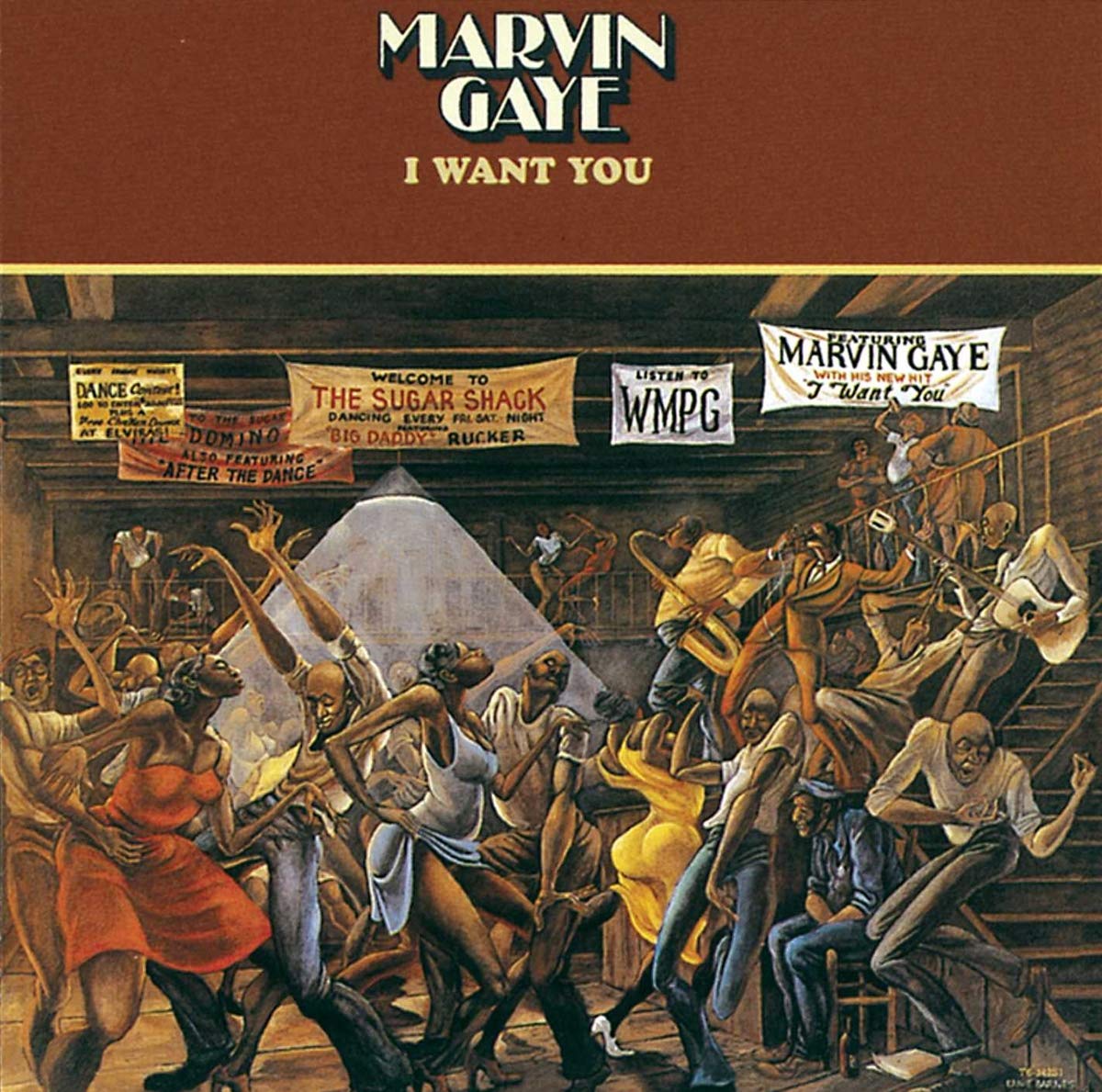
I Want You

Musical Massage

The seventies witnessed the great flowering of the concept album (What's Going On and Innervisions amongs others). Singer/songwriter, Leon Ware wrote one of the best of these in I Want You, a full-length suite in the vein of longing. When he brought a few songs from the demo to his Motown patrons, Marvin Gaye jumped at it and wanted to record the whole suite. This was what came to pass after some Berry Gordy arm-twisting. Marvin, a sensualist at heart, went on to embue the songs with his own blend of erotomania and recorded one of the great bedroom come-on albums. When you listen to the original album (a few tracks of which are tacked on to the remastered Massage album), you realize that the blueprint had been put in place by Ware; all Marvin did was turn up the lust quotient. The instrumentation is mostly unchanged and the only contrast is Marvin's more silky voice. Tracks like Come Live With Me (Angel) would be classics regardless of who sung them.

Musical Massage then was Leon Ware's follow up and the title fits: it feels like a full-body rub of sorts, relaxing and deeply invigorating. The arrangements in all the songs work to put you in a trancelike state. A great and seamless musical experience and well worth rediscovering. Minnie Ripperton features on Instant Love and flirts with us. Bobby Womack, and Marvin himself returning the favour, feature in the studio console. Body Heat is full of fire and mindful of the heat Ware was bringing in his contemporaneous work with Quincy Jones. The flutes and strings that drift in and out underscoring the point are clearly the flourishes of a skilled shiatsu masseur.

So that's the music, what's the toli you ask? Well it's simple: Berry Gordy was a pimp. That at least was the gist of a couple of famous articles by Arthur Kempton in the New York Review of Books. I had long thought this theory had a touch of hyperbole about it but I've increasingly come to see its essential insight.

The back story of the way this Leon Ware album was treated is an interesting case in point. Despite being one of the strongest albums of 1976, and having given up his previous album to Marvin, Berry Gordy wanted this album for Marvin also. After Ware demurred, it was finally released under his name but then was barely promoted by Motown; Gordy is not a man to cross and Musical Massage paid the price.

The previous evidence of Gordy's pimphood were things like the Funk Brothers never getting their dues until it was almost too late a few years ago when Standing in the Shadows of Motown was released. Similarly the story of James Jamerson, one of the all time greatest guitarists, having to scalp a ticket to see the Motown 25 show (he who had played on almost all the songs performed there) and dying destitute grates me deeply.

The wistful way all these great musicians reminisce about their Motown years just underscores the point; the power imbalance in the relationships being plainly evident. The essential stinginess of the man who lured them with promises of wealth but made sure that they gave him the money first. There was capricousness, arbritrariness, favoritism - the "bottom bitch" in this case being Diana Ross. The wheedling and cajoling, the occasional flamboyance and fundamentally the factory line approach that Gordy pioneered in managing the "talent" all speak to this point.

Now it's a sad thing to think of successful black men and place them in proximity with a word like pimp. One might expect that of boxing promoters like Don King but that comes with the territory, we expect a little sleaze amidst the sweat of fistic endeavours. Our musical heroes deserved better than the exploitation that was their daily fare. Leon Ware isn't bitter about his treatment and his music stands the test of time. It's a crying shame, however, that he didn't reap the rewards of his considerable artistic achievement and I lay the blame squarely on Berry Gordy.

Al Green - Call Me

Al Green was in a zone for 4 years forging an intense collaboration with Memphis producer Willie Mitchell in the early 70s. This was before he had his own Road to Damascus incident admonishing him to stop singing devil music and to embark on the path of the good Reverend Al. It's not that the gospel-inflected music that followed was any less good, but it's a plain fact Willie Mitchell-era Al Green embodied baby-making music. Sophisticated and unhurried, soothing like a good wine, low lights and some candlelights, honey-glazed, chocolate heaven...

Oh! I forgot myself for a minute...

Call Me didn't sell as much as Let's Stay Together or I'm Still In Love With You which arguably had more hits. And yet I find it his most cohesive music. In this same vein, some point to Talking Book as Stevie Wonder's peak even though Innervisions was the greater album.

Listening to the album, it's hard to account for all the goodies, the title track obviously is a standout, but also Here I Am (Come And Take Me) later to be covered by UB40 in their Labour of Love project which only proves what great taste they had. Similarly I'm So Lonesome I Could Cry definitively captures a plaintive mood. It would take twenty years for another artist to come close to doing justice to it and we can thank new moon daughter Cassandra Wilson for taking on that task. Even so, Al Green is untouchable.

Ship Ahoy

The first shot across the bow by Philly International writer/producer pair Gamble and Huff was perhaps the O'Jays Back Stabbers album. To my mind though, Ship Ahoy, the follow-up is the apogee of Philly Soul. Where Back Stabbers had hits in Sunshine, Love Train and of course the title track, it was an album more concerned with relationships. This album, a year later, is more topical. After all, you couldn't help but respond to the kind of engaged and thoughtful music that the competition (Marvin, Curtis, Issac and Donny) were laying down. And so the Philly International turned political over the course of the album producing grown-folks music that one couldn't help but groove to.

Ship Ahoy explodes with killer singles. The title track is a nine minute journey on the slave ship from Africa to America. The string arrangements are a signature of Gamble and Huff, multi-layered and delicate, cellos, violas and violins combining with a horn section sans pareil. For the Love of Money is the monstrous dancefloor hit, a guitar lick sans-pareil that simply radiates funk. Play this at any barbecue and everyone will be bumping and grinding and forget that you just stole their last piece of spare ribs. And yet the lyrics speak of social ills of people selling their soul for the mighty dollar. Similarly, Now That We Found Love is essential soul. A very influential track covered by the likes of Third World who gave it some reggae flavour and also by Heavy D with a hip-hop take.

My favourite song on this is You've Got Your Hooks In Me. Listening to it is just like the moment when that tall man with that deep, gravelly voice who normally doesn't talk much, and sits at the back of the church, gets up and startles you as he begins to testify. Testifying is what this gospel/soul song achieves. The organ propels the voices and the rest of the congregation join in. This is manhood incarnate talking about love: voices harmonizing, call-and-response declaiming and pronouncing.

Eddie Levert's vocals recall the similarly electric Otis Redding, Sam Cooke or Harold Melvin and the Blue Notes. This is The O'Jays' reply to songs like I Miss You or Try a Little Tenderness from the point of view of the pulpit. I suppose that a few years later they created the ultimate ballad in Stairway to Heaven which also fused the secular and sacred. But that was a more mature work, more polished and the arrangement was more complex and had more strings. The singing here is more fun, closer to church. Indeed let's call it pure church - a Philly baptist take on a modern day Song of Solomon.

Rufus and Chaka Khan

Chaka Khan's work early on in her career as lead vocalist for blue-eyed funk band Rufus placed her in elite company with the likes of Patti Labelle and Stephanie Mills or even Aretha Franklin. This greatest hits compilation actually should properly be called "early hits" since it doesn't have the mid-eighties standouts like Ain't Nobody and I Feel For You - missing Grandmaster Flash stuttering "Chaka, Chaka, Chaka Khan" is criminal.

Still by concentrating on early albums like Rufusized and Ask Rufus, the bases are covered. Tell Me Something Good, written by Stevie Wonder is a tribute to her vocal stylings. You've Got The Love still tears up a dancefloor and has been sampled to death, think Tone Loc - Loc'ed After Dark for example.

During the acoustic guitar section of Prince's last tour, he would play Sweet Thing and after the first five notes, everyone responded with the warmth that such an all-time classic deserves. Mary J Blige stated a claim to shrewdness by associating herself with that song on her first album. Erykah Badu also knew a good thing when she wailed on Stay in her live album. Of course she can't quite capture the out-and-out ferocity of the original but then who can. Chaka Khan is such an emotional singer and Rufus the band were a great complement to her talents.

C.K.


Another Chaka Khan album here, this one from 1989 is essentially a star-studded celebration much like Duke Ellington's Jazz Party album 40 years earlier. Good friends and scary talent coming together with music on their minds. Brenda Russell delivers solid soul songwriting, Bobby McFerrin joins in the Soul Talking. George Benson turns up with some nice fills on guitar and of course Stevie Wonder adds his harmonica to a reprise of his own Sign, Sealed Delivered (I'm Yours).

It's My Party was the radio hit, featuring Womack and Womack coming straight off their success on Teardrops (let's sing along: Footsteps on the Dancefloor / Remind me baby of you / Teardrops in my eye/ Next time I'll be true).

Chaka has always had jazz inclinations and here she covers couple of Billie Holiday standards: I'll Be Around and The End of a Love Affair. It's a different emotion than with Lady Day but unlike others who have tried, and failed, to emulate Billie, Chaka's hard life serves as a foundation for an authentic take on that blue mood. Baby Me is quietly devastating with a bassline resulting in a perfect pop/soul/rock fusion. I can't fail to sing along with it.

And then there's a purple combination. Who can resist the combination of Chaka Khan, Prince and Miles Davis on the same track. Birds of a feather and iconoclasts all, Sticky Wicked is a confection of psychaedelic, neo-funkified, horn-inflected paisleydom.
Caramel-coated, pseudo-happy Call her Sticky Wicked
Prince has always been in love with divas (his first major hit I Feel For You was originally written for Patrice Rushen and ironically was best sung by Chaka Khan in 1984). After this collaboration, he would try to recreate this groove with Mavis Staples in Jaguar but this song is the prototype of the minneapolis genius at work with late-era Miles adding his customary accents. Prince also donates one of his best ballads, Eternity, a clock ticking excursion into love. It's a party all right.

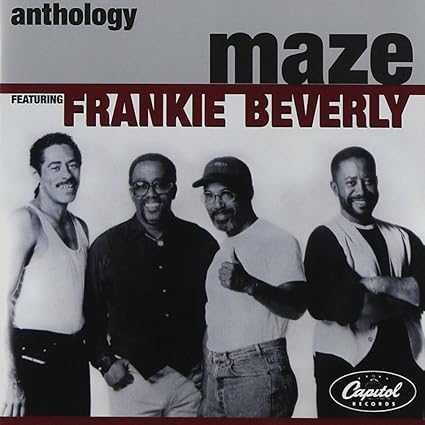
Maze Anthology


A bed of soul without Maze and the lilting voice of Frankie Beverley is missing its essential warmth. As a band, they never got a Number 1 on the pop charts (in much the same way that James Brown never really got pop acceptance). Their most influential song, Joy and Pain, was an album track and was never released as a single - Rob Base and DJ EZ Rock rode that breakbeat for their 15 minutes or fame. And yet they'll sell out any number of venues whenever they go on tour. Their dedication to crafting sonic gems is on display throughout and the care with which they go about it is a pleasure. Running Away is rare groove defined. Before I Let Go is delicious jazz-funk. And the ballads, such ballads: While I'm Alone, Golden Time of Day to say the least. These are songs that just creep onto you, before you notice it you're smiling and your mood has lifted.

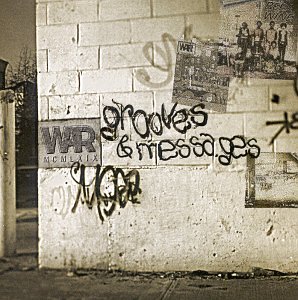
a href="http://www.amazon.com/exec/obidos/ASIN/B00000J63N/">War


People often think that War were responsible for that classic "War, Was is it good for?", but no that was The Temptations. Still the confusion is well-placed, the band War was known for its conscious messages delivered over jazzy beats. Tbe band was a collective that came out with rare groove anthems like The World Is A Ghetto, lazy funk that ambled. When necessary they could be as cold as Funkadelic as on Cisco Kid and Low Rider, more often though they stuck to great instrumental Jazz-Funk with a latin twist thrown in to keep you in the pocket: Slipping into Darkness is a good case in point.

Unlike Kool and the Gang and Cameo, they didn't really have much success beyond the 70s. I think this is a good thing because along with Brass Construction or The JBs, they are the best example of the pure Jazz-Funk band. Their horns reigned supreme, the konga and percussion was varied rather than metronomic and their artistic choices were always inspired. As a bonus treat the second disc of this set features some interesting remixes offering sometimes radical reinterpretations.

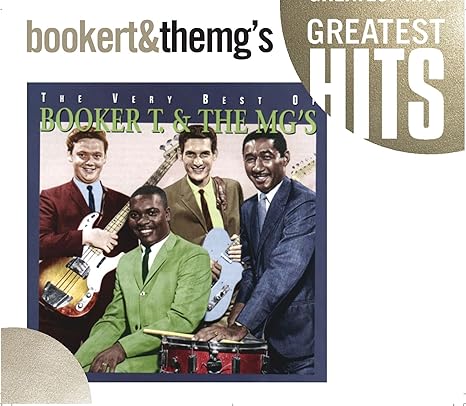
Booker T


I'll end with instrumental soul straight out of Memphis. Booker T. & the MGs were the house band for countless hits on Stax, they were immensely influential and popular in their own right. No rock and roll, blues or funk band has failed to test their chops on Green Onions which stands as one of the most memorable songs we have. For that song alone, they were destined for the Hall of Fame. And for drumming, few could compare to Al Jackson Jnr, the distinctive and gritty backbeat to almost all southern soul. Every instrument is locked in a groove that just meshes together perfectly. The Roots recently covered Melting Pot which is my favourite amongst the abundance of riches here. It has all the ingredients of my kind of music: soul, intelligence, wit and virtuousic execution. With such a soundtrack ringing in my ears, I'm a picture of serenity these days.


File under: , , , , , , , , , , , ,