Showing posts with label virtuosity. Show all posts

Tuesday, June 09, 2026

The Finest

The words write themselves
All of the things he was
The finest for all of us

Peerless yet unassuming
And a hard act to follow
The finest undeniably

No one worked harder
Yet it was always with such ease
The finest reliably

Tasteful and self contained
The tone, exquisitely poised
The finest most graciously

A twinkle in the eye
Delightful conversations
The finest effortlessly

The strategy was to redirect fools
Quiet laughter amidst this tolerance
The finest ever so gently

Reading widely, education was paramount
His learning had no boundaries
The finest, he charted new territory

In search of the new, an early adopter
But yearning for what actually worked
The finest, his passion for discovery

Bound in faith for all of us, a firm believer in family
A gift of love and concern, a trailblazer for our community
The finest spirit, he gave generously

The words write themselves
All of the things he was
We hold on to the memories

The finest we've known
The finest we've seen
The finest we'll remember


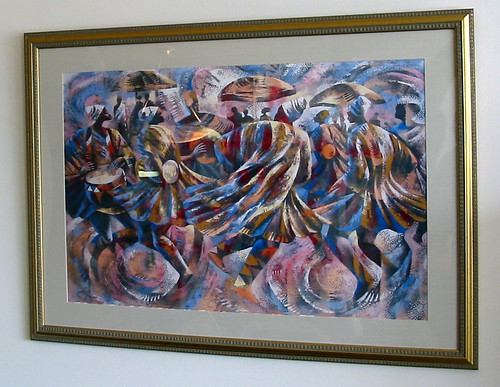
dance by wiz


After Samuel Ofosu-Amaah

The Finest, a playlist


A soundtrack to this note (spotify version)
The Finest


File under: , , , , , , , , ,

Writing log: January 29, 2023

Saturday, November 08, 2025

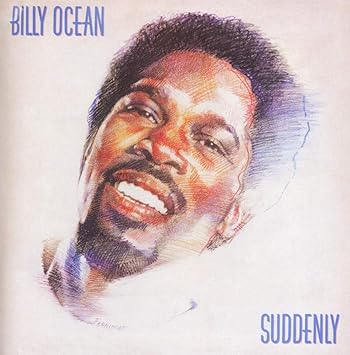
Caribbean Queen by Billy Ocean - One Track Mind

I'm dating myself, but the easiest way to get me to make a fool of myself is to play Caribbean Queen by Billy Ocean. It's like kryptonite to me. By the time the chorus comes around, I'm no longer acting, I have become an actual fool.

I mean Michael Jackson and Prince especially made major moves that year but Billy Ocean essentially won 1984 with just that song. The rest of the album was a bonus.

I just can't resist the groove, it makes me happy, I want to dance, I want to sing (loudly), and act the fool. They say Dionysus was a Greek god but the scribes out of discretion didn't disclose his infatuation with the siren song of a Caribbean queen.

I'm pretty sure Liberian Girl was MJ's belated response to homie for stealing his thunder, despite what the biographers may say. The gloved one with the golden voice always knew a winner (see lifting the synths from 1999).

Incidentally, many sincere apologies to the women I've stepped to while singing that song or variations of it - I'm an equal opportunity prospective lover, and, as I've said, I'm a fool.

The song is so versatile that, not to disclose too much, I've sang of African queens, Nigerian girls, Ghanaian ladies, various European duchesses and American queens and more, not to mention many a real life Caribbean queen.

Musical flirtation must be an occupational hazard of womanhood and it's all for the good. I've found that on occasion, some do get caught up in the rapture of a song so infectious. And even when deflected, the song breaks it down gently.

Now of course there's a long tradition of such celebratory songs. Frankie Beverly and Maze gave us Southern Girl. Earlier, Lou Perez gave us Caribbean Woman, his charanga ode to that fine Caribbean woman. They know what's up.

But to return to the song, give me the extended version. At the very least, you need the seven minute version, a radio edit wouldn't do with something so exuberant.

Even after the insistent anouncement of the opening bars (you have to signal your intentions in these things), the song takes its time to get the the point and lets the saxophone lay down the law to start things off.

There's something quite unhurried yet insistent about the groove, propelled by the synth basslines. It's a pulsing pace yet it still manages to be langorous, as if to savor the dance. Caribbean Queen is a dancefloor anthem, feelgood in four on the floor rhythms.

Start with the voice. The warmth in Billy Ocean's singing just invites you into the conversation. To my ears, there's a lilting hint of Gregory Isaacs and the velvet touch of Dennis Edwards in the voicing.

The honesty also disarms:

"I was in search of a good time
Just running my game
Love was the furthest,
Furthest from my mind"
The kicker comes from the parentheses in the title: No more love on the run. This is about being captured.

With spare lyrics, the scene sets up the drama of the relationship but he makes you wait by doing two verses and bridges, so building up the tension that the chorus is a release. But, just as soon as we're released, the groove settles back down to enjoy the dance.

The drop in the middle, and the build up, also play their part making you savor each element. The bass gets it due, the drum beats and then the synths do their bit. It's like the Soul Makossa breakdown in Wanna Be Startin' Something. By the time the chorus comes back around you want to start singing it again.

The guitar riffs. the sound effects, Keith Diamond's keyboard, synthesizer and production are inspired and really shine here but it's the saxophone solo by Jeff Smith just puts things over the top.

Infectious thy name is Caribbean Queen.

The initial release in Europe was titled European Queen but didn't get traction. Canny marketing forced a new title and Caribbean Queen struck a nerve. I've also heard an African Queen version.

Caribbean Queen by Billy Ocean


Surveying the 1984 music scene, most would hand it to Prince, you can hardly argue with When Doves Cry and the Purple Rain album and movie, let alone The Time, Sheila E and Appolonia 6. It was his year in music and pop culture.

But there were others too. I mean Cherrelle (courtesy of Jam and Lewis) dropped I Didn't Mean To Turn You On, Dennis Edwards and Seidah Garret had the almighty duet Don't Look any Further.

The S.O.S. Band's Just the Way You Like It album heated up the dancefloor. And even in the midst of all this, Sade's Diamond Life had been released and Smooth Operators were moving

A digression: Billy Ocean would win the 1985 Grammy award for Best Male R&B Vocal Performance for Caribbean Queen. But the other nominees that year were quite mistaken. Namely, let's be frank, The Woman In Red is hardly prime Stevie Wonder.

And to pick on the thread, the Grammys have never really rewarded the soul music that moved the masses. Unforgiveably, James Brown didn't get anything after Papa's Got a Brand New Bag until Living in America in 1987.

Sexual Healing is an all-time jam but the Academy barely acknowledged Marvin Gaye's transcendent 1970s run of albums that changed music.

Teddy Riley's only Grammy was for engineering Dangerous in 1993. How are such things possible?

Anyway, the point is that Stevie Wonder kept getting sentimental votes in honor of his Seventies's streak.

It was even harder to square Stevie winning the next year 1986 for In Square Circle when Alexander O'Neal wasn't even nominated.

The same thing goes for 1996 when there was Brown Sugar by D'Angelo or say I Hate U by Prince. For Your Love is a effortless ballad from Stevie but come on, really?

In any case, the fact remains that Caribbean Queen stopped both Prince and Stevie Wonder in the charts that year which is saying something about what it means to black culture.

The song affects me the way its almost contemporaneous Somebody Else's Guy by Joycelyn Brown does - shower song fodder. I Can't Wait by Nu Shooz would disconcert me in a similar manner a couple of years later.

So anyway, catch me singing along with Billy Ocean: Caribbean Queen (No More Love on the Run). Meet me on the dancefloor.

Queens, a playlist


A few more songs in the vein of Billy Ocean's opus. (spotify version)

See previously: Janet Jackson and the importance of bubblegum and Baby me by Chaka Khan

This note is part of a series: One Track Mind

File under: , , , , , , , , , , , , , ,

Writing log: April 28, 2024

Tuesday, May 20, 2025

Love and Death

The slightly stilted language, as if through a veil of translation
The rhythm and cadences came from a different place
Performing with a twinkle in the eye, full of hints and allusion
The marked confidence, the groove, we've got our own thing

Speaking of heaven, but not hell
Singing of love, but not hate
Trickster tales that leave you in the lurch
But, crucially, clear-eyed about death

...

Laments and celebrations walk hand in hand
And comfort lies in the company you walk with
The hidden realms one passes on the journey
The dreamy truths revealed along the way
Hold tight, for friends will one day sway off the road
And, at the tail-end of the journey, your traveling companion will be your shadow


After seeing Ebo Taylor perform at age 89

Ebo Taylor


Love and Death, a playlist


A soundtrack for this note (spotify version)

Pat Thomas and Ebo Taylor


I caught Ebo Taylor and Pat Thomas on the former's farewell tour in Austin on May Day 2025. Then aged 89, he relied on his very capable 6 piece band (helmed by two of his sons) to do the heavy lifting. Ageless afro-funk grooves, nasty keyboards and the horns. Pat Thomas's voice too, still had that honey-coated baritone and the vocal range that could hit the high notes that would excite you. They still had it, they still had that ineffable style that emerged fully-formed in their Seventies heyday. Heaven for this exiled soul.

Bonus beats: I captured a few snippets of their live performance with my cell phone: Heaven , Love and Death and Kwaku Ananse, some mellow highlife Ene Nyame A Mensuro, encore

File under: , , , , , , , , , , , , , ,

Writing log: May 2, 2025

Saturday, June 29, 2024

Baby Me by Chaka Khan - One Track Mind

More musings on music have been requested (apparently weekly playlists and poems are not enough) so I'm inaugurating an occasional series I'm calling One Track Mind. I'll pick a song, nothing too obvious, and see where the discussion leads.

Baby me by Chaka Khan is my first pick.

Chaka Khan CK 1988


Chaka Khan announces herself. May God preserve her. Her musical chops are undeniable, she's every singer's favorite singer (Ask Joni). She was recently (finally! belatedly!) inducted into the Rock and Roll Hall of Fame. She doesn't need more flowers and yet I come to sing her praises.

Beyond that voice, that immaculate voice, that awesome weapon, there's that unerring sense of funk. You've seen those videos of her drumming, right?

Chaka Khan also has impeccable taste. The story goes that she told Stevie Wonder that she wasn't feeling the song he'd written for her and that he should go back and try better. (This was 1974-vintage Stevie, the greatest songwriter in his prime period)

Of course he then wrote Tell me Something Good

The point being that Chaka Khan has exceedingly high standards.

By this stage in her career - 1988, she had nothing to prove to anyone. Every project she took on was an all-star affair, akin to a Minnie Riperton album - an event, and everyone scrambles to get in on it. The voice and talent are so compelling that you want to throw your hand in.

The sessions for the C.K. album were no different. The A-side is an embarrasment of riches.

First, a cover of Stevie Wonder's Signed Sealed Delivered featuring the man himself on harmonica reprising his guest appearance on I Feel For You

Soul Talkin' is next, written by the peerless Brenda Russell who also supplies background vocals. Bobby McFerrin joins in the fun, channeling the sound of a saxophone with his own vocals.

It's my Party brings the joyous sounds of Womack & Womack to the table. This was the first single of the album.

And then Prince supplies Sticky Wicked (featuring Miles Davis, Eric Leeds and Atlanta Bliss) a nouveau funk affair, and then offers Eternity one of his effortless ballads (Chaka and David Frank produce the latter)

On the B-side, she continues her jazz explorations paying homage to Billie Holiday with The End of a Love Affair and I'll Be Around again bringing in inspired collaborators: George Benson, Marcus Miller, Dave Grusin, Steve Ferrone and Miles Davis again.

Chris Jasper of the Isley Brothers also crafts a tune, Make it Last. Frankly we are spoilt for choice.

And yet Baby Me, the third single, is what we should focus on. Let's have a listen (also on spotify)


A few preliminaries to save you to trip to Wikipedia or Discogs. The legendary Russ Titelman is the producer, Rob Mounsey arranges and plays keyboards. Holly Knight, Billy Steinberg are the songwriters. Chaka Khan, of course, does all the vocal arrangements

Russ Titelman was trying to capture the magic he'd witnessed when he had her and Rufus in the studio during the sessions for the Stompin' at the Savoy album in 1983, especially the performance on Ain't Nobody. You can read some of his memories of the time

Baby me is a deceptively simple love song. The lyrics are of longing, tenderness and vulnerability. After all, who doesn't want to be babied and treated with care? "The world is crazy and sometimes cruel / So baby me and I'll baby you"

(Incidentally, I fully believe in the power of misheard lyrics so I'm serving notice that I'll ignore any stickler who might bring up that "sometimes cruel" is probably not how the line goes. That's what I heard and I'm sticking to it)

It's a keyboard driven song, much like Ain't Nobody, the hit that capped her reunion with Rufus in 1983, and which serves as a kind of blueprint.

It's a fairly restrained affair to start with, bouncing between the keyboards and her voice, and punctuated by Paul Pesco's guitar fills. The lyric in the refrain goes "When you touch me, I come undone", and then carries on asking "Do you do this to every one?"

Then the excitement builds. "Take me in your arms / Rock me tonight"

Observe the way she sells the "Rock me tonight" line.

Then the chorus changes as if to emphasize the mounting infatuation:

"When you touch me I come undone / You better not do that to everyone".

Is this the pleasure principle speaking or resignation at being lost in love?

Then to the bridge, the bridge that un-mans me. For she goes in flight with a little scatting - her voice is an instrument, and then the saxophone comes in. The scatting is cathartic, duelling almost with the saxophone. You realize just how striking her voice is.

"Touch me" she sings. And then she makes you wait - a model of restraint, it's fully 3 minutes 10 seconds in before when she finally winds up and starts wailing. It's a release of the built-up tension. And you, the listener, want to join in.

The genius of this part is that she doesn't keep going, she stays in the pocket. Sure she lets loose, there's a release, but then she retreats. This part confounds me because once you start, you always want to keep it up.

I know that once I've started on my own wailing on Baby Me (in the shower or, as my household have caught me on many occasions), I can't help but adding my adlibs. I just want to sing at the top of my voice. And keep singing.

Patti Labelle or Aretha Franklin would have decimated the end of the song. I fully envision histrionics if Patti were let loose on this song, and perhaps if Chaka ever performed this live, she would go wild. But it works here; she's almost inviting the listener to fill things in.

Chaka Khan, known for her vocal pyrotechnics, is well aware that she could belt this out; but she chooses to be restrained in the arrangement, restrained even when she lets loose. She stays in the cut, in the pocket, in service of the song. And that is her knowing artistry at work.

There are a few remixes that highlight the craft and thought that went into finalizing the song. Rob Mounsey's arrangements were on the mark.

The Big Baby Extended mix emphasizes the keyboards showing how tight the mix is in the released version and the importance of the guitar licks and Warren Hill's saxophone

Compare also to Come 2 my House a decade later, the title track of her album length collaboration with Prince.

The 3cks and a baby remix highlights the scatting and adds a few more improvisations and wailing at the end, hinting at the kind of arrangements that could have been used in the final mix

Soul Talkin' follows a similar formula with Bobby McFerrin supplying the vocal solo in lieu of the saxophone. (My long overdue Brenda Russell appreciation piece will be forthcoming).

Here's some more Chaka Khan drumming (you're welcome). Again, she stays in the pocket instead of being flashy

The Babysitting mix of Baby me is a more stripped down affair, a little too sparse to my ears

I'll also throw in Eternity which bears the fingerprints of Prince.

Spotify doesn't have the remixes but the essential is there

I suppose this is fodder for my contention that 1988 was one of the greatest years in recorded music. But I'll flesh out that provocation another time...

What can I say, the song moves me, the arrangements, the voice - everything about it. I'll leave you with 4:06 minutes of soul perfection:
Baby me by Chaka Khan
Let me know what you think.

See also: Janet Jackson and the importance of bubblegum and Tony Toni Tone - Weary Sons of Soul which I retrospectively nominate for this series

File under: , , , , , , , , ,

Writing log: May 3, 2024

Thursday, October 08, 2020

The Professor, Azumah Nelson

It is safe to say that Azumah Nelson and a couple of sprinters were the only proud faces of Ghana during the 1980s. Certainly The Professor was my preferred image of Ghana.

talking drums 1985-10-14 Azumah's World Crown at stake

To the rest of the world, we were either refugees or objects of pity (or both) what with our Ghana must go bags at the ready, and our tedious talk of curfews, scarcity and such. And starving too, just drop a can of sardines or corned beef and watch the Ghanaians fight.

Ah, those halcyon days on the playground, when my Liberian, Sierra Leonean and Zimbabwean friends would chuckle and tease us mercilessly. I laughed too, mind you, it was no good going on about glass windows or a neighbor's house of fire. Our brand was in the toilet.

It was one thing for the Nigerians to josh us, the Ghana-Nigeria competition is nothing new. In the 1980s, their country might have been a mess, but they still had oil money, and millions of our compatriots were desperate to get inside their borders. We knew who had the edge of the rivalry back then. But when Sierra Leoneans, or say my good friends from the Central African Republic would start to wind you up (they who, in their weaker moments, could mention their family members disappeared by that cannibal Bokassa's regime), when they could start in on you, you knew you had an identity crisis. I am often accused of unerring confidence and self belief, but I can tell you that I was very circumspect in the eighties.

Of course, we all know about cautionary tales, and the changing fates of some of those same countries. Liberia and Sierra Leone were branded as the coming anarchy in their lost decades. In much the same way as Ghanaians flocked to Nigeria in the 1980s, Zimbabweans over the past 30 years have sought out South Africa as their Babylon - pace Mugabe. The 20-plus percent of Ghanaians forced into the diaspora were exiled souls plain and simple; most of those that remained were internally displaced, if only psychically.

In any case, you go to the playground with the country you have. How for do? When you have lemons, you make lemonade. When you have lost decades, you make your peace with it.

When your leaders are laughingstocks, you tend to either affect bravado or keep a low profile. Ghanaians mostly kept a low profile. Americans, who aren't the most self reflective of people, are going through much of this same cringing these days. Self regard runs deep though in the American case, and an aversion to shame helps them get through things and to seek to brazen out their very visible troubles. Ghanaians didn't have that luxury back then, but we had Azumah.

Oh we were proud. So so proud of Azumah. If you think Ghanaians go on about their Black Stars, our football warriors, you can't imagine the attention we gave to our ring professor, our sole ray of light.

Our cultural life was stifled, we had no politics, we were in the grip of revolution. We would fight to be church treasurer or assistant secretary of the football supporter's club since those were the cultural organizations that passed muster. Political parties, and anything that could spell dissent, were banned. Many have pointed to the resurgence of Ghana's new Christianity as a result of this stifling of political and cultural life. The curfew, especially, and the armed men roaming the streets, decimated market and street culture. It's taken decades for nightlife and the arts to reassert themselves.

Kofi Annan was a mid-level UN employee back then, we had no sexy secretary general to name drop, we had no captain of industry or larger-than-life robber baron - oh we had plenty of robbers for sure, but no barons. There was no swaggering actor or winsome actress or model to fixate on.

We would be looking to our eastern neigbors, Benin, to find that Cardinal Gantin had been suggested as a pope in the making early on, but that was obviously fool's gold. No Ghanaian bishop was in the running.

talking drums 1984-04-30 New Naira notes - Cardinal Gantin - the military problem

We tracked Azumah's every achievment and would get a frisson of delight when "the WBC named him Boxer of the Month of February for having successfully defended his world featherweight title against Mexican Marcos Villasana". A bonus would be Abedi Pele making waves in the same month. Oh joy.

talking drums 1986-03-17 page 26 azumah nelson abedi pele

And just as well, because at the same time as we would celebrate his victory in the back pages, we were bemoaning "why the killings go on". We were reflecting on the mysterious death of Catholic Father Charles Kukah.

talking drums 1986-02-17 ghana mystery death of a catholic priest - nigeria the press rules ok

The middle pages of what magazines that were available to us were full of explanations on "the modus operandi of official hit-squads in Ghana today". We would list

Various places have been identified as locations for executions.
  • Airforce station
  • Taunegup Range - behind Burma Camp
  • The vast area between the Airforce Station and Arakan Barracks.
  • Labadi and Black Star Square beaches
  • Michel Camp
along with reports suggesting that secret killings also take place in the Castle, Osu. Very often those who are killed are taken to be buried in prison cemeteries.

"The sad part of this whole affair is that there are families in Ghana today who do not know where their relations are, believing that once they do not see them, they have fled the country"

talking drums 1986-03-17 page 09 ghana why the killings go on

The Catholic church that had been challenging the excesses of the regime got the message loud and clear. We stopped hearing much from the bishops. And so we turned to the sports pages for relief. Anything to turn away from the grimness of 'The Ethiopian Way' that Rawlings and Tsikata were dealing us. As we reaped the wages of Thermidor, Azumah was our comfort suite.

And so we sublimated our aspirations onto Azumah Nelson and Abedi Pele. We latched on to all of them, to any sign of nobility and indeed success. We knew all their names, the sprinters and athletes: John Myles-Mills, Ernest Obeng, Charles Moses, Emmanuel Tuffour, Mercy Addy (continuing a long line of sporting and academic excellence by Addys), Grace Armah, Mary Mensah, Cynthia Quartey and more.

Without irony, we celebrated the vision of Ghanaian manhood as "the two-minute wonder"

talking drums 1985-10-21 Azumah The two minute wonder

To this day, Ghanaian newspapers and media sites know that you can periodically boost traffic with any clickbait article about Azumah's life. Mind you, this doesn't bother me any. You can have your royal family, your Kardasian units, or whatever is your cultural tabloid fodder. For Ghanaians, Azumah fills that cultural void.

I proudly clicked and forwarded the news of Azumah Nelson Crowned WBC Super Featherweight Greatest of All Time a few years back. I would do so again.

There's a notion of sports as a leading indicator with identity and allegiances on the line. You could talk about how tribal identities are forged when you watch sports. Sports bind the US more even than religion since there is that separation of Church and State business. Perhaps the only thing that will make Americans serious about the coronavirus pandemic is the potential or actual closure of organized sports. The athletes have more power than they think in this respect.

Now Azumah Nelson isn't the most reflective of men, he often let his fists do the talking, and continues to do so as his biographies attest. If you watched his fights, you were treated to the sight of one of the most cerebral of boxers. The defensive abilities and superb ring craftsmanship are what earned him the Ring Professor moniker.

He appeared to take what looked like a lot of punishment, yet it was all with the resilience of a Bukom bomber. It wasn't quite rope a dope, it was his own formula, and he excelled at it and would respond with vicious blows whose accumulated weight would overwhelm his opponent. The way he knocked out Wilfredo Gómez in round 11 to win the WBC featherweight championship stands in the pantheon, but all his bouts in his prime are well worth watching - and we watched them all, over and over again. We'd program our Panasonic or JVC VHS recorders and stay up in the wee hours of the morning to watch the bouts in Las Vegas, Mexico or New South Wales. And he would dispatch them all: Gutierrez, Martínez and so forth. It was also especially delicious to see him deal imperiously with representatives of the erstwhile colonizers, Pat Cowdell and Jim McDonnell. And his pronouncements in victory were legendary.

But Azumah took on allcomers and didn't shirk rigorous competition. I still think he had the edge over Pernell Whitaker, but even when the Caesar's Palace judges sided with the smart money, we knew all about arbitrary decision making and, like the proud warrior that he was, he and we, took the blows of adversity in stride and came back the next day to prevail for the next fight.

These days there are many other faces of Ghana to embrace, and we have settled enough into normalcy that perhaps we don't need the iconography of these living symbols of excellence to survive. Our self image is confident enough that we know our place in the world.

I cannot understate what Azumah Nelson continues to mean to our nation even beyond what he stood for in that historical moment. He deftly navigated the social interplay and stands in our cultural iconography. Simply put he's a national treasure. And so in closing, a fond head nod of appreciation to The Professor, Azumah Nelson. Long may he teach.

The Professor (Azumah Nelson) a playlist


A soundtrack for this note (spotify version)

A sampling of some of the young Ghanaian artists who have taken to invoking Azumah's spirit. Like most of Ghana, they were likely came of age or were born in the 1990s, after the worst years the country endured. There is an optimism in their flow and it is invigorating to listen to. We end the playlist with another Azuma, Christy that is, with the micraculous sounds of Naam.


File under: , , , , , , , , , , , , , , , , , ,

Saturday, November 07, 2009

Meshell's Moods

Anger can be a great musical catalyst. The story is told about Miles Davis's historic 1964 concert at Lincoln Center, that the band was angry that Miles had preemptively waived their fees for charity. The performance, duly celebrated in two albums, My Funny Valentine and Four and more, can be said to have that urgent yet sinuous edge that make it one of the essential live musical performances. The young rhythm section is especially on fire; you can almost hear the added accents in Tony Williams's percussion, Ron Carter does all the right things as a low end theoretician on the bass, and Herbie Hancock solves differential equations on his piano. And then there's the horns of course, Miles is lyricism itself - the ballads are simply wonderful, and George Coleman blows throughout as if it's a cutting contest. The son of man claimed that man cannot live on bread alone, these hungry musicians tried to come up with a corollary to that notion over the course of the concert. Suffice to say that it was an important occasion for all concerned and the potency of the music endures.

It was in this vein that I listened to Meshell NdegeOcello's band last Friday at The New Parish in Oakland. It wasn't quite anger that was at work, it was more like irritation that was the catalyst but who am I to quibble about the end result. I'll get to the whys, wherefores and textures of their sound but should get the hyperbole off my chest upfront.

Simply put, Meshell NdegeOcello's band is the coldest band since The Revolution circa 1985.
If you want a slightly more precise description, I'm referring to the sound and attitude that pertained as the Purple Rain continued to fall, you know, before the addition of horns and the looser feel of the Parade and Sign of the Times bands. I'm talking about a well-oiled band that is out to make a point, a band that wants to share an important moment. Meshell and company are forced to be reckoned with in their live performances, moreover they are touring to support a strong new album, Devil's Halo and are fully committed to its rocky soul aesthetic.

MeShell NdegeOcello - Devil Halo

The Wife called them sick - her slang is of a different vintage, for me they were stone cold. Their creative energy harnessed as it was, was something to behold. The sonic architecture brought in elements of Sly Stone, Bootsy Collins, Stanley Clarke and Eddie Hazel. And they were versatile in their approach. Meshell can go from Nathalie Merchant primness to Betty Davis fierceness without skipping a beat and she'll throw in some Sly and Robbie dub for good measure. By the time, they got around to freaking Prince's Dirty Mind, rendering it like no one has heard it before, my jaw had already dropped, I was in awe. When someone is in this kind of mood you can only sing along - and admire.

But on to the bit about anger... As we stood in line outside the club, we overheard mutterings about problems. There were scattered phrases that might cause your average concertgoer to raise their eyebrows, things like "No soundcheck", "Equipment came late", "Damn rental company", "Will they even play?" and so forth. The crowd was suitably wary. They were playing at a new venue, a small club and a suitably intimate joint but one where the kinks were still being worked out. And it showed at the outset even as they came out with such energy. For the first three songs, the sound was slightly off. There were sufficient glitches to cause Meshell to basically throw away the small sound machine (synthesizer/sampler thingimijig) that she's started performing with. Her sound technicians were feeling the pressure as they scrambled to fix things. The underlying tension only heightened the performance. Thus she stuck mostly to singing for the rest of the show and would sing mostly from the more recent parts of her songbook. Call the concert an exercise in aural seduction. Raging songs like Lola, Mass Transit, The Sloganeer - Paradise, and Article 3 were full of urgency. Only occasionally would she pick up the bass when her mood would veer into the ecstatic. Mostly she was orchestrating the shifting soundscapes that now characterize her music; the short outbursts that are the bread and butter of her songcraft only slightly lengthened for the live performance.

There was an element of pride as they paced on stage, as if they all had a point to prove. Oakland may only be a pit stop between the bigger commercial venues - Los Angeles (with the beautiful people) and San Francisco (with the sexy people) where they would play the next night. Oakland however is important for soul singers, functioning as a sort of comfort interlude that restores one's swagger. It's a town that appreciates the ironic mood of a song like White Girl, the audience will laugh in the right places.

Songs like Dead Nigga Blvd - from 2003's Cookie, have extra resonance when sung one block away from Martin Luther King Jnr. Avenue, five minutes away from Mandela Parkway, and 10 minutes away from Malcolm X Elementary School. And she is right to be angry, as expressed in the lyrics and performance of that song, at the disrespect and dysfunctionality of part of the black community in Oakland and elsewhere. People campaigned, marched and sacrificed much labour and even blood to secure the gains of the civil rights struggle, commemorated in those boulevards and yet some would say much is being dissipated. The salty language of the song decries a drive-by mentality accented by the staccato keyboard riffs of the song. The mournful Die Young also struck a chord in that vein. It would figure that only a couple of days later I would read the headline she'd anticipated: Man shot and killed in downtown Oakland. Such is life, or rather such is death in these parts. To die over nothing, a block from the martyr's boulevard...

But back to the considerable songcraft on display. Bitter was her pre-millenium, album length meditation on a mood and we were treated to Fool of Me and Faithful in that key. Fellowship and Forgiveness and Love upped the dub quotient, the reggae tinge of a comfort woman. She took up an acoustic guitar for Crying In Your Beer - lovely balladeering with Chris Bruce her fearless guitarist. Deantoni Parks was ferocious throughout on the drums, sounding like an army platoon. Keefus Ciancia had four or more keyboards and would add ethereal sound effects. She's comfortable having Mark Kelley on bass which is a compliment to his capabilities. All in all this a group with a creative edge. We were treated to a lush musical moment capturing shifting moods.

For the encore, she comes out, picks up her bass and gets into her great remake of Ready for the World's Love you Down. It is spacey, laced with dub stylings, and soulful to the core. It is also flawlessly executed.

Meshell is not one to coddle her audience but she is definitely thankful that we stayed with her on this night. We weren't too demanding for the old favourites and went along with the musical trip of the new songs. Devil's Halo is strong set verging on the rock end of a soul spectrum. You could see the sense of confidence and perhaps a little swagger in the step of all the musicians as they left. In her current thankful mood she is perhaps reaching a sentiment expressed in the title of her second album: Peace beyond Passion.

...

The opening act, Beatropolis, were were a musical puzzle of sorts if only because their feel-good sensibility was hard to pin down. Perhaps we should let them descibe themselves in their own words: "live organic drum and bass... many styles". Indeed there were many styles on display, from an acid jazz start, mix in The Roots circa Organix, a touch of Joycelyn Brown, a smidgen of Roni Size or perhaps Dizzee Rascal and let everything simmer. They would throw in a jungle version of You're All I Need To Get By just because they could, and why ever not, I expect Marvin and Tammi would concur. Perhaps most impressive was Fall Apart. Yeats never would have imagined that a century after writing The Second Coming that we'd have rappers declaiming that "The best lack all conviction, while the worst are full of passionate intensity" to a fierce drum-n-bass beat, a jungle lament about things falling apart, a topic close to my heart. Needless to say, I approve.

...

The full-length video of Meshell's Seattle concert from the following week finds her and band in a more laidback and relaxed mood. Compare to her previous escapades in jazz from a few years ago.

File under: , , , , , , , , , , ,

Wednesday, September 24, 2008

Sunday Night with Amel Larrieux

Soul singers seem to dig Oakland. Something about the city's vibe resonates with them. Their appreciation is always reciprocated and audiences move rapidly from laidback contemplation to active engagement. Somehow I managed to catch Amel Larrieux and her five piece band last Sunday night in performance at Yoshi's in Oakland. Thus I can share a few notes on a comfort suite...

An electric bass guitar begins warbling, sounding something like an ethereal sitar by the time Amel walks on stage. She hums and launches into a warm acoustic rendition of Morning, the title track of her most focused album. Right out of the gate her voice grabs you as if to say "Pay attention. Get ready for some soul music". She doesn't intend to leave anything on the stage.

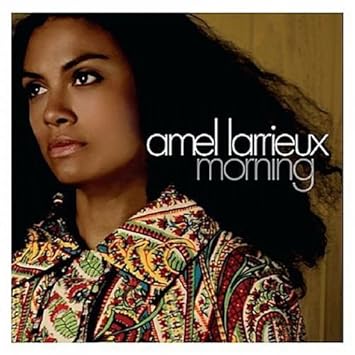
Amel Larrieux Morning

Trouble, is done Latin style with, as is typical in her live performances, an impromptu ending in which she starts scatting with abandon. "Louis Armstrong", she later explains, "All those years trying to be like you". She adds, "Lena Horne too". Well she's a singer's singer, it stands to reason that she has impeccable taste.

Giving Something Up is a bassy funk groove overlaid with increasingly abstract vocal stylings as it progresses, the arrangement is a mixture of jazz, soul and hip hop. Then almost improbably she breaks into Amazing Grace - a song that has never been done in this mode, urgent futuristic blues. How, the listener wonders, can a song contains such multitudes, rendered so seamlessly?

All I Got is an effortless follow up, a march reflecting on our condition. The refrain is all about the set upon (when she sings the passing lyric "slapped down a racist fool", those darker than blue in the Oakland audience respond knowingly). It's about standing strong and living without expecting any big bailout or "helping hand" as she sings: "this is all I got" indeed. As she riffs on the economic climate, "we're thoroughly spent... our credit's jacked up", there is complete empathy with the five piece band. They follow her on that the long walk with those worn shoes.

She gives a stately take on Magic and the zingers are fired rapidly: "still paying for your education when you're sixty six". Again the chorus is revelatory: "stress level's high and the morale's low". It's a blues for our time done with minimalist instrumentation. She ends with a turn as a choir director enlisting the audience in three part harmony. This kind of crowd participation is fun: we all need to "tap into that magic" to overcome our subprime present. Indeed that has been the theme of the whole concert, acknowledging what is going on in the world and finding humour to deal with it. Amel is an unpretentious artist, she makes everyone feel at home. It doesn't hurt that she's very easy to look at, the word chic describes her clothes and the long hair is doing all the right things.

A cheer of recognition greets the start of For Real, the ballad being one of the perennial fan favourites. With deft piano playing in the background, she floats into the upper registers displaying her Minnie Riperton credentials. After welcoming a a few bars from a guest soprano in the audience, she takes over. Her vocal control is breathtaking. Game, set and match, I'd say. To top it off she provides three or four different takes of the song - live remixes on stage. I'm always interested in the way singers manage to keep their trademark songs alive; somehow Amel always comes up with new arrangements subscribing to the jazz improvisation aesthetic. The jazz inclination will keep her in good stead with her audience.

We Can Be New is a warm poem, a melodious ballad very beautifully sung and ends with a reggae tinge. It must be the band's trademark to provide full glimpses of her range and musical comfort zone.

She debuts a new song, Have You?, a lover's lament peppered with humourous lyrics "I've mixed denim with whites, have you?". By this stage we are all spellbound. The elements of her appeal are simple: sympathetic piano, the light accents of her backup singer (Amira) and a singer at her peak. Amel is in full effect.

Then I almost died of joy: she sang Gills and Tails - my favourite song, the very definition of virtuosity. The vocal performance is wonderful; what the professionals would call her cry is a thing to behold. It's emotional, it's cerebral, it's quietly devastating. It's everything I like in soul music.

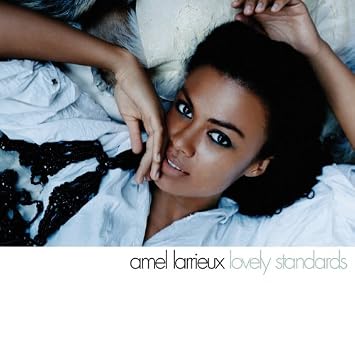
Amel Larrieux Lovely Standards

Wild is the Wind from her album of standards, shrewdly titled Lovely Standards, is done as a homage to Nina Simone. It's just her and the piano player; she has got the audience clinging to her every note. As the song starts to wind down she brings in the rest of the band and they add a dance groove - whoa, she can do house music, what can't she do? - the groove then morphs into Dear to me. House music man, just for the heck of it. She took a jazz standard, did it with flair and, just to show how fearless she is, she gives you some house. I give up, I'm joining the street team, Amel.

As if she read my mind, she then covers Prince's Pop Life, it's a party pure and simple - she reminisces about the Purple Rain to Parade Revolution era of His Royal Badness (she notes that she even digs Tambourine! claiming by this revelation membership in that purple secret society) and talks about the rush she got performing Take Me With You with Kamal the Abstract a couple of weeks ago.

She closes with two crowd favourites: Get up, the monster club hit from Bravebird and Tell Me (from her Groove Theory beginnings). We're all dancing and singing along. It's a celebration. There's a community feeling. We'll be holding our head high in the weeks to come, smiling on Manic Mondays and Black Tuesdays, lifted above the fray, fortified by some soul music, a soundtrack to our struggles, "this great Mountain of When". This is her thing, this is what she does best: two ninety minute sets, three nights in a row in an intimate jazz venue. Every show sold out, the audience in the palm of her hand, the soul singer performs. Amel Larrieux has done it again.

File under: , , , , , , , ,

Friday, May 20, 2005

The Roots + Floetry = Virtuosity

The Roots + Floetry = Virtuosity

The Roots and Floetry. Live at The Roxy, Boston. Wednesday May 18 2005


Intro * The Scene * The Vibe Y'All * Outro


Intro


I Shall... Proceed... And Continue... To Rock The Mic
Everybody Is A Star
"Go All Stars, Get Down For Y'all"
The 'Notic, The Hypnotic = Floetry, Floacism
All You Gotta Do Is Say Yes
Illadelph Halflife Meets Ill London Flow
Bring Some Money To Spend And Somebody To Lend And Some Worthwhile Money Not Some 20s And 10s
Adrenaline
Boom!
They're Coming To Break You Off
Duck Down
Don't Say Nuthin'
All Roads Lead To Apache
With Thought At Work, It's The Next Movement
I Don't Care As Long As The Bass Line's Thumping And The Drum Line's Banging Away
Kool Herc Ain't Never Seen A Royalty Check
Hip Hop You're The Love Of My Life
The Legendary Roots Crew Stay Cool In The Melting Pot
We Are The Ultimate (Rock-Rocking It)
That's What's Happening In The Parking Lot. That's What's Happening On Stage.
Din Da Da (Dun Do Do)
Do You Want More?
Somebody's Gotta Do It When The Guns Are Drawn
The Roots Come Alive
The Tipping Point Is Here And That's The Bottom Line
Give The Drummer Some
Keep the Beat Going
Bring The Beat Back. Bring The Beat Back.

Floetry - Floetic


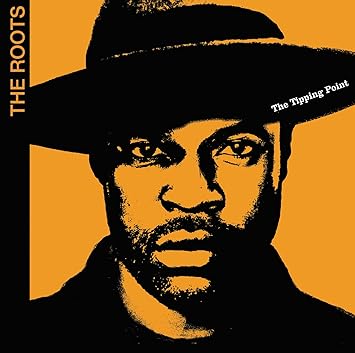
The Roots - The Tipping Point

The Scene (Combat Zone)


You might sense a little exuberance, a little elation, a little plain joy in these parts and you'd be right. Wednesday night with The Roots and Floetry was even more reason to sport that wide smile that I've been bearing of late. It was a cheer that started in the long lines that stretched out for 2 blocks outside The Roxy. In downtown Boston, the Theatre District is very close to what is lovingly called the Combat Zone. Indeed during my first visit to Chinatown in 1991, there were gunshots and people scrambling as we walked out of the Boylston T Stop (200 metres from The Roxy) to try to get some Dim Sum. Most Harvard students tend to stay in Cambridge which has pretty much everything they need thus each excursion to Boston and its environs is an event. With guns drawn, that outing certainly fitted the bill;it was a great Sunday brunch by the way, baptism by fire as it were.

Now of course the city has cleaned things up since then. There was a concerted effort in this liberal bastion to husband the commons in a kinder, gentler mode than Rudy MussoGiuliani in New York. In the black community at least, the churches got everyone together and knocked heads around. There was one incident that was the last straw the community could bear in 1992 when teenage gang members came guns drawn chasing people into Morning Star Baptist Church and stabbed a kid during a funeral service for a teenager who himself had been killed in a drive-by shooting days earlier. Pastors and Samaritans everywhere started hitting the streets and patiently mentoring youths and forming a Ten Point Coalition that hasn't let ever since. With the Big Dig Irish/Italian/Federal/Mafia money to spread around for the past 15 years, a little dotcom boom and bust, the current biotech splurging, and a set of savvy universities around Boston with their 300,000 students in mind, it appeared that lots of things could go well for the community and economy. The notion was that it would pay for government and even Big Government to actually to manage the cultural and economic zeitgeist so that social ties were woven together and one wouldn't end up like the anomic New Haven, to take an example of what social neglect can do.

So now there are fewer porno emporiums or theaters in the Combat Zone. Whoever had the inspired idea of placing the Registry of Motor Vehicles next to that sordid theatre knew very well the power of shame in human affairs. Thus there has been considerable gentrification throughout the city of Boston and Developers With Vision™ have tried to clean things up. There are lots of gleaming and spiffy new buildings around, including the fancy Loews Theater at Boston Common outside of which the Star Wars tribe had camped out to buy tickets at the stroke of midnight for this Friday's Sith-like Revenge on office productivity everywhere.

However the move up-market was done in typical liberal fashion, with much hand-wringing about gaining community consent and buy-in from those affected. This is why there is the occasional attraction for strong men and fascism, they make the trains run on time. Ghana, like Chile before us, could only be a poster child of the IMF and World Bank in the late 80s because it was ruled by vicious rogues who could run roughshod over the wishes of their populace. Things are not so easy when you have a case of the episodic ballot box. Thus Franklin D. Roosevelt's "He's our sonofabitch" theory of the Realpolitik of "vital interests" and the recurring marriages of convenience with noxious strongmen and Strange Bedfellows are played out in such a grisly fashion in Uzbekistan and other countries even today.

With no dictator in place to press the issue, there is still a significant minority of people around Boston and Cambridge who haven't heard the word about the clean up program. Thus as you head for the opera or some fancy show, dressed in your finest tuxedo or shimmering dresses (Swan Lake was playing at the Boston Ballet which I must see at some point), you'll pass the 7-Eleven at the corner of Tremont and Kneeland and see a few (shockingly young) hookers and their rough but effete pimps, most just a few years older, casting a wary eye and assessing the likelihood of your disbursing cash money for The Game all the while speaking a patois full of puns, coinages and ghetto witticisms. Some of us were harried after long days at work or the minutiae of dissertation completion and were dressed down hence we glossed over these gritty urban fixtures. Our thoughts were all about the Sound of Philly and perhaps Brixton or Deptford.

Others however had seen a late addition on the Ticketmaster web site about a purported dress code, "No Jeans, No SNEAKERS, or Athletic Wear", which I suspect caused much gnashing of teeth and wardrobe deliberation. The notion that a low rent joint like The Roxy was ever going to enforce a dress code on an $18 ticket to a hip-hop show was hilarious to me, but I suppose others took this seriously because I saw a fair number of people dressed up as if this were one of the summer concerts along the waterfront, or the adjacent Boston Ballet for that matter, instead of a hip-hop soul lovefest. People wearing uncomfortable shoes, plus a late start - 10:30pm on a Wednesday night, might cast a shadow on some of the enjoyment.

One thing to note is that this one-off concert was sponsored by a cigarette company and there was a certain dissonance in seeing Surgeon General's warnings on the video screens above the stage right after a stream of "Kool" images (tagline: Be True and A New Jazz Philosophy) floated past repeatedly. Just in the past year, Angie Stone was sipping on Remy Red and Jill Scott's tour was sponsored by Alizé. I suppose the floodgates opened when KRS-One did the Sprite tv commercial to the sound of The Revolution Will Not be Televised. Gil Scott Heron must not own his masters. Ironies abound when companies in the guilty pleasure industries pick up all the "progressive" artists; one wonders a little about artistic integrity but maybe it's a matter of holding your nose and paying the bills (dollar, dollar bill y'all). Who else is going to sponsor the next movement?

Left-of-center artists like The Roots have a very diverse audience, they are musicians' musicians, and hip-hop's favourite jam band thus the crowd was a kind of Rainbow Coalition of neo-soul and hip-hop aficionados, the kind of people portrayed in candy like Brown Sugar. The addition of Floetry brought out a few more older African-American women to the table, intellectual poetry with harmonies, wit and the kind of groove that gave Michael Jackson Butterflies. Everyone looked good and expectant and harassed college students could escape their fears about the courses they had neglected all semester before buckling down for finals. This was the place to be if you weren't a George Lucas addict.

The Vibe Y'all


If you walked in to a joint to the booming sounds of A Tribe Called Quest's Electric Relaxation, you would know that everything was going to be all right. Like Earth Wind and Fire singing Keep Your Head to the Sky and Devotion live, it felt like a revival meeting so "Clap your hands this evening. Say it's all right. Yeah, Yeah, Yeah."

With 'that dude from Living Colour' guesting on guitar (I turns out that it was Vernon Reid and not "The Other Guy"), this was a performance that sometimes verged on the rock side of things. Well as rocked out as a hip-hop sensibility allows and with the good Captain Kirk Douglas also doing a mean Hendrix or more accurately a Kravitz impression, the rock and soul meshed well in the flow of things. The band always pay homage to the greats with snippets of the obscure breaks thrown in every now and then and this time it was Ray Charles' What I'd Say that did the trick.

Coincidentally this past weekend I had been in New York and passed by my favourite crate digging place Rock and Soul on 35th and 7th and, if I hadn't had a train to catch, would have spent a good couple of hundred bucks on essential breakbreats.

In any case the musical territory covered was hip-hop, rock, soul (with a very soulful new backing singer who's just joined them and not mere eye candy too, she can sign), lilting reggae to straighten things out. Black Thought is completely in control of things these days and now that he no longer hoards up his charisma or turns his back from the audience, the love is plainly reciprocated. The way he started with the pyrotecnics of Web, that one verse drum-and-bass, old school raw adrenaline was astounding and there was no let up. The humour and verbal dexterity (the breath control) is about about as good as it gets, I'm reminded of Big Daddy Kane or Kool Moe Dee going to work on things but with a millennial flow. Kamal at times introduced jazz and classical keyboard breaks, he's still hip-hop's Ahmad Jamal and towards the end gifted us with an amazing church keyboard solo that hit the spot. Hub's styles himself as a cross between Michael Henderson who made Miles Davis simply Live/Evil when he pushed him to slickaphonics and foot-foolery in the early 70s and Miko Weaver who, along with Eric Leeds, pushed His Royal Badness into the zone.

Miles Davis Live Evil


Miles Davis Live At Philharmonic Hall


And the drummers you ask? Frankie Knuckles on percussion, in empathy with ?uestlove's mission, adding great effects especially when they tilted towards reggae, soul and funk.

Questlove on the drums is simply scary and deserves his own paragraph. The frenetic and phonetic Brother Questlove is a perfectionist on his instrument, I now put him ahead of Kariem Riggins who got the nod last year because of his regular jazz moonlighting. Having listened to the Grover Washington-influenced Philadelphia Experiment, and heard the swinging I Am Music from Common's Electric Circus of which he was the executive producer, I knew he could do jazz and now with the kind of live performance that leaves you awestruck, there was simply too much talent to consider.

There was a point when it felt like that moment in the Sign O' The Times concert during It's Gonna be a Beautiful Night, right after the band has worked out on the Detroit Crawl when Prince says "Night Train" and the band switches on the dime and Duke Ellington's chorus blares from the horn section fitting perfectly and dazzling the audience. Or when James Brown was In a Jungle Groove for those magical 4 years starting in 1969, or even the point in Curtis Live during (Don't Worry) If There's Hell Below We're All Gonna Go when Brother Curtis sings
Cat Calling, Love Balling
Fussing And Cussing
Top Billing Now Is Killing
For Peace No One Is Willing
Kind Of Make You Get That Feeling
Everybody Smoke
Use The Pill And The Dope
Educated Fools
From-Uneducated Schools
Pimping People Is The Rule
Polluted Water In The Pool
And Nixon Talking About Don't Worry
He Says Don't Worry
But They Don't Know There Can Be No Show
And If There's A Hell Below We're All Gonna Go

Need I go on? At such moments, the music, audience and performers are in complete consonance. This is what I call virtuosity. This is life in a rarefied zone.

In last year's Toli Music Awards, I wrote
They've certainly hit a groove. It's like Prince circa 1986-7 when the Miles Davis horns came into his arrangements on the Parade. They've done the kiss-off album (Phrenology as Around the World in a Day) to throw off fairweather fans. They are now going for the vituousic and this works perfectly. Could a Sign O' The Times be in the offing next?

That was before hearing them on Giles Peterson and certainly before seeing them take it to the stage in the tradition of Funkadelic. I got my answer I believe.

Suffice to say that the kind of music I heard live last night has blown the band way past The Tipping Point they proclaimed was their due. The Roots are so confident in what they are doing these days that they make it appear effortless. The elated audience felt it too. Floetry who are so versatile were similarly inspired in their performance. They weren't blown off stage as almost anyone else who had to follow The Roots would be, but did their own thing and got a lot of love and plain respect. Their vibe is one of great invention, harmonizing, operatic and sensual with some London Yardie and garage inklings. It's a White Teeth meets a Brick Lane Sense and Sensibility. The thing about such musical intelligence is that at times it can be too dense and overwhelming but both bands kept the Boom Bap factor in mind so they "Rock(Ed) It To The Bang Bang Boogie Say Up Jumped The Boogie To The Rhythm Of The Boogie, The Beat"

The Roots closed out with a their usual 45 minute Hip Hop 101 tribute medley to those who have gone before them. They always choose different heroes to focus on and this time even went into more commercial club-banging territory (snippets of Biggie even turned up) intermixed with the exhilarating instrumental rare groove of Booker T and the MG's Melting Point that I pointed out earlier as the Jazz Funk in a Blanket of Soul.

Melting Pot

Outro


Since the DJ who warmed the club up was utter early nineties nostalgia, I'll close with this lyrical zinger from that same era, a golden era in retrospect, Chubb Rock's Yabadabadoo:
From The Rustler
Lyrical Hustler
The Fat Lady Sang
I Crushed Her.
Word Up The Chubbster
As we walked out at 2am to brave those denizens of the night who were still plying their trade in the combat zone, there was a little wistfulness about whether the car would still be there. It was hence highly appropriate that we were handed a couple of fliers for next weekend's Pimps and Hoes party.

roxy-flier-pimps-hoes-party


Iceberg Slim's hoedown aesthetic is now a commonplace with Don "Magic" Juan, 50 Cent and Snoop literally pimping the cultural (and financial) zeitgeist. Thankfully people like the more reflective Ice-T have stepped off that program (and never would I have dreamt of writing a sentence containing the words reflective and Ice-T but that is a sign of the times). Perhaps one should see this as just a bit of fun, the ascendancy of a culture of irrepressible irreverence and reinvention, a kind of poking your thumb in the eye of those august New York Times types who now write editorials about how hip-hop lost its way. What these grey ladies don't understand is that that hip-hop is vibrant enough that Ludacris and De La Soul can coexist and even feed off each other without dissonance. Even if I were that way inclined, I'm off to London next weekend and anyway what would Malcolm and Martin think? The commercial road is certainly a heavily travelled path for instant gratification. The Roots and Floetry aesthetic simply shrugs of such concerns and tries to win you over with musical dexterity, one performance at a time, and it pays off I think. As the Black Sheep (who were also played during the warm up) put it, The Choice is Yours: "You can get with this or you can get with that". In my book, the tortoise does beat the hare in the end. I might take Richard Pryor over Bill Cosby but I still love both aspects of the culture. Mission: Music.

With a Philly groove still echoing in my ears, this was simply blasé blasé to me. I fell asleep with a smile on my face.

File under: , , , , , , , , , , , , , , , , , , , , , , , , , , , , , , , , , , , , , ,

Wednesday, February 23, 2005

A Soul Jazz Thing

The great organist Jimmy Smith left us on February 8th at the age of 79. I was especially saddened to hear of his passing because I had started an appreciation piece on him last December but never completed it as these things are wont to go. He truly was the heart of soul jazz.

The various obituaries were universally respectful and admiring of his talent, noting his considerable influence; but it struck me that many were damning him with faint praise:

He blended jazz, blues, R&B, bebop and even gospel into an exciting stew - an idiom that produced many imitators, followers and fans.
Fair enough, I suppose, but when you say blended, I think of tepid purée not the kind of propulsive music that sprung from Smith's hands. This is a man, in a category of his own, who was dubbed the "Emperor of the Hammond Organ". He featured, like the Kings, Dukes and Counts, among the royalty of the jazz tradition.

Pardon me, if you will, while I set the record straight:
Soul Jazz is ecstatic music.
It's about the blowing sessions that happen after the main show, long past the midnight hour, when the lights are low and the musicians are loose and playing for keeps. At the after-party jam, it's all about earthly delights, loosened ties and unbuttoned collars. You'll hear complex grooves and humourous exchanges in the music: Can you top this? they're asking.

There'll be virtuosity that will make you stand up, thump your feet and rumble with someone close. The laughs are heartier and the flirtations are more intense. It's a celebration of the sensual and the sacred. Musically, it's the funky, greasy blues of back-alley jook joints with the prospect of the Good Lord the next day.

And Jimmy Smith best illustrated this notion: after playing through the night at the grimiest of speakeasies, you would find him on the organ at the church service in the morning, energetically lacing melodies to punctuate the reverend's call. All the while, the crowd from the previous night would be nursing their hangovers in soul claps amongst the congregation.

Consider the one-two punch of Midnight Special, which is about as earthy as these things come, and the revival and church hall vibe of Prayer Meetin'. They are part and parcel of this innovative musical conception. Smith's music speaks loudly and was heavily sampled by hip-hoppers and revered by the acid jazz/rare groove crowd. The aesthetic of A Tribe called Quest sprung fully formed from this soul jazz confection. Exciting is the least of it.

Herewith then, this month's soul jazz playlist bookended by Jimmy Smith's groove.

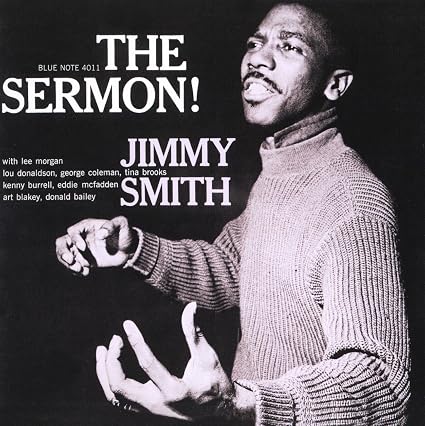
The Sermon


Jimmy Smith - The Sermon

The title track, a 20 minute affair, is what is says it is: a musical sermon. It's a relaxed affair, founded on an insistent back beat of the kind that Jamerson and co. would later pepper all of Motown with. It's not overbearing; the preacher is in his prime and knows what he's doing. It ebbs and flows as the message is delivered full-throated by the choir. The soloists let their hair down and the music builds up. It's an all-star cast on the church floor. The intent is to make people start yearning for the promised land. Exclamations and outbursts proliferate and everyone has ample opportunity to shine. The solos on the rest of the album are in the same vein, demonstrating to all and sundry that, with the Hammond organ on hand, there was no one quite like Jimmy Smith.

Hallelujah. Amen.

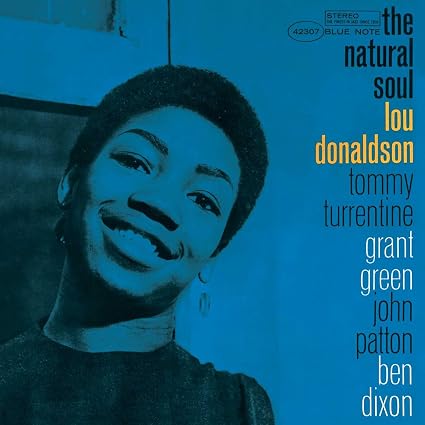
Natural Soul


Lou Donaldson - The Natural Soul

Mixed in with shaking works like Nice 'n' Greasy and Funky Mama are fluid and inventive approaches to old standards by Gershwin and Rodgers and Hammerstein. Lou Donaldson is a wonderful musician full of humour and here everything flows easily as befits a natural soul.

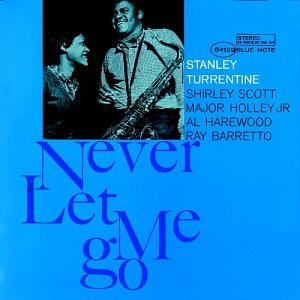
Never Let me Go


Stanley Turrentine - Never Let me Go

Stanley Turrentine's artful saxophone and lazy organ courtesy of Shirley Scott makes for heavenly jazz. For those late nights...

Sonny Clark


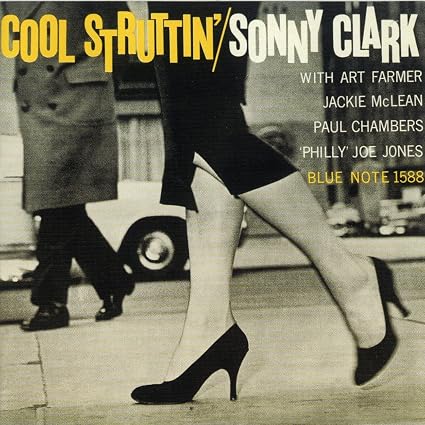
Sonny Clark - Cool Struttin'

This is the closest to staightforward hard bop as you'll get from this playlist. But the sounds of this album speak to that transcendant "feel" that is soul. It's not a blowing session but the musicians are in a playful mood. All the ingredients combine and the core of the genre is plainly evident.

Ready for Freddie


Freddie Hubbard - Ready for Freddie

Earlier albums like Hub Tones were about displaying the fireworks and technical mastery of his instrument that put him in the league of the best jazz trumpeters of all time. Ready for Freddie is Hubbard's most cohesive album and shows his virtues as a band leader and composer. Those who think that Miles Davis was the end-all on the trumpet need to consider the likes of Lee Morgan, Clifford Brown or Donald Byrd and, on the evidence of this album, Freddie Hubbard. Trading with Wayne Shorter on tenor sax and rythymn section of McCoy Tyner, Elvin Jones and Art Davis, this is a portrait of a band in full. A decade later, firmly established as an all-star, he could go on to the much-beloved Red Clay. But in the music of this moment, the world was ready for him and Freddie was a monster.

Straight No Filter


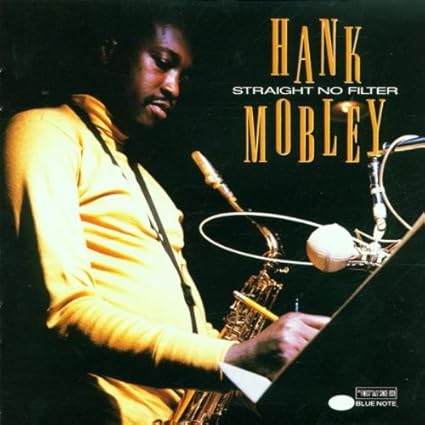
Hank Mobley - Straight No Filter

Whereas Soul Station is his consensus masterpiece, this posthumous release of the sessions that comprise Straight No Filter is a great introduction to the rarefied sounds of Hank Mobley. For a decade, everyone worth his salt in jazz knew that a gig with Hank was just the right thing. He made no apologies with his compositions and was game for revisiting standards in interesting new ways. "Yes Indeed" could well stand in for a sermon and Donald Byrd, Herbie Hancock and Philly Joe Jones turn it up a notch. The aura of these sessions is mellow crepuscule.

Mercy Mercy Mercy


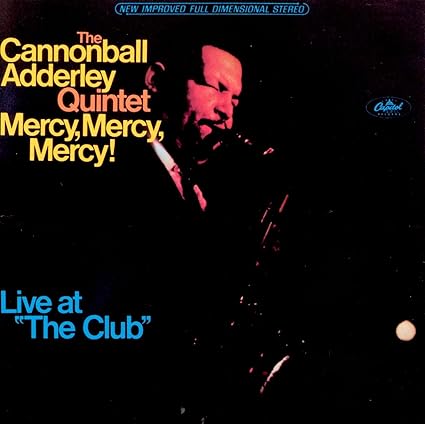
Cannonball Adderley Quintet - Mercy, Mercy, Mercy!

Although sub-titled "Live at 'The Club'", this was actually a studio affair. The album aimed to recapture that loose club feeling with friends showing up for a good time and free booze. And it works. There's Fun, Games, and even a Sack O' Woe as the Adderley brothers (Nat and Cannonball) do their thing. Joe Zawinul's compositions also played an important part in the way in which this group gelled.

Alternatively you can go for the Country Preacher album which was indeed recorded live at a revival for Operation Breadbasket and which features a young Jesse Jackson exhorting the appreciative audience onwards and upwards. But trust me, you can't go wrong with Mercy, Mercy, Mercy!

Idle Moments


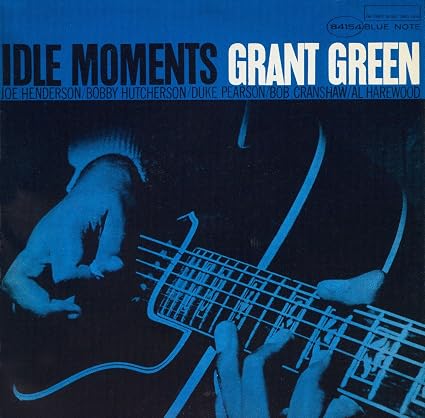
Grant Green - Idle Moments

Is this the greatest jazz guitar album ever? Well it's a close-run thing. Maybe Smokin' at the Half Note gets the edge, but I wouldn't be so presumptious. Idle Moments captures Grant Green and company making magic. Bobby Hutcherson is on the vibes, Joe Henderson growls on the tenor sax and Duke Pearson is all empathy on the piano. They didn't plan for the title cut to be that long but sessions like these are supposed to be unhurried affairs. Simply inspirational music that we have the great fortune to be able to listen to time and again. This is about as good as it gets.

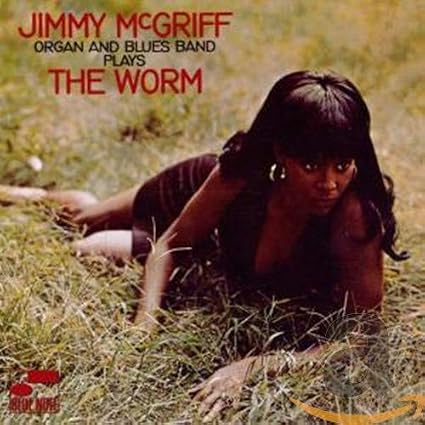
The Worm


Jimmy McGriff - The Worm

An organist who followed in Jimmy Smith's path, McGriff found his own style and took the instrument in a different direction. It's more percussive and danceable, he's aiming towards the funky edge of the continuum. The liner notes defy you to sit down through this album. I can testify to their veracity.

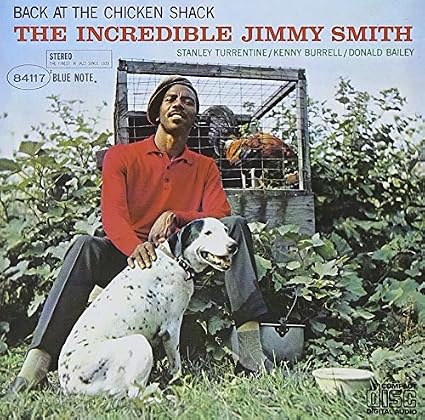
Back at the Chicken Shack


Jimmy Smith - Back at the Chicken Shack

And finally we're back where it begins, at the blues shack. This album is one of my favourites from Blue Note and Jimmy Smith's finest moment. Cratediggers like DJ Shadow are forever enthused by the album cover but for me it's the music inside that matters and, when it comes to that, the guns are drawn from the first note: insistent, intelligent and nasty fun ensues.

I can see Jimmy hunched over the organ. Kenny Burrell on guitar, and Stanley Turrentine on saxophone are egging him on and trading funky licks and hard-bop runs. He's sweating profusely yet he's still cool enough to wink to that sister in the corner table to seal the deal. Smiles and loaded looks are exchanged.
Later on baby. There'll be time enough afterwards. For now, just lay back and listen to this. I'm in the cut.
I miss you Jimmy. Wherever you are, stay locked into the groove.

A Soul Jazz Thing, a playlist


File under: , , , , , , , , , , , ,, ,