Showing posts with label appreciation. Show all posts

Tuesday, June 09, 2026

The Finest

The words write themselves
All of the things he was
The finest for all of us

Peerless yet unassuming
And a hard act to follow
The finest undeniably

No one worked harder
Yet it was always with such ease
The finest reliably

Tasteful and self contained
The tone, exquisitely poised
The finest most graciously

A twinkle in the eye
Delightful conversations
The finest effortlessly

The strategy was to redirect fools
Quiet laughter amidst this tolerance
The finest ever so gently

Reading widely, education was paramount
His learning had no boundaries
The finest, he charted new territory

In search of the new, an early adopter
But yearning for what actually worked
The finest, his passion for discovery

Bound in faith for all of us, a firm believer in family
A gift of love and concern, a trailblazer for our community
The finest spirit, he gave generously

The words write themselves
All of the things he was
We hold on to the memories

The finest we've known
The finest we've seen
The finest we'll remember


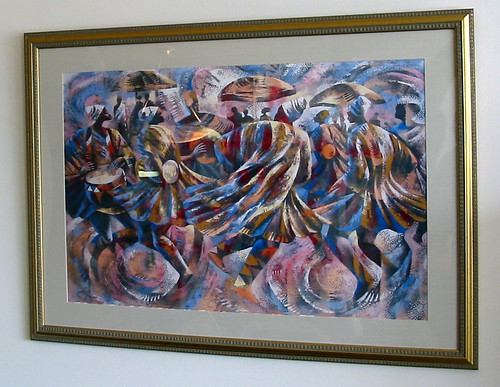
dance by wiz


After Samuel Ofosu-Amaah

The Finest, a playlist


A soundtrack to this note (spotify version)
The Finest


File under: , , , , , , , , ,

Writing log: January 29, 2023

Tuesday, May 12, 2026

African Travel Narratives

I've been thinking of The Traveler's Africa; the view from the Torrid Zone. Some readings beyond Equiano's Travels taken from my bookshelf (oh, and a playlist...)

African travel narratives


Classics of the Genre

  • The Modern Traveller by Hilaire Belloc
  • Heart of Darkness by Joseph Conrad
  • Travels in West Africa by Mary Kingsley
  • Black Mischief by Evelyn Waugh
  • Travels with my Aunt by Graham Greene
From savage satire to the impressionistic to the documentary.

Hilaire Belloc's satirical eye is sublime. Nothing escapes his immaculate rendering of the essence of thousands of travel narratives. From antiquity to, say, the great explorers tomes (Mungo Park's travels in the interior) to near-contemporaries like Stanley and Livingstone. All that and more are highlighted in The Modern Traveller.

He dismantles the kind of writing lionized in the prose of empire by Kipling and others. Where we'd now say God, Gold and Glory, Belloc straightforwardly put it as Blood and Sin in vicious light verse. The cover by Basil Blackwood is apt. All the tropes of travel writing about Africa are outlined, the mystery at its heart, and all that made it evocative. Writing at the height of empire in the wake of the British victory at the battle of Omdurman in 1898, there is much to deflate in Victorian triumphalism and he sets about it avidly. The Modern Traveller is his early masterpiece.

Oh! Africa, mysterious Land - the modern traveller


The Journalistic Impulse


The journalistic impulse weighs heavily on travel narratives and Africa gives great material for the genre.

The travel writer ofen emerges jaded from the encounter with Africa despite the initial optimism. The people steal your heart but also destroy you. You might start to merely document but hallucinations often follow, such is the burden of the heart of darkness. Joseph Conrad, of course, had great influence on popular perceptions of Africa, and for good reasons: metaphors and urgent storytelling will always strike a chord.

It would take more than half a century and Chinua Achebe's own urgent storytelling to begin to change the perspective and to show that African voices need not be drowned out in the travel narratives and treated as mere backdrop. Indeed, they can lead the way.

A Burnt Out Case is probably Graham Greene's most focused entry, a lush hatchet job of the Conrad template, but Travels with my Aunt is his purest distillation of travel writing. An entertainment, perhaps, it captures the fecklessness and the roving eye. The kind of observed behavior that Evelyn Waugh savages with vicious fun in Black Mischief.

Contrast with the relatively sober yet similarly roving eye of Mary Kingsley. Hers is rooted in her search for botanical specimens but there is a richness to what she uncovers in the process. She was genuinely interested in the place she traveled to and the culture of the people she encountered. Her observations make for a treasure trove for historians and sociologists alike.

In a more literary bent in the 1920s, consider André Gide's Travels in the Congo and a delightful memoir Then I Saw the Congo by Grace Flandrau. The book covers tend to follow a distinct pattern.
  • The Shadow of the Sun by Ryszard Kapuściński
  • Report in Africa by Oden Meeker
  • Call Africa 999 by John Peer Nugent
  • Stringer by Anjan Sundaram

(I hesitate to brand Kapuściński as a journalist, he was so much more. The journalistic impulse is, rather, what I'm getting at when it comes to the tenor of his writings. Denis Johnson in Seek treads much of the same terrain as Kapuściński but with a stronger punch).

How to take to the tropics is a delicious survey of travel writing in Africa by Oden Meeker. His and John Peer Nugent books are recent discoveries, wide ranging as befits these restless souls. Anjan Sundaram's Stringer follows Conrad by way of investigative journalism, archetypal of the mold of journalists that have had to report on conflict (e.g Fergal Keane).

African Perspectives


The Wife has long taught an African Travel Narratives course; we, each, have our favorites and trade new finds as we discover them. Our modern canon:
  • An African in Greenland by Tété-Michel Kpomassie
  • By the Sea, Desertion and Paradise by Abdulrazak Gurnah
  • Everyday is for the thief by Teju Cole
  • A Stranger's Pose by Emmanuel Iduma
A semester length course will cover readings in many styles and from many perspectives. The ones we tend to find most engaging highlight the African perspective. And things do change once African voices are in the mix.

An African in Greenland is revelatory, Tété-Michel Kpomassie's story is so engaging, he grabs you with the force of his personality, his curiousity and his drive.

Abdulrazak Gurnah, of course, in his brilliant body of work inverts the perspective and the frame that Conrad may have set and, with this freedom, makes it his own. I've lost count of how many copies of By the Sea I've had to buy as I keep recommending and gifting it to others. I'm thankful that the academy have rightly rewarded him and I no longer need to be on the street team.

A novel like Tayeb Salih's Season of Migration to the North contains a lot travel observations but doesn't read as a traditional travel narrative and indeed there is far more sophistication in it.

Our blog era has produced two perfect little books in the genre. Teju Cole aims for close observation in Everyday is for the Thief while Emmanuel Iduma goes for the poetic in A Stranger's Pose. They are both lyrical writers with dauntingly sharp eyes.

It's fun exercise to contrast, say, The Moor's Account by Laila Lalami with Mimi and Toutou's Big Adventure: The Bizarre Battle of Lake Tanganyika by Giles Foden. The one written from the ground up and periphery, the other taken with main character energy.

And the narratives ripped from archival material carry a heavier burden that the typical travel dispatch, I'm thinking of The Two Hearts of Kwasi Boachi by Arthur Japin or say Ama: A Story of the Atlantic Slave Trade by Manu Herbstein - there's no lightness to be found in the slave trade or the earlier patterns of exchange in the colonial era.

I never quite got into the former Peace Corps memoirs although I keep reading them for what they reveal despite themselves (and George Packer's clear-eyed Village of Waiting - and Central Square which I loved, doesn't excuse his later hubris see: Iraq war).

Still I much prefer Packer over Paul Theroux's Dark Star Safari. And in the same vein, I favor Graham Greene over V.S. Naipaul.

I also can't resist missionary and explorer narratives, even as I read them in the same vein, mostly for what is left unsaid or for the people that linger in the background. Sometimes, however, you find gems in second hand bookstores: Cowboy Boots in Darkest Africa by Dr Bill Rice is an all-time favorite. But that one, like Belloc's Modern Traveller, deserves its own tale.

There's all that and more in The Traveler's Africa. And to close, a cautionary note to the would-be readers of travel narratives; not all is as it seems:
T
for the Genial Tourist, who resides
In Peckham where he writes Italian Guides

Moral
Learn from this information not to cavil
At slight mistakes on books on foreign travel

A Moral Alphabet by Hilaire Belloc

What are your favorite Africa travel narratives?


Ayuba Suleiman Diallo


African Travel Narratives, a playlist


A soundtrack for this note (spotify version)

Bonus beats: Searching by Roy Ayers

cecil rhodes astride africa From Cairo to Cape Town


See also Types and Faces and The Stereotype

File under: , , , , , , , , , , , ,

Writing log: November 2, 2025

Saturday, November 08, 2025

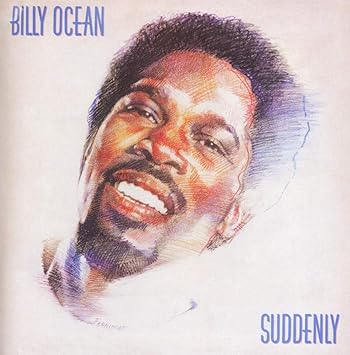
Caribbean Queen by Billy Ocean - One Track Mind

I'm dating myself, but the easiest way to get me to make a fool of myself is to play Caribbean Queen by Billy Ocean. It's like kryptonite to me. By the time the chorus comes around, I'm no longer acting, I have become an actual fool.

I mean Michael Jackson and Prince especially made major moves that year but Billy Ocean essentially won 1984 with just that song. The rest of the album was a bonus.

I just can't resist the groove, it makes me happy, I want to dance, I want to sing (loudly), and act the fool. They say Dionysus was a Greek god but the scribes out of discretion didn't disclose his infatuation with the siren song of a Caribbean queen.

I'm pretty sure Liberian Girl was MJ's belated response to homie for stealing his thunder, despite what the biographers may say. The gloved one with the golden voice always knew a winner (see lifting the synths from 1999).

Incidentally, many sincere apologies to the women I've stepped to while singing that song or variations of it - I'm an equal opportunity prospective lover, and, as I've said, I'm a fool.

The song is so versatile that, not to disclose too much, I've sang of African queens, Nigerian girls, Ghanaian ladies, various European duchesses and American queens and more, not to mention many a real life Caribbean queen.

Musical flirtation must be an occupational hazard of womanhood and it's all for the good. I've found that on occasion, some do get caught up in the rapture of a song so infectious. And even when deflected, the song breaks it down gently.

Now of course there's a long tradition of such celebratory songs. Frankie Beverly and Maze gave us Southern Girl. Earlier, Lou Perez gave us Caribbean Woman, his charanga ode to that fine Caribbean woman. They know what's up.

But to return to the song, give me the extended version. At the very least, you need the seven minute version, a radio edit wouldn't do with something so exuberant.

Even after the insistent anouncement of the opening bars (you have to signal your intentions in these things), the song takes its time to get the the point and lets the saxophone lay down the law to start things off.

There's something quite unhurried yet insistent about the groove, propelled by the synth basslines. It's a pulsing pace yet it still manages to be langorous, as if to savor the dance. Caribbean Queen is a dancefloor anthem, feelgood in four on the floor rhythms.

Start with the voice. The warmth in Billy Ocean's singing just invites you into the conversation. To my ears, there's a lilting hint of Gregory Isaacs and the velvet touch of Dennis Edwards in the voicing.

The honesty also disarms:

"I was in search of a good time
Just running my game
Love was the furthest,
Furthest from my mind"
The kicker comes from the parentheses in the title: No more love on the run. This is about being captured.

With spare lyrics, the scene sets up the drama of the relationship but he makes you wait by doing two verses and bridges, so building up the tension that the chorus is a release. But, just as soon as we're released, the groove settles back down to enjoy the dance.

The drop in the middle, and the build up, also play their part making you savor each element. The bass gets it due, the drum beats and then the synths do their bit. It's like the Soul Makossa breakdown in Wanna Be Startin' Something. By the time the chorus comes back around you want to start singing it again.

The guitar riffs. the sound effects, Keith Diamond's keyboard, synthesizer and production are inspired and really shine here but it's the saxophone solo by Jeff Smith just puts things over the top.

Infectious thy name is Caribbean Queen.

The initial release in Europe was titled European Queen but didn't get traction. Canny marketing forced a new title and Caribbean Queen struck a nerve. I've also heard an African Queen version.

Caribbean Queen by Billy Ocean


Surveying the 1984 music scene, most would hand it to Prince, you can hardly argue with When Doves Cry and the Purple Rain album and movie, let alone The Time, Sheila E and Appolonia 6. It was his year in music and pop culture.

But there were others too. I mean Cherrelle (courtesy of Jam and Lewis) dropped I Didn't Mean To Turn You On, Dennis Edwards and Seidah Garret had the almighty duet Don't Look any Further.

The S.O.S. Band's Just the Way You Like It album heated up the dancefloor. And even in the midst of all this, Sade's Diamond Life had been released and Smooth Operators were moving

A digression: Billy Ocean would win the 1985 Grammy award for Best Male R&B Vocal Performance for Caribbean Queen. But the other nominees that year were quite mistaken. Namely, let's be frank, The Woman In Red is hardly prime Stevie Wonder.

And to pick on the thread, the Grammys have never really rewarded the soul music that moved the masses. Unforgiveably, James Brown didn't get anything after Papa's Got a Brand New Bag until Living in America in 1987.

Sexual Healing is an all-time jam but the Academy barely acknowledged Marvin Gaye's transcendent 1970s run of albums that changed music.

Teddy Riley's only Grammy was for engineering Dangerous in 1993. How are such things possible?

Anyway, the point is that Stevie Wonder kept getting sentimental votes in honor of his Seventies's streak.

It was even harder to square Stevie winning the next year 1986 for In Square Circle when Alexander O'Neal wasn't even nominated.

The same thing goes for 1996 when there was Brown Sugar by D'Angelo or say I Hate U by Prince. For Your Love is a effortless ballad from Stevie but come on, really?

In any case, the fact remains that Caribbean Queen stopped both Prince and Stevie Wonder in the charts that year which is saying something about what it means to black culture.

The song affects me the way its almost contemporaneous Somebody Else's Guy by Joycelyn Brown does - shower song fodder. I Can't Wait by Nu Shooz would disconcert me in a similar manner a couple of years later.

So anyway, catch me singing along with Billy Ocean: Caribbean Queen (No More Love on the Run). Meet me on the dancefloor.

Queens, a playlist


A few more songs in the vein of Billy Ocean's opus. (spotify version)

See previously: Janet Jackson and the importance of bubblegum and Baby me by Chaka Khan

This note is part of a series: One Track Mind

File under: , , , , , , , , , , , , , ,

Writing log: April 28, 2024

Tuesday, November 04, 2025

Field of Light

"While I appreciate art, I fail to see how using 28,000 spheres, no matter how subtly lit, showcases an intersection with nature..."

— Wildflower Center Fails its Conservation Mission by Lighting Up its Landscape (Austin Chronicle, September 23, 2022)

J'accuse. Subtle lighting is no panacea
This really takes the cake, you must have no concern for nature
The ramifications of the act are serious, this is no laughing matter

Let me tell you, wrapping up a disaster, ignoring harmful effects
I'll bet that you haven't even consulted the experts
Light pollution is real, my friends, why don't you think about the birds


...

"Our goal, with any installation, is to be thoughtful and considerate of the landscape, as well as the topography, and wildlife."

— FAQs - Bruce Munro's Field of Light Comes to The Wildflower Center

And now for the rejoinder, the frequently asked questions
The artist composes a deft environmental impact statement
The obligatory show of commitment, for the field of light is sustainable

A celebration of natural topography, the stated goal is to be thoughtful
Materials highly recyclable, light sources for charitable installations
Solar powered and very durable, the aim is reuse without loss of condition


...

Art is not for everyone as the field of lights exhibit illuminates
For what to the eye of the beholder may thrill and exhilarate
May leave a mark of indifference to others or even infuriate
The thought occurs: what we have here is a failure to appreciate


zilker trail of lights


Field of Light, a playlist


A soundtrack for this note (spotify version)
You can't please everyone

File under: , , , , , , , , , , , ,

Writing log. October 7, 2022

Saturday, September 06, 2025

The Synthetic Shadows of Marvin Huxley

Apropos simulations and simulacra... I am catnip for the blues and, for the past few weeks, have been simmering in a thick stew of female blues singers - because, well, that's what one can do these days... Which leads me to the curious case of Marvin Huxley.

Or should I italicize "Marvin Huxley", a music producer who, like me, is enamored of 1930's Delta style blues and has now, at length (and perhaps controversially augmented with AI), delivered an album-length blues fascinator, Shadows of the South

Branded as an "Independent Lo-fi Blues and Jazz Funk Music producer" from Adelaide, Australia, I see and hear what gets him off, it's an aesthetic I am deeply sympathetic with. It's also an aesthetic just out of an uncanny valley, leaving me deeply conflicted.

My introduction to Marvin Huxley was Suits Stitched in Shadows and Lies, which was somehow recommended by YouTube after I'd exhausted my go-to playlists of Etta James, Big Mama Thornton and Memphis Minnie. And, well, listen for yourself.

(Putting aside the visuals - which were a later discovery and par for the course in this our generative timeline), I didn't know where to start with the music, I was confounded.

Then, one click later, there was A Dollar's Worth of Skin, which was similarly disconcerting to the ear. Synthesis, compression, homage at once, and fruit of a strange alchemy.

Then, there were also the earlier experiments, say Goodbye America Blues, which is more evidently artificial with its vocal sampling of an unknown singer and filtered guitar. Still, I kept listening, eventually casting the effort as a blues fascinator despite the synthetic content.

Sidenote: The Sister-in-law has written at length about the real thing. We should all listen to them. The emotional labor and the craft:
Blues Mamas and Broadway Belters: Black Women, Voice, and the Musical Stage (Refiguring American Music) #CiteBlackWomen

In any case, here is an album that is soaked in this aesthetic, devoted even. A studio creation, perhaps, but it is a creation nevertheless. A high-tech creation of lo-fi blues.

Or more precisely, it is a recreation from someone "who loves trying to recreate those old sounds using vintage style instruments, samples, compressors and effects". Homage and chimera, then.

When I read "The guitar recording was degraded to evoke the brittle warmth of a 1930s field recording", I couldn't help but think of Pete Rock or DJ Shadow crate-digging and similarly jacking for beats.

Or say Q-Tip on the needle drop.

There's a racial angle perhaps (or a cultural appropriation take, some might say), but I won't venture in that direction, only the music matters to me.

Still, who gets to write "a love letter to the lost ghosts of American blues music"? Not for nothing do many bluesmen sing that Blues is a Feeling. (see Lightnin' Hopkins, for example)

And in a year where the movie Sinners has dominated the cultural zeitgeist, it is worth asking whether you can have a Delta blues revival, with full-on lyrics, gritty vocals and all, that is synthetic rather than authentic.

(Sidenote: to that point, Buddy Guy's new album Ain't done with the blues is also out)

Still, the music nerd in me wants to deconstruct the work. Where do the voices in Shadows of the South come from? What studio trickery was used? What equipment? Or, perhaps more tellingly, what prompts were crafted, if some of it is indeed AI-infused?

But then, stepping back, I also want to ask: who made the field recordings that we all venerate? Who was documenting the blues back then? Who was promoting it? And who now basks in the sounds of earthy blues?

But that's me. I can listen to a blues mama merely humming for hours on end. Further, the stakes are low. To add or not to add to the playlist, that is the question.

It seems to me that the visuals highlight the artifice and perhaps even detract from the music they are intended to support. At the same time, they do underscore the mood and point to the story of the clever lyrics. Also: they are great conversation pieces.

(A reminder that my favorite video accompanying a Funkadelic song is a juxtaposition with a Russ Meyer film, You Scared the Lovin' Outta Me by Funkadelic)

But I wonder what Marvin Huxley would come up with, with say a Lizz Wright in the flesh, after hours in the recording booth. Or maybe, to push the racial angle, what would a project with Alice Russell on vocals sound like in comparison?

In the same vein, one wonders if people want to listen to the blues or if blues-adjacent or blues-influenced will suffice. Certainly in these streaming days, there are many for which the simulacra will suffice as background music. Reserving the experience of the real thing for live settings. One wonders...

Anyway, the album is not all fetishized retro action. The rest features more modern beats, albeit still blues-inflected on the surface, even when veering into trip-hop territory. That growl in the vocals is a constant, and those guitar licks. Sounds of nostalgia.

I can see the twinkle in the eye as the album was released. But who knows how it will be received? I do know that this listener was left chasing shadows tying to decipher this conversation piece. Let me know what you think.

austin sunset 4


Shadows of the South by Marvin Huxley


The album on YouTube (spotify version) and a few highlights. For the first three, I suggest a blind listen before venturing to the videos.

P.S. Hey Marvin, tell me more about the makings of this album.

P.P.S. Pardon the title of this piece, I'm a sucker for such things.

This note is part of a series, One Track Mind. See previously:

Saturday, August 16, 2025

Paul Laurence, Soul Man

Soul man, Paul Laurence, is more known as a producer and keyboardist than for his solo efforts. I always found it surprising that he didn't break out given his impeccable bonafides. The keyboard and bass-driven funk. Propulsive boogie dance music even when mellow. Even the ballads groove.

An interesting Rhythm & Blues column by Nelson George in Billboard 1985 discusses the roots of Paul Laurence's dilemma. Long story short: timing is everything.

1985 was Paul Laurence's triumphant year. Having written Rock Me Tonight For Old Times Sake for Freddie Jackson, he'd essentially assured himself a Grammy and a firm place in the black music pantheon. Entire careers never reach such heights.

By then, he'd paid his dues writing for the likes of Melba Moore and Evelyn Champagne King. The success of Rock me Tonight meant he'd finally get his shot at his solo debut album, Haven't You Heard. Only, then, for the first single, She's Not A Sleaze to stall on radio play.

Why, then, was She's Not a Sleaze not a greater hit?

It features both Freddie Jackson and Lilo Thomas on vocals having fun over an infectious beat. Sonically, it sounds like an SOS Band joint guaranteeed to fill dancefloors. What happened here? Why would Nelson George call Paul Laurence a 'victim of circumstance'?

The pull quote: "'Sleaze'-y lyrics create a problem for Paul Laurence". In a sign of the times, a few musical directors - browbeaten by the scrutiny of the Parents Music Resource Center, misintepreted an innocuous lyric, "They called her Loose Lucy", and pulled the track from airplay.

As Paul Laurence rightly noted at the time:

"Guys like Prince have made a fortune out of suggestiveness, saying things on record I would never say. Yet because of the fallout, I and other artists, are going to take the weight".
And yes, even as The Purple One smiled his way through those years and never looked back, Paul Laurence was, indeed, collateral damage.

He was not wrong. Darling Nikki, and perhaps Erotic City, the previous year, famously aroused Tipper Gore causing the furore that lead to those explicit content stickers you still see on cd covers or the Scarlett E letter on your streaming services. Moral panics and such prompted by Prince.

But perhaps the damage wasn't so bad. The royalty checks he started cashing from Rock me Tonight were very real. The For Old Times Sake guaranteeed nostalgia. You don't always win everything in the creative arts. And as a palate cleanser, he then produced Putting A Rush On Me for Stephanie Mills.

Furthermore, he also topped that by taking Prince's Do me Baby and produced Meli'sa Morgan's cover version and album of the same. He wasn't resting on his laurels and, in tipping his hat to Prince, proved that game recognizes game.

1985 was before Nelson George would turn to calling the music that made his fame Rhythm and Bull. It was a time when he actually paid close attention to that strand of musicianship. Perhaps it was the shenanigans of the record companies that irked him rather than the music...

Also note Nelson George's scoop in his column: "Janet Jackson is recording part of her next album in Minneapolis with Jimmy Jam and Terry Lewis"

Paul Laurence's craft is immense; his is a solid body of work. Evelyn Champagne King, Melba Moore, Freddie Jackson, Meli'sa Morgan, Kashif, Howard Johnson, Keith Washington... Legends like George Benson, Smokey Robinson, Stephanie Mills.

And when it was the dawn of the New Jack Swing era, he came hard, I Ain't Wit It remains one of my favorite swingbeat joints. The album title, however, does say it all however; it would be his second, and last, solo album: Underexposed.

In later years, he would continue writing for Freddie Jackson and others, producing much of the same quality. So Fine by Howard Johnson would be an exemplar. Along with Kashif he would blaze a trail in the vein of soul music with the songcraft, always tailoring things for the artists he produced.

And he's still bringing heat these days (see No Matter How You Rock It featuring Vincent Matthew). Again, however, that track was lost in our covidious lockdown. Foiled by the pandemic, a victim of circumstance once again.

In a sense, Paul Laurence could be considered in the same mold as Leon Ware, a legend more renowned for his production (and gifts to the like of Marvin Gaye) than for his solo releases even though those are no less excellent.

{And perhaps like Leon Ware, the singers he produced were better vocalists than him. Although I'd counter that I quite like when he deploys his falsetto - and I'm an aficionado of falsettos)

To conclude, Paul Laurence is not exactly unsung, but he was certainly underexposed. As a soul man who lives and breathes music, he deserves all the plaudits. He's also a minor victim of circumstance, perhaps, in terms of fame, but then timing is everything.


Paul Laurence


Paul Laurence, a playlist


A soundtrack for this note, a poor man's discography. Sadly I can't see any music videos so you'll just have to soak in the sounds of Paul Laurence. (a less comprehensive spotify version)


This note is part of a series, One Track Mind. See previously: Baby Me by Chaka Khan

File under: , , , , , , , , ,

Writing log: June 4, 2025

Monday, August 04, 2025

Drama, a Playlist

The type of song that hits the sweet spot of drama and dysfunction. The subject matter may be petty and sometimes trifling, but the lyrics are sung with verve and, tellingly, the song always strikes a nerve. You can't look most of these singers in the eye such are the stories they tell.

I give you Drama, a playlist (YouTube / Spotify version)

  • I Feel Like Breaking up Somebody's Home by Ann Peebles

    I'm genuinely scared of Ann Peebles, she really is to be feared. Her mixture of ferocity and vulnerability will disarm the most hardened of hearts. And Memphis soul never hurt so bad (that voice, Willie Mitchell's production! Those horns!)
     
     
  • If That's Your Boyfriend (He Wasn't Last Night) by Meshell NdegeOcello

    Talk about petty. She'll take what she feels is hers and taunt you in the morning. Sexy and attention grabbing, she doesn't care. "Call me what you like", she sings. It may hurt, but those are the breaks; you learn as much on the playground.
     
  • Who is he (and what is he to you)? by Bill Withers

    Well, is the jealousy justified? Was the look innocent? "When you cleared your throat, was that your cue?" Soul's premier storyteller paints a picture of suspicion with restraint and economy.
     
  • The Rain by Oran "Juice" Jones

    Cinematic storytelling, he gets down to the sweet business of betrayal. The legendary breakdown is most quoted part of the song but the silky soul setup and refrain make it worth the payoff. "I saw you (and him) / walking in rain / you were holding hands and I'll / never be the same"
     
  • Me and Mrs Jones by Billy Paul

    The apotheosis of Philly soul is this classic tale of adultery. The poet laureate of human weakness is not ashamed about the "thing" they've got going on. This is grown folks business, matters of the heart must be attended to.
     
  • Don't Explain by Billie Holiday

    Lady Day shushes the scoundrel she's in love with. "Skip that lipstick, don't explain". The terseness of wounded feeling. Note the slight pause before she sings "right or wrong don't matter". The effort hurts. Talk about battered women syndrome.
     
  • If loving you is wrong I don't want to be right by Millie Jackson

    I prefer Millie's version of Luther Ingram's opus of longing. The Caught up album is choc full of drama, and with the reversal of perspective, she found the formula that made her reputation: the conflicted soul.
     
  • The Rap by Millie Jackson

    But then, unrepentant, she added The Rap, a monologue where she revels in being the other woman, outlining the subversive pleasures in wearing the scarlet letter. And society's disapproval can hardly hold a candle to the excitement of the affair.
     
  • Yu-ma / Go away little boy by Marlena Shaw

    Relationships aren't easy by any measure. When your man quits his job, you can certainly understand why a diva like Gwen Guthrie would sing "Ain't nothing going on but the rent". Here, on the other hand, Marlena Shaw holds court, "Go away little boy", she sings. And how she sings. But, one wonders, does she really mean it?
     
  • Creepin' by Stevie Wonder

    The departure here is not of betrayal but of sweet obsession. By inclination, our greatest songwriter was more uplifting and personal in his writing. He simply can't get her out of his mind. And the chorus does the same duty as an earworm.
     
  • Woman to Woman by Shirley Brown

    Dysfunction laid bare, the phone call with the other woman. The song that spawned dozens of answer records. The back and forth with Barbara Mason and others made this the definitive talking piece. The rarefied heights of drama.
     
  • Hope she cheats on you (with a basketball player) by Marsha Ambrosius

    Bitter, petty, and endowed with a highly specific vindictiveness. Cross her at your peril. If this is what the reaction is like when she's "just a little bitter", god help you. A woman scorned, she sets a new standard for righteous fury.
     
sculpture


  • Down here in hell (with you) by Van Hunt

    Genius songwriting. I mean "What would I do if we were perfect? / Where would I go for disappointment?" is hard to top. Messy and complicated. A strange relationship for the ages
     
  • Creepin' by Luther Vandross

    By this stage, Luther was showing off. First doing the definitive cover of Brenda Russell's If only for one night then outdoing Stevie Wonder, no less, on the very next song. And check out the call and response with Darlene Love on background vocals. Creepin'
     
  • Next lifetime by Erykah Badu

    The heart desires, but practicalities arise. Timing is everything. Dilemmas of the "awkward situation". In life as in her art, Erykah Badu's entanglements are legendary. Call her the Elizabeth Taylor of the hip hop world, the best rappers were all moths to her flame.
     
  • She's got papers on me by Richard "Dimples" Fields

    The classic tall tale of the conflicted cad. Dimples's soft voice is perfectly pitched, the voice of a the set-upon. Then Betty Wright walks in on him hearing him pine for someone else and lays down the law. Yes, she's got papers on him. And rightly so!
     
  • I Hate U by Prince

    Prince goes all-in and even takes it to the courtroom, a funny prosecution of heartfelt jealousy. The breakdown is worth the wait. There's a remix with Eric Leed's flute that leavens the bitterness of the original somewhat. Also: that guitar solo at the end...
     
  • You know I'm no good by Amy Winehouse

    Confessing upfront her fickleness, she's the very definition of trouble. Guilty as charged, yet you still can't resist the pleasures and turmoil she promises. She's a diva. Well, what did you expect?
     
  • Tyrone by Erykah Badu

    The reaction of the crowd the first time they heard this song live overwhelms. This was manna for the Essence crowd. Erykah took it to the streets. She's done with you. Surely you know who to call
     
  • The girl is mine by Michael Jackson

    "Michael, we're not going to fight"
    "Paul, I think I told you, I'm a lover not a fighter."


    Even if you thought that the song was syrupy or that MJ had lost his mind, you couldn't help imagining the spectacle
     
  • Busted by The Isley Brothers

    You really can't avoid R Kelly when it comes to musical drama and this production of Ronald Isley is the prototype for the later Trapped in the closet series. Aimed straight at the chitlin circuit.
     
  • I don't want to do wrong by Gladys Knight & the Pips

    Decisions decisions. The secret sauce lies in the call and response. The tension in the blues, the interplay with the Pips. "I just can't help myself"
     
  • You could have had me, Baby by Esther Phillips

    From an album titled Black-Eyed Blues which announces just how problematic things will be. Like Etta James, her subject matter is trouble, love and loathing. The album closes with Tangle in your Lifeline which says it all as far as dysfunction goes.
     
  • I am your woman. She is your wife by Barbara Mason

    Why do people do this to themselves? Infidelity is an inherently unstable affair (pun intended) but Barbara fully embraces it. "You want your cake and eat it too". Consider also "From his woman to you", her answer record to Shirley Brown's Woman to woman.
     
Madam Long Mouth & Mrs Big Ear - every time talk talk


  • Jolene by Dolly Parton

    Taking matters into her own hands, begging Jolene to "please don't take my man / even if you can". That she manages to sell the idea that she, Dolly Parton, would play second fiddle to anyone is testament to her ear for drama
     
  • After the pain by Betty Wright

    She still loves him despite everything. The soundtrack of rationalization. She actually sings "Don't blame Mr. Charlie, Mr. Charlie is just a man. And he's doing the best he can". I mean, we need an intervention here, come on.
     
  • If loving you is wrong I don't want to do right by Luther Ingram

    1972 was a good year for adultery. Sounding the same theme as Me and Mrs Jones, Luther is not willing to compromise for anything, for she means that much to him. All obligations, vows and responsibilities be damned.
     
  • You can have him by Nancy Wilson

    Some say Nina Simone, but I go with Nancy Wilson's interpretation of Irving Berlin's song. The delusion is strong with this one. Regret is all, I don't even believe the words for one second. She's stuck on him
     
  • The other woman by Nina Simone

    Minimalist storytelling, four verses that trace the now familiar arc of disappointment. The bridge?
    And when her old man comes to call
    He'll find her waiting like a lonesome queen
    'Cause when she's by his side
    It's such a change from old routine
  • Clean Up Woman by Betty Wright

    Featuring the immortal break beat, her's is the cautionary tale of "making it easy for the clean up woman". It's an odd perspective really and quite reactionary too: regret and the blame game for dumping the man.
     
  • In My Bed by Dru Hill

    Goldilocks and the Three Bears revisited, Sisqó and company made the most of the ubiquity of this club classic. Even today, dance floors fill up immediately at the bass line. "Somebody's sleeping in my bed". Let the bump and grind begin. Drama
     
  • Shaniqua by Oran Juice Jones

    She turned him out. The player persona couldn't stand contact with this fly girl. Shaniqua got him whooped, turned him into a square and put his pimp days behind him, By the end, The Juice even admits he's "straighter than six o'clock". Big Daddy Kane sympathizes with him.

    I just discovered that he actually shot a video back in 1990, albeit it's the edited version of the song, without Kane's rap (Kane does make an appearance in the video). Still, who knew?
     
  • The Boy is Mine by Monica and Brandy

    The ménage-a-trois here is trifling, the stakes are not so high. One wonders if the titular boy is even worth fighting over. The vocal performances are the real battle in this case. Fighting words, perhaps, but I prefer Monica, she has a little spite in her approach. Brandy is all sugar.
     
  • Sh*t Damn, Motherf*cker by D'Angelo

    It starts with "Why are you sleepin' with my woman?" and devolves from there. Caught, busted. The sound of jealous rage is the old favorite trope of the blues, revived here for the hip-hop age. The last line is genius
     
  • Saved by the Bell by Roy C

    A very knowing comic masterpiece, a tall tale about the goings on in Infidelity, Georgia. The Wife would complain when I used to play this song in front of the kids. I demurred, the humour is universal even if racy. Effortless storytelling.
     
  • Just be good to me by The S.O.S. Band

    The things we do for love, the things we'll put up with. I'll end with this vintage Jam and Lewis soul concoction. Problematic lyrics. Drama:
    People always talking 'bout reputation
    I don't care about your other girls
    Just be good to me
    And so forth.
     
laff with jo mini - private secretary - talking drums 1985-10-14 page 19


Drama, a playlist (YouTube / Spotify version)


See previously: Love, a playlist

File under: , , , , , , , , , , , , ,

Writing log: March 28, 2024

Tuesday, July 22, 2025

The Memorial Lectures

In a time, then, of intense ferment and revolutionary fervor
When bishops were imprisoned, and judges were being murdered
Amidst vituperous outbursts, obscenities, from the leaders of the junta
Who would set upon any opposition their cadres, commandos, and militias

It took personal bravery from this eminent historian
More inclined to dusty archival work than the realm of the politician
But everyone had to play their part, not just the journalists
The man on the streets, even the poets and the satirists

The call still resounded after six years to stand up and be counted
For, even in those days of despair, the challenge had to be mounted
In the face of random, yet purposeful, terror and violence
To confront head-on the prevailing culture of silence
Up stood the good professor to give those memorial lectures

Political parties were banned, so they were couched as educational sessions
Our intellectual life in those days reduced to Green Book study lessons
Featuring long-winded missives from our friends in Cuba and Nicaragua
East German ideologues too gave input, as did theoreticians from Romania

It's fair to say that this minor act of defiance prompted a revival
A reappraisal, in many ways, of Ghana's philosophy of survival
Methodically and deftly explained with his customary sensitivity
What we choose to remember and forget, the workings of cultural memory

He stepped up to outline the essence of these fraught histories
Provided the background to give strength to quiescent identities
We owe him a debt of gratitude, this mild mannered man of qualities
For laying out the Ghanaian context of the sphinx modalities


In memoriam, Professor Alfred Adu-Boahen

masks from Maame


Memorial Lectures, a playlist


A soundtrack for this note. (spotify version)

The Ghanaian Sphinx: Reflections on the Contemporary History of Ghana, 1972-1987 Alfred Adu-Boahen


Part II of Sphinx Modalities, putting a human face to Sphinx

Further reading: The Ghanaian Sphinx: Reflections on the Contemporary History of Ghana, 1972-1987

I nominate this piece for the Things Fall Apart series under the banner of Social Living

File under: , , , , , , , , , , , , , , , , , , ,

Writing log: September 11, 2022

Tuesday, May 20, 2025

Love and Death

The slightly stilted language, as if through a veil of translation
The rhythm and cadences came from a different place
Performing with a twinkle in the eye, full of hints and allusion
The marked confidence, the groove, we've got our own thing

Speaking of heaven, but not hell
Singing of love, but not hate
Trickster tales that leave you in the lurch
But, crucially, clear-eyed about death

...

Laments and celebrations walk hand in hand
And comfort lies in the company you walk with
The hidden realms one passes on the journey
The dreamy truths revealed along the way
Hold tight, for friends will one day sway off the road
And, at the tail-end of the journey, your traveling companion will be your shadow


After seeing Ebo Taylor perform at age 89

Ebo Taylor


Love and Death, a playlist


A soundtrack for this note (spotify version)

Pat Thomas and Ebo Taylor


I caught Ebo Taylor and Pat Thomas on the former's farewell tour in Austin on May Day 2025. Then aged 89, he relied on his very capable 6 piece band (helmed by two of his sons) to do the heavy lifting. Ageless afro-funk grooves, nasty keyboards and the horns. Pat Thomas's voice too, still had that honey-coated baritone and the vocal range that could hit the high notes that would excite you. They still had it, they still had that ineffable style that emerged fully-formed in their Seventies heyday. Heaven for this exiled soul.

Bonus beats: I captured a few snippets of their live performance with my cell phone: Heaven , Love and Death and Kwaku Ananse, some mellow highlife Ene Nyame A Mensuro, encore

File under: , , , , , , , , , , , , , ,

Writing log: May 2, 2025

Tuesday, December 10, 2024

Celestial Visitor

Venus would appear in its first guise as a morning star
Paving the way for the sun to rise a few hours later
And casting a faint shadow in its greatest illuminated extent
A waxing crescent state in the predawn hours
The liminal twilight before sunrise

In modern times, adjustments were needed amidst the man-made glare
To favor eyes unaccustomed to discerning such distant objects
How best to perceive its shape during the fleeting apparition
The advice was to first stare at the receding horizon
To habituate the senses to behold the roving vision
For the eye to truly gather a full glimpse
We had to learn anew how to see the wonders of this world

Still, the ancients would take its journey as an omen
In their urge to understand the paths of nature's higher bodies
A reminder, in its elliptical motion, of the proper order of things
Mankind's gaze recorded that Venus would precede the sun

Thus it was their practice to wake at the crack of dawn
To savor the quality of the light of the early morning sun
And they would make sure that those bearing the very young
Would be shielded in the shadows from the later burning sun

And the word was passed down, the stories were retold across the ages
Grandmothers would explain as they called you in, mine would speak in this way:

Spirits are often contemplated in the dark, messengers of the night
And Venus, in its full grandeur, visits humanity before sunrise


ghana stamp pioneer venus space project multiprobe spacecraft 1979 39 pesewas


Venus, a playlist


A soundtrack for this note (spotify version)
Bonus beats: Happier than the morning sun by Stevie Wonder

File under: , , , , , , , , , ,

Writing log. June 9, 2022

Saturday, August 10, 2024

The New Standards, a Playlist

I give you The New Standards, a playlist. Some music that moves the soul. (spotify version)

bible study group dance 9


Undeniable standards


The New Standards (fond edition)


The New Standards (sweet and sour edition)


candy slide


Standard Time


sheila e and prince


These are some of my new standards. What are yours?

File under: , , ,

Writing log: May 26, 2020