Showing posts with label review. Show all posts

Tuesday, May 12, 2026

African Travel Narratives

I've been thinking of The Traveler's Africa; the view from the Torrid Zone. Some readings beyond Equiano's Travels taken from my bookshelf (oh, and a playlist...)

African travel narratives


Classics of the Genre

  • The Modern Traveller by Hilaire Belloc
  • Heart of Darkness by Joseph Conrad
  • Travels in West Africa by Mary Kingsley
  • Black Mischief by Evelyn Waugh
  • Travels with my Aunt by Graham Greene
From savage satire to the impressionistic to the documentary.

Hilaire Belloc's satirical eye is sublime. Nothing escapes his immaculate rendering of the essence of thousands of travel narratives. From antiquity to, say, the great explorers tomes (Mungo Park's travels in the interior) to near-contemporaries like Stanley and Livingstone. All that and more are highlighted in The Modern Traveller.

He dismantles the kind of writing lionized in the prose of empire by Kipling and others. Where we'd now say God, Gold and Glory, Belloc straightforwardly put it as Blood and Sin in vicious light verse. The cover by Basil Blackwood is apt. All the tropes of travel writing about Africa are outlined, the mystery at its heart, and all that made it evocative. Writing at the height of empire in the wake of the British victory at the battle of Omdurman in 1898, there is much to deflate in Victorian triumphalism and he sets about it avidly. The Modern Traveller is his early masterpiece.

Oh! Africa, mysterious Land - the modern traveller


The Journalistic Impulse


The journalistic impulse weighs heavily on travel narratives and Africa gives great material for the genre.

The travel writer ofen emerges jaded from the encounter with Africa despite the initial optimism. The people steal your heart but also destroy you. You might start to merely document but hallucinations often follow, such is the burden of the heart of darkness. Joseph Conrad, of course, had great influence on popular perceptions of Africa, and for good reasons: metaphors and urgent storytelling will always strike a chord.

It would take more than half a century and Chinua Achebe's own urgent storytelling to begin to change the perspective and to show that African voices need not be drowned out in the travel narratives and treated as mere backdrop. Indeed, they can lead the way.

A Burnt Out Case is probably Graham Greene's most focused entry, a lush hatchet job of the Conrad template, but Travels with my Aunt is his purest distillation of travel writing. An entertainment, perhaps, it captures the fecklessness and the roving eye. The kind of observed behavior that Evelyn Waugh savages with vicious fun in Black Mischief.

Contrast with the relatively sober yet similarly roving eye of Mary Kingsley. Hers is rooted in her search for botanical specimens but there is a richness to what she uncovers in the process. She was genuinely interested in the place she traveled to and the culture of the people she encountered. Her observations make for a treasure trove for historians and sociologists alike.

In a more literary bent in the 1920s, consider André Gide's Travels in the Congo and a delightful memoir Then I Saw the Congo by Grace Flandrau. The book covers tend to follow a distinct pattern.
  • The Shadow of the Sun by Ryszard Kapuściński
  • Report in Africa by Oden Meeker
  • Call Africa 999 by John Peer Nugent
  • Stringer by Anjan Sundaram

(I hesitate to brand Kapuściński as a journalist, he was so much more. The journalistic impulse is, rather, what I'm getting at when it comes to the tenor of his writings. Denis Johnson in Seek treads much of the same terrain as Kapuściński but with a stronger punch).

How to take to the tropics is a delicious survey of travel writing in Africa by Oden Meeker. His and John Peer Nugent books are recent discoveries, wide ranging as befits these restless souls. Anjan Sundaram's Stringer follows Conrad by way of investigative journalism, archetypal of the mold of journalists that have had to report on conflict (e.g Fergal Keane).

African Perspectives


The Wife has long taught an African Travel Narratives course; we, each, have our favorites and trade new finds as we discover them. Our modern canon:
  • An African in Greenland by Tété-Michel Kpomassie
  • By the Sea, Desertion and Paradise by Abdulrazak Gurnah
  • Everyday is for the thief by Teju Cole
  • A Stranger's Pose by Emmanuel Iduma
A semester length course will cover readings in many styles and from many perspectives. The ones we tend to find most engaging highlight the African perspective. And things do change once African voices are in the mix.

An African in Greenland is revelatory, Tété-Michel Kpomassie's story is so engaging, he grabs you with the force of his personality, his curiousity and his drive.

Abdulrazak Gurnah, of course, in his brilliant body of work inverts the perspective and the frame that Conrad may have set and, with this freedom, makes it his own. I've lost count of how many copies of By the Sea I've had to buy as I keep recommending and gifting it to others. I'm thankful that the academy have rightly rewarded him and I no longer need to be on the street team.

A novel like Tayeb Salih's Season of Migration to the North contains a lot travel observations but doesn't read as a traditional travel narrative and indeed there is far more sophistication in it.

Our blog era has produced two perfect little books in the genre. Teju Cole aims for close observation in Everyday is for the Thief while Emmanuel Iduma goes for the poetic in A Stranger's Pose. They are both lyrical writers with dauntingly sharp eyes.

It's fun exercise to contrast, say, The Moor's Account by Laila Lalami with Mimi and Toutou's Big Adventure: The Bizarre Battle of Lake Tanganyika by Giles Foden. The one written from the ground up and periphery, the other taken with main character energy.

And the narratives ripped from archival material carry a heavier burden that the typical travel dispatch, I'm thinking of The Two Hearts of Kwasi Boachi by Arthur Japin or say Ama: A Story of the Atlantic Slave Trade by Manu Herbstein - there's no lightness to be found in the slave trade or the earlier patterns of exchange in the colonial era.

I never quite got into the former Peace Corps memoirs although I keep reading them for what they reveal despite themselves (and George Packer's clear-eyed Village of Waiting - and Central Square which I loved, doesn't excuse his later hubris see: Iraq war).

Still I much prefer Packer over Paul Theroux's Dark Star Safari. And in the same vein, I favor Graham Greene over V.S. Naipaul.

I also can't resist missionary and explorer narratives, even as I read them in the same vein, mostly for what is left unsaid or for the people that linger in the background. Sometimes, however, you find gems in second hand bookstores: Cowboy Boots in Darkest Africa by Dr Bill Rice is an all-time favorite. But that one, like Belloc's Modern Traveller, deserves its own tale.

There's all that and more in The Traveler's Africa. And to close, a cautionary note to the would-be readers of travel narratives; not all is as it seems:
T
for the Genial Tourist, who resides
In Peckham where he writes Italian Guides

Moral
Learn from this information not to cavil
At slight mistakes on books on foreign travel

A Moral Alphabet by Hilaire Belloc

What are your favorite Africa travel narratives?


Ayuba Suleiman Diallo


African Travel Narratives, a playlist


A soundtrack for this note (spotify version)

Bonus beats: Searching by Roy Ayers

cecil rhodes astride africa From Cairo to Cape Town


See also Types and Faces and The Stereotype

File under: , , , , , , , , , , , ,

Writing log: November 2, 2025
Saturday, November 08, 2025

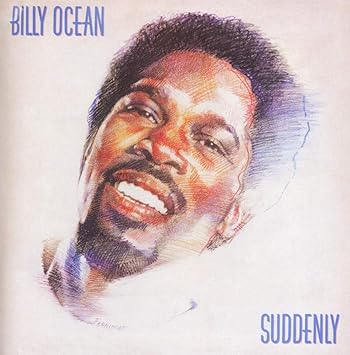
Caribbean Queen by Billy Ocean - One Track Mind

I'm dating myself, but the easiest way to get me to make a fool of myself is to play Caribbean Queen by Billy Ocean. It's like kryptonite to me. By the time the chorus comes around, I'm no longer acting, I have become an actual fool.

I mean Michael Jackson and Prince especially made major moves that year but Billy Ocean essentially won 1984 with just that song. The rest of the album was a bonus.

I just can't resist the groove, it makes me happy, I want to dance, I want to sing (loudly), and act the fool. They say Dionysus was a Greek god but the scribes out of discretion didn't disclose his infatuation with the siren song of a Caribbean queen.

I'm pretty sure Liberian Girl was MJ's belated response to homie for stealing his thunder, despite what the biographers may say. The gloved one with the golden voice always knew a winner (see lifting the synths from 1999).

Incidentally, many sincere apologies to the women I've stepped to while singing that song or variations of it - I'm an equal opportunity prospective lover, and, as I've said, I'm a fool.

The song is so versatile that, not to disclose too much, I've sang of African queens, Nigerian girls, Ghanaian ladies, various European duchesses and American queens and more, not to mention many a real life Caribbean queen.

Musical flirtation must be an occupational hazard of womanhood and it's all for the good. I've found that on occasion, some do get caught up in the rapture of a song so infectious. And even when deflected, the song breaks it down gently.

Now of course there's a long tradition of such celebratory songs. Frankie Beverly and Maze gave us Southern Girl. Earlier, Lou Perez gave us Caribbean Woman, his charanga ode to that fine Caribbean woman. They know what's up.

But to return to the song, give me the extended version. At the very least, you need the seven minute version, a radio edit wouldn't do with something so exuberant.

Even after the insistent anouncement of the opening bars (you have to signal your intentions in these things), the song takes its time to get the the point and lets the saxophone lay down the law to start things off.

There's something quite unhurried yet insistent about the groove, propelled by the synth basslines. It's a pulsing pace yet it still manages to be langorous, as if to savor the dance. Caribbean Queen is a dancefloor anthem, feelgood in four on the floor rhythms.

Start with the voice. The warmth in Billy Ocean's singing just invites you into the conversation. To my ears, there's a lilting hint of Gregory Isaacs and the velvet touch of Dennis Edwards in the voicing.

The honesty also disarms:

"I was in search of a good time
Just running my game
Love was the furthest,
Furthest from my mind"
The kicker comes from the parentheses in the title: No more love on the run. This is about being captured.

With spare lyrics, the scene sets up the drama of the relationship but he makes you wait by doing two verses and bridges, so building up the tension that the chorus is a release. But, just as soon as we're released, the groove settles back down to enjoy the dance.

The drop in the middle, and the build up, also play their part making you savor each element. The bass gets it due, the drum beats and then the synths do their bit. It's like the Soul Makossa breakdown in Wanna Be Startin' Something. By the time the chorus comes back around you want to start singing it again.

The guitar riffs. the sound effects, Keith Diamond's keyboard, synthesizer and production are inspired and really shine here but it's the saxophone solo by Jeff Smith just puts things over the top.

Infectious thy name is Caribbean Queen.

The initial release in Europe was titled European Queen but didn't get traction. Canny marketing forced a new title and Caribbean Queen struck a nerve. I've also heard an African Queen version.

Caribbean Queen by Billy Ocean


Surveying the 1984 music scene, most would hand it to Prince, you can hardly argue with When Doves Cry and the Purple Rain album and movie, let alone The Time, Sheila E and Appolonia 6. It was his year in music and pop culture.

But there were others too. I mean Cherrelle (courtesy of Jam and Lewis) dropped I Didn't Mean To Turn You On, Dennis Edwards and Seidah Garret had the almighty duet Don't Look any Further.

The S.O.S. Band's Just the Way You Like It album heated up the dancefloor. And even in the midst of all this, Sade's Diamond Life had been released and Smooth Operators were moving

A digression: Billy Ocean would win the 1985 Grammy award for Best Male R&B Vocal Performance for Caribbean Queen. But the other nominees that year were quite mistaken. Namely, let's be frank, The Woman In Red is hardly prime Stevie Wonder.

And to pick on the thread, the Grammys have never really rewarded the soul music that moved the masses. Unforgiveably, James Brown didn't get anything after Papa's Got a Brand New Bag until Living in America in 1987.

Sexual Healing is an all-time jam but the Academy barely acknowledged Marvin Gaye's transcendent 1970s run of albums that changed music.

Teddy Riley's only Grammy was for engineering Dangerous in 1993. How are such things possible?

Anyway, the point is that Stevie Wonder kept getting sentimental votes in honor of his Seventies's streak.

It was even harder to square Stevie winning the next year 1986 for In Square Circle when Alexander O'Neal wasn't even nominated.

The same thing goes for 1996 when there was Brown Sugar by D'Angelo or say I Hate U by Prince. For Your Love is a effortless ballad from Stevie but come on, really?

In any case, the fact remains that Caribbean Queen stopped both Prince and Stevie Wonder in the charts that year which is saying something about what it means to black culture.

The song affects me the way its almost contemporaneous Somebody Else's Guy by Joycelyn Brown does - shower song fodder. I Can't Wait by Nu Shooz would disconcert me in a similar manner a couple of years later.

So anyway, catch me singing along with Billy Ocean: Caribbean Queen (No More Love on the Run). Meet me on the dancefloor.

Queens, a playlist


A few more songs in the vein of Billy Ocean's opus. (spotify version)

See previously: Janet Jackson and the importance of bubblegum and Baby me by Chaka Khan

This note is part of a series: One Track Mind

File under: , , , , , , , , , , , , , ,

Writing log: April 28, 2024

Saturday, September 06, 2025

The Synthetic Shadows of Marvin Huxley

Apropos simulations and simulacra... I am catnip for the blues and, for the past few weeks, have been simmering in a thick stew of female blues singers - because, well, that's what one can do these days... Which leads me to the curious case of Marvin Huxley.

Or should I italicize "Marvin Huxley", a music producer who, like me, is enamored of 1930's Delta style blues and has now, at length (and perhaps controversially augmented with AI), delivered an album-length blues fascinator, Shadows of the South

Branded as an "Independent Lo-fi Blues and Jazz Funk Music producer" from Adelaide, Australia, I see and hear what gets him off, it's an aesthetic I am deeply sympathetic with. It's also an aesthetic just out of an uncanny valley, leaving me deeply conflicted.

My introduction to Marvin Huxley was Suits Stitched in Shadows and Lies, which was somehow recommended by YouTube after I'd exhausted my go-to playlists of Etta James, Big Mama Thornton and Memphis Minnie. And, well, listen for yourself.

(Putting aside the visuals - which were a later discovery and par for the course in this our generative timeline), I didn't know where to start with the music, I was confounded.

Then, one click later, there was A Dollar's Worth of Skin, which was similarly disconcerting to the ear. Synthesis, compression, homage at once, and fruit of a strange alchemy.

Then, there were also the earlier experiments, say Goodbye America Blues, which is more evidently artificial with its vocal sampling of an unknown singer and filtered guitar. Still, I kept listening, eventually casting the effort as a blues fascinator despite the synthetic content.

Sidenote: The Sister-in-law has written at length about the real thing. We should all listen to them. The emotional labor and the craft:
Blues Mamas and Broadway Belters: Black Women, Voice, and the Musical Stage (Refiguring American Music) #CiteBlackWomen

In any case, here is an album that is soaked in this aesthetic, devoted even. A studio creation, perhaps, but it is a creation nevertheless. A high-tech creation of lo-fi blues.

Or more precisely, it is a recreation from someone "who loves trying to recreate those old sounds using vintage style instruments, samples, compressors and effects". Homage and chimera, then.

When I read "The guitar recording was degraded to evoke the brittle warmth of a 1930s field recording", I couldn't help but think of Pete Rock or DJ Shadow crate-digging and similarly jacking for beats.

Or say Q-Tip on the needle drop.

There's a racial angle perhaps (or a cultural appropriation take, some might say), but I won't venture in that direction, only the music matters to me.

Still, who gets to write "a love letter to the lost ghosts of American blues music"? Not for nothing do many bluesmen sing that Blues is a Feeling. (see Lightnin' Hopkins, for example)

And in a year where the movie Sinners has dominated the cultural zeitgeist, it is worth asking whether you can have a Delta blues revival, with full-on lyrics, gritty vocals and all, that is synthetic rather than authentic.

(Sidenote: to that point, Buddy Guy's new album Ain't done with the blues is also out)

Still, the music nerd in me wants to deconstruct the work. Where do the voices in Shadows of the South come from? What studio trickery was used? What equipment? Or, perhaps more tellingly, what prompts were crafted, if some of it is indeed AI-infused?

But then, stepping back, I also want to ask: who made the field recordings that we all venerate? Who was documenting the blues back then? Who was promoting it? And who now basks in the sounds of earthy blues?

But that's me. I can listen to a blues mama merely humming for hours on end. Further, the stakes are low. To add or not to add to the playlist, that is the question.

It seems to me that the visuals highlight the artifice and perhaps even detract from the music they are intended to support. At the same time, they do underscore the mood and point to the story of the clever lyrics. Also: they are great conversation pieces.

(A reminder that my favorite video accompanying a Funkadelic song is a juxtaposition with a Russ Meyer film, You Scared the Lovin' Outta Me by Funkadelic)

But I wonder what Marvin Huxley would come up with, with say a Lizz Wright in the flesh, after hours in the recording booth. Or maybe, to push the racial angle, what would a project with Alice Russell on vocals sound like in comparison?

In the same vein, one wonders if people want to listen to the blues or if blues-adjacent or blues-influenced will suffice. Certainly in these streaming days, there are many for which the simulacra will suffice as background music. Reserving the experience of the real thing for live settings. One wonders...

Anyway, the album is not all fetishized retro action. The rest features more modern beats, albeit still blues-inflected on the surface, even when veering into trip-hop territory. That growl in the vocals is a constant, and those guitar licks. Sounds of nostalgia.

I can see the twinkle in the eye as the album was released. But who knows how it will be received? I do know that this listener was left chasing shadows tying to decipher this conversation piece. Let me know what you think.

austin sunset 4


Shadows of the South by Marvin Huxley


The album on YouTube (spotify version) and a few highlights. For the first three, I suggest a blind listen before venturing to the videos.

P.S. Hey Marvin, tell me more about the makings of this album.

P.P.S. Pardon the title of this piece, I'm a sucker for such things.

This note is part of a series, One Track Mind. See previously:

Saturday, August 16, 2025

Paul Laurence, Soul Man

Soul man, Paul Laurence, is more known as a producer and keyboardist than for his solo efforts. I always found it surprising that he didn't break out given his impeccable bonafides. The keyboard and bass-driven funk. Propulsive boogie dance music even when mellow. Even the ballads groove.

An interesting Rhythm & Blues column by Nelson George in Billboard 1985 discusses the roots of Paul Laurence's dilemma. Long story short: timing is everything.

1985 was Paul Laurence's triumphant year. Having written Rock Me Tonight For Old Times Sake for Freddie Jackson, he'd essentially assured himself a Grammy and a firm place in the black music pantheon. Entire careers never reach such heights.

By then, he'd paid his dues writing for the likes of Melba Moore and Evelyn Champagne King. The success of Rock me Tonight meant he'd finally get his shot at his solo debut album, Haven't You Heard. Only, then, for the first single, She's Not A Sleaze to stall on radio play.

Why, then, was She's Not a Sleaze not a greater hit?

It features both Freddie Jackson and Lilo Thomas on vocals having fun over an infectious beat. Sonically, it sounds like an SOS Band joint guaranteeed to fill dancefloors. What happened here? Why would Nelson George call Paul Laurence a 'victim of circumstance'?

The pull quote: "'Sleaze'-y lyrics create a problem for Paul Laurence". In a sign of the times, a few musical directors - browbeaten by the scrutiny of the Parents Music Resource Center, misintepreted an innocuous lyric, "They called her Loose Lucy", and pulled the track from airplay.

As Paul Laurence rightly noted at the time:

"Guys like Prince have made a fortune out of suggestiveness, saying things on record I would never say. Yet because of the fallout, I and other artists, are going to take the weight".
And yes, even as The Purple One smiled his way through those years and never looked back, Paul Laurence was, indeed, collateral damage.

He was not wrong. Darling Nikki, and perhaps Erotic City, the previous year, famously aroused Tipper Gore causing the furore that lead to those explicit content stickers you still see on cd covers or the Scarlett E letter on your streaming services. Moral panics and such prompted by Prince.

But perhaps the damage wasn't so bad. The royalty checks he started cashing from Rock me Tonight were very real. The For Old Times Sake guaranteeed nostalgia. You don't always win everything in the creative arts. And as a palate cleanser, he then produced Putting A Rush On Me for Stephanie Mills.

Furthermore, he also topped that by taking Prince's Do me Baby and produced Meli'sa Morgan's cover version and album of the same. He wasn't resting on his laurels and, in tipping his hat to Prince, proved that game recognizes game.

1985 was before Nelson George would turn to calling the music that made his fame Rhythm and Bull. It was a time when he actually paid close attention to that strand of musicianship. Perhaps it was the shenanigans of the record companies that irked him rather than the music...

Also note Nelson George's scoop in his column: "Janet Jackson is recording part of her next album in Minneapolis with Jimmy Jam and Terry Lewis"

Paul Laurence's craft is immense; his is a solid body of work. Evelyn Champagne King, Melba Moore, Freddie Jackson, Meli'sa Morgan, Kashif, Howard Johnson, Keith Washington... Legends like George Benson, Smokey Robinson, Stephanie Mills.

And when it was the dawn of the New Jack Swing era, he came hard, I Ain't Wit It remains one of my favorite swingbeat joints. The album title, however, does say it all however; it would be his second, and last, solo album: Underexposed.

In later years, he would continue writing for Freddie Jackson and others, producing much of the same quality. So Fine by Howard Johnson would be an exemplar. Along with Kashif he would blaze a trail in the vein of soul music with the songcraft, always tailoring things for the artists he produced.

And he's still bringing heat these days (see No Matter How You Rock It featuring Vincent Matthew). Again, however, that track was lost in our covidious lockdown. Foiled by the pandemic, a victim of circumstance once again.

In a sense, Paul Laurence could be considered in the same mold as Leon Ware, a legend more renowned for his production (and gifts to the like of Marvin Gaye) than for his solo releases even though those are no less excellent.

{And perhaps like Leon Ware, the singers he produced were better vocalists than him. Although I'd counter that I quite like when he deploys his falsetto - and I'm an aficionado of falsettos)

To conclude, Paul Laurence is not exactly unsung, but he was certainly underexposed. As a soul man who lives and breathes music, he deserves all the plaudits. He's also a minor victim of circumstance, perhaps, in terms of fame, but then timing is everything.


Paul Laurence


Paul Laurence, a playlist


A soundtrack for this note, a poor man's discography. Sadly I can't see any music videos so you'll just have to soak in the sounds of Paul Laurence. (a less comprehensive spotify version)


This note is part of a series, One Track Mind. See previously: Baby Me by Chaka Khan

File under: , , , , , , , , ,

Writing log: June 4, 2025

Tuesday, May 20, 2025

Love and Death

The slightly stilted language, as if through a veil of translation
The rhythm and cadences came from a different place
Performing with a twinkle in the eye, full of hints and allusion
The marked confidence, the groove, we've got our own thing

Speaking of heaven, but not hell
Singing of love, but not hate
Trickster tales that leave you in the lurch
But, crucially, clear-eyed about death

...

Laments and celebrations walk hand in hand
And comfort lies in the company you walk with
The hidden realms one passes on the journey
The dreamy truths revealed along the way
Hold tight, for friends will one day sway off the road
And, at the tail-end of the journey, your traveling companion will be your shadow


After seeing Ebo Taylor perform at age 89

Ebo Taylor


Love and Death, a playlist


A soundtrack for this note (spotify version)

Pat Thomas and Ebo Taylor


I caught Ebo Taylor and Pat Thomas on the former's farewell tour in Austin on May Day 2025. Then aged 89, he relied on his very capable 6 piece band (helmed by two of his sons) to do the heavy lifting. Ageless afro-funk grooves, nasty keyboards and the horns. Pat Thomas's voice too, still had that honey-coated baritone and the vocal range that could hit the high notes that would excite you. They still had it, they still had that ineffable style that emerged fully-formed in their Seventies heyday. Heaven for this exiled soul.

Bonus beats: I captured a few snippets of their live performance with my cell phone: Heaven , Love and Death and Kwaku Ananse, some mellow highlife Ene Nyame A Mensuro, encore

File under: , , , , , , , , , , , , , ,

Writing log: May 2, 2025

Friday, May 09, 2025

You Voted For This (And Other Songs)

Elections don't make for great subject matter for music (or art in general). They are typically uneventful in most countries. And most would rather sing about love, conflict, loss or betrayal. Audiences don't favor the banal when escapism, gossip, or spicy takes are available.

Still, there is a certain strain of art that emerges when elections are contentious, or if the personalities involved are striking in some way. The loss may hurt more, the win might be long overdue, or against all odds, the results might be shocking...

Joy, shock, upheaval or outrage rightly deserve an artistic response. In contrast, the poet of the quotidian lives in considered penury, envious of her more successful peers.

Hands down, the greatest artistic reaction to an election is B-movie by Gil Scott Heron. It starts with the immortal line "Mandate, my ass", and goes on from deconstructing Ronald Reagan's 1980 election to painting a pointillist portrait of a nostalgia-ridden USA (said nostalgia endures).

Beyond the biting poetry, set to that militaristic bassline, the performance benefits from its panoramic scope that moves beyond Skippy's loss, and RayGun's ascension, to a cold-eyed assessment of the wider culture.

(His band would soon be renamed the Selective Amnesia Express.)

The song, B-movie, like the earlier Winter in America, continues to resonate due to the range of his ambition and careful economy of the execution. The sparse musical arrangement is just the icing on the cake.

The prescient lyrics, of course, diagnosed, at length, Bush 2004 and Trump's MAGA appeal:

The idea concerns the fact that this country wants nostalgia
They want to go back as far as they can - even if it's only as far as last week
Not to face now or tomorrow, but to face backwards
But if B-movie is sui generis, what about the more routine reactions? Sticking to music and what is available on YouTube music, and focusing on the USA, I give you a representative playlist of twenty songs that cover the past twenty years. As usual, I have a few thoughts (call them liner notes)...

The most recent reaction songs started right after the November 2024 US election. The most typical response contains the expected mix of disgust, I told you so, you've made your bed, now lie in it, this is your mess etc. In short, schadenfreude, anger and fear prevail.

While I understand the impulse and there's certainly the urge to react, politics remains a contact sport. One wonders: what is the intent of all this sound and fury? What is the underlying theory of change?

Anger may motivate to wrath while disappointment often leads to depression and disengagement. Perhaps the idea is that even though writing in righteous anger, or singing the blues, may not change the world, their palliative relief is very welcome. Perhaps we should look elsewhere for change.

(But perhaps I'm not the wisest person to opine on such matters, after all I've written 5,000 words on an html button, 7,000 words on a taxonomy useful idiots, and even 9,000 words on a bookmarked tag. What change did I drive?)

Every act of creation should be celebrated. Moving on...

I voted for this by Friend of USAID


The most impressive finding comes from the aptly-named band, Friends of USAID. Newly-formed in 2025, they fully embrace the satirical mantle. Opening this playlist is the just-released I Voted For This. A delicate duo, melding male and female voices, they add sweet insult to injury

Calm delivery, sample lyrics:
My cousin's kid caught the measles - I guess that's kinda sad
But at least she won't have to learn how slavery was bad
The crops are dying, the aid is gone, but I don't care 'bout that
At least I don't have to speak Mexican and hear 'bout them eating cats
The inspired band name highlights the Doge cuts that have decimated the mission of the eponymous agency. The artwork of the 15 singles they have released this year accentuate the effect. As do the songs themselves sample titles: Thoughts and Prayers, inc, Reverse Robin Hood (The Tariff Two-Step).

I hope that, like Randy Rainbow, they commit to the bit and continue to release more music. They have an album's worth of material already. We could all do with more biting satire to leaven the next few years.

More typical in the 2025 crop is You Voted For This Fool by Lazy Radiographer which reeks with disgust. The chorus: "You chose the fire / Now feel the cost / Watch freedom burn / While you praise the boss"

This Is What You Voted For (I Hope You're Happy) by After Everything continues in the vein of anger and outrage. It's rock-infused so less restrained. Lyric: "Sooner or later they'll come for you and you'll be the next in line". Bleach is the cover of their last album title A-Jax Everywhere

Is This What You Voted For? by Rhett Sawyer is more earnest and conciliatory, seeking to question and start a conversation. He's a country musician worried about his country and reels a litany of problems starting with "a land of the lost, locked up and poor", and carrying on from there

Cory Legendre is all bitterness in You Get What You Voted For - off his album, We Tried To Tell You (cover with Putin and Musk and a sitting Trump). Albeit looking at vote counts in the recent election, I'd hope the b-side would address those who didn't vote.

Lopkerjo has fully signed up with the resistance and has Nobody Voted For This, the titular track of his furious album... Still, methinks that Liz Cheney Hero of Integrity is where I step off (I would have added a question mark to that song title at the very least, but your mileage may vary).

Late in 2024, Me & Melancholy wounded by Trump's victory released We Never Voted For This. Working fast but protesting too much, I think. Who is the We he is talking about? I would rather point him in the direction of Antibalas's 2010 album, Who is this America Dem Speak of Today?

YaBoi Dirty is more philosophical with Who You Voted For. His is more a plague o' both your houses missive. The kind of demoralized outlook that would lower voter turnout - and perhaps that is the point of his intervention. Politicians are crooks, spokesmen for the rich etc...

Capture the state by Friend of USAID


Stepping back to 2022, we have part of Ben Frank's standup comedy routine which is riffing on political hypocrisy with This Is What You Voted For. The private sexual mores versus the public severe prudity. Cynicism about the bonafides of leaders.

Turn to hip-hop also in 2022, Mr Trumptastic released You Voted For Jb You Must Be Smoking Dope. He'd had enough of a whole year of Joe Biden's presidency and was looking forward to Trump's rightful return. One wonders if he'll have more to say for the current moment.

in 2021, Art Neuro, more punk than rock, chimed in with This Is The Stuff You Voted For taken from his Sadistic Ineptitude album. Not quite mellifluous, his is a rather acidic take.

Preaching reconciliation in 2021, JCAR93 weighs in with Come Together (Even If You Voted For Trump), trap rap noodling. I suspect The Beatles were more artistically successful being all sugary and omitting the snark.

In 2020 from England, we have If You Voted For This Then You Are Part Of The Problem by Dannydangerously, his grime flow is less outraged at Boris Johnson's shenanigans than of his countrymen's continued voting for the Tories. England was then the new epicenter of the covid pandemic.

In 2015, Me Time released You Voted For This. Again punk-inflected, and furious about the GOP's assault (presumably under Bush) on gun control, the EPA, bloody wars, corporate cronyism.
"Thank God we chose to back the GOP / The world is a wasteland / It's piles of grass, ash and sand"
Also in 2015, The Walking Toxins chime in with You Voted For Them. Angry at a fascist state that dropped the bomb (unclear whether it was Obama drones or Bush shock and awe that drew their ire). Like the music they produce here, they are not happy campers.

In 2012, Zygsville sound bewildered in Who Voted for This, a nice uptempo joint that one can do a line dance to. More musically interesting with some nice guitar licks. Giving the date of the release, I suspect Barack Obama wasn't his favorite but the lyrics are rather ambiguous consequently the song has legs.

In 2008, Beatnik Turtle whistles his acute observations on buyer's remorse, describing how the new guy becomes "the incumbent, he's got the peoples mandate, but he's passing wacky laws now, showing all his flaws and he's the guy that everyone hates. And all of a sudden nobody voted for this guy"

The humourous point is well taken about how partisans turn quiet when those they put in power screw the pooch. And, quite likely, this year we'll be repeating the observers are worried mantra.

Stylistically, then, the songs are mostly country, rock and punk, perhaps because I stuck to the Anglosphere. It's not easy listening as the singers are trying to provoke a reaction. Where we have hip-hop, the political commentary is a sideshow, braggadocio is a necessity in that form.

I do think that the songs with songs that broaden the perspective will likely endure but I appreciate the lesser works as fodder for the time capsule, cultural artifacts for later historians mining the zeitgeist of these trying times. I hope we make it to the other side.


Bonus beats: Your Mess by Omar, timeless soul, and an extract from Black Wax the film that featured a live performance by Gil Scott Heron of B-movie


File under: , , , , , , , , , , , , , ,

Writing log: May 4, 2025

Saturday, June 29, 2024

Baby Me by Chaka Khan - One Track Mind

More musings on music have been requested (apparently weekly playlists and poems are not enough) so I'm inaugurating an occasional series I'm calling One Track Mind. I'll pick a song, nothing too obvious, and see where the discussion leads.

Baby me by Chaka Khan is my first pick.

Chaka Khan CK 1988


Chaka Khan announces herself. May God preserve her. Her musical chops are undeniable, she's every singer's favorite singer (Ask Joni). She was recently (finally! belatedly!) inducted into the Rock and Roll Hall of Fame. She doesn't need more flowers and yet I come to sing her praises.

Beyond that voice, that immaculate voice, that awesome weapon, there's that unerring sense of funk. You've seen those videos of her drumming, right?

Chaka Khan also has impeccable taste. The story goes that she told Stevie Wonder that she wasn't feeling the song he'd written for her and that he should go back and try better. (This was 1974-vintage Stevie, the greatest songwriter in his prime period)

Of course he then wrote Tell me Something Good

The point being that Chaka Khan has exceedingly high standards.

By this stage in her career - 1988, she had nothing to prove to anyone. Every project she took on was an all-star affair, akin to a Minnie Riperton album - an event, and everyone scrambles to get in on it. The voice and talent are so compelling that you want to throw your hand in.

The sessions for the C.K. album were no different. The A-side is an embarrasment of riches.

First, a cover of Stevie Wonder's Signed Sealed Delivered featuring the man himself on harmonica reprising his guest appearance on I Feel For You

Soul Talkin' is next, written by the peerless Brenda Russell who also supplies background vocals. Bobby McFerrin joins in the fun, channeling the sound of a saxophone with his own vocals.

It's my Party brings the joyous sounds of Womack & Womack to the table. This was the first single of the album.

And then Prince supplies Sticky Wicked (featuring Miles Davis, Eric Leeds and Atlanta Bliss) a nouveau funk affair, and then offers Eternity one of his effortless ballads (Chaka and David Frank produce the latter)

On the B-side, she continues her jazz explorations paying homage to Billie Holiday with The End of a Love Affair and I'll Be Around again bringing in inspired collaborators: George Benson, Marcus Miller, Dave Grusin, Steve Ferrone and Miles Davis again.

Chris Jasper of the Isley Brothers also crafts a tune, Make it Last. Frankly we are spoilt for choice.

And yet Baby Me, the third single, is what we should focus on. Let's have a listen (also on spotify)


A few preliminaries to save you to trip to Wikipedia or Discogs. The legendary Russ Titelman is the producer, Rob Mounsey arranges and plays keyboards. Holly Knight, Billy Steinberg are the songwriters. Chaka Khan, of course, does all the vocal arrangements

Russ Titelman was trying to capture the magic he'd witnessed when he had her and Rufus in the studio during the sessions for the Stompin' at the Savoy album in 1983, especially the performance on Ain't Nobody. You can read some of his memories of the time

Baby me is a deceptively simple love song. The lyrics are of longing, tenderness and vulnerability. After all, who doesn't want to be babied and treated with care? "The world is crazy and sometimes cruel / So baby me and I'll baby you"

(Incidentally, I fully believe in the power of misheard lyrics so I'm serving notice that I'll ignore any stickler who might bring up that "sometimes cruel" is probably not how the line goes. That's what I heard and I'm sticking to it)

It's a keyboard driven song, much like Ain't Nobody, the hit that capped her reunion with Rufus in 1983, and which serves as a kind of blueprint.

It's a fairly restrained affair to start with, bouncing between the keyboards and her voice, and punctuated by Paul Pesco's guitar fills. The lyric in the refrain goes "When you touch me, I come undone", and then carries on asking "Do you do this to every one?"

Then the excitement builds. "Take me in your arms / Rock me tonight"

Observe the way she sells the "Rock me tonight" line.

Then the chorus changes as if to emphasize the mounting infatuation:

"When you touch me I come undone / You better not do that to everyone".

Is this the pleasure principle speaking or resignation at being lost in love?

Then to the bridge, the bridge that un-mans me. For she goes in flight with a little scatting - her voice is an instrument, and then the saxophone comes in. The scatting is cathartic, duelling almost with the saxophone. You realize just how striking her voice is.

"Touch me" she sings. And then she makes you wait - a model of restraint, it's fully 3 minutes 10 seconds in before when she finally winds up and starts wailing. It's a release of the built-up tension. And you, the listener, want to join in.

The genius of this part is that she doesn't keep going, she stays in the pocket. Sure she lets loose, there's a release, but then she retreats. This part confounds me because once you start, you always want to keep it up.

I know that once I've started on my own wailing on Baby Me (in the shower or, as my household have caught me on many occasions), I can't help but adding my adlibs. I just want to sing at the top of my voice. And keep singing.

Patti Labelle or Aretha Franklin would have decimated the end of the song. I fully envision histrionics if Patti were let loose on this song, and perhaps if Chaka ever performed this live, she would go wild. But it works here; she's almost inviting the listener to fill things in.

Chaka Khan, known for her vocal pyrotechnics, is well aware that she could belt this out; but she chooses to be restrained in the arrangement, restrained even when she lets loose. She stays in the cut, in the pocket, in service of the song. And that is her knowing artistry at work.

There are a few remixes that highlight the craft and thought that went into finalizing the song. Rob Mounsey's arrangements were on the mark.

The Big Baby Extended mix emphasizes the keyboards showing how tight the mix is in the released version and the importance of the guitar licks and Warren Hill's saxophone

Compare also to Come 2 my House a decade later, the title track of her album length collaboration with Prince.

The 3cks and a baby remix highlights the scatting and adds a few more improvisations and wailing at the end, hinting at the kind of arrangements that could have been used in the final mix

Soul Talkin' follows a similar formula with Bobby McFerrin supplying the vocal solo in lieu of the saxophone. (My long overdue Brenda Russell appreciation piece will be forthcoming).

Here's some more Chaka Khan drumming (you're welcome). Again, she stays in the pocket instead of being flashy

The Babysitting mix of Baby me is a more stripped down affair, a little too sparse to my ears

I'll also throw in Eternity which bears the fingerprints of Prince.

Spotify doesn't have the remixes but the essential is there

I suppose this is fodder for my contention that 1988 was one of the greatest years in recorded music. But I'll flesh out that provocation another time...

What can I say, the song moves me, the arrangements, the voice - everything about it. I'll leave you with 4:06 minutes of soul perfection:
Baby me by Chaka Khan
Let me know what you think.

See also: Janet Jackson and the importance of bubblegum and Tony Toni Tone - Weary Sons of Soul which I retrospectively nominate for this series

File under: , , , , , , , , ,

Writing log: May 3, 2024

Saturday, December 17, 2022

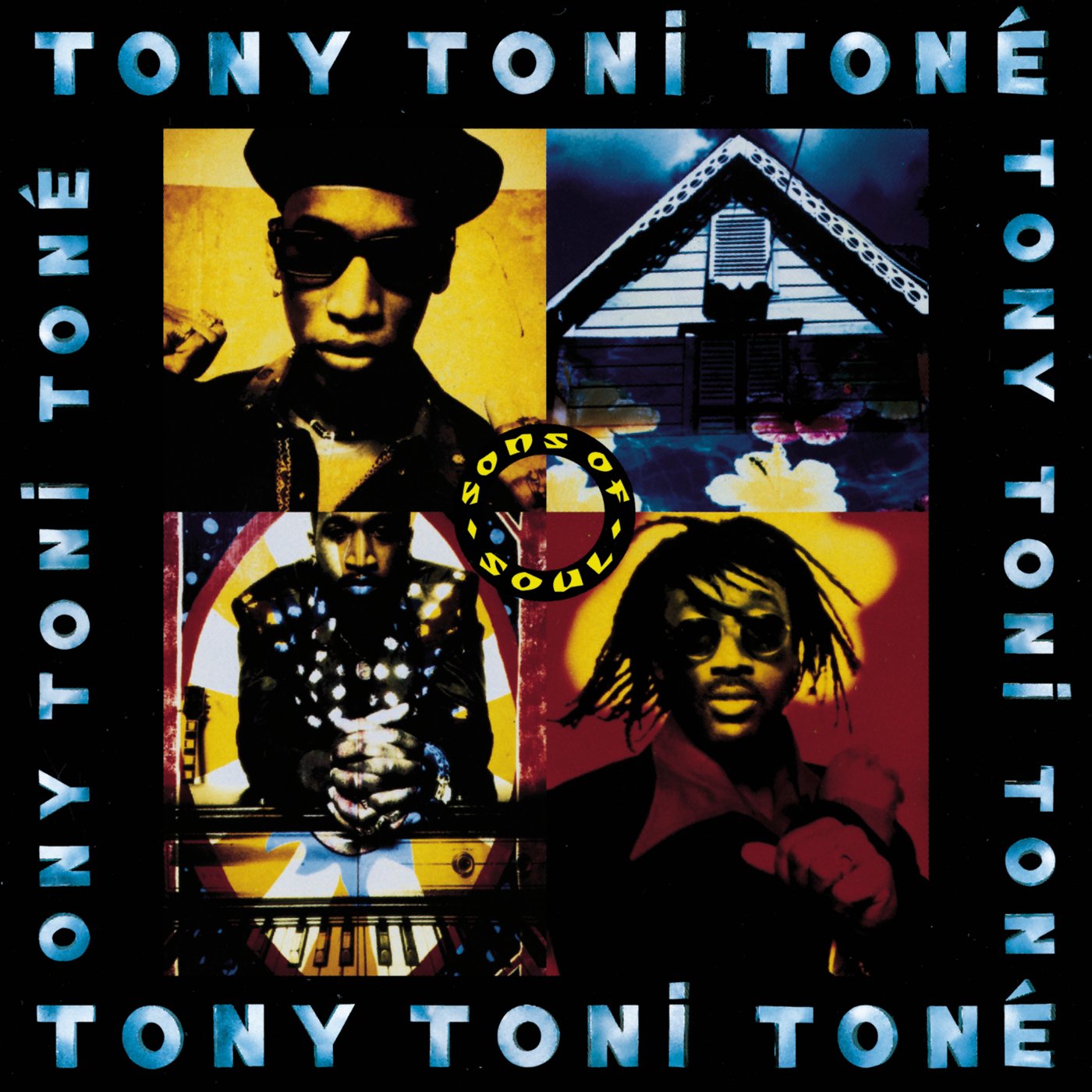
Tony Toni Tone - Weary Sons of Soul

The Music Snobs were discussing Tony Toni Toné the other day - sterling as usual, covering the band's breakup, the legacy and the music. Still, they always leave an opening and I have some thoughts...

I was at university with a Wiggins cousin and like all of the Wiggins, he was a beautiful soul, insanely talented but famously prickly and always wary - he had seen some things. I later learned this friendly-but-guarded business is true of many black Bay Area folk.

He would speak of his cousins who were in a band and how they used to mess around at home and in talent shows, trying to find studio time. They were already doing well, The Revival had a serious impact the previous year. Musically minded, their family reunions had epic soundtracks.

Still, there was something a little frayed, a faint thread that ran beneath the smooth surface of these guys. It's in the music, in all their albums even as they became more confident performers. And maybe it's best to point to a lyric...

Lovin' You is arguably Tony Toni Toné's masterpiece. It stands in the pantheon of slow jams, an impeccable and lush ballad. And yet I'm drawn to a lyric that Raphael throws in: "This world is drunk and everybody's mad". How did that get into this seduction suite?

Skip forward to 2019 and Raphael Saadiq with nothing to prove to anyone, releases his most personal album, Jimmy Lee, a song suite musing about his uncle's addiction. And what do you see? Track 3: This World is Drunk

The driving chorus:

This world is drunk
And the people are mad
Lovin' You was their Adore perhaps, and just like Prince deflating things with "but maybe not the ride", Raphael drops "this world is drunk" to ground the beauty... They had moved beyond bubblegum by this stage. They could drop the mic and walk away. Grit was part of their legacy.

...

True story. Late at night. The mixtape is ready. Prince got us in the mood, then Maxwell's suite, the satin sheets are prepped, Meshell Ndegeocello, a declaration of intent, we're going to get freaky, D'Angelo, Brown Sugar baby! Then the Tony's come in, Lovin' You, to seal the deal.

Mood, low lighting, you're drawing close to steal a kiss, singing along "loving you..." Crooning. Let's sing together, it's on tonight... Then: "the world is drunk and everyone is mad" !!!

What? What did we just sing? That's like a reminder to use a condom, to make sure you have birth control measures in place... That is a warning.

I'd been thinking Let's get it on, not Brenda's got a Baby. I'd been thinking Turn off the Lights, I was suggesting Lay Your Head On My Pillow. Caveats and responsibilities were the furthest from my mind. Had I picked the wrong track?

These weary sons of soul put a parental advisory notice on the most sensual of moods. Rain check that night, I'm sad to say. I'd have to change the playlist going forward.

So... Tony Toni Tone put the contraception in baby-making music.

I started a family 15 years later...

If they were in finance instead of family planning, they'd have said sure go for the money but choose cement instead of crypto, choose dividends over dotcom dreams. Careful out there.

...

My introduction was Born Not to Know. A friend had brought the tape back from the States, I was hooked. But I stayed for Baby Doll (which had a Teddy Riley remix) and the songcraft. While Foster/McElroy were doing production duties on their first album, the Tonies were doing the writing and it was intriguing at that.

They were traditionalists, they had a band sound and were students of the greats. You heard that even in the first album, Who?. Their second, The Revival explicitly referenced their Oakland antecedents, Sly and the Family Stone, Santana etc. They had ties to Sheila E's band after all.

Sons of Soul and House of Music were further studies of the craft, hearkening to the different styles of the greats. But it wasn't just homage; they were modernizers, conscious of the legacy. Throughout, their soulful grooves came with real talk.

Little Walter was a little controversial for interpolating a spiritual. Sinbad appeared in the video - comic relief at the outset of their career, but there's no hiding that it was a cautionary tale that ends with "When Walter went to open it, he was blown to the floor".

261.5 features Dwayne singing about "falling in love with a minor" and risking breaking the eponymous California Penal code number. Playing for laughs and done with subtlety - PG-rated. It's an age old story and some later predators would ignore the warnings (say R Kelly)...

There's a lot of dysfunction in their songbook. Take Jo-Jo - Raphael singing about a family situation - Jo Jo who goes missing, or My Ex-Girlfriend - learning about infidelity and being cuckolded with the immortal chorus "My ex-girlfriend (girlfriend) is a hoe". Vicious fun.

Don't Fall in Love is up there:
Have you ever fell in love with a woman, that wasn't a woman?
I mean, all the time, you thought she had the things it takes to be a woman
That's the Eddie Murphy line: "I was just giving the person a ride", that's The Crying Game denouement sung with soul.

I know, I know, that's a poor interpretation of the song, he's really singing about picking the right woman and even sings "You better let God pick your one". But the ambiguity of great songwriters is to make you find layers in their musical world even as you sing along.

Or take Annie May - their stripper anthem.
"Annie May's gotta make up her mind
Is it a girl or is it a guy?"
Is it a love triangle, gender confusion, sexual ambivalence, a discourse on binary themes? Or just a fun thought piece about a dancer? Shut up and dance. "Let your hair down"

Sidenote: at a certain point they dropped the punctuation in the band name: Tony! Toni! Toné! became Tony Toni Toné. They didn't need the exclamation points perhaps. Or was it like The Jacksons being born out of The Jackson 5, contract negotiations? Industry shenanigans? (ducks)

Like Janet Jackson, if there were only faint traces of bubblegum at the outset, they very quickly leaned in to chart their own direction. Regardless, when they took over production duties, there was no need for any histrionics, the music spoke for itself and lingers. We still talk about them and play their well crafted albums years later.

I'm glad that they weren't absorbed into the Prince universe, that going to Paisley Park didn't work out. I'm glad they remained a band and charted their own course. Being soul men was not easy in that era. But the writing was on the wall as to their longevity.

Still, they did warn, listen to Tonyies! In The Wrong Key: "Sometimes I wonder how we stuck together / But I'm so glad and happy we did". On hearing that, I wasn't sure that there would be another album after Sons of Soul. In that sense, House of Music was a double blessing.


Sons Of Soul


I saw Raphael Saadiq live at The Fillmore in San Francisco in 2009, he was touring The Way I See It. I think that he would have been happier playing in the East Bay. When he went into his gospel, revival mode, very few in the crowd followed. It seemed I was the only one whooping and singing hosannas.

I did my 8 years in the Bay Area, my children were born in Oakland, proper African Americans. I'd like to think that there's something of the East Bay that rubs off on you. To live a remove from the moneyed power centers but also where the Black Panthers were founded. But I digress...

To be black in the East Bay is not to be living out Medicine for Melancholy, or even The Last Black Man in San Francisco. It's more in the vein of Sorry To Bother You and Fruitvale Station (especially). Restless joy but with a weary edge, and Tony Toni Tone laid down the soundtrack.

...

Tony Toni Tone had been through a lot but they had a formula: they seduce you with lush soul but made sure there was grit underneath. That's the Oakland Stroke, that's The Blues, the necessary counterweight to It Never Rains and Lay your Head on my Pillow. Family friendly but never shying away from reality.

Their legacy is to be central to the conversation amidst the soul movements of their era. They proudly wore the mantle of The Isley Brothers, The O'Jays, Maze and The Ohio Players.

Their brand of soul was beautifully constructed, the sound of a band, danceable grown folks music. It feels good and is something that lingers. I'm conflicted that they went out on a high but glad they they gave us what they did.

Recall:
"This world is drunk and everybody's mad"


Tony Toni Tone, a playlist


A soundtrack for these weary sons of soul. Spend some time in their catalog, it's worth your time (spotify version)

(Orignally written for twitter)

File under: , , , , , , , , , ,

Writing log. November 11, 2022

Monday, August 16, 2021

Domedo

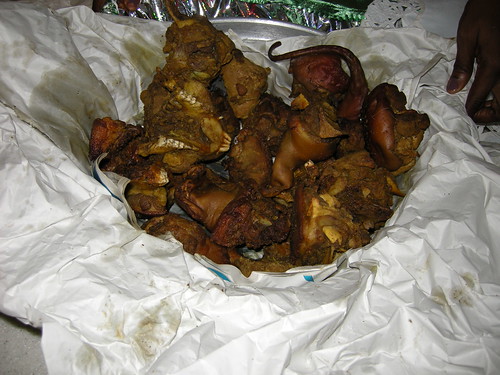
You have to wait a while for domedo. Those who think of it as just street food know only the adulterated sort, the one that bypasses the wait. Part of the appeal of good domedo is that you have to wait a while. Even when you get a tip about a good supplier, you kind of resign yourself to a kind of food serfdom, the tsar being the domedo guy.

Case in point, I remember one Christmas back home in Ghana, I happened to mention that I hadn't had domedo in a year - a kind of idle hint that I thought might hasten things to the benefit of this exiled soul. The parental unit were enjoying having a full house and fully indulging their brood. But no, I had quite forgotten that this wasn't a routine thing. Domedo is very far from routine, you see. As it was, Mum promptly called her domedo guy and placed the order. It didn't matter that she had built up a relationship with the man over the past 16 years, that she had brought him repeat business, and had referred him many faithful customers over the years, we simply had to wait. There was no indication about when the domedo would come, no estimated timeframe etc. The order was merely acknowledged; further there was no negotiation on price, he knew that whatever he demanded would be promptly paid, no matter how usurious. If we had the good grace to get some domedo on my birthday or even before our return to Austin that would be a fringe benefit, I knew my place.

domedo

And when it did come, the fight began. These two children of ours who had been turning their nose up at the fare in the house all of a sudden were fighting with their grandfather and I - I started reconsidering this whole business about putting food on the table for the family. Said grandfather who had began waxing eloquent about the special occasions growing up when domedo was served, noticed the alarming speed with which those two were digging in and reverted to that jungle imperative - every man for himself. The golden rule was was suspended, the other cheek was stuffed not turned. There was no more small talk, we were simians who'd happened onto the prodigal son's feast - to mix my parables. We dug in and ate it all. It was worth the wait.

To say that domedo is spicy pork doesn't capture anything about its essence. It has to be experienced.

I do know this. When this pandemic is over and vaccines and all have been procured. The very first thing I will do when I land on Ghanaian soil is put in an order for domedo. I'm not sure when it will come, but it will be worth the wait.

food spread 2

For the completists or curious: domedo is pronounced something like dough-may-dough.

Note: I have no dietary restrictions albeit my palate was fixed by the time I left Ghana as a child. I am otherwise indifferent to pork - goat and guinea fowl are my favorite meats, but I always stand to attention at the prospect of some good domedo.

Pork, a playlist


A soundtrack to this tasty dish (spotify version) See previously: Taste, Comfort Food and Rare Groove, A Taste of Africa

File under: , , , , , , , , ,

Writing log: March 21, 2016; Playlist March 16, 2021

Tuesday, June 29, 2021

The Great Longing

To this type of writer, fidelity is not the concern
He strains for the lyrical in everything he observes
Comfortable with a tall-tale, or is it a hall of mirrors?
One shouldn't hew too closely to those paragraphs about Paris

He delights in fluttering from town to town
But there's acuity whenever he hits the ground
Picking out people to study and describe
It's no wonder this novel concerns a public scribe

His novels have that quality of floating above a city
All residents are fair game for his detached scrutiny
The fumes of memory are his proving ground
His task is recording the imprint of history's sound

Some writers are like this, they feel so deeply
Even when their work covers a terrain of uncertainty
Yet their commitment holds fast to that roving eye
A compulsion they cannot escape no matter how much they try

It's a sort of out-of-body performance, this authorial detachment
The critics would brand him the laureate of internal displacement
I'm minded of a line from a song called Human Nature
The knowing looks exchanged that the lyricist captured

He traces this compulsion to growing up as a sick child
Confined to bed and to home, experiencing life through others
Starting with imaginary affairs where he pictures himself running wild
Escaping his room and seducing the women who visit his mother

As an adult, in his own real relationships, there is always awkwardness
The flesh can never measure up to the erstwhile fictional goddesses
The determination to eschew participation in favor of bearing witness
Has a pervasive effect, in all engagements he is rendered feckless

He describes towns he has lived in, Fez, Tangiers, all full of traditions
Exquisite portraits, even if some of these places are not happy locations
Take the camp he is sent to as punishment for dissent as a young student
In maturity, in France he can only reminisce about the Morocco he left

A metaphor, perhaps, of the perils of life as a dissident
The squalid end that autocrats decree to crush dissent
The Moroccan antecedent was L'Affaire Ben Barka
The means, fear and blood, that marked such chapters

So who is this écrivain public? And how accurate is his narrative?
The author wears as his disguise a mask of words hidden in plain sight
The indirection of men of letters who craft their narratives of exile
This reader recognizes a fellow traveler bearing a splinter of ice

In days of yore, it was an honorable profession to write letters
To give voice to those requiring correspondence and editorial services
The public scribe took dictation or transformed words into print
From mundane business to, sometimes piquant, the most romantic

The later novels are what endeared him to the academy
But it is this early one that lingers in my memory
The sketches of childhoods with certainties written in sand
And the testimonies on the lack of mercy in the life of man

The lesson is that what matters is documenting the dislocation
We'll have time enough later to deal with truth and reconciliation
The spirit's rhythm of loss is the heart of the matter
The great longing is the main feature of nostalgia


On reading L'Écrivain Public by Tahar Ben Jelloun

brass glistens souk of marrakesh africa report 1966-06-058 portfolio of african holidays

The Great Longing, a playlist


A soundtrack for this note (spotify version) ...

Timing is everything
Observers are worried

See also: File under: , , , , , , , , , , , , , , , , , ,

Writing log. Concept: January 10, 2011; March 5, 2021