Showing posts with label african-american. Show all posts

Friday, March 02, 2007

Types and Faces

My friend Nate pointed out André Gide's Travels in the Congo to me a few months ago. We've been carrying on this occasional conversation about travel writing, perceptions, Africa, Conrad and the like.
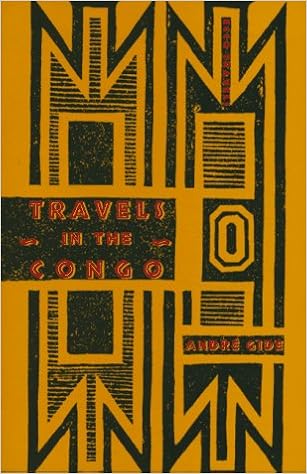
travels in the Congo


In passing he mentioned that the book's typeface reminded him of Rob Giampietro's fascinating article on the Neuland question which discusses
"Neuland, a "display" typeface hand-carved in 1923 by Rudolf Koch but also Lithos, another "display" typeface digitally created in 1989 by Carol Twombly"...

How did these two typefaces come to signify Africans and African-Americans, regardless of how a designer uses them, and regardless of the purpose for which their creators originally intended them?
Let's have Nadine Gordimer as the token African.

Nadine Gordimer My Son's Story


Richard Wright can serve as the token African-American.

Uncle tom children


There's a discussion about the history of those typefaces and how they came to embody an authentic sense of, well, ethnicity shall we say. "Stereotypography" was how Nate put it. "Blackface" might be another appropriate pun. There's lots to say about such signifiers. I can certainly imagine further papers on "Issues of authenticity and its visual vocabulary: field lessons from Gutenberg's press".

All of which reminded me of the box of Ubuntu Rooibos tea from South Africa that The Wife had picked up on her travels. It's one of those "sustainable agribusiness", fair trade, touchy-feely things marketed by an offshoot of USAID. The brand names, Ubuntu and Mpuntu, let you know what you're getting into. In case you're not convinced, the obligatory typeface is a great signifier and adds the requisite marketing frisson of authenticity: Africa. Motherland. Earth etc.
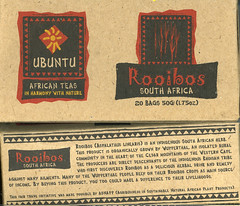
ubuntu tea


My own copy of the Travels in the Congo arrived in the mail today, and before I could turn the page and note Gide's dedication to Joseph Conrad (all travel writing owes a debt to Conrad so this was unsurprising), I was confronted by the striking cover. I realized that I'd ordered a different edition.
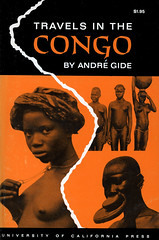
travels in the congo 1962 edition


Hmmm. That's more like it. Congo: breasts, nudity, enlarged ornamental lips, pygmies, natives. You don't tend to see these kinds of images on book covers any longer. They'll appear on National Geographic magazines to be sure, or coffee table books, but not on the paperback that you pull out on the bus. It appears that some cultural threshold has been crossed in the recent past, my guess is that this took place around the mid-seventies and there has been a consequent marketing realignment or adjustment.

A more subtle indicator is required and the typeface is one of the few tools product designers have, along with the product names to indicate the essence of the product they are trying to move. You need to know what you're getting but these days we don't discuss race - or at least it's always a very polite discussion. As we say in Ghana: how for do?

A theory formed in my mind that when it came time to revise Gide's work in the later 1994 edition, it was no longer culturally appropriate in the US to display nubile, big-lipped natives, even if they were all the rage back when my 1962 edition was published (that liberal Berkeley Press!). There are probably throngs of academics working on such material.

I amended the topic of the paper to "Changing mores, changing types, changing faces in representations of Africa: field lessons from Gutenberg's press". I like how academic papers seem to go with lots of sub-clauses in their paper titles.

I then remembered that Fred had discussed Then I Saw the Congo, a 1920's travel memoir by Grace Flandrau. I put in my order for that book; we all need more writing about Congo. Its cover is less exotic than Gide's. Its subtle imagery, the silhouetted rowboat of natives on the Congo river dates back to Stanley's expeditions. The mighty river Congo has great visual appeal and looms large in African iconography.

I turned around, glanced at my bookshelf and immediately noticed a couple of books that fit the visual mold. The first was In Griot Time, An American guitarist in Mali by Banning Eyre. The ubiquitous font is overlaid on his photo of Djelimady Tounkara who Teju Cole reckons as the best guitarist in the world - I won't quibble, but what about Prince?

In Griot Time


Checking Amazon, I noticed that a later edition (2002 - only 2 years on) dispenses with our typeface-du-jour and sadly also that the musician, whose face I can no longer make out, is now squashed behind the prison bar-like guitar strings tucked in the cavernous confines of a grey guitar.

In Griot Time


What should one make of the demotion of both the black-faced guitarist and our typeface? What was the designer attempting in the reworked cover? In mitigation, one notes that there is the green, yellow and red in the background to indicate the colours of the Malian flag, although one must add, the colours are washed out, perhaps to indicate the ancient status of the music, and of Mali. Authenticity is preserved, I suppose, although the ethnic signifiers have been toned down. I guess it's fair, there was no need to beat the shopper over the head as the original cover did. We could have figured things out from the subtitle.

Robert Klitgaard's Tropical Gangsters also jumped out to me.

Robert Klitgaard - Tropical Gangsters


It has the great subtitle: "One man's experience with development and decadence in deepest Africa". You don't quite need to write "darkness", "deepest Africa" gets the point across. Now of course Condi Rice and co. have no qualms dealing with the Equatorial Gangsters that Klitgaard deconstructs in his book, so I guess decadence is appropriate in the title. Kurtz's moral decay is quite apt when one reads things like the following hatchet job (Thatcher alert):
Equatorial Guinea had the bad luck to come to independence under Macias Nguema, whose rule was so terrible that a third of the population was either killed or fled. Though he had people garrotted, buried alive and beheaded (and their heads stuck on poles), the detail that sticks in my mind is his having 150 people executed to the tune of 'Those Were the Days, My Friend' played over stadium loudspeakers.
Tropical horrors continue to be our mainstay on the continent it is sad to say. Everyone owes a debt of gratitude to Conrad it seems.

Which reminds me... The best history book on Africa since independence is Paul Nugent's appropriately titled Africa Since Independence.

Africa Since Independence


If you take a look at the cover, it's as if you are out on a safari, the zebra is quietly crossing the scene in the foreground, the wide trees spread out in vistas of the savanna, you almost expect to spot a lion lazily stepping into to the picture - or an antelope perhaps. Simba. Kimba. Bambi etc. That image has almost nothing to do with the content of this brilliantly-constructed book other than to be a prime stereotype of Africa. Indeed I can't think of an image that could do more violence to the words of this sophisticated book, focused as it is on Africa's post-colonial history and the vagaries of modernity. Is that really the image of Africa since independence?

I'm fairly sure that Nugent had almost no input on his book's cover. Like almost all authors - and certainly all the ones I've pointed out in this note, let alone those South African rooibos farmers - he would have had nothing to do with the packaging of his works. Very few authors have the clout to insist on cover art, they are spent by the time the discussion over the book title is done. Still I almost disregarded his book, judging it as I did by its cover. Perhaps those purchasing history textbooks respond to different things. It goes to show that those cues can have can great influence, whether it is overt imagery or even typefaces.

I amended the paper's title: "Types and Faces: Visual Identites and cross-cultural (mis)understandings - (re)visting the Congo through fonts".

I would normally close with a playlist - and I've had requests for a Heart of Darkness playlist, but that can wait. Instead, apropos the business of not judging a book by its cover, I'll end with a Congolese proverb:
A white tooth has a bloody root.


File under: , , , , , , , , , , , , , , , , , , , ,

Wednesday, March 16, 2005

Handling Rogues

One of the most interesting issues in diplomacy is how to handle prickly characters. One thing that has always impressed me is the frequency with which a skillful and determined negotiator can arrive at a neutralizing accommodation. Often one's gruesome interlocutor can be induced, cajoled, bribed or coerced. In rare cases, there can even be genuine conversions and, by sheer argument, you may lead someone to their Road of Damascus.

It's a mostly thankless task though, requiring patience, perceptiveness, a keen understanding of history, human foibles and an ever-optimistic outlook. There are exceptions of course that can cause even the most wizened diplomat to turn to drink. Sometimes, as say with the Lord's Resistance Army in Uganda, or the irascible clan warlords in Somalia, you're simply wasting your time. They never had any intention of settling and were just humouring you, if they were even persuaded to make it to the negotiating table. The prototypical case in the last decade was Milosevic.

I recall people telling me in the 90s that having Charles Taylor of Liberia wearing suits and sipping champagne in hotels was better than anything. "Maybe he'll get used to it, calm down and stop causing trouble". Wishful thinking of course. In the end, Taylor held Liberia hostage, won a "free and fair" election - his campaign slogan: "you killed my mother, you killed my father but I will vote for you", and proceeded to loot at an impressive and unprecedented scale, a more savage Tony Soprano as it were. The timber forest and diamond mines in the sub-region will never be the same.

The same was said about the Sierra Leonean lot, and here choice expletives need to be thrown at Reverend Jesse Jackson who intervened to force a disastrous settlement without making warring groups disarm. How the Country Preacher ever came to be seen as an expert and, more worryingly, as someone who could shape Clinton's foreign policy is still beyond me. Surely there should be more than racial affinity to make someone an authority? Or maybe, like those appointed to the Coalition Provisional Authority in Iraq, it was a case of who you knew. If you don't know what you're talking about, don't bring yourself: people's lives are at stake here. In the event, the Sierra Leonean catastrophe was a close-run thing and it took all of the efforts of ECOMOG, the West African peacekeeping mission, and a judicious deployment of a battalion of British paratroopers to staunch the bleeding.

In any case, the story of the almost incestuous relationship between otherwise notable African-Americans like Leon Russell and Louis Farrakhan and miscreant African leaders deserves a fuller exposition at a later point. A brief sketch though: there's a two-way back-scratching that is at work here. On the one hand, there's the glamour of proximity to presidents that tickles the inflated ego ("Look here: a photo of me with President so-and-so. Did you know, he took the whole day off to chat with me!). And on the other hand, there's a aura of legitimacy that the African counterparts craves by association with this distinguished American ("Running a country is so easy, why not get some face-time with this guy, we can drink some fine wines"). Some have speculated there has been an element of monetary lubrication in these affairs whether it's plots of land, mining concessions or the ever-propitious perennial: flashy jewelry (blood diamonds anyone?). I'm not so sure that these shabby interchanges need much prompting since it's a perfect quid-pro-quo. The populace of these countries will show up for these affairs dressed in finery, sing and dance to puff up your sense of importance. They lay it all out for you. There's a power imbalance of course but when you're poor, you'll take any entertainment you can. Once you've stuffed your suitcases with loot and finally returned to DC or Atlanta, you should know, however, that your contempt is fully reciprocated.

What is interesting about the current situation in Congo is that many in the media are willing to go for go for the jugular to stiffen the spine of the 'international community' in how it deals with rogues and warlords. Take this recent piece from The Economist, The UN gets tougher:

"In January, Congo's transitional government invited five of Ituri's militia bosses to become generals in the still-chaotic national army, in the hope that they would encourage their troops to disarm. The new generals all say they are looking forward to serving their country, but some appear to be carrying on as before, snapping orders into mobile telephones from their air-conditioned rooms at the Grand Hotel in Kinshasa, the capital.

Little in the militia bosses' history inspires confidence. Your correspondent was once the unwilling guest of one of them, Jerome Kakwavu, a former traffic warden whose men control the town of Aru, on the border between Ituri and Uganda. During the course of a week, Mr Kakwavu publicly executed three of his own men, nearly flogged a ten-year-old soldier to death and kidnapped two Ukrainian pilots. He was hospitable to your correspondent, however, offering him the use of his sex slaves and the companionship of his pet baby chimpanzee."
And I quite agree, I'm all for quiet negotiation, entreatments and face-saving accommodations, but that should be for the diplomats. The commenting class, and I am a proud, keyboard-wielding member, often has the strength of the moral high ground. Let's simply call a spade a spade and shame these bastards.

File under: , , , , , , , , , , , , , ,

Saturday, July 31, 2004

Street Lit, Pulp Fiction and The Worst Novel Ever Written

The Post has an article about "street lit" - the bawlderized black pop "literature" that has become popular if not increasingly financially successful these days:New Books In the Hood

For good or for bad, street lit is eating up the African American book world at the moment. Walk into the Karibu bookstore in Prince George's Plaza and you'll see. It used to be there were just one or two small shelves of "street life" books. Now there's a whole section.

The titles of the paperbacks pretty much say it all: "No Way Out" by Zachary Tate, "The Last Kingpin" by Relentless Aaron, "Payback's a Bitch" by Marcus Spears, "Thugs and the Women Who Love Them" by Wahida Clark, "Bad Girlz" by Shannon Holmes and countless more. In the same way rap music muscled melodious soul tunes off the charts, street lit is altering the equation of African American publishing.

What is a street lit novel? The telltale signs usually include a shut-your-mouth title, straightforward sentences, vast amounts of drugs, sex and rap music and varying degrees of crime and punishment. An exemplary tale is a mixture of foul language, flying bullets, fast cars, a flood of drugs, fallen angels and high-priced frippery. It venerates grams over grammar, sin over syntax, excess over success.

Street lit, says Karibu co-owner Simba Sana, "is the hottest thing going right now."

The paperback fiction bestseller list at Karibu -- a local five-store chain featuring books by and about African Americans -- is dominated by street lit, aka urban lit, gangsta lit or hip-hop fiction. "Do or Die" by Washingtonian Darren Coleman is at the top, followed by Keisha Ervin's "Me and My Boyfriend," Thomas Long's "A Thug's Life" and "A Project Chick," the second novel by Nikki Turner. Karibu stores have sold nearly 3,000 copies of Turner's first novel, "A Hustler's Wife." [...]

First, the 'Iceberg'

The new street lit is not to be confused with the classic naturalistic style of Richard Wright or James Baldwin, some critics say. That would be a little like comparing P. Diddy to Duke Ellington. Street lit lacks the literary ambition -- and the power -- of great writing. Terry McMillan, Walter Mosley and Nichelle D. Tramble are literary fiction writers -- in the tradition of Wright and Baldwin -- who write about the streets. Their novels, however, are not street lit.

Street lit has always been more of a social than a literary movement. It can be traced to 1969 when Iceberg Slim, aka Robert Beck, published "Pimp," a memoir of his professional life. He was born in Chicago in 1918 and lived most of his life in the Midwest. Between the ages of 18 and 42, he worked as a procurer of prostitutes. He did some jail time.

While in solitary confinement in 1960, he decided to go straight. When he was released, he moved to California and wrote his memoir. He went on to write a lot of books, including "Trick Baby" and "Death Wish." The books were groundbreaking in their real-life, close-to-the-bone accounts of life, sex and death on the streets. And they were packed with urban patois, such as using "jasper" for lesbian and "macking" for pimping. Iceberg Slim died in 1992.

In the 1970s, Donald Goines picked up the thread. A former heroin addict and chronic convict, Goines produced in short order a slew of books including "Dopefiend: The Story of a Black Junkie" and "Whoreson: The Story of a Ghetto Pimp." The books came along with the rise of blaxploitation movies and hip-hop music. For a while, street lit fell by the wayside, but it returned in the late '90s, with a bullet, when Sister Souljah published "The Coldest Winter Ever."

Today's street lit has its champions. Many of the novels have a moral, says Mackey. "In most of them it's about people who have made wrong choices," she says. "The authors are making a conscious decision to say these people made bad choices and you don't have to. There is a moral fiber running through the whole book."

Plus, she says, "There is a blessing in all of this: African Americans are reading. They've picked up a book and they are reading."

Poet Sterling Plumpp, who taught at the University of Illinois for 30 years, says that contemporary hip-hop writing "is the most inventive thing happening to the language in a long time."

He believes it is more successful in fiction and poetry than in rap lyrics. "I'm not sure the music is there," he says.

Eventually, Plumpp says, great writers may emerge. "What you have is a very difficult situation for a lot of young African Americans," Plumpp says. "They did not inherit the legacy of W.E.B. Du Bois or Frederick Douglass in terms of literacy."

But, Plumpp continues, these young folks have life experiences that they want to express. "They have almost developed an African American language that is as estranged from the educated African American world as it is from the white world."

Street lit, he says, "should be promoted."
I think Bill Cosby would disagree with the above statement but it does have a utilitarian grain to it.
  1. If more people (and especially black people) are reading, then surely that is a good thing - there has been a bit of a todo of late about the declining numbers of people reading
  2. Popular culture does not need to address the academy; it has a life of its own. Tarantino for example has mined the shlock of b-movies to wonderful effect and we are all the better for it. Similarly some of the great writers of the past century made a living working in the pulp fiction genre.
  3. It not so much that street lit is at best a guilty pleasure. I have found more literary verve in Bill Marshall's slender novel Bukom about the slum of that name ["We are going to make folks in Bukom realise that I Ataa Kojo, and my children are forward looking. We are going to make folks envy us. We are going to build a whiteman's toilet in this house and the neighbours are going to come here and beg us to use it"] than in say Ayi Kwei Armah's entire oeuvre of weighty historical tomes on slavery like say The Healers. Similarly, and not to be so obscurantist, I'll take John Grisham's The Client or even Terri McMillan's Waiting To Exhale over Thomas Pynchon's V any day - literary pretensions be damned.
In the same vein, the most annoying (nay, the absolute worst book I've ever read) was The Unconsoled by Kazuo Ishiguro. I mention this as a public service announcement - avoid at all costs.

This must be the novel parodied by Martin Amis in The Information: the novel circulated to critics which induces severe headaches, nausea and worse to anyone who begins it, what with its circle of 8 unreliable narrators.

After 150 pages, I literally wanted to punch the author. After finishing the book - I unfortunately feel obligated to finish every book I start - exquisite torture was the only appropriate punishment.

The sad thing is that I've loved every other book by him. It goes to show that technically-adept writing without purpose can be a lethal thing. Let's have more "street lit", especially with soul!

File under: , , , , , , , , , , ,