Of No Fixed Abode
My initial response to the 2005 London bombings was in the vein of whimsy: London's got soul, a trilogy celebrating the place, my favourite town. I then considered a case of identity theft last year to kick off the present Things Fall Apart series. After the news of the past few days, I can now give you the second part of a trilogy focused on the people. This time a look at my "fourth man": the fifth bomber, a man of no fixed abode. Some notes ripped from the headlines, a few musings and some poetry...
"Thought to be Bukhari": A Paper Trail
You lived with him
You stole his name...
They trained you well
Your name is cursed...
No one knows the identity of this man who performed the identity theft.
— Identity Theft
Identity:
[Redacted] 32, from West London. A Ghanaian, his real name is thought to be Bukhari. Said to have abandoned his bomb at Little Wormwood Scrubs after losing his nerve. Represented by Stephen Kamlish, QC.
— 21/7: the trial, January 16, 2007
Motivation:
Mr Kamlish, representing [redacted], said to Mr Ibrahim: "You wanted to do a copycat of 7/7 - four bombs on 7/7, four bombs two weeks later on 21/7. That was your plan.
"We say your 21/7 bombs were to be bigger and better in your twisted thinking than that of 7/7.
"Four real bombs on the Tube and one block of flats, a tower, destroyed, going up in a ball of flames. That was your plan, wasn't it?"
— Man 'planned tower block blast', March 22 2007
During the trial the man I called cursed continued to be referred to by his alias and that inevitable suffix, "of no fixed abode".
Tricksters, gremlins and parasites; who is which?
Mr Kamlish said his client - who the jury was told was really called Sumailia Abubakhari - was "used and abused" by Mr Ibrahim who was a "cowardly, manipulative schemer".
21/7 suspect 'saved tower block', April 17 2007
On Tuesday, he took to the witness box for the first time and told the court his real name was in fact Sumaila Abubakhari and that he is 28 - not 34. Wearing a crisp white shirt, dark blue tie and grey suit, [redacted] said he came to the UK in December 2003 using a passport in someone else's name and applied for the Army. He said he did not consider what countries he might be sent to on active service.
— Ghanaian suicide bomber 'wanted to join Army', April 17 2007
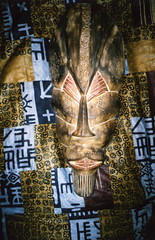
Muddied waters:
A terror suspect dismantled a bomb and saved the lives of people living in a tower block, his lawyers have claimed...
Prosecuters say he was the fifth bomber who allegedly lost his nerve at the last minute.
But Stephen Kamlish QC, defending, said his client had ditched his bomb - made of hydrogen peroxide and chapatti flour - at Little Wormwood Scrubs after "making it safe".
Woolwich Crown Court heard claims he also dismantled a booby-trapped sideboard at a "bomb factory" allegedly set up by a co-defendant in Curtis House, New Southgate, north London.
Mr Kamlish said: "He's not asking for any applause, but if he hadn't have done it and it was a bomb that actually worked ... he was in fact responsible - potentially - for saving the block and all the people in it."
Mr Kamlish said his client - who the jury heard was really called Sumailia Abubakhari - was "used and abused" by Ibrahim, a "cowardly manipulative schemer".
The barrister told the jury that [redacted] had been under intense pressure, and was even threatened by another defendant, since deciding to "break ranks".
He described his client as a "decent" and "somewhat childlike, sometimes naive" man.
— 'Not Asking For Applause', Sky News, April 17 2007
A theatrical man, he makes good copy with his African emotions; consider the headlines generated in under an hour a few months ago:
- 21/7 suspect 'is a devious liar', BBC, April 17 2007
- 21/7 suspect 'encouraged to lie', BBC, April 17 2007
- Accused breaks down in court, BBC, April 17 2007
- 21/7 suspect 'defused booby-trap', BBC, April 17 2007
- 21/7 suspect 'saved tower block', BBC, April 17 2007
- 21/7 suspect's claim 'is amazing', BBC, April 17 2007
- 'Bomber' admits lying to police, BBC, April 17 2007
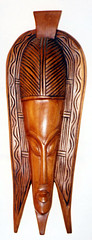
A compromised man:
Anthony Jennings QC, defending Hussain Osman, accused Mr [redacted] of crying when he told police about his supposedly dead father.
Mr [Redacted] has since admitted that his father is still alive.
"You were doing exactly what you were trying to do to this jury, which is pull the wool over their eyes by starting to cry when you were lying," said Mr Jennings.
The barrister went on to accuse Mr [redacted] of being a "self-confessed liar", a "fraudster", and a "sly and devious liar".
Mr [Redacted] denied lying, saying: "I was remembering the time as I'm staring death in my face and you're telling me not to cry?"
— 21/7 suspect 'is a devious liar', BBC, April 17 2007
Bukhari or Abubakari?
The prosecution says his real name might be Sumaila Abubakari but his nationality is unclear.Bukhari or the other moniker Abubakari are Muslim names typically found in West Africa (from Northern Ghana, Nigeria to Sierra Leone). In Ghana at least, the north is much poorer and less developed than the rest of the country. Northern muslims tend to settle in the zongos (slums). Regardless of nationality, the experience of these dwellers is much like that in the slums of Nima, rough and hardscrabble lives. As an often itinerant people, they are deliberately opaque and insular. This served them well in their dealings with the colonials and beyond but this opacity gives rise to much uncertainty as in the present case. We simply don't know what the nationality is.
'Bomb plot' trial, BBC, April 17 2007
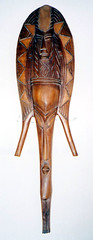
Emotional:
Mr [Redacted], who is said by the prosecution to have lost his nerve and dumped his device, has said he was not a "fanatic".
He told the court he left the device he was given in a west London park as he "just wanted to get rid of it".
He said Mr Ibrahim had told him the devices would "not hurt anyone".
He told the jury: "It didn't make sense to me. I didn't know whether this was hoax or real or anything to do with terrorists.
"But I didn't want anything where the police got involved in it.
"I thought: 'I don't want to listen no more. I have heard enough. I just don't want to have anything to do with it." ...
At one point, Mr [redacted] needed several minutes to compose himself in the witness box.
He broke down after telling the court of how Mr Ibrahim demonstrated the rucksack device on the morning of 21 July 2005 - two weeks after suicide bombers struck in London on 7 July 2005.
"He started to explain for the first time as if he has been talking to me before," Mr [redacted] told the court.
"I was waiting for him to tell me if this was a suicide bombing or not.
"This was my belief, that this was going to be a suicide bombing because it just happened two weeks ago."
He told the court: "I wanted to live. I wanted to have a good life. I wanted to support my family. It is just something that I have never thought of in my life."
— 21/7 accused breaks down in court
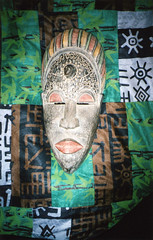
Lies and Truths:
But he agreed with Mr Sweeney's description that he had lied to police on an "epic" scale, including not telling them his real name, religion or background, about buying the peroxide or what he did after the "attacks" had failed.
He said: "It is unbelievable when I look back at these lies...I lied about the whole day of July 21."
Mr Sweeney said: "You lied through your teeth as to who the bombers were."
[Redacted] replied: "Yes I did. I did not want to associate myself with them after realising what they had put me through."
[Redacted] denied lying to cover up his own guilt, maintaining that he was initially manipulated by co-defendant Muktar Said Ibrahim to follow the story that the attacks were meant only to be a hoax but realised once the trial had started that he had to tell the truth.
— 21/7 suspect 'lied on epic scale' April 27, 2007
Assessment
The jury deliberating the cases of the alleged July 21 bomb plotters was today discharged after failing to reach a verdict on the final two defendants.
The decision by the trial judge, Mr Justice Fulford QC, came during the eighth day of deliberations by the jury at Woolwich crown court in south-east London.
He asked prosecutors to decide by tomorrow whether they want to seek a retrial for [redacted].
— Jurors fail to reach verdicts on two 21/7 defendants, Guardian, July 10, 2007
- Jury deadlocked in UK transit bomb case, AP, July 10, 2007
The jury was discharged yesterday after failing to reach a decision on two other defendants, [redacted], both of whom deny conspiracy to murder.
[Redacted], 34, of no fixed address, ... will face a retrial, prosecutors said today.
— Four July 21 plotters jailed for life, The Guardian, July 11, 2007
A Redacted Note
It has been known since September 2005 that the man I called cursed, a man of "no fixed abode" and now "thought to be Bukhari" was not the man his identity papers claimed, yet in the proceedings of the trial and the journalistic coverage, he is continually referred to with his stolen name. Perhaps this is as it should be, the slow workings of the law and the wheels of justice, an administrative decision. Yet each mention of the name is an open wound for a family in Ghana and London, a reminder about the continuing trauma in their lives. We are all collateral damage, the walking wounded of these interesting times.
I'll note in passing that the western journalistic tic of attaching an age and provenance to every name leads to the stilted formulations of the copy we have seen. Indeed these details detract from the heart of the matter and obscure rather than enlighten the complexities of this very human story. As we have seen, the name, age and nationality are still undetermined and the reporting has been wrong throughout. The only certainty is that he is "of no fixed abode". If we do have to name, place and date in tangible words, I suggest in this case that we stick to the following:
"[redacted], undetermined age, unclear nationality, of no fixed abode"
Reflection
A few more leading indicators to round off our notes:
Al-Qaeda has responded to the U.S. intelligence focus on young Arab men as potential risks, he says, by recruiting "jihadists with different backgrounds. I am convinced the next major attack against the United States may well be conducted by people with Asian or African faces, not the ones that many Americans are alert to."No country is immune from these things, consider this clipping from last summer:
— George Tenet: Tenet Details Efforts to Justify Invading Iraq, April 28, 2007
Two Nigerians, whose identities were not disclosed at press time, have become victims of the exchange of artillery fire between Israeli authorities and Hezbollah forces in Lebanon.The footsoldiers of The Great Game know no boundaries, indeed their variety is a historical commonplace.
Two Nigerians Confirmed Killed in Lebanon bombings, July 24, 2006
So when I watched the recent protests in Kyrgyzstan, I thought not to the recent people-power outings in Ukraine and Georgia or even to the collective courage that led to the fall of the Berlin Wall (not pope-inspired by the way). Rather I thought back to Christmas 1990 sitting in Nancy, France, watching images from Bucharest alongside a true-believer socialist as his worldview finally succumbed to that ineffable and unrelenting pull of gravity.Perusing these notes, the obvious questions remain unanswered. Depending on where you stand, the actors range from convenient scapegoats like John Walker Lindh, to the convinced and morally convicted ciphers such as Richard Reid, to the more ambiguous cases like that of the man I call cursed. There is perhaps a full spectrum of responses: from moral courage, through the mistaken and misguided indiscretions of youth, to moral midgetry. That is the terrain of fallen angels.
It is no comfort to have learnt, as I did a few years later, that there were Ghanaians who died fighting for that reptilian man, Nicolae Ceausescu, alongside his Securitate during the Romanian overthrow of that macabre communist regime. I thought about the kind of world in which someone would send young Ghanaian men to train in interrogation techniques in far-flung places like Cuba, East Germany and Romania to come back and oppress their people.
I thought about what it meant for a young man to find himself in that position, in a foreign land, dodging bullets and shooting at people, in their own country mind you, trying to overthrow a rotten regime. I thought about how miserable and brutish their lives must have been to have undergone that kind of journey. And what about their peers who did come back from their various schools of grist to wreck havoc on their compatriots? I'm sure that some of these trained killers are among those who carry out weekly armed robberies in our towns.
— Strange Bedfellows and the Journalistic Impulse
As with all things about the human factor and the theatre of our existence, our fall from grace perhaps renders this melancholy mystery unknowable. One cannot but stare at the trainwreck when it comes. But how does one equip oneself to face the abyss? Where does one buy soul insurance? In a dark time, perhaps social living is the best.
"Of No Fixed Abode"
Identity theft
Open wounds
Fallen angels
Damaged goods
Brutish living
Scarred consciences
Devious schemers
Lost nerves
Enemy combatants
Collateral damage
Modern travelers
Prison shelters
Stolen verdicts
Jury deadlocks
Bomb factories
Moral blinders
Hostile lives
Fractured dislocations
Cultural interplay
Social living
The aliases of exiled souls
Alienated, "of no fixed abode"
Soundtrack for this note
Of No Fixed Abode, a playlist
- Antibalas - Indictment
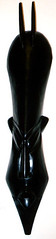
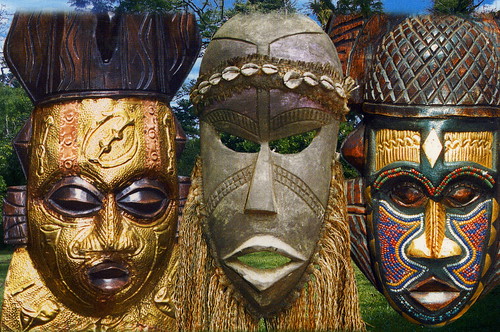
An angry afro-beat meditation with dissonant horns that presents a bill of goods, if not some articles of impeachment, on our current situation. The song is also a humourous indictment of all those rogues in a musical court of law. One wished everyone expressed their grievances in music or words. The cover art is prescient about the flight of that man "thought to be Bukhari", the confusion and urgency are the same, as is the mistaken resort to violence. It is the mask of a man of no name, of indeterminate age, of unclear nationality and of no fixed abode. The only missing thing is the discarded, bomb-laden rucksack.

- Prince - Reflection
A simple song: light drums and an acoustic guitar that sticks in your head and gets you singing along before you know it. The melody is wistful and, befits the title, reflective. We're reminiscing about innocence lost, the good old days when decisions were without consequence and life itself was carefree. Not everyone has that luxury but we can all empathize with that sentimentSometimes I just want to sit out on the stoop, play my guitar just watch all the cars go by
- Angie Stone - Soul Insurance
Her warm voice endears as does the music; Angie assures you that she has got your back. Soul assurance. Soul insurance. Where do I sign up for mahogany soul?
Update August 29, 2007
The following passage should give much pause for those sympathetic to this man "thought to be Bukhari"
He said that Mr Omar had offered a bed to a mentally ill African refugee, took in a homeless Indian man and paid visits to people in hospital. He never heard Mr Omar speak out in support of any act of terrorism. Mr Dixon said: "He was against the Iraq war, but... he said nothing radical." Mr Dixon became an unwitting helper of the alleged conspirators when he accompanied Mr [Redacted] on a trip to buy dozens of litres of hydrogen peroxide, the chemical that formed the key ingredient of the rucksack bombs.So not only did [redacted] use people unwittingly to help buy bombmaking equipment but, if my reading is correct, he also stole the identity of that "mentally ill African refugee" who his accomplice had taken in. No one has connected these particular dots but I would lay even odds that said refugee was indeed the man who woke up to learn that the police were calling him a bomber. That would certainly round out the circle of infamy of tricksters using anyone who falls into their orbit. One wonders if there really are any more shades of gray to this story.
— Witness was unwitting helper with 21/7 purchase
Next: Ode to Betty Brown
File under: London, Ghana, bombing, terrorism, loss, waste, crime, anomie, identity, theft, reflection, globalization, Africa, culture, immigrant, diaspora, observation, perception, poetry, Fallen Angels, Things Fall Apart, toli