Showing posts with label reflection. Show all posts

Tuesday, July 07, 2020

The London Bombings

I wrote two trilogies in the wake of the July 7 2005 London bombings - the 7/7 bombings as they became known. I took it personal even before reading that the first declared casualty was a Ghanaian woman. Moreover I later learned that this was someone that I knew whose life story to that point had been a touchpoint for my family. No, all the casualties mattered. The failed follow-on attempts on July 21 2005 only deepened the wound when reports came in that a suspect was said to be Ghanaian. Unraveling that case of identity theft amidst the horror and grief caused a reckoning over the years.

The first trilogy went under the banner of London's Got Soul, and explored the place and the people, celebrating the London brew and the vibe of what is one of my favourite places on earth. As befits a celebration, the tone was warm and lighhearted. The second trilogy, part of my Things Fall Apart series, was also personal, but understandably sober, as I delved into the Ghanaian connections to the events. Thus I came up with a broad spectrum of responses that ranged from whimsy and irreverence to heartache and stark reflection, even as I occasionally aimed for the lyrical. I certainly had to get it out of my system as a kind of exorcism by prose, music and poetry. Perhaps it was as Joan Didion has suggested: "We tell ourselves stories in order to live". I hope some of this collected toli might be up your alley.

catford sidewalk painting

London's Got Soul
I too lived under the depredations of the IRA in the 80s and 90s so instead of wallowing in the undoubted horror of the moment, I'm going to be celebrating the flavour of the place.
Catford Bridge
Some action-packed travel journalism and a photo essay.
Bullet from a Gun
A hip-hop photo essay in the vein of South London's vibe, the Toli Remix of Derek B's Bullet From a Gun. Now with a music video adaptation if you want to skip the easy words.
Kente, Lace and Champagne
Pondering a photo and a poem amidst unfinished sympathy

The London's Got Soul pieces continue to be very popular - I wonder if it's because I leavened things with photos.

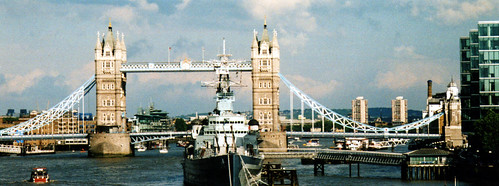
london-bridge-tower-glory


Identity Theft

The first piece in my Things Fall Apart series dealt with collateral damage on the periphery, an immigrant's stolen identity. It was written under the influence of Four Women by Nina Simone.

Wake up one day
They say you're a bomber

Of No Fixed Abode

Written a couple of years later, the second note was concerned with the "fourth man": the fifth bomber. A man "Thought to be Bukhari", "of no fixed abode".

Enemy combatants
Collateral damage

Bomb factories
Moral blinders

Ode to Betty Brown

The last note dealt with the eponymous casualty. It took me 14 years to find a way to write Betty's tale. For the longest time I couldn't move beyond the title and the first sentence I had scribbled down when I learned of her passing. Once I did, however, everything poured out in just a couple of hours, I somehow tapped a well of inspiration and, for what it's worth, it is among my proudest bits of writing.

Complaining was not her style. She put up with more setbacks than anyone this side of Job and that Count of Monte Christo fellow, and yet she gave new meaning to the term resilience.

This is an elegy rather than a lament, for such thoughts never crossed her mind. This is an ode for a woman in full, a spirit heaven-sent.

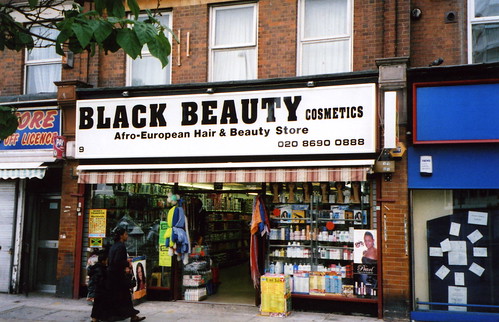
catford black beauty

When this covidious interlude is over, London will be one of my first ports of call. It means that much to me.

Soundtrack for these notes


A playlist as is my norm, music soothes my soul when I write.
File under: , , , , , , , , , , , , , , ,

Monday, October 07, 2019

Ode to Betty Brown

She overheard the name in Waitrose as she picked up the groceries. Betty Brown. She liked it; she adopted it. It was as simple as that. Betty Brown. The name said something, and there was a nice sound about it. After the attacks, what we read in the obituaries were those other names, those legal names, those names that had been quickly discarded in that moment at the store. Well, Betty Brown was how some of us first came to know her. And she was named in Waitrose, next to the row of tinned tomatoes.

Names were important where she came from so this wasn't a light step. It is a brave Ghanaian woman that discards the protection of the names given at her outdooring. The new name was a touch of whimsy - like a Betty Blue or even a Betty Boop, and it fitted her laugh. Call it the reinvention aesthetic. And cathartic too. It was something to hold onto as the hard knocks kept coming, for, truth be told, there was much to forget in her past.

That whimsical name was the detail I returned to when she died on that Seventh of July, blown up on the Number 30 bus in Tavistock Square. And here I should pause a little and try to forget that awful day, for my aim is not for a lament, rather I need to conjure an ode.

Betty had an uproarious laugh, so infectious that you wanted to hear it all over again, and yet, try as you might, you could never photograph her wearing a smile. It was quite a puzzle how this elemental laugh would magically stop as the camera lens swung towards her face. It was uncanny, that unerring instinct for the approaching window onto the soul.

That aspect of her spirit was, thus, only experienced in the flesh - powerful and endearing at once, and guarded and resolute at the other. She was ever encouraging and optimistic to her friends and family - a source of a one-way flow of unrequited positivity. Try as one might, it was hard to be jaded in the presence of Betty Brown, her laughter and love overcame all obstacles.

A pause in our narrative, a return to that moment in that grocery store. We should contemplate a newborn woman, newly outdoored and newly named. Two musical words, Betty Brown, ringing in her ears as she voiced them in the air for the first time. Music, and magic too perhaps. Welcome magic, for she had entered at a low point, her employers having refused to return her passport. Your garden variety tale of abusive domestic servitude perhaps, the ordinary cruelties suffered by house girls. An announcer came up on the store intercom. "There's a special on cakes and pies, treat yourself to some ice cream too". Betty knew what to do: vanilla ice cream and some apple crumble to celebrate her name. She returned to the house, her spirit fortified. The Madam couldn't quite understand the aura of sunshine from someone she thought she had long since broken.

Months later, she overheard them in that same store, walking through the aisles speaking Ewe; her country people. She gambled, grabbed her opportunity, and accosted M and D. Haltingly, she explained her plight, conveying her desperation. It all came out quickly once she started speaking. Their concern was apparent as the words poured forth and her saga of woe unfolded. She'd never told her story before, not to anyone, not even to herself in the mirror and certainly never in this way.

After those long years in Ghana, they had brought her to London when the boy needed medical care. First they wanted to discard her, then The Madam said they should keep her, but they wouldn't pay her or give her passport. This was the first time they had let her out in two weeks. She told everything - even the most humiliating details, the beatings, the forced labour, no holidays, the virtual slave thing and so forth. Saying the words out loud made her realize just how close she'd come to the abyss. She could see the mounting alarm in their eyes as she talked, but she carried on, the story had to be told. They listened, first warily, then concernedly, and then carefully as if all of this testimony should be committed to memory. Finally they asked her name. She laughed, "Call me Betty Brown, but I'm also known as [redacted]". She laughed again. It was the laugh and that melodious name that did it and drew them into her comfort suite.

"Pleased to meet you Sister Betty. God-willing we'll get through all this."
"Betty Brown. That's a powerful name."

They offered their help and she took the opportunity. They agreed to meet later, the family still needed her do the groceries, so she was sure she'd be able to get out. The shadows lifted.

And so, M and D were the ones who took her in. In the Hackney home, the dining room became her bedroom. Later she would insist that they let her rent a room, pay her way. Her story was whispered throughout the community and not just because it confirmed every prejudice we had against 'those Lebanese', 'those Saudis' and they way they treated us back home, and even here in London. K stepped in later to help with the confiscated passport, to give his customary legal advice, to give comfort above all.

So, she had come from nothing, had been the lowliest of servants, and had been brought even lower. That first morning when she woke up at 5am, she realized that all she had were the clothes she had on and the few belongings she had been able to smuggle out. Well, it was a temporary inconvenience; she simply got to work, cleaning and tidying up.

But she didn't dwell on the past. Rock bottom is always a matter of perspective and she always put the hard days behind her. Looking forward and disdaining pity, she simply wondered what the next day of work would be. And it was work that was her lot. She aimed to please. Self-esteem was not simply an afterthought, it was a never-thought. Throughout her life, she knew only work.

And there was violence undoubtedly, she had been treated most brutally by them, and had the scars to prove it, scars that were occasionally glimpsed in that matter-fact manner in which she moved her body. Some would have her be the woman who walked into doors. That was a facile characterization, after all a hard life is not all about violence. Her reality, as those closer to her knew, was rather life as the empress of the splendid season. She wasn't content to be a cautionary tale or an object of concern: she lived, she worked - that's all.

Poverty is always relative yet her hometown, Avenui-Awudome, was poor even in a poor part of a poor country. It was a spec of a hamlet, not quite a village like Taviefe. It wasn't even worthy of the prospect of an advance guard of the E.P. Church seeking out forlorn souls in the Volta Region. The tale is told of that boy from Awudome who managed to get a scholarship to Mawuli School, the first to even make it to secondary school in the environs and that was 1959. The family was so poor that the whole village had to take up a collection to buy him proper shoes so that he could walk to the school. Well, that older boy was the lucky one in the clan. By the time Betty came of age to go to secondary school, the options, and the goodwill, had long since dwindled. The money simply wasn't there. And so she began, or rather continued, that trajectory of burden that had been hers from birth. Sleep to work to sleep. Not that there was any choice, for there were other children coming up behind her.

As it turned out, farm work suited her, she never minded following Papa into the forest to their little plot. As the forest diminished, and the farms suffered, it became harder and harder to make do. The family's farm barely provided enough yams and cassava to eat, let alone sell. They had had to push in deeper into the thinning forest to eke out something to harvest. They ran through all the various vegetables they could think of; nothing seemed to work anymore. So she was loaned out to work in nearby villages and then sent to Ho.

Hard-working was the constant refrain about Betty on the construction sites. The cement blocks, she was able to carry without complaint. Fetching water and carrying had always come easily to her. When even work in Ho dwindled, it naturally followed that she should try her luck in Accra. She became a kayayei in the city. The slums of Nima were her proving ground. Sleeping rough, hustling, carrying and fighting ferociously for the slightest coin or banknote. She first found work carrying for the market women. And then it was construction sites again - less drama, although the physical toll was punishing. The years went by and she faithfully sent her contribution home for the younger ones - every cedi made a difference in Awudome. Eventually she was recommended to the Lebanese family as a housegirl for she had a way with cooking. On the streets, she was known for being able to manufacture a tasty dish from even the most wretched garden eggs or leaves of nkontomire.

Street girl to house girl; she'd taken care of the boy happily and cheerfully. When he fell ill after five years, she followed them from Accra to Riyadh, and then to London as they sought hospital treatment. It hurt that they took out their frustration on her as his health worsened for, certainly, no one cared for him, nor knew him, as well as she did. Perhaps it was jealousy too, for he loved her songs and stories and would only sleep at night if he knew she was close. One wonders if they even know what happened to her after they were done with her...

At length, she regularized her situation in London and even found love in the community. Her architect. Her man. Others would complain and suggest that he wasn't pulling his weight - after all there he was with all his degrees working as a security guard, if indeed he could be found to work. She dismissed those concerns. It wasn't easy. She knew it wasn't easy to be an immigrant, to have your qualifications nullified for lack of a stamp in some passport, to be condescended to at best, and to face everyday invisibility. She was clear-eyed even as she heard the exasperation in friends' voices. "You're being taking advantage of. Do something for yourself, not for others". And that day at the outdooring, that long disappearance, stepping out to pick up drinks at the off-license. All those last straws. All that drama. All that hand wringing from the naysayers counted for naught. None of that mattered. She didn't make excuses. She simply loved. She saw the light in his soul. She kept the faith. She would work additional jobs to make it work.

And well, she did. She made it work. For almost 18 years, she would effectively be the sole breadwinner even as they raised themselves up from the margins. She raised the children in faith and moved mountains to spare them any taste of deprivation. She had finally brought something worthy into the world and would do anything for them. She loved unconditionally, she loved unreservedly, she loved wholly.

I can see her on that bus, that morning, catching her breath after the all-night shift at the cleaning job at University College. She was on her way to Shoreditch for that housing management college course - self improvement. Then that afternoon, she would pass by the African Development Agencies in Hackney to volunteer as was her wont - there were others coming up behind her, and they needed help, before yet another job that evening. I see Betty, stout and middle-aged, part of that immigrant unseen, a member of the tribe that gathers at the crack of dawn, those who clean with no benefits, those who give definition to that phrase, menial labour. Well she worked, she was a worker, she was a cleaner. She got on with it.

Later, I saw the picture of the children and her husband standing with the President. It must have been when he passed by their home in Essex after the attacks on his way back to Ghana, official solace in their hour of grief. Their red eyes were those of the walking wounded. It broke my heart. It breaks my heart. The absence of her flesh and blood, it was all too much. A grievous loss, a soul snatched away arbitrarily.

They took her body home to Ghana for the funeral. Thousands came to pay their respects, Ghanaians don't need prompting to attend funerals but who could resist that of their countrywoman who died in Babylon at the hands of Al Qaeda.

Her blurry photo stares at me from the news websites. Smudged pixels that haunt me. It doesn't reveal much of her. She didn't have many photos of herself in any case, preferring to look outwards. That fugitive glimpse of her in the stories was fitting. Yes, that was Betty Brown, self-effacing even in her obituary. The words would reveal more about those who survived her than about her complicated story full of twists and turns. Well, her story deserves to be told, even if in these refracted fragments, a journey of pathos, ultimately distilled into tragedy.

Complaining was not her style. She put up with more setbacks than anyone this side of Job and that Count of Monte Christo fellow, and yet she gave new meaning to the term resilience. This is an elegy rather than a lament, for such thoughts never crossed her mind. This is an ode for a woman in full, a spirit heaven-sent.

I often think of Betty in those quiet moments in the autumn of life, when the cleaners walk by with their carts at the office - humming, when the nannies gather their charges in the park, back home with those street girls hustling in the Adabraka traffic instead of going to school. I hear her voice, her infectious patter, her tics, and her teasing manner, the way she always affected to be absent-minded to draw you in. And the laugh. The heart aches. I think of her, not as a stray or as a victim, but as a force of nature. Some of us stepped in when we could, worried about her, but we couldn't save her; it really wasn't up to us, rather she saved herself. And she stood strong. She fought, God knows she fought. And now she's gone.


catford sidewalk painting


This is the final part of a trilogy on Ghanaian connections to the London bombings of 2005, in this instance, the eponymous casualty. The first piece, Identity Theft, dealt with collateral damage on the periphery, an immigrant's stolen identity. The second note, Of No Fixed Abode, concerned the "fourth man": the fifth bomber.

An entry in the Things Fall Apart Series.

File under: , , , , , , , , , , , , , , , ,

Wednesday, July 11, 2007

Of No Fixed Abode

My initial response to the 2005 London bombings was in the vein of whimsy: London's got soul, a trilogy celebrating the place, my favourite town. I then considered a case of identity theft last year to kick off the present Things Fall Apart series. After the news of the past few days, I can now give you the second part of a trilogy focused on the people. This time a look at my "fourth man": the fifth bomber, a man of no fixed abode. Some notes ripped from the headlines, a few musings and some poetry...


"Thought to be Bukhari": A Paper Trail


You lived with him
You stole his name...

They trained you well
Your name is cursed...

No one knows the identity of this man who performed the identity theft.

Identity Theft

Identity:
[Redacted] 32, from West London. A Ghanaian, his real name is thought to be Bukhari. Said to have abandoned his bomb at Little Wormwood Scrubs after losing his nerve. Represented by Stephen Kamlish, QC.

21/7: the trial, January 16, 2007

Motivation:
Mr Kamlish, representing [redacted], said to Mr Ibrahim: "You wanted to do a copycat of 7/7 - four bombs on 7/7, four bombs two weeks later on 21/7. That was your plan.

"We say your 21/7 bombs were to be bigger and better in your twisted thinking than that of 7/7.

"Four real bombs on the Tube and one block of flats, a tower, destroyed, going up in a ball of flames. That was your plan, wasn't it?"

Man 'planned tower block blast', March 22 2007

During the trial the man I called cursed continued to be referred to by his alias and that inevitable suffix, "of no fixed abode".

Tricksters, gremlins and parasites; who is which?
Mr Kamlish said his client - who the jury was told was really called Sumailia Abubakhari - was "used and abused" by Mr Ibrahim who was a "cowardly, manipulative schemer".

21/7 suspect 'saved tower block', April 17 2007

On Tuesday, he took to the witness box for the first time and told the court his real name was in fact Sumaila Abubakhari and that he is 28 - not 34. Wearing a crisp white shirt, dark blue tie and grey suit, [redacted] said he came to the UK in December 2003 using a passport in someone else's name and applied for the Army. He said he did not consider what countries he might be sent to on active service.

Ghanaian suicide bomber 'wanted to join Army', April 17 2007
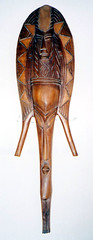
Aburi mask - strange days


Muddied waters:
A terror suspect dismantled a bomb and saved the lives of people living in a tower block, his lawyers have claimed...

Prosecuters say he was the fifth bomber who allegedly lost his nerve at the last minute.

But Stephen Kamlish QC, defending, said his client had ditched his bomb - made of hydrogen peroxide and chapatti flour - at Little Wormwood Scrubs after "making it safe".

Woolwich Crown Court heard claims he also dismantled a booby-trapped sideboard at a "bomb factory" allegedly set up by a co-defendant in Curtis House, New Southgate, north London.

Mr Kamlish said: "He's not asking for any applause, but if he hadn't have done it and it was a bomb that actually worked ... he was in fact responsible - potentially - for saving the block and all the people in it."

Mr Kamlish said his client - who the jury heard was really called Sumailia Abubakhari - was "used and abused" by Ibrahim, a "cowardly manipulative schemer".

The barrister told the jury that [redacted] had been under intense pressure, and was even threatened by another defendant, since deciding to "break ranks".

He described his client as a "decent" and "somewhat childlike, sometimes naive" man.

'Not Asking For Applause', Sky News, April 17 2007

A theatrical man, he makes good copy with his African emotions; consider the headlines generated in under an hour a few months ago:
masks aburi


A compromised man:
Anthony Jennings QC, defending Hussain Osman, accused Mr [redacted] of crying when he told police about his supposedly dead father.

Mr [Redacted] has since admitted that his father is still alive.

"You were doing exactly what you were trying to do to this jury, which is pull the wool over their eyes by starting to cry when you were lying," said Mr Jennings.

The barrister went on to accuse Mr [redacted] of being a "self-confessed liar", a "fraudster", and a "sly and devious liar".

Mr [Redacted] denied lying, saying: "I was remembering the time as I'm staring death in my face and you're telling me not to cry?"

21/7 suspect 'is a devious liar', BBC, April 17 2007

Bukhari or Abubakari?
The prosecution says his real name might be Sumaila Abubakari but his nationality is unclear.

'Bomb plot' trial, BBC, April 17 2007
Bukhari or the other moniker Abubakari are Muslim names typically found in West Africa (from Northern Ghana, Nigeria to Sierra Leone). In Ghana at least, the north is much poorer and less developed than the rest of the country. Northern muslims tend to settle in the zongos (slums). Regardless of nationality, the experience of these dwellers is much like that in the slums of Nima, rough and hardscrabble lives. As an often itinerant people, they are deliberately opaque and insular. This served them well in their dealings with the colonials and beyond but this opacity gives rise to much uncertainty as in the present case. We simply don't know what the nationality is.
masks-aburi-thin


Emotional:
Mr [Redacted], who is said by the prosecution to have lost his nerve and dumped his device, has said he was not a "fanatic".

He told the court he left the device he was given in a west London park as he "just wanted to get rid of it".

He said Mr Ibrahim had told him the devices would "not hurt anyone".

He told the jury: "It didn't make sense to me. I didn't know whether this was hoax or real or anything to do with terrorists.

"But I didn't want anything where the police got involved in it.

"I thought: 'I don't want to listen no more. I have heard enough. I just don't want to have anything to do with it." ...


At one point, Mr [redacted] needed several minutes to compose himself in the witness box.

He broke down after telling the court of how Mr Ibrahim demonstrated the rucksack device on the morning of 21 July 2005 - two weeks after suicide bombers struck in London on 7 July 2005.

"He started to explain for the first time as if he has been talking to me before," Mr [redacted] told the court.

"I was waiting for him to tell me if this was a suicide bombing or not.

"This was my belief, that this was going to be a suicide bombing because it just happened two weeks ago."

He told the court: "I wanted to live. I wanted to have a good life. I wanted to support my family. It is just something that I have never thought of in my life."

21/7 accused breaks down in court


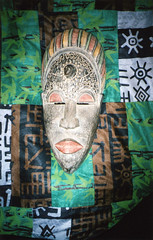
aburi mask


Lies and Truths:
But he agreed with Mr Sweeney's description that he had lied to police on an "epic" scale, including not telling them his real name, religion or background, about buying the peroxide or what he did after the "attacks" had failed.

He said: "It is unbelievable when I look back at these lies...I lied about the whole day of July 21."

Mr Sweeney said: "You lied through your teeth as to who the bombers were."

[Redacted] replied: "Yes I did. I did not want to associate myself with them after realising what they had put me through."

[Redacted] denied lying to cover up his own guilt, maintaining that he was initially manipulated by co-defendant Muktar Said Ibrahim to follow the story that the attacks were meant only to be a hoax but realised once the trial had started that he had to tell the truth.

21/7 suspect 'lied on epic scale' April 27, 2007

Assessment
The jury deliberating the cases of the alleged July 21 bomb plotters was today discharged after failing to reach a verdict on the final two defendants.

The decision by the trial judge, Mr Justice Fulford QC, came during the eighth day of deliberations by the jury at Woolwich crown court in south-east London.

He asked prosecutors to decide by tomorrow whether they want to seek a retrial for [redacted].

Jurors fail to reach verdicts on two 21/7 defendants, Guardian, July 10, 2007
The jury was discharged yesterday after failing to reach a decision on two other defendants, [redacted], both of whom deny conspiracy to murder.

[Redacted], 34, of no fixed address, ... will face a retrial, prosecutors said today.

Four July 21 plotters jailed for life, The Guardian, July 11, 2007

A Redacted Note


It has been known since September 2005 that the man I called cursed, a man of "no fixed abode" and now "thought to be Bukhari" was not the man his identity papers claimed, yet in the proceedings of the trial and the journalistic coverage, he is continually referred to with his stolen name. Perhaps this is as it should be, the slow workings of the law and the wheels of justice, an administrative decision. Yet each mention of the name is an open wound for a family in Ghana and London, a reminder about the continuing trauma in their lives. We are all collateral damage, the walking wounded of these interesting times.

I'll note in passing that the western journalistic tic of attaching an age and provenance to every name leads to the stilted formulations of the copy we have seen. Indeed these details detract from the heart of the matter and obscure rather than enlighten the complexities of this very human story. As we have seen, the name, age and nationality are still undetermined and the reporting has been wrong throughout. The only certainty is that he is "of no fixed abode". If we do have to name, place and date in tangible words, I suggest in this case that we stick to the following:
"[redacted], undetermined age, unclear nationality, of no fixed abode"
aburi mask dark


Reflection


A few more leading indicators to round off our notes:
Al-Qaeda has responded to the U.S. intelligence focus on young Arab men as potential risks, he says, by recruiting "jihadists with different backgrounds. I am convinced the next major attack against the United States may well be conducted by people with Asian or African faces, not the ones that many Americans are alert to."

George Tenet: Tenet Details Efforts to Justify Invading Iraq, April 28, 2007
No country is immune from these things, consider this clipping from last summer:
Two Nigerians, whose identities were not disclosed at press time, have become victims of the exchange of artillery fire between Israeli authorities and Hezbollah forces in Lebanon.

Two Nigerians Confirmed Killed in Lebanon bombings, July 24, 2006
The footsoldiers of The Great Game know no boundaries, indeed their variety is a historical commonplace.
So when I watched the recent protests in Kyrgyzstan, I thought not to the recent people-power outings in Ukraine and Georgia or even to the collective courage that led to the fall of the Berlin Wall (not pope-inspired by the way). Rather I thought back to Christmas 1990 sitting in Nancy, France, watching images from Bucharest alongside a true-believer socialist as his worldview finally succumbed to that ineffable and unrelenting pull of gravity.

It is no comfort to have learnt, as I did a few years later, that there were Ghanaians who died fighting for that reptilian man, Nicolae Ceausescu, alongside his Securitate during the Romanian overthrow of that macabre communist regime. I thought about the kind of world in which someone would send young Ghanaian men to train in interrogation techniques in far-flung places like Cuba, East Germany and Romania to come back and oppress their people.

I thought about what it meant for a young man to find himself in that position, in a foreign land, dodging bullets and shooting at people, in their own country mind you, trying to overthrow a rotten regime. I thought about how miserable and brutish their lives must have been to have undergone that kind of journey. And what about their peers who did come back from their various schools of grist to wreck havoc on their compatriots? I'm sure that some of these trained killers are among those who carry out weekly armed robberies in our towns.

Strange Bedfellows and the Journalistic Impulse
Perusing these notes, the obvious questions remain unanswered. Depending on where you stand, the actors range from convenient scapegoats like John Walker Lindh, to the convinced and morally convicted ciphers such as Richard Reid, to the more ambiguous cases like that of the man I call cursed. There is perhaps a full spectrum of responses: from moral courage, through the mistaken and misguided indiscretions of youth, to moral midgetry. That is the terrain of fallen angels.

As with all things about the human factor and the theatre of our existence, our fall from grace perhaps renders this melancholy mystery unknowable. One cannot but stare at the trainwreck when it comes. But how does one equip oneself to face the abyss? Where does one buy soul insurance? In a dark time, perhaps social living is the best.

masks maame


"Of No Fixed Abode"


Identity theft
Open wounds

Fallen angels
Damaged goods

Brutish living
Scarred consciences

Devious schemers
Lost nerves

Enemy combatants
Collateral damage

Modern travelers
Prison shelters

Stolen verdicts
Jury deadlocks

Bomb factories
Moral blinders

Hostile lives
Fractured dislocations

Cultural interplay
Social living

The aliases of exiled souls
Alienated, "of no fixed abode"

Soundtrack for this note


Of No Fixed Abode, a playlist
  • Antibalas - Indictment
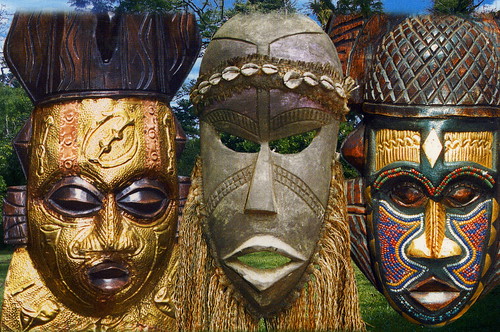
    An angry afro-beat meditation with dissonant horns that presents a bill of goods, if not some articles of impeachment, on our current situation. The song is also a humourous indictment of all those rogues in a musical court of law. One wished everyone expressed their grievances in music or words. The cover art is prescient about the flight of that man "thought to be Bukhari", the confusion and urgency are the same, as is the mistaken resort to violence. It is the mask of a man of no name, of indeterminate age, of unclear nationality and of no fixed abode. The only missing thing is the discarded, bomb-laden rucksack.

    Antibalas - Indictment
  • Prince - Reflection
    A simple song: light drums and an acoustic guitar that sticks in your head and gets you singing along before you know it. The melody is wistful and, befits the title, reflective. We're reminiscing about innocence lost, the good old days when decisions were without consequence and life itself was carefree. Not everyone has that luxury but we can all empathize with that sentiment
    Sometimes I just want to sit out on the stoop, play my guitar just watch all the cars go by
  • Angie Stone - Soul Insurance
    Her warm voice endears as does the music; Angie assures you that she has got your back. Soul assurance. Soul insurance. Where do I sign up for mahogany soul?


Update August 29, 2007

The following passage should give much pause for those sympathetic to this man "thought to be Bukhari"
He said that Mr Omar had offered a bed to a mentally ill African refugee, took in a homeless Indian man and paid visits to people in hospital. He never heard Mr Omar speak out in support of any act of terrorism. Mr Dixon said: "He was against the Iraq war, but... he said nothing radical." Mr Dixon became an unwitting helper of the alleged conspirators when he accompanied Mr [Redacted] on a trip to buy dozens of litres of hydrogen peroxide, the chemical that formed the key ingredient of the rucksack bombs.

Witness was unwitting helper with 21/7 purchase
So not only did [redacted] use people unwittingly to help buy bombmaking equipment but, if my reading is correct, he also stole the identity of that "mentally ill African refugee" who his accomplice had taken in. No one has connected these particular dots but I would lay even odds that said refugee was indeed the man who woke up to learn that the police were calling him a bomber. That would certainly round out the circle of infamy of tricksters using anyone who falls into their orbit. One wonders if there really are any more shades of gray to this story.

Next: Ode to Betty Brown

File under: , , , , , , , , , , , , , , , , , , , , ,

Tuesday, April 10, 2007

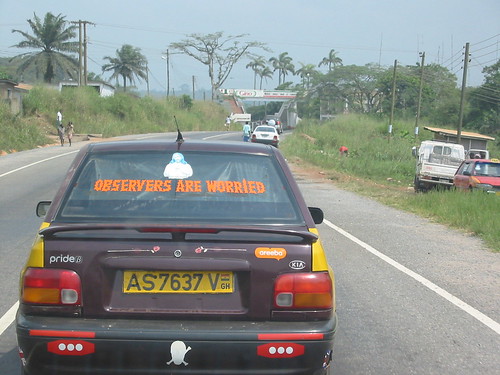
Observers are Worried

I. Ancient History


Item: Stevie Wonder records Happy Birthday on his 1980 album, Hotter Than July, to lobby for a public holiday for Martin Luther King, Jr..

Dig: President Reagan signs legislation creating Martin Luther King, Jr. Day in 1983

Paul Krugman observes:
In 1980, when Ronald Reagan won the White House, conservative ideas appealed to many, even most, Americans. At the time, we were truly a middle-class nation. To white voters, at least, the vast inequalities and social injustices of the past, which were what originally gave liberalism its appeal, seemed like ancient history.
Would history repeat itself, one wondered? Let's pursue an alternate history, if you will. After the maudlin Ebony and Ivory (1982) with Sir Paul, there was a slight pause.

Then: Stevie Wonder releases Skeletons from his Characters album in 1987, raising his voice about the South African situation.
Skeletons in your closet / Itchin' to come outside / Messin' with your conscience / In a way your face can't hide
Effect?: The apartheid government of South Africa begins secret negotiations with Nelson Mandela and company in 1988. Mandela is released two years later and becomes president of the country after the ANC wins the 1994 elections.

The power of latter day Stevie has long been noted; historians would do well to study his writings as they tease out landmarks from our cultural history. Still, along with the passage of MLK day, the USA got the ongoing Reagan retrenchment - mitigated in part by Monsieur Clinton. Guilt was assuaged: first they got votes and affirmative action, then they got the TV mini-series, and now they've even got the holiday. Reversing the perspective, I can imagine the T-shirt:
I fought for civil rights and all I got was a lousy holiday.
On the South African business, Stevie had impeccable timing, ignoring if you will the multitude who joined in that long and ongoing struggle. They say that every thing that happened before 1994 has been reconciled with truth, right? Indeed that chorus started long before the 1994 handover. We still hear it:
Move on, it's all ancient history.

II. Right on Time


Item:
Jacob Weisberg's writing represents the just before banal of the center left in the United States. This is not to say that Mr. Weisberg is stupid, merely that by the time he writes something, there is a vast "The End" spray painted on the wall. He says something just as it is about to become common knowledge.

Stirling Newberry - The Unspeakable Truth discussing the received wisdom in American media and political circles in March 2007, namely that the Iraq war was a mistake
Dig: Barely weeks later, Joe Klein declared George W. Bush unfit to lead.

Per Newberry's spectrum of banality, Klein should be counted as being merely banal. One awaits the post-banal.

III. Risk Avoidance

Only posterity is unkind to the man of conventional wisdom, and all posterity does is bury him in a blanket of neglect.

— John Kenneth Galbraith discussing inequality in The Affluent Society, 1958
Dig the soul singer:
Predicting the loss
before I begin
So it don't cut too deep
when I don't win
I hate it when I'm right
Much rather be wrong
I'd rather be wrong

Amel Larrieux - Mountain of When, 2006

IV. The Bully Pulpit


Ancient history
Idées fixes
Aspirations of prescience

Firm pronouncements of Praetorian guards
Breathless headlines of received wisdom
Platitudinous laments

Ride the wave, over the edge
Light as a feather
That's how the cookie crumbles

Quibbling a la carte
Trend-surfing alacrity
Toothless prophecy

Polemics of convenience
Shrink-wrapped profundity
Trailblazers of the trade winds

Timing is everything
Observers are worried

Observers are worried


File under: , , , , , , , , , , , , , , , ,

Sunday, March 05, 2006

Africa, 1966

Part 3 of the Things Fall Apart series... I've been sidelined for the past few days by a flu - my body perhaps taking too literally the theme of this series, hence I'll extend my admittedly arbitrary week schedule, reorder things and take a brief detour to ponder some photos. Hopefully you won't detect fevered intensity in this and later writings.

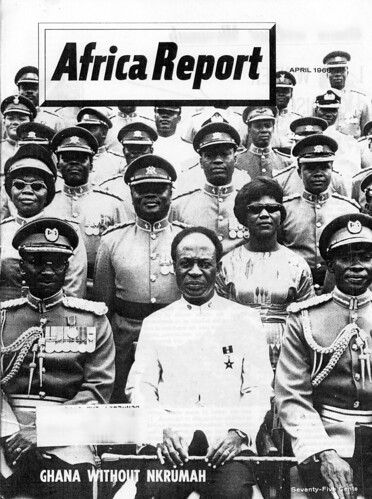
Today is Ghana's 49th Independence Day, an occasion to look back in history in order to look forward. I've been thinking however not about the halcycon days of 1957, the celebrations, the happy shrugging-off of the colonial mantle, but rather about the year 1966, prompted by finally being able to obtain a copy of Africa Report magazine from that year. I scanned and uploaded a few of the photos along with some of the articles therein. Why 1966? I was asked. It was a significant year for Ghana but more generally, 40 years ago was "when West Africa lost its innocence", as a good friend put it. The military coups in Ghana and Nigeria were a major reason for this assessment; Ghana being the first country in sub-saharan Africa to gain independence and Nigeria being the largest on the continent and casting a large shadow. Thus there is a sense of wistfulness about the path of the continent, promise gone wrong barely a decade after the initial excitement and optimism of independence. To add more context for the Nigerian case, 50 years ago, 1956, was when oil was discovered in the Niger River Delta - perhaps a clue to part of the reason for the subsequent unravelling but that is getting ahead of ourselves.

Ghana without Nkrumah


The image is at once iconic and, if you consider what happened months later, ironic. It features the President-for-Life, Kwame Nkrumah posing surrounded by army officers some of whom would shortly overthrow him. Is the fact that they are looking over his shoulder a foreshadowing of the long arm of the military in African affairs? Should one read ominous portents as the magazine's editors undoubtedly intended with its selection? The president looks confident in white with his ceremonial whip in hand, as well he should. At that point he was in full bloom, the one-party state enshrined in the constitution, titles and honorifics proliferating - Osagyefo, he appears secure in his power, surrounded by the obsequious and the sycophants. Everyone is smiling. One wonders who that woman behind him is (the one on the right) and where she ranks in the hierarchy. And those black shades!

Still there is another reading of the image, and it comes down to ego and insecurity that translated itself into government policy. Thus Nkrumah's regime imprisoned leaders of the political opposition, legislated their parties out of existence, and sent away the best and brightest or any who were inclined to question. Thus Kofi Annan and many other bright young Ghanaians were gifts to the rest of the world, sent out to the United Nations instead of causing trouble back at home. For Nkrumah and the CPP apparachiks who surrounded him, cronyism was a mundane fact of life; it was the simple exercise of power embodied in the direct manner of minister-without-portfolio Krobo Edusei a larger-than-life power broker and fixer. As a sidenote, the president-for-life moniker is not hyperbole, it was a little noted executive instrument in the law books discovered after the coup. The logic being that once the state is the party and the party's will is embodied in the leader then, well you get the idea...

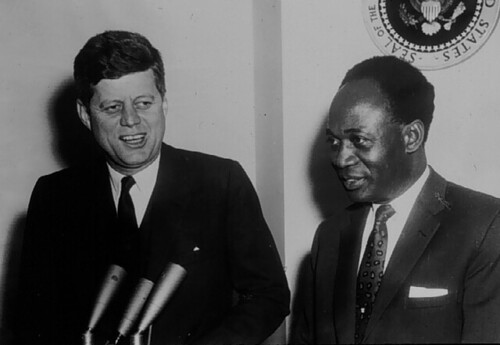
Now I suppose I shouldn't besmirch the legacy of a great man and erstwhile icon of pan-Africanism, black pride and the rest of it. It was said that the impact of seeing his triumphal trip to the United States and the image of John F. Kennedy holding up an umbrella to welcome him and feting him as he came to address the United Nations was to break a psychological barrier. Those countries that were perhaps hesitant about demanding independence could no longer wait. Sekou Touré of Guinea was one who succumbed to the irresistible glamour of it all. But still it is hard to bear the diversions into scientific socialism, the dissipation of the pan-African idea into overblown rhetoric, the sheer waste in other words... In Ghana, the popular overthrow of a regime that had started with much promise was perhaps a metaphor for the continent as a whole.

For those inclined for further reading, the feature articles in the issue may shed a little light
These articles are obviously products of their time, let's start with the title of the first: Winter of Discontent. When was the last time there was a winter in West Africa? But that is nothing new, metaphorical excess is the rule in writing about Africa. Heart of Darkness ruled the roost long before Things Fall Apart came along.

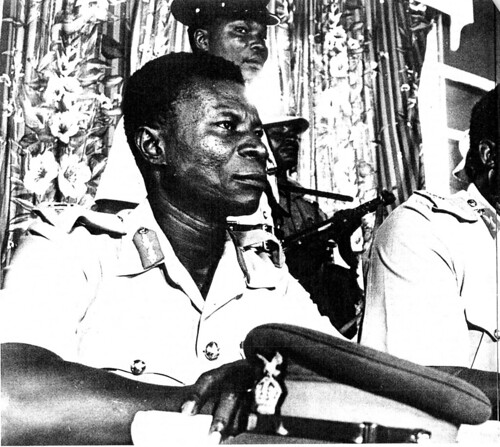
Markovitz posited that Nkrumah's choices for Ghana ranged from "Chinese communalization to Moshavism or laissez-faire capitalism". When was the last time you heard about Moshavism? 1966, we must then remember, was the height of the Cold War; the great elephants, East and West, fighting for world dominance and using the rest of the world as their battlegrounds. It is hard to believe the mindset and rhetoric of that era but perhaps our own era has its own tropes. As it was, regardless of the choices made by governments in Africa, in many countries the military stepped in. Some of the coups were inspired internally, some were indeed popular but in others, either the CIA, the socialists - the USSR vying for influence, or the former imperial powers (France, England, Belgium) weighed heavily. In Nigeria, the military as an institution decided that it would hold the reigns of power. In Ghana, the NLC was rather wanting to return to civilian rule but the precedent had been set and later in the 1970s and beyond, those who did step in were less benign.

Major General Emmanuel Kotoka


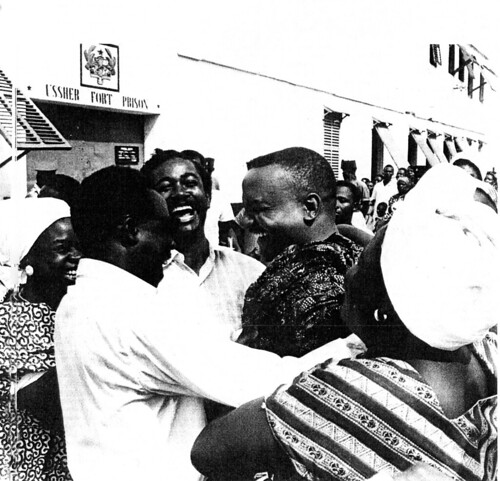
The enduring image of the year in Ghana is the sight of the political prisoners freed after the coup standing outside Ussher Fort being greeted by their families and friends. Some of the prisoners had been essentially starved to death or at best fed gari laced with sand - a quite macabre policy if you consider the already low nutritional value of gari. Well less said on that. I measure greatness based on what one does with power and on the whole African leaders have been poor in their exercise of power.

Ussher Fort freed prisoners 1966


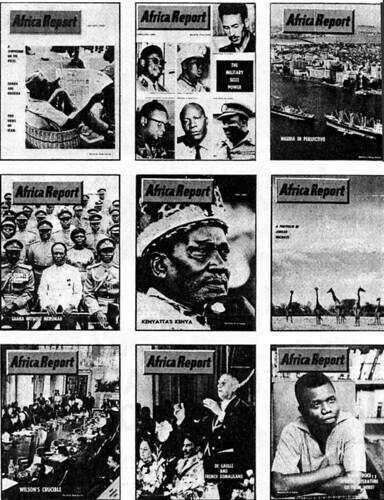
What of the rest of Africa in 1966? Here perhaps the covers of the issues of the magazine might shed some light.

Africa Report covers 1966


Politically, personality cults and strongmen abound (from Mobutu to Jomo Kenyatta with Eyadema looming in the background). Hastings Banda became president of Malawi in 1966 and 5 years later declares himself President-for-Life following other precedents. The Rhodesia question is still unresolved. The Biafra civil war is just a year away...

A young Alfred Adu Boahen completes Topics in West African History, perhaps the most influential history textbook on Africa and one that revealed the undoubted depth of African scholarship and accessiblitity. It featured prescient analysis of colonial rule and beyond. On his road to becoming the most influential scholar on Africa, he was busy writing the follow-up West Africa since 1800.

West Africa since 1800


Culturally, African literature, music and art in general is blossoming although there is a bittersweet tinge and here I'll simply note what was on the minds of the greats: 1966 is like a crossroads and a good point to take stock of Africa as a whole. Looking forward, independence was gained but many countries didn't start their post-colonial journeys on the right footing. Lots of things could go right and in many ways, there was a lot of promise on the horizon, but you could also see traces of the problems of the next few decades. There has been progress forty years on but sometimes I wonder if we are still at the same place.

Soundtrack for this note


Funkdadelic - Standing on the Verge of Getting It On

Riding High in 1961


Nkrumah and JFK


Circa 1965


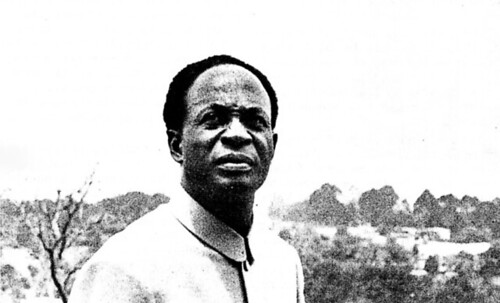
Kwame Nkrumah circa 1965


Next in part 4: Chinua Achebe weighs in on the Voices Inside Things Fall Apart.

See also: The Busia Papers for another perspective.

File under: , , , , , , , , , , , ,

Thursday, March 02, 2006

Identity Theft

It was a minor footnote last summer, but for any Ghanaian who read reports of the capture of those alleged to be behind the July 21st bombings in London (the second wave that failed), there was a sentence that struck ungodly fear. It was that sinking feeling that disaster had hit home. I'll recount the episode in the spirit of Four Women by Nina Simone, as a stripped-down tale.

Part 2 of the Things Fall Apart series...

Four Men

32 years old, Wednesday born
Bright as hell, sky's the limit
Family's establishment back home
Immigrant life: London,
God save the Queen.
Dirty Pretty Thing
Ceaseless hustle:
Day job, night jobs,
Live in bedsits,
Sleep in shifts.
A tough life,
Invisible to all
Hostel life: hostile life.
Anomie, angst, stress
Exhausted, mental breakdown
Check yourself in
Hospital: Asylum Down
Sleep. Finally. Sleep.
Medicine, try to get better
Wake up one day
They say you're a bomber
No! Not true!
Your name is stranger

Deputy Inspector General of Police
Big title, Big Man in Ghana
Exemplary career, promotion looms:
Big smile, Big plans, Big politics
A Big Man might get bigger
They say your son is missing
London, dropped out of sight
Fragile thing, you miss him
Head to London, unpaid leave
Search everywhere, he's lost.
No one knows, clean disappeared
Shadow world. Immigrants.
Weeks pass, must head home
Job calls, next IGP
Worried, daily calls. Then:
Hear it on the radio
Read it in the papers
They say it's your son
Headline: Bomber. Al Qaeda.
Impossible. A father knows.
Can't be true.
Your name is concerned

32 years old, Wednesday born
Sky's the limit
Family's establishment back home
Diaspora: Boston, Tea Party
Big Blue technology
You write toli
Long, winding pieces
Everything and nothing
Prognosticator, opinions galore
Worry about this world
Cry wolf: queasiness
You see train-wrecks everywhere
Eritrean Mujaheedeen?
You sigh: prescience, You called it
Two days later: new developments
Read a name, recognition.
One of the bombers
The Name. Twi interpreter.
A countryman. Country! Man!
32 years old. Wednesday born.
Shock, horror, depression
Your name is crushed

You lived with him
You stole his name
NHS card, easy prey
Signed up for nihilism
Secrets. Compartmentalized.
Saw the carnage
Waited
Two weeks later: your turn
Rucksack, carry the bomb
Spotted? Too risky?
Call it off
Drop the backpack in the park
Run. Hide. Lay low.
They broke up the plot
Caught you, damn.
Stand in court
"No speak English"
Keep up the pretense:
Ask for an interpreter
Stick to the story, the name
Don't say nothing
They trained you well
Your name is cursed

empty-shell

State of Shock

It was a man's worst nightmare. It was a father's worst nightmare. It was a country's worst nightmare. It appeared that the thing named terrorism, or should one capitalize it - Terrorism, that damned thing, had been wrought by a native son.

The July bombings in London were deeply shocking and troubling even as such acts go. They had additional resonance for Ghanaians, even those who weren't Londoners. The city has long been a destination of choice for us, indeed in our slang it is fondly called Babylon, reflecting a long, shared history. The great shopping street in Osu, Accra is called Oxford Street. Many of us have relatives there and we took it personally. In the aftermath of July 7th, it was no surprise to learn that Ghanaians were amongst the many casualties. That made sense, we are part-and-parcel of the London brew. From the students to the businessmen, from the minicab drivers, nurses, lawyers, doctors, street cleaners, ticket collectors, journalists, from the rich to the poor, we are all Londoners. We were all in mourning.

And then we heard that a Ghanaian may have been responsible - "charged over an unexploded device found at Little Wormwood Scrubs park in West London".

Thus our grief turned into incredulity. Yet there was also apprehension. In a global village, anything is plausible. Al Qaeda switching up the ethnic profile of their foot-soldiers would be smart. We instinctively know that no society is immune to such things and indeed, given the right conditioning, anyone can be radicalized. We had even glimpsed those frayed edges in our own society. Take those youngsters with the Bin Laden t-shirts on the streets, heck I'd even written about how distressed it had made me. Geoffrey Hiller managed to capture that image in his remarkable photo essay and that was just one man's West African road trip. Of course there were other indicators notably that hush-hush story about the security services in Ghana breaking up a group in Kumasi attempting to recruit for jihad... Well, hush-hush.

But still, but still...

We are a proud people but also conflicted. Our disbelief turned into shame (which is still one of the strongest impulses in our society) but also, and significantly, into cold calculation. We have enough problems in our society that we can't afford the stain of terrorism. We could all see it happening, the stigma that attaches itself to a community when a disastrous label is flung at it. We are experienced in negative branding from the economic to the racial and worse. We know all about profiling; the curse of low expectations and insouciant sidelining is our daily bread. Still it is another step to imagine travel as a Palestinian, Libyan, Saudi, Egyptian, Chechen or any of those other peoples have traveled in past decades (or years for some). Our reaction was a little hypocritical and verging on the narcissistic, but then we are only human; who wants to be collateral damage?

contemplating

Resolution

As you might expect, the Ghanaian community in London rallied and investigated the issue. A father headed to London to redouble his search for his missing son (or to secure a lawyer if necessary). Everybody pitched in and we crossed our fingers. It took a couple of weeks but they eventually found the man in hospital. He had been living the anonymous immigrant life in a hostel outside London and had "fallen ill". The English police were informed, but being quite happy that they had the right bomber in custody, were not concerned about correcting the public record. Indeed despite the Ghanaian embassy's prompts for a public exoneration of man and country, the only thing that has been said is that "an official statement will be issued in due course".

No one knows the identity of this man who performed the identity theft. The best we know from the accounts in the Ghanaian community is that this is someone who lived in the same building as an acquaintance of the Ghanaian at a certain point. Thus the connection was tenuous, opportunistic and the most awful serendipity. He had been living under this assumed name for over a year, even leasing property in that name.

The second wave of London bombers, the July 21st group, are believed to be a cell from the Horn of Africa, from Eritrea, Somalia and Tanzania. The first wave was comprised of locals Brits albeit of Pakistani and Jamaican descent, still: Brits to the core. The mystery remains as to the ethnicity of that man I call cursed. The cover story that one of them released was that they were simply copycats - they "never intended to cause any harm". [Obscenity]. Of course, more likely is that it is just luck that their bombs didn't go off as planned - the bombmaker had a bad day, made a bad batch. Regardless, there will be no mitigating circumstances, they will never see a day of freedom.

The accounts in the Ghanaian press, which are the only ones that concerned themselves about this story, are curiously deficient. Our journalists aren't intrepid, persistent or imaginative. It was enough for them to get confirmation that the bomber was not that particular Ghanaian. They didn't ask follow-on questions about the wider story. For example the Twi interpreter would have been able to definitively say if indeed the bomber was Ghanaian. The acquaintance would have been able to describe the man etc. But beyond that, there has been almost no follow-up reporting about the July 21st bombings in the press (English or Ghanaian) and much could be shaken loose from the strands on display here. Even if they confined themselves to the narrow Ghanaian angle, there is much left unsaid and what has been said is elliptical at best. In many ways, the reports raise more questions than they answer: the missing passport, the "health problems" and so on. Suffice to say that the story being told in the Ghanaian community is different from the official accounts. But perhaps enough scrutiny has been brought to bear on a man, his family and a country. We had dodged a bullet of infamy and wanted to return to the normalcy of our relative anonymity.

I, on the other hand, suffer from the journalistic impulse and want to know about the back story. I want to vocalize the story of what might be the ultimate identity theft, the worst case scenario. Who are these people after all? I want to outline the life in those hostels, that lonely life on the fringe. I understand how easy it is to fall through the cracks, to drop out of sight, from brother, from father and from friends. I have known the bright immigrants, Master's degrees and all, falling into these ruts, preferring to hustle, to juggle menial jobs, and refusing to return until they "make it" somehow, someday. I have seen the double and triple lives Ghanaians in London can lead. I have seen the mental breakdowns and worse; it is no fun picking up those pieces. True, it is not just stagnation, there are also many triumphs. Regardless, these stories are worth telling.

I am interested also in capturing the essence of that very pragmatic and practical response we had for a few weeks last summer: an almost hypocritical yet instinctive turn to self-preservation. Why is it better to know that the bomber was not Ghanaian? Does it lessen our grief? And why Schadenfreude instead of solidarity for Somalis or Eritreans? How much better will we be treated at airports? We are harassed and worse already, tarred with the same brush - Africans, the people darker than blue as the song goes. Our playgrounds are in that school of hard knocks. Why that lingering sense of relief? For that matter, is our house in order and can we hold our heads high about our current situation? More to the point, it was somebody's son after all. For all I know, the bomber, like the man whose identity he stole, or indeed like myself, was also Ghanaian, 32 years old and Wednesday born.

It all goes to show that our grip is tenuous and we can become unhanded in a single moment. A simple case of identity theft perhaps, a temporary inconvenience and fright, or, to return to the theme of this series, a sideshow lending weight to the notion that

"Things fall apart; The center cannot hold."
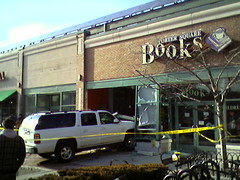
SUV meets bookshop in Porter Square

The Hustle, a playlist


A soundtrack for this note... I always have music in mind as I write and these songs were today's motivation. The first two feature metronomic beats and dancefloor agitation, the last two a pause for mournful reflection.

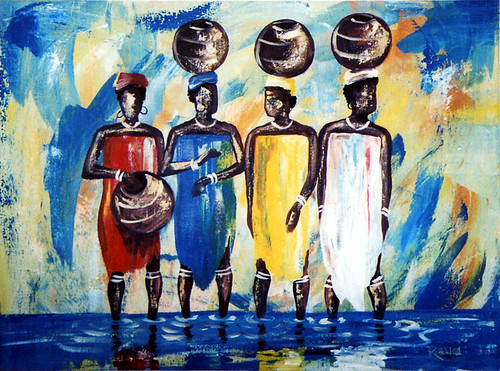
K Baka: River women

Next in part 3: Africa, 1966

See also: Of No Fixed Abode and Ode to Betty Brown for more on the July London bombings.

File under: , , , , , , , , , , , , , , , , , , ,

Thursday, June 09, 2005

Harvard Graduations and Okyeame

Harvard Graduations and Okyeame


So I attended The Girlfriend's graduation at Harvard today capping the end of 6 years for a PhD in the History of Science department (having read her work, I will write separately about it and dispassionately but enthusiastically about her achievement). I took lots of photos but being a 35mm film and scanner Luddite, they'll take a while to get posted to Flickr, for now you can see the dissertation photoset.

[Update] Graduation Photo Album.

Her cousin was also graduating from the college so there was a lot of Africans-at-Harvard pride and the family's achievement is undoubtedly wonderful. I'm proud to be joining them. The wider American part of her family weren't able to make it but those from the other side of the Atlantic celebrated double for them.

It was also 10 years to the day since I had myself graduated from Harvard so there was a little nostalgia as I walked around the yard and took in the familiar sights. A little bittersweet since I'd since seen many of these things take place ever since and back then it was all so exciting. I've come a long way. The bitter is also that I was wondering what was happening at work as the great cull was about to begin and some of the other iconoclastic people I work with would be targeted by sharp-elbowed bureaucratic discretion and what the lay of the land would be in coming months. I met one of my old friends who was back for our 10 year reunion, which I hadn't thought about but which I might now attend. Given that I am still living 10 minutes from my freshman dorm, I really don't have any excuse. It was great to reminisce about the vicissitudes of life and all that jazz... One of the speeches at the graduation, by Peter Ellison, dean of the Graduate School of Arts and Sciences was about being humble but also about being bold as opposed to being arrogant and/or clawed with self-doubt the last 2 of which I have fallen prey to at times. I'm going to take that admonition to heart, be humble in your achievements and respect for others but also be bold, be fearless.

It did make me think however of this email that I wrote to Okyeame right after I took leave of the ceremony and got a little time away from the family. I recently happened upon it in my archives. Okyeame being the first mailing list for Ghanaians started by my good friends at MIT, Mawuli Tse and others. Okyeame is still going strong but these days web forums like Ghana Think are more easily accessible.

If you read it, you'll get a sense of where my head was during those days, you'll see that journalistic impulse at work and also the withering and searching tone to my writing - I was even more jaundiced if you can believe that. While other people were simply celebrating, Koranteng was seeking out some toli. The framework was the same, I'd start out on a seeming small point, in this case VAT and then explore it in my long, winding way (but I was briefer then)... Anyway I hope this doesn't prove to be an exercise in nostalgia or navel-gazing. And The Girlfriend is a historian so maybe if she ever does a history of the effects of exile on diasporic communities this could be a minor footnote. I just cleaned up the formatting a little.

On VAT, Graduation And Ghanaian Politics


Date: Fri, 9 Jun 1995 03:06:52 -0400 (EOT)
From: Koranteng Ofosu-Amaah
To: Okyeame@MIT
Subject: On VAT, graduation and Ghanaian politics

On Thu, 8 Jun 1995 Kwaku wrote apropos VAT:
The lesson has to do with what happens when a government fails to listen to its own people. It also shows clearly the dangers of a leader who surrounds himself with yes-men. Further, it shows clearly that the government is out of touch with the economy of Ghana.

Several of us on this net were quick enough to point out the problems of VAT, in spite of our absence from Ghana. How then could the government not have anticipated that VAT was inimical to the interests of Ghana?
To expand on this, one should note the very clear failures of our so-called parliamentary democracy in this whole fiasco.
  1. The government introduced a VAT bill in Parliament - without really providing any motivation for it (that would come later)
  2. Opposition points out obvious flaws in the scheme and raises vigorous criticism. The political atmosphere of the country is such that the government does not want to even consider dialogue. The authoritarian instincts of "those who know best" are aroused.
  3. The parliament debates the bill and introduces 42 amendments that any reasonable person can clearly see will worsen further the actual implementation of the, already IMO ill-justified and ill-conceived, scheme.
At this stage in a functioning democracy, and with a competent government, alarm bells should be ringing. I submit that we have neither in Ghana. Given the level of opposition, a competent government might pause to reconsider its proposal. Also I believe that a competent government would withdraw its proposal if even its rubber-stamp parliament so modifies its proposal as to make it unworkable. Anyway we have been arguing for over a year about VAT and others have similarly pointed out the numerous ironies and flaws in the whole matter and at greater length...

At my graduation today (oh did I mention I was graduating :), I was listening to Vaclav Havel, the Czech president, deliver a beautiful speech about amongst other things
  • the importance of human rights
  • the responsibility of politicians to those they serve and
  • cautioning about those who let their image and personal ambition rule all else...
In my champagne-afflicted haze, my jumbled thoughts turned to Ghana. In my mind I was imagining Jerry Rawlings giving a speech at a Harvard Commencement and obviously I burst out in kotokious laughter upsetting the pomp and ceremony of the occasion (visions of a Head of State incoherent, swearing and ignoring protocol). I stopped myself though, after all there are few people in this world let alone presidents who have the intellect or the moral authority of a Vaclav Havel or a Nelson Mandela. Also, not everybody is a good speaker and one need not be a writer to be a good politician. Maybe I was becoming a Harvard snob. Havel however made a very good point that politicians often set the tone for the whole community. This rings truly in the context of Ghana where our first President had a penchant for self-aggrandizement and our current is intolerant and doesn't believe in democracy.

Then I reflected about the news I had heard earlier about VAT being suspended "with immediate effect" and the tragicomedy of the whole affair. I thought of the countless similar affairs that have occurred since the first and especially the second coming of this regime. When half-baked ideas or poorly thought out lunacies pass for government policy. Also I thought back to childhood memories of this bunch of idealists who used to sit in our house and argue about how corrupt Kutu and co. were, these uncles who would take us horse riding and talked about fast cars, flying and what needed to be done to this country. I contrasted the high-falutin talk these idealists would spout, even to impressionable children, with what we have seen.

The utter mediocrity of the jokers who are ruling us boggles the mind. Their idiosyncrasies, pettiness, moral failings, violence or personal corruption aside, they are a truly incompetent bunch. It is sad to say this and maybe other politicians are/will be no better. But since those who rule us set the tone in a country, their impact is felt in our family homes in Jamestown, Aburi or even Abutia-Teti and all over the country. I am always amazed Ghana still keeps ticking despite the hardships of our situation and how badly we are being managed. In a sense, I am glad the VAT affair has occurred because it perfectly illustrates the many facets of the ineptitude of this administration.

But let me stop venting, I have been fairly quiet on Okyeame for the past four years and perhaps I am exposing myself. Food for thought though is food anyway and what is Okyeame if not to vent... Let me return to champagne and debauchery.

--
Koranteng Ofosu-Amaah
'95 til infinity; Outta Here
File under: , , , , , , , , , , , , , , ,