Showing posts with label film. Show all posts

Monday, January 24, 2011

Best of 2010

My customary list of things that moved me in 2010...

Truth be told, I was mostly consumed by the World Cup last year especially since Ghana were bona fide contenders and could have/should have gone further/won it outright. Well the boys did great: Andre Ayew, Asamoah Gyan and all. I still haven't recovered from the Ghana-Uruguay match...

So, the year in numbers: I read 37 books, watched 100 movies (blame Netflix) and attended 12 concerts and 1 play.

I didn't write as much as I hoped and one reason is that I now also subscribe to about 1300 feeds; the resulting onslaught of information coming my way makes me lean towards consumption rather than production. Here's hoping for a different balance in 2011.

Books


Novels led the way in the 37 books I read (Incidentally two of these were e-books: Hilaire Belloc's essays and Charles Dickens's serial novels were great reads for the mobile phone moments, the interstices of modern life). The highlights in print were the young African writers.

  • Nii Ayikwei Parkes - Tail of the Blue Bird

    Call it a case of deep empathy; it was the shock of the familiar. It's not often that I recognize myself on the book shelves. It was bracing to read a young Ghanaian writer, a modern traveler, equally at ease in London, the US, and my childhood neighbourhoods in Accra, and even someone who'll head up to the mountains near Aburi and make them the setting for his novel. Nii Parkes loves language and plain storytelling. My friend isn't afraid to take his time and tell stories and let them take us where they may, with humourous anecdotes and elliptical discursions thrown in for good measure. The genre and the form - the crime procedural, are almost unimportant even if finely detailed, it's the underlying story that matters. We are children of Ananse, lovers of social living, and the stories we can share. I have a deep and specific connection with his artistic impulse even when I disagree with him. To cap things off, The Makings of You, his poetry collection finally got its release in the US. Needless to say my man had a great year. I dig his brand of toli and recommend it to you. A head nod in your direction, brother.

  • Petina Gappah - An Elegy for Easterly
    Brian Chikwava - Harare North

    "They" kept saying that I should read the new crop of Zimbabwean writers, that life in the shadow of Robert Mugabe was proving to be a fertile artistic ground, that the future of African literature lay in their palms. And there was a lot to their argument, these two wrote of dark matters and it was a tonic to read them. With a blast of furious energy, their voices asserted themselves immediately. Where Gappah was wry and humanistic, Chikwava's tone was utterly bleak, filled with irony and the darkest humour. Mugabe's victims are manifold but we can always fall back on this artistic response to his reign.

    Let me digress about book covers for a minute - as you may know I have an interest in the types and faces that represent writing about Africa. Consider the journey from the cover photo in the English edition of a London market

    Brian Chikwava - Harare North cover of English edition

    to the following illustration in the US Edition

    Brian Chikwava - Harare North cover of US edition

    "Fine", you say, there's a transformation from the photo of a street scene to a quite clever montage in the illustration that further manages to throw in a few more references to London: Big Ben, tube signs and all. "I get it".

    But look closer, if you will, at the bottom corners of the latter, and note the giraffe on the right and the tree in the savanna that has materialized on the left.

    Chikwava's book is a novel about Zimbabwean immigrants in London. True, there are plenty of predators in the book but they are all too human - there is no wildlife to be found in its pages. What scenes there are in Zimbabwe are all urban.

    (Incidentally, I can understand that the same tree and savanna appear on the cover of Gappah's book since at least one of her stories has that kind of backdrop.)

    Apparently it isn't enough to have Harare in the title, and the black head and anomic eyes of the main protagonist as a signifier; that would be too subtle an indicator of Africa. I wonder if that giraffe and savanna detail was part of the cover artist Yuko Kondo's initial vision or whether it was the publisher who needed to remove any doubt about provenance. I wonder, must every African novel face the world with wildlife or the savanna as its backdrop? I'm not a big fan of the safari quotient.

  • James Ellroy - Blood's A Rover

    I am a big fan of Ellroy's Underworld USA trilogy and the intricate worlds of bad men (and women in this final part) that he has constructed: "a new myth from the gutter to the stars". Indeed I read this twice in a feverish haze. He didn't disappoint; the trilogy will stand as one of the most ambitious and resolutely executed works of the past 20 years.

  • Geoffrey Philp - Who's Your Daddy? and other Stories

    Call it Jamaican Gothic, a collection of stories full of wit and perception. His roving eye and his sharply attuned ear for dialog make for vivid reading. I also happen to love Geoffrey Philp's poetry.

  • Heinrich von Kleist - The Marquise of O and Other Stories

    Luminous stories that linger in the mind. Plots that swirl every which way, with turns at once startling and engrossing. Writing that leaves you breathless, von Kleist was peerless as an artisan of literary tectonics.

  • Geoffrey Household - Rogue Male

    A story so stripped down and spartan that the reader wants to apply metaphor to gain comfort. On the surface it's a hard-boiled thriller about life at the extremes, I came to read it as a prescient warning about the relentless challenge that Hitler's fascism would pose. What is your interpretation?

  • Meja Mwangi - Going Down River Road

    A deep dive into the slums of Nairobi. An exacting and brilliant novel that manages to find soul and brotherhood among the futility. Gappah is to Chikwava - and Kenya is to Zimbabwe in our millennium - as Going Down River Road is to Thomas Akare's The Slums.

  • Alain Mabanckou - Black Bazar

    Reads almost like a follow-up of his 1998 tour de force, Bleu, Blanc, Rouge, wonderful writing all around.

    See also: The Ways of The Porcupine

  • Emmanuel Dongala - Johnny Chient Méchant

    There's a fine translation, Johnny Mad Dog of this look at child soldiers and the damage they leave in their wake. I read also that it has been made into a film that is about to be released. I have a pending piece on the novels about child soldiers in Africa. Powerful stuff indeed.

  • Sarah Ladipo Manyika - In Dependence
    The Nigerian writers are making us all of us proud. I thoroughly enjoyed this love story full of missed opportunities.

Theatre


The sole play was Marcus Gardley's ... and Jesus Moonwalks the Mississippi, a funny gumbo of a play with soul food, slavery, Greek choruses, and Michael Jackson's Billie Jean song and dance routine at its core. Homeboy's got a unique vision.

Movies


Two trilogies brought forth the heat in my film watching.
  • Carlos the Jackal

    Olivier Assayas's take on that gremlin of terrorists featured a startling and dizzying performance by Edgar Ramirez as the eponymous Venezuelan revolutionary. There was no higher achievement in cinema.

  • Stieg Larsson's Millenium trilogy saw Noomi Rapace embody that girl with the dragon tattoo with her singular talent. Actress of the year
  • State of Play

    This BBC Miniseries was so engrossing that we had to watch all 6 hours in one sitting. Fodder for those with the journalistic impulse.

  • Prince of Broadway
    Sean Baker's vibrant take on the hustle of Ghanaians in New York is almost too realistic.
  • The Death Of Mr Lazarescu
    Quietly devastating and Kafkaesque.
  • The Secret of the Grain
    I want to eat some couscous with everyone associated with La graine et le mulet.
  • Boardwalk Empire and Treme
    The Wife and I fell for these HBO series, what can I say.
  • Bela Fleck: Throw Down Your Heart

    A great documentary on musical exploration. For me it stepped into high gear from the moment when Oumou Sangare picked him up at the airport. I saw him in concert with Toumani Diabete the previous year; it was a great collaboration, banjo met kora and all was well.

Music


I attended 13 concerts - but only blogged about one - adding to the pile of lost reviews that I keep meaning to publish.
  • Amel Larrieux

    The highlight of my year was watching Amel Larrieux perform for two magical nights in August. I still have an orange glow from those sessions. Her 2006 album, Morning, has proven to be a fantastic bed of creativity, reinvented on stage. It was the album of the year in 2006 and, well, let me not beat around the bush, it is one of my two favourite albums of the decade - the other is Voodoo. The listening statistics seem to bear that out. The songs she previewed from next year's album ought to bring her to the wide acclaim she richly deserves.

  • Van Hunt gave a solo performance almost exactly a year ago. He playfully alternated between acoustic guitar and grand piano and treated us to a tour of his soul songbook. It is deep and his musical vision is captivating.
  • José James and Jef Neve For All We Know
    José James - Blackmagic

    Hands down the most romantic thing I did was to attend the concert José James and Jef Neve gave at the Gould Theater at the Legion of Honor in San Francisco. The classic setting, and the music, mon dieu, the music. I stand by my immediate reaction:

    Impossibly talented, extravagantly empathetic, lushly lyrical: the golden voice meets the angular piano. Loved it.
    It was really hard to believe that they had only played together twice before stepping into the studio. I'll have more to write about these young lions - José James especially (he had a busy year) deserves considerable critical attention, for this is the future of jazz.

    jose james and jef neve
  • Dwele - Wants World Women

    Dwele still has that swagger - he deserves it needless to say. This year in addition to the seductive poses he struck on stage - a Dwele concert in Oakland is an event to behold. He brought some social observation into the mix - as ever it was over an infectious beat. Consider his take on our ongoing Great Recession in How I Deal

    See, I was employed
    But not today
    See Bush came and made all that go away
    Now I'm the crib with the fakest grin
    Waiting for Obama to kick in

    The chorus starts aptly enough with "I'm losing my power, chasing the almighty dollar". With unemployment at 10 percent and underemployment pervasive, we are all "waiting for Obama to kick in".
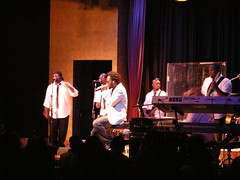
    dwele and banddwele singing in the crowd
  • Bilal - Airtight's Revenge

    In concert he was wild and fabulous and the new album was solid. It's great to have him back. The one-two combination of Restart and All Matter was exhilarating, Bilal went into a trance and we followed

  • John Legend & The Roots - Wake Up!
    These guys deserve the Grammys they will be getting in the next few weeks.
  • Hindi Zahra - Handmade

    We managed to catch Hindi Zahra live at Le Bataclan in Paris and thoroughly enjoyed ourselves. I guess you'd call it world music, it was worldly, grown folks music. Norah Jones watch out.
    hindi zahra at le bataclan 5hindi zahra at le bataclan 3
  • Sharon Jones & the Dap-Kings - I Learned The Hard Way
    How can one not love The Game Gets Old?
  • Eric Roberson put the Music Fan First and continued to build his independent soul movement.
  • Corinne Bailey Rae, mourning her late husband, found a way to sing again and released a set, The Sea, full of elegiac balladry.
  • It was a year of returns. Massive Attack gave us Heligoland, Sade was a Soldier of Love and Gil Scott-Heron said I'm New Here - his take on Me And The Devil rocked hard.

    Erykah Badu came back to us and even went nude for the love of the music.

    Habib Koite and Bamada were mellow men as befits a band that has been together for 25 years. Like Sade, they were a seamless unit.
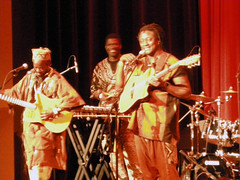
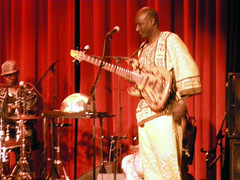
    habib koite and bamada smileAbdoul Wahab Berthe - bassist for habib koite and bamada

Finally two acts I caught at the end of the year who will be making waves in 2011:

  • Les Nubians will be giving us a Nu Revolution in coming months. We caught them live as they readied a new stage show.
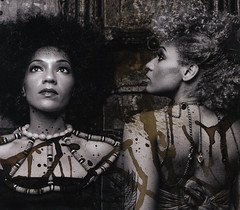
    Les Nubians 2010
  • I'm looking forward to Rhian Benson's Hands Clean, her first album in 7 years. Asked why she made us wait, she explained, "I had to do some living that I could then put in the album". She gave a short set at her release party in Accra - and even had a couple of wardrobe malfunctions, but it was worth it to hear her sing Say How I Feel and preview a few songs from the new album. Valentines Day is only weeks away.
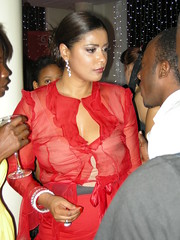
    Rhian BensonRhian Benson

Song of the year: Bilal - All Matter

Dearly Departed


In letters, Ferdinand Oyono, Robert Parker and gold old José Saramago passed away and are sorely missed.

In music, we lost Teddy Pendergrass - black masculinity incarnate, Gregory Isaacs - the cool ruler with the golden voice, Willie Mitchell one of the best music producers we have known, the ever versatile Lena Horne. The loss I took most personally was Abbey Lincoln; I'll forever miss her vibe.

For a playlist in memory of these greats, consider these albums: Joy, Night Nurse, Let's Stay Together and A Turtle's Dream.

File under: , , , , , , , , , , , ,

Thursday, January 14, 2010

Best of 2009

Everybody likes lists so here's a list of things that moved me in 2009. I didn't blog much (a mere 5 posts - I was quite shaken) but I did leave quite a wide digital trail by compulsively tracking my consumption of various cultural artifacts - especially as I tend to make time to write mini-reviews. A cursory summary of my year: 50 books, 120 movies (blame Netflix), 10 concerts and 1 play. I remain an omnivorous consumer of the web and additionally bookmarked or shared up to 680 articles and blogposts (blame the 1099 feeds I subscribe to Google Reader) - each of these was the occasion of some pithy commentary and tags, your basic frisson de folksonomie.

Books


I read mostly novels last year and eschewed non-fiction since I haven't yet become American in my reading preferences. There was some poetry especially near the end; mostly web-based after I got interested in how poets are using the web.

Entertainments


Entertainments tend to get short shrift, dismissed as they are as guilty pleasures, yet there is something to be said to bask in the glow of literary entertainments. With hindsight, I prefer Graham Greene's self-described 'entertainments' to his serious pieces. I've resolved to increase the quotient of entertainments in my reading.

  • Zuleika Dobson by Max Beerbohm
    A delightful entertainment and sublime take on a bygone era at Oxford. Compare to the best campus novels like those of Kingsley Amis and David Lodge or even more scabrous affairs like Porterhouse Blue. Satire and vicious cultural observation. Some of the dialog from the upper class twits reminded me of his Edwardian contemporary, Saki. For example,
    Are you fond of peasants? My tenantry are delightful creatures, and there is not one of them who remembers the bringing of the news of the battle of Waterloo.
    How to describe an effete English Lord in 2 sentences.
  • Comment Cuisiner Son Mari À L'Africaine by Calixthe Beyala
    A novel in the form of a cookbook. A cookbook in the form of a novel. A fable in the form of a tasty barbecue. A romance spiced with flair. A delightful confection through and through, cooked with verve. A sensual read, it is also a thoroughly modern affair set in the milieu of low income housing in Paris. She was early in documenting immigrant life and prescient about the travails of exiled souls.
  • The Charlie Mortdecai trilogy by Kyril Bonfiglioli
    The three Charlie Mordecai novels, Don't Point that Thing at Me, After You with the Pistol, and Something Nasty in the Woodshed have the highest concentration of effortless wit, zingers and cultural affectation I've encountered in a long while. Who knew that the intrigues of a disreputable coward, art snob and seasoned thief would be so entertaining? The increasingly intricate plots are almost incidental - verging at times on spoofs of James Coburn spy capers which were themselves spoofs, the towering pleasures are in the asides. I want to have cocktails with Mordecai.
    My life-long study of the art of warfare has taught me that running away is certainly the most cost-effective type of fighting. It doesn't win many battles but it saves you a lot of troops. Ask any Italian general if you can catch him out of his hairnet. Or, indeed, if you can catch him at all.

    — Kyril Bonfiglioli - After You with the Pistol, page 74
  • The Parker novels by Richard Stark
    Donald Westlake sadly passed away late in 2008, his alter-ego's productions are the gold standard of hard-boiled noir, spare and stripped down tales of amorality and professional crime. Luckily many are being reissued these days. The Mourner, The Score and The Seventh were last year's comfort suites for me, variations on a heist with a relentless force of nature at the helm. Also revelatory was Darwin Cooke's graphic novel resurrecting Richard Stark's Parker: The Hunter. Revenge has never been better.

Masters of Storytelling


There's nothing like letting go and putting your faith in one of these craftsmen of the tale:
  • Verre Cassé by Alain Mabanckou
    I read a lot of Mabanckou last year and an appreciation piece is sorely overdue. He is one of the best living African writers and yet few focus on him perhaps because he writes in French. Let's hope that the new translations that have began appearing remedy the situation - Broken Glass seems to be getting some buzz. Short of that, I'll become his shill. His latest, Mémoires De Porc-épic, was also magisterial.
  • Moses Ascending by Samuel Selvon
    After discovering the many pleasures of Zee Edgell last year I resolved to read more Caribbean literature and, after plowing through Selected Poems by Derek Walcott, I went back to that other master of Caribbean letters, Samuel Selvon, catching up on his great creation in 1970s England. A novel packed with hilarious observations about immigrants, poor whites, Pakistanis, black power, sexual mores, the relationship with authority figures, and throughout the resilient hustle of the Caribbean immigrant.
  • The Dragon Can't Dance by Earl Lovelace
    Call it a masquerade or rather a prose calypso. Wonderful social commentary on Trinidad, straight from the slum hills overlooking Port of Spain.
  • The Friends of Eddie Coyle by George V. Higgins
    Beautiful writing, haunting characters and an unerring ear for the nuances of language. The film adaptation is a classic of tragic noir, Robert Mitchum was never better.
  • To Each His Own by Leonardo Sciascia
    A sardonic lament on the corruption of the mafia. He cut out all the fat in the narrative and the result is so restrained as to be unbearable. It lingered in my mind the whole year and resonated as I watched Gomorrah. What is to be done when this malevolent thing can blight an entire society? The follow-up, The Day of the Owl is, if anything, more menacing.

Urban Dread


  • Man Gone Down by Michael Thomas
    This one hit too close to home mainly because I know one of the barely fictionalized protagonists. Observations on race, identity and cultural anomie from the viewpoint of Boston black Americans close enough to the ivory towers to make their continuing travails and periodic falls from grace more heartrending and frustrating. An elegy for the modern strays of the world.

    Also in the same vein of urban dread, The Scholar: A West Side Story by Courttia Newland with its inner city London setting and The Turnaround by George Pelecanos who continues to mine the streets of the Washington DC area.

Heartwarming


I Do Not Come to You by Chance by Adaobi Tricia Nwaubani

Young African writers are in ascendance these days. This wistful and funny study of world of the 419 scam was the best and most heartening of the lot. I never quite got to Sarah Ladipo Manyika's In Dependence or my friend Nii Ayikwei Parkes's Tail of the Blue Bird so those will have to be part of the 2010 contingent.

Theatre


The Cutting Ball's production of Ionesco's The Bald Soprano was a tonic, what with its great translation and interpretive gusto, but then you know that I love all things Ionesco.

Movies


  • In The Loop
    The best film of the year. The best adaptation of the year. The most fun of the year. A satire of the build up to the Iraq war, it hit harder than all the war movies. The Alistair Campbell character is larger than life but the entire cast shines.
  • Goodbye Solo
    Ramin Bahrani is fast becoming my favourite director; he manages to get so much out of his actors. I'm fairly sure I've been driven by a taxi driver with the same spirit as Solo (wonderfully played by Souleymane Sy Savane) in Boston. They caught the magic with this gripping meditation on life and family ties. The previous year's Chop Shop was gritty and heart-breaking.
  • Killer of Sheep
    Talking about strays of the world, how about a portrait of working class life in 1970s Los Angeles. Charles Burnett's masterpiece only received a theatrical release after 30 years. I can still hear Dinah Washington's This Bitter Earth play in the background of a hot apartment in the summertime.
  • Sin Nombre
    The most uncanny love story meets road movie meets Latin American gang life. Mesmerizing.
  • Gomorrah
    No wonder the writer, Roberto Saviano, now needs police protection; Matteo Garrone's adaptation brings stark visuals to a relentless milieu of social corruption and violence.
  • District 9
    I hope Neill Blomkamp never gets budgets ala James Cameron, his scrappy aesthetic and expedient innovations are fine by me.
  • Nuts in May, Abigail's Party
    Happy-Go-Lucky also was my top film of 2008 hence I went on a Mike Leigh spree and revisited many of his early television pieces. Fun all around.
  • Life and Nothing But
    The aftermath of the first world war is a great backdrop for a meditation on loss and love. Another Tavernier-Noiret collaboration.
  • Mapp & Lucia (series one)
    I have long loved E.F. Benson's Mapp & Lucia series, its celebration of beastly manners are economical marvels of observation. The television series didn't disappoint.

Music


I have a series called The Lost Reviews in the works so I'll simply note the high points.

And then there were the passings. Michael Jackson's death left a hole in my heart. The concert film was no consolation and the tributes barely salved the soul; the thrill is gone. Add to that the recent passings of Willie Mitchell and Teddy Pendergrass and what is a soul lover to do. Rest in peace.

Late Pass:

Kutiman's Thru You was the most creative album of the year, all the more impressive since Youtube was his orchestra and jam band. Dig it.

On to 2010. My mantra: focus and produce.

File under: , , , , , , , , , ,

Saturday, March 18, 2006

Heart of Darkness

Part 5 of the Things Fall Apart series - in which we head down the river...

Mr Metaphor


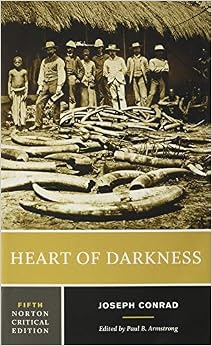
Once he found his voice, the man the world would know as Joseph Conrad would be at once compelling and infuriating. He had travelled widely in the British merchant navy, observing the colonial enterprise from a seaman's perspective. It took a while for him to settle into the style of storytelling that would win him renown but, once he found his voice, he was prolific. He tended to mix personal meditations and psychological portraits with a broad brush of metaphors (pun intended). Late in his writing life, this latter aspect would lead to his work losing his earlier audience. Still the works he produced when he was on form endure to this day.

Heart of Darkness is a slender novel, it is short, sweet, muddled and, as befits the title, murky. It's the story of a journey and at barely 100 pages in my edition, you can read it in a couple of hours. For almost a century, this has been the novel that people have used to characterize Africa. Indeed Chinua Achebe's Things Fall Apart has taken almost half a century to surpass its influence. Short of safaris, wild animals, poverty, famine and warfare, popular notions of Africa have not been of normalcy (of say skyscrapers, markets and factories) but have rather been informed by Conrad's visions.

heart of darkness


I've long been interested in the creative spark, in finding out what sets an artist off. In this respect, Heart of Darkness looms large in its influence. The Norton critical edition augments it with more scholarship than almost anyone can absorb. Even as you read my ruminations, secondary school children the world over are writing papers on its themes. A cottage industry of Cliff Notes exegesis has obviously blossomed on its fertile ground. Beyond interpretation however, it is worth pointing out a few works that seem to draw from its premise.

But first, what of Conrad's own creative spark? Well Conrad wrote the novel at the turn of the century 8 years after making his trip to Congo in the 1890s. Thus he was writing at a remove from his experience. Yet there is immediacy in the story, it isn't merely a mythical journey. Conrad wrote at a time when the "Congo Issue" was being raised in the press - namely the quite vigourous campaign against the egregious human rights violations that King Leopold's men had been perpertrating for decades in his personal fiefdom of the Congo. Perhaps the headlines of the time prompted Conrad to put to paper some of what he had seen.

The plot, as it is, is stark: the unreliable narrator, Marlow, recounts his experience heading down the Congo river to encounter the agent, Kurtz, who one learns is a larger than life character who has become unhinged. The atmospheric journey is the point of the novel. You are led into an environment that is meant to be impenetrable and alien. Darkness prevails both physical and metaphorical. The fascination mounts about Kurtz who is variously described as "a prodigy", "a remarkable person, he gets more ivory than all the others", a "universal genius".

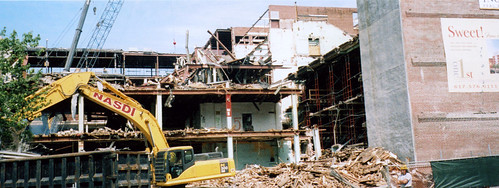
candy factory demolished


The writing is hallucinatory, Conrad has a talent for repetition and incantatory description. Some characterize Heart of Darkness as a meditation on man's capacity for evil, that is, as a psychological jumping point for examining the eternal human story. Others perceive it as an indictment of the rapacity of King Leopold's excesses - a legacy which still haunts Congo today. If there wasn't quite a cyncism about the colonial enterprise in the novel, it could still be read as an illustration of the costs of the effort. One problem with the purely psychological reading however is that those who are affected are rough sketches at best. In the biblical tale, Cain and Abel were brothers and started out as equals, in Kurtz's Congo however, the victims are the proverbial wretched of the earth and are worth only cursory descriptions.

It is a truism that when you're building empires, rules don't apply. This covers a spectrum that ranges from noblesse oblige through exceptionalism and, in Conrad's time, to Social Darwinist Alley. Idées fixes abounded in the attitudes towards the "savage people" that were being colonized. Euphemisms reigned supreme and a missionary zeal to uplift the conquered peoples prevailed. Throughout history, such encounters proved catastrophic for those on the losing side. To the winners however come the obvious material spoils and the fringe benefits of superiority complexes.

It is no surprise then that "Mr Kurtz lacked restraint in the gratification of his various lusts". The whispers along the river are that he is considered some sort of "Superior Being". The shock to reader however is the extent of the moral decay and corruption. It queered the self image of the whole enterprise. We read graphic evidence of how low people can sink when unmoored from any checks and balances. The enduring image of the tale is of the ghastly decorations, the decapitated human skulls staked to the ground that surround Kurtz's house. Bromides of an uplifting mission are harder to countenance in light of such scenes.

King Leopold


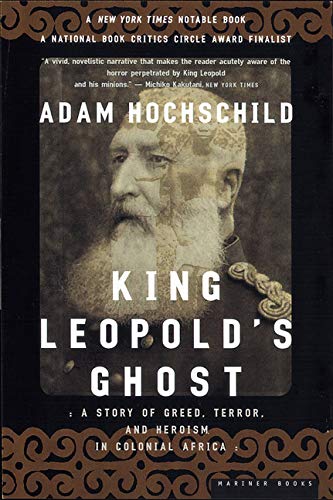
The metaphorical Heart of Darkness that Conrad wrote about is something rooted in the unparalleled brutality perpetrated on the Congo. Adam Hochschild spent some time in King Leopold's Ghost situating the novel in its proper historical context. Kurtz is based on historical figures and perhaps people that Conrad himself met during his four month expedition. The reality of Congo's colonial past was indeed conscription, forced marches (your basic slave labour) and summary amputations all in service of ivory, rubber and the good King Leopold. It is estimated that 10 million died under this regime.

Hochschild points out any number of men who could have served as prototypes for Kurtz including Captain Léon Rom who famously kept a collection of severed African heads around his garden. Sentences like the last one are part of the power of the shock of that episode. If Conrad's novelistic indictment helped stem such outrages, Heart of Darkness would have served its purpose.

Near the end of the tale, Marlow finds Kurtz's "masterpiece" writings which are dryly titled "Suppression of Savage Customs" - the scrawled inscription on them is "Kill the brutes". This little detail should resonate for readers of Things Fall Apart, the report written by the colonial administrator in Achebe's story has a very similar title.

heart of darkness


Burnt-Out Cases


Graham Greene almost satirized Conrad in his 1960 novel A Burnt-Out Case. A man heads to a leper colony in Congo where he is diagnosed as a burnt-out case; he seeks solace in helping the lepers in the institution. Greene takes Conrad's tale but adds nuance - the vivid imagery, Conrad's impenetrable darkness, is substituted by the shades of grey that were Greene's natural inclination. This is one of Greene's strongest novels, one that is sometimes (and wrongly I believe) counted as one of his "Catholic" novels. It is the same framework however: Africa as the place people come to for redemption or escape. The difference here is that the jaundiced viewpoint of the twentieth century informs Greene's treatment of the Heart of Darkness. He acknowledges upfront that "this Congo is a region of the mind".

The language also is instructive and it is interesting to see the progression. Writing 60 years after Conrad's novel, we've moved from Heart of Darkness to Burnt-Out Cases. This is undoubtedly progress. I suspect that burn-out, or perhaps its counterpart, things fall apart, is more tractable than heart of darkness. With occasional breaks and maintenance the human animal can keep going, indeed, if you throw in a change of perspective, we can go from strength to strength.

the machines


Chinua Achebe has said that he wrote Things Fall Apart as a response to Heart of Darkness and other books in that vein, novels he felt that at best short-changed Africa and at worst were viscerally objectionable. I love literary spats and Achebe got himself in the midst of a great one. In quite plain language, he noted that "Joseph Conrad was a thoroughgoing racist" amongst other weighty charges in his famous 1977 polemic An Image of Africa: Racism in Conrad's Heart of Darkness. In that lecture he laid into the sacred cow of Heart of Darkness, finding all manner of things awful in the novel. He conflates Marlow and Conrad, argues against the language, the setting and the entire story.

It continues to enervate him to this day as Caryl Phillips found out in a 2003 interview, The case against Conrad:
"Africa as setting and backdrop, which eliminates the African as human factor. Africa as a metaphysical battlefield devoid of all recognisable humanity, into which the wandering European enters at his peril."
This is "arrogance", "perversity" and worse in Achebe's eyes.

The thing is that Conrad is too easy a target. You can open the novel at almost any page and find something objectionable. For example:
We had enlisted some of these chaps on the way for a crew. Fine fellows - cannibals - in their place. They were men one could work with, and I am grateful to them. And after all, they did not eat each other before my face: they had brought along a provision of hippo-meat which went rotten, and made the mystery of the wilderness stink in my nostrils. Phoo! I can sniff it now.
There is a gruesome humour in these attitudes but even if you think it is despicable, or that the author had a pernicious intent, it is humour nevertheless.

While Achebe strikes home on some of his points, I think his novelistic output is a better counterpoint and response to Conrad. The deep-seated resentment of the colonial enterprise and its concomittant disdain and exploitation of Africa drove Achebe to write his own tales and to change the perspective. This impetus led to a blossoming of modern African literature. Why exercise oneself about this novel? It is true that travel writing seems to have a disproportionate influence in the world. I'll note in passing how Robert Kaplan's The Coming Anarchy seized Bill Clinton and Madelaine Albright's imagination and informed their response to Rwanda and the former Yugoslavia in the 1990s. I'll confess that I quite like Conrad's tale, it's a great achievement and obviously much more than mere "travel writing". It certainly doesn't bother me; I'm writing my own stories of Africa.

For an example of a more telling critique and one that I think is far more powerful, we can turn to Vladimir Nabokov who famously dismissed Conrad (and Ernest Hemingway mind you) as "writers of books for boys":
I cannot abide Conrad's souvenir-shop style, bottled ships and shell necklaces of romanticist cliches. In neither of those two writers can I find anything that I would care to have written myself. In mentality and emotion, they are hopelessly juvenile.
That is the more insightful and damning critique, in just a few words Nabokov stabs Conrad's work in its heart - and its style and substance is found wanting.

Things Fall Apart brought to the fore different ways of writing about Africa that broadened the context beyond standard tropes and travel pieces and put Africans at the center of the narrative. At the same time, who's to say that Africans are better writers on Africa? V.S. Naipaul and Graham Greene stand as masterly writers about the continent whose works display the same rich textures and emotional fortitude. More recently William Boyd's A Good Man in Africa or Brazzaville Beach stand up to much contemporary African literature - indeed I claim him as an African rather than an English writer, and not just because he was born in Ghana. Moving outside the continent, Madison Smartt Bell has just completed the definitive fictional works on Haiti - who knew that Toussaint L'Ouverture would be reincarnated from a home office in Baltimore, Maryland?

sweet shell


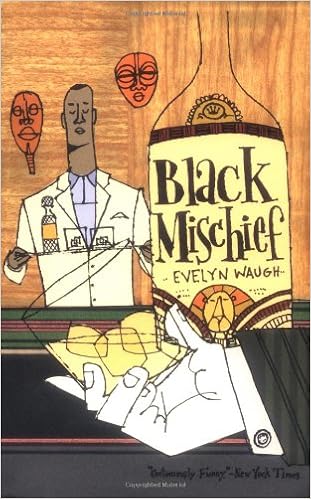
Black Mischief


Jerome Weidman wrote the following on Evelyn Waugh's Black Mischief.
To achieve greatness... satire must be rooted not only in a genuine love for the object being satirized but also in an awareness of the object's relation to the entire human condition, regardless of race, color, creed, or geography
He was shrewdly anticipating what would be an almost politically correct response to Waugh's musings by many critics and pointing out a way to deflect those charges. The novel is not as savage a satire as Vile Bodies or A Handful of Dust, but it remains one of his funniest novels, brimming with great set pieces and a sustained wit that powers the narrative. There are no sacred cows and everyone is thoroughly lampooned.

black mischief


Broke and after running into more jams than one can count, a young Basil Seal flees Britain for Azania, a barely-fictionalized Zanzibar. Waugh provides a picture-perfect rendering of colonial administration in the 1930s. This is a portrait of decrepitude, of second-chance has-beens reinventing themselves in faraway lands as overlords, of the casual racism and solipsism of the colonists, of intrigues between the English, French and the German who worry about their spheres of influence and the profit imperative. The Emperor Seth, who had been Basil's contemporary at Oxford, aims to come back and modernize the country. The two eventually combine to implement the various absurd reforms which have no practicality or relevance to his "subjects". The portrait of the English in foreign lands is never pretty, let alone when they occupy positions of power and Waugh delights in showing them at their worst. After all, only in colonial times could a ne'er-do-well leave his country and promptly become an Imperial Minister. There are even animal rights ladies who have come to do something about the treatment of the livestock on the island completely glossing over the mindless treatment meted out to the locals, the Azanians who mind the livestock.

Waugh follows Conrad's motif, the journey into the dark, impenetrable Other but he takes a keen satirist's eye and wrecks gleeful havoc along the way. As an author, Waugh is completely unsentimental about human relations and motivations. It isn't contempt for his characters but rather a recognition that in life much occurs that is unfair and absurd. Laughter is the coping mechanism for his keenly felt outrage. Unlike Conrad however, he is an equal opportunity satirist, the "locals" are given as nuanced a portrait as the "colonists" and they are similarly doomed and knowingly characterized. I would add this extremely funny and bittersweet novel to Greene's as the best artistic take on Heart of Darkness.

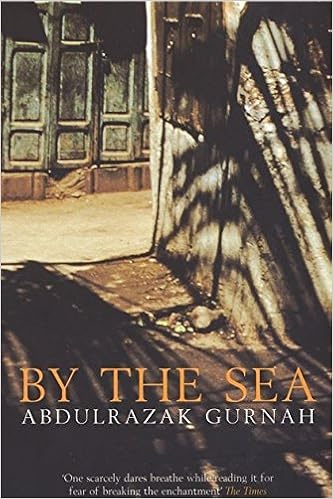
By the Sea


Abdulrazak Gurnah's great novel By the Sea presents a perfect reversal of this idea. Quite simply, it inverts Black Mischief and Heart of Darkness. In this case it's an old Arab trader who arrives from Zanzibar at Heathrow airport and eventually finds himself in a guest house in coastal England while his immigration case is considered. At length he is joined by a young man, a fellow countryman. It is only in a sedate bed-and-breakfast that the two protagonists can resolve issues that their families had back on their island. The novel concerns itself with their tangled history.

England in the novel is the place of escape and refuge. Here it is literal exile, the one is an asylum seeker. The meat of the story however is in the implications of their former lives in Zanzibar. Gurnah has said "Places don’t live just where they are, they live within you". This sentiment points to all writers' urge to project and in his novel, Zanzibar is projected onto East Sussex to a quite sublime effect.

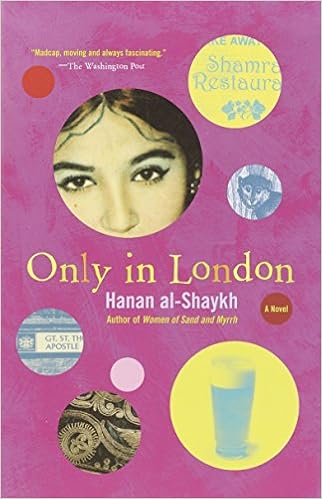
only in london


Less successful artistically is Only in London by Hanan Al-Shaykh which is also in this vein of using the West as a stepping stone for purely local concerns - Al-Shaykh is Lebanese. It's a fun read, a ribald comedy with a mass of stereotypes, four strangers who head to London and their misadventures. It's nothing too weighty; it features an Iraqi divorcée contemplating an arranged marriage, a high-class Moroccan prostitute, an English connaisseur of Arabic art, a young gay Lebanese man (and a smuggled monkey). What is instructive however is to read some of the reviews by western critics. Many are upset that London is not a character in the novel, in their eyes the story could have been set anywhere. And that's the point I suppose; for Al-Shaykh, London is indeed a mere backdrop, the heart of the city is barely scratched. The characters don't step out beyond say Harrods or other predictable landmarks. The English characters are the proverbial Other and barely drawn. As a Londoner, I couldn't recognize the soul of the city yet, as someone who has read much fiction about Africa, I could recognize the trend: London as Conrad's river Congo and those chattering savages on the banks of the river Thames, a cacophony to be ignored. Only in London is thus an ironic title, for that alone, the novel is worth reading.

Apocalypse Now


"I love the smell of napalm in the morning" is the line that everyone remembers from Apocalypse Now and Robert Duvall's improvisation is fitting for the most famous adaptation of Conrad's tale. Francis Ford Coppola's epic movie bursts with more ideas and quotable nuggets than one can handle. It is more than a war movie, indeed Coppola has quipped: "The film wasn't about Vietnam, it was Vietnam". The haze of the journey and the futility of war is illustrated at length. The cynicism of the Vietnam enterprise is exposed in all its dubious glory. The image of Marlon Brando's Kurtz when we meet him is as disturbing as one would expect and his final monologue as unnerving and hallucinatory as Conrad would have wanted.

Apocalypse Now


It is said that Francis Ford Coppola almost lost his mind during the filming as depicted in his wife's documentary Hearts of Darkness: A Filmmaker's Apocalypse. His leading man suffered a heart attack, his Kurtz arrived massively overweight (Brando as prima donna), his other actors were out of control. There was hubris (filming without a complete script), it was over budget, the weather didn't help etc. It's a mess as befits the title, but we all love it and it is firmly embedded in the pop culture of the world.

The scene of the helicopters sweeping into into action is iconic. Like Oddball's Sherman tanks in Kelly's Heroes, they head into war with Wagner's Valkyries playing. It is fascist in the extreme but very exciting cinema. War is glamourous and such scenes have their own perverse logic. In the film, Kurtz's book bears the inscription "Drop the bomb, exterminate them all". Ironically, despite being conceived as an anti-war film, Apocalypse Now is motivational fodder and a sort of war pornography for soldiers as evidenced in Anthony Swofford's Jarhead and its recent film treatment.

Still, I keep waiting for the definitive Vietnamese or Cambodian response to Apocalypse Now and its ilk, the Full Metal Jackets of the world. For it must surely come, in whatever medium. It can't sit well to be considered a mere backdrop, let alone a playground for Agent Orange and worse.

"The horror! The horror!" are Kurtz's famous last words in Conrad's work. When Marlow returns home however, he reports a white lie to Kurtz's fiancée, and perhaps to the reader, namely that
"The last word he pronounced - was your name."
Africa has seen much that can lead to the heart of darkness. From Sierra Leone and Liberia to Rwanda, and perhaps the current slow burn in Sudan, there is much that is hallucinatory. True, such scenes aren't the complete picture but they are an integral aspect of our outlook and one that bears meditating on. Writers, musicians and all artists inform our received notions about the continent. They are griots urging us beyond journalistic copy. Whenever I finish reading Heart of Darkness or any of the works that have followed its path, my response is to return to questions that I ponder daily:
What is the cement of African society? And how can it be strengthened?
See also in part 4: Chinua Achebe's voices inside Things Fall Apart.

Next in part 6: Frisson de Folksonomie

File under: , , , , , , , , , , , , , , , , , , , ,