Showing posts with label norms. Show all posts

Tuesday, February 21, 2023

Samory's Old Camp

The image was deeply disturbing, archival footage from a colonial scrapbook
Above was the skull garden, and below were the native drummers at Bimtuku
The caption in the Colonial Office's collection mentioned Samory's old camp
The skulls of ninety-odd souls arranged in mostly neat rows on the ground

I had just read that post about King Leopold's ghost and iconic legacy
That laid bare the man's haunting misdeeds and colonial cruelty
The images that had galvanized Edward Morel's campaign to bear witness
The type of experiences that triggered Conrad to write Heart of Darkness

And then I came to this page nestled in the UK National Archives release
Of part of its digitized collection. What was one to make of this?
Certainly it was through a colonial lens that we viewed these images of Africa
But this hit close to home, for these were historical images of Ghana

And now, a century at a remove, I faced the archivist's mystery
I wondered if this image was a colonial record of an atrocity
The archives were soliciting contributions from the public to help update
The records. Perhaps, with millions of eyes on this, we could elucidate

But I could only go by the fickle metadata
I was, as it were, on the horns of a dilemma
I'm no Errol Morris but I can do amateur research
Opened a new tab, off to Google to type in a search

The town of Bimtuku is lost to history,
   as are its striking mud mosques
Although their lore is faded,
   the photos are part of the colonial record
These are the Gold Coast archives
   so we do have a few clues about the location
We know that somewhere in what is now Northern Ghana,
   there was a skull garden

...

I had come onto this material with a nostalgic but gimlet eye
The archives evoked, in my mind, a wide range of responses to empire
Fodder for addressing uncertainties - albeit never reparations
A longstanding focus of mine being truth and reconciliation

If this was the past as prologue, where, indeed, were the poetics?
Could I detect in those images where the seeds of our troubles were sown?
Or should I focus on surface matters and questions of aesthetics?
And simply savor a fugitive glimpse of a world largely unknown

A treasury in short, 714 photos,
   with the usual suspects, say Nkrumah
Typical images of empire,
   the exploits of His Excellency the Governor
Some chiefs and their retinues
   with whom he occasionally palavered
Enactments of Confederacy,
   signing ceremonies approved by Queen mothers

Journeys up the various rivers, inspecting outposts,
   the trappings of trade
The gold mines foremost, and the timber concessions
   where they cut with saw blades
Architectural details to behold,
   visions of old Accra and the then new hospitals
Beaches, churches, schools,
   and sessions of the Gold Coast legislative council

The names are mostly familiar to me,
   it's a thrill to see the old Kings
Of Mampong, Kokofu and Juaben.
   Not to mention Bekwai, Insuta and Wonki
The ceremonial details,
   witness the bearing of the chief sword bearers
Next to the nubile Adda Girls

   fetching water at the mouth of the Volta River

There's quite a bit of nudity,
   the young girls at Sekasoko were known to be demure
Very easy on the conqueror's eyes
   who came with intentions impure
Some of the photographers also seemed fascinated
   with the hairdressing styles
But just then, you behold another young girl
   dressing her hair by the roadside

She's completely at ease with her body, and you can't avert your eyes
Her photo is next to a Seribe (what is a Seribe?) of Bimtuku
As you ponder, you click to turn the page and behold the photo
Of the skull garden that I shall now endeavor to describe

...

One of the skulls is mounted on a stick, elevated as if on a pike
One has a tibia or arm bone almost lodged where the mouth would go
Another skull, on the side, sits uneasily on a pile of leg bones
The rest, in their rows, are exposed to the elements, this is their home

They are mostly well preserved,
   only a couple of the skulls have cracks
But you're no forensic scientist,
   and don't really know what question to ask
The skulls were not going anywhere, it is fair to say
But what were they doing in the old camp of Samory Touré?

Many societies have traditions of ossuaries
I've even visited some of the catacombs in Paris
There's a fascination with the norms of death,
   and the intimation of our mortality
Expressed in the way we treat the dead,
   and raising issues of cultural relativity

And we all know of fraternal societies,
   for example the Skull and Bones at Yale
Charles Taylor, at his trial, tried to justify his atrocities
   so beyond the pale
Pointing to the mysticism of Western institutions
   such as the Freemasons
That made use of dead bodies
   for secret rituals and sundry traditions

Skull gardens throughout history have been the epitome
Of that very human heart of darkness and the mystery
Of how, through massacres, we frequently break all taboos
Of love, respect, shame, and our shared humanity

From school, I thought that Samory's empire
   was more to the west of the coast
I knew that it might have extended
   at the easternmost point to Burkina Faso
But it stands to reason that the Wassoulou
   and Mandinka Empire stretched to Ghana
This would explain the interest in the Gold Coast colonial record - they'd conquered

Could one theorize about the image
   when looked at through the governor's eyes?
The colonists were always looking for evidence
   of bloodlust and human sacrifice
The practices of the savages
   that were beyond the bounds of civilization and crude
Thus a skull garden would be fodder for the old saying: exterminate the brutes

Did the photo document an actual relic of ongoing savagery?
Or simply how they dealt with the dead in a commonplace ossuary?
Some societies cremate instead of burying their dead
In Samory's old camp perhaps they just preserved the heads

...

We do know that in Bimtuku there were dye pits
And not too far from there resided the High Priest
And of course this was the Gold Coast, so there were sellers of gold
But was the fetish priest party to what went on at Samory's camp of old?

There are few other pictures of Bimtuku,
   it must be near Bole in Northern Ghana
Just north of the Bui National park,
   and close to Adarranu near the Black Volta
What is the history of these old villages
   on the Awuna Lagoon, near Kitta?
The colonial record branded these as hinterlands
   that were the home of the Soma

There's a dissertation for sure in expanding the historical record
One that probes whether there is further evidence of anything untoward
Some anthropologist should visit Northern Ghana
   and rediscover Bimtuku
Talk to some people, for it's elusive
   compared to the more famous Timbuktu

Some of the names resonate to any Ghanaian child
They are part of our long and storied history
But, I suppose, to most readers, there are merely exotic and wild
And, in this case, part of the great African mystery

For Ghana finds itself in the crosslines on the Prime Meridian
A through line running right through the center of the world
We fancy ourselves a great civilization, guardians of humanity's home
Proudly located on the gold coast, at the heart of the torrid zone

What to the outside observer appears shocking and unfamiliar
With enough context, may be only natural to the bearer
Those who venture on the pain of others conceive the essential mystery
The ineffable human experience, a photo can leave an iconic legacy

What our soul insurance providers behold as underlying conditions
The landscapes of human drama, the narratives and the fictions
The tale of the lost stories, storytelling is how we learn
Everything is written in sand, to dust we shall surely return

Ultimately, with just a photo in a scrapbook, the rest is history
We're left to speculate on what might have been, and behold the mystery
That sometime in Bimtuku back in the late nineteenth century
In Samory's old camp, there was a skull garden, an ossuary
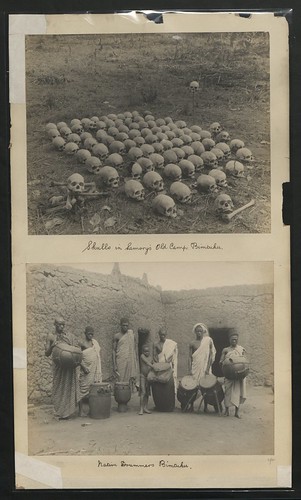


the skull garden at Samory's Old Camp


Mystery, a playlist


A mysterious soundtrack for the old camp. (spotify version) ...

Timing is everything
Observers are worried

See also: White Graves

File under: , , , , , , , , , , , , , , , , , , ,

Writing log. Concept: February 2, 2011; May 5, 2021
Saturday, September 17, 2022

Ritual Tributes

Apropos public grief, herewith a sampling of tributes to Yuri Andropov by African leaders after his death, as reported in Talking Drums magazine (February 20, 1984)...

The public expression of grief can be confounding especially when rituals combine with politics and the performance of power. At such times, perception is all.

The institutions that have staying power in human history are well practised at the spectacle of ritual tributes. The Catholic Church, and as we are currently seeing, the British monarchy, are experts in this realm, putting on a finely-tuned display with the pomp and pageantry of a well oiled machine.

Africans understand well the importance of funeral ceremonies, death being our close companion. Effusive outpourings are to be expected, furrowed brows and florid rhetoric - albeit with a sober countenance, in celebration of the departed. During our lost decades, even the rogues who were busy feeding on the carcasses of our body politic, and who, in the main, weren't the most gifted of wordsmiths, could be counted on to give a felicitous toast and ritual tribute. Solidarity matters and we were treated to the keen expression of shock and sorrow.

Their counterparts of today may be more sensible but are equally eloquent and performative, it goes with the territory. Observe well the statements of condolences - and acts, upon the death of the good Queen Elizabeth II.

The Soviet Union didn't last a century and their leadership transitions were sometimes fraught affairs but the Communist Party well understood the necessity of ritual tributes. Their populace and their clients duly performed. Shock and sorrow was expected, shock and sorrow was delivered.

Tributes to Andropov by African Leaders

Talking Drums, February 20, 1984


News of the death of President Yuri Andropov was received in Africa with shock and sorrow as expressed in the various measures taken by African leaders in memory of the Soviet leader.

In Nigeria a delegation led by the Chief of Staff, Supreme Headquarters, Brigadier Tunde Idiagbon, and including the Chief of Air Staff, Air Vice Marshall Ibrahim Alfa and the Minister of External Affairs, Dr Ibrahim Gambari, were in Moscow to attend the funeral.

Ghana: Three days of national mourning were declared during which Flt-Lt. J.J. Rawlings, Chairman of the Provisional National Defence Council signed the book of condolence at the Soviet Embassy.

Earlier during a visit to Upper Volta, Flt-Lt. Rawlings had sent a message of condolence to the Soviet leadership noting that "the frailty of individual destinies should provide the world with fraternal solidarity that goes beyond ideological inclinations"

Benin: An extraordinary meeting of the Political Bureau of the sole party was convened followed by a declaration of three days national mourning. President Kerekou then sent a message of condolence to the Soviet leadership describing Andropov as "a worthy pursuer of Lenin's works."

Ethiopia: Addis Ababa radio reported Mengistu Haile Mariam's departure for Moscow and announced that flags would be flown at half mast in Ethiopia for three days.

Zimbabwe: Harare radio reported that Prime Minister Robert Mugabe was at the airport to see off President Canaan Banana and the Foreign Minister, Witness Mangwende to Moscow. Two days of national mourning were also declared as a further mark of the solidarity.

Guinea: The Prime Minister, Lansana Beavogui, delivered to the Soviet Ambassador a message of condolence from the people, party and President of Guinea describing Andropov as a man of peace. The Prime Minister was also in Moscow for the funeral.

Liberia: The Liberian leader General Doe sent a message of condolence describing Andropov as a staunch fighter for world peace

Congo: A statement issued by the Party's central committee declared two days of national mourning. President Sassou-Nguesso sent a message of condolence to the Soviet leadership describing the USSR as the rampart of peace, harmony, world co-operation and the progress of humanity."

Mozambique: President Machel was in Moscow to attend the funeral Earlier in his message of condolence to the Soviet leaders broadcast by Maputo Radio, Machel said Andropov had "wisely used his intelligence and serenity at a time when the aggressiveness of imperialism increasingly showed itself as a permanent menace against humanity's liberation."

Angola: Luanda radio reported the signing by President dos Santos of the book of condolence at the Soviet embassy and his description of Andropov as "a statesman and distinguished leader of the CPSU and a staunch fighter for peace, liberty and socialism."

Upper Volta: According to Ouagadougou Radio, there was a message from the Upper Volta leader, Capt. Sankara, saying that the loss of "this illustrious freedom fighter should further strengthen our revolutionary faith and vigilance."

...

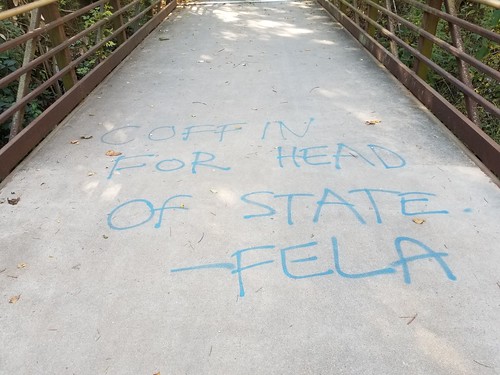
coffin for head of state - fela graffiti contra Trump

(On election day 2020, this was the graffiti we came across on our walk. On the same trail we saw "Trump is the virus" and other unprintables by the same artist. I guess it was cathartic for them).

Soundtrack for this note


An ironic ritual tribute in Afrobeat. ...

I would normally be moved to a poem, the language in the above passage is tempting; the music to be found in the homilies of strongmen and the men in khaki. Also, as a time capsule of cold war perceptions from the south, much could be drawn out. Still, one is conflicted. Circa 1984 the Soviet Union and General Secretary Andropov were not supporting the apartheid regime as Reagan and Thatcher were, indeed they were actively on the side of many African liberation movements. Still it's hard to resist commenting on the expressions of grief from say Comrade Mengistu, who was then Chairman of the Organisation of African Unity (OAU), or the erstwhile Master Sergent (and then Doctor and General) Doe, the blood altogether blinds me.

Bread and circuses are not merely confined to monarchies. But this is a time of worldwide mourning and sober reflection, let's not pursue the thread...

...

Timing is everything
Observers are worried

See also: The Laws of Grief

File under: , , , , , , , , , , , , , , , , , , ,

Writing log: September 16, 2022

Tuesday, August 16, 2022

Interstitial

The little glass fondleslabs
Were not the first to rob us of the interstices
But they were, truth be told,
Leaps and bounds, the most effective

While you waited in line, it was all too tempting
To whip it out of your pocket and, into its warm glow, plunge in
Better, during the commute, to plug in the headphones and listen
To scan the headlines or pursue whatever was the latest distraction

Versatile too, the mobile package, if charged,
Could supply essentially unlimited attractions
But this was not new, a thick broadsheet unfolded carefully
Could divert you to yesterday's news just as easily

But the convenience was the difference,
Oh so unobtrusive and frictionless,
Deployed in a single motion from one's pocket,
One handed operation supported
One click and you were transported

A paradox of modernity, no more idle chat while you wait for the bus
It's enough to make you wonder, what paradise have we lost?
And so I, for one, bemoan the loss of friction
The interstitial is on the brink of extinction

bored teenagers

Interstitial, a playlist


As is my custom, a soundtrack for this note. (spotify version)

See previously
broken-visor

Timing is everything
Observers are worried

This note is part of a series: In a covidious time

File under: , , , , , , , , , , , , , , , ,

Writing log: May 1, 2021

Saturday, June 14, 2014

Deferred Maintenance

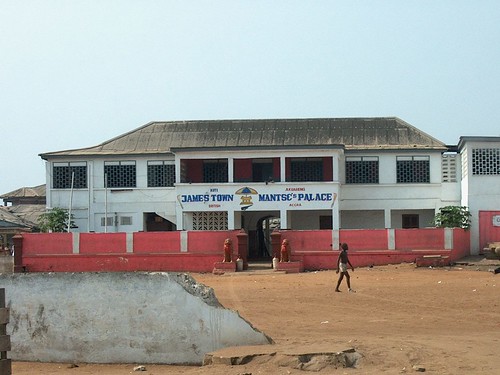
Deferred maintenance is a norm where I come from; we tend to demur on the necessary until we are confronted by the looming or, more frequently, the actual, catastrophe. Indeed, quoth my mother, "if you are seen painting your house, people will stop by and ask if you have a funeral". That's just the way things work. Still I was struck by the following photos which depict the Jamestown Mantse palace in Accra; the first dilapidated in 2001:

Jamestown Mantse Palace 2001


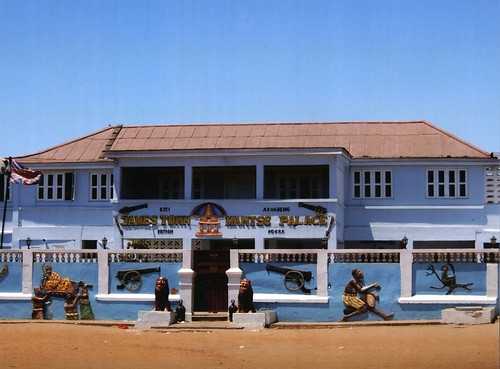
and vaguely restored in 2010 (restored enough that it features on calendars these days).

Jamestown mantse palace 2010


There's a comment to be made about what the former photo says about the institution of chieftaincy among the Ga. One can't imagine the Ashantis ever letting Manhyia Palace fall into similar disrepair but that is by the by...

There is a wider cultural point, I suppose; there are opportunity costs for maintenance, moreover, it is hard work, and unsexy at that. Some cultures simply have norms that emphasize mundane processes and others where the constraints of societal life drive different behaviours. Inertia is an essential part of the dark matter of communities. What interests me most is exactly how a society moves towards cultivating the maintenance ethic.

In the software profession, we often talk about "technical debt", acknowledging its almost inevitable presence as well as the inertial forces that contribute to its growth. Just recently, I was burning the midnight oil and paying for design and architectural decisions postponed for a couple of years. It was painful to deal with, but with hindsight, plainly unavoidable. My sleep-deprived self was conscious enough to bemoan my plight. It takes maturity and discipline to instill this ethic.

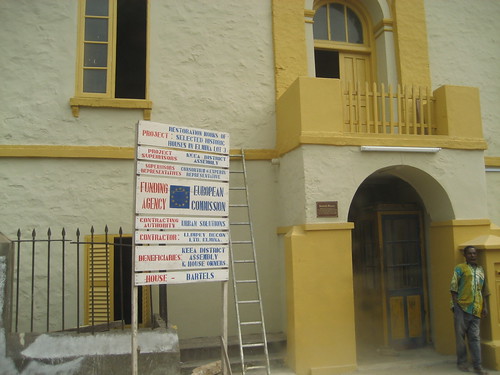
In Ghana, sadly, the escape valve for a surprising amount of deferred maintenance is often that some benevolent foreign entity can be called upon to fund a restoration. One wishes that the impetus was internal. There is certainly plenty of shovel-ready work to be done in development.

restored houses elmina

That said, I see 'normalcy' taking root in many places. Indeed the rise of the insurance industry can be said to be a marker in that respect. Restoration and maintenance does take place (occasionally) and must be celebrated whenever it happens. Welcome signs on the streets of Jamestown and Elmina.

Soundtrack to the note


As usual, a playlist: Restoration

Sidenote: before parenthood intervened, I used to tend to this virtual joint more often, consider this note some throat-clearing, some deferred maintenance on the blogospheric writing front. It's the World Cup season and I am bound to summon up the creative juices as in times past. Some readings from the archives: Ghana vrs USA and some Dilemmas.

File under: , , , , , , , , , ,