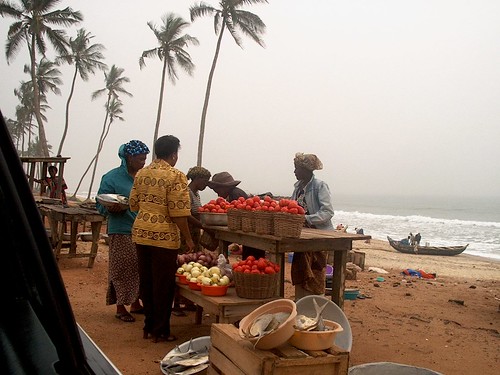
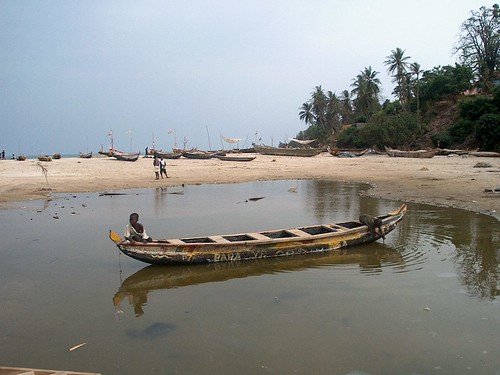
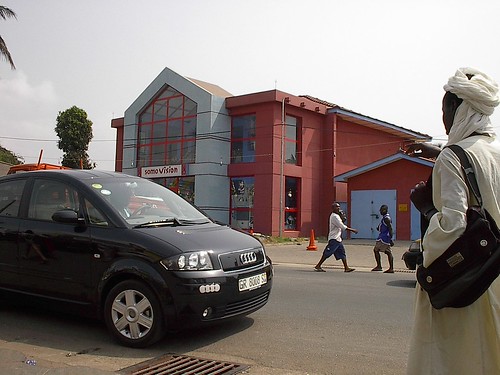
Showing posts with label accra. Show all posts

Monday, March 28, 2016

Broken Record

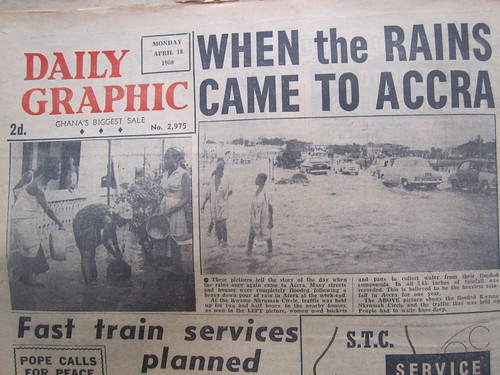
The rainy season is so-named because it comes every year, hence one would expect that the authorities would plan for it, but this was the scene on the front page of the Daily Graphic in 1960 when the rains came to Accra with the resulting floods. The headlines 56 years later will likely be the same even with last year's disaster relatively fresh in our minds.

when the rains came to accra april 18 1960

The satirists have already laid their bets: Accra mayor begins ritual of dusting off his annual 'flood speech' as rains set in. Of course the collateral damage has already been felt this year. One prays this year's death toll will be minimized.

Now I hear you: it's complicated. Flood management is difficult even if you're not in the Third World (and you don't have to go the extreme of mentioning Katrina and Sandy and other extraordinary acts of nature to make the point). Flash floods do happen. And yes, you can't simply throw out all the people who have encroached and built on the areas that are ostensibly meant for drains. You need to find a sustainable solution. Oh sure, after every disaster, the bulldozers appear and the Accra Metropolitan Authority workers along with the police knock down the kiosks and other dwellings that have sprung up upending home and livelihood for the unfortunate. And sometimes it is just a matter of excessive garbage, blocked drains and/or the negligence of those who got the juicy contract to maintain the same. Or... I know, I know: everything is local. And anyway why worry about such things from a remove of 6,479 miles?

My mother has accumulated dozens of newspaper columns on this very topic over her 50 year career. And as evidenced by the 1960 front pages, the headlines were writing themselves long before she started. It's a matter of meteorology (it always rains heavily), geography (Kwame Nkrumah circle was always a flash point; the location of the rivers and lagoons in the city), physics and architecture (the design, placement and configuration of streets, houses, roads and drains), engineering (how well those roads and drains were constructed, whether corners were cut after the no-bid contract was awarded, whether proper materials were used) and ultimately slum politics (the perennial tension between the drainage of the Korle lagoon and the growth of the nearby slums full of voters - whether you call one of those touchpoints Agblobloshie, Old Fadama or Sodom and Gomorrah features into the lens through which one views this intractable issue).

But there is a difference between an act of god and an eminently predictable seasonal occurrence. We'll bemoan the lack of a maintenance culture, pay emergency rates for things that ought to be run-of-the mill repairs. Before and after the fact, everyone "knows" what needs to be done. At what point does damage move from collateral to intended? We cheapen Ghanaian lives and compensate with congratulatory funerals while patting ourselves on the back about our unique culture. I dissent. The refrain I've grown up with is that history should not keep repeating itself. And yet we keep sounding like a broken record when the rains come to Accra.

And for bonus points note the other headline on the 1960 front page: "Fast Train Services Planned". We're still waiting for Godot on that front. It's not as if the plans haven't been there as far as the development of Accra goes. Through each era, under each government, no matter how progressive, incompetent (as currently) or indeed how repressive (as thankfully in our past), the plans have always been there. Sisyphus must have been the patron saint of urban planners in Accra.

Lamentable, a playlist

A lamentable soundtrack for this note(spotify version)

File under: , , , , , , , , , , , , , , , , , ,

Saturday, June 14, 2014

Deferred Maintenance

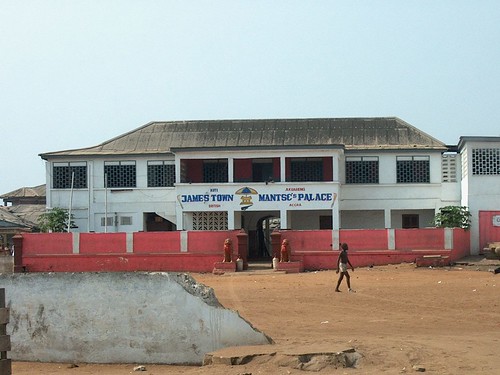
Deferred maintenance is a norm where I come from; we tend to demur on the necessary until we are confronted by the looming or, more frequently, the actual, catastrophe. Indeed, quoth my mother, "if you are seen painting your house, people will stop by and ask if you have a funeral". That's just the way things work. Still I was struck by the following photos which depict the Jamestown Mantse palace in Accra; the first dilapidated in 2001:

Jamestown Mantse Palace 2001


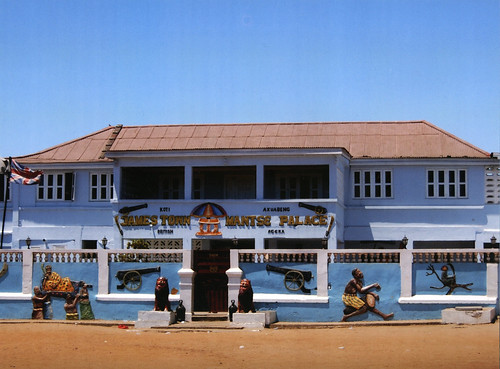
and vaguely restored in 2010 (restored enough that it features on calendars these days).

Jamestown mantse palace 2010


There's a comment to be made about what the former photo says about the institution of chieftaincy among the Ga. One can't imagine the Ashantis ever letting Manhyia Palace fall into similar disrepair but that is by the by...

There is a wider cultural point, I suppose; there are opportunity costs for maintenance, moreover, it is hard work, and unsexy at that. Some cultures simply have norms that emphasize mundane processes and others where the constraints of societal life drive different behaviours. Inertia is an essential part of the dark matter of communities. What interests me most is exactly how a society moves towards cultivating the maintenance ethic.

In the software profession, we often talk about "technical debt", acknowledging its almost inevitable presence as well as the inertial forces that contribute to its growth. Just recently, I was burning the midnight oil and paying for design and architectural decisions postponed for a couple of years. It was painful to deal with, but with hindsight, plainly unavoidable. My sleep-deprived self was conscious enough to bemoan my plight. It takes maturity and discipline to instill this ethic.

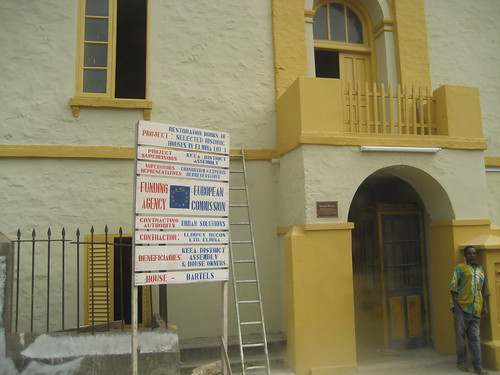
In Ghana, sadly, the escape valve for a surprising amount of deferred maintenance is often that some benevolent foreign entity can be called upon to fund a restoration. One wishes that the impetus was internal. There is certainly plenty of shovel-ready work to be done in development.

restored houses elmina

That said, I see 'normalcy' taking root in many places. Indeed the rise of the insurance industry can be said to be a marker in that respect. Restoration and maintenance does take place (occasionally) and must be celebrated whenever it happens. Welcome signs on the streets of Jamestown and Elmina.

Soundtrack to the note


As usual, a playlist: Restoration

Sidenote: before parenthood intervened, I used to tend to this virtual joint more often, consider this note some throat-clearing, some deferred maintenance on the blogospheric writing front. It's the World Cup season and I am bound to summon up the creative juices as in times past. Some readings from the archives: Ghana vrs USA and some Dilemmas.

File under: , , , , , , , , , ,

Wednesday, December 21, 2011

Road Trip

It was a mere road trip to fetch my grandmother from our family's village in the Volta region for the New Year, yet it ran the gamut of emotions. Some impressionistic travel toli from the archives...

I. Sick


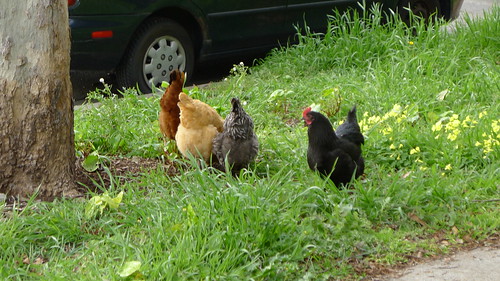
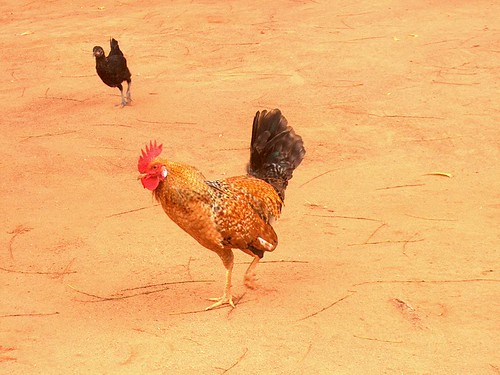
The motorcyclist didn't even try to avoid them - indeed it seemed as if he sped up to reach them. Coming up behind him, and taking furious evasive action, we barely missed adding to the desolating impact. A contest between a Honda motorbike and a hen and her four chicks will always be unequal. A week-old chick, half the size of a tennis ball was the fatal casualty, collateral damage to glib insouciance. The reaction to the death was all too familiar. The hen felt the maternal loss - there was that squealing sound, and the mortified look at the crumpled flesh was a recognizable universal. Yet there was no time to dwell on the damage and she gathered the remainder of her brood to continue crossing the road - presumably she would return later if at all possible, braving the traffic. We all felt sick in the car; we all felt angry. What kind of man enjoys running over a chick? As we overtook him, the wrathful thought crossed my mind, a slight swerve and it would be the same kind of competition between our four-wheel drive and his motorbike, roadkill revenge on this chick murderer on the main street in Anyiwarase. Such are the conflicted musings of a backseat driver... Instead, we mournfully averted our eyes as we passed: they say that, much like revenge, wrath is for the weak. In any case, the next town was coming up.

the chickens of berkeley - call them free range

II. Sour


The mood in the car turned eerily reflective as we drove through the village of D. It took me half a minute to remember that its townsfolk had attempted to murder my uncle in the last elections, which explained the pregnant silence of his brother, who slowly drove the car through its only paved street - he'd had to retrieve him back then, bloodied and all, and the stillness of his 89 year old mother, who is still feeling the wound to this day. Try as I might, and I tried twenty times in a row, no pictures that I took would come out right. It was as if the Gods of Nikon decided to forbid me a photographic record of this hamlet of trauma. Oh well, it would have to live on in my memory, live and not Memorex.

We noted that the electricity that my mother had sought to have delivered to the village had indeed been installed, and that the school now seemed well appointed and equipped and even had a fresh coat of paint. It was their just reward, a shower of love. The village is a religious settlement, home to an evangelical sect; the unkind call them a cult, but surely brands do not matter in Ghana's new Christianity. "Welcome to D. City of God. A holy town", proclaims the sign at the village entrance. "One whose folk do unholy things", I thought to myself...

Nothing was said for a long while in that car; call it group therapy for three generations. A commemoration of a town we must pass whenever we want to see loved ones.

To salve myself, I remembered a lyric, nothing hits your heart like soul music, and contemplated a playlist - the lead track would have to be Portishead's Sour Times. My thoughts then turned to the climax of that Clint Eastwood b-movie, you know, the one in which the avenging gunfighter makes the all-too-fallible members of a town paint it entirely in red as if to commemorate the blood that spilled on the ground. Oh, and in that vein perhaps Gil Scott-Heron's Paint it Black, would fit the bill. And so forth... There was perfect silence until we reached the bridge.

digable planets

III. Sweet


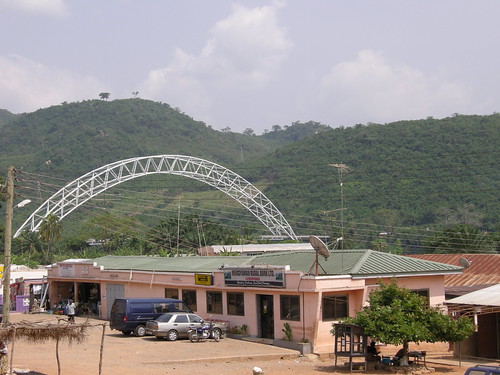
We stopped after we crossed the bridge at Atimpoku. As we slowed, thirty-five or more traders, mostly young girls, scampered in our wake and surrounded the car, arms outstretched, wares on the head, and tongues wagging. Some insistent, some seductive, some combative, the whole, a joyful cacophony.

Atimpoku bridge

They shouted, "Papa-le, Novi, Big Man. Hey. Honey. Over here..." Rolling down the window, I could see and smell the alluring prizes they presented: abolo and the red lobster, shrimp and crayfish - freshly caught and smoked from the river. And the pears of course. Indeed some shoved their wares into the car. Well the bargaining began in earnest. In Africa, a market forms wherever there is slowed traffic; one's car window becomes a temporary shop, the products thrust in your hands for brief evaluation. You have to bargain hard even though the prices are ridiculously low from your dollar-based standpoint. It is expected that even big men will barter; as they say, markets are conversations.

Stopping at the bridge to buy abolo and shrimp was a ritual my uncle and I have always performed. I remember especially vividly the roadtrips the two of us took in the late 80s and early 1990s. Back then, with the poorer roads and cars, we were guaranteed to break down and the food would prove essential as we waited at the roadside for someone to stop and help. As the bundles of food produce were handed over, the thought vaguely crossed the mind that most of these girls should be in school rather than hawking their wares. The warm, breadlike abolo — baked rice flour wrapped in fresh plantain leaves, smelled and tasted as I remembered: at once sour and sweet. And the shrimp! Well... There's a reason we always ate them even during the cholera scares of a decade ago... Ah foolish me, forgive me for thinking that cholera scares were a thing of the past, apparently they're back these days.

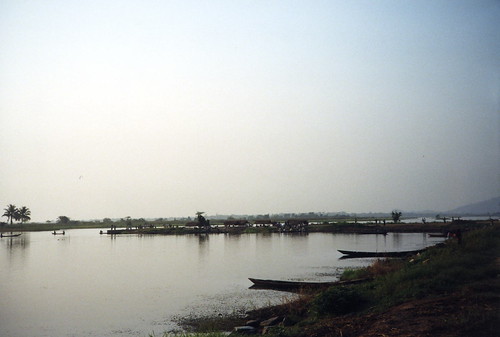
volta river boats

Of course the packaging of the food wares on hand recalled the eternal tension between tradition and modernity. On the one hand, the organic plantain leaves that no one can imagine buying abolo without, and, on the other, the now-ubiquitous plastic bag or cling wrap surrounding the shrimp. Or indeed consider the sachet water industry that the young girls, the kayaye, that ply our streets embody. You can't avoid plastics it seems; the populace has seeming voted with its pocket books for sachet drinking water and the cottage industry it has spawned. We really must challenge ourselves to do better when it comes to packaging of our foods. The market hasn't changed in over a century except perhaps with this non-biodegradable detritus that mark out our modern age.

Newly repaired and resurfaced, the bridge looked better than I'd ever seen it. Deferred maintenance is the usual fare in our lands but some enterprising soul had managed to secure the funds to rehabilitate this bridge, allowing it to escape the lot of the numerous road and construction projects that have simply stalled in the past few years - even as they had been budgeted for. My uncle regaled me with the toli that the drivers of some of the very heavily loaded trucks that we saw parked nearby in the town, which are ostensibly forbidden from using said bridge, were known to lie in wait and pay lucrative bribes to pass during the night. Everyone knows it but no one does anything about it. Plus ça change, a routine story of law and disorder in Ghana.

The mood lifted as I took in the sights, sounds and smells of life around the river Volta. I remembered the great, restful feeling of earlier in the day. There's a reason everyone who visits loves this part of Ghana.

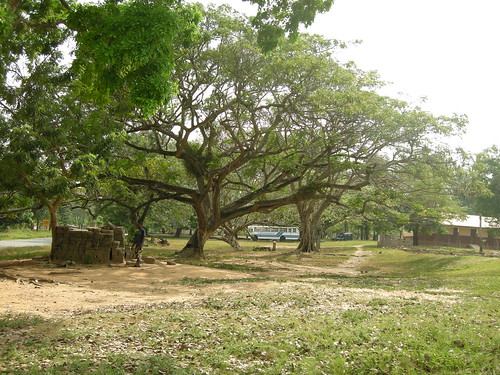
There's a certain freshness of the air once you cross the bridge and officially enter the Volta region. It's not that development has passed the place by but it does feel more unchanged. The nearby Ho hospital after all is testament to state-of-the art living (even if we discount its notorious 150 percent overhead - white elephant election gifts that World Bank directors would prefer you not to bring up in conversation). I recalled the majesty of the trees in our village commons, near the EP church (Evangelical Presbyterian that is). The trees that used to serve as facilities for the primary school all the way until 2002.

tree in village commons

I remembered the sight of my grand aunt standing in line to vote in the day's district assembly elections, proud of doing her civic duty even amidst the shambles - the ballots had only arrived at 2 pm, and only in our village, not in the three surrounding villages. Her early-bird attempt at 9 am had been fruitless but hopefully by now she would have managed to cast her vote. Listening to her complain about the Electoral Commission and disorganization. I reminded her that she was the one who always said that democracy was a process, that we always had to fight for it. "Well it's getting tiring".

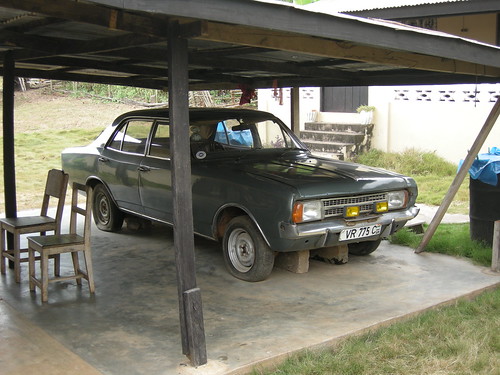
I was minded of the uncanny places you might come across a 1969 Opel, a vintage collector's item that deserves to be in a museum if not on the road.

1969 opel

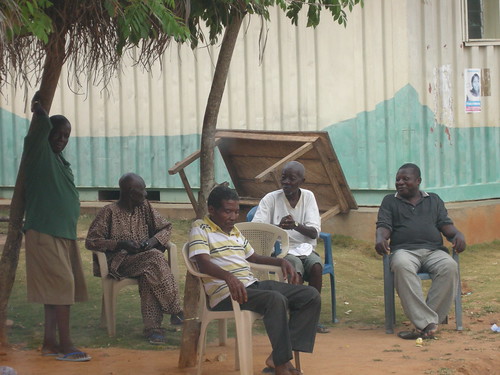
I wondered about the lives of those who decide to retire to Ghana's villages. The old men sitting under the canopies throughout the day. Do they have places to go and people to talk to? Elder care ought to be a growth industry in Ghana, and professionalized too. Those traditional bonds that we have long prided ourselves as differentiators are a thing of the past.

old men sitting in abutia

But it was all about talking to family, young and old, and hearing about the changes we'd been going through.

mother and daughter

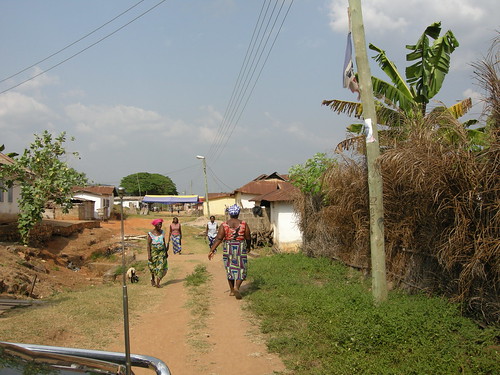
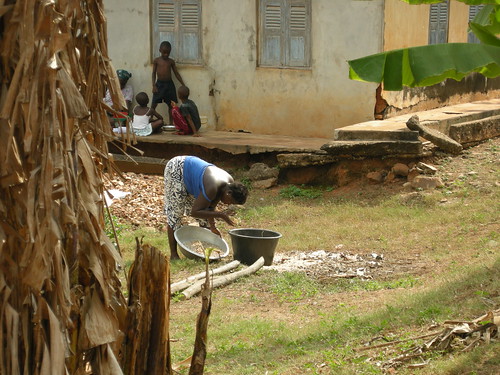
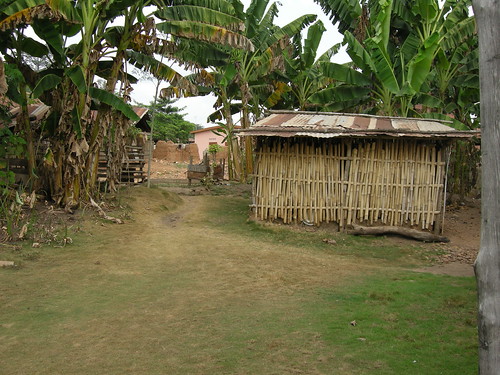
Our village is always restful.

main path abutia

abutia village

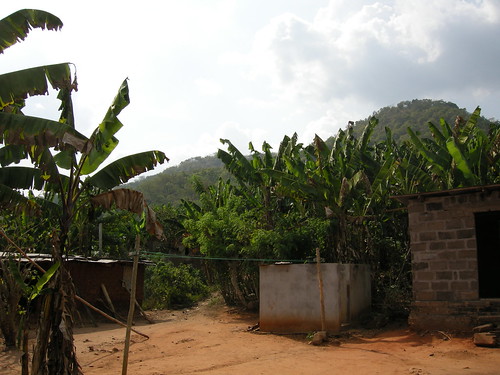
The once dense forest in the Abutia hills is slowly recovering from the depredations of the nearby human settlements.

abutia view hills

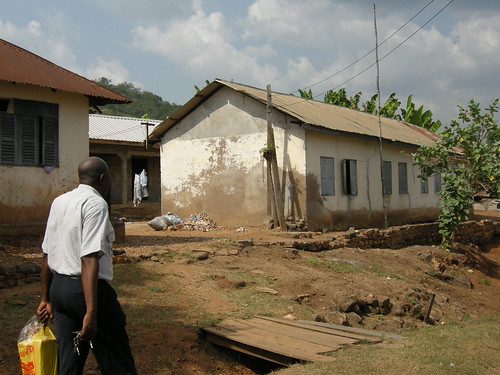
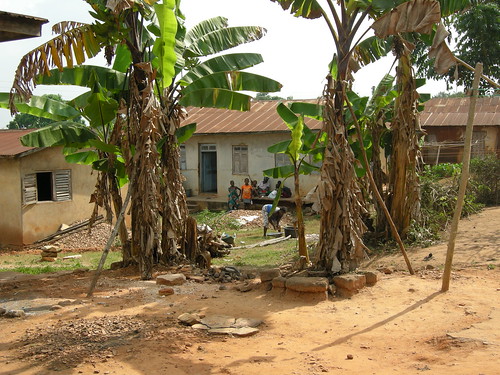
Our houses are mostly unchanged.

abutia house

We work with millet and maize in the same immemorial manner as if a little technology couldn't help.

abutia working with millet

Heading back home we reached the Tetteh-Quarshie roundabout, named after our country's famous scion (he brought cocoa, that other black gold to Ghana). Formerly miles of unused land, and notoriously the dumping ground for some of the laziest of Rawlings's deathsquads in the early eighties (the Affram plains being too far for their cargo of bodies), it has seen development - they now call it an interchange. On its margins still sits the unfinished hotel that the owner of Shangri La started against advice until the marshy soil sank the buildings as if in rebuke. But there are now additions and, well, the sour memories are being eclipsed by the new additions to its environs, the new sweetness of Better Ghana.

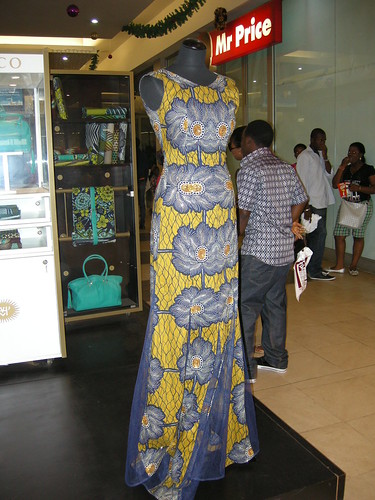
We passed the Accra Mall that, much like Citizen Kofi's, is an attempt to bring an upscale Southern California aesthetic to Ghana. The middle class of a recently declared middle income country deserve their Apple i-shop and finery. Vlisco proudly display their new creations and Woodin had just opened a branch doling out their fabulous fabrics. A store manager would later admit that too many people were window shopping over the holidays. And so we have the mall as a youth hangout, thoroughly normalized in other words. In just a few years, we have developed a mallrat culture worthy of New Jersey. Globalization as the Mosquito Principle.

stunning dress and fabric by Vlisco

We are living multiple realities it seems.

abutia scene

We passed the Villagio sky scrapers under construction that expats are buying sight unseen - rumours of up to a million dollars for the upper floors. The bit about these being all-cash payments makes one wonder about where the money is coming from.

tower construction

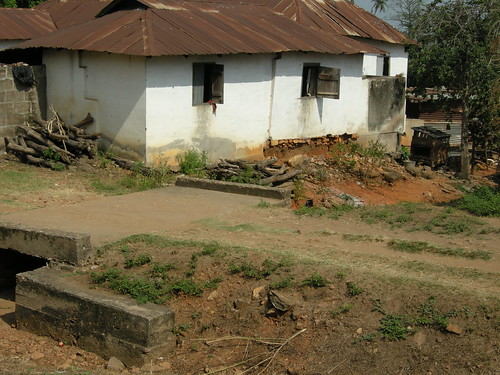
Some things are unchanged, mud huts compete with steelworks.
abutia mud hut

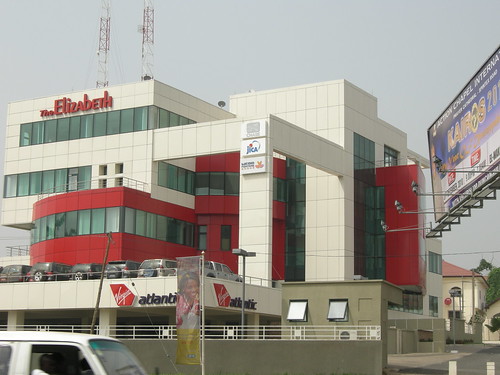
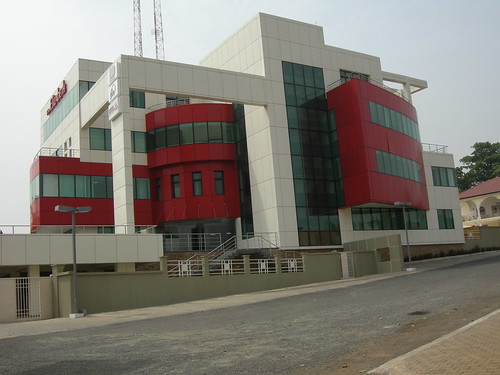
Just a few minutes later we passed the gleaming office building that my cousin's husband designed just a few doors down our street. The quite malicious toli is that it was a monument to Mum, that she was behind it, that it was proof of her millions. It's the name you see, The Elizabeth. If only they could see her bank account and what fleeing your home at your prime into 18 years of exile can do.

the elizabeth designed by esem quartey

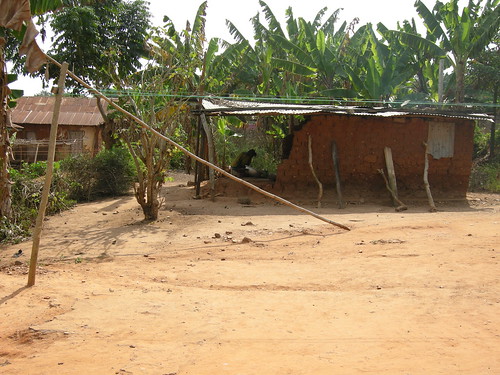
Shacks overlap with shinging glass.

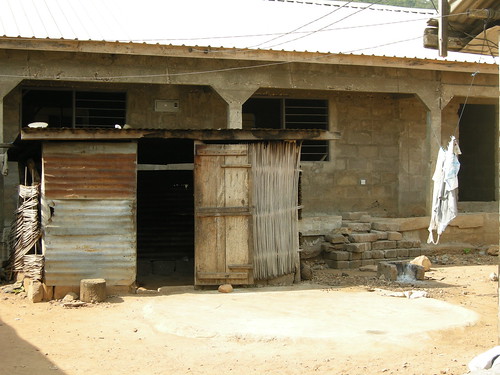
abutia shack

the elizabeth designed by esem quartey 3

Life is sweet in Ghana (for some at least).

abutia shack 2

We came home that's all.

Soundtrack for this Note


A playlist for this road trip as is my custom

File under: , , , , , , , , , , , ,

Tuesday, May 23, 2006

The Books of Nima

A note I've been meaning to write for perhaps 6 months to "Sir Sky", the author of The Sea and the Bells; a conversation about Nima, a neighbourhood of the mind.

Part 9 of the Things Fall Apart series, this time an entry under the banner of Social Living...

I was looking over your shoulder during your year in Ghana, perusing your travelogue that I came across in a case of web serendipity (the Ghana tag at Technorati, in case you're wondering). When I first read you, and learned that you were going to be staying in Nima, I was apprehensive. Yours would not be the typical volunteer or expat experience; you weren't destined to have the servants, the driver and car, or the air-conditioned office. I don't know if you knew what you were getting yourself into, that you'd be going local and doing the slum housing thing and worse. As an Accra boy, albeit transplanted to Cambridge, I know all about the school of hard knocks called Nima. It looms large in the Ghanaian consciousness, even if there are many worse places these days as you know. It's very far from ideal as an introduction to a visitor.
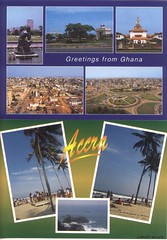
ghana postcards


The fact that you were willing to give of yourself to us was very generous, and I don't know if Ghana fully reciprocated the generosity... The years from 1982 to 1988 broke the back of the Ghanaian people, and ever since, we've been struggling to recover from scarcity and arbitrariness. Thus we demand a lot of outsiders and of anyone who's been abroad. This is changing, and our current quiet stability is restoring our confidence in parts; still, not everyone has read that script, and the neediness can wear you down. For what it's worth, you're not the only one labelled oburoni; my mid-Atlantic self gets that designation every now and then when I'm home.

I was tempted at many stages to jump in: to suggest creature comforts or avenues that would have made things less wrenching for you. But as is the norm on this web, I remained dark matter, absorbing your energy. Still in mitigation of the head nods I omitted to send your way, I think your experience is all the more richer for being yours alone. Like your country's peacekeepers, you are one of Canada's great exports, and after your experience in Ghana, you'll breeze through anything back home.

You lived through countless lights out and experienced the wasted time spent dealing with simple things like water, food and transportation. And of course, there were those untrustworthy and maddeningly inconsistent people... It's the simple fruits of poverty; we lack infrastructure, physical and otherwise.

You had the daily struggle in that library without resources, where you taught the adult literary classes and wrangled to teach those neighbourhood children. The ironies and absurdities about that task are worthy of a novel and hopefully you'll write one.

Osu library was the scene of some of my fondest memories of my childhood. It was well stocked and the librarians cared and worried about you. No one could ever tear me away from it, even at closing time. It was where I learned that books and ideas are important, where the parental challenges were investigated and puzzled over. Those books were a long winding road, to be read with care as their nuggets would reveal themselves, or the inconsistencies of an argument would appear in relief in the reading light. My greatest heartache about Ghana today is that very few children are getting the same opportunity. True, our lingua franca these days might be radio, television or this internet thing, but really, how many Ghanaians are participating in this conversational web? If only I could hear those missing voices... The notion that so few in my country can bury their heads in books on weekday afternoons or on a lazy Saturday morning at the library is cause for much distress. And don't get me started about what's happened to the Legon university bookstore. Must everything be utilitarian? Is a country without whimsy worth worrying about?
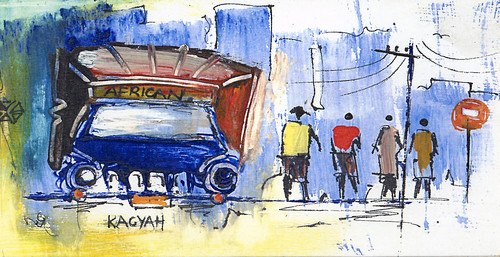
African by Kagyah


I think the emotional violence could have been avoided, and, certainly the physical violence should have been avoided. My heart leaped at such times, but still I kept silent and read on. Nima is such an insular place, it is very wary of outsiders as you probably found. In the past it was where rural migrants came to partake of the Accra dream in the Gold Coast. Thus it has always been messy, and developed in fits and starts as befits the residence of those who live on the fringe.

Even today, two shacks away from the homes of proud middle-class schoolteachers you'll find the "Nima boys", selling 'wee', guns or worse, right under the Kanda highway and close to the police station. The boys can always be counted on to roust any political opposition come election time, and their hard knocks usually come for cheap. True, the stereotypes of Nima boys as uncouth, brash, vicious, and ill-educated are extreme, but they carry a kernel of truth about a small minority that lingers even in the relative prosperity of the moment. Across is a chop bar serving the best banku and fetri in town; Auntie Maggie's spot is packed during the day and there's nice fresh tilapia at night, shantytown chic as it were. Just around the corner is a drinking spot with people playing oware or dominoes and downing bottles of Star beer and Guinness in the early evening. Nowadays there are the occasional interruptions when they'll whip out the latest mobile phone ostentatiously: "talking loud and saying nothing".

But you saw all that and more, you saw how people "disciplined children" and how they meddled in each other's business — or not. As you found out, that "it takes a village to raise a child" business isn't happening much in the slums of Nima; too often it is the garden-variety anomie and indifference of urban life, something that wouldn't be out of place in any big city. I saw the same mix in Soweto a decade ago, although that was more upscale at the time, and well, Inman Square is what it is. It is true that given a few decades of development, Nima could become the Catford of Accra, and, believe it or not, it is much better today than it was in the sixties and seventies, but perhaps that progress is cold comfort for the struggles you faced.

I dug your observations on the press and on street life of Accra. Your look at the street cleaning exercises that took place earlier in the year was priceless. In the year 2006, they're finally worried about rubbish and overflowing gutters! And only for two weekends. Ah yes, that culture of maintenance that was so evident in your encounters with us. Perhaps you too have the journalistic impulse. And that water shortage in certain parts of town, Accra is straining at the seams; I was in Ghana at the time and noted as much, although we had water in our neighbourhood. You picked up on our tro-tro wisdom, our folktales, and the languid way in which we view the world. You even taught me that proverb from Northern Ghana:
"Trust God implicitly but always tie your camel up at night."
I don't know if that's where Ronald Reagan got his "trust but verify" shtick, but it's close. Still, Kweku Ananse's cunning and laziness can be a curse; living by your wits, hustling in short, is no substitute for the prosaic work of development, although it can be quite enjoyable.

I suspect that a lot of Ghana has rubbed off on you; we can be quite infectious (and not just in matters of public health). Do be careful that you don't break out into pidgin when you're back home interviewing for a job; our deconstruction of the English language has its own musical logic, and not everyone is ready for it.
Take care-oh.
And you saw the other side too, the havens of those expats who saw Ghana as a holiday, who kept to themselves and didn't engage with the country and its people. Hell they might as well have been living in Eden; your garden was good old Nima. Well at least you got to know us intimately; that has to count for something. We claim you as our soul sister, and will keep your heart hostage in our town.

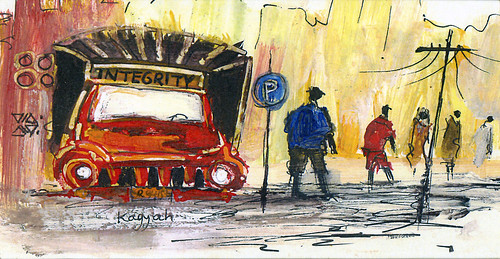
Integrity by Kagyah


You even reported on the beginnings of the cholera outbreak that I encountered last Christmas. When my father began to warn me about taking precautions if I decided to eat out in town, I nodded my head knowingly; for a time you were my favourite Ghanaian newspaper.

And of course there were those malarial episodes, the fevers, the Larium dreams and those hallucinations. How much energy was dissipated in those sweaty nights and days? Those mosquitos, and their cargo of plasmodium falciparum; they are a poverty tax. We may throw our herbal medicine and "bitters" at them, but that is after the fact, to deal with the symptoms. The full panoply of mosquito nets, sprays and lotions counts for nought if you don't deal with sewers and the ever-present pools of stagnant water, or if parents will use their children's nets. And we all know about drug resistance: Darwin's evolution is intelligent design. Still, as they say, mosquitos don't discriminate. Not in Ghana, not on the island of Reunion, and certainly not in Cambridge. We're all singing the West Nile Blues these days. Some call it globalization; I know it as the Mosquito Principle.

You may only have lived in Nima for a while but you got the full Ghanaian experience, unvarnished and cacophonous; three centuries taking place simultaneously in those twisted back alleys. I'll admit to a sense of wistfulness in seeing my country anew through your eyes, and I want to hear more of your thoughts going forward as you carry Ghana in you. I hope we don't weigh too heavily on you. I wish I had been there on the ground; it's hard to be living vicariously through a Canadian woman.

As you'd expect, it's very painful for me as a proud Ghanaian that, almost 50 years after independence, we are still relying, nay depending on you, to teach us how to read, or even to school us about the importance of a book. To read, for God's sake. Hundreds of years after our chiefs started sending their children to Europe to learn these things and we haven't internalized the lessons... But then it works in the other direction, the West relies on people like me to make sense of its world - the technology world in my case. And your southern neighbour, that United States of Anomie, can be a similar school of hard knocks, and not just for lowly immigrants; you don't need to visit New Orleans to get the daily evidence. Still, I wish the cultural interplay was more balanced, that we could each walk tall, rather than smile sheepishly as we do and say, "Only in Ghana" or "That's how it is in Ghana". As if we can't do anything about it. As if it doesn't have to be this way.

You quoted Anthony Hopkins playing C.S. Lewis in Shadowlands:
"Experience is a brutal teacher. But you learn. My God, you learn."
I'll suggest in response, our poet Kwesi Brew's book, African Panorama, and I'll quote one of his elegiac poems. You should recognize the subject matter.

The Slums of Nima


Three neighbours met,
And after a hurried, "I give you rest"
The two young men stood aside for the old man
to pass and then picked their way
in the opposite direction towards the alley on the left.
They were thieves who robbed with violence
But still they stood aside for the old man
And he thanked them.

In a bereaved world questions and comments
Fall on unhearing ears.
Only silence, understanding and
Belonging can put
A blind man's stick in the hands
Of a searcher in that night.

The crumbling walls have leaned
On their chests for decades!
The toll of breathing has shredded
Their lungs, and their eyes are sore
With the smoke of the wicker lamps.
And now we all stand at the edge
Of an abyss
Afraid to plunge headlong, or
Return to the dark of the night with them!
kwesi brew


Ghanaians are natural storytellers. We are cultural interpreters and urban griots; not for us Anglo-Saxon brevity. Even as we consider Kwesi Brew's abyss, or that heart of darkness, you'll hear the musical laughs and see our urge to understand. We want to change the perspective and open things up through observation and humour. As he wrote in another poem, and I won't give the punchline away, things must be sweet for Ghanaians:
How else could they laugh
Like they do when they should weep;
Remembering the voiceless days of the past.
It is quite poetic that you arranged for your class to travel outside Accra - to the beach no less, and even managed to get them that helicopter ride over the city. We are all so caught up in our black boxes, strangers in our own country. It is eye-opening to glimpse those different perspectives, and you too were being a cultural interpreter, making people see themselves anew. It was a small victory in your ongoing journey.

I really hope you don't take your journal down as you threatened recently. The pearls of experience therein are too rich to be simply discarded in the dustbin of the lost web. Allow Google to stumble over your throwaway experiments - they provide comfort even for an audience of one. I dug a lot of the writing (without a doubt, you're on the road to many books). The sound of a voice trying to make sense of an unfamiliar, frustrating yet endearing environment, the large and the small observations, all these things make for a historical document done in best tradition of the web style. The Sea and the Bells, at least that year's version, is a great snapshot of Ghana in the years 2005-2006, a personal introduction to be sure, but it constitutes a compendium of small things to be duly celebrated.

As you might guess, my preferred response to Things Fall Apart is small things: short cuts and bite-sized conversations that engage in the marketplace of ideas. I know you only as "Sir Sky" and the conversation has been one-sided until now. Consider this my opening gambit, my "so what's your name?" approach. I hope you like my brand of small talk; it's known as toli.

Dig: I'm sending some books to the Osu library. I hope it's still there and that someone will receive them. I can only hope that people are still reading. I've been carrying them all these years but never did anything about them; they make a glorious floorscraper. They'll be delivered in your name, and inscribed with the word Nima.

A belated head nod to you.

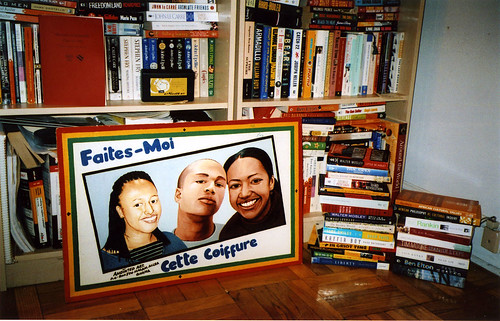
barbershop portrait and books


Next: Dilemmas.

See also: Poetry as Cultural Memory

File under: , , , , , , , , , , , , , , , , , , , , , , , , , , , ,

Wednesday, April 27, 2005

Koforidua Fever (or Naki does Ghana)

I wrote the Strange Bedfellows and the Journalistic Impulse piece in a 4 hour fevered trance prompted by an offhand remark at the end of a phone call with my dad. The act of putting those thoughts together was cathartic but when I looked at the posted result I thought that it was too much, too heartfelt, too confessional and perhaps too bitter. Thus I turned to photos to dampen the impact of words that shouldn't have to be written and to show that life went on.

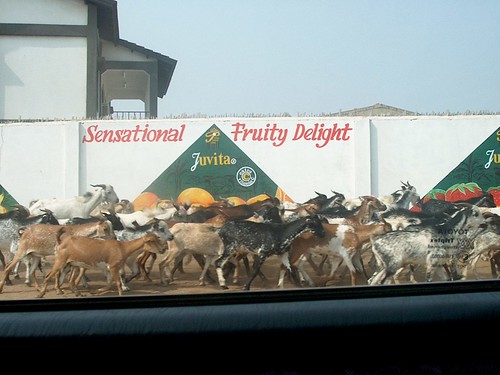
Sensational Fruity Delights


Since I've started to use Flickr as my online photo service of choice (as I previously recounted and despite its issues with the brown skin that India Arie sings of), friends asked why I hadn't simply tagged the photos that I considered using. Duh! Use the tools! All that folksonomic goodness you evangelize...

Thus I give you the Strange Bedfellows photo essay - the subtitle is:
This Be Ghana. This Be Koranteng.

I didn't take all of the photos that you'll see in the album and therein lies another story.

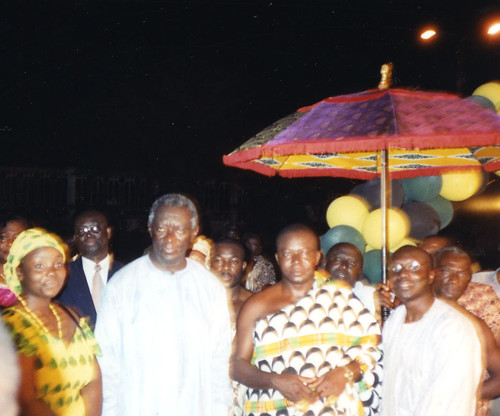
madam-president-asantehene


Back in Christmas 2001, many of my cousins and I made a trip to Ghana. In our own way, we had been taking baby steps to make our way back home, in my case through annual Christmas excursions starting in 1998. Various things had come into place, an election in 2000 had removed the Rawlings Chain from our neck after 18 years and, after a year of democracy and sanity, it looked like coups might be a thing of the past.

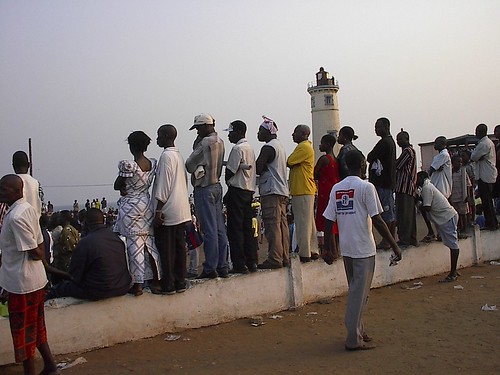
rally


Also our parents had made their way back home whether to retire or to get their feet wet in the new Ghana (some were still in transit but their intentions were clear). This must have been the kind of impulse that many Ghanaians felt right around Independence in 1957. I know my father quickly left the Kofi Annan-types at the UN soon after independence came to Ghana. We in turn were old enough to process things and rediscover our country anew in a considered way. Thus it was a great homecoming and I believe the photos tell the tale.

me cousins presidential gardens


After a few days however, I came down with a case of Koforidua Fever which is a local variant of Dengue Fever. It was excruciating pain, memorable and spine-jarring fevers and chills for the next ten days. Thus I was bed-bound and had to live vicariously through the phone calls from my cousins who were clearly having a ball.

At the summer hut in Aburi


My dear cousin, Naki (or as we call her of late: Just Naki) picked up the piece and preserved the photographic record for all of us.

Arrival in Jamestown


She had been in exile for 15 years (this was her first time home - again nothing out of the ordinary for us mid-Atlantic types). Her parents and whole family could have made great submissions to the National Reconciliation Commission about the traumatic upheaval that had occurred in their lives. That is if they didn't happen to be stoic types "descended from a long line of fishermen" who just got on with things. She must have taken 1,000 photos during the trip as her act of catharsis.

horns blowing for President for life


She's an architect

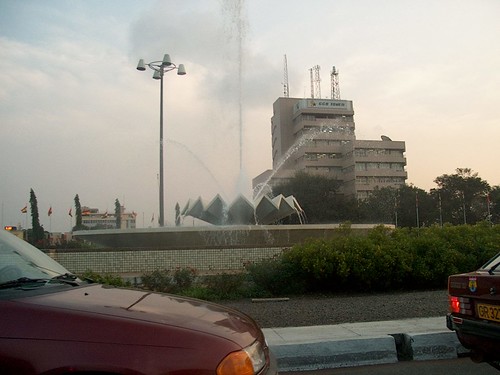
fountain splash at Circle


and interior designer

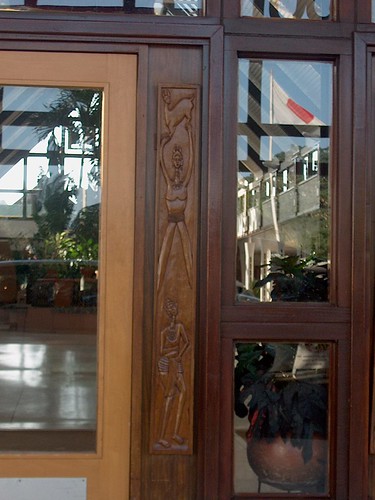
reflection


thus her visual acumen

electricity bypasses huts


is far sharper than anything I'll achieve.

Frankies in Osu


My own myopia is pervasive in actuality and in the metaphorical sense...

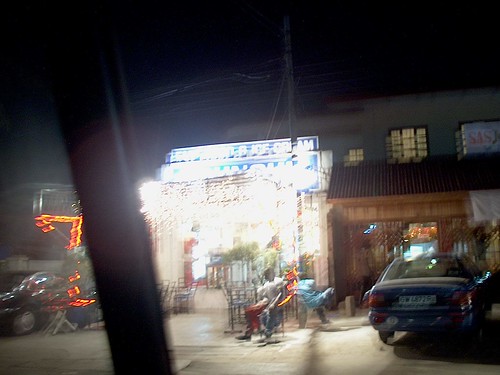
Osu at night


She edited some of the photos into a series of 4 presentations that she gave to her architecture firm in Boston when she returned. Of course it took me fully 3 years to actually look at them and recognize their importance but that's how these things go.

Together the presentations constitute one of the best visual introductions to Ghana I've seen.

There are some limitations in that, given her profession, she tends to be more interested in buildings than in people.

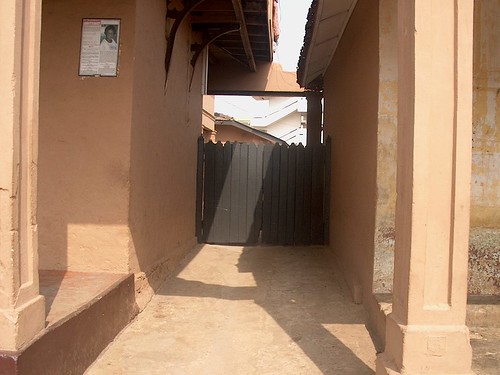
The old ones (the buildings that is)

Jamestown buildings


Their nooks and crannies

Jamestown


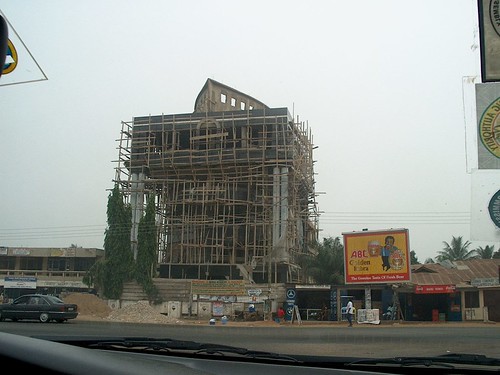
The follies under construction (ship buildings?)

Peace FM ship building - Abeka Junction


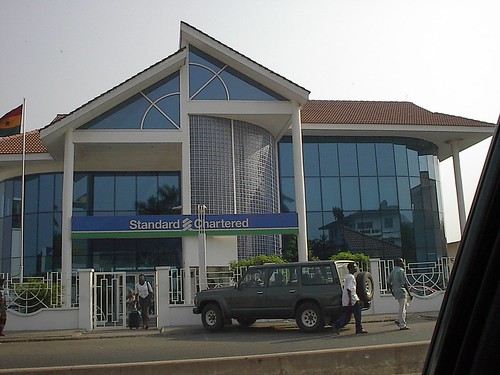
The commercial ones

bank


The cool ones

Sati house


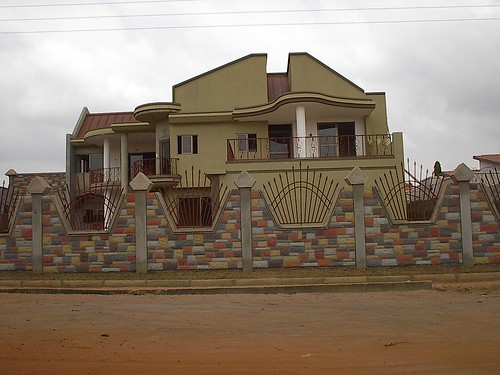
And of course, the obscene ones (the East Legon mansions that a combination of drug money and Strange Bedfellows made possible)

The Lion House in East Legon


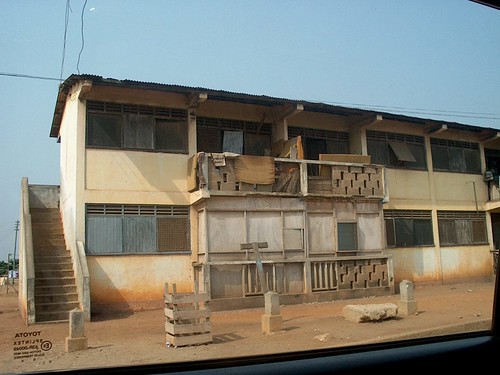
Also a fair number of photos were taken from cars

Jamestown rally


and are "outside-in"

traffic


rather than springing from the ground up as it were

local


But that's what 15 years of forced exile will do to your perspective.

Chop bar


For a great example of photos from the trenches in Ghana see Asibi Adormah's current work especially those in her native Bolgatanga in Northern Ghana.

However as a creative type, Naki picks up far more 'local' flavour than I do

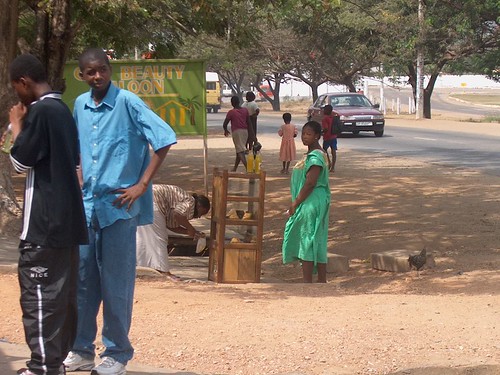
streets of Accra


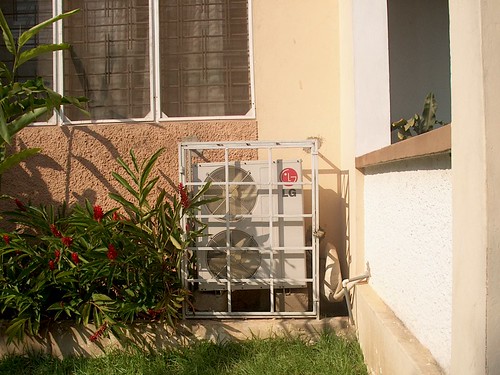
Pointing out the essentials (e.g. the pervasive air conditioners that need cages to prevent thieves from swiping their cooling hum or the solar-powered street lights that are being tried out these days)

Essential caged air conditionners


And with the kind of wit

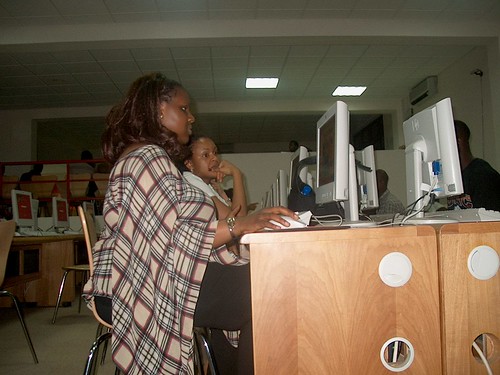
ekene and anuli check email


and wonder

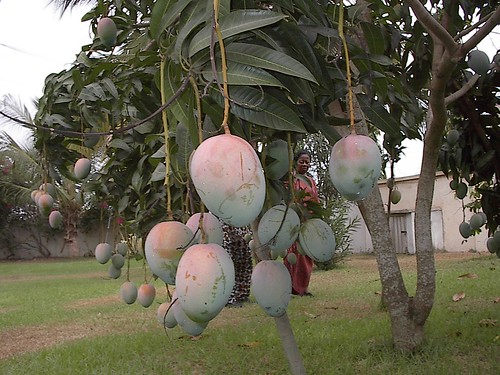
Mangoes in Auntie Akwele Garden


that I admit I freely plunder

Things come home to roost


time and again

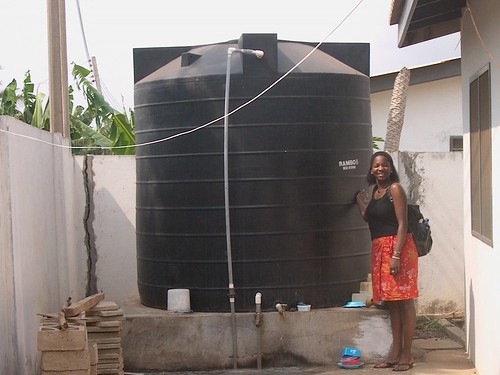
Water tanker blues


for journalistic effect.

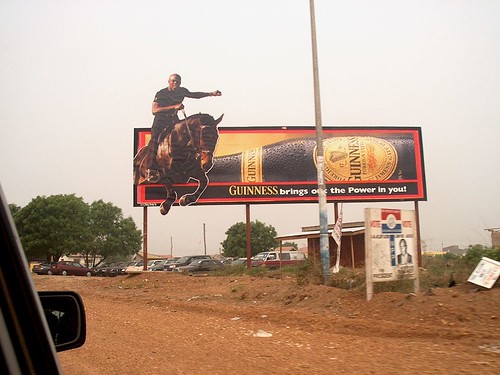
Guiness cowboy Africa style


I hope you enjoy them

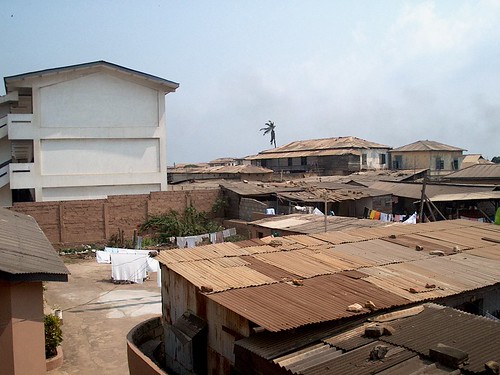
Tin and asbestos rooftops of Jamestown


As much

Akwele driving a hard bargain


as I do

canoe


This Be Ghana. This Be Koranteng


The 4 presentations that she created amount to 106 MB which goes far beyond the meagre storage and bandwidth limits that Comcast provides. They are really worthwhile to see because they have gone through her inimitable filter and are full of delightful juxtapositions; she is in the grip of the Editorial Impulse.

Update: the presentations can be found on most days on any Gnutella-based file sharing network. I use Gnucleus as my client of choice. You can also download them from the Internet Archive (I managed to upload them via ourmedia.org). Details:
  • Ghana1.ppt (29.5MB) - the visual introduction to Ghana
  • ghana2.ppt (12.9MB) beaches (White Sands) and Legon, the University of Ghana
  • ghana3legon.ppt (36.4 MB) - the houses of East Legon, Accra
  • ghana4aburi.ppt (27.4 MB) - up in the "mountains" (or rather the hills) of Aburi
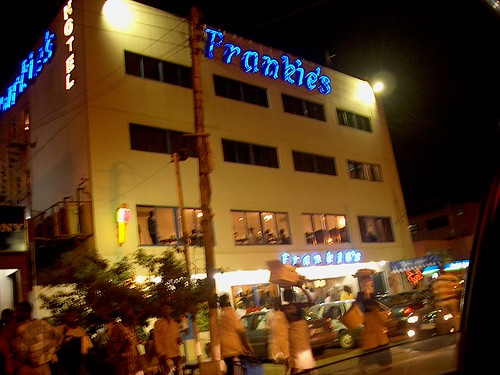

Osu RA


I still haven't been able to figure out how to seed them to a Bittorrent stream (perhaps I'll need to tweak the port-forwarding settings of my Linksys box and the ZoneAlarm firewall - arrgh NATs and the breaking of Internet Transparency and the end-to-end principle!).If anyone can give pointers to a host or instructions to help me share them via Bittorrent running through a Zonealarm firewall on Windows XP and a Linksys box, I would be greatly indebted. I'm in a giving mood these days and want to share my joy...

File under: , , , , , , , , , , , , , , , ,