Saturday, May 02, 2020

Uncle Mike

A man in full, in 10 movements...

I. Funeral Minded


Islington crematorium
Webcast, funeral-minded

Brave daughter
Minor speeches

Quarrelsome Uncle
Fond arguments

Fugitive memories
In loco parentis

Distant grief
Transatlantic sorrow

The pastor's gloves
The absence of hugs

Murmurs of mourners
Social distancing

Brutal efficiency
Death. Finality.
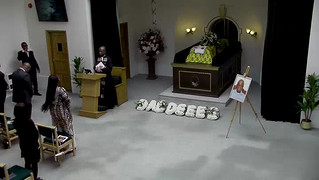
Mike Adjei funeral

II. The Shape of an Argument


He relished an argument, for better or worse. He loved the reality of a quarrel. It could be infuriating, and wearying for sure, to become embroiled in one of his affairs. More often however, it was fun. You'd notice the twinkle in his eye as he launched into things, you got to learn the shape of an argument. Oh the quarrels, Uncle Mike. We still shake our heads.

His method wasn't didactic and it certainly wasn't socratic. He got down in the trenches, he would fight dirty when he argued. He'd bring in humour and all the considerable charm, or alternately, the gravitas, that he could muster even while marshalling the most esoteric theories. It was an equal opportunity free-for-all with him. The youngest of children, and adults alike, were targets and compères in these arguments, and that was the liberating aspect. We'd argue about everything, in broad outline, and in minute details. And with panache. Our poet, Kwesi Brew, might well have had Uncle Mike in mind with his line about whether to "engage the scarlet fury of battle". My Avu knew all about Ghana's Philosopy of Survival.

He made you articulate, clarify, and revisit your point. And when he realized that he was on the losing side of an argument, which was all too often, he'd switch, and pretend he'd been playing devil's advocate all along. Of course, this tic was a ruse, he was merely biding his time while thinking of a better riposte. As you finally let your guard down, he would pounce. Cue the twinkle in the eye, the arched eyebrows, the raised voice, and those phrases: "Obviously... You know as well as I do... That's a foolish argument... Foolish...". Yes, foolish.

We'd move from room to room during all this, or sit outside in the garden under the frangipani tree or next to the indestructible yellow Fiat. The obligatory beer would be in hand, the belly laughs would erupt as daily absurdities were explored - and Ghana in the 1970s was a petri dish of all manner of absurdities. He had strong opinions for sure, but, crucially, he wanted to hear yours - if only to dismiss them heartily. This was where the love of strange bedfellows and the journalistic impulse was cultivated. This was where I learned about toli, about 'filler', about seeking the story behind the story. He would indulge our exploration of the issues, in sports, politics, economics, and all manner of small things and kindred subjects. It was infectious, and I was happy to be infected by this searching compulsion.

And yes, he was a Larteh man, through and through. Uncle Mike was a man of big appetites; fufu and abenkwan and riotous conversation were his primary vices. Being an uncle in Akan society confers more obligations even than being a father, and he took these things seriously. Any number of children all over Accra and Larteh were his charges, to be supported and nurtured - sometimes (and we complained bitterly at those times) to the detriment of his own brood - the complaints were brushed aside dismissively ("Foolish"). A generous spirit, he made sure, after the intense daily conversations had run their course, to sponsor all the neighbourhood children to walk down to Auntie Becky's at Labone junction for kelewele and peanuts. His was an open house in every way.

The hedge that separated our houses on Soula Loop might as well have been blades of grass.
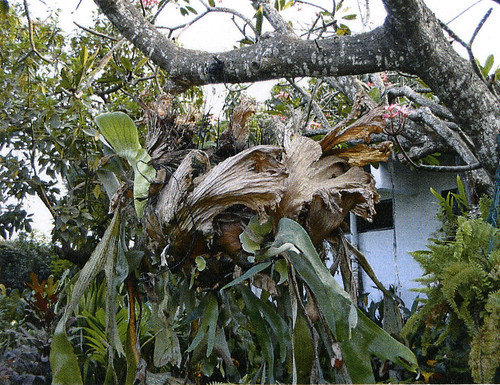
goody-garden

III. A Heavy Coat


Uncle Mike was the last person I saw at the airport the night we fled Ghana, mere weeks after the coup in 1982. His was the last friendly face to sear my memory of Ghana for the next decade. Earlier that night, he had handed me the winter coat, a man's coat, that I would wear over my school uniform. He succinctly explained things to me - Mum and I were leaving, he had to count on me, that Mum depended on me. And before I set out in advance to the airport with Uncle Emma, he indulged my last meal: Cerelac - a detail he never let me live down even decades later. Later that night, he drove Mum in that seasoned Fiat through all those checkpoints on the normally short journey from Labone to Kotoka, leaving at the very last minute, and carrying very little. The cover story, after all, was that we were simply attending that three day conference in Holland as previously arranged. He shepherded her through the airport, brazening the revolutionary inquisitions with all his hearty charisma. His sharp look silenced me when I saw the two of them haggling at the desk just outside the duty free shop, and I resisted the urge to run up to her. He was my comfort suite in that still moment, then and as ever.

The heavy coat would come in handy in Amsterdam when we arrived the next morning, and in the years to come (I wore it long into my teenage years). My 9 year old self was swamped by it in the cold of Schiphol airport for those long hours when we paced the walkways of the airport, waiting for the next development. Who did we know in this town? No one was expecting us despite our bravado. Would we be wards of the UN or Amnesty International? Should we request asylum? Would we be sent back? We had packed light, and had left with nothing (in any case, any foreign exchange would have been seized on our way out - revolutionary saboteurs you see). Our new lives beckoned full of uncertainty. The heavy coat was my blanket of soul.

In later times, I would learn how dicey things had been and the full peril of those days and of that night, that it could all have unraveled if any one thing had happened differently. The few photos I have of my childhood are those Gee and Uncle Mike managed to salvage from our house before the soldiers arrived and did their thing. Uncle Mike would recall how, years after our departure, he had met that selfsame lady who had tried to prevent us from leaving Ghana that night at that desk, in exile herself in cold London. "Revolutions have a tendancy to eat their own" was his comment to her. Indeed. A typically astute Uncle Mike bon mot.

My last memories of Ghana: first the handshake, and whispered encouragment delivered with a reassuring smile, a bear hug and the strength of his embrace. I had the coat on, even in the harmattan heat, as I walked onto the plane.

The dictionary definition of avuncular ("suggestive of an uncle, especially in kindliness or geniality") seemed written for my Uncle Mike. Avunculus was the nickname. Avu for short.
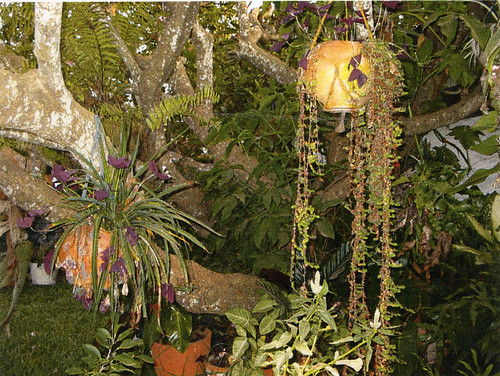
goody-garden-2

IV. A Stinging Pen


Uncle Mike liked his satire savage. In print, his biting words left a lasting sting. Friends were not exempt. Cameron Duodu would forever recall that column and that metaphor. Unearned for sure, especially as you read the details of the charge, but memorable nevertheless. The same could be said of countless others targeted by Yeli-Yeli's columns.

He was a journalist by training and inclination, one of the first graduates of the school of journalism at Legon. His avocation was to the crafting of bracing words, and he obliged at the Daily Graphic and elsewhere throughout his career. But he would branch out later from journalism into communication and public relations. He understood the power of words and was fearless in noting their implications. Hypocrites were always unmanned by Uncle Mike's forensic examinations.

There is a thin line between the fractious and the satirical. Both outlooks stem from a fundamental unhappiness with the state of the world. And it is a hard path to navigate, If Uncle Mike could always call on his innate joie de vivre as his font of optimism, he remained unhappy about the state of Ghana, of Africa and of his people. No matter the situation, like my mother, he was a firm believer in the necessity of permanent outrage.

I have a theory about the many Africans who have had to deal with being political prisoners over the years. Not everyone will come out the way Nelson Mandela did, serene and resolute. Many are broken for sure, the humbling of confinement exacts a heavy toll on one's faith and fortitude. The majority are equanimous I suppose. But many also come out having inherited a wilful streak from their captors. They never look back, and their convictions, or indeed their decisions, will not be challenged come what may (think Mugabe, think Nkrumah in the Ghanaian context). Uncle Mike landed towards the latter end of the spectrum after his experience. And it's worth explaining...
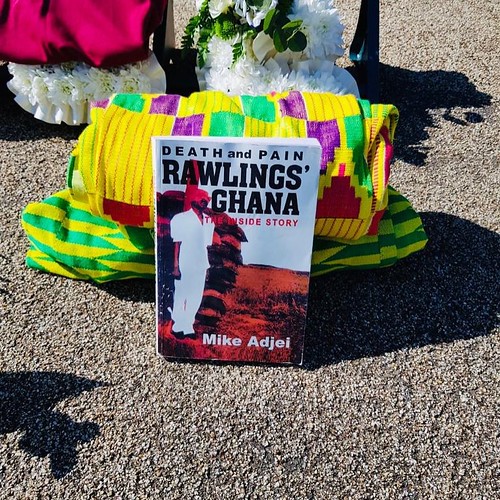
death and pain in rawlings ghana by mike adjei

Death and Pain: Rawlings's Ghana was the name of the book he ultimately published, his memoirs of those years. You could quibble with some of the details, hell Uncle Mike would encourage your arguments, and he wrote it in a typically discursive, sometimes gossipy, and always polemic manner. But, well, like with everything he wrote, the kernel of truth is there, the facts will not be denied. And, like the book's title, the facts and the words sting, and linger in the mind.

There was that mild column that he wrote. It did contain a milquetoast critique of the Flight Lieutenant and his regime. Trigger happy men, they did regularly summon journalists to The Castle for not being complaisant. Uncle Mike's body did bear blunt witness to their pettiness. The soldiers did come for him at the house. Multiple times. They did come with heavy boots and knocked down doors searching for him. He was savagely beaten at Gondar Barracks. The soldiers did bundle him up to Nsawam prison. He did spend almost a year in detention without charge. He did witness all manner of pathologies of those strong men in military garb.

He would recount his reception with the grim faced souls he met at the camps. "Talk true!", they would shout before welcoming him with dirty slaps and worse. The mock, and the real, executions did leave their scars. My cousins and aunt were indeed terrorized, nay traumatized, for all those years. Uncle Mike did have to flee into exile after his release, first to Nigeria and then, at length, to the United Kingdom for fear that the worst threats to his person would be realized. The occupants of The Castle did order and sanction wanton brutality, and let's be frank, murder was their close companion in their so-called revolution. And they did write amnesty provisions into our constitution to immunize themselves after all.

There is truth, and there is reconciliation for sure, but I have no patience with those who acquiesce with their now decades-long rehabilitiation campaign. Forgive my visceral reaction, it's the blood you see, I have no immunity.

They, the names are familiar to Ghanaians, the Rawlingses, the Tsikatas, the Botchweys, had all been in our North Labone houses, drinking the same Star and Club beer, and arguing with everyone else under that same frangipani tree. No one was happy with the state of Ghana in the 1970s. They had babysat us children, and we had babysat their own children, our playmates in those lazy streets. The Flight Lieutenant liked to take the more intrepid of us horse riding. If Uncle Jerry (or was it Uncle Kojo?) was displeased at something Uncle Mike had written, and had decided to teach him a brutal lesson for those unkind words, why did no one intervene? For that year, when Gee would make the rounds, braving curfews, to The Castle and the now-fortified houses that our former friends, uncles (and aunts) lived in, to plead for news of the whereabouts of her husband, for the return of their erstwhile friend, why did they not intervene?

It doesn't bear answering. The best that can be said is that, perhaps they thought they did their part and they prevented his death. The worst, a combination of cowardice at unchecked wrath, and casual cruelty, is that they approved. The blood had simply gone to their heads. They had conquered a country, after all, and they liked sitting on the throne. All was permitted and all was done, to their eternal discredit. The question is unanswered.

I turn again to the poet

The nature of the human heart wreaks its mischief
Upon close neighbours each smoldering with his own craving.
From unfulfilled desires burst forth consuming anger

Uncle Mike left you in no doubt where he stood, and who he was rooting for. He survived all this revolutionary justice and more. And it is in this spirit, and in his stead, that I offer the next movement.

aburi-plot-view-4

V. The Wages of Thermidor


I did not have to wait
For the distance of history in order to pronounce judgement.

For theirs is a legacy of bloodstains and unnecessary suffering.
And it was scarred on our stunted bodies in real time.
The jagged marks of their chains endure.

Venality without compromise,
Wrath without provocation,
And vitriol as compensatory cover.

Neither do they deserve the nuance they denied others
In their unseemly haste to spill blood on the earth.

We noted at the time their pecuniary motives
Those strutting peacocks in khaki uniforms
Extorting bribes as they went, in exchange for curfew passes
Score settling amidst an orgy of common thievery

The rhetoric of grievance
Couched in class resentment
But masked as the moral midgetry of thin-skinned men.

I had a dream
Of tyrants destroyed
With all available indignities.
And when the voiceless sphinx awoke
It was to an unvarnished vision
And an unbidden gift:
The welcome irrelevance
Of that baleful cohort
Their evanescent stature
A fugitive reality
And all this happened
Almost imperceptibly
Their dreadnought weight lifted
For such are the wages of Thermidor

talking drums 1985-03-11 rawlings brutalities at Gondar Barracks

VI. Avunculus, a playlist


A musical interlude, a break for beer or something...

Quoth the soul singer

Some people got that (je ne sais quoi)
I don't know, where you just have to look back (two times, two times)
A walking invitation into the fire
Or higher ground
A mystical combination (it's like, it's like)
gee garden flower

VII. Double Trouble


I suspect I shouldn't go there, and I hesitate in writing this next section, but, well, my Avu was a complicated man. Further, I was the one that got the call that unraveled the deception, so here goes...

I was home alone from school (or was it university?) one day in the 90s when I received a phone call from the UNHCR. The woman was calling from Heathrow airport and wanted to find Uncle Mike because his two children had arrived. She wanted to confirm the details. Our house had been Uncle Mike's first port of call when he made it to exile in London but he hadn't been staying with us for quite a while. A small flat in Brent Cross will never compare to what we had left in North Labone.

I couldn't imagine my cousins leaving without Gee, my aunt. Further, I had three cousins in Ghana not two. How could Nii Okyne have been left behind? Or had my Tatu stayed with Gee in Ghana? And then there were the names she provided. Had they had to use aliases to get out of Ghana? And the ages didn't match up. I was completely bemused, befuddled, perplexed. I had spent my entire childhood with my cousins. I knew and was raised by my uncle - in loco parentis was his catchphrase with me. What was going on? Who were these people at the airport? Was it a case of identity theft perhaps? Our compatriots were getting creative in their quest for exile in this era of the Scramble for Babylon. Or was the Refugee Commissioner looking for another Uncle Mike? I was conjuring up scenarios as we spoke.

At length, it dawned on me that it was indeed the same Uncle Mike, but that there was another family. I mumbled my own cover story to salvage the conversation with my interlocuter, professing confusion and a bad memory, "I haven't seen them in years... I think you have it right... ". I was shaken when I put the phone down. I had to steel myself to narrate the call when Mum returned after a long day at Bush House worrying about the vicissitudes of Mother Africa for the Beeb.

So. Another family...

aburi-plot-view-5

The recrimations were immediate, and the battle lines were drawn. The hurt was a simple fact; the betrayal was complete. The hurt, like our newly discovered brethren, could not be denied. All those discussions of loyalty, of equity, of betrayal, of justice, of love, of innocence, and of our core identities were brought into play and revisited anew, and with new eyes.

If our exile in London was a dim, grey struggle, we Lonely Londoners had it easier by far. We were the success stories of Ghana must go. The deprivations that our family who had stayed back home in Ghana were facing were unsurmountable. It was frankly brutal on Gee and my cousins, I had seen as much in my two brief visits. I remember being embarrassed by the relish with which the few tins of corned beef and sardines I had shoved in my hand luggage had been received. Not to mention the avidity with which the dusty books and old magazines I had casually discarded were taken up. Ever since I've always made sure to pack a suitcase of reading material when I go home - the need is still there. There was no way to sugar coat it. Ghana in our lost decades was was all about privation and suffering and Uncle Mike had written the book about it. How come, then, that they weren't the ones being brought out of darkest Africa?

We never talked about this trouble, Uncle Mike and I. But I don't think that there was ever shame. It was just one of those things in the affairs of men and women, a fugitive glimpse at the naked world. We, all of us, simply reassessed the complexity of said world. I was surprised at how quickly we all made our accomodation to the new reality. Family is family, and we embraced our new siblings and mother. For his part, Uncle Mike's door remained open throughout. If there was hurt, the soothing balm was time. If there was now distance and reticence, it was all to be acknowledged, and he was straightforward about it, and accepted his responsibility. But the conversation would continue apace. It would never stop, it could never have stopped. After all, who could ever resist arguing with him?

So. A greater family...

aburi-plot-4

The lessons imparted by Uncle Mike's troubles went something like this, a balance sheet of the affairs of man:

Structural Adjustments

An early lesson learned in matters of accounting
Is of a balance sheet in the affairs of man
Revolutionary justice tips the scale, leaves borrowers overextended
The heart is prone to default on all those payments due
And so be wary of blank checks made out to an exiled soul

Broken hearts heal in the embrace of experience
Resist nostalgia and all its seductive comfort
But hold on to the clarity of your convictions
To finance the trade deficit of unanswered questions
For indeed wist is the favourite currency of love.

Above all, in all things, remember this:
Flesh and blood are not inconveniences
To think otherwise is to surely forfeit one's spirit
We can afford the taxes due on dividends in kind
For love is the defined benefit of soul insurance.

aburi-garden-view

VII. Exuent


He plunged right back into politics when he returned after the inauguration in 2001. Ghana's real return to democracy after the questionable elections of the 90s (the first dubbed the Stolen Verdict, and the second "Free and fair, free from fear"). Mr Kufuor knew him as a powerful communicator, and wanted him to help style the message, just as he had for Victor Owusu. It should come as no surprise that in his writing and returnee life, the polemics and jeremiads continued apace. He was nothing if not consistent in that respect. Still, the past twenty years have been of redemption, of catching up and making up for those lost decades. He embedded himself firmly in the mountains of Larteh. It has all been about family, and it has been good.

Uncle Mike suffered a stroke last August in London. My cousin Ansaa left everything behind in Ghana to come to Babylon to take care of him. She lived out of a suitcase in his hospital room ever since, only occasionally retreating to the flat in Barnett. We heard all about the intrigue at the hospital - some thought she was his mistress, not his daughter! She organized the entire ward, the nurses and doctor alike, around Uncle Mike. Like her father, everyone knew when Ansaa was around. Everyone was drawn into her Ananse web and would summon the kotokious laughter and love that she inevitably elicited. Like father, like daughter.

I spoke to him a few times since then on WhatsApp in those hospital rooms. On Christmas day, it was particularly hard to see him so physically diminished, but he was recovering, and the twinkle in the eye and the warm smile was as strong as ever. As he got better, he got back to giving us "filler" and running commentary, holding court on nothing and everything. He had long experience of rogues like Trump and Boris Johnson and much prime material to contemplate: Brexit, impeachment, the rigged world. By New Year's Eve, the hunt was on for a place at a rehabilitiation center. Sadly the dysfunction that a decade of austerity had wrought with the NHS would raise its spectre. At length a bed was found - they needed to free beds, worried as they were about being swamped by the imminent onset of the coronavirus pandemic, and he was indeed transferred. The sanctuary this dutiful taxpayer of Her Majesty had every right to expect turned out to be a bed of novel coronavirus and he succumbed within days to COVID-19.

If Ansaa makes it through the weeks of her covidious quarantine, Uncle Mike's ashes are destined for the hills of Larteh. Along with pieces of my heart.

aburi-plot-view-5

IX. Blues and Roots

"The man who watches and waits, the man who attacks because he's afraid, and the man who wants to trust and love but retreats each time he finds himself betrayed."

— from Beneath the Underdog, a memoir as quoted in An Argument With Instruments: On Charles Mingus

Uncle Mike was just my uncle. But he was also an artist, an artisan of prose. The adjectives to describe him, soft yet prickly, argumentative yet imbued with delicacy and craft, resonate with those about that big bear Charles Mingus. The musical analog of this beautiful, fractured and fractious soul is to be found in the combativeness and virtuosity of the first four songs of Mingus' Blues and Roots album. The titles tell the tale by themselves, and the music remains immortal:

Listen well, they tell a story.

Further reading

gee flowers

X. Grief, a playlist


In memory of Uncle Mike, in loco parentis.


I nominate this note for The Things Fall Apart Series under the banner of Social Living.

File under: , , , , , , , , , , , , , , , , , , ,,

Sunday, April 26, 2020

A Golden Encounter

I had a golden encounter this covidious afternoon. To wit, I was out in the front yard mowing the lawn with my hand reel mower - I roll that way. I was wearing the face mask The Wife had sewn for me out of my old Hanes undershirts. Mowing was going fine...

Sidenote: I was wearing my Presentation Pete t-shirt from my old Lotus Freelance days that I had found in the box in the garage that we were going to donate to Goodwill, but that, in our covidious era, I decided actually sparked joy. I wore the shirt proudly...

I. Presentation Pete (An Entertainment)


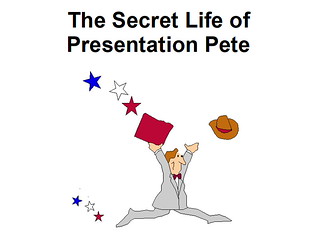
The Secret Life of Presentation Pete is quite the twisted tale; evocative, it put me in a good mood.

II. A Golden Encounter


Back to my golden encounter, where was I? Oh yes, there I was minding my business mowing my front lawn with my hand reel mower. I was wearing the face mask The Wife had sewn for me out of my old Hanes undershirts. Mowing was going fine...

The searing Austin sun meant that I was getting a good sweat going. I was a little worried that one of the bolts had come off the hand mower and so was treading gingerly with it. I didn't fancy making a trip to Home Depot - self isolation and all that, you know.

A white SUV passed on the other side of the street and made a hasty U-turn. Working as I now do at a car company, I was quite proud of myself for identifying the model, one of ours, a 2018 Chevy Tahoe LT. This guy essentially got me last year's bonus.

The car pulled up just by my mailbox and stopped. The driver rolled down his window. He beckoned to me. Intrigued but, well, observing social distancing I stopped mowing, took my gloves off, and took a step towards him. He beckoned to me almost impatiently again.

I noted that he wasn't wearing a mask. I took a step back, out of covidious practice. He was holding something in his hand.

"Yes... What is it?".

The thought crossed my mind that perhaps I shouldn't be talking to Johnny Random Driver Who Does a U turn When He Sees Your Black Ass Mowing the Lawn.

Whatever he was holding was shiny. I felt relief that it wasn't a gun. I haven't traveled all this way in life to die on my front lawn - and I knew The Wife would complain that I hadn't finished mowing (keeping up with the Joneses)

"Come. Come.", he was insistent, gruff even.

He was a middle eastern man, I could tell from the way he looked and the impatient accent. I know the type.

"What is it? How can I help you?"

"It's gold."

"Gold?"

"Yes gold. I need money."

Phew. I took a closer look, and, yes, it did indeed look to be a gold coin that he was dangling towards me. Still, I shook my head.

"No thanks, sir."

He looked irritated, but I made to turn back to the house.

I had tagged him as Lebanese or Syrian, a heavy set man, mid-40s. He made that pshew sound with his cheeks.

Definitely Lebanese, I thought.

I turned towards him, remembering for some strange reason that it was Ramadan. 3 pm is getting to be hunger time. I remember trying to shop at the Halal butchers around that time in our Before Coronavirus life. Impatience reigns in those hours. I greeted him, "Assalamu Alaikum".

He paused in consternation, as if to reassess his interlocutor. He ventured almost reluctantly a soft response, "Alaykumu s-salām".

I gave him the customary toli head nod. He drove off and made a dangerous u-turn on the street (our street is still surprisingly full of cars despite the shelter-in-place mantras). I wished him well on his future golden transactions.

"I need money" indeed.

I returned to my lawn mowing - it's great exercise. The Wife thinks all this covidious yard work is doing wonders for my body (hint hint).

Hey, what do you know, the kids didn't hang handkerchiefs over the Nest cam as they normally do (they don't believe in our tech surveillance capitalism present) so it captured some footage

A golden encounter

I suspect that if he came back 6 months hence, I would trade him the yams I planted in the backyard for some of his gold.

I knew what was going on. The first of the month is less than a week away. Mortgage, rent and car payments are due. People are trying to liquidate gold on the streets of Austin. Ah this covidious life. After this golden encounter, I think I'll stick to my backyard.

A golden encounter playlist

Adapted from some pandemic toli

See also: The Mosquito Principle

6 weeks later, the bolts disappeared, it was back to basics for me. See Nuts and Bolts

File under: , , , , , , , , , , , , , , , ,

The Secret Life of Presentation Pete

I had a golden encounter this covidious afternoon. To wit, I was out in the front yard mowing the lawn with my hand reel mower - I roll that way. I was wearing the face mask The Wife had sewn for me out of my old Hanes undershirts. Mowing was going fine...

Sidenote: I was wearing my Presentation Pete t-shirt from my old Lotus Freelance days that I had found in the box in the garage that we were going to donate to Goodwill, but that, in our covidious era, I decided actually sparked joy. I wore the shirt proudly.

Here's Presentation Pete in his glory

Presentation Pete - Leaping Pete

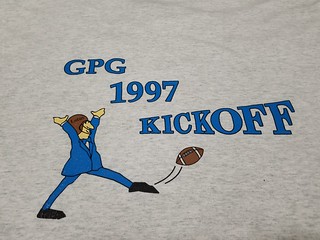
Here's the t-shirt. Some of my old Lotus folks will remember. This was the kickoff to the Coltrane Release where Lotus went all out to embrace the "World Wide Web". We would implement "Publish to Web" well before Powerpoint got around to it.

Presentation Pete kicks of Lotus's Graphical Products Group 1997 effort

Digression upon a digression: I have a draft of a short story somewhere titled The Secret Life of Presentation Pete. The idea has been percolating for nigh 13 years now - a high concept joint about the inner life of stock photograph characters or something.

Arrgh, it deserved neglect, let's tweet instead.

The Secret Life of Presentation Pete

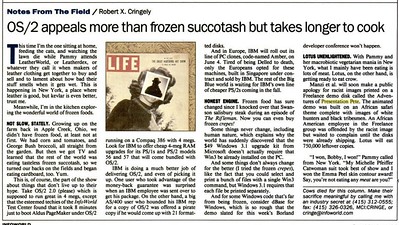
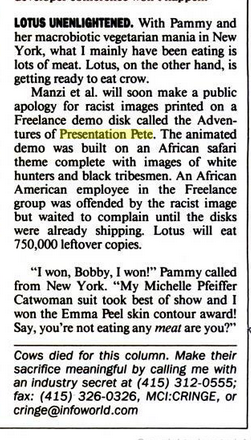
I wasn't there at his conception - I believe Joanne Meirovitz might have been the mother, however, Presentation Pete had a very inauspicious debut. The scandalous toli would be chronicled by Cringely in an aside in InfoWorld (June 1 1992). Our Bob titled it "Lotus Unenlightened". Call it a youthful indiscretion.

The Adventures of Presentation Pete - Lotus Unenlightend - Cringely Infoworld June 1992

As the story goes,

"Lotus CEO Jim Manzi et al will soon make a public apology for racist images printed on a Freelance demo disk called The Adventures of Presentation Pete. The animated demo was built on an African Safari theme complete with images of white hunters and black tribesmen."

Something along these lines perhaps?

Lions attack the modern traveller

Here's the detail that gets me:

"An African American employee in the Freelance group was offended by the racist image but waited to complain until the disks were already shipping. Lotus will eat 750,000 leftover copies"
The Adventures of Presentation Pete - Lotus Unenlightend - Cringely Infoworld June 1992 (2)

I believe I know who that African American employee was, although I can't remember the name - even as he gave me much shrewd career advice - there weren't many of us darker than blue at Lotus back then (or even now in software). I loved that he waited before pouncing. I still admire the nerve.

I can only imagine the contents of the safari themed disk of The Adventures of Presentation Pete that had to be pulped. I would pay good money for a bootleg of that disk. Surely one of those 750,000 leftover copies still exists? I demand especially to see those African tribesmen.

Scratch that. Here's my artist's rendition of the African safari themed disk of The Adventures of Presentation Pete that had to be pulped. A quarter century later, I still have a copy of Freelance on my laptop.

Presentation Pete - safari pete

Digression: was it a floppy disk or a cd-rom? Freelance's PRZ file format was quite famous for being more efficient than Powerpoint's PPT format and could fit on floppies.

I now understand why there was so much trepidation 6 years later when I brought up the issues I observed when integrating clip art in the Coltrane release. Lotus had been primed for Cultural Sensitivity in Technology

I first met Presentation Pete in his prime when I joined Lotus in 1995. As noted, he had already led a storied life by that young age. He was a natty dresser

Presentation Pete - Natty Dresser Pete

Presentation Pete was passionate about office life. The title in the Freelance clip art chooser read "Hardworking Pete"

Presentation Pete - Hardworking Pete

Still, office life could sometimes be overwhelming for Presentation Pete. Cue the clip art title "Scared Pete":

Presentation Pete - Scared Pete (Office Life)

Presentation Pete was a renaissance man.

Presentation Pete - Renaissance Man Pete

In his Christmas and Santa personas, Presentation Pete was full of zest. He was a fair referee also

Presentation Pete - Santa and Referee Pete

In short, Presentation Pete was a man for all seasons

Presentation Pete - Man for all Seasons Pete

Pete's co-workers loved him. I think one of them, his office wife perhaps, was modeled on Ruth Seltzer who hired me at Lotus. Or perhaps it was her sister. Whatcha think @iustinianus ?

Presentation Pete - Pete's co-workers

Presentation Pete was all about collaboration and groupware, what we now call social software.

Presentation Pete - Collaboration Pete

Pete was a pioneer of remote screen show. You say Zoom, I say Presentation Pete

Presentation Pete - Presenting Remotely

I learned heady lessons about work-life balance under Presentation Pete's tutelage

Presentation Pete - Work Life Balance Pete

The four years we spent together collaborating were the best years of my professional life.

Pete's job was offshored to India once IBM ceded the office suite market to Microsoft circa 1999. Lotus would stagger on as a brand for another decade but the thrill was gone. The remnants of a still-profitable Lotus were finally sold off by IBM in December 2018.

Presentation Pete - Information Superhighway Pete

I helped train Presentation Pete's replacements in India before switching to work on software for the ill-fated Network Computer. Lotus eSuite, remember that? For you young ones, a precursor to Google Suite.

Presentation Pete - Really Remote Presentation Pete

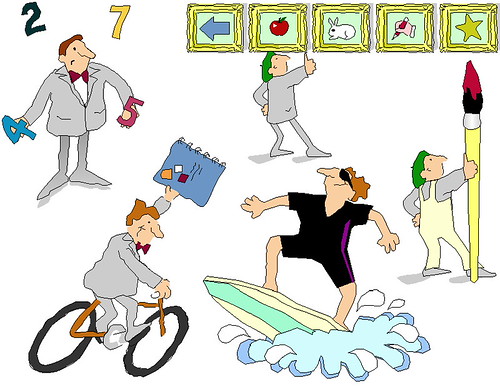
Surfer Pete was one cool cat. Presentation Pete had more than 9 lives.

Presentation Pete 15 - Surfer Pete

Presentation Pete was a man in full, his legend proved to be iconic in software history. Presentation Pete Lives.

Presentation Pete - Leaping Pete

Adapted from some covidious toli

Next in Part II: A Golden Encounter

Previously: The Mosquito Principle

File under: , , , , , , , , , , , , , , , ,

Monday, April 06, 2020

The Mosquito Principle

"As they say, mosquitos don't discriminate... We're all singing the West Nile Blues these days. Some call it globalization; I know it as the Mosquito Principle."

— extract from The Books of Nima

Honam mu nni nhanoa
(Humanity has no boundary)

— Akan proverb

Takes behaviour to get along.
Lots of behaviour to get along.
Do you really, really know that?
Social Living is the best

Do you know?
Social Living is the best

Burning Spear - Social Living

II. Insatiable Appetites

"...Some have insatiable appetites & are never satisfied (politics?)."

Donald Trump ostensibly complaining about the governors of certain states, but perhaps rather projecting his impulses onto others. (April 2 2020)

The U.S. allegedly snatched a planeload of 60 million Chinese-made medical masks that were initially intended for France, a French official said.

"A French order was bought out with cash by Americans on the tarmac, and the plane that was to fly to France took off for the U.S. instead".

Snatched from the tarmac. (April 2 2020)
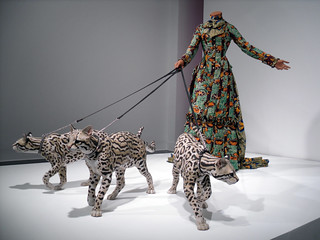
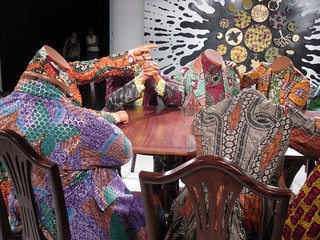
Yinka Shonibare MBE at Brooklyn Museum

We need the masks. We don't want other people getting them.

— Donald Trump, April 3 2020


Insatiable Appetites


The German capital ordered 200,000 special FFP2 and FFP3 masks that are used to protect emergency staff and care workers from infection with coronavirus.

Andreas Geisel, Berlin's interior minister, confirmed that the consignment had been “confiscated” in Bangkok and never reached Berlin.

"We consider that an act of modern piracy," he said. "You don't treat your transatlantic partners like that."

US swoop sees 3M masks allegedly diverted from Berlin (April 3 2020)

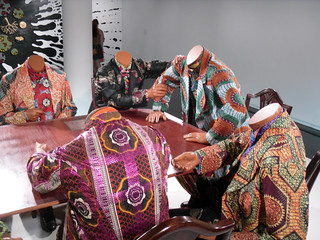
Yinka Shonibare MBE at Brooklyn Museum

— Scenes from The Berlin Conference of 1894
Scramble for Africa by Yinka Shonibare at Brooklyn Museum (2005) - credit: DK

III. Manifest Destiny

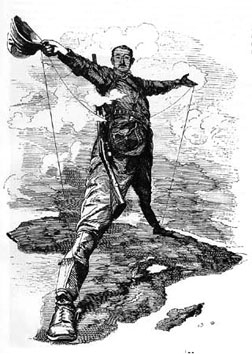
cecil rhodes astride africa

From Cairo to Cape Town, The Rhodes Colossus (Punch 1892)

"I contend that we are the finest race in the world and that the more of the world we inhabit the better it is for the human race. Just fancy those parts that are at present inhabited by the most despicable specimens of human beings what an alteration there would be if they were brought under Anglo-Saxon influence, look again at the extra employment a new country added to our dominions gives...

We know the size of the world we know the total extent. Africa is still lying ready for us it is our duty to take it. It is our duty to seize every opportunity of acquiring more territory and we should keep this one idea steadily before our eyes that more territory simply means more of the Anglo-Saxon race more of the best the most human, most honourable race the world possesses."

Confession of Faith by Cecil Rhodes (1877)


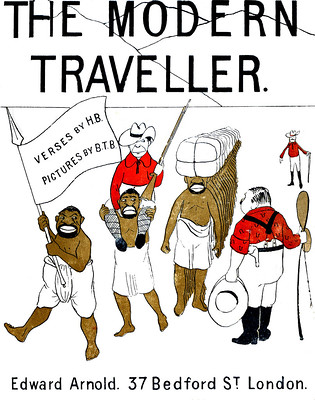
The Modern Traveller by Hilaire Belloc

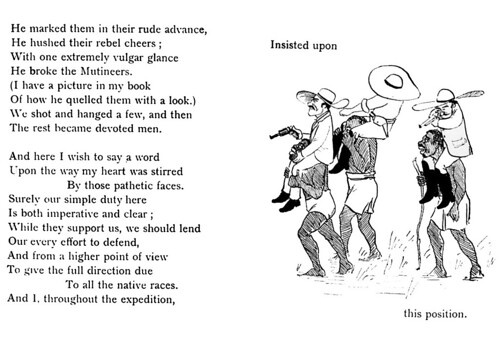
Surely our simple duty here
Is both imperative and clear;
While they support us, we should lend
Our every effort to defend,
And from a higher point of view
To give the full direction due
To all the native races.
And I, throughout the expedition
Insisted upon

To give the full direction due to all the native races - the modern traveller

              this position.

The Modern Traveller by Hilaire Belloc (1898)

The modern conservative is engaged in one of man's oldest exercises in moral philosophy; that is, the search for a superior moral justification for selfishness.

John Kenneth Galbraith (1963)

The modern Republican Party is the result of collusion between a movement to take U.S. jurisprudence to the pre-Depression era, and a movement to take culture back to the pre-Enlightenment era. It is doomed because the latter would like a theocratic state to regulate culture, and the former want to smoke dope and look at dirty pictures.

Maxspeak Maxim IX, Max Sawicky (2006)

IV. The Mosquito Principle (Redux)

"You don't make the timeline, the virus makes the timeline"

- Anthony Fauci on the novel coronavirus

Later: "There is no region in the country, in my mind, that's going to be exempt from an outbreak"


If you win mainly by convincing THEM that they are losers, and convincing them to give up fighting — and all of us, not just Trump, do this sort of adversarial reality distortion to a degree — what do you do when THEY is a virus? What do you do when there are no credible substitutes?

— taken from a discourse on our current global narrative collapse in Plot Economics

See also: You Can't Gaslight a Virus

In these days of insecticides and drained swamps, those of us who live in the rich, temperate world have become accustomed to the luxury of not thinking very much about mosquitoes and the risks they carry. But the insects are still killing more than eight hundred thousand people a year, primarily in Africa.

How Mosquitoes Changed Everything

Item: The exact origin, locations, and natural reservoir of the Ebola virus remain unknown. Current suspicions are founded on cynomolgous monkeys, civets or bats...

Dig: The pressure of marauding warlords roaming the bush has forced many to start eating animals that had previously been left alone in the bush.

Ebola and Marburg virus musings in Angola

Europe turned into a petri dish and travel from there impacted the world, with its most damaging effect in Africa and Latin America. “The colonial legacy lives in viral movements. I wasn’t surprised that Belgian travel preceded DRC’s first known case,”

Coronavirus Started in China, but Europe Became the Hub for Its Global Spread
Walking the pets

V. Pandemic Toli

Mosquitos don't discriminate

Previously: "You welcome the US to the fun of the Third World" - West Nile Blues

Virus lays bare the frailty of the social contract
— The Financial Times editorial page ostensibly advocating for social insurance and a rebalancing of modern economies. A Road to Damascus moment. (April 4 2020)

The mitigation strategies have varied throughout humanity's long shared history with malaria and other mosquito-borne diseases. There has been genetic adaptation (sickle cell disease), the observation that colder climates are less hospitable to mosquitos, quinine from the bark of a cinchona tree, good sanitation, (of late) artemesin, bed nets and an entire panoply of public health measures.

Only occasionally do we get a glimpse of the universality of the struggle (see the spread of Zika that threatened Rio's Olympics, outbreaks of chikungunya, Dengue fever and the like). That's when you'd read: "The mosquito is ubiquitous... You don’t need to travel to get the disease". Consider also the spread of West Nile Virus in California that resulted from Delinquent Mortgages and Neglected Swimming Pools in the aftermath of the Great Recession. Collateral damage of huhudious financial malpractice.

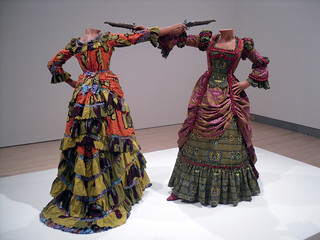
Rapacious vultures at the Berlin Conference by Yinka Shonibare

Still, to a large extent in the West, a sort of natural equilibrium has been established, even as we operate elsewhere under Mosquito Rules. Structurally, malaria and other mosquito-borne dieseases have been contained in the First World through strenuous public health efforts. In the third world, however, mosquitos remain a poverty tax.

Diseases like Ebola that jumped hosts and spread disastrously in repeated outbreaks in recent decades are thought to be confined, to the global, poorer south. The 3 years of Ebola epidemic that affected 10 countries and decimated 3 countries that could hardly afford it (recovering as they were from gruesome civil wars) didn't make a lasting impression. Similarly SARS and MERS were big scares in recent memory but, at length, they too were largely contained. The West was largely unscathed fron the calculus of contagion.


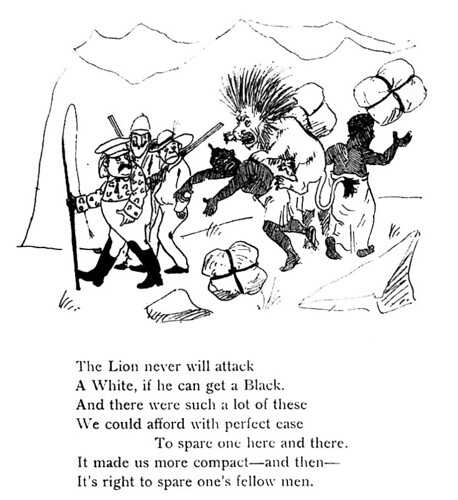
Hilaire Belloc had keen insight about the complacency in the face of a common enemy, and the almost liquidationist impulse that drives the Social Darwinist attitudes, and Empire writ large. Think about the past several months squandered in the face of clear and present danger. The following panel perhaps captures the insouciance, and the attempts to deny, or cage, the dangers of the predator. Call it the herd immunity strategy.
Lions attack the modern traveller - p.50
The Lion never will attack
A White, if he can get a Black
And there were such a lot of these
We could afford with perfect ease
To spare one here and there.

It made us more compact - and then -
It's right to spare one's fellow men.

If COVID-19 is the pandemic disease of the moment, the novel coronavirus, SARS-CoV-2, is just a virus; it is not a parable or extended metaphor. Like the plasmodium falciparum, and the mosquito that transmits it through its bite, this coronavirus doesn't discriminate. Whether spread by symptomatic or asymptomatic carriers, it is no respector of princes or prime ministers. It is oblivious to all boundaries, navigating between its unknown primary host (bats?), its intermediate hosts (say that initial pangolin or civet in the Wuhan wild animal market or that tiger at the Bronx zoo), and the human prey that it afflicts with COVID-19. It merely reproduces, evolves, and occasionally mutates its RNA as it navigates between hosts.

The current flight to safety in this covidious depression may be to US bonds - that, after all, is the financial norm that befits the US having the world's reserve currency. The literal airplane flights, and the longer-term larger scramble, however, may now be to China. The evidence is already there: if that Cairo to Cape Town railway is indeed ever built, it will be financed by China's belt and road initiative. In just a few more weeks, Wuhan province may well prove to be safer than New Orleans and Catalonia. Just weeks ago, African elites were precipitously withdrawing their children from European boarding schools. Thousands of Chinese students are yearning to be repatriated from the US rather than take their chances, uninsured in America where bad faith actors keep beaches open against all sense.

Rapacious vultures at the Berlin Conference by Yinka Shonibare

We are all passengers on cruise ships (operated by soon-to-be bankrupt Princess Lines, flying their Liberian flags of convenience). The underpaid crew (essential workers with compromised immune systems) labor to find a port of respite working with creaking infrastructure, hollowed by austerity policies, offshoring and deferred maintenance. We pray that we are being piloted by sensible Captains (no Ahabs or Blighs). Some of us, however, have been dealt the mayor from Jaws preaching herd immunity and necessary sacrifice, hucksters touting quack remedies, or contrarian chancers with no naval experience save navel gazing.

We are all rather wishing we were being steered by no-nonsense Taiwanese or Singaporeans crisis managers. At this stage, locked down and self isolating in windowless interior cabins, we'd gladly accept plane shipments of personal protective equipment from China or South Korea. We worry and look askance at Italian or Spanish tourists, and especially the quiet Americans (quiet, perhaps, in dismay at the observed competence of their political leaders measured in the mounting, grim body count). Africans facing the pandemic would gladly substitute the gunboat diplomacy of yore for Asian supply chain competence, German engineering efficiency, and a Danish social safety net. Such is life in a state of narrative collapse this season of coronavirus. Our lifeboats are soap and running water, face masks, social distancing and, in extremis, ventilators. We can't breathe.

By all rights, solidarity should overcome rapacious hoarding or looting. There are tensions between the demands of capital, labour and now public health. If power is never given up willingly, it is clear the costs of the pandemic we are facing are human lives, thousands already, and perhaps millions of them. There is a marketplace of ideas and cooperation, human ingenuity, and the systematic application of science and operational excellence ought to be our guiding posts, acknowledging our common humanity

There is an emergency on planet earth. As far as coping strategies go in dealing with the Mosquito Principle, I suggest we revisit The Great Game, eschew the insatiable appetites of Manifest Destiny, and embrace Social Living.

Soundtrack for this note

I give you fifty songs on the theme starting out with Burning Spear's take. He had it right: Social Living is the best. I'm also quite fond of Amel Larrieux's injunction to "tap into your magic" and D'Angelo's ecological lament, 'Til it's done.

Bonus playlists:
  • Manifest Destiny (liner notes)
    A soundtrack of irony
  • Insatiable
    You can't go wrong between Prince and Omar
  • Contagious
    From Taja Sevelle's infectious pop confection, Love is Contagious, to The Isley Brothers and Chanté Moore's soap opera (the record's producer is currently muted and worried about the coronavirus in federal jails), and The Whispers' shiny 80s electro-funk.

And the band played on...

This note is part of the Things Fall Apart series under the banner of Social Living.

Previously: Ode to Betty Brown

File under: , , , , , , , , , , , , , , , , , , , , , , ,

Monday, October 07, 2019

Ode to Betty Brown

She overheard the name in Waitrose as she picked up the groceries. Betty Brown. She liked it; she adopted it. It was as simple as that. Betty Brown. The name said something, and there was a nice sound about it. After the attacks, what we read in the obituaries were those other names, those legal names, those names that had been quickly discarded in that moment at the store. Well, Betty Brown was how some of us first came to know her. And she was named in Waitrose, next to the row of tinned tomatoes.

Names were important where she came from so this wasn't a light step. It is a brave Ghanaian woman that discards the protection of the names given at her outdooring. The new name was a touch of whimsy - like a Betty Blue or even a Betty Boop, and it fitted her laugh. Call it the reinvention aesthetic. And cathartic too. It was something to hold onto as the hard knocks kept coming, for, truth be told, there was much to forget in her past.

That whimsical name was the detail I returned to when she died on that Seventh of July, blown up on the Number 30 bus in Tavistock Square. And here I should pause a little and try to forget that awful day, for my aim is not for a lament, rather I need to conjure an ode.

Betty had an uproarious laugh, so infectious that you wanted to hear it all over again, and yet, try as you might, you could never photograph her wearing a smile. It was quite a puzzle how this elemental laugh would magically stop as the camera lens swung towards her face. It was uncanny, that unerring instinct for the approaching window onto the soul.

That aspect of her spirit was, thus, only experienced in the flesh - powerful and endearing at once, and guarded and resolute at the other. She was ever encouraging and optimistic to her friends and family - a source of a one-way flow of unrequited positivity. Try as one might, it was hard to be jaded in the presence of Betty Brown, her laughter and love overcame all obstacles.

A pause in our narrative, a return to that moment in that grocery store. We should contemplate a newborn woman, newly outdoored and newly named. Two musical words, Betty Brown, ringing in her ears as she voiced them in the air for the first time. Music, and magic too perhaps. Welcome magic, for she had entered at a low point, her employers having refused to return her passport. Your garden variety tale of abusive domestic servitude perhaps, the ordinary cruelties suffered by house girls. An announcer came up on the store intercom. "There's a special on cakes and pies, treat yourself to some ice cream too". Betty knew what to do: vanilla ice cream and some apple crumble to celebrate her name. She returned to the house, her spirit fortified. The Madam couldn't quite understand the aura of sunshine from someone she thought she had long since broken.

Months later, she overheard them in that same store, walking through the aisles speaking Ewe; her country people. She gambled, grabbed her opportunity, and accosted M and D. Haltingly, she explained her plight, conveying her desperation. It all came out quickly once she started speaking. Their concern was apparent as the words poured forth and her saga of woe unfolded. She'd never told her story before, not to anyone, not even to herself in the mirror and certainly never in this way.

After those long years in Ghana, they had brought her to London when the boy needed medical care. First they wanted to discard her, then The Madam said they should keep her, but they wouldn't pay her or give her passport. This was the first time they had let her out in two weeks. She told everything - even the most humiliating details, the beatings, the forced labour, no holidays, the virtual slave thing and so forth. Saying the words out loud made her realize just how close she'd come to the abyss. She could see the mounting alarm in their eyes as she talked, but she carried on, the story had to be told. They listened, first warily, then concernedly, and then carefully as if all of this testimony should be committed to memory. Finally they asked her name. She laughed, "Call me Betty Brown, but I'm also known as [redacted]". She laughed again. It was the laugh and that melodious name that did it and drew them into her comfort suite.

"Pleased to meet you Sister Betty. God-willing we'll get through all this."
"Betty Brown. That's a powerful name."

They offered their help and she took the opportunity. They agreed to meet later, the family still needed her do the groceries, so she was sure she'd be able to get out. The shadows lifted.

And so, M and D were the ones who took her in. In the Hackney home, the dining room became her bedroom. Later she would insist that they let her rent a room, pay her way. Her story was whispered throughout the community and not just because it confirmed every prejudice we had against 'those Lebanese', 'those Saudis' and they way they treated us back home, and even here in London. K stepped in later to help with the confiscated passport, to give his customary legal advice, to give comfort above all.

So, she had come from nothing, had been the lowliest of servants, and had been brought even lower. That first morning when she woke up at 5am, she realized that all she had were the clothes she had on and the few belongings she had been able to smuggle out. Well, it was a temporary inconvenience; she simply got to work, cleaning and tidying up.

But she didn't dwell on the past. Rock bottom is always a matter of perspective and she always put the hard days behind her. Looking forward and disdaining pity, she simply wondered what the next day of work would be. And it was work that was her lot. She aimed to please. Self-esteem was not simply an afterthought, it was a never-thought. Throughout her life, she knew only work.

And there was violence undoubtedly, she had been treated most brutally by them, and had the scars to prove it, scars that were occasionally glimpsed in that matter-fact manner in which she moved her body. Some would have her be the woman who walked into doors. That was a facile characterization, after all a hard life is not all about violence. Her reality, as those closer to her knew, was rather life as the empress of the splendid season. She wasn't content to be a cautionary tale or an object of concern: she lived, she worked - that's all.

Poverty is always relative yet her hometown, Avenui-Awudome, was poor even in a poor part of a poor country. It was a spec of a hamlet, not quite a village like Taviefe. It wasn't even worthy of the prospect of an advance guard of the E.P. Church seeking out forlorn souls in the Volta Region. The tale is told of that boy from Awudome who managed to get a scholarship to Mawuli School, the first to even make it to secondary school in the environs and that was 1959. The family was so poor that the whole village had to take up a collection to buy him proper shoes so that he could walk to the school. Well, that older boy was the lucky one in the clan. By the time Betty came of age to go to secondary school, the options, and the goodwill, had long since dwindled. The money simply wasn't there. And so she began, or rather continued, that trajectory of burden that had been hers from birth. Sleep to work to sleep. Not that there was any choice, for there were other children coming up behind her.

As it turned out, farm work suited her, she never minded following Papa into the forest to their little plot. As the forest diminished, and the farms suffered, it became harder and harder to make do. The family's farm barely provided enough yams and cassava to eat, let alone sell. They had had to push in deeper into the thinning forest to eke out something to harvest. They ran through all the various vegetables they could think of; nothing seemed to work anymore. So she was loaned out to work in nearby villages and then sent to Ho.

Hard-working was the constant refrain about Betty on the construction sites. The cement blocks, she was able to carry without complaint. Fetching water and carrying had always come easily to her. When even work in Ho dwindled, it naturally followed that she should try her luck in Accra. She became a kayayei in the city. The slums of Nima were her proving ground. Sleeping rough, hustling, carrying and fighting ferociously for the slightest coin or banknote. She first found work carrying for the market women. And then it was construction sites again - less drama, although the physical toll was punishing. The years went by and she faithfully sent her contribution home for the younger ones - every cedi made a difference in Awudome. Eventually she was recommended to the Lebanese family as a housegirl for she had a way with cooking. On the streets, she was known for being able to manufacture a tasty dish from even the most wretched garden eggs or leaves of nkontomire.

Street girl to house girl; she'd taken care of the boy happily and cheerfully. When he fell ill after five years, she followed them from Accra to Riyadh, and then to London as they sought hospital treatment. It hurt that they took out their frustration on her as his health worsened for, certainly, no one cared for him, nor knew him, as well as she did. Perhaps it was jealousy too, for he loved her songs and stories and would only sleep at night if he knew she was close. One wonders if they even know what happened to her after they were done with her...

At length, she regularized her situation in London and even found love in the community. Her architect. Her man. Others would complain and suggest that he wasn't pulling his weight - after all there he was with all his degrees working as a security guard, if indeed he could be found to work. She dismissed those concerns. It wasn't easy. She knew it wasn't easy to be an immigrant, to have your qualifications nullified for lack of a stamp in some passport, to be condescended to at best, and to face everyday invisibility. She was clear-eyed even as she heard the exasperation in friends' voices. "You're being taking advantage of. Do something for yourself, not for others". And that day at the outdooring, that long disappearance, stepping out to pick up drinks at the off-license. All those last straws. All that drama. All that hand wringing from the naysayers counted for naught. None of that mattered. She didn't make excuses. She simply loved. She saw the light in his soul. She kept the faith. She would work additional jobs to make it work.

And well, she did. She made it work. For almost 18 years, she would effectively be the sole breadwinner even as they raised themselves up from the margins. She raised the children in faith and moved mountains to spare them any taste of deprivation. She had finally brought something worthy into the world and would do anything for them. She loved unconditionally, she loved unreservedly, she loved wholly.

I can see her on that bus, that morning, catching her breath after the all-night shift at the cleaning job at University College. She was on her way to Shoreditch for that housing management college course - self improvement. Then that afternoon, she would pass by the African Development Agencies in Hackney to volunteer as was her wont - there were others coming up behind her, and they needed help, before yet another job that evening. I see Betty, stout and middle-aged, part of that immigrant unseen, a member of the tribe that gathers at the crack of dawn, those who clean with no benefits, those who give definition to that phrase, menial labour. Well she worked, she was a worker, she was a cleaner. She got on with it.

Later, I saw the picture of the children and her husband standing with the President. It must have been when he passed by their home in Essex after the attacks on his way back to Ghana, official solace in their hour of grief. Their red eyes were those of the walking wounded. It broke my heart. It breaks my heart. The absence of her flesh and blood, it was all too much. A grievous loss, a soul snatched away arbitrarily.

They took her body home to Ghana for the funeral. Thousands came to pay their respects, Ghanaians don't need prompting to attend funerals but who could resist that of their countrywoman who died in Babylon at the hands of Al Qaeda.

Her blurry photo stares at me from the news websites. Smudged pixels that haunt me. It doesn't reveal much of her. She didn't have many photos of herself in any case, preferring to look outwards. That fugitive glimpse of her in the stories was fitting. Yes, that was Betty Brown, self-effacing even in her obituary. The words would reveal more about those who survived her than about her complicated story full of twists and turns. Well, her story deserves to be told, even if in these refracted fragments, a journey of pathos, ultimately distilled into tragedy.

Complaining was not her style. She put up with more setbacks than anyone this side of Job and that Count of Monte Christo fellow, and yet she gave new meaning to the term resilience. This is an elegy rather than a lament, for such thoughts never crossed her mind. This is an ode for a woman in full, a spirit heaven-sent.

I often think of Betty in those quiet moments in the autumn of life, when the cleaners walk by with their carts at the office - humming, when the nannies gather their charges in the park, back home with those street girls hustling in the Adabraka traffic instead of going to school. I hear her voice, her infectious patter, her tics, and her teasing manner, the way she always affected to be absent-minded to draw you in. And the laugh. The heart aches. I think of her, not as a stray or as a victim, but as a force of nature. Some of us stepped in when we could, worried about her, but we couldn't save her; it really wasn't up to us, rather she saved herself. And she stood strong. She fought, God knows she fought. And now she's gone.


catford sidewalk painting


This is the final part of a trilogy on Ghanaian connections to the London bombings of 2005, in this instance, the eponymous casualty. The first piece, Identity Theft, dealt with collateral damage on the periphery, an immigrant's stolen identity. The second note, Of No Fixed Abode, concerned the "fourth man": the fifth bomber.

An entry in the Things Fall Apart Series.

File under: , , , , , , , , , , , , , , , ,

Wednesday, April 17, 2019

Brexit, a playlist

We don't have a Plan B by Redhead Kingpin
Stuck on you by Lionel Richie
Can't stand losing you by The Police
Looking at the front door by Main Source
Chaos and Disorder by Prince
Let's stay together by Al Green
I can't see myself leaving you by Aretha Franklin
Stay with me by El Debarge
Knockin' at the wrong door by The Rollers
Mistake by Fela Kuti

Bonus beats:

Weary by Amel Larrieux
Let's call the whole thing off by Ella Fitzgerald and Louis Armstrong

Liner notes:

I was an early victim of Theresa May's 'hostile environment' immigration policy, and lost my notional residency in Her Majesty's lands some time ago, hence I'm quite ambivalent about the exhausting spectacle of self harm that the past three years of English politics have provided. True, the political sketch writers have been having a field day as everyone has done their worst - with the promise of more to come. Satire is a soothing balm for dysfunction, but to paraphrase Theresa May, dysfunction means dysfunction.

The closing track of this playlist, Mistake, recorded live at the Berlin Jazz Festival, was originally meant to be part of the appropriately named Zombie album (prescience about "the withdrawal agreement"?). As is typical for a Fela track, languorous horns float in and out atop the loping drums throughout, and it is only after 8 minutes that Fela gets to decrying colonial thinking.

Mistake you go make, people go laugh at you.
After they laugh at you, them go smile again

Still, he is quite optimistic in the end: "after mistakes... everything's all right". As for the rest of the tracks, they are self evident. Nominations for additions are welcome.


Brexit, a playlist

File under: , , , , , , , ,

Monday, March 11, 2019

Side by Side

A few juxtapositions briefly noted - part of an occasional series.

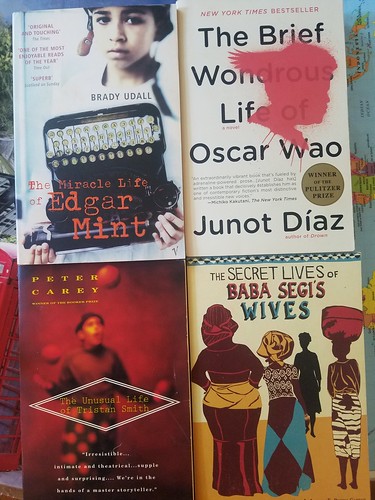
Novelistic Lives


novelistic lives
  • The Miracle Life of Edgar Mint by Brady Udall
  • The Unusual Life of Tristan Smith by Peter Carey
  • The Brief Wondrous Life of Oscar Wao by Junot Díaz
  • The Secret Lives of Baba Segi's Wives by Lola Shoneyin
Another candidate on the same bookshelf was Milan Kundera's Life is Elsewhere.

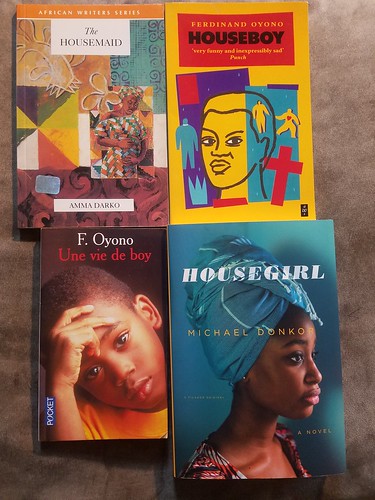
House Readings


House readings
  • La vie de boy (Houseboy) by Ferdinand Oyono
  • Housegirl by Michael Donkoli
  • The Housemaid by Amma Darko
My favourite book on much the same theme is Empress of the Splendid Season by Oscar Hijuelos.

Office Tales


Office life, office politics, the organization man, managing humans, the bad child's book of beasts
  • Office life by Keith Waterhouse
  • Office Politics by Wilfrid Sheed
  • The Organization Man by William H Whyte, Jr
  • Managing Humans by Rands in Repose
  • The Bad Child's Book of Beasts by Hilaire Belloc
Belloc's inclusion turns these office tales into a survival guide.

Contrasting Fortunes

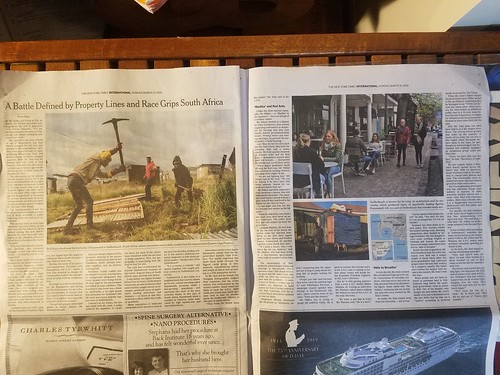
I grew up in a newsroom hence print newspapers retain their fascination for me. In this age of declining print journalism, I am still cheered that there are some stories whose impact is best dealt with in newsprint. The touch of a great editor melding words and images is a thing to behold.

apartheid legacies in Stellenbosch

Surprisingly, although it was part of the same story, it was not the front page display of last Sunday's New York Times that was vital to me, nor indeed the online version, A battle defined by Property Lines and Race. Rather it was the contrast between the images of those erecting a shack on page 12 and the relaxing tourists in the streets of Stellenbosch on 13 that silently made the poignant case. The complexities of the enduring legacies of apartheid were succinctly illustrated. Who gets to share in the wages of wine and spoils of the soil?

In the same vein, I had a strong sense that the Brexit referendum would go the way it did simply by reading the inside pages of the Daily Mail in January 2016, something that amounted to Tickling John Bull's Lizard Brain. There, skillful juxtaposition had a visceral impact even on a jaundiced reader.

The most effective juxtaposition I can remember was executed in the war context in the reporting of the Israeli attacks on Lebanon in 2006. The accompanying article, In Beirut, an Abyss Between Elegance and Chaos, didn't need much more that the contrasting photos.

"One man struggles, while another relaxes", goes the refrain in Massive Attack's Hymn of the Big Wheel. This is the nature of The Great Game.

Colors - a playlist


File under: , , ,