Showing posts with label poverty. Show all posts

Tuesday, November 12, 2024

The Corner of 12th and Chicon

Transitional you may call it these days, the corner of 12th and Chicon
A far cry from its salad days as an out-and-out combat zone
When hardened hookers used to walk the streets barely causing a shrug
And the weary cops turned a blind eye to the open air markets of drugs

Change has been long coming but it creeps up on you all of a sudden
Places betray only faint traces of their previous reputation
Located just a mile from downtown, no wonder there's been gentrification
The inescapable reality of commerce and real estate transactions

Suffice to say in this case, that there has been a whitening
A rebrand now that the corner is no longer so frightening
And as a fitting testament to the changing face of East Austin
On the mural, they painted the face of Bad-era Michael Jackson

Still, the other heroes are there, defiant:
   Bob Marley, Nina Simone and Prince
Thurgood Marshall, James Brown, Sade,
   Sly Stone (or is it Jimi Hendrix?)
The conscience of a certain tribe: Dick Gregory, Muhammad Ali
And, keeping it real, conflicted martyrs like Tupac and Biggie

Throughout, the nearby Eastside Community Church aimed to provide shelter
Modified latterly to host, on its premises, a Pregnancy Resource Center
You never know in Texas, this was ground zero for maternal mortality
Where Barbara Jordan fought for civil rights, they try to preserve her legacy

The last holdouts remain but now no longer hold sway
Just a few transients holding on to faded glory days
Rough trade, ambling in the early morning to the liquor store
Passing, as they do, the fresh-faced women out walking their dogs

Lululemon leggings, some carrying their yoga mats, nubile young things
Or the others now heading to work out on the shiny exercise machines
Complicated tributes to physical perfection, elliptical witnesses
On their treadmills to modernity, edifices of health and fitness

The parking lots where the Guinean immigrants would sell African clothes
Trinkets, carvings, dashikis, herbal oils, and the like are now mostly closed
Once their steady remedial work was done, the developers moved in
It's a safe neighborhood now, and on a few plots they've started construction

A couple of desultory food trucks, beasts of burden, now stand alone
On the way to middle school with the 11 year old past 12th and Chicon
No crossing guard here, those who walk these streets are on their own
Eyes wide open, we take it all in. Then a quick hug before I turn and walk home


12th and Chicon


The Corner, a playlist


A soundtrack for this note (spotify version)
Bonus beats: Street Corner Hustler Blues by Lou Rawls

See previously Inman Square Still Life and Coyote Point

This note is part of a series: In a covidious time

File under: , , , , , , , , , , , , , , , ,

Writing log: August 31, 2022

Tuesday, July 23, 2024

The Last Holdouts

The last holdouts, it's come to this
The Walker brothers would be leaving this place
Yes, they'd delayed the purchase for months and strung things out
But now time was up, they had to move out of the house

At least the two of them had made a stand
Scrap dealers, their hustle was hard
The mountain of bikes scavenged for parts
Machinery under the tarp

Old man Jackson would be the very last holdout
His house on the other side of the tracks
Specialist in all styles, you had to respect him
The end of an era, and now it's come to this

...

Down by the train tracks, the very last patch
On the east side, past the highway
Bad soil, badlands
Bordered by the railway and the creek
Cul-de-sac
Halfway houses
Depression era bungalows
Functional and plain homes for our kind of folk
Featuring Terry's stealth restaurant in one of the backyards
One of his jook joint ideas that didn't go nowhere
Left with barbecues, conversation and soul food
Frankie Beverly and Maze blaring,
Cheap malt, it was all good
And now the blues grinder is over, it's come to this

...

Bars, heavy iron burglar bars over the windows
During the crack years it wasn't far from a combat zone
Drugs, man, I tell you, a hell of a thing
Charnel houses, dens of iniquity, they saw it all
And if it wasn't dope, well all vices could be bought
Mind you, there were fifteen churches within the six blocks
Sin and redemption were the nosy neighbors
It was hard to tell which you would end up crashing with
The churches too are moving out, it's come to this

...

Now that the trail has been done up, it's come to this
The developers have their eye on things
It's the American way, we understand cold cash
Someone expert with the building code, real estate
A couple of miles from downtown, it's a no-brainer
Multiple units or townhouses with the right contractor
An offer you can't refuse, a fateful decision
Suburbia here we come, some call it gentrification


graveyard of champions, urban decay


The Last Holdouts, a playlist


A soundtrack for this note (spotify version)
See previously: The Old Man who Lives in the Park

This note is part of a series: In a covidious time

File under: , , , , , , , , , , , , , ,

Writing log: April 11, 2022

Tuesday, August 08, 2023

An Hour Away

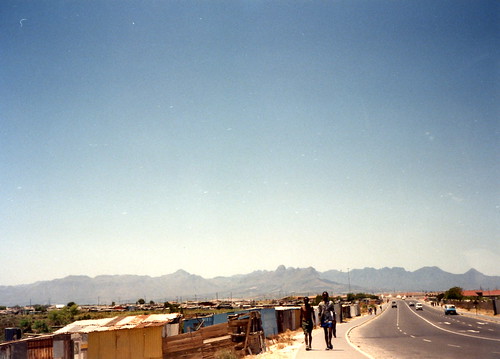
Cape Point. Near the southern tip of the continent
From the cliff, we watched the famed seascape
The blue waves that were said to rival Zanzibar
Then, the Cape of Good Hope.
Tourists. Escapism.

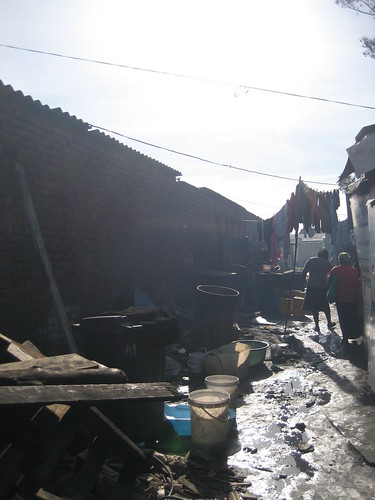
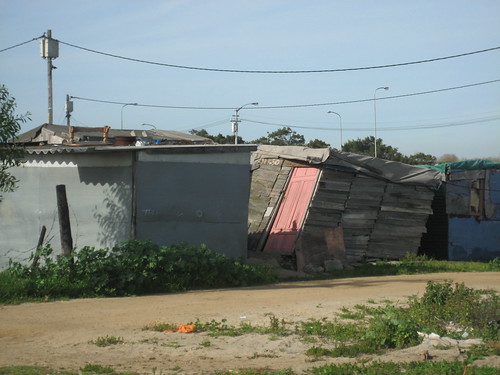
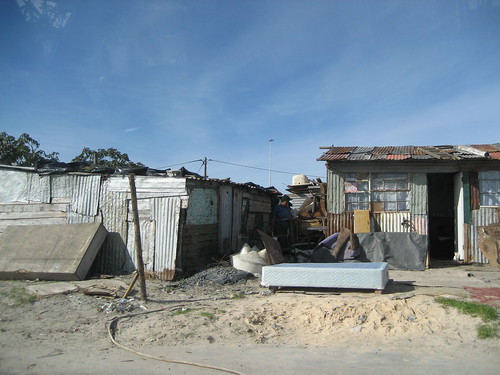
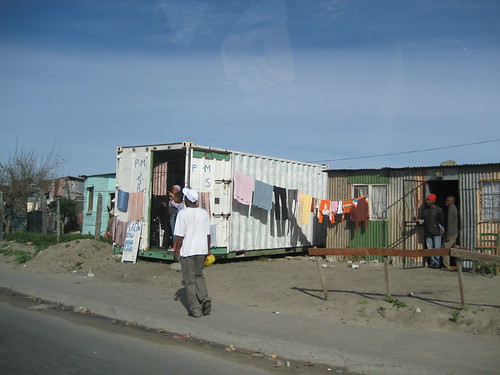
Later, an hour away lay the township
Punishing. We took in the juxtaposition
Apartheid painted from its drab palette
Khayelitsha.
Slum life. Journalism.

(South Africa, Christmas 1993)


capetown capepoint

capetown khayelitsha slum


Put all this behind you, the scripts were being readied
The recent unpleasantness was all ancient history
Welcome to the New South Africa, they'd started to say
After all, you know, the elections are only months away

A Temporary Inconvenience, a playlist


Some sounds from South Africa. (spotify version)


File under: , , , , , , , , , , , , , ,

Writing log: December 30, 1993, December 1, 2021

Tuesday, July 11, 2023

67

Well, well, well, guess who turned 67 just the other day?
A neighbor distributed a flyer right at our doorway
Inviting us to a gathering to celebrate
   near the benches just before dark
Plum center, a photo of the birthday boy,
   the old man who lives in the park

Sadly, I couldn't rally to make it to the happy event
Even though I would consider myself one of his friends
Life intruded, parenthood and the pandemic's dismal reality
Meant that I missed out on the trappings of that ceremony

What do you give the man who has nothing but wants nothing?
I racked my brain:
   what could possibly be an adequate contribution?
Moreover, would he really want to be celebrated
   or, rather, left alone?
After all, when the party's over,
   the park would still be his humble home

At his age, one would traditionally be prime for retirement
Clearly though, besides his clothes and blanket,
   he has no safety net
Despite the gestures we've made
   to maintain a modicum of community
For all we know, he may not even be collecting social security

It can't be easy this life of his, being homeless
Street life, the whole world watching all your business
The soul of the neighborhood was the flyer's consensus
67, this old man. Think first, of the least of us


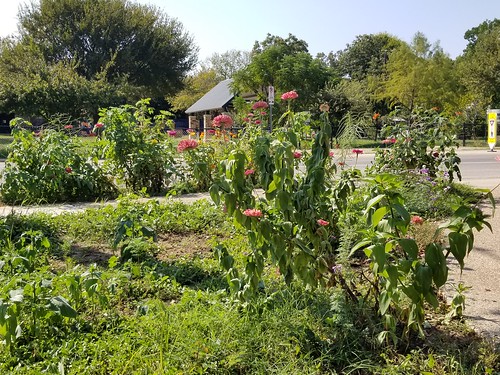
zinnias flower garden

The Old Man Who Lives in the Park (Redux), a playlist


A soundtrack for this note. (spotify version)

See previously: The Old Man Who Lives in the Park


This note is part of a series: In a covidious time.


File under: , , , , , , , , , , , , , ,

Writing log: September 11, 2021

Tuesday, January 24, 2023

White Graves

"There are small fortresses on the hills in the background to which the inhabitants flee in times of danger or when bandits attack them.

White graves lie scattered on the slopes lower down."

Those of the Basel Mission captured so much that was striking
From the souls that, through advocacy, they converted to be Christian
To the photos that they amassed, with their typically meticulous bookkeeping
Their legacy is all over the world, they were, as advertised, on a mission

Which is how I came upon the image of the white graves
The tiny speckles that littered that Chinese landscape
Truth be told, this puzzle came by way of a diversion
But I was altogether intrigued by the poetic caption

I'd been searching the archival record for a doctor
Who I'd long known had ties to my grandfather
It's not that I was searching for a (white) saviour
But the title did suggest itself, A Good Doctor in Africa

He was an elusive figure this good Doctor
To whom had been seconded my grandfather
But armed with those keywords, his name and Gold Coast
I quite easily came upon African and Chinese mission posts

The annotation was prefixed by Huppenbauer
And therein lay the little mystery
For there was no known missionary
By that name who worked in China

"We don't know what this means", wrote the cataloger at the mission
This was an affront to their normally excellent record keeping
I guess it was at this point, a century later, that I took a second look
Perplexed, as were those earlier archivists, with the scrapbook

All that we had was the photo and the scraps of metadata
"Black and white positive, paper prints, gelatin silver"
But, you know, browse a little and your attention starts to wander
The trail of missionary Huppenbauers led to the Fophin River

...

Just past the bridge over the Fophin River
Near the Temple of the Goddess of Mercy
A group of house evangelists gathered
In front of the Basel Mission Station

All bore smiles, some wore hats, while others carried umbrellas
These men were converts, it couldn't have been easy, they were treading water
For they were surrounded by Buddhists who found it hard to relate
Nay, there were anti-Christian placards on one of the town gates

The mission vocation held that, through advocacy, redemption could be found
But there were a few limits: the house for Europeans lay in the background
The station was erected at a remove, a secluded part past the town wall
The mission had an uneasy foothold in the town, especially after nightfall

Still, there were good times at mission station Fophin
The Free Chinese evangelist Lo Wun Tshin
Would play hide and seek with the Meyerholdt's children
Idle moments of laughter in the botanical garden

I then ventured to Limtshai (an outstation of Fophin) on the hills
Navigating past the wet market and river down to the rice fields
The village is not compactly built, with fields between the groups of houses
The vistas laid out in this rural setting, and of course the outhouses

There was more, I continued in that vein, there was no end of material
For the archives were a font of lost stories, fugitive and ephemeral
Imagining backstories of those souls whose likeness had been captured
Conjuring up the rhythms of life of those places and their measure

I guess you could call it an odd form of escapism
To while away my pandemic with rank speculation
To spend time exploring the world of these missions
It might be a peculiar form of cultural projection

I was minded of the ambiguity in the Christian missionary impulse
And the old joke about the encounter with Africa, and our loss
"When you came, you had the good book and we had the land.
Now we have the good book - we read it, and you have all the land"

I would return later to my search for the good Doctor
I am quite hot on the trail but he was not to be found in China
More likely, the note was written by the other Huppenbauer, Hans
Who was on mission in Borneo and pictured teaching knitting class

But back to the striking caption, I beheld at this note's introduction
The small fortresses in the hills didn't look to afford much protection
Flimsy edifices, less robust escape room, and more temporary enclave
No wonder the bandits were wreaking damage as witnessed by the white graves

I was curious about this glimpse of a strange kind of life
The townsfolk regularly having to flee those bandits wielding knives
Only a century ago, at the heart of rural China, during their lost decades
What bothered me was what the missionary observed: the sight of the white graves


aburi-plot

Fophin Mission Station, a playlist


A soundtrack for this armchair historian's note. (spotify version) ...

Timing is everything
Observers are worried

See also: Fophin Mission Station in the Basel Mission archives. A mysterious image that troubled this searcher.

File under: , , , , , , , , , , , , , , , , ,

Writing log: May 6, 2021

Tuesday, August 30, 2022

Strays

Her sweatshirt read "Have more empathy"
That was the detail that struck you so vividly
As you bent and swerved to dodge the incoming blow
Perhaps, you thought, what you reap is what you sow

Next was her earlier comment, "Some of us have got principles".
It was fascinating to be in the presence of this feral dynamo
Who in England would, no doubt, be subject to an ASBO.
Fury might have been her middle name, hers was formidable.

strays-pisces-sena-by-kukua

...

She was carrying an umbrella although it wasn't raining,
Nor, indeed, was it sunny. Mask and anorak even in the hot weather.
Shifty, she made to hide behind the tree as you were approaching
Swerving as she did, she twirled her umbrella.
The Wife moved automatically to the other side, the other trail
She could tell that something was awry with the woman. She looked frail.

You were undaunted and continued walking towards her.
Eventually - there were a few false starts here and there,
She peeked out from beyond the tree and started walking.
You gave her a head nod as you passed - acknowledging.
She raised the umbrella then asked in a loud voice,
"Did you get your check?", clear even over the background noise

Hmmm. Was she really worried about Uncle Joe's stimulus check?
Actually no, you had too much income to qualify for it.
"No", you muttered. Yours was a privileged situation
"I didn't either." She took it as confirmation
That those of our skin tone were being duly denied
A seat at the table, leaving much to be decried.

You decided not to explain your good fortune
For who knew how she would take it in her agitation,
You moved on, quickly grabbing The Seven Year Old, tightly held
You told him "Always be respectful of the strays of the world."

strays by kukua

Strays, a playlist


A soundtrack to this note (spotify version) See previously: The Old Man Who Lives in the Park

Illustrations: Kukua Akumanyi

This note is part of a series: In a covidious time

File under: , , , , , , , , , , , , ,

Writing log: April 30, 2021

Monday, January 04, 2021

The Old Man Who Lives In The Park

The old man who lives in the park now has a dilemma
That's causing you and your neighbors further heartache
Not, paradoxically, that he sleeps under the benches,
For he's blessed, he always says to confound any pity
"I'm blessed to live in this here world"
"The Good Lord watches over all his creations. He is indeed my witness"
No, it's that Parks and Rec, just weeks ago, removed the porta potty
That has been serving as his bathroom and privy
For what seems like the past couple of years
And now, with no stand pipe or running water,
We can only expect a trail of tears

The park was ostensibly closed at the outset of the pandemic
But this new development ups the ante of discomfort
The practical questions mount: where will he relieve himself?
You're all facing the pressing matter of public health
You wonder if the flying toilets of Labadi Beach
Will make their appearance on these Austin Texas streets
Well, at least the garbage is still being regularly cleared
Appearances must be kept up, even as lockdowns take their toll
The prospect, however, is of walking through discarded toilet roll

He's always kept himself clean, tidy and well dressed
Dignified, with a sense of possession and no trace of stress
One has always wondered: where does he take his showers?
Still it's a consolation that the park benches
That he sleeps under at night are still there
For what it's worth, they provide some protective cover
He moves out early in the morning from this place he shares
To allow the yoga and exercise crowd to take them over

He had a good run this summer by every measure
The birthday party crew were stymied by the park closures
Thus he could sleep in, even on the weekend mornings
No anxious parents trying to stake out the benches
And mark their territory with prefab themed balloons
And other plastic decorations with which they festooned
No disposable tablecloths that they would tie down
No cups, coolers and fluffy pom poms
No banners and photo booths nor burgeoning cheer
For the show they later planned to put on
No bouncy castles, at least for the first few months
No barbecues, the smell of which draw out a great longing
Indeed for those months there were no gatherings
Of friends and family and their spawn

He must do odd jobs during the day for the folks at the restaurant
Perhaps they repay him in kind with their choice soul food
The sign says that they even serve meat from alligators
Or perhaps it's just his company that they enjoy that makes him a fixture
The owner raises a weary eye and his expression grows stark
Whenever you happen to mention the old man who lives in the park
There's a pause, then a sigh, born of longstanding concern,
A shake of the head, it's really a long story
Believe me, we've long since involved social services
At this point, it's not even a matter of charity
Interventions galore, there's no doubt a fraught history

zinnias flower garden

When he disappeared for a month,
You wondered if he was lost to the pandemic
That was back in July, when that new urban soundtrack
The near constant sound of ambulances, almost made you panic
The Governor, despite the positivity rate,
Was hell bent on the grand reopening
You could only hang your head in dismay
At the fecklessness, will they ever learn?
So it was the most misbegotten kind of relief
When the old man who lives in the park made his return

We'd circled each other uneasily ever since we moved in across the park
The real estate agent couldn't have known he'd be our neighbor
The head nods proffered were only occasionally returned
There was indeed recognition, but always a pregnant silence
I later learnt that he was half blind
Which perhaps explained the diffidence
And his uneasy and languid way with locomotion.
Albeit he has a white cane that he twirls merrily,
But he seems to only use it as decoration
Thus he crosses the street willy-nilly
Invariably causing near crashes and commotion.

Came to find out that he was a veteran
There's a hardness under what you observe
You wonder which was the American
Foreign misadventure he was drafted in to serve
The word on the street is that his sister takes all his benefit checks
Such is the mystery of the arrangement, for he seems quite happy
And even compelled to spend his nights sleeping under the bench
So perhaps it's not about money but rather about penance
For sins past. Who knows the backstory of this kind of repentance

We first talked one August evening
As I watered my flowers and plants in the front yard.
Limping, he'd crossed the street from the park
As usual, ignoring the passing cars
He approved of my low tech approach
But suggested installing a sprinkler system
I didn't have the heart to show him the one right there under his nose
Given that I preferred getting out and about with my garden hose
Back to basics, Nyame had suggested, choose manual over automatic.
Such were the nuts and bolts guiding me through this pandemic
So while we live in this digital world, I prefer analog connections
The necessity of touch and meaningful conversation

Nevertheless he approved that I was taking care of the earth
And digging up and weeding on my hands and knees
"If all goes well, young man, with the passage of time
There'll be plenty of monarch butterflies and bees"

There's a musical quality to the cadences of his speech
As if, in another life, he could be moved to preach

"I'm blessed, Sir. I have two young ones, I couldn't be prouder.
The Good Lord is in control, don't mind that weather forecaster
You know, he had it wrong, claiming rain and thunderstorms
But what could he know about His ways and directions?"

"It surprises them when you call them Sir, but it doesn't cost you none.
Keep doing what you're doing, above all, be true, young man"...

"I see you have a couple of children, I can tell they bring you joy.
I'll be off now. Pleased to meet you, Sir, my own name is Delroy."

And so I turned off the water and coiled up the garden hose
And took off the homemade face mask that covered my nose
I made to turn on the light in front of my home
And walked back up to my study thinking of a poem
I gazed across the street at the incipient dark
Thinking, as I do at night, about the old man who lives in the park.

front yard

The Old Man Who Lives In The Park, a Playlist


A soundtrack for this note (spotify version)

See also: Frank and Frances (or 500 Steps)

This note is part of a series: In a covidious time.


File under: , , , , , , , , , , , , , ,

Monday, October 07, 2019

Ode to Betty Brown

She overheard the name in Waitrose as she picked up the groceries. Betty Brown. She liked it; she adopted it. It was as simple as that. Betty Brown. The name said something, and there was a nice sound about it. After the attacks, what we read in the obituaries were those other names, those legal names, those names that had been quickly discarded in that moment at the store. Well, Betty Brown was how some of us first came to know her. And she was named in Waitrose, next to the row of tinned tomatoes.

Names were important where she came from so this wasn't a light step. It is a brave Ghanaian woman that discards the protection of the names given at her outdooring. The new name was a touch of whimsy - like a Betty Blue or even a Betty Boop, and it fitted her laugh. Call it the reinvention aesthetic. And cathartic too. It was something to hold onto as the hard knocks kept coming, for, truth be told, there was much to forget in her past.

That whimsical name was the detail I returned to when she died on that Seventh of July, blown up on the Number 30 bus in Tavistock Square. And here I should pause a little and try to forget that awful day, for my aim is not for a lament, rather I need to conjure an ode.

Betty had an uproarious laugh, so infectious that you wanted to hear it all over again, and yet, try as you might, you could never photograph her wearing a smile. It was quite a puzzle how this elemental laugh would magically stop as the camera lens swung towards her face. It was uncanny, that unerring instinct for the approaching window onto the soul.

That aspect of her spirit was, thus, only experienced in the flesh - powerful and endearing at once, and guarded and resolute at the other. She was ever encouraging and optimistic to her friends and family - a source of a one-way flow of unrequited positivity. Try as one might, it was hard to be jaded in the presence of Betty Brown, her laughter and love overcame all obstacles.

A pause in our narrative, a return to that moment in that grocery store. We should contemplate a newborn woman, newly outdoored and newly named. Two musical words, Betty Brown, ringing in her ears as she voiced them in the air for the first time. Music, and magic too perhaps. Welcome magic, for she had entered at a low point, her employers having refused to return her passport. Your garden variety tale of abusive domestic servitude perhaps, the ordinary cruelties suffered by house girls. An announcer came up on the store intercom. "There's a special on cakes and pies, treat yourself to some ice cream too". Betty knew what to do: vanilla ice cream and some apple crumble to celebrate her name. She returned to the house, her spirit fortified. The Madam couldn't quite understand the aura of sunshine from someone she thought she had long since broken.

Months later, she overheard them in that same store, walking through the aisles speaking Ewe; her country people. She gambled, grabbed her opportunity, and accosted M and D. Haltingly, she explained her plight, conveying her desperation. It all came out quickly once she started speaking. Their concern was apparent as the words poured forth and her saga of woe unfolded. She'd never told her story before, not to anyone, not even to herself in the mirror and certainly never in this way.

After those long years in Ghana, they had brought her to London when the boy needed medical care. First they wanted to discard her, then The Madam said they should keep her, but they wouldn't pay her or give her passport. This was the first time they had let her out in two weeks. She told everything - even the most humiliating details, the beatings, the forced labour, no holidays, the virtual slave thing and so forth. Saying the words out loud made her realize just how close she'd come to the abyss. She could see the mounting alarm in their eyes as she talked, but she carried on, the story had to be told. They listened, first warily, then concernedly, and then carefully as if all of this testimony should be committed to memory. Finally they asked her name. She laughed, "Call me Betty Brown, but I'm also known as [redacted]". She laughed again. It was the laugh and that melodious name that did it and drew them into her comfort suite.

"Pleased to meet you Sister Betty. God-willing we'll get through all this."
"Betty Brown. That's a powerful name."

They offered their help and she took the opportunity. They agreed to meet later, the family still needed her do the groceries, so she was sure she'd be able to get out. The shadows lifted.

And so, M and D were the ones who took her in. In the Hackney home, the dining room became her bedroom. Later she would insist that they let her rent a room, pay her way. Her story was whispered throughout the community and not just because it confirmed every prejudice we had against 'those Lebanese', 'those Saudis' and they way they treated us back home, and even here in London. K stepped in later to help with the confiscated passport, to give his customary legal advice, to give comfort above all.

So, she had come from nothing, had been the lowliest of servants, and had been brought even lower. That first morning when she woke up at 5am, she realized that all she had were the clothes she had on and the few belongings she had been able to smuggle out. Well, it was a temporary inconvenience; she simply got to work, cleaning and tidying up.

But she didn't dwell on the past. Rock bottom is always a matter of perspective and she always put the hard days behind her. Looking forward and disdaining pity, she simply wondered what the next day of work would be. And it was work that was her lot. She aimed to please. Self-esteem was not simply an afterthought, it was a never-thought. Throughout her life, she knew only work.

And there was violence undoubtedly, she had been treated most brutally by them, and had the scars to prove it, scars that were occasionally glimpsed in that matter-fact manner in which she moved her body. Some would have her be the woman who walked into doors. That was a facile characterization, after all a hard life is not all about violence. Her reality, as those closer to her knew, was rather life as the empress of the splendid season. She wasn't content to be a cautionary tale or an object of concern: she lived, she worked - that's all.

Poverty is always relative yet her hometown, Avenui-Awudome, was poor even in a poor part of a poor country. It was a spec of a hamlet, not quite a village like Taviefe. It wasn't even worthy of the prospect of an advance guard of the E.P. Church seeking out forlorn souls in the Volta Region. The tale is told of that boy from Awudome who managed to get a scholarship to Mawuli School, the first to even make it to secondary school in the environs and that was 1959. The family was so poor that the whole village had to take up a collection to buy him proper shoes so that he could walk to the school. Well, that older boy was the lucky one in the clan. By the time Betty came of age to go to secondary school, the options, and the goodwill, had long since dwindled. The money simply wasn't there. And so she began, or rather continued, that trajectory of burden that had been hers from birth. Sleep to work to sleep. Not that there was any choice, for there were other children coming up behind her.

As it turned out, farm work suited her, she never minded following Papa into the forest to their little plot. As the forest diminished, and the farms suffered, it became harder and harder to make do. The family's farm barely provided enough yams and cassava to eat, let alone sell. They had had to push in deeper into the thinning forest to eke out something to harvest. They ran through all the various vegetables they could think of; nothing seemed to work anymore. So she was loaned out to work in nearby villages and then sent to Ho.

Hard-working was the constant refrain about Betty on the construction sites. The cement blocks, she was able to carry without complaint. Fetching water and carrying had always come easily to her. When even work in Ho dwindled, it naturally followed that she should try her luck in Accra. She became a kayayei in the city. The slums of Nima were her proving ground. Sleeping rough, hustling, carrying and fighting ferociously for the slightest coin or banknote. She first found work carrying for the market women. And then it was construction sites again - less drama, although the physical toll was punishing. The years went by and she faithfully sent her contribution home for the younger ones - every cedi made a difference in Awudome. Eventually she was recommended to the Lebanese family as a housegirl for she had a way with cooking. On the streets, she was known for being able to manufacture a tasty dish from even the most wretched garden eggs or leaves of nkontomire.

Street girl to house girl; she'd taken care of the boy happily and cheerfully. When he fell ill after five years, she followed them from Accra to Riyadh, and then to London as they sought hospital treatment. It hurt that they took out their frustration on her as his health worsened for, certainly, no one cared for him, nor knew him, as well as she did. Perhaps it was jealousy too, for he loved her songs and stories and would only sleep at night if he knew she was close. One wonders if they even know what happened to her after they were done with her...

At length, she regularized her situation in London and even found love in the community. Her architect. Her man. Others would complain and suggest that he wasn't pulling his weight - after all there he was with all his degrees working as a security guard, if indeed he could be found to work. She dismissed those concerns. It wasn't easy. She knew it wasn't easy to be an immigrant, to have your qualifications nullified for lack of a stamp in some passport, to be condescended to at best, and to face everyday invisibility. She was clear-eyed even as she heard the exasperation in friends' voices. "You're being taking advantage of. Do something for yourself, not for others". And that day at the outdooring, that long disappearance, stepping out to pick up drinks at the off-license. All those last straws. All that drama. All that hand wringing from the naysayers counted for naught. None of that mattered. She didn't make excuses. She simply loved. She saw the light in his soul. She kept the faith. She would work additional jobs to make it work.

And well, she did. She made it work. For almost 18 years, she would effectively be the sole breadwinner even as they raised themselves up from the margins. She raised the children in faith and moved mountains to spare them any taste of deprivation. She had finally brought something worthy into the world and would do anything for them. She loved unconditionally, she loved unreservedly, she loved wholly.

I can see her on that bus, that morning, catching her breath after the all-night shift at the cleaning job at University College. She was on her way to Shoreditch for that housing management college course - self improvement. Then that afternoon, she would pass by the African Development Agencies in Hackney to volunteer as was her wont - there were others coming up behind her, and they needed help, before yet another job that evening. I see Betty, stout and middle-aged, part of that immigrant unseen, a member of the tribe that gathers at the crack of dawn, those who clean with no benefits, those who give definition to that phrase, menial labour. Well she worked, she was a worker, she was a cleaner. She got on with it.

Later, I saw the picture of the children and her husband standing with the President. It must have been when he passed by their home in Essex after the attacks on his way back to Ghana, official solace in their hour of grief. Their red eyes were those of the walking wounded. It broke my heart. It breaks my heart. The absence of her flesh and blood, it was all too much. A grievous loss, a soul snatched away arbitrarily.

They took her body home to Ghana for the funeral. Thousands came to pay their respects, Ghanaians don't need prompting to attend funerals but who could resist that of their countrywoman who died in Babylon at the hands of Al Qaeda.

Her blurry photo stares at me from the news websites. Smudged pixels that haunt me. It doesn't reveal much of her. She didn't have many photos of herself in any case, preferring to look outwards. That fugitive glimpse of her in the stories was fitting. Yes, that was Betty Brown, self-effacing even in her obituary. The words would reveal more about those who survived her than about her complicated story full of twists and turns. Well, her story deserves to be told, even if in these refracted fragments, a journey of pathos, ultimately distilled into tragedy.

Complaining was not her style. She put up with more setbacks than anyone this side of Job and that Count of Monte Christo fellow, and yet she gave new meaning to the term resilience. This is an elegy rather than a lament, for such thoughts never crossed her mind. This is an ode for a woman in full, a spirit heaven-sent.

I often think of Betty in those quiet moments in the autumn of life, when the cleaners walk by with their carts at the office - humming, when the nannies gather their charges in the park, back home with those street girls hustling in the Adabraka traffic instead of going to school. I hear her voice, her infectious patter, her tics, and her teasing manner, the way she always affected to be absent-minded to draw you in. And the laugh. The heart aches. I think of her, not as a stray or as a victim, but as a force of nature. Some of us stepped in when we could, worried about her, but we couldn't save her; it really wasn't up to us, rather she saved herself. And she stood strong. She fought, God knows she fought. And now she's gone.


catford sidewalk painting


This is the final part of a trilogy on Ghanaian connections to the London bombings of 2005, in this instance, the eponymous casualty. The first piece, Identity Theft, dealt with collateral damage on the periphery, an immigrant's stolen identity. The second note, Of No Fixed Abode, concerned the "fourth man": the fifth bomber.

An entry in the Things Fall Apart Series.

File under: , , , , , , , , , , , , , , , ,

Saturday, December 17, 2016

Waiting for Godot (Khayelitsha)

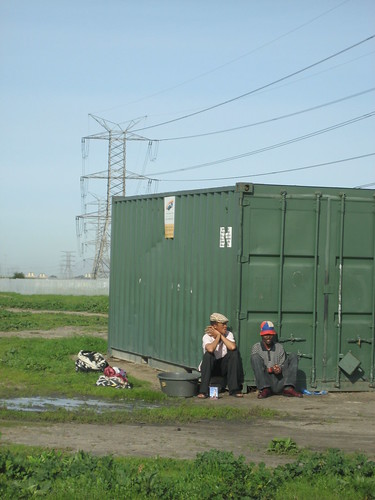
Waiting for Godot - Khayelitsha, South Africa

The two men sit outside a container waiting there in the middle of the field. There is an ease about them. We've caught them at a comfortable lull in the conversation or perhaps they are pondering a fond memory or the whereabouts of so-and-so. Their posture is relaxed, their clasped hands are mirrored. They've shared many stories, they'll share many more.

The one, perched on a couple of cement blocks, sports a plaid cap, a light pink polo shirt and slightly loose black trousers. Second hand. The other's multi-coloured off-brand Kangol bucket hat underlines the point. They are not rich obviously, for it goes without saying that the rich do not sit waiting outside containers in the middle of fields.

The power lines loom overhead, the hum of Tesla's crucifixes perhaps crackling occasionally to punctuate the high voltage cancerous flow. A basin sits to their right and there are a couple of piles behind them, clothes, it appears, that they are in no hurry to wash. The puddles of (dirty) water we assume do not disturb them now if they ever did. They are at ease in their patch of the the world. If it weren't for their skin tone, one would be tempted to call them Vladimir and Estragon, for indeed they do appear to be Waiting for Godot.

Waiting for Godot - Khayelitsha, South Africa

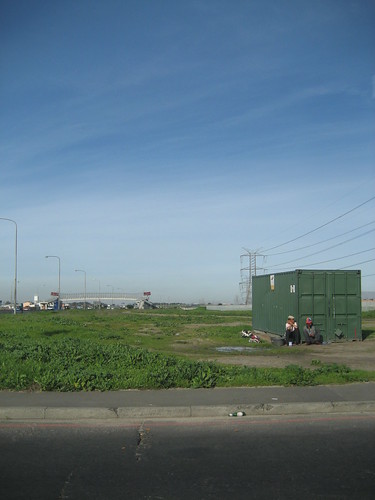
The earlier photo, taken at a further remove, is more classical. With its wider angle it captures more of the bluer sky, and places the men in their proper scale and perspective: insignificant like the discarded beer bottle at the curb, twenty meters away from the faded green container. Although it was winter in South Africa and it had snowed in Johannesburg for the first time in years, the environs of Cape Town could count on the milder weather that the men are enjoying. I understand why the photographer zoomed in, however. It's those details: that package at their feet, that blue plastic bag stuck under the locked container, the expressions on their faces, it's not so much resignation and despair as wist. Rather than the theater of the absurd, call the scene a mere portrait of modernity. I welcome other readings.

...

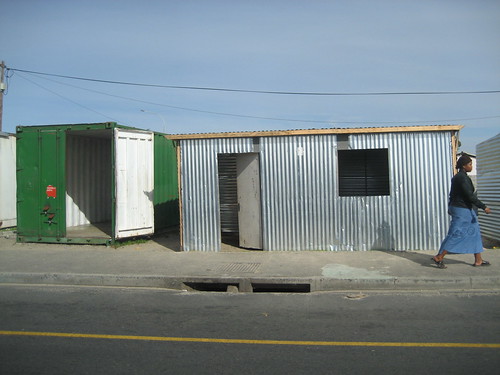
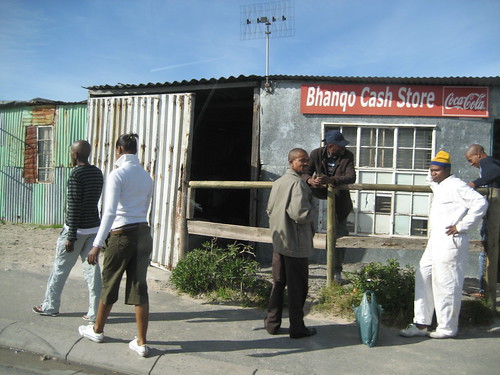
The Khayelitsha township near Cape Town, South Africa remains a foreboding place: poor, underdeveloped and a visible reminder of the lasting legacy of apartheid.

Khayelitsha slum

Still, even among the informal slum surroundings that might depress the most hardy,

Khayelitsha shacks precarious

there is a dynamism among the people that live here that belies the script that many have written for them.

Amidst the tin shacks (these days without the asbestos roofing of yore)

Khayelitsha shacks

and the containers

Khayelitsha containers and housing

those improvised, repurposed and ubiquitous containers

Khayelitsha container housing

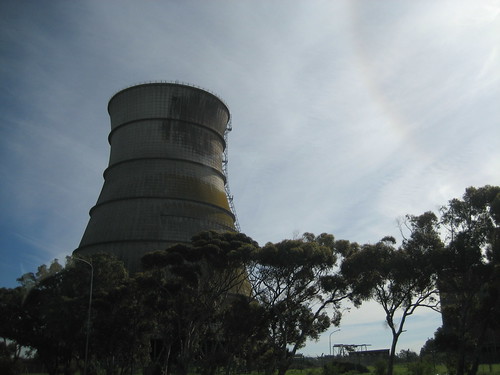
and under the shadow of the electrical pylons and power plants,

Khayelitsha tower

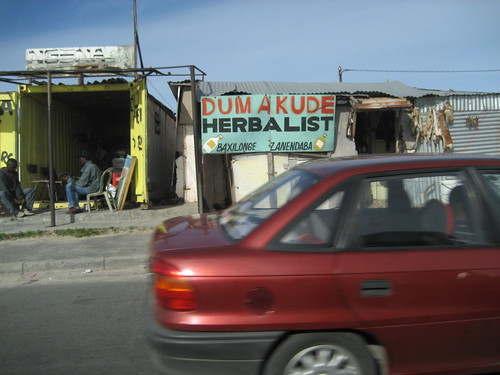
you'll find shops,

Khayelitsha containers Dumakude herbalist shop

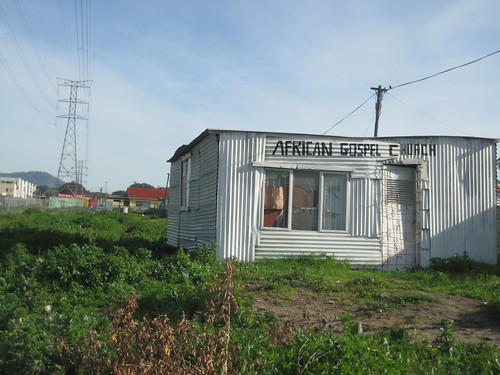
churches of sorts

Khayelitsha african gospel church

and, more importantly, the people with more ideas than you can absorb.

There's no time to dwell on any notion of nostalgia or the tragicomedy of poverty. This is the terrain of the hustle.

Khayelitsha bhango cash store

I trust the future is being written in Khayelitsha.

Soundtrack for this note


As is my custom, a playlist to augment this thoughts.

Obligatory disclaimer: I skipped the obvious songs about waiting since I was aiming for optimism rather than the blues (Prince's Still Waiting, Bob Marley's Waiting in Vain or say George Michael and Aretha Franklin's I knew you were waiting for me etc.) Also: these photos were taken by The Wife during a research trip in July 2007. I still haven't geared up to write up my own observations from my time in South Africa.

File under: , , , , , , , , , , , ,,

Monday, June 13, 2005

West Nile Blues

Last year you read a pamphlet from the Cambridge Public Health Department about the dangers of the West Nile virus. You wrote a blog entry about that virus, mosquitos and malaria. You had lots to say about mosquitos and malaria given your history and your Ghanaian background.

Then one morning this past April, you woke up to the sounds of bulldozers digging a foundation in the adjacent house right outside your bedroom window. Thenceforth every morning at 7:30am, the fun starts with construction noise. It's not as bad as last year when it was construction two houses over. So far they don't have the loud guys, those guys with the booming South Boston voices who wrangled the construction crew and kept the lazier folks on their toes. You got an education on the intricacies of construction work and mentoring on the job. Its a different crew this time, they're more experienced and barely talk to each other. The real-estate bubble is in full gear in metropolitan Boston and in Cambridge it is reaching fever pitch. Everyone is building new houses in their backyards or doing home improvement. The developers have moved in, The Locals are moving out - priced out and heading to Medford and beyond (even Somerville is getting too expensive). Gentrification is proceeding apace.

In any case, this year you've been waking up even earlier because of the quality of the early morning light so you aren't woken up by the construction. It simply disturbs your early morning reading and writing. You get used to the noise after a couple of weeks. At some point it rains heavily, it's late spring weather. A week or so later, you walk into your apartment one night and notice a mosquito (you wonder if a window is open); you kill it. You've had malaria bouts in the past and have lost your immunity. Thus you are very sensitive to their presence and can't bear these creatures of God.

A few days later you enter your bedroom at night and notice that this time there are plenty of mosquitos - you spend a half-hour killing them before you go to bed. You check to see if your window nets have holes in them. Everything looks ok. A day later The Girlfriend mentions in passing a report predicting that Boston will be the prime capital for West Nile Virus this year. You shrug. West Nile virus has spread all over the US in any case.

You come back from work that night and again find your bedroom teeming with mosquitos that buzz around your head as you doze off. Again, lights on, grab the nearest newspaper, curl it and hunt for those pesky insects. The result is a few stains on the wall. You'll wipe the wall later.

You wake up the next morning. It's a lovely day. You lean out of your window. It's 7am and those construction folks have started early.

Then it clicks. You observe pools of stagnant water in the foundation hole. You've read about stagnant water in some pamphlet before.

You lean out of your window and take a photo. The construction workers notice you and make a wisecrack. You ask them when they'll finish construction. "Maybe by November." "What about the foundation?" "Maybe August." "Nah, July. Are you crazy?" "Hey. I want a copy of the photo". "Sure man".

You're still a 35mm luddite so 2 weeks pass before you develop, scan and post said photo on Flickr.

construction outside window

Days later, while waiting for a server to restart, the bane of a developer's life, you write a short blog entry about said construction site.

You make a note to add to your shopping list: Insect Repellant Spray (Deep Woods Off with at least 15% DEET). You wonder if you won't need to buy Mosquito Coil or some heavy duty spray like they use in Ghana for your apartment to control the infestation.

You remember that malaria was a problem in New York as late as 1950 and similarly in London and Paris. The problem being insanitary living conditions and the proverbial stagnant water pools where mosquitos breed. Who would have thought that normally cold Boston would have an issue with mosquitos? You say to yourself that it is futile to call the Cambridge Department of Public Health: until the foundation is done, it will be a big hole and breeding pool. Your only hope is heat and global warming to evaporate the water.

You realize your biology is faulty: the warmer it is the more mosquitos there'll be. Oh well.

You look out again and notice more pools of stagnant water gathering. There'll be fun in Boston this summer and especially in your neighbourhood. Maybe with West Nile Virus ascendant and mosquitos everywhere, someone will finally focus on finding a cure for malaria. Maybe with US soldiers hallucinating because of Larium and going on homicidal rampages, someone will fund research into better drugs for that disease.

In any case, you welcome the US to the fun of the Third World.

Like they say
Mosquitos don't discriminate.

Postscript


This morning they begun pouring concrete, cement or something or other into the foundation. They must be moving ahead of schedule. Hopefully the mosquito infestation will be soon be tempered as the stagnant water is drained. Ironically the nuisance is now the noxious fumes that emanate from the pit as they mix and pour whatever chemicals. The Girlfriend run precipitously from the apartment when she smelled that concoction.
I don't like your apartment.


See also: Strange Days

File under: , , , , , , , , , , , , , , , , , , ,

Wednesday, September 29, 2004

Reading The Haitian Landscape

The grim stories from Haiti over the past couple of weeks are even more depressing than the steady drumbeat of bad news we've heard from there all year. Perhaps only genocidal Darfur, perennially shell-shocked Gaza and the West Bank, the complete disaster that is Iraq, or the parts of Sahelian Africa that are dealing with a biblical plague of locusts are comparable in the extent of desperation inflicted on the poor country. See Death Toll in Haiti Floods Rises to 1,650 or many other news stories about Hurricane Jeanne and photos to get a flavour.

True, some of the scenes from Gonaives that have emerged have even managed to make slight inroads into the solipsism of America's media; the dramatic images, of say people fighting for food or UN troops having to fire in the air to prevent looting, provide a more arresting diversion from the more orderly Florida evacuations or political navel-gazing of election season. But only for a few minutes. The media script that prevails is one that doesn't allow us to stare frontally at the abyss that is today's world. If we won't even dig into Abu Ghraib, what appeal can little Haiti have? Like the graffiti on the subway I noted proclaimed: "Buy Something, You Stupid Consumer!" That's really what it's all about in this society.

The Haitian Landscape


Still, Haiti has been a non-stop disaster all year
Floods are particularly devastating in Haiti, the poorest country in the Americas, because it is almost completely deforested, leaving few roots to hold back rushing waters or mudslides. Most of the trees have been chopped down to make charcoal for cooking.

The storm came four months after devastating floods along the southern border of Haiti and neighbouring Dominican Republic. Some 1,700 bodies were recovered and 1,600 more were presumed dead.

Gonaives, the city where Haiti's declaration of independence was signed, also suffered fighting during the rebellion that led to Aristide's ouster and left an estimated 300 dead.

All this in a year supposed to be dedicated to celebrating the 200th anniversary of the country's independence from France. Haiti, the only country to launch a successful rebellion against slavery, was the world's first black republic.
In a sense this week's scenes are much like those of the Mozambiquan floods of 2000 (similarly epochal) and the woman giving birth on treetops and being rescued by helicopter. You can't ignore the human drama of the natural disaster.

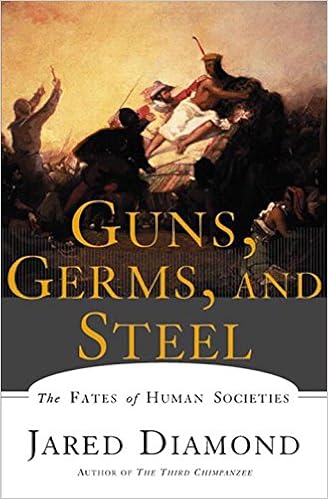
Of course, the irony is that the foundation for the disaster has been man-made (albeit taking place slowly over the past century). Over the past few years, geographer, physiologist and MacArthur Foundation 'Genius', Jared Diamond, has been emphasizing the point he first made in Guns, Germs and Steel

Guns Germs and Steel


To take an example from last year, in an op-ed on Iraq in the LA Times (I can't find an online link, so this quote is from my copy), he talked about the decline of the Fertile Crescent (what we now call the Middle East and the cradle of civilization) and The erosion of Civilization
So how did Fertile Crescent peoples lose that big lead? The short answer is ecological suicide: They inadvertently destroyed the environmental resources on which their society depended. Just as the region's rise wasn't due to any special virtue of its people, its fall wasn't due to any special blindness on their part. Instead, they had the misfortune to be living in an extremely fragile environment, which, because of its low rainfall, was particularly susceptible to deforestation.

When you clear a forest in a high-rainfall tropical area, new trees grow up to a height of 15 feet within a year; in a dry area like the Fertile Crescent, regeneration is much slower. And when you add to the equation grazing by sheep and goats, new trees stand little chance. Deforestation led to soil erosion, and irrigation agriculture led to salinization, both by releasing salt buried deep in the ground and by adding salt through irrigation water. After centuries of degradation, areas of Iraq that formerly supported productive irrigation agriculture are today salt pans where nothing grows.

Once the Fertile Crescent began to decline for those environmental reasons, hostile neighbors helped speed the process. The original flow of power westward from the Fertile Crescent reversed in 330 BC, when the Macedonian army of Alexander the Great advanced eastward to conquer the eastern Mediterranean. In the Middle Ages, Mongol invaders from Central Asia destroyed Iraq's irrigation systems. After World War I, England and France dismembered the Ottoman Empire and carved out Iraq and other states as pawns of European colonial interests. As the end product of this history, the former world center of wealth, power and civilization is now poor in everything except oil. Iraq's leaders ensured that few benefits of that oil reached their people.

Iraq's decline holds a broader significance. Many other countries today face similar crippling environmental problems, including the deforestation, overgrazing, erosion and salinization that brought down the Fertile Crescent. Other countries already crippled or nearly so by such problems include Haiti, Somalia, Rwanda, Afghanistan, Pakistan, Nepal, the Philippines and Indonesia.

You may well detect a similarity between this list of looming environmental disasters and the CIA's list of overseas trouble spots, places prone to civil wars and violent regime changes ? places to which we often end up dispatching U.S. troops. Those two lists are related by cause and effect. When environmental damage makes people economically desperate, they are likely to suffer from poor health and short life spans, blame their governments, kill each other, end up with crazy leaders and seek to immigrate illegally to more favored landscapes.
Or for a more extensive treatment in a recent take on Why Societies Collapse, consider this excerpt from a speech
If one asked an academic ecologist to name the countries in the modern world that suffer from most severe problems of environmental damage and of over-population, and if this ecologist never read the newspapers and didn't know anything about modern political problems, the ecologist would say "Well that's a no-brainer, the countries today that have ecological and populations, there are Haiti, Somalia, Rwanda, Burundi, Iraq, Afghanistan, Pakistan, Nepal, the Philippines, Indonesia, Solomon Islands." Then you ask a politician who doesn't know, or a strategic planner who knows or cares nothing about ecological problems, what you see is the political tinderboxes of the modern world, the danger spots, and the politician or strategic planner would say "It's a no-brainer; Haiti, Somalia, Rwanda, Burundi, Iraq, Afghanistan, Pakistan, Nepal, the Philippines, Indonesia, Solomon Islands", the same list. And that simply makes the point that countries that get into environmental trouble are likely to get into political trouble both for themselves and to cause political troubles around the world...

In trying to understand the collapses of ancient societies, I quickly realised that it's not enough to look at the inadvertent impact of humans on their environment. It's usually more complicated. Instead I've arrived at a checklist of five things that I look at to understand the collapses of societies, and in some cases all five of these things are operating. Usually several of them are.
  1. The first of these factors is environmental damage, inadvertent damage to the environment through means such as deforestation, soil erosion, salinisation, over-hunting etc.
  2. The second item on the checklist is climate change, such as cooling or increased aridity. People can hammer away at their environment and get away with it as long as the climate is benign, warm, wet, and the people are likely to get in trouble when the climate turns against them, getting colder or drier. So climate change and human environmental impact interact, not surprisingly.
  3. Still a third consideration is that one has to look at a society' s relations with hostile neighbours. Most societies have chronic hostile relations with some of their neighbours and societies may succeed in fending off those hostile neighbours for a long time. They're most likely to fail to hold off the hostile neighbours when the society itself gets weakened for environmental or any other reasons, and that's given rise for example, to the long-standing debate about the fall of the Western Roman Empire. Was the conquest by Barbarians really a fundamental cause, or was it just that Barbarians were at the frontiers of the Roman Empire for many centuries? Rome succeeded in holding them off as long as Rome was strong, and then when Rome got weakened by other things, Rome failed, and fell to the Barbarians.
  4. And similarly, we know that there were military factors in the fall of Angkor Wat in Cambodia. So relations with hostiles interacts with environmental damage and climate change. Similarly, relations with friendlies interacts. Almost all societies depend in part upon trade with neighbouring friendly societies, and if one of those friendly societies itself runs into environmental problems and collapses for environmental reasons, that collapse may then drag down their trade partners. It's something that interests us today, given that we are dependent for oil upon imports from countries that have some political stability in a fragile environment.
  5. And finally in addition to those four factors on the checklist, one always has to ask about people's cultural response. Why is it that people failed to perceive the problems developing around them, or if they perceived them, why did they fail to solve the problems that would eventually do them in? Why did some peoples perceive and recognise their problems and others not?
Soil erosion as big a problem as global warming
Societies in the past had collapsed or disappeared because of soil problems. Easter Island in the Pacific was a famous example, Prof Diamond said. Ninety per cent of the people died because of deforestation, erosion and soil depletion.

"Society ended up in cannibalism, the government was overthrown and people began pulling down each other's statues, so that is pretty serious. In another example, Pitcairn and Henderson island in the south-east Pacific, everybody ended up dead. Another example was Mayan civilisation in the Yucatan peninsula of Mexico and Guatemala. Again, people survived but about 90% of the population was lost," he said.
The horrific impact of deforestation on the Haitian condition is a modern and pressing concern but some might say that Haiti was cursed from the beginning and for that we have to look at other aspects of the Haitian landscape.

Slavery


Slavery throughout the Caribbean was awful but nowhere worse than in Haiti where colonists gave vent to the full flowering of racism and raw brutality, plumbing the depths of institutional degradation and humiliation. The legendary violence in Port-Au-Price and its environs still reverberates. If issues of race and its legacy still consume the US, imagine what it must be like where slavery received its highest formulations.

L'esclave vieil homme et le molosse by Patrick Chamoiseau


Patrick Chamoiseau

Patrick Chamoiseau hails from, and writes about, Martinique but this little fable about the old slave who decides to flee the cruel master and the huge mastiff that pursues him applies equally well to Haiti. This story is akin to Ernest Hemingway's The Old Man and The Sea, written as a universal tale, in the exuberant voice of Creole. Salman Rushdie's Haroun and the Sea of Stories is written in a similar tone although this time targeted at younger audiences.

Chamoiseau normally writes about life in the slum (see Texaco), and about oral history, language and modern-day griots (see Solibo Magnificent), in a stylized language that is neither french nor creole but its own invention. This short book is a departure for him and allows him to focus on the essence of the caribbean experience of slavery and less on the style. His Creole Folktales are more explicitly idealized.

Here both the language and the story are simple, drawn with broad strokes and the effect is dreamlike with sometimes astonishing details catching your attention. The master's huge dog that had demoralized all other fugitives into submission. The old slave that no one ever thought would flee, has spent his life caring for the family and the plantation. The master's rigid discipline over his domain, a firm and sometimes cruel hand - but only when necessary. The chase drawing these three characters further and further into the forest. It is a stripped-down journey of 150 pages that leaves you wanting to discover all you can about this living history that is the legacy of slavery in the Caribbean.

Voodoo


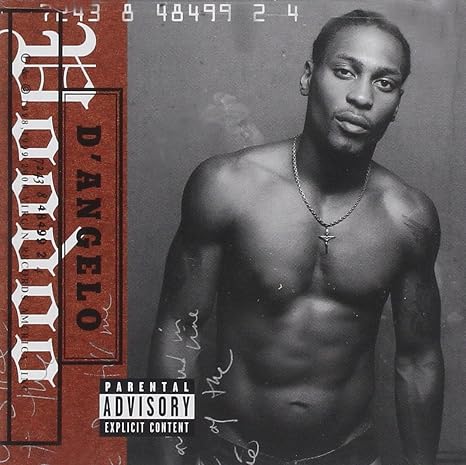
Voodoo too looms large in the popular imagination of Haiti. In music, we can look in recent years to D'Angelo's Voodoo album and its photos of bare-chested dancers in circles and chicken feathers floating in the air presumably about to be sacrificed. The music too is slow and mysterious, tilted towards New Orleans and Haitian Vodun and punctuated with occasional shrieks and sound effects providing ambiance. My favourite album of the past decade.
D&Angelo Voodoo


As I've mentioned before, my neighbourhood's Haitian grocery is regarded with suspicion as a sort of Voodoo emporium. You wouldn't expect this given the large population of Haitians in metropolitan Boston and the large number of christian churches that they dominate still the perception of a primitive and nativist voodoo culture informs the haitian landscape.

James Bond


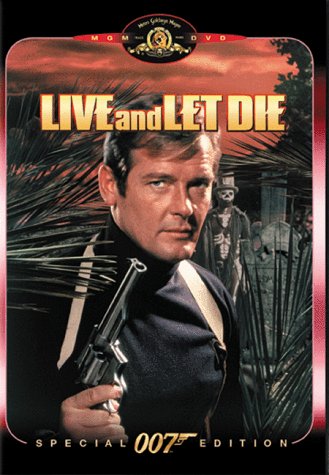
In movies too, Haitian voodoo is an ongoing motif. Take the James Bond staple, Live and Let Die James Bond battling voodoo cultist and drug dealer, Yaphet Kotto, whose hold over the card reading Jane Seymour character, Solitaire, is organic and vaguely sinister - one of Ian Fleming's best novels if an ordinary Bond film.

Angel Heart


Or that great B-movie, Angel Heart starring my first crush Lisa Bonet and Mikey Rourke with its dark sounds, dances and atmospheric pathos and sense of dread.

Toussaint L'Overture and the Slave Rebellion


Toussaint L'Overture is the most striking figure in Haiti's history - a former slave who practiced herbal and African healing, although he was not a Voodoo houngan. He was the most forceful, astute and successful of the generals who led the slave uprising that lead to the founding of Haiti's Republic challenging the French (even scaring Napoleon), the Spanish, and the mulattos. His story is tragic, abolishing slavery and founding the "First Black Republic (tm)" and dying in captivity in the Fort de Joux in Doubs, betrayed by everyone.

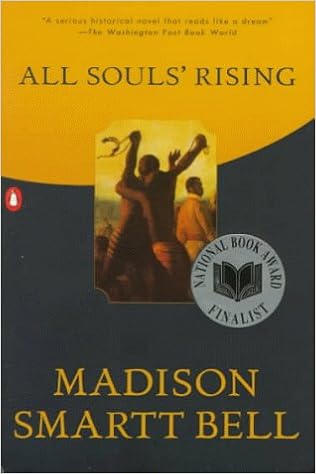
All Souls's Rising by Madison Smartt Bell

Madison Smartt Bell


Master of the Crossroads by Madison Smartt Bell

Master of the Crossroads


The first two parts of Madison Smartt Bell's masterpiece trilogy on revolutionary Haiti cover much of Toussaint and Haiti's story. I can't say enough about the achievement of these novels and am eagerly awaiting the final part due in November 2004. He displays astounding historical imagination in exploring the rich intricacies of the period. The expansive set of characters that we follow in this disturbing and violent tragedy is a sort of greek chorus. The conscience of the story, the good Doctor Antoine Hébert is mostly powerless in the face of the epic events that are taking place yet he tries to maintain his humanity all the while observing the great men and the small people who have to live with the decisions. We see Toussaint gaining tactical awareness and power and all the various forces at work: the colonists trying to keep their plantations, France in revolution and mostly the various factions of the slaves in revolt, the landed mulattos fighting to preserve their middle ground much like the 'coloreds' in modern day South Africa.

At the end of Master of the Crossroads, that "carefully drawn road map through hell", Smartt Bell reproduces a great document from his archival research: the "Classification of Races in colonial Saint Domingue" with the 210 different hues of humankind listed according to the amount of black blood - a five pages tribute to how deeply engrained this institution was. A sample:
I. Combinaisons du Blanc.

D'Un Blanc et d'une Négresse, vient... un Mulâtre.
D'Un Blanc et d'une Mulâtresse... Quarteron.
D'Un Blanc et d'une Quarteron... Métis.
D'Un Blanc et d'une Métive... Marmelouque.
D'Un Blanc et d'une Marmelouque... Quateronné.
D'Un Blanc et d'une Quateronnée... Sang-mêle.
D'Un Blanc et d'une Sang-mêlée... Sang-mêle, qui s'approche continuellement du Blanc.
D'Un Blanc et d'une Marabou... Quateron.
D'Un Blanc et d'une Griffonne... Quateron.
D'Un Blanc et d'une Sacatra... Quateron.
Faulty biology may account for this emphasis on mixed blood - the Sang-mêle quoted above, but this skewed and awful dislocation of race writ-large continues to haunt that society to this day. You can imagine old society ladies evaluating new parvenues according to this code.

The Kingdom of this World - by Alejo Carpentier

Alejo Carpentier


Alejo Carpentier's novel delves deeply into the lurid and lugubrious depths of the years after Haiti's liberation from francophone colonial rule under the black king, Henri-Christophe. This was an era of chaotic, brutal, and horrific atrocities that gave full vent to the casual cruelty of the races. The writing is hallucinatory and surreal which suits the violent period he is covering. I suppose this is what magic realism is all about. We follow the events through the eyes of the old slave, Ti-Noel, a stoic guide to the Dante-esque corruption and superstition that ensues. The heights of sexual loathing and racial hatred are also emphasized here. Power and corruption are absolute.

Papa Doc and Les Tonton Macoute


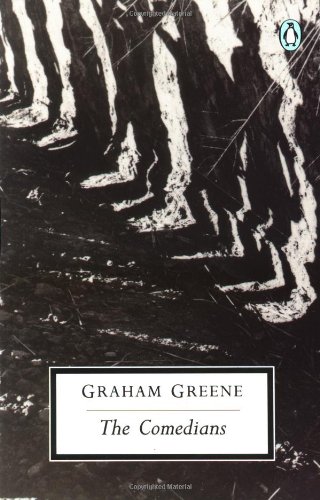
The Comedians by Graham Greene

The Comedians


Graham Greene's 1966 novel deals with the macabre and grotesque era of "Papa Doc" Duvalier (1957-1986) that would carry on like a vicious hereditary disease under his son "Baby Doc" who now lives a life of comfort in exile in France. Haiti has never escaped social and political upheaval and here it's dictatorship as a theatre of the absurd, of pockets of arbitrary and savage violence erupting at will across the populace. As his author's introduction notes:
Poor Haiti itself and the character of Doctor Duvalier's rule are not invented, the latter not even blackened for dramatic effect. The Tonton Macoute are full of men more evil than Concasseur; the interrupted funeral is drawn from fact; many a Joseph limps the streets of Port-au-Prince after his spell of torture, and though I have never met the young Philopot, I have met guerillas as courageous and as ill-trained in that former lunatic asylum near Santo Domingo. Only in Santo Domingo have things changed since I began this book - for the worse.
Featuring an expatriate hotelier Brown, whose jaded, seen-it-all sensibility can't prevent him from getting embroiled in a doomed anti-Duvalier plot. This is not one of Greene's 'Entertainments' although there are elements of farce and how could it be? The subject matter of Haiti defies even tragicomedy. Incidentally for a very knowing look at Graham Greene see the following review: Sinner Take All - Graham Greene.

I haven't read much of the more modern fiction on Haiti. I have Edwidge Danticat's Breath, Eyes, Memory lying around somewhere, its Oprah's Book Club label insistently staring at me. I suppose I should really read more than the first 5 pages but it looks like one of those difficult reads. Maybe later.

For now though, the eight families (light skinned) who own almost all of Haiti are happy to continue living in their paradise, shopping in the best department stores in Miami and Paris. Hell I met a number of their offspring at Harvard, bright, cultured and highly recherché in their intellectual outlook - much resented by some of the more common Haitian stock, I might add. I wonder about that resentment though: no one ever willingly gives up privilege. For the rest of the country I suppose it's mostly your garden variety third-world drudgery: a wellspring of ecological hell, cocktails of charcoal, asbestos and cheap plastic Chinese imports, albeit washed down with sprinklings of CNN, the BBC, the latest Hollywood bootleg dvds, Brazillian football and global hip-hop and reggae.

If Jean-Bertrand Aristide, eventually aided by a reluctant Clinton, brought a promise of change and restoration to Haiti in the 1990s, the result a decade later is clearly disappointing if not disastrous as he too is now in ignimonious exile and Haiti is in the news again as a poor desperado. His journey from priest to president to exile (twice) and the historical parallels are begging for a couple of novels or at least a movie.

In the world of art, it is easy to dwell on blood-soaked despair and Haiti gives much material for this vein. In the real world of Haiti however, we should always remember that there are simply people trying to get on with it under very trying circumstances. Reading the Haitian landscape is only part of the puzzle, a very proud and capable people stare back at you exuberant and expectant.


[Crossposted at blogcritcs.org] File under: , , , , , , , , , , , , , , , , , , , , , , , , , , ,