Showing posts with label Miles Davis. Show all posts

Monday, July 25, 2005

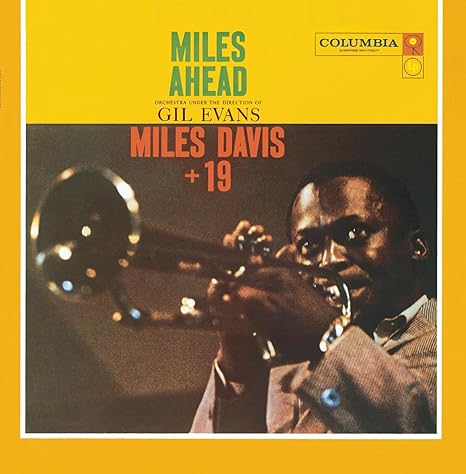
Miles Ahead

So Chris Lydon pinged me yesterday about a show he was putting together on Miles Davis tonight. He obviously knew that Miles is like an old friend to me and a litmus test I use to compare up-and-coming artists.

The original hook was "How to listen to Miles Davis... and Why?", it has since morphed into Miles Davis: Early, Late, Real, Yours. As The Times points out today, A Radio Program Turns to a Blog to Cull Ideas, this is a very interactive way to put a program together and the pre-show comments tell the tale about how it can engage the audience and shape the focus of the show. Participatory radio is the thing these days and the feedback loop that the two-way web allows is refreshing. You should be able to listen to it live on radio, via streaming or download the archived show.

I've been nursing a sore throat and have mostly lost my voice thus I'm not sure that I'll be able to call in and participate what with George Wein, Marcus Miller and George Cole now added to the menu.

Still here are some jumbled thoughts that I sent his way. We are both enthusiasts on this front.

So much to say about Miles and so many ways to look at him...

For some he's just a good introduction to jazz. For most people, Kind of Blue is the first jazz album they'll buy much like Bob Marley's Legend is the normal introduction to reggae.

Thus we have Miles as the Gateway Drug, the Taste of Blue which will lead to Something Else and Someday My Prince Will Come and then to Cannonball Adderley, John Coltrane, Sonny Rollins, Bill Evans, Ahmad Jamal and Wynton Kelly. Maybe we need a Miles Czar or War on Miles to prevent young people from getting hooked?

There's the bandleader who always surrounded himself with great musicians and (mostly) run a tight ship. Think of Monk, Duke, Mingus or Blakey or Horace Silver whose bands were similarly proving grounds.

The list of those who passed through his band is astounding from Coltrane and Cannonball Adderley in the 50s through Tony Williams, Wayne Shorter, Herbie Hancock, Ron Carter in the 60s, Chick Corea, Joe Zawinul, Dave Holland, Michael Henderson, George Duke and Marcus Miller etc. He caught them young, stepped back and let them shine playing a kind of zone offense (to mix my metaphors) whatever the style of music was played.

There's the competition of the bop years, the blowing sessions with Bird and Diz. Who blew better, faster, higher? Diz? Clifford Brown? Lee Morgan? Roy Eldridge?

Then there's the First Great Quintet that I alluded to when Cookin with Rokia Traoré - the Rhythm Section indeed.

There's the Taste of Miles: he immediately recognized the artistry of Ahmad Jamal, Bill Evans, Wynton Kelly and others. Impeccable taste in short.

The various eras of Miles like you suggest. Everybody has their own favourite era and I change every six months. Of late I've been going with the work with Gil Evans and especially Miles Ahead which verges on the orchestral blues.

Style - Nobody does it better than Miles

Competitive - He was always listening to other sounds and wanted to compete. Think of the reaction to James Brown and especially to Sly Stone in the early 70s.

Tradition vrs Modernity - respectful at times but refusing to go with the academy. As an example of the academy at work, a recent (or current?) cover of Jazz Times has a piece on Wes Montgomery in proximity to the phrase Sellout. The nerve of it! Is jazz a living music or did it end with Filles De Kilimanjaro as Stanley Crouch and Wynton Marsalis would have it?

Ego - Miles refused to be ignored and was very sensitive to perceived slights.

Provocative - how else to describe Bitches Brew or say On The Corner?

Hubris - there was that and we must admit it

Race - since race is still very close to the fabric of this society one can talk about the kind of additional scrutiny that falls on prominent blacks from Jack Johnson to Muhammed Ali and how they negotiate it.

Sex - there is much to say about his attitude towards women. e.g. Misogyny at times, exploitative at times (pimp episodes). Is that par for the course?

There's also another aspect of Miles and sex that is worth pointing out. Why is it that when you start playing some laidback Miles (say Bags Groove with Milt Jackson) that members of the opposite sex immediately assume that your intentions, are how to put it, single-minded (e.g. Miles as a Gateway to Seduction). I suppose it's like the notion that Henry Ford could never have assumed that the back of a car would become a cultural signifier in the sexual life of teenagers in America and the rest of the world.

Drugs - must one suffer for one's art like so many jazz musicians did?

Money - well that's also worth a discussion. Did he go commercial?

Miles in twilight - I'm very interested in what he recorded with Prince and Chaka Khan in the late 80s - very little of which has been released. He had become terse, preferring concentrated bursts of trumpet and emotion rather than virtuosity. It is clear though that his influence was crucial in bringing horn-inflected sounds to His Royal Badness (the Minneapolis purple one). If you're one of those afflicted with the purple obsession you'll have somehow acquired the bootleg of the New Year's Eve jam at Paisley Park in 1987.

And it continues with the rappers today, they may not sample him (since the record companies charge so absurdly these days) but they name-check him. Think of Digable Planets or of A Tribe Called Quest in the past decade (The Low End Theory is just a matter of vibing with Ron Carter and hence Miles). The late era of any musician is always interesting, think of the pathos of Lady Day in autumn, the voice ravaged but note also the emotion of The End of the Affair.

Above all there's the music and we are lucky to have so much of it available on record. Still it is the music that happens after the show that I've been interested in, the blowing sessions much venerated in soul jazz, the little moments that stay in one's memory.

Mission: music. Glad you found Inamorata, I love tomorrow.

I subsequently noticed that the comments on the show's entry on the web site also spoke of Kind of Blue as being the Gateway Drug to jazz... Thus this is quite a meme. And it is true...

If you hear Miles play It Never Entered My Mind, you'll indubitably be led to Ben Webster and Coleman Hawkins' version and from there you'll branch to Duke Ellington then all bets are off, you'll get to Count Basie, you'll think of Lester Young and then you'll get to Robert Altman's Kansas City and then you come full circle with all those young lions cutting each other, James Carter, Nicolas Payton, Joshua Redman, Christian McBride etc.

There should be a Six Degrees of Miles parlour game.

As I leave you, I'm listening to Blues For Pablo and sipping some ginger tea with honey.
Miles Ahead


Miles Ahead like they said.

File under: , , , , , , , , , ,

Friday, March 11, 2005

Inamorata

(a portrait of Miles Davis)

Inamorata.
Mission: Music, Masculinity.
Master Of The Art, Music.
Who Is This Music
That Which Description May Never Justify?
Can The Ocean Be Described?
Fathomless Music,
Body Of All That Is.
Live Everlastingly.
Man Initiate Inamorata:
Your Music Art Tomorrow's Unknown Known Life.
I Love Tomorrow.

by Robert Conrad
From Miles Davis - Live-Evil (1970)

See also: Miles Ahead


File under: , , , , , ,

Monday, October 25, 2004

Cooking with Rokia Traoré

A night with Rokia Traoré at the Somerville Theatre, October 15, 2004

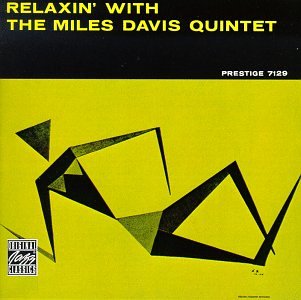
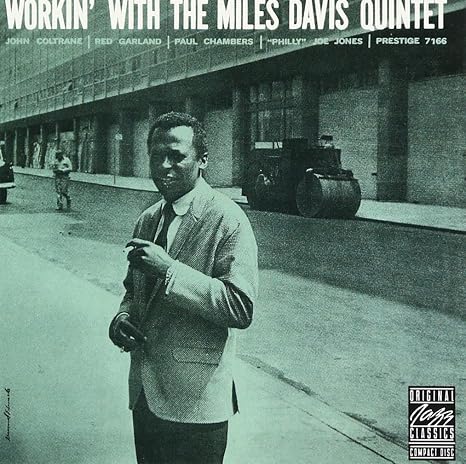
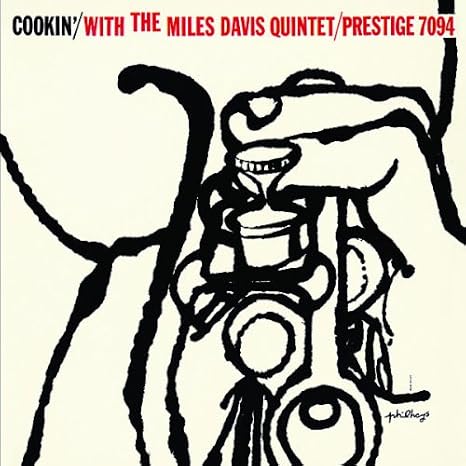
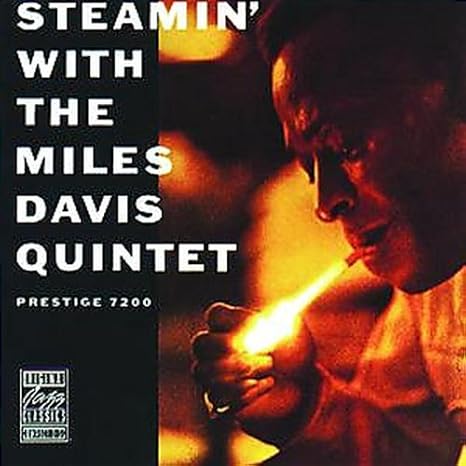
For many, the peak of Miles Davis's first great quintet were the four albums they recorded during a marathon studio session one magical day in October 1956. Relaxin', Workin', Cookin' and Steamin' were the album titles and collectively, they displayed the best of the jazz form of almost any era.

This was a group that had made a reputation touring together with a varied repertoire. The rhythm section of Red Garland, Philly Joe Jones and Paul Chambers was so well-oiled that it was called "The Rhythm Section", bold and capitalized. The quintet set the gold standard for musical empathy and high caliber fireworks something augmented in these recordings especially when a young John Coltrane would egg on bandleader Miles and trade solos.

The albums were recorded as if they were in a nightclub, Miles would call out a tune and off they would go laying out the definitive treatment of standards like Surrey With Fringe On Top or It Never Entered My Mind along with originals like Four and Half Nelson. These albums were probably the most conventional that Miles would make; he was never one to look back.

I mention all this because in many ways, Rokia Traoré's performance with her eight piece band last Friday reminded me of those landmark albums, in conception, in attitude and especially in the flawless execution.


Relaxin'


Relaxing


She walks out onto the stage quietly, picks up a guitar and begins playing. There are no diva theatrics - think of Beyonce being carried out Cleopatra-like by a guard of six hardbodies. This is a musician first and foremost; an unassuming singer/songwriter who knows that the music will speak for itself. She's lost the braids from a few years ago and her head is shaven, she's rocking the Angelique Kidjo aesthetic.

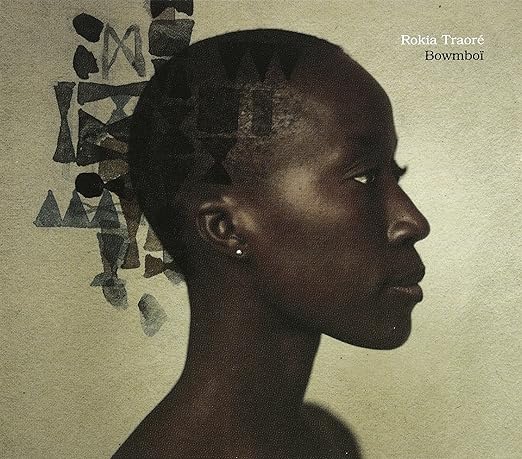
A back-up singer and a kora player accompany her and they begin with a touch of reflection, a couple of soft lilting ballads She's trying out the material from the new album, Bowmboï. It's a gentle introduction for the audience, fodder for a quiet evening on the porch.

Malian music is very well marketed in the West, moreso than say soukous, highlife or other forms of African music. The reason being that it is typically less frenetic than those forms and also because in many ways, it fits with a certain notion of "World Music": folky, laidback, and vaguely "authentic". The idea is that it's rural, bluesy, folk music: think Ali Farka Toure, think the "Roots of The Blues" etc. Never mind that the picture on the ground is more complicated or that the influences are varied and cross cultural boundaries. Never mind all that. This is the terrain of the African artist. Their music belies the frame in which they are portrayed.

The first time I saw her, four years ago, it was across the street, at Johnny D's, a small, homely joint that seats maybe a hundred. Back then, she was promoting her second album, Wanita, a dreamy affair firmly in traditional mould. These days though, she can sell out the Somerville Theatre which seat about 1,000 which give you some idea of the attention that has been paid to building up an audience. Nonesuch is the new record label and you know that they are no fools.

Workin'


Working with the Miles Davis Quintetrokia traore


The rest of the band join them and the evening's groove begins. Rokia is a diplomat's daughter and has lived in the Middle East and the West. She's listened closely to all those other rhythms but finds comfort in her roots, thus we have the balafon (xylophone), the kora, the two n'gonis (lutes)and the calabash and talking drums. Clearly the decision to use traditional malian instruments is a conscious one.

Her voice is not as full as Oumou Sangare - the éminence grise of Malian vocalists; it's lighter and more ethereal. The backup singer overlays and harmonizes very well. They are sisters in harmony.

She's got a young band, a set of young Malian musicians who are enjoying every minute of their time together and are committed to the journey she's taking them on. As a bandleader, she is not the imperious commander type although she has a clear conception of what she wants to achieve. She is more the team player, allowing everyone to shine and produce a zone offense, if there's such a thing.

One surprise though is the new guitarist/bassist Christophe "Disco" Minck, a tall long-haired Belgian so-and-so who lays down the fierce and metronomic break beats and wah-wah effects while jerking like a funky chicken. It adds some flavour to the gumbo they are cooking up on stage. This is akin to the addition of Money Mark's Fender-Rhodes keyboards during Femi Kuti's tour a few years ago promoting the Fight To Win album. There's something about the cross-cultural exchange by having another set of ears in the mix. She's been listening to all sorts of music and it informs her writing on the songs on the new album. It's hypnotic and mellow yet, rendered live, it's propulsive stuff.

Cookin'


Cooking with the Miles Davis Quintet
Wanita


During the Wanita tour, she very generously shared her stage with a group of young Malian drummers and rappers. The whole world listens to hip-hop and it was interesting to see the exuberant youth reinterpret the old tunes to a griot backbeat. She welcomed their melodic ideas and rhythmic wordplay then but this sensibility is only occasionally hinted at in her own music. She manages to be sound contemporary while keeping a traditionalist slant to things.

Back home, her biggest competition among the young lions is probably Habib Koite who is a similarly gifted writer. The blind duo, Amadou & Miriam are the folk heroes. Of course the gold standard are artists like Salif Keita, Oumou Sangare and all those great kora players (Toumani Diabate among them).

The new album recorded last year has been getting some buzz in Africa and Europe. Bowmboï won the BBC Album of the Year award and you begin to get an idea of what the judges for that competition were thinking as imperceptibly the band begins cooking. Polyrhythmic innovation quickly ensues, fired on by wah-wah guitar and alternatively some thumping electric baselines.

On the album she enlists the Kronos Quartet on a couple of songs - the effect is to add a classical tinge to the malian and occasional middle-eastern soundscape. Live though, the band gives vent to the interplay between the n'goni and the calabash, her own guitar quietly filling in the space.

For me it's the soul clap factor, once you've got me clapping, your work is done: I'll be your evangelist. She's got me clapping for sure.

As if to prove my point, she starts dancing with her backup singer, with flowing and languid movements. The men get very interested at this, if they weren't already: the two are lithe and sexy. The women in the crowd stay interested because their dancing is not as overtly sexual as for example those female dancers in Femi Kuti or Koffi Olomide's bands; it's tastefully done and no competition. They proceed to reel off five or six joints that are simply perfect, insistently intelligent, long groovy pieces that they explore to the fullest. We are all elated by the end of things.

Steamin'


Steaming


As she comes out for the encore, she enjoins the crowd in her bookish, impeccably correct and french-accented english, to feel free to stand and join her in moving to her music. "For me, singing onstage was a dream that has come true." Like a good diplomat, she knows how to charm her audience. The Girlfriend and I of course had been nudging each other throughout noting that African audiences would never have sat down through the type of performance that we have been treated to so far. Well this is Massachusetts so we take what we get.

The crescendo builds up in the three encore songs, and this is what is extraordinary about this: the music while clearly akin to Ali Farka Toure blues is nevertheless very danceable. More to the point the groove is trance-like and plainly funky. How do you manage to make funk out of kora and xylophone, pray tell? Now others in the crowd don't need any prodding to join in the soul-claps and the call-and-response that clearly delight both musicians and audience.

I think the space created by the two interlocking n'gonis is a vital part of the mix. Also we are treated to shifting tempos and some sublime changes just like in soukous or old highlife (see King Bruce or E.T. Mensah). Think of it as 5 or 6 in-situ remixes of the songs, radical reinterpretations of a basic sketch. So the dancing gets wilder, the atmosphere gets sweaty and we are all making a beautiful sound. At the concert closes the entire band is showcased and they do justice to it all. We're leave hyped by what we've heard. Come back Rokia... Steaming is the least of it.

Now that I've placed Rokia Traoré in august company for this review asserting that she's channeling the spirit of the Miles Davis Quintet, I should close by commenting on the context in which to place the evolution of her nouveau-funk Malian brew. For Miles Davis, the cooking sessions confirmed his place among the jazz greats and cemented his reputation as a bandleader par excellence. Bop traditionalists still look back on fondly on them as a landmarks. Albums like Kind of Blue and Somethin' Else would soon follow these classic and Miles' experiments would multiply in the ensuing years. Rokia Traoré's new album and especially the live performances in this tour are similar, confirmation of a great talent and a wonderful bandleader, I can't wait for the next album or to see what direction she goes in. You want to be along for the ride.

The critical response to her tour has been suitably estatic (see these various reviews for example). But don't take it from the Times or The Post, down here in the streets of Cambridge, the toli is that Rokia Traoré has arrived. Keep your eye on her.

File under: , , , , , , , , , , ,