Showing posts with label concert. Show all posts

Saturday, November 07, 2009

Meshell's Moods

Anger can be a great musical catalyst. The story is told about Miles Davis's historic 1964 concert at Lincoln Center, that the band was angry that Miles had preemptively waived their fees for charity. The performance, duly celebrated in two albums, My Funny Valentine and Four and more, can be said to have that urgent yet sinuous edge that make it one of the essential live musical performances. The young rhythm section is especially on fire; you can almost hear the added accents in Tony Williams's percussion, Ron Carter does all the right things as a low end theoretician on the bass, and Herbie Hancock solves differential equations on his piano. And then there's the horns of course, Miles is lyricism itself - the ballads are simply wonderful, and George Coleman blows throughout as if it's a cutting contest. The son of man claimed that man cannot live on bread alone, these hungry musicians tried to come up with a corollary to that notion over the course of the concert. Suffice to say that it was an important occasion for all concerned and the potency of the music endures.

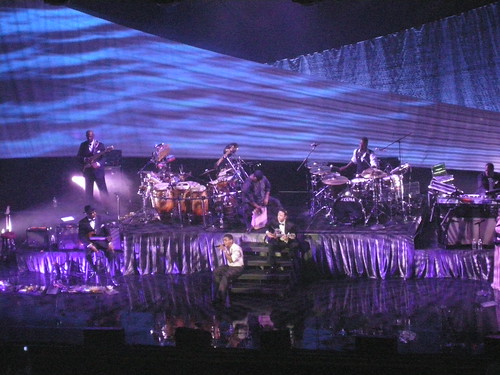
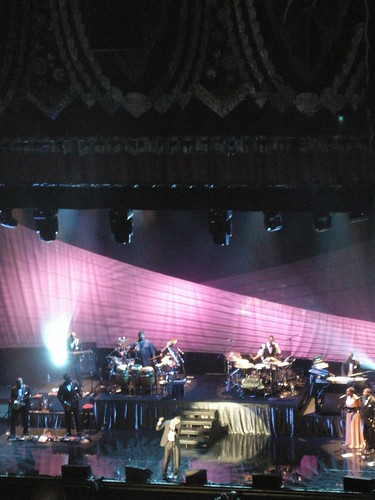
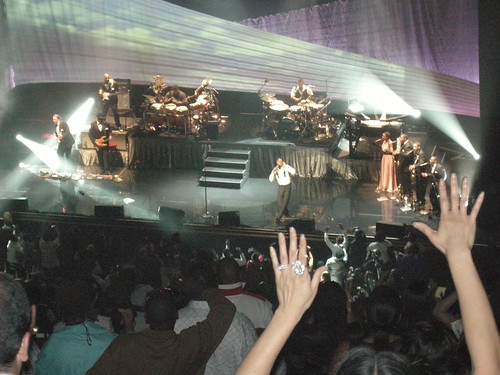
It was in this vein that I listened to Meshell NdegeOcello's band last Friday at The New Parish in Oakland. It wasn't quite anger that was at work, it was more like irritation that was the catalyst but who am I to quibble about the end result. I'll get to the whys, wherefores and textures of their sound but should get the hyperbole off my chest upfront.

Simply put, Meshell NdegeOcello's band is the coldest band since The Revolution circa 1985.
If you want a slightly more precise description, I'm referring to the sound and attitude that pertained as the Purple Rain continued to fall, you know, before the addition of horns and the looser feel of the Parade and Sign of the Times bands. I'm talking about a well-oiled band that is out to make a point, a band that wants to share an important moment. Meshell and company are forced to be reckoned with in their live performances, moreover they are touring to support a strong new album, Devil's Halo and are fully committed to its rocky soul aesthetic.

MeShell NdegeOcello - Devil Halo

The Wife called them sick - her slang is of a different vintage, for me they were stone cold. Their creative energy harnessed as it was, was something to behold. The sonic architecture brought in elements of Sly Stone, Bootsy Collins, Stanley Clarke and Eddie Hazel. And they were versatile in their approach. Meshell can go from Nathalie Merchant primness to Betty Davis fierceness without skipping a beat and she'll throw in some Sly and Robbie dub for good measure. By the time, they got around to freaking Prince's Dirty Mind, rendering it like no one has heard it before, my jaw had already dropped, I was in awe. When someone is in this kind of mood you can only sing along - and admire.

But on to the bit about anger... As we stood in line outside the club, we overheard mutterings about problems. There were scattered phrases that might cause your average concertgoer to raise their eyebrows, things like "No soundcheck", "Equipment came late", "Damn rental company", "Will they even play?" and so forth. The crowd was suitably wary. They were playing at a new venue, a small club and a suitably intimate joint but one where the kinks were still being worked out. And it showed at the outset even as they came out with such energy. For the first three songs, the sound was slightly off. There were sufficient glitches to cause Meshell to basically throw away the small sound machine (synthesizer/sampler thingimijig) that she's started performing with. Her sound technicians were feeling the pressure as they scrambled to fix things. The underlying tension only heightened the performance. Thus she stuck mostly to singing for the rest of the show and would sing mostly from the more recent parts of her songbook. Call the concert an exercise in aural seduction. Raging songs like Lola, Mass Transit, The Sloganeer - Paradise, and Article 3 were full of urgency. Only occasionally would she pick up the bass when her mood would veer into the ecstatic. Mostly she was orchestrating the shifting soundscapes that now characterize her music; the short outbursts that are the bread and butter of her songcraft only slightly lengthened for the live performance.

There was an element of pride as they paced on stage, as if they all had a point to prove. Oakland may only be a pit stop between the bigger commercial venues - Los Angeles (with the beautiful people) and San Francisco (with the sexy people) where they would play the next night. Oakland however is important for soul singers, functioning as a sort of comfort interlude that restores one's swagger. It's a town that appreciates the ironic mood of a song like White Girl, the audience will laugh in the right places.

Songs like Dead Nigga Blvd - from 2003's Cookie, have extra resonance when sung one block away from Martin Luther King Jnr. Avenue, five minutes away from Mandela Parkway, and 10 minutes away from Malcolm X Elementary School. And she is right to be angry, as expressed in the lyrics and performance of that song, at the disrespect and dysfunctionality of part of the black community in Oakland and elsewhere. People campaigned, marched and sacrificed much labour and even blood to secure the gains of the civil rights struggle, commemorated in those boulevards and yet some would say much is being dissipated. The salty language of the song decries a drive-by mentality accented by the staccato keyboard riffs of the song. The mournful Die Young also struck a chord in that vein. It would figure that only a couple of days later I would read the headline she'd anticipated: Man shot and killed in downtown Oakland. Such is life, or rather such is death in these parts. To die over nothing, a block from the martyr's boulevard...

But back to the considerable songcraft on display. Bitter was her pre-millenium, album length meditation on a mood and we were treated to Fool of Me and Faithful in that key. Fellowship and Forgiveness and Love upped the dub quotient, the reggae tinge of a comfort woman. She took up an acoustic guitar for Crying In Your Beer - lovely balladeering with Chris Bruce her fearless guitarist. Deantoni Parks was ferocious throughout on the drums, sounding like an army platoon. Keefus Ciancia had four or more keyboards and would add ethereal sound effects. She's comfortable having Mark Kelley on bass which is a compliment to his capabilities. All in all this a group with a creative edge. We were treated to a lush musical moment capturing shifting moods.

For the encore, she comes out, picks up her bass and gets into her great remake of Ready for the World's Love you Down. It is spacey, laced with dub stylings, and soulful to the core. It is also flawlessly executed.

Meshell is not one to coddle her audience but she is definitely thankful that we stayed with her on this night. We weren't too demanding for the old favourites and went along with the musical trip of the new songs. Devil's Halo is strong set verging on the rock end of a soul spectrum. You could see the sense of confidence and perhaps a little swagger in the step of all the musicians as they left. In her current thankful mood she is perhaps reaching a sentiment expressed in the title of her second album: Peace beyond Passion.

...

The opening act, Beatropolis, were were a musical puzzle of sorts if only because their feel-good sensibility was hard to pin down. Perhaps we should let them descibe themselves in their own words: "live organic drum and bass... many styles". Indeed there were many styles on display, from an acid jazz start, mix in The Roots circa Organix, a touch of Joycelyn Brown, a smidgen of Roni Size or perhaps Dizzee Rascal and let everything simmer. They would throw in a jungle version of You're All I Need To Get By just because they could, and why ever not, I expect Marvin and Tammi would concur. Perhaps most impressive was Fall Apart. Yeats never would have imagined that a century after writing The Second Coming that we'd have rappers declaiming that "The best lack all conviction, while the worst are full of passionate intensity" to a fierce drum-n-bass beat, a jungle lament about things falling apart, a topic close to my heart. Needless to say, I approve.

...

The full-length video of Meshell's Seattle concert from the following week finds her and band in a more laidback and relaxed mood. Compare to her previous escapades in jazz from a few years ago.

File under: , , , , , , , , , , ,

Wednesday, October 29, 2008

Maxwell's Suite

For the record, the best $3.13 I've ever spent was for a copy of Maxwell's Urban Hang Suite in May 1996 dug out of a remainder bin in a dusty record store (now defunct) in Davis Square in Somerville, Massachusetts. I remember very clearly looking at the cover and deciding to buy the record on the sole basis of the title, thinking to myself: this is surely some soul music. I was 9 months into my first job and this was the first bit of whimsy I had indulged in all that time, the first thing I had bought for myself beyond bare necessities in all those months. For some silly reason I had worked myself into a state of thrift, subsisting at times on those "bags of burgers" that were the rage at McDonalds - 10 cheeseburgers for something like $4. Well I digress, we'll tackle that toli later... I remember also the look of interest as the guy at the counter rang up my purchase: "Looks like some soul, let me know what you think of it".

When I got to my room, I found the turntable, played the record and discovered that I was in possession of some exceptional soul music, a suite, a trip. This was a new voice that demanded attention, someone I would be proselytizing for even if he wouldn't need it. Looking at the credits I read names that gave me further comfort: Stuart Matthewman of Sade looked to be a key collaborator. Amp Fiddler and Wah Wah Watson were among the musical cast. I dug the voice, I dug the production values, I dug the sound, I dug the message, I dug the execution.

A mood lifted by the time I wore out the needle on the turntable that day. My immediate favourites were Til The Cops Come Knockin' and Lonely's The Only Company; I could identify with the vague longing and perhaps sense of obsession — young adults. Lots of things were resolved to the sounds of the album in the next few months. For one I decided to buy a cd player, that I deserved to have more than that gray room, that — well, lots of things you know.

maxwell urban hang suite

I returned to the store a few days later to buy a cd copy and gave my report to the guy. We listened and talked our way through the album, talked music like those who share our affliction do - for example comparing Maxwell to that other guy, D'Angelo, who seemed hungrier. If they would be MJ and Prince in coming years, we wondered who would be their Madonna. The guy was an R&B traditionalist and kept trying to get me to buy that Brian McKnight album - I kept demurring, that thrift thing. Then he played New Moon Daughter for me and I kicked myself for having been so out of touch that I'd missed out on the release of a new Cassandra Wilson album. I decided to try to do a guest show at WHRB, to get back into things.

So.

There I was about to simply review the concert I attended last night and all of these things came out.

Music is like that. It's a social thing, conveying a sense of time, of place and of comfort. It triggers memories. It's that thing we call soul. I could go on about the vicissitudes of that year, about Boston, about friends and family, about jobs, the travails of finding an apartment and more. All those things came flashing back. I won't though. I'll simply note an album that was part of that year's soundtrack, a mood marker. And I'll hold on to that detail: the album cost $3.13 after tax.

maxwell

So yes, The Cousin and I were warmed by Maxwell and his 10 piece band last night at the Paramount in Oakland. Escapism from the work week for 3,000 or so souls. It was well worth it. It was, to recycle that phrase I've become fond of, a comfort suite.

I'll leave the detailed reviews to others. It was great show like all others in this tour. The horn section gave an organic feel, the guitars and bass were just right, the percussion was on point, the background vocalist gave nice accents. Briefly stated, the band is tight. When you think about Maxwell, don't just think of the man, the band is as important as the front man. All of them are enjoying the comeback and the overwhelming love from the audiences.

maxwell showman

They played most of the favourites from his songbook and previewed a few new songs. His falsetto is still as pure as ever, he can do the Sam Cooke thing when he wants, or the Prince thing, or the Al Green thing, or the Marvin Gaye circa 1974 thing. There's the dancing and showmanship ala James Brown, he's no longer as skinny obviously, but he still gets down. If he was Mr Mellow Smooth in the past, there's now an additional edge to the performance and to the sound. There's now some experiential blues in his brand of soul. He still thinks in terms of suites, of capturing a mood, and will run with that feeling through its course.

Most of all there's the warm feeling in the music - it's like that groundswell that builds when Maze featuring Frankie Beverly come onstage in D.C.. It's in the crowd too - everyone knows the lyrics and wants to be seduced anew. By the time he got to covering Al Green's Simply Beautiful, he was simply making his intentions explicit. Call it melodious melodies or sensual soul - to pick titles of mix tapes I've made featuring Maxwell.

maxwell

The ladies in the audience were all captivated. The panties were thrown on stage. The atmosphere was headier than a Robin Thicke concert. As expected, The Cousin paid me no mind throughout the concert, absorbed as she was in the aura like many others in the audience. I laughed at some of the scandalous things that those two women in front were screaming. It wasn't just nostalgia however, the music was truly that good. This Woman's Work made me tear up, Ascension (Don't Ever Wonder) hit the soul spot. Sumthin' Sumthin' got us dancing. Lifetime made us sigh. What more could you want on a Tuesday night?

Seven years is a long time out of the limelight but brother man delivered the goods. He's back. The demons are conquered. It was worth it. There'll be more suites in the near future and everyone is on notice that he'll be setting the bar high for all to follow. I'm expecting the same elation when that other guy finally resurfaces but for now, pound for pound, Maxwell's a heavyweight soul champion.

File under: , , , , , , , , ,

Wednesday, September 24, 2008

Sunday Night with Amel Larrieux

Soul singers seem to dig Oakland. Something about the city's vibe resonates with them. Their appreciation is always reciprocated and audiences move rapidly from laidback contemplation to active engagement. Somehow I managed to catch Amel Larrieux and her five piece band last Sunday night in performance at Yoshi's in Oakland. Thus I can share a few notes on a comfort suite...

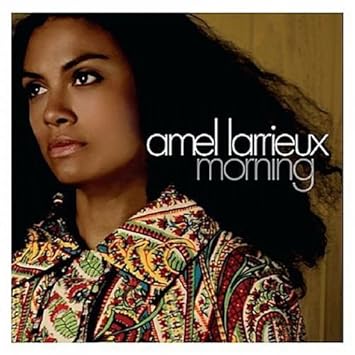
An electric bass guitar begins warbling, sounding something like an ethereal sitar by the time Amel walks on stage. She hums and launches into a warm acoustic rendition of Morning, the title track of her most focused album. Right out of the gate her voice grabs you as if to say "Pay attention. Get ready for some soul music". She doesn't intend to leave anything on the stage.

Amel Larrieux Morning

Trouble, is done Latin style with, as is typical in her live performances, an impromptu ending in which she starts scatting with abandon. "Louis Armstrong", she later explains, "All those years trying to be like you". She adds, "Lena Horne too". Well she's a singer's singer, it stands to reason that she has impeccable taste.

Giving Something Up is a bassy funk groove overlaid with increasingly abstract vocal stylings as it progresses, the arrangement is a mixture of jazz, soul and hip hop. Then almost improbably she breaks into Amazing Grace - a song that has never been done in this mode, urgent futuristic blues. How, the listener wonders, can a song contains such multitudes, rendered so seamlessly?

All I Got is an effortless follow up, a march reflecting on our condition. The refrain is all about the set upon (when she sings the passing lyric "slapped down a racist fool", those darker than blue in the Oakland audience respond knowingly). It's about standing strong and living without expecting any big bailout or "helping hand" as she sings: "this is all I got" indeed. As she riffs on the economic climate, "we're thoroughly spent... our credit's jacked up", there is complete empathy with the five piece band. They follow her on that the long walk with those worn shoes.

She gives a stately take on Magic and the zingers are fired rapidly: "still paying for your education when you're sixty six". Again the chorus is revelatory: "stress level's high and the morale's low". It's a blues for our time done with minimalist instrumentation. She ends with a turn as a choir director enlisting the audience in three part harmony. This kind of crowd participation is fun: we all need to "tap into that magic" to overcome our subprime present. Indeed that has been the theme of the whole concert, acknowledging what is going on in the world and finding humour to deal with it. Amel is an unpretentious artist, she makes everyone feel at home. It doesn't hurt that she's very easy to look at, the word chic describes her clothes and the long hair is doing all the right things.

A cheer of recognition greets the start of For Real, the ballad being one of the perennial fan favourites. With deft piano playing in the background, she floats into the upper registers displaying her Minnie Riperton credentials. After welcoming a a few bars from a guest soprano in the audience, she takes over. Her vocal control is breathtaking. Game, set and match, I'd say. To top it off she provides three or four different takes of the song - live remixes on stage. I'm always interested in the way singers manage to keep their trademark songs alive; somehow Amel always comes up with new arrangements subscribing to the jazz improvisation aesthetic. The jazz inclination will keep her in good stead with her audience.

We Can Be New is a warm poem, a melodious ballad very beautifully sung and ends with a reggae tinge. It must be the band's trademark to provide full glimpses of her range and musical comfort zone.

She debuts a new song, Have You?, a lover's lament peppered with humourous lyrics "I've mixed denim with whites, have you?". By this stage we are all spellbound. The elements of her appeal are simple: sympathetic piano, the light accents of her backup singer (Amira) and a singer at her peak. Amel is in full effect.

Then I almost died of joy: she sang Gills and Tails - my favourite song, the very definition of virtuosity. The vocal performance is wonderful; what the professionals would call her cry is a thing to behold. It's emotional, it's cerebral, it's quietly devastating. It's everything I like in soul music.

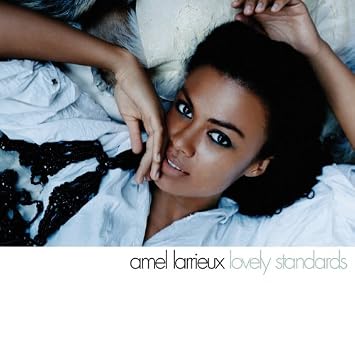
Amel Larrieux Lovely Standards

Wild is the Wind from her album of standards, shrewdly titled Lovely Standards, is done as a homage to Nina Simone. It's just her and the piano player; she has got the audience clinging to her every note. As the song starts to wind down she brings in the rest of the band and they add a dance groove - whoa, she can do house music, what can't she do? - the groove then morphs into Dear to me. House music man, just for the heck of it. She took a jazz standard, did it with flair and, just to show how fearless she is, she gives you some house. I give up, I'm joining the street team, Amel.

As if she read my mind, she then covers Prince's Pop Life, it's a party pure and simple - she reminisces about the Purple Rain to Parade Revolution era of His Royal Badness (she notes that she even digs Tambourine! claiming by this revelation membership in that purple secret society) and talks about the rush she got performing Take Me With You with Kamal the Abstract a couple of weeks ago.

She closes with two crowd favourites: Get up, the monster club hit from Bravebird and Tell Me (from her Groove Theory beginnings). We're all dancing and singing along. It's a celebration. There's a community feeling. We'll be holding our head high in the weeks to come, smiling on Manic Mondays and Black Tuesdays, lifted above the fray, fortified by some soul music, a soundtrack to our struggles, "this great Mountain of When". This is her thing, this is what she does best: two ninety minute sets, three nights in a row in an intimate jazz venue. Every show sold out, the audience in the palm of her hand, the soul singer performs. Amel Larrieux has done it again.

File under: , , , , , , , ,

Friday, May 20, 2005

The Roots + Floetry = Virtuosity

The Roots + Floetry = Virtuosity

The Roots and Floetry. Live at The Roxy, Boston. Wednesday May 18 2005


Intro * The Scene * The Vibe Y'All * Outro


Intro


I Shall... Proceed... And Continue... To Rock The Mic
Everybody Is A Star
"Go All Stars, Get Down For Y'all"
The 'Notic, The Hypnotic = Floetry, Floacism
All You Gotta Do Is Say Yes
Illadelph Halflife Meets Ill London Flow
Bring Some Money To Spend And Somebody To Lend And Some Worthwhile Money Not Some 20s And 10s
Adrenaline
Boom!
They're Coming To Break You Off
Duck Down
Don't Say Nuthin'
All Roads Lead To Apache
With Thought At Work, It's The Next Movement
I Don't Care As Long As The Bass Line's Thumping And The Drum Line's Banging Away
Kool Herc Ain't Never Seen A Royalty Check
Hip Hop You're The Love Of My Life
The Legendary Roots Crew Stay Cool In The Melting Pot
We Are The Ultimate (Rock-Rocking It)
That's What's Happening In The Parking Lot. That's What's Happening On Stage.
Din Da Da (Dun Do Do)
Do You Want More?
Somebody's Gotta Do It When The Guns Are Drawn
The Roots Come Alive
The Tipping Point Is Here And That's The Bottom Line
Give The Drummer Some
Keep the Beat Going
Bring The Beat Back. Bring The Beat Back.

Floetry - Floetic


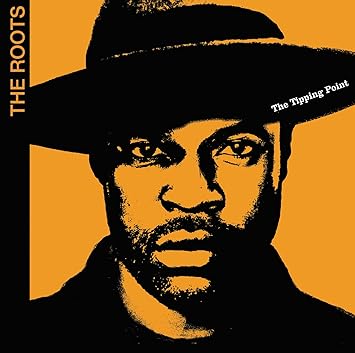
The Roots - The Tipping Point

The Scene (Combat Zone)


You might sense a little exuberance, a little elation, a little plain joy in these parts and you'd be right. Wednesday night with The Roots and Floetry was even more reason to sport that wide smile that I've been bearing of late. It was a cheer that started in the long lines that stretched out for 2 blocks outside The Roxy. In downtown Boston, the Theatre District is very close to what is lovingly called the Combat Zone. Indeed during my first visit to Chinatown in 1991, there were gunshots and people scrambling as we walked out of the Boylston T Stop (200 metres from The Roxy) to try to get some Dim Sum. Most Harvard students tend to stay in Cambridge which has pretty much everything they need thus each excursion to Boston and its environs is an event. With guns drawn, that outing certainly fitted the bill;it was a great Sunday brunch by the way, baptism by fire as it were.

Now of course the city has cleaned things up since then. There was a concerted effort in this liberal bastion to husband the commons in a kinder, gentler mode than Rudy MussoGiuliani in New York. In the black community at least, the churches got everyone together and knocked heads around. There was one incident that was the last straw the community could bear in 1992 when teenage gang members came guns drawn chasing people into Morning Star Baptist Church and stabbed a kid during a funeral service for a teenager who himself had been killed in a drive-by shooting days earlier. Pastors and Samaritans everywhere started hitting the streets and patiently mentoring youths and forming a Ten Point Coalition that hasn't let ever since. With the Big Dig Irish/Italian/Federal/Mafia money to spread around for the past 15 years, a little dotcom boom and bust, the current biotech splurging, and a set of savvy universities around Boston with their 300,000 students in mind, it appeared that lots of things could go well for the community and economy. The notion was that it would pay for government and even Big Government to actually to manage the cultural and economic zeitgeist so that social ties were woven together and one wouldn't end up like the anomic New Haven, to take an example of what social neglect can do.

So now there are fewer porno emporiums or theaters in the Combat Zone. Whoever had the inspired idea of placing the Registry of Motor Vehicles next to that sordid theatre knew very well the power of shame in human affairs. Thus there has been considerable gentrification throughout the city of Boston and Developers With Vision™ have tried to clean things up. There are lots of gleaming and spiffy new buildings around, including the fancy Loews Theater at Boston Common outside of which the Star Wars tribe had camped out to buy tickets at the stroke of midnight for this Friday's Sith-like Revenge on office productivity everywhere.

However the move up-market was done in typical liberal fashion, with much hand-wringing about gaining community consent and buy-in from those affected. This is why there is the occasional attraction for strong men and fascism, they make the trains run on time. Ghana, like Chile before us, could only be a poster child of the IMF and World Bank in the late 80s because it was ruled by vicious rogues who could run roughshod over the wishes of their populace. Things are not so easy when you have a case of the episodic ballot box. Thus Franklin D. Roosevelt's "He's our sonofabitch" theory of the Realpolitik of "vital interests" and the recurring marriages of convenience with noxious strongmen and Strange Bedfellows are played out in such a grisly fashion in Uzbekistan and other countries even today.

With no dictator in place to press the issue, there is still a significant minority of people around Boston and Cambridge who haven't heard the word about the clean up program. Thus as you head for the opera or some fancy show, dressed in your finest tuxedo or shimmering dresses (Swan Lake was playing at the Boston Ballet which I must see at some point), you'll pass the 7-Eleven at the corner of Tremont and Kneeland and see a few (shockingly young) hookers and their rough but effete pimps, most just a few years older, casting a wary eye and assessing the likelihood of your disbursing cash money for The Game all the while speaking a patois full of puns, coinages and ghetto witticisms. Some of us were harried after long days at work or the minutiae of dissertation completion and were dressed down hence we glossed over these gritty urban fixtures. Our thoughts were all about the Sound of Philly and perhaps Brixton or Deptford.

Others however had seen a late addition on the Ticketmaster web site about a purported dress code, "No Jeans, No SNEAKERS, or Athletic Wear", which I suspect caused much gnashing of teeth and wardrobe deliberation. The notion that a low rent joint like The Roxy was ever going to enforce a dress code on an $18 ticket to a hip-hop show was hilarious to me, but I suppose others took this seriously because I saw a fair number of people dressed up as if this were one of the summer concerts along the waterfront, or the adjacent Boston Ballet for that matter, instead of a hip-hop soul lovefest. People wearing uncomfortable shoes, plus a late start - 10:30pm on a Wednesday night, might cast a shadow on some of the enjoyment.

One thing to note is that this one-off concert was sponsored by a cigarette company and there was a certain dissonance in seeing Surgeon General's warnings on the video screens above the stage right after a stream of "Kool" images (tagline: Be True and A New Jazz Philosophy) floated past repeatedly. Just in the past year, Angie Stone was sipping on Remy Red and Jill Scott's tour was sponsored by Alizé. I suppose the floodgates opened when KRS-One did the Sprite tv commercial to the sound of The Revolution Will Not be Televised. Gil Scott Heron must not own his masters. Ironies abound when companies in the guilty pleasure industries pick up all the "progressive" artists; one wonders a little about artistic integrity but maybe it's a matter of holding your nose and paying the bills (dollar, dollar bill y'all). Who else is going to sponsor the next movement?

Left-of-center artists like The Roots have a very diverse audience, they are musicians' musicians, and hip-hop's favourite jam band thus the crowd was a kind of Rainbow Coalition of neo-soul and hip-hop aficionados, the kind of people portrayed in candy like Brown Sugar. The addition of Floetry brought out a few more older African-American women to the table, intellectual poetry with harmonies, wit and the kind of groove that gave Michael Jackson Butterflies. Everyone looked good and expectant and harassed college students could escape their fears about the courses they had neglected all semester before buckling down for finals. This was the place to be if you weren't a George Lucas addict.

The Vibe Y'all


If you walked in to a joint to the booming sounds of A Tribe Called Quest's Electric Relaxation, you would know that everything was going to be all right. Like Earth Wind and Fire singing Keep Your Head to the Sky and Devotion live, it felt like a revival meeting so "Clap your hands this evening. Say it's all right. Yeah, Yeah, Yeah."

With 'that dude from Living Colour' guesting on guitar (I turns out that it was Vernon Reid and not "The Other Guy"), this was a performance that sometimes verged on the rock side of things. Well as rocked out as a hip-hop sensibility allows and with the good Captain Kirk Douglas also doing a mean Hendrix or more accurately a Kravitz impression, the rock and soul meshed well in the flow of things. The band always pay homage to the greats with snippets of the obscure breaks thrown in every now and then and this time it was Ray Charles' What I'd Say that did the trick.

Coincidentally this past weekend I had been in New York and passed by my favourite crate digging place Rock and Soul on 35th and 7th and, if I hadn't had a train to catch, would have spent a good couple of hundred bucks on essential breakbreats.

In any case the musical territory covered was hip-hop, rock, soul (with a very soulful new backing singer who's just joined them and not mere eye candy too, she can sign), lilting reggae to straighten things out. Black Thought is completely in control of things these days and now that he no longer hoards up his charisma or turns his back from the audience, the love is plainly reciprocated. The way he started with the pyrotecnics of Web, that one verse drum-and-bass, old school raw adrenaline was astounding and there was no let up. The humour and verbal dexterity (the breath control) is about about as good as it gets, I'm reminded of Big Daddy Kane or Kool Moe Dee going to work on things but with a millennial flow. Kamal at times introduced jazz and classical keyboard breaks, he's still hip-hop's Ahmad Jamal and towards the end gifted us with an amazing church keyboard solo that hit the spot. Hub's styles himself as a cross between Michael Henderson who made Miles Davis simply Live/Evil when he pushed him to slickaphonics and foot-foolery in the early 70s and Miko Weaver who, along with Eric Leeds, pushed His Royal Badness into the zone.

Miles Davis Live Evil


Miles Davis Live At Philharmonic Hall


And the drummers you ask? Frankie Knuckles on percussion, in empathy with ?uestlove's mission, adding great effects especially when they tilted towards reggae, soul and funk.

Questlove on the drums is simply scary and deserves his own paragraph. The frenetic and phonetic Brother Questlove is a perfectionist on his instrument, I now put him ahead of Kariem Riggins who got the nod last year because of his regular jazz moonlighting. Having listened to the Grover Washington-influenced Philadelphia Experiment, and heard the swinging I Am Music from Common's Electric Circus of which he was the executive producer, I knew he could do jazz and now with the kind of live performance that leaves you awestruck, there was simply too much talent to consider.

There was a point when it felt like that moment in the Sign O' The Times concert during It's Gonna be a Beautiful Night, right after the band has worked out on the Detroit Crawl when Prince says "Night Train" and the band switches on the dime and Duke Ellington's chorus blares from the horn section fitting perfectly and dazzling the audience. Or when James Brown was In a Jungle Groove for those magical 4 years starting in 1969, or even the point in Curtis Live during (Don't Worry) If There's Hell Below We're All Gonna Go when Brother Curtis sings
Cat Calling, Love Balling
Fussing And Cussing
Top Billing Now Is Killing
For Peace No One Is Willing
Kind Of Make You Get That Feeling
Everybody Smoke
Use The Pill And The Dope
Educated Fools
From-Uneducated Schools
Pimping People Is The Rule
Polluted Water In The Pool
And Nixon Talking About Don't Worry
He Says Don't Worry
But They Don't Know There Can Be No Show
And If There's A Hell Below We're All Gonna Go

Need I go on? At such moments, the music, audience and performers are in complete consonance. This is what I call virtuosity. This is life in a rarefied zone.

In last year's Toli Music Awards, I wrote
They've certainly hit a groove. It's like Prince circa 1986-7 when the Miles Davis horns came into his arrangements on the Parade. They've done the kiss-off album (Phrenology as Around the World in a Day) to throw off fairweather fans. They are now going for the vituousic and this works perfectly. Could a Sign O' The Times be in the offing next?

That was before hearing them on Giles Peterson and certainly before seeing them take it to the stage in the tradition of Funkadelic. I got my answer I believe.

Suffice to say that the kind of music I heard live last night has blown the band way past The Tipping Point they proclaimed was their due. The Roots are so confident in what they are doing these days that they make it appear effortless. The elated audience felt it too. Floetry who are so versatile were similarly inspired in their performance. They weren't blown off stage as almost anyone else who had to follow The Roots would be, but did their own thing and got a lot of love and plain respect. Their vibe is one of great invention, harmonizing, operatic and sensual with some London Yardie and garage inklings. It's a White Teeth meets a Brick Lane Sense and Sensibility. The thing about such musical intelligence is that at times it can be too dense and overwhelming but both bands kept the Boom Bap factor in mind so they "Rock(Ed) It To The Bang Bang Boogie Say Up Jumped The Boogie To The Rhythm Of The Boogie, The Beat"

The Roots closed out with a their usual 45 minute Hip Hop 101 tribute medley to those who have gone before them. They always choose different heroes to focus on and this time even went into more commercial club-banging territory (snippets of Biggie even turned up) intermixed with the exhilarating instrumental rare groove of Booker T and the MG's Melting Point that I pointed out earlier as the Jazz Funk in a Blanket of Soul.

Melting Pot

Outro


Since the DJ who warmed the club up was utter early nineties nostalgia, I'll close with this lyrical zinger from that same era, a golden era in retrospect, Chubb Rock's Yabadabadoo:
From The Rustler
Lyrical Hustler
The Fat Lady Sang
I Crushed Her.
Word Up The Chubbster
As we walked out at 2am to brave those denizens of the night who were still plying their trade in the combat zone, there was a little wistfulness about whether the car would still be there. It was hence highly appropriate that we were handed a couple of fliers for next weekend's Pimps and Hoes party.

roxy-flier-pimps-hoes-party


Iceberg Slim's hoedown aesthetic is now a commonplace with Don "Magic" Juan, 50 Cent and Snoop literally pimping the cultural (and financial) zeitgeist. Thankfully people like the more reflective Ice-T have stepped off that program (and never would I have dreamt of writing a sentence containing the words reflective and Ice-T but that is a sign of the times). Perhaps one should see this as just a bit of fun, the ascendancy of a culture of irrepressible irreverence and reinvention, a kind of poking your thumb in the eye of those august New York Times types who now write editorials about how hip-hop lost its way. What these grey ladies don't understand is that that hip-hop is vibrant enough that Ludacris and De La Soul can coexist and even feed off each other without dissonance. Even if I were that way inclined, I'm off to London next weekend and anyway what would Malcolm and Martin think? The commercial road is certainly a heavily travelled path for instant gratification. The Roots and Floetry aesthetic simply shrugs of such concerns and tries to win you over with musical dexterity, one performance at a time, and it pays off I think. As the Black Sheep (who were also played during the warm up) put it, The Choice is Yours: "You can get with this or you can get with that". In my book, the tortoise does beat the hare in the end. I might take Richard Pryor over Bill Cosby but I still love both aspects of the culture. Mission: Music.

With a Philly groove still echoing in my ears, this was simply blasé blasé to me. I fell asleep with a smile on my face.

File under: , , , , , , , , , , , , , , , , , , , , , , , , , , , , , , , , , , , , , ,

Tuesday, March 15, 2005

Sunday Night With Jill Scott

Sunday night at the Orpheum Theatre, Boston, March 13 2005.


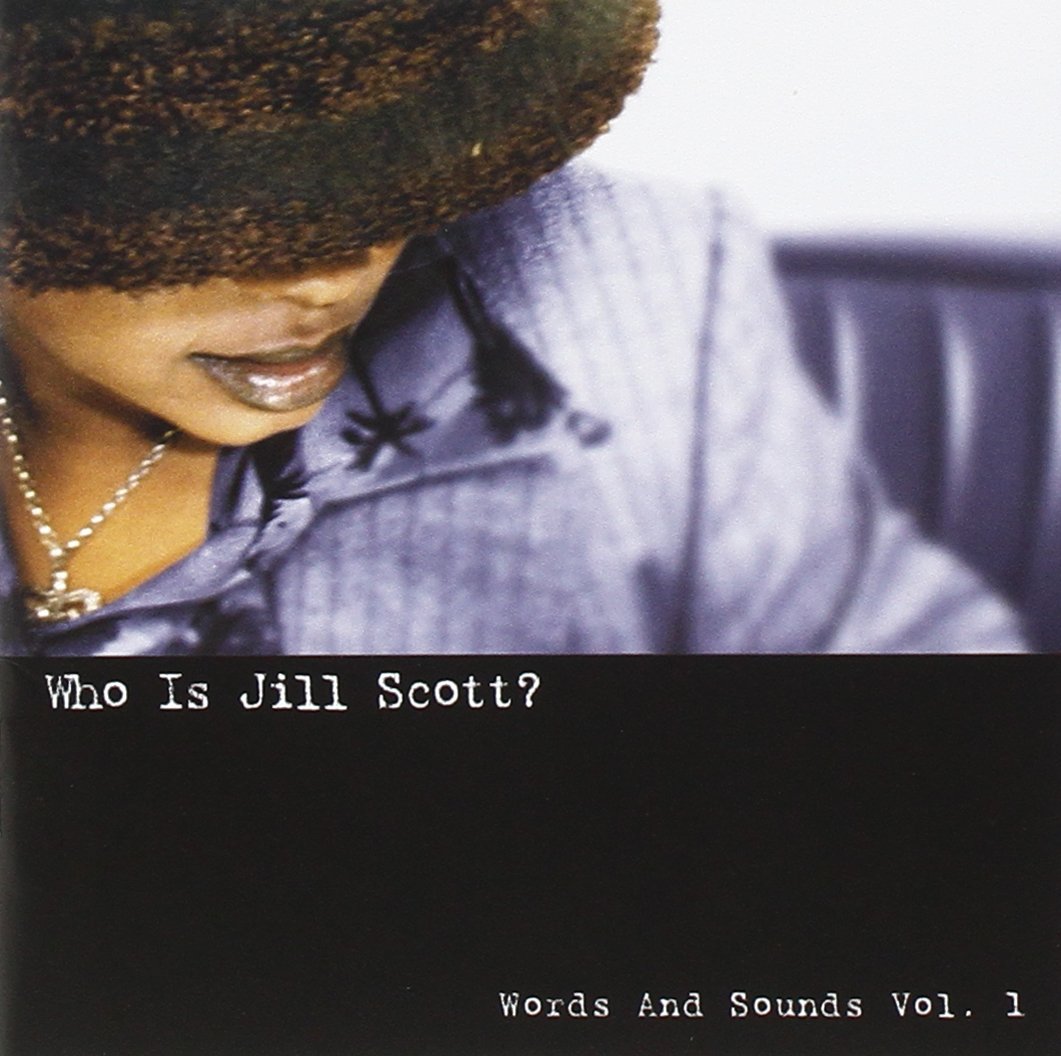
Jill Scott and her crack 13-piece band brought the Big Beautiful tour to Boston last Sunday night. Ostensibly this was in support of the Beautifully Human album. As it turned out though there was a whole lot of the first album, Who is Jill Scott?, on display.

As I've noted previously, I've seen her twice before, first when she was an unknown in a small club and then 9 months later at a prestigious venue where she was pleasantly surpised by the double platinum plaques and critical acclaim that had started coming her way. She took an extended break from music "to attend to her mariage" but came back in a big way in the past year. She is fresh off winning a Grammy in that category designed for left-of-center artists who won't sell the tens of millions: Cross My Mind won Best Urban/Alternative Performance.

There is no opening act; she starts with a track appropriately called Warm Up in which a dancer brings some urban ballet flavour to the proceedings. The dance was a little off especially given that the Boston Ballet is right around the corner and that we in the audience were expecting earthy soul. Sadly also, us New Englanders were not be blessed with Common appearing on the same bill, something New Yorkers had enjoyed just days earlier. Still how often does every thinking person's favourite soul sister come to your town?

They start out in church mode with Golden the first single and a welcome radio-friendly return. After the first chorus, they flip it house style (ala East Coast mix). It becomes hyperactive dance music and she wails away in the Gloria Gaynor mould to the accelerating beat. It's a canny way to make sure that the band has woken up and is ready to keep the Sunday night audience moving.

The Jill Scott aesthetic is interesting: if you've ever seen the movie Love Jones, you'll know all about it. There's an urban appeal and refreshing down-to-earth quality to her. She walks down the same gritty Philadephia streets. Her tastes are suitably proletarian. It's soul food from cheese steaks to collard greens. Her man is one step above FUBU but is not averse to the bourgeois stylings of Sean John.

When she performs live, she aims straight for the heart. The idea is that of the unassuming girl next door: Jilly From Philly. There's so much love and good will in the building reciprocating to her. She's so warm-hearted and beams at being here performing for us. She looks good and there's that sense of vulnerability that can't be faked. The Girlfriend has a keen condescension detector and even forgives Jill the "interesting" high heeled shoes she's wearing. A mistake Jill laughing acknowledged when she came out for the encore wearing slippers.

The subtitle of both her albums is Words and Sounds and as she informs those seing her for the first time, maybe two-thirds of the crowd, it's not just about the music: it's also about the talks. An integral component of a Jill Scott show is her spoken interludes. At times it's almost like a 1-woman musical theater show as she mimes performs these interludes, inhabiting the various characters - a cast that includes annoyed girlfriends, cheating men, and the breakfast disputes of the hen-pecked and their demanding significant others.

Exclusively is a spoken word song in this vein, about the early morning encounter at the grocery store with a nameless woman who is able to detect her post-coital posturings:
She sniffed [...] She sniffed... She sniffed, and sniffed and sniffed then finally, "Raheem, right?"
Gettin' In the Way is like a shot of testosterone and pure anger. Jill is prepared to take off her shoes to fight for her man. Like Pam Grier in Foxy Brown, she may even have razor blades hidden in her afro.


A Long Walk demonstrates what an inventive wordsmith she can be and how easily she can deconstruct romantic liasons. Do You Remember is about nostalgia and as befits the theme is a sing-along around a camp fire.

It's Love is a jam done go-go style. There are snatches of the bassline break from Minnie Riperton's Baby This Love, popularized and repurposed in A Tribe Called Quest's Check The Rhime. This is all just to let people know that she's down, that there's a sophisticated and funky musical sensibility at work here. The band is loose, the horns blow with abandon. The crowd is out of their seats.

The one-two punch of The Way and Love Rain framed the turbulence that was at the heart of her debut. We all know the words and we made a beautiful sound with her if I may say so. The band has fun with what have become latter-day standards. The horn section is a standout and makes everthing worthwhile. It features Jeff Bradshaw on trombone. He was more subdued than in the past, apparently he proposed to his girlfriend on stage at the previous show, one wonders if there was a touch of apprehension in the air. The trumpet and saxophonist are excellent. The latter, Steve Something-or-Other picks up a flute that is the most welcome complement to the instrumentation and heightens the musical excitement in my mind.

She's still obsessed with food, from barbecue sauce, "Put some on it even if you're vegan", to "Scrambled Eggs and Grits" which is the punchline in the former song. The latter features that all-time vivid metaphor: "Loose like bowels after collard greens."

One is the magic # proves that she can sing opera in the Latin mode. The Mexican trumpet welcomes us to a fiesta. It's two months before Cinqo de Mayo but we are transported to Latin America or is it spain. Plus there's the defiance of the chorus "There's just me / One is the magic number". It's clever and fun.

Slowly Surely is again all about uplift, about recovering from that old desperate love, the maze of love. Every one who's had their heart broken can relate.

Those were songs from the first album. Some of the best of the new songs were missing in action; teasing and feinting us with 30 seconds of Bedda At Home and 2 phrases from I'm Not Afraid are not enough. And not having Family Reunion isn't compensated by her recounting of a funny story about her cousin, a barbeque and a woman in furs choking on her food and a surprise reinvention of the Heimlich maneuver. Those who burnished the grassroots appeal for you want to go on the trip with you. Sure she talked about the making those songs, but damnit, I wanna hear them too.

Beautifully Human


Talk to Me (Break it Down / Spell it Out) is lovely soul, it starts out reminiscent of any track from Stevie Wonder's Fulfillingness' First Finale and then it goes firmly into jazz mode with cabaret swing. She's trying to show versatility, she swoons and scats like Ella Fitzgerald. The horns add accents to what becomes a big band tune.

A few comments on soul singers doing jazz: Jill Scott has an awesome vocal instrument and can do almost anything she wants with it. However:
  1. When doing the jazz thing make sure your musicians can play in that idiom. The horn section was fine but the bass and drums stay in a funk pocket and don't swing. Her take on the jazz soul thing was better in last year's collaboration with Common on I am Music for his Electric Circus album. That was a dream team affair full of musical virtuosity; Nicholas Payton on trumpet, Questlove on the drums and Common's syncopation and verbal dexterity in a hip-hop cadence melding well with her superior vocal stylings.
  2. Of this generation of soul singers, Bilal and Amel Larrieux have the purest jazz sensibility. Erykah Badu follows closely as a stylist who does a mean Sarah Vaughan or Nina Simone impression (see Green Eyes) and can embue her voice an emotion that is close to her core. The straight up jazz stylists, from Lizz Wright on, are more authentic. Rachelle Ferrelle would frankly embarrass Jill in a jook joint cutting contest.
The Fact Is (I Need You) is the anthem to female affirmation with the background vocalists doing a slow and classically-influenced burn. I suspect that she will point to the lyrics as the Jill Scott manifesto
I can be a congresswoman or a garbage woman or police officer or a capenter / I could be a doctor and a lawyer and a mother and a "good God what chu done to me?" kind of lover / I could be / I could be a computer analyst / The queen with the nappy hair raising the fist or / I could be much more and myriad of this
Cross my Mind is an epic song that deserved the Grammy. Its wistful mood is that of reminiscing about old flames and relationships that didn't work out. Were they good for us?

Only one song was off, Can't Explain. The musicianship was actually very good, the colourings by the horn section (especially the flute) were spot on. I suspect the fault in that particular song was the following: as a lyricist she's very wordy. It normally works well but sometimes brevity is the font of musical wisdom. Anyway it's far better on the album.

Whatever is the emotional heart of the concert. Beautifully Human was essentially a celebration of married life, of monogamy and of a deep exuberant love. Whatever is consequently a pure celebration. Live, it is the best expression of where Jill Scott's journey has taken her. She's loving every bit of married life. I'll admit that my heartstrings caught a bit as I rose to my feet for this and did my shower singing with the entire audience. To top it off, the coda reinvented the tune as a salsa escapade and her percussionist took us all to Havana.

For the triumphant encore she brought out Not Like Crazy, a new song that is simply virtuosic and full of flourishes including a great saxophone solo to punctuate things. She finishes with He Loves Me, and mimes the ingenue flashes of the first flashes of love. This was written when she found her man and we all sing along recognizing as we all do that emotion she well captured. We're all hopeful we've found our soul-mates.

My only criticism of the concert is that she keept to a similar framework as the last album and tour. Having been there in the small clubs at the start when she wasn't known and evangelizing and spreading the word-of-mouth, there wasn't enough of the new album for my liking. A more adventurous artist would have changed the show. I can't imagine someone like Erykah Badu being that conservative, indeed Badu had to be forced to sing her old tunes. The patter of the old show serves as intimate and seductive introductions for mainstream newcomers to her vibe but I want to get a sense of where Jill Scott is at today on her trip. And we only got a partial sense of that in Whatever and Not Like Crazy.

There are few appeals as direct and disarming as Jill Scott, someone who loves performing, an authentic wordsmith and perhaps soul music's warmest and most endearing and expressive voice. She aims for different vocal colourings, the keen sensibility of the horn section and now the flute augment things nicely. The production values though don't take her out of her comfort zone of traditional soul with a little gospel and spoken word thrown in for good measure. Labelmates and poetry auteurs Floetry are in much the same mould. I wish the Hidden Beach label would press for more experimentation but they seem to have a formula that works and gets broad appeal.

Back when I was awarding the Toli Music Awards last year, I gave Amel Larrieux the nod over Jill Scott, noting then that my inclinations were for a more angular musicianship even though singers like Scott were sure to sell more records. That's still mostly the case but it's like the difference between Bill Cosby, America's sweater-wearing dad whose universal humour is that of the irascible curmudgeon, and Richard Pryor who fearlessly, and in his very personal way, reminds us of the pimps, hookers and drug dysfunction that are an integral part of the American dream.

Last Sunday night, the dynamic artistry of Jill Scott was a very appealing contender and almost made me want to join the mainstream. She has settled on something that will continue to have great success and has grown in a laudable way. In a very canny way also, she seems to have groomed a very loyal female cohort. Of course, in matters of consumerism, where the women go, the men will follow.

As the show ends, the genuine warmth and humour show again and she reminds us why there's so much to love in Jilly from Philly. Instead of filing off triumphant and exhausted, she disarms us and stays on stage for a few minutes signing autographs and simply chatting and cracking jokes. She's just a girl from the neighbourhood after all, you may pass her as you walk the streets as you make your way to the grocery store.

And for the final note, picking up a flier handed to her from the crowd, she announces the after-party.

File under: , , , , , , , , , , , , ,

Monday, October 25, 2004

Cooking with Rokia Traoré

A night with Rokia Traoré at the Somerville Theatre, October 15, 2004

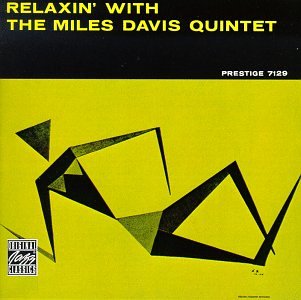
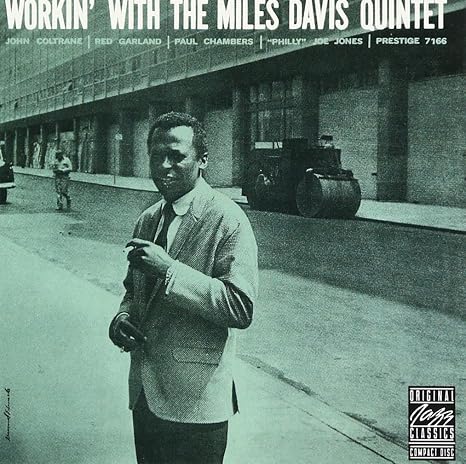
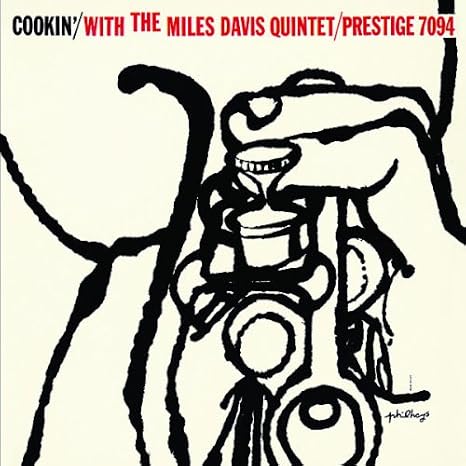
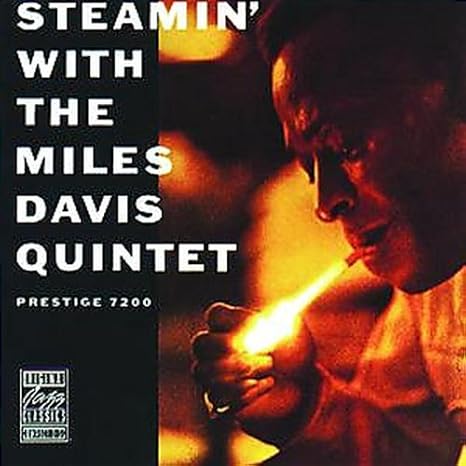
For many, the peak of Miles Davis's first great quintet were the four albums they recorded during a marathon studio session one magical day in October 1956. Relaxin', Workin', Cookin' and Steamin' were the album titles and collectively, they displayed the best of the jazz form of almost any era.

This was a group that had made a reputation touring together with a varied repertoire. The rhythm section of Red Garland, Philly Joe Jones and Paul Chambers was so well-oiled that it was called "The Rhythm Section", bold and capitalized. The quintet set the gold standard for musical empathy and high caliber fireworks something augmented in these recordings especially when a young John Coltrane would egg on bandleader Miles and trade solos.

The albums were recorded as if they were in a nightclub, Miles would call out a tune and off they would go laying out the definitive treatment of standards like Surrey With Fringe On Top or It Never Entered My Mind along with originals like Four and Half Nelson. These albums were probably the most conventional that Miles would make; he was never one to look back.

I mention all this because in many ways, Rokia Traoré's performance with her eight piece band last Friday reminded me of those landmark albums, in conception, in attitude and especially in the flawless execution.


Relaxin'


Relaxing


She walks out onto the stage quietly, picks up a guitar and begins playing. There are no diva theatrics - think of Beyonce being carried out Cleopatra-like by a guard of six hardbodies. This is a musician first and foremost; an unassuming singer/songwriter who knows that the music will speak for itself. She's lost the braids from a few years ago and her head is shaven, she's rocking the Angelique Kidjo aesthetic.

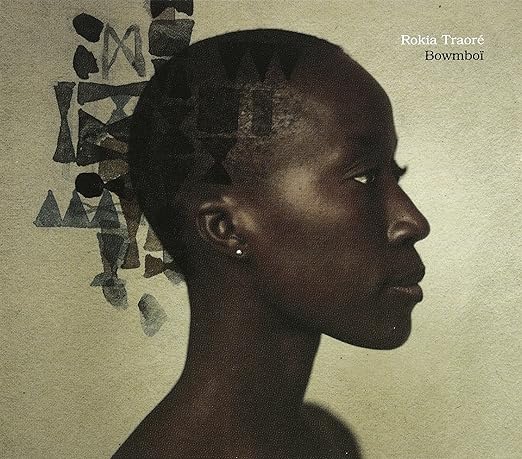
A back-up singer and a kora player accompany her and they begin with a touch of reflection, a couple of soft lilting ballads She's trying out the material from the new album, Bowmboï. It's a gentle introduction for the audience, fodder for a quiet evening on the porch.

Malian music is very well marketed in the West, moreso than say soukous, highlife or other forms of African music. The reason being that it is typically less frenetic than those forms and also because in many ways, it fits with a certain notion of "World Music": folky, laidback, and vaguely "authentic". The idea is that it's rural, bluesy, folk music: think Ali Farka Toure, think the "Roots of The Blues" etc. Never mind that the picture on the ground is more complicated or that the influences are varied and cross cultural boundaries. Never mind all that. This is the terrain of the African artist. Their music belies the frame in which they are portrayed.

The first time I saw her, four years ago, it was across the street, at Johnny D's, a small, homely joint that seats maybe a hundred. Back then, she was promoting her second album, Wanita, a dreamy affair firmly in traditional mould. These days though, she can sell out the Somerville Theatre which seat about 1,000 which give you some idea of the attention that has been paid to building up an audience. Nonesuch is the new record label and you know that they are no fools.

Workin'


Working with the Miles Davis Quintetrokia traore


The rest of the band join them and the evening's groove begins. Rokia is a diplomat's daughter and has lived in the Middle East and the West. She's listened closely to all those other rhythms but finds comfort in her roots, thus we have the balafon (xylophone), the kora, the two n'gonis (lutes)and the calabash and talking drums. Clearly the decision to use traditional malian instruments is a conscious one.

Her voice is not as full as Oumou Sangare - the éminence grise of Malian vocalists; it's lighter and more ethereal. The backup singer overlays and harmonizes very well. They are sisters in harmony.

She's got a young band, a set of young Malian musicians who are enjoying every minute of their time together and are committed to the journey she's taking them on. As a bandleader, she is not the imperious commander type although she has a clear conception of what she wants to achieve. She is more the team player, allowing everyone to shine and produce a zone offense, if there's such a thing.

One surprise though is the new guitarist/bassist Christophe "Disco" Minck, a tall long-haired Belgian so-and-so who lays down the fierce and metronomic break beats and wah-wah effects while jerking like a funky chicken. It adds some flavour to the gumbo they are cooking up on stage. This is akin to the addition of Money Mark's Fender-Rhodes keyboards during Femi Kuti's tour a few years ago promoting the Fight To Win album. There's something about the cross-cultural exchange by having another set of ears in the mix. She's been listening to all sorts of music and it informs her writing on the songs on the new album. It's hypnotic and mellow yet, rendered live, it's propulsive stuff.

Cookin'


Cooking with the Miles Davis Quintet
Wanita


During the Wanita tour, she very generously shared her stage with a group of young Malian drummers and rappers. The whole world listens to hip-hop and it was interesting to see the exuberant youth reinterpret the old tunes to a griot backbeat. She welcomed their melodic ideas and rhythmic wordplay then but this sensibility is only occasionally hinted at in her own music. She manages to be sound contemporary while keeping a traditionalist slant to things.

Back home, her biggest competition among the young lions is probably Habib Koite who is a similarly gifted writer. The blind duo, Amadou & Miriam are the folk heroes. Of course the gold standard are artists like Salif Keita, Oumou Sangare and all those great kora players (Toumani Diabate among them).

The new album recorded last year has been getting some buzz in Africa and Europe. Bowmboï won the BBC Album of the Year award and you begin to get an idea of what the judges for that competition were thinking as imperceptibly the band begins cooking. Polyrhythmic innovation quickly ensues, fired on by wah-wah guitar and alternatively some thumping electric baselines.

On the album she enlists the Kronos Quartet on a couple of songs - the effect is to add a classical tinge to the malian and occasional middle-eastern soundscape. Live though, the band gives vent to the interplay between the n'goni and the calabash, her own guitar quietly filling in the space.

For me it's the soul clap factor, once you've got me clapping, your work is done: I'll be your evangelist. She's got me clapping for sure.

As if to prove my point, she starts dancing with her backup singer, with flowing and languid movements. The men get very interested at this, if they weren't already: the two are lithe and sexy. The women in the crowd stay interested because their dancing is not as overtly sexual as for example those female dancers in Femi Kuti or Koffi Olomide's bands; it's tastefully done and no competition. They proceed to reel off five or six joints that are simply perfect, insistently intelligent, long groovy pieces that they explore to the fullest. We are all elated by the end of things.

Steamin'


Steaming


As she comes out for the encore, she enjoins the crowd in her bookish, impeccably correct and french-accented english, to feel free to stand and join her in moving to her music. "For me, singing onstage was a dream that has come true." Like a good diplomat, she knows how to charm her audience. The Girlfriend and I of course had been nudging each other throughout noting that African audiences would never have sat down through the type of performance that we have been treated to so far. Well this is Massachusetts so we take what we get.

The crescendo builds up in the three encore songs, and this is what is extraordinary about this: the music while clearly akin to Ali Farka Toure blues is nevertheless very danceable. More to the point the groove is trance-like and plainly funky. How do you manage to make funk out of kora and xylophone, pray tell? Now others in the crowd don't need any prodding to join in the soul-claps and the call-and-response that clearly delight both musicians and audience.

I think the space created by the two interlocking n'gonis is a vital part of the mix. Also we are treated to shifting tempos and some sublime changes just like in soukous or old highlife (see King Bruce or E.T. Mensah). Think of it as 5 or 6 in-situ remixes of the songs, radical reinterpretations of a basic sketch. So the dancing gets wilder, the atmosphere gets sweaty and we are all making a beautiful sound. At the concert closes the entire band is showcased and they do justice to it all. We're leave hyped by what we've heard. Come back Rokia... Steaming is the least of it.

Now that I've placed Rokia Traoré in august company for this review asserting that she's channeling the spirit of the Miles Davis Quintet, I should close by commenting on the context in which to place the evolution of her nouveau-funk Malian brew. For Miles Davis, the cooking sessions confirmed his place among the jazz greats and cemented his reputation as a bandleader par excellence. Bop traditionalists still look back on fondly on them as a landmarks. Albums like Kind of Blue and Somethin' Else would soon follow these classic and Miles' experiments would multiply in the ensuing years. Rokia Traoré's new album and especially the live performances in this tour are similar, confirmation of a great talent and a wonderful bandleader, I can't wait for the next album or to see what direction she goes in. You want to be along for the ride.

The critical response to her tour has been suitably estatic (see these various reviews for example). But don't take it from the Times or The Post, down here in the streets of Cambridge, the toli is that Rokia Traoré has arrived. Keep your eye on her.

File under: , , , , , , , , , , ,

Wednesday, September 08, 2004

Vibing with Abbey Lincoln

A night with the Abbey Lincoln Quintet at the Blue Note, September 4, 2004

Abbey Lincoln


So my cousin, Tei, and I were vibing with Abbey Lincoln Saturday night - so blissed out afterwards that the both of us didn't seek out any additional after-midnight New York joints and capped the night with a couple of shwarmas topped with pepper sauce, going out on a high as it were. It was a three part epic:

1. Serendipity


It was a spur of the moment thing, really: heading to the Blue Note in the Village to hear Abbey Lincoln. The long lines at PS-1 - the dance show at the MOMA earlier that night didn't augur well for much fun but when in New York, you have options. It seemed a little late for the US Open so we took the long shot and headed to the East Village. No line at the Blue Note - a good sign. We'd timed it well, arriving just as they were seating the second show. We forked out our $20 for bar seats, ordered our drinks and got ready for some jazz from the living legend.

Now mind you there was a little trepidation: when you start calling someone 'living legend', you are subconsciously wondering just how much longer she'll be living. We saw Nina Simone (Tei's favourite) on her last tour the year before she died and that was prime Diva-in-twilight stuff: raucous and rousing but sadly short. Abbey Lincoln is not that old but she was one of the great jazz voices in the fifties and that says a lot - do the math.

I've seen her twice before at Scullers in Cambridge over the years and have most of her albums. She always puts on a good show. There really should have been a third time but that turned out to be the abortive Valentine's Day date - months before "The Girlfriend" became "The Girlfriend". The first time was simply perfect. The second time was good but you begun to worry - she was forgetting a few lyrics...

She now has a quintet. James Spauling is a welcome addition on saxophone and flute - fiery stuff. Marc Cary lays down the sensitive accompaniments on the piano. Michael Bowie lays down hard bop bass and Jaz Sawyer is the drum wizard. What I like about them is that they aren't overly respectful of her; they learn from her but also challenge her every night.

She comes on to the stage with her trademark porkpie hat (echoes of Lester Young) and starts messing with the beat - a habit she shares with Billie Holiday. She works around the beat, slowing down or picking up the pace as her fancy takes her. She's never on the beat like these metronomic nouveau singers. If overdone it would be jarring, instead her artful manner excites your ear and keeps you alert. By the end she brings you back to where you expect and you're elated.

There's a grit to her voice these days. It's there even when she laughs at, or with, the overawed audience. If it was painful for some to contemplate Lady Day in her late period - with the damage of hard living showing in her voice, Abbey in autumn is a different affair. She has aged gracefully (like Sarah Vaughan) and the timbre of her voice suits the personal and almost political songs she writes. When she began writing the essential soundtrack to the civil rights movement in the 60s, she was pigeon-holed as a 'difficult' artist and her career suffered accordingly. These days though, her blues are comforting; we pretend all those issues have been resolved and are nostalgic for the good old days.

A diva at peace with her legacy, she sings the numerous standards that she wrote for herself and others, including Hey Lordy Mama which she gave to Nina Simone.
Hey Lordy Mama
I Heard You Wasn't Feeling' Good
They're Spreadin' Dirty Rumors
All Around The Neighborhood
They Say You're Mean And Evil
And Don't Know What To Do
That's The Reason That He's Gone
And Left You Black And Blue
Hey Yeah
Tell Me What You Gonna Do Now
Looking back, it is clear that she and other artists 'made' joints like the Blue Note and the Village Vanguard famous, not to mention all of these prestigious record labels they spawned. It is clear that the club owners and audiences owe her the reverence that we see. At the same time, places like the Blue Note were the proving grounds for jazz musicians - the places that made her the artist she is. And so there is this fondness flowing in both directions and a sense of playfulness and looseness with the band. But there is also a sense of electricity because she feels the need to be at her best at the Blue Note, she and the band have put on their game face.

2. The Let-down


After an hour though, the hinges start coming off.

First she forgets a lyric, looks around furtively and asks the pianist to remind her where she was. She recovers quickly though. For the next song, the band begins to build a furious groove. She begins to join in, a little tentative at first, but then says out loud: "That didn't work!" and calls for another song.

Two songs later she seems to be getting back into it but something isn't quite right, she isn't feeling it like the rest of us. And so:
"Thank you folks. I'm tired."
And she walks off the stage.

And so that was that: the temperamental diva syndrome again. Still, it was a good hour of solid if not great jazz by someone we love.

3. Redemption and Ecstasy


Or so we thought...

Ten minutes later, who should come up to the bar and sit next to us but Miss Abbey Lincoln. And that's when the vibing began as we drank and chatted for the next hour (cognac for her). With hindsight I think we were a great combination of drinking partners. I was the music lover who would pose obscure questions trying to show I had taste and knew the musicians' musicians. Tei was his usual argumentative self, prodding, teasing and flirting without commitment - crucially he made it clear upfront that Nina Simone was his thing so there was no question of adulation - something stars get too much of anyway.

Now let me tell you a few things about our close friend, Abbey Lincoln.
  • She was the 10th of 12 children.
  • Her father midwived the last 6 children at home
  • Her "real name is Anna Marie" (Woodridge). Abbey Lincoln is a stage name.
  • She was raised on a farm in Michigan. They "didn't have much growing up.. It was a hard life" (read: the family was dirt poor).
  • Her parents didn't get on towards the end. "Maybe they shouldn't have married"
And then there was the fierce discussion of marriage and human relationships.
  • "A man should have his own house."
  • "So should a woman."
  • She's not a big fan of marriage.
    "We don't need marriage."
  • She didn't think she'd take any more lovers.
    "I don't need the jealousy... Why should I be worrying about you? asking 'Where have you been? I want you to do this or do that'... Have your own place! You'll be better off."
And then there was the musical discussion:
  • I teased her that the last time I saw her, she was talking down Lena Horne. She bristled that Lena Horne was a shining star on the stage and that she would never speak ill of her. Shirley Horn on the other hand...
  • Nina Simone didn't look like a pin-up but was an outsized talent and good friend.
  • The Sarah Vaughan and Clifford Brown album was indeed a vocal milestone, like I alluded to earlier. However she thought Abbey Is Blue was better
    "And it had the same musicians!"
  • Clifford Brown died too young and Max Roach (her first husband) with whom Cliffie made legendary albums was completely devastated by the loss of his friend
  • Mal Waldron, Billie Holiday's accompanist, was one of the most sensitive men she knew. And she treasured the time they spent together and the musical lessons learned
  • Duke Ellington's encouragment was a source of strength for her.
  • Ben Webster played the most lyrical saxophone although she dug Pres more (Lester Young). Not to mention that Pres was the sharper dresser and wore the same hat as her
  • "I wasn't a peer of some of these guys [Duke, Ella, Sassy, Count Basie], but I knew them, played with them and carry their legacy... We made a joyful sound you know"
  • She identified a Stan Getz tune playing on the club sound system after barely 2 bars. "Stan Getz was a true friend. We were that close..." She later added, "We didn't screw you know... that was a good thing - a pure friendship"
We talked of the hard times for jazz artists and black artists in general and those who were forced to leave the US: Bud Powell, Sidney Bechet, Ben Webster, Dexter Gordon, Josephine Baker, Nina Simone.
"And Abbey Lincoln, you know.

It was hard. My patrons were French. They're the only ones who ask you 'What do you feel like doing this time, Abbey?'"
On aging, and seeing her friends pass away one after the other:
"I don't want to be the last one... It's getting lonely, you know."
It turns out that the reason she cut the set short was that it had been too cold. They hadn't turned the air conditionning off a half hour before she came on and so she was uncomfortable and couldn't give it her all.

We also saw the perils of celebrity: the star-struck fans coming up periodically, the guys wanting advice on how to get a record deal and clasping cameraphones for the obligatory photo, the tourist: "We came all the way from France to see you. We love you Abbey. Je t'aime".

The woman from Boston who wrote a song after hearing her in Boston three years ago and who insisted on singing her vapid tune for three unbearably long minutes. Not to mention the obsequious and sycophantic club owners next to her trying to pump her up so that she would return the next night. "You're the greatest. Everything you do is success and pleasure enough. You're so wonderful". I guess the reason she liked us was that we weren't yes-men stroking her ego.

She wanted to talk about how new artists were being led astray, especially this one, Alexis something-or-other, who had been around her house and whose manager was this dirty old man. It took me almost an hour to figure out that she meant Alicia Keys.
"Oh yes, Alicia Keys. With that old man! her manager or something... He's a dinosaur! Why's he making her sing about A Woman's Worth. What does she know about struggle? When has she ever experienced loss? She's so pretty you know. Beautiful even. That man is ruining her. Let her sing what she knows".
Alicia are you listening?

But then she concluded by leaning forward conspiratorially and said "I think she (Alicia) did her hair in braids after meeting me".

Anyway, we had our drinks and got 'drunk as a skunk' over the hour, having ourselves a good old time. As we left, she hugged both of us tightly and whispered:
"Go give it to them. Go kick 'em in the ass. You guys. Really... Be strong, and go give it to them... Kick 'em in the ass"
With pleasure, Abbey. With pleasure.

File under: , , , , , , , , , , , , , ,