Showing posts with label youth. Show all posts

Friday, January 30, 2026

A DJ's Duty

Seeing friends in the East Coast digging out from their winter storm put me in mind of the Nor'easter of 1995 when I did an 18 hour stint DJing on WHRB in the basement of Memorial Hall. A duty of care, I didn't want to shut the radio station down.

It all started so innocently, I was set to do the Street Beat hip hop show from 4 to 6 pm on Saturday. I showed up 90 minutes early, having paid no attention to the weather forecast. Albeit I did notice a few flakes of snow as I exited the shuttle bus with my crate of records. Who knew?

Almost immediately, I got the sense that something was up. As I poked my head in the studio, the DJ who was on air signaled to me and pointedly asked me if I wanted to go on early. I didn't know any better and so said "Sure, why not" and ran to pick out a few more records from our stacks.

The Street Beat credo, if there was one, was simply that we didn't play commercial stuff. If you did play a club banger, it had to be a rare white label remix. The founders of The Source magazine were Street Beat alums. We had standards. We did vinyl. We mixed. We were underground.

I had my work cut out because I hadn't been keeping up with the latest releases so I was half expecting some irate caller from Roxbury complaining about the lack of Ed O.G. & Da Bulldogs. Anyway, I started my set off with Dip Dip Divin' by Justin Warfield and got more esoteric from there.

At 5 pm, I got a call that the next DJ wasn't going to be able to make it for the 6 pm show. Hey, I thought, more airtime and, well, I wanted to play some soul. The Boston hip hop audience is unusually demanding whereas the soul crew are far more forgiving. I threw on Rainbow by Shinehead.

Anyway 6 pm came and I switched to spinning club classics. Grooving really, everything was beat-matched; not a bad mix. I was feeling it and getting lots of requests. Callers did mention that the snow was really coming down but my music was giving them soul comfort.

I suddenly realized that I was getting hungry. Ah right, I'd missed dinner. But, well, I could pass by the Hong Kong at 8 pm and grab something. The red leather furniture of the restaurant, the ambiance of disrepute and the strangely comforting food. Salivating. Bruce Lee would approve

Of course, I'd forgotten Francis Bacon's adage:

Hope is a good breakfast, but it is a bad supper.
7:45 pm came and the next DJ hadn't shown up. I went to the front door and saw a pile of snow. It was coming down hard. Blizzard conditions really. I checked the schedule but didn't see a phone number or who to call for backup. Ooooh trouble.

I decided to not just put on a cd, it's a point of pride to always be mixing vinyl. So I dug more records from the vault and I mixed, blended and matched beats.

8 pm came.

For You To Love was our quiet storm show. DJ Zik had heavy boots to fill but I thought I'd be up to the task for the next two hours. Where his signature was the titular Luther Vandross song, I went with Crying Overtime by Alexander O'Neal, the king of ad libs.

10 pm came. I now had to read a Public Service Announcement, something about a storm advisory, how you should avoid leaving home if at all possible. As I read the script, the penny dropped. Stay off the roads. No wonder no one was coming to give me relief.

Midnight came. No replacement. I continued with a set of torch songs. Again it would have been easy to throw on an Isaac Hayes half hour lament but that would feel too much like cheating. I dug deep: Luther Ingram, The O'Jays, Eddie Kendricks etc.

2 am. Despair set in.

Burning Spear came to my rescue (Mi gi dem was the joint). I turned to roots reggae. Then decided to explore the falsetto singers in reggae. The phone calls to the studio blew up at this point. I must have struck a nerve.

Also: scavenging around the studios, I managed to find a Twix bar. I didn't query its vintage, I just ate it up. Where there's a snack gap...

4 am. This was getting ridiculous. UK soul then - I put on Loose Ends, Omar, Mica Paris and some acid jazz, Young Disciples, Galliano, Jamiroquai. Also I started to think of drastic measures...

When you comped, you had to learn how to turn the station on and off. FCC regulations or something. But no one really paid attention to that part of the training. I certainly couldn't remember how to turn the station on if I came in cold in the morning. In any case, who ever heard of shutting it down?

I grew up in newsrooms and the BBC World Service formed the backdrop of my teenage years. Dead air was anathema to me. I wasn't going to be the one to let the side down. So I kept spinning, running back and forth to pull more records. Mixing on the turntable decks always, I refused to play cds.

At 6 am the woman who normally did the Sunday gospel show called apologetically to say that she couldn't make it, commiserating about the snow drifts, danger and all that jazz. Sigh...

I threw on some divas. Aretha, Brenda, Mavis, Chaka and Rachelle Ferrell. Know what I mean?

8 am came, and it seemed as if relief beckoned. Some poor soul called and said that he hoped to be there soon to do the folk show. The storm had abated somewhat. I started playing songs that mentioned Heaven. Bebe and CeCe Winans, Miles Jaye and so forth.

9 am and the guy hadn't showed up. I was tempted to Shut 'em down c/o Public Enemy - the Pete Rock Remix of course (still the best remix of all time).

I cheated and decided to throw on Freedom Suite by The Young Disciples. A good 15 minutes of respite. Isaac Hayes's By the time I get to Phoenix was another option considered (18:45 minutes for those in the know) but I couldn't find Hot Buttered Soul in the stacks.

10:15 am. He arrived. Another human being in the flesh. He said that it was rough outside. Of course he needed some time to pull some records together for his set but by this stage I didn't care anymore, blending and beat matching almost like an automaton.

I couldn't find Keep the Beat by Eric B & Rakim so I closed my set out with And the beat goes on by The Whispers. I was fully committed to the task.

The studio was an almighty mess when I handed over and I started reshelving the hundreds of records I'd pulled and deliberated over. 18 hours worth. It was tough going.

I walked back to the dorm through the 14 inches of snow with my crate of records. No shuttle bus obviously. I didn't have boots on, no gloves and, well, I wasn't appropriately dressed. It was a long, treacherous walk but, at length, I made it to the Quad. The Cabot House dining room was just opening for brunch.

...

There's no moral to the story, just the abiding memory of holding down the fort in that basement, at one with the music and the radio audience.

DJs may be a strange breed but we have a keen sense of duty.


old WHRB basement

- The basement entrance to the old WHRB studios


A DJ's Duty, a playlist


A soundtrack for this note. Some of what I played that weekend (spotify version)

Bonus beats: a tape of a Club Classics set I did circa 1993 that I digitized when I found time during the early covidious lockdowns


File under: , , , , , , , , , , , ,

Writing log: January 5, 2022
Saturday, November 08, 2025

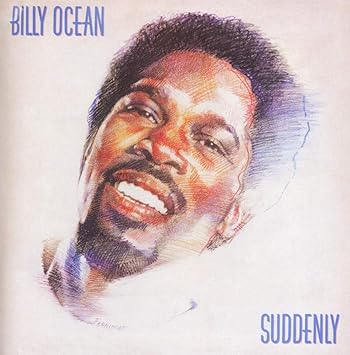
Caribbean Queen by Billy Ocean - One Track Mind

I'm dating myself, but the easiest way to get me to make a fool of myself is to play Caribbean Queen by Billy Ocean. It's like kryptonite to me. By the time the chorus comes around, I'm no longer acting, I have become an actual fool.

I mean Michael Jackson and Prince especially made major moves that year but Billy Ocean essentially won 1984 with just that song. The rest of the album was a bonus.

I just can't resist the groove, it makes me happy, I want to dance, I want to sing (loudly), and act the fool. They say Dionysus was a Greek god but the scribes out of discretion didn't disclose his infatuation with the siren song of a Caribbean queen.

I'm pretty sure Liberian Girl was MJ's belated response to homie for stealing his thunder, despite what the biographers may say. The gloved one with the golden voice always knew a winner (see lifting the synths from 1999).

Incidentally, many sincere apologies to the women I've stepped to while singing that song or variations of it - I'm an equal opportunity prospective lover, and, as I've said, I'm a fool.

The song is so versatile that, not to disclose too much, I've sang of African queens, Nigerian girls, Ghanaian ladies, various European duchesses and American queens and more, not to mention many a real life Caribbean queen.

Musical flirtation must be an occupational hazard of womanhood and it's all for the good. I've found that on occasion, some do get caught up in the rapture of a song so infectious. And even when deflected, the song breaks it down gently.

Now of course there's a long tradition of such celebratory songs. Frankie Beverly and Maze gave us Southern Girl. Earlier, Lou Perez gave us Caribbean Woman, his charanga ode to that fine Caribbean woman. They know what's up.

But to return to the song, give me the extended version. At the very least, you need the seven minute version, a radio edit wouldn't do with something so exuberant.

Even after the insistent anouncement of the opening bars (you have to signal your intentions in these things), the song takes its time to get the the point and lets the saxophone lay down the law to start things off.

There's something quite unhurried yet insistent about the groove, propelled by the synth basslines. It's a pulsing pace yet it still manages to be langorous, as if to savor the dance. Caribbean Queen is a dancefloor anthem, feelgood in four on the floor rhythms.

Start with the voice. The warmth in Billy Ocean's singing just invites you into the conversation. To my ears, there's a lilting hint of Gregory Isaacs and the velvet touch of Dennis Edwards in the voicing.

The honesty also disarms:

"I was in search of a good time
Just running my game
Love was the furthest,
Furthest from my mind"
The kicker comes from the parentheses in the title: No more love on the run. This is about being captured.

With spare lyrics, the scene sets up the drama of the relationship but he makes you wait by doing two verses and bridges, so building up the tension that the chorus is a release. But, just as soon as we're released, the groove settles back down to enjoy the dance.

The drop in the middle, and the build up, also play their part making you savor each element. The bass gets it due, the drum beats and then the synths do their bit. It's like the Soul Makossa breakdown in Wanna Be Startin' Something. By the time the chorus comes back around you want to start singing it again.

The guitar riffs. the sound effects, Keith Diamond's keyboard, synthesizer and production are inspired and really shine here but it's the saxophone solo by Jeff Smith just puts things over the top.

Infectious thy name is Caribbean Queen.

The initial release in Europe was titled European Queen but didn't get traction. Canny marketing forced a new title and Caribbean Queen struck a nerve. I've also heard an African Queen version.

Caribbean Queen by Billy Ocean


Surveying the 1984 music scene, most would hand it to Prince, you can hardly argue with When Doves Cry and the Purple Rain album and movie, let alone The Time, Sheila E and Appolonia 6. It was his year in music and pop culture.

But there were others too. I mean Cherrelle (courtesy of Jam and Lewis) dropped I Didn't Mean To Turn You On, Dennis Edwards and Seidah Garret had the almighty duet Don't Look any Further.

The S.O.S. Band's Just the Way You Like It album heated up the dancefloor. And even in the midst of all this, Sade's Diamond Life had been released and Smooth Operators were moving

A digression: Billy Ocean would win the 1985 Grammy award for Best Male R&B Vocal Performance for Caribbean Queen. But the other nominees that year were quite mistaken. Namely, let's be frank, The Woman In Red is hardly prime Stevie Wonder.

And to pick on the thread, the Grammys have never really rewarded the soul music that moved the masses. Unforgiveably, James Brown didn't get anything after Papa's Got a Brand New Bag until Living in America in 1987.

Sexual Healing is an all-time jam but the Academy barely acknowledged Marvin Gaye's transcendent 1970s run of albums that changed music.

Teddy Riley's only Grammy was for engineering Dangerous in 1993. How are such things possible?

Anyway, the point is that Stevie Wonder kept getting sentimental votes in honor of his Seventies's streak.

It was even harder to square Stevie winning the next year 1986 for In Square Circle when Alexander O'Neal wasn't even nominated.

The same thing goes for 1996 when there was Brown Sugar by D'Angelo or say I Hate U by Prince. For Your Love is a effortless ballad from Stevie but come on, really?

In any case, the fact remains that Caribbean Queen stopped both Prince and Stevie Wonder in the charts that year which is saying something about what it means to black culture.

The song affects me the way its almost contemporaneous Somebody Else's Guy by Joycelyn Brown does - shower song fodder. I Can't Wait by Nu Shooz would disconcert me in a similar manner a couple of years later.

So anyway, catch me singing along with Billy Ocean: Caribbean Queen (No More Love on the Run). Meet me on the dancefloor.

Queens, a playlist


A few more songs in the vein of Billy Ocean's opus. (spotify version)

See previously: Janet Jackson and the importance of bubblegum and Baby me by Chaka Khan

This note is part of a series: One Track Mind

File under: , , , , , , , , , , , , , ,

Writing log: April 28, 2024

Tuesday, February 06, 2024

Waiting for the Pope

The Pope and Archbishop were coming
And so we waited in the morning sun
Sensible, well pressed skirts for the girls
Boys in sharp shorts, our khaki school uniforms
At the behest of stern teachers and chaperons
We all made an effort to tamp down our ruffian ways
Arrayed, or rather displayed, in formation at the roadside

Earlier, after assembly, we'd marched out of the school gates
Passing through the dusty streets of North Ridge
And made our way to Ring Road, all the while chanting
Oh the heat, the hours passed without a sighting
No water, no snacks, but the novelty of the excursion compensated
Seven year olds will find their own entertainment
Serene and papal, we practiced our hand waves
Then, inspired, tried out our Polish-accented English
"Holy, holy, very holy... I bless you, my children."

In the event, after all that, it was a two minute affair
No popemobile as it turned out, a rather sober procession
Cars bearing dignitaries preceded by the motorcade
Cheers, such cheers, and a mad scramble
We bore witness

A slight man in the flesh, pint-sized
Can't say that he was larger than life
Still, you could have sworn he looked you directly in the eye
Made you feel a connection even at the roadside
Our healthy skepticism of catholicism was almost overcome
The great man theory, we'd learned some kind of civic lesson
We savored the escape and managed to wrangle a further hour of fun
Then slowly, very slowly, made our way back to North Ridge Lyceum


ghana stamp pope john paull II archbishop of canterbury with president Hilla Limann 8-10th May 1980 20 pesewas


Waiting for the Pope, a playlist


A soundtrack for this note (spotify version)
education church or state


See previously Articles of Faith and On Catholicism

File under: , , , , , , , , ,

Writing log: March 28, 2022

Tuesday, October 10, 2023

Playground Education

They pantomimed the firing squad
Reenacting the march of the bedraggled and confused
The older boys had grabbed sticks
   and descended on a group of us
They lined us up roughly, laughing and barking orders
Repeating phrases they'd heard from their parents
And the dawn broadcast
"We'll finish them..."

They set up a few paces out,
   on the edge of the playground.
"Line up.
Take your marks.
Fire."

Pow. Pow. Pow. Pow. Pow. Pow.
Six shots.
"Attention."

Then the recriminations:
"You. You didn't die properly.
   You. The General. You didn't slump.
Let's do it again."

More laughter.
Scenarios were contemplated for the next round.
"Let the blood flow..."

There must have been something in your look
   that gave them temporary pause
For even as you had kept a brave face,
   you couldn't break out a smile
Appalled frankly. You recognized a wrong,
   something beyond the pale
The comment escaped your mouth, you couldn't help it
"That was someone's daddy."

A brief pause, but then the conversation resumed
Mocking tones infused their frenzied acting
You detached yourself from the game
Dusted yourself
Casually
And walked off
You didn't look back


digable planets

Playground Games, a playlist


A soundtrack for this note. (spotify version) ...

Timing is everything
Observers are worried

...

See also: The Wages of Thermidor and June 4th

File under: , , , , , , , , , , , , , , , ,

Writing log. January 4, 2022

Tuesday, August 29, 2023

The Color of Memory

First, the red cloth in the marketplace
Shimmering prints. Dakar was a revelation
First time abroad. First time on a plane.
The sounds, the laughs, friends and family
They have different jollof these Sénégalais
And, mon dieu, how about that poisson braisé
Black and white world cup matches on the TV
Then, a treat, we watched the final on a color screen
The orange of the Dutch team and their fans.
They lost. Orange was the color of memory

Again, a few years on, back home
Black and white TV. Monochrome.
Charles and Diana. A royal wedding.
We drove across Accra to my cousin's
A dash to their impromptu watch party
Just in time. We caught the carriage ride in color
Bright imprint, young mind. Colonial press
Strangely pallid, the prince and princess
Crown jewels from the Gold Coast. British monarchy
Our former rulers. Red velvet was the color of memory

Later. Exile. Someplace called Golders Green
Our own Babylon, mother and son, not quite refugees
Creature comforts, we bought our first color TV
This 9 year old's research pointed to a Panasonic
This was during the 1982 world cup, football fanatics
Fresh. The first thing we watched: Brazil vrs Italy
So unexpected, enter Paolo Rossi
A blue bandit overcame heroics from Socrates
Transcendent beauty outdone by clinical speed
Gutted. Frankly, everything has been downhill since
Contra the poacher, yellow was the color of memory


rainbow installation at The Contemporary Austin


Colors, a playlist


A soundtrack for this note. I give you sixty odd flavors of a rainbow spectrum, listen without prejudice (spotify version)

File under: , , , , , , , , , , ,

Writing log: December 11, 2021

Tuesday, December 20, 2022

Teddy Mink

Along came Teddy Mink, as usual, with the girls in tow
The Mink Quadrant was a tight unit, a hard act to follow

Sheila, Joyce, Melissa, and Stephanie came up in lockstep
The classic lineup, they danced as if they were doing it to death

But Teddy insisted, he laid down the funk rules of the beat
And Diana and Mary couldn't handle the supreme heat

They’d opted for Motown and greener pastures
Get down on the one, the groove was the master

The drum is a woman, The Duke had said it before
Teddy agreed with this aspect of Ellington's Law

He'd had a falling out with Cucumber Bones
Over the woman, and the song, Aretha is Home

Something about the credits and, as usual, the royalties
But, mostly, it was the oversight in the liner notes that he found petty

And now that he had something to prove on his hands
He was determined not to lose the battle of the bands

As a bandleader, he drilled the musicians harder then the Godfather
His work ethic approached Prince, truly, no one did it better

In the warehouse, the grooves and ideas flowed, the pace was unrelenting
And as for the dancers, he wouldn't let them quit - man, it was exhausting

His love language was a jam session, he lived for music, it was an obsession
But who the hell knew if they would defeat Cucumber Bones and Frankie Ocean?

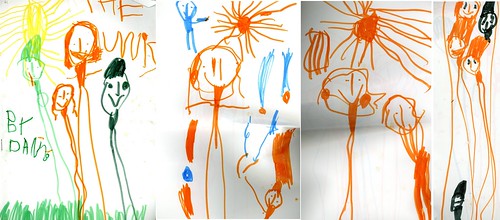
A brief sketch, as told to me by the then 4 year old

The names of my son's imaginary friends have become more interesting. Who is this Cucumber Bones? And what is he singing with Frankie Ocean?


the bad tour by danso

Teddy Mink, a playlist


A soundtrack for this jam session. (spotify version)
See also Mingering Mike: The Amazing Career of an Imaginary Soul Superstar

File under: , , , , , , , , , , , , , ,

Writing log. Concept March 25, 2017. May 5, 2021

Tuesday, November 02, 2021

What Paradise Have We Lost? (Age of Innocence Edition)

"Mommy?", her eyes twinkled with a mischievous smile,
"Were you born in the last century?"
Promptly disarmed, we waited to discern her purpose
To learn what aspect she would query about our new normalcy
In the event, she just giggled, she merely thought being old was funny
Thankfully, despite the upheaval, she hasn't lost her child's pose

This wasn't the moment to bring up our fraught modernity
Albeit there is reason enough as this pandemic stands
It was a half formed thought but she could have pursued any number of strands
In prior times, we would have spent the afternoon at the public libraries
Those venues now closed that are the stuff of wist and former memories
So many idle pleasures denied, what paradise have we lost?

...

Gee kindly Doctor Fauci
You know who's getting to be such a bore
The good doctor Walensky
That new CDC Director
Quite unlike her predecessor
Keeps saying that we need to mask up
And that restaurants should restrict capacity
Contra wishful thinking, a touch of reality
She seems to know what's in store

creek

Soundtrack for this note


Innocent by Alexander O'Neal

This note is part of a series: In a covidious time.


File under: , , , , , , , , , , , , , , ,

Writing log: March 25, 2021

Tuesday, September 14, 2021

What Paradise Have We Lost? (Real Talk Edition)

Think about it, would we have Dickens without child labour?
What a world when the youth of Bangladesh, or say, Ghana
Are no longer doing graveyard shifts in the textile factory
Or planting yams and pineapples in the hills of Aburi
Call me a contrarian Scrooge or a prematurely old codger
Our modern day Oliver Twists, Little Annies and Artful Dodgers
Coddled as they are with this modernity,
   no longer have the hard knock life
My own childhood, despite my parents' challenges,
   was blissfully free from strife
Kids these days have school, not farms and, get this,
   activities for enrichment
Moreover they now constantly demand
   fondleslabs of mobile entertainment
What about the old toys: stick, ball, string, dirt and box?
Is it nostalgia to ask, what paradise have we lost?

...

Gee kindly Doctor Fauci
Food banks can hardly be the response
To this covidious misery
Starving children don't cry
Tears waste too many calories
No, the kids are not alright
Parking lot wifi out of sight
True, man cannot live on bread alone
But surely you can find some crumbs to loan

danso wood structures boggy creek greenbelt 2

Children, a Playlist


A soundtrack for his note. (spotify version)
See previously: What Paradise Have We Lost? and The Dishwasher Situation

This rumination on kids these days is part of a series: In a covidious time.


File under: , , , , , , , , , , , ,

Writing log: March 15, 2021

Tuesday, August 10, 2021

What Paradise Have We Lost?

The boy picked up a dandelion
Carefree as was his wont
But when it came to blowing it out
He was stymied by the face mask
No matter how hard that he huffed and he puffed
The fabric mesh that covered his mouth held fast

The mask against aerosols and other viral vectors
Did its duty of protection against childhood leisure
Thus whimsy was victimized by material culture
Revealing the extent of the plague's infrastructure
We were getting a truer measure of the pandemic's cost
Even as we asked, what paradise have we lost?

...

We passed our neighbor on our daily walk
But where we would usually stop and talk
We contented ourselves with a head nod and gave her a wide berth
Such are the rituals that are disappearing from this earth
Now alienation becomes common courtesy and a duty of care
The temporarary inconvenience of distancing as social welfare

That the breath of life carries tainted droplets is another irony
Anecdotal testimony abounds of the myriad covidious casualties
Biology imposes penalties and we weigh its shadow's burden
Deprived of touch and community, so many are truly hurting
This new normalcy, fraught and enforced, only exhausts
We are left pondering, what paradise have we lost?

end of the trail

Paradise Lost, a playlist


An upbeat soundtrack for this note, a tour of a world forlorn. (spotify version)

This internal displacement is part of a series: In a covidious time.


File under: , , , , , , , , , , , , , , , ,

Writing log: March 13, 2021

Saturday, February 13, 2021

Janet and the Importance of Bubblegum

The Music Snobs were discussing authenticity and the legacy of Control recently. This is somewhat orthogonal to the show but they gave me an opening and I couldn't resist. I have some thoughts on He Doesn't Even Know I'm Alive, Janet Jackson and the importance of bubblegum.

He Doesn't Even Know I'm Alive plays the same role in Control as Baby be Mine did in Thriller. It is the bridge between what came before and what is new and is to come. To wit:

Baby be Mine could be an outtake or a logical progression from Off the Wall. In the same vein, He Doesn't Even Know I'm Alive explicitly winks to the perceived bubblegum of Janet's earlier albums.

Sonically He Doesn't Even Know I'm Alive is the closest to pop on the album even though it has the prototypical synth grooves that characterized Minneapolis. Lisa Keith laces the background vocals and Spencer Barnard does the heavy lifting with the writing and production.

You can imagine Terry Lewis hearing this and saying, okay now let's add some funk to the rest of the album. Jimmy Jam would say now let's take it uptown. Cue When I Think Of You, Nasty and all the basslines that endure, the things that we celebrate from Control.

Lyrically, He Doesn't Even Know I'm Alive is a trifle. And yet, it is completely disarming. You can't take it too seriously because of the subject matter. It captures the uncertainty of teenage love - the giggles of the unrequited longing. The letters column in Right On magazine.

He Doesn't Even Know I'm Alive is needed in the architecture of the album because of the vulnerability it exposes. If we think of Control as Janet's bildungsroman, it is a bildungsroman precisely because of the glimpse of the naivete, the innocence about to be lost.

The sequencing of Control has been much praised. You can do without He Doesn't Even Know I'm Alive, we don't talk much about the song, but you'd lose something. The patter that starts What Have You Done For Me Lately echoes her homegirls steping in with advice in the chorus: "Talk to him".

I don't think she ever performed He Doesn't Even Know I'm Alive live, it is strictly an album track. Still most people would kill for this kind of filler.

Compare it with almost contemporaneous Crush on You by The Jets that covered the same subject matter and is similarly upbeat and bright dancefloor fodder. Ready For The World's Love You Down captures the sense of yearning but is more akin to Lets Wait Awhile.

I'd like to think that Joe Jackson was expecting more of the same when he entrusted her to Jam and Lewis and was pleasantly surprised. Lightning struck twice, they were good for business.

By the end of Control, Joe Jackson can be under no delusion that his baby girl hasn't moved beyond schoolgirl crushes to needing a supply of birth control pills and condoms in her handbag. The closing moans in Funny how time flies do more work than the later Rolling Stone cover.

Jam and Lewis were great producers because they met their artists as equals and tailored the songs accordingly. Think of the sensitivity towards New Edition, the brotherhood with Alexander O'Neal or the meeting of minds with Cherrelle. Flyte Tyme was a family affair.

Teenage Love, a Playlist


The obligatory crush playlist (spotify version)
Slick Rick is the most wordly of the lot, I'd expect nothing less of hip hop


Others pitched in to confirm that, as speculated, He Doesn't Even Know I'm Alive was the first song recorded for Control.

File under: , , , , , , , , , , , , ,

Friday, January 19, 2007

Lamppost

lamppost: verb. To lamppost someone is to sneak up in the middle of the night to the foot of their bed (typically along with willing co-conspirators), grip its frame and lift the bed up in a swift motion until it is fully vertical. When performed correctly, the (typically) sleeping occupant of the bed will be projected in a curvilinear flight path leaving him (victims are typically male), after the working of gravity, the rotational energy thus imparted, and subsequent collision and rebound with the back wall and/or floor (cushioned somewhat by covering duvet or blanket), lying upside down on his head, bruised by the impact and rudely awoken by this quite literal upheaval.

As far as the etymology of the term goes, the lamppost designation comes from the upright look of the bed once it reaches its final position. Lamppost thus has a sense of transformation, the repurposing of beds into utility poles and, linguistically, of a noun to a verb. It suggests movement from rest into action and a catapult effect of sorts.

Sample usage: "Why don't we lamppost Tiny Tim after lights out?"

With regard to the history of this peculiar tradition, my investigations revealed only that it is ancient. It certainly was part of the curious lore of the secondary school I attended thus perhaps this practice might extend all the way back to 1597. The name, I suspect, is of a more recent vintage.

lamppost

The laws of physics come into play when one lampposts and it becomes a matter of weight, force, materials and torque. Lampposting is best performed on lighter weight human beings sleeping on single beds, say with a metallic bedframe on lightly waxed wooden floors to lessen the friction. Thus in a dorm room of teenage boys, the youngest and leanest are likely and frequent targets. More satisfying however are the cases when the young ones combine to exact vengeance on elder tormentors although, in these instances, one has to balance the strength of the former against the size and weight of the latter - and the prospect of retribution.

If you've ever been lampposted you are well aware about how quickly friends can become enemies. That instant when you lose contact with the mattress is a signal moment of clarity in that regard. Defensive measures against the practice include feigning sleep or sleeping with one eye open - alert for the sight or sound of rushing predators, and deftly jumping out of bed before (or even as) the bed is being raised. It is good therefore to make sure that bedsheets are not fully tucked in thus thwarting your escape.

I am relatively famous in a certain crowd for having remained asleep for almost a minute post-impact in this inverted vertical posture after a quite cruel lampposting. My case was a novel twist to the practice; the victim is meant to swiftly groan, curse appropriately lamenting his misfortune (and pain), gather up mattress, pillows and blankets and find some way to bring the bed to its formerly horizontal position. The lords of the flies who dealt with me on that occasion were disappointed by the lack of reaction and worried that neither the bed nor I would be restored before the authorities might make their appearance to investigate the commotion.

Pranks of varying degrees of ingenuity occur in any playground and community. Sometimes of course, lines are crossed from rituals of sorts into, well let's be frank, bullying. Thus hazing is a commonplace from army barracks to boarding schools. Human behaviour is endlessly fascinating and we have all sorts of ridiculous traditions that seem to stick around. I suppose that this impulse could also be translated into our politics and diplomacy. Certainly certain coalitions of the willing are apt to lamppost other nations just because they can - these are affectionately called wars of choice, but I digress.

contemplating

I'll admit having lampposted a couple of people in my time. In mitigation about being an object lesson on man's propensity for appalling behaviour, I should say for what it's worth that I was a victim of said practice probably ten times (although I managed to escape half the time).

The worst lamppost I can remember witnessing was of someone whose arm had been placed in a cast just that day. To lamppost him that same night seemed a touch excessive if not cruel. It was too painful for him to maneuver out of bed even as it was lifted. I still regret not having warned the poor guy; my instinct for self-preservation had led me to leap out of my bed and, once satisfied, that I wasn't that night's target, I simply watched the rushing hordes step into action. The slingshot effect, the flight, the terrible sound...

One other irony I should mention: the most enthusiastic lampposter I knew went on to become a policeman in later life, perhaps indicating something about the likelihood of brutality and trigger-happiness in his chosen profession.

In later years I did my part in trying to curb the practice with invocations of the golden rule, love thy neighbour, do unto others etc. My results were middling. Oh well...

A few nights ago as I was falling asleep, I heard a crashing sound and rapid footsteps approaching and almost instinctively rolled out of bed. It was a false alarm, the upstairs neighbours or something and an acoustic trick. Still, I was transported back 20 years and the word returned to me. I laughed at first at the vivid memories - perhaps that was the zaniness of the act, the uplift as it were. Then I remembered the typical aftermath (picking up the pieces), shook my head and headed back to bed. I kept the sheets loose just in case.

Soundtrack for this note


  • Loose Ends - Hangin' on a String (Contemplating)
    What did I do wrong? It's all a mystery to me
    The breakthrough song from one of my favourite soul groups - a song that set the tone for the British soul that followed. The subtitle is "contemplating".
File under: , , , , , , , , , ,

Monday, October 25, 2004

Cooking with Rokia Traoré

A night with Rokia Traoré at the Somerville Theatre, October 15, 2004

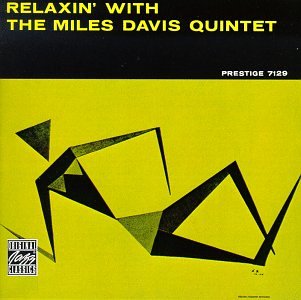
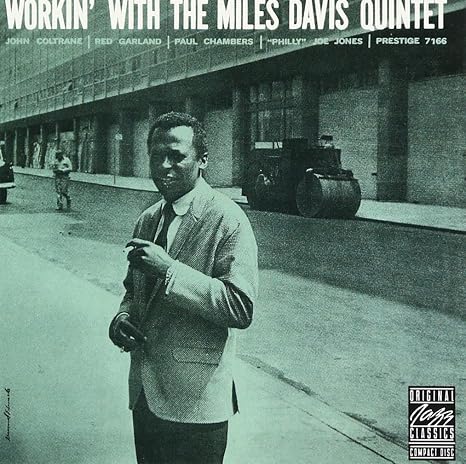
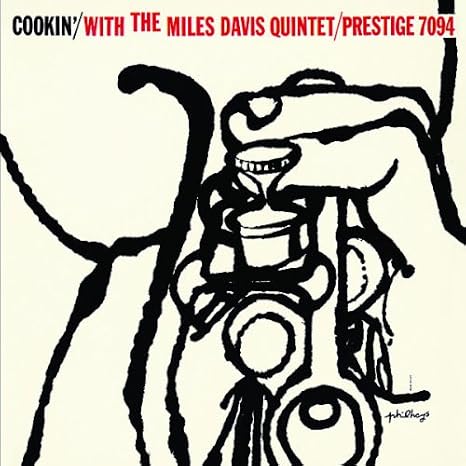
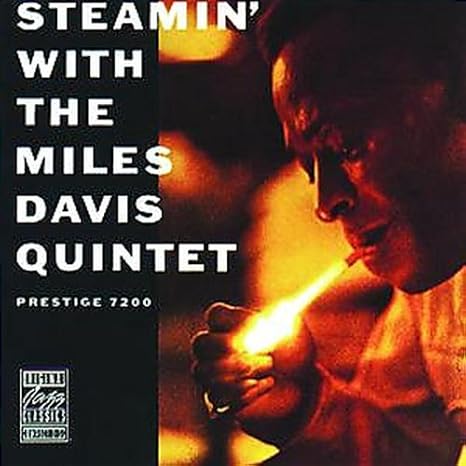
For many, the peak of Miles Davis's first great quintet were the four albums they recorded during a marathon studio session one magical day in October 1956. Relaxin', Workin', Cookin' and Steamin' were the album titles and collectively, they displayed the best of the jazz form of almost any era.

This was a group that had made a reputation touring together with a varied repertoire. The rhythm section of Red Garland, Philly Joe Jones and Paul Chambers was so well-oiled that it was called "The Rhythm Section", bold and capitalized. The quintet set the gold standard for musical empathy and high caliber fireworks something augmented in these recordings especially when a young John Coltrane would egg on bandleader Miles and trade solos.

The albums were recorded as if they were in a nightclub, Miles would call out a tune and off they would go laying out the definitive treatment of standards like Surrey With Fringe On Top or It Never Entered My Mind along with originals like Four and Half Nelson. These albums were probably the most conventional that Miles would make; he was never one to look back.

I mention all this because in many ways, Rokia Traoré's performance with her eight piece band last Friday reminded me of those landmark albums, in conception, in attitude and especially in the flawless execution.


Relaxin'


Relaxing


She walks out onto the stage quietly, picks up a guitar and begins playing. There are no diva theatrics - think of Beyonce being carried out Cleopatra-like by a guard of six hardbodies. This is a musician first and foremost; an unassuming singer/songwriter who knows that the music will speak for itself. She's lost the braids from a few years ago and her head is shaven, she's rocking the Angelique Kidjo aesthetic.

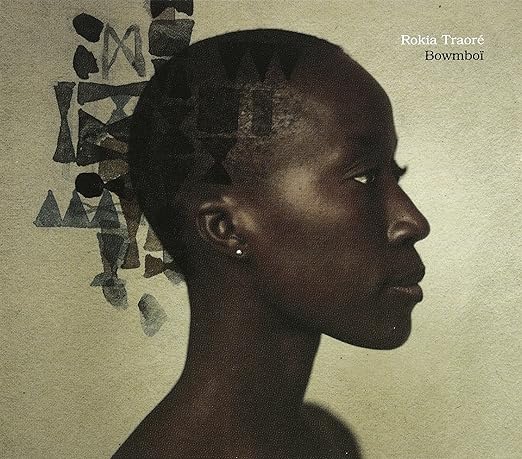
A back-up singer and a kora player accompany her and they begin with a touch of reflection, a couple of soft lilting ballads She's trying out the material from the new album, Bowmboï. It's a gentle introduction for the audience, fodder for a quiet evening on the porch.

Malian music is very well marketed in the West, moreso than say soukous, highlife or other forms of African music. The reason being that it is typically less frenetic than those forms and also because in many ways, it fits with a certain notion of "World Music": folky, laidback, and vaguely "authentic". The idea is that it's rural, bluesy, folk music: think Ali Farka Toure, think the "Roots of The Blues" etc. Never mind that the picture on the ground is more complicated or that the influences are varied and cross cultural boundaries. Never mind all that. This is the terrain of the African artist. Their music belies the frame in which they are portrayed.

The first time I saw her, four years ago, it was across the street, at Johnny D's, a small, homely joint that seats maybe a hundred. Back then, she was promoting her second album, Wanita, a dreamy affair firmly in traditional mould. These days though, she can sell out the Somerville Theatre which seat about 1,000 which give you some idea of the attention that has been paid to building up an audience. Nonesuch is the new record label and you know that they are no fools.

Workin'


Working with the Miles Davis Quintetrokia traore


The rest of the band join them and the evening's groove begins. Rokia is a diplomat's daughter and has lived in the Middle East and the West. She's listened closely to all those other rhythms but finds comfort in her roots, thus we have the balafon (xylophone), the kora, the two n'gonis (lutes)and the calabash and talking drums. Clearly the decision to use traditional malian instruments is a conscious one.

Her voice is not as full as Oumou Sangare - the éminence grise of Malian vocalists; it's lighter and more ethereal. The backup singer overlays and harmonizes very well. They are sisters in harmony.

She's got a young band, a set of young Malian musicians who are enjoying every minute of their time together and are committed to the journey she's taking them on. As a bandleader, she is not the imperious commander type although she has a clear conception of what she wants to achieve. She is more the team player, allowing everyone to shine and produce a zone offense, if there's such a thing.

One surprise though is the new guitarist/bassist Christophe "Disco" Minck, a tall long-haired Belgian so-and-so who lays down the fierce and metronomic break beats and wah-wah effects while jerking like a funky chicken. It adds some flavour to the gumbo they are cooking up on stage. This is akin to the addition of Money Mark's Fender-Rhodes keyboards during Femi Kuti's tour a few years ago promoting the Fight To Win album. There's something about the cross-cultural exchange by having another set of ears in the mix. She's been listening to all sorts of music and it informs her writing on the songs on the new album. It's hypnotic and mellow yet, rendered live, it's propulsive stuff.

Cookin'


Cooking with the Miles Davis Quintet
Wanita


During the Wanita tour, she very generously shared her stage with a group of young Malian drummers and rappers. The whole world listens to hip-hop and it was interesting to see the exuberant youth reinterpret the old tunes to a griot backbeat. She welcomed their melodic ideas and rhythmic wordplay then but this sensibility is only occasionally hinted at in her own music. She manages to be sound contemporary while keeping a traditionalist slant to things.

Back home, her biggest competition among the young lions is probably Habib Koite who is a similarly gifted writer. The blind duo, Amadou & Miriam are the folk heroes. Of course the gold standard are artists like Salif Keita, Oumou Sangare and all those great kora players (Toumani Diabate among them).

The new album recorded last year has been getting some buzz in Africa and Europe. Bowmboï won the BBC Album of the Year award and you begin to get an idea of what the judges for that competition were thinking as imperceptibly the band begins cooking. Polyrhythmic innovation quickly ensues, fired on by wah-wah guitar and alternatively some thumping electric baselines.

On the album she enlists the Kronos Quartet on a couple of songs - the effect is to add a classical tinge to the malian and occasional middle-eastern soundscape. Live though, the band gives vent to the interplay between the n'goni and the calabash, her own guitar quietly filling in the space.

For me it's the soul clap factor, once you've got me clapping, your work is done: I'll be your evangelist. She's got me clapping for sure.

As if to prove my point, she starts dancing with her backup singer, with flowing and languid movements. The men get very interested at this, if they weren't already: the two are lithe and sexy. The women in the crowd stay interested because their dancing is not as overtly sexual as for example those female dancers in Femi Kuti or Koffi Olomide's bands; it's tastefully done and no competition. They proceed to reel off five or six joints that are simply perfect, insistently intelligent, long groovy pieces that they explore to the fullest. We are all elated by the end of things.

Steamin'


Steaming


As she comes out for the encore, she enjoins the crowd in her bookish, impeccably correct and french-accented english, to feel free to stand and join her in moving to her music. "For me, singing onstage was a dream that has come true." Like a good diplomat, she knows how to charm her audience. The Girlfriend and I of course had been nudging each other throughout noting that African audiences would never have sat down through the type of performance that we have been treated to so far. Well this is Massachusetts so we take what we get.

The crescendo builds up in the three encore songs, and this is what is extraordinary about this: the music while clearly akin to Ali Farka Toure blues is nevertheless very danceable. More to the point the groove is trance-like and plainly funky. How do you manage to make funk out of kora and xylophone, pray tell? Now others in the crowd don't need any prodding to join in the soul-claps and the call-and-response that clearly delight both musicians and audience.

I think the space created by the two interlocking n'gonis is a vital part of the mix. Also we are treated to shifting tempos and some sublime changes just like in soukous or old highlife (see King Bruce or E.T. Mensah). Think of it as 5 or 6 in-situ remixes of the songs, radical reinterpretations of a basic sketch. So the dancing gets wilder, the atmosphere gets sweaty and we are all making a beautiful sound. At the concert closes the entire band is showcased and they do justice to it all. We're leave hyped by what we've heard. Come back Rokia... Steaming is the least of it.

Now that I've placed Rokia Traoré in august company for this review asserting that she's channeling the spirit of the Miles Davis Quintet, I should close by commenting on the context in which to place the evolution of her nouveau-funk Malian brew. For Miles Davis, the cooking sessions confirmed his place among the jazz greats and cemented his reputation as a bandleader par excellence. Bop traditionalists still look back on fondly on them as a landmarks. Albums like Kind of Blue and Somethin' Else would soon follow these classic and Miles' experiments would multiply in the ensuing years. Rokia Traoré's new album and especially the live performances in this tour are similar, confirmation of a great talent and a wonderful bandleader, I can't wait for the next album or to see what direction she goes in. You want to be along for the ride.

The critical response to her tour has been suitably estatic (see these various reviews for example). But don't take it from the Times or The Post, down here in the streets of Cambridge, the toli is that Rokia Traoré has arrived. Keep your eye on her.

File under: , , , , , , , , , , ,

Tuesday, July 20, 2004

The $10 impossible dream: A year of school

The LA Times continues its series on 'living with pennies', focusing this time on education. it doesn't go into as much depth and tackles the issue of what happens when you can't afford to pay the fees.

The $10 impossible dream: A year of school

The note sent home with the 922 students of Silwanetshe Primary School was clear: Pay up or drop out.

The next morning, about 500 children whose parents couldn't afford the $10 annual fee were absent. When classes began, 11-year-old Mduduzi Mkhize and his sisters, Precious, 10, and Zinhle, 8, could only press against the wire fence that separates their mud hut from the school grounds.

"I wish I was there," Mduduzi, a third-grader with a love of arithmetic and penmanship, said as he watched his classmates begin their morning prayers.

Vast numbers of Africa's children stand with Mduduzi and his sisters — trapped on the other side of the fence. Many attend school sporadically. Others don't even start. Of an estimated 115 million children worldwide who have never been to school, nearly 40% live in Africa, according to the World Bank.

These children may have survived disease, war or famine to reach school age. But for want of a few dollars a year, they will never be educated.

Because most Africans get by on less than a dollar a day, school is a luxury they cannot afford. After feeding their children, parents must stretch their pennies to pay for clothes and other basic needs. Even if they manage to set aside some money for school, they may have to choose which of their children to educate.

Since the end of apartheid in 1994, South Africa has promoted education as an antidote to poverty and conflict. The government spends nearly 8% of the nation's gross domestic product on education — a higher percentage than the United States or Britain — and the nation is widely recognized as having the best school system on the continent.

Even so, public schools must charge fees to stay open, which excludes many thousands of children. A third of South Africa's children don't make it past fifth grade.

Mduduzi is too young to grasp that a lack of schooling will keep him on society's lowest rung. For him, it is much simpler. "I miss reading," he said. "I miss learning to write. But most of all, I miss my friends."

Louis Mndaweni, principal of the Silwanetshe school, understands. He was once as poor as these children.

"It breaks my heart to have to send the children home," he said. "But if we don't enforce the rules, we'll have no money to run the school. There will be no school to come to."
This is all too common unfortunately throughout the continent. For us living outside the continent, it is not uncommon to deal with the following scenario - send money home for nieces, nephews' school fees, parents can't manage and use the money for food or other necessities (worst case is it's wasted on other things), child doesn't have the $5 to give to teacher, stops attending school, starts work at home (in the best case). A couple of years go by and the child is off the track, lost to the system - then teenage pregnancy for the girls or the boys then a life essentially hustling, selling dog chains and chinese plastic goods at intersections in the road. Its a harsh, brutish and short life that looms.

Tertiary Education is my mum's current portfolio so this remit is part of our daily lives and worries. If one looks at it head on, it's almost too large a problem to confront. And yet the kids show up, proud in their uniforms if they have one, want to go to school, to learn. On that basis, these problems are not insurmountable.

File under: , , , , , , , ,