Showing posts with label blues. Show all posts

Saturday, September 06, 2025

The Synthetic Shadows of Marvin Huxley

Apropos simulations and simulacra... I am catnip for the blues and, for the past few weeks, have been simmering in a thick stew of female blues singers - because, well, that's what one can do these days... Which leads me to the curious case of Marvin Huxley.

Or should I italicize "Marvin Huxley", a music producer who, like me, is enamored of 1930's Delta style blues and has now, at length (and perhaps controversially augmented with AI), delivered an album-length blues fascinator, Shadows of the South

Branded as an "Independent Lo-fi Blues and Jazz Funk Music producer" from Adelaide, Australia, I see and hear what gets him off, it's an aesthetic I am deeply sympathetic with. It's also an aesthetic just out of an uncanny valley, leaving me deeply conflicted.

My introduction to Marvin Huxley was Suits Stitched in Shadows and Lies, which was somehow recommended by YouTube after I'd exhausted my go-to playlists of Etta James, Big Mama Thornton and Memphis Minnie. And, well, listen for yourself.

(Putting aside the visuals - which were a later discovery and par for the course in this our generative timeline), I didn't know where to start with the music, I was confounded.

Then, one click later, there was A Dollar's Worth of Skin, which was similarly disconcerting to the ear. Synthesis, compression, homage at once, and fruit of a strange alchemy.

Then, there were also the earlier experiments, say Goodbye America Blues, which is more evidently artificial with its vocal sampling of an unknown singer and filtered guitar. Still, I kept listening, eventually casting the effort as a blues fascinator despite the synthetic content.

Sidenote: The Sister-in-law has written at length about the real thing. We should all listen to them. The emotional labor and the craft:
Blues Mamas and Broadway Belters: Black Women, Voice, and the Musical Stage (Refiguring American Music) #CiteBlackWomen

In any case, here is an album that is soaked in this aesthetic, devoted even. A studio creation, perhaps, but it is a creation nevertheless. A high-tech creation of lo-fi blues.

Or more precisely, it is a recreation from someone "who loves trying to recreate those old sounds using vintage style instruments, samples, compressors and effects". Homage and chimera, then.

When I read "The guitar recording was degraded to evoke the brittle warmth of a 1930s field recording", I couldn't help but think of Pete Rock or DJ Shadow crate-digging and similarly jacking for beats.

Or say Q-Tip on the needle drop.

There's a racial angle perhaps (or a cultural appropriation take, some might say), but I won't venture in that direction, only the music matters to me.

Still, who gets to write "a love letter to the lost ghosts of American blues music"? Not for nothing do many bluesmen sing that Blues is a Feeling. (see Lightnin' Hopkins, for example)

And in a year where the movie Sinners has dominated the cultural zeitgeist, it is worth asking whether you can have a Delta blues revival, with full-on lyrics, gritty vocals and all, that is synthetic rather than authentic.

(Sidenote: to that point, Buddy Guy's new album Ain't done with the blues is also out)

Still, the music nerd in me wants to deconstruct the work. Where do the voices in Shadows of the South come from? What studio trickery was used? What equipment? Or, perhaps more tellingly, what prompts were crafted, if some of it is indeed AI-infused?

But then, stepping back, I also want to ask: who made the field recordings that we all venerate? Who was documenting the blues back then? Who was promoting it? And who now basks in the sounds of earthy blues?

But that's me. I can listen to a blues mama merely humming for hours on end. Further, the stakes are low. To add or not to add to the playlist, that is the question.

It seems to me that the visuals highlight the artifice and perhaps even detract from the music they are intended to support. At the same time, they do underscore the mood and point to the story of the clever lyrics. Also: they are great conversation pieces.

(A reminder that my favorite video accompanying a Funkadelic song is a juxtaposition with a Russ Meyer film, You Scared the Lovin' Outta Me by Funkadelic)

But I wonder what Marvin Huxley would come up with, with say a Lizz Wright in the flesh, after hours in the recording booth. Or maybe, to push the racial angle, what would a project with Alice Russell on vocals sound like in comparison?

In the same vein, one wonders if people want to listen to the blues or if blues-adjacent or blues-influenced will suffice. Certainly in these streaming days, there are many for which the simulacra will suffice as background music. Reserving the experience of the real thing for live settings. One wonders...

Anyway, the album is not all fetishized retro action. The rest features more modern beats, albeit still blues-inflected on the surface, even when veering into trip-hop territory. That growl in the vocals is a constant, and those guitar licks. Sounds of nostalgia.

I can see the twinkle in the eye as the album was released. But who knows how it will be received? I do know that this listener was left chasing shadows tying to decipher this conversation piece. Let me know what you think.

austin sunset 4


Shadows of the South by Marvin Huxley


The album on YouTube (spotify version) and a few highlights. For the first three, I suggest a blind listen before venturing to the videos.

P.S. Hey Marvin, tell me more about the makings of this album.

P.P.S. Pardon the title of this piece, I'm a sucker for such things.

This note is part of a series, One Track Mind. See previously: Baby Me by Chaka Khan, Paul Laurence, Soul Man

File under: , , , , , , , , , , , , , , ,

Writing log: September 1, 2025
Monday, March 18, 2013

Blues of an Omnivorous Reader

Wherein I reproduce a couple of apparently futile musings on the announced death of Google Reader. I've always preferred that my public utterances be available in a feed and Google Plus by design doesn't provide one. Further I received a transatlantic call yesterday from The Parents who are alarmed and incredulous that such an important and incredibly useful tool - an essential part of their experience of the web, would be summarily executed, as it were. They raised a point that I hadn't considered as I've been thinking about Plan B. It is easy to say that there are other feed readers, but almost all the proposed alternatives will not be free if they operate at Google's scale, and this presents complications if you live in a country like Ghana which is a black sheep in terms of e-commerce. Although my parents are undoubtedly willing and able to pay for such a service, they will be locked out because PayPal, Google Wallet and most credit card payment systems are not available to Ghanaians. I'm going to have do the dance of getting their credentials, signing them up for Feedly, Newsblur or what have you and entering in my payment details. Now that's a workable arrangement for my family, but what about others in similar circumstances? I had posited, with some amount of hyperbole, that this was a massive destruction of consumer surplus but I didn't know the half of it.

1487 Feeds (or Blues of an Omnivorous Reader)


A belated, and certainly, redundant comment to this thread.

I suppose I am an outlier in terms of usage as Google Reader is my single most used web application (more than even search and email), but I'll have to repeat the question I've been asking myself for a couple of days now: how does one handle 1487 different content sources efficiently across the up to 10 devices that I might use daily?

The corollary question also comes to mind: how did I come to aggregate that many sources of data?

The answer to both those questions is Google Reader.

Chris Wetherell's thesis was that "feed reading is inherently polymorphic" and he would know as he designed Google Reader.

As I'm having to now export said 1487 feeds to try out various alternatives, I've been thinking through my usage of Reader and I must agree with him on that front, because what I see is a wide variety of sources organized however I want.

Some are blogs, some are news sites, some are topical, some sui generis, some polymath, some from people I disagree with, some are the web output of friends, some from family, some are photo blogs, some are podcasts, comics, or comments. Some are on current affairs, some on Africa (although that tag seems to encompass anything non-US), some on technology, some tagged as general interest, some pure entertainment.

Some are high traffic, some are infrequently updated. An example: a friend recently emerged after a 2 year disappearance in the new parent cone of silence. On his return to blogging, he seems to be no longer interested in writing about technology. No problem: simply tag him or add him to a different folder (feeds can be multiply categorized).

Some are work related. Some are very narrowly focused. Some are alerts that I want to monitor e.g. feeds in Flickr and Delicious (tags or people or groups), Google alerts. For a while I could easily monitor almost everything of interest about Ghana since writing on Ghana and indeed the Ghanaian web footprint has been so small.

Some are forums. Some are for research often more speculative than not (e.g. the two months when I mused about a dissertation on two-sided markets in technology). Some are for archiving purposes (e.g. various synthetic feeds of sorts), and of course there are the vanity feeds (e.g. the defunct Technorati watch lists or Blogdigger searhes, Friendfeed etc.) which are all filed in the Egotism folder).

Anything that could generate a feed is fair game and has an equal opportunity.

Some are full feeds (which I prefer), some only offer headlines and some have article summaries but I've found that using Reader to scan headlines and/or summaries is still more useful as a starting point to distill and decide what to open in a new tab.

The huge variety boggles and has matched my varying interests over time.

Humanity Critic can lie next to Maciej Ceg?owski who lies next to Malcolm Gladwell. Google Reader democratizes the process of information consumption.

All of these sources could be sliced and diced, categorized any which way and sorted however I want.

Each folder can be read differently since Reader accommodates different reading styles. Skimming is easy if need be. You could have a river of news with whatever filtering that you want. You could decide to focus on a particular source or topic and deeply explore.

Sort also is important, some things should be read in order e.g. Doonesbury, for others recency is more important.

Sort by "magic" used to be almost uncanny in surfacing what I found most interesting. The algorithm was changed a couple of years ago and it has suffered greatly (some of the higher traffic sites are overwhelming things) and the All Items view hasn't been as useful ever since in bubbling up interesting content. In mitigation, I've since segregated the high traffic but low signal feeds into different folders where they can be easily triaged and marked read to regain sanity. The loss of the old sharing features (and enforced move to Google+) was hard to take, and perhaps contributed to the decline in effectiveness of sort by magic. One click starring and sharing was the most wonderful thing while it lasted.

Starring and synchronization of unread state across multiple devices are of course the killer features.

The high information density is unmatched on the desktop and mobile. (Indeed the mobile web app is better than the Android app for what it's worth). Keyboard shortcuts for navigation and the visual design are the icing on the cake.

Others have explicated much of these design traits and at length.

A few other things:
  • An invaluable debugging tool for feed development.
    It's hard to remember how long it took to develop robust tools to produce and consume feeds, not to mention how contentious the process was. Google Reader was a major driver and was at the heart of this process. Mark Pilgrim's myth of RSS compatibility is one iconic example in this vein. It was hard work. Now in 2013, every software product can produce a valid Atom or RSS feed, so much so that we can almost retire the heroic feed validator service. Atom stores proliferate everywhere even if only under the covers. Feeds are essential web infrastructure and like all good infrastructure they are only noticed in their absence.
  • Archiving
    Google Reader's archives are second to none: so long as at least one person subscribed to a feed, its content was archived. This obviously includes archives of now-defunct blogs. For example, the only archive of Teju Cole's Modal Minority blog that eventually morphed into his novel Open City is to be found in Google Reader, the Internet Archive doesn't have a copy. Imagine a future, or even current, student with a mind to write a dissertation on the most critically praised blog-turned-novel that we have seen. Well that student has 3 months to get cracking or there will be no discoursing on "The artist as urban exiled soul: witnessing the Bush years through episodic flânerie". Links are ephemeral you see.
    The archiving features have saved many a misconfigured blog's data.
  • A Public Service
    In the same way that people in Iran and other countries were using sharing in Google Reader to do interesting things to route around censorship and political repression (something that came to light when Google+ forcibly became the "one true way" to share from Reader), the impending loss will be felt in other countries. It's hard to arbitrarily filter Google, it's too useful a bundle of services. Filtering Feedly? or Newsblur? Come on, let's be serious.
Arggh.. this was meant to be a one line comment namely:
Google Reader is the single most useful tool I've found "for organizing the world's information".
Not to be facetious, but asking one to articulate its value and what in its design can lead to the above sentiment is really sad. It's hard to believe that it's not obvious. It's hard to believe that it has to be articulated. Really. It's hard to believe.

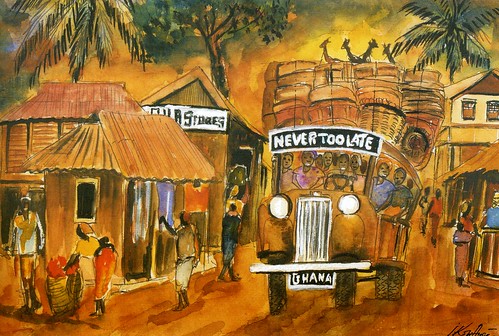
never too late by John Kofi Aryee


Fairy Tale Endings

Responding to Ben Hyde's first take on the matter: Fairy tale is the right metaphor and Google Reader's is a cautionary tale akin to the Tower of Babel. Coordination costs is the issue and what we are seeing is a vast consumer surplus being dissipated.

And it hurts even if you saw the blow coming. I made my peace with the loss of sharing features a couple of years ago and the enforced push to Google+, I made my peace with many other losses, but now I'm been in mourning for the web.

Grievous bodily harm is being done to the web ecosystem. For a good decade, tools and infrastructure were built that wrangled the web with a view of feeds as an ideal medium for information dissemination and consumption. Google Reader's role was crucial and necessary.

Unlike Les Orchard, I didn't go so far as to actually write books or move home to work on the teams that built some of these building blocks (Delicious, Flickr, Reader) but I similarly evangelized and worked on them. It's a shame.

In retrospect, Mark Fletcher (of Bloglines fame) cashed out at the right time, from what I can tell his life post-Bloglines is a lot of safaris. All power to him.

Looking forward more broadly, I can see the outlines of how the story of Amazon will ultimately play out. For a moment that will seem all too brief in retrospect, consumers had use of a vast consumer surplus as the web was built and options value flowed in their direction. Then we heard about "Spring Cleaning"...

I feel sad writing this note in Google+.

Soundtrack for this note

File under: , , , , , , , , , , , , , , , ,

Wednesday, February 23, 2005

A Soul Jazz Thing

The great organist Jimmy Smith left us on February 8th at the age of 79. I was especially saddened to hear of his passing because I had started an appreciation piece on him last December but never completed it as these things are wont to go. He truly was the heart of soul jazz.

The various obituaries were universally respectful and admiring of his talent, noting his considerable influence; but it struck me that many were damning him with faint praise:

He blended jazz, blues, R&B, bebop and even gospel into an exciting stew - an idiom that produced many imitators, followers and fans.
Fair enough, I suppose, but when you say blended, I think of tepid purée not the kind of propulsive music that sprung from Smith's hands. This is a man, in a category of his own, who was dubbed the "Emperor of the Hammond Organ". He featured, like the Kings, Dukes and Counts, among the royalty of the jazz tradition.

Pardon me, if you will, while I set the record straight:
Soul Jazz is ecstatic music.
It's about the blowing sessions that happen after the main show, long past the midnight hour, when the lights are low and the musicians are loose and playing for keeps. At the after-party jam, it's all about earthly delights, loosened ties and unbuttoned collars. You'll hear complex grooves and humourous exchanges in the music: Can you top this? they're asking.

There'll be virtuosity that will make you stand up, thump your feet and rumble with someone close. The laughs are heartier and the flirtations are more intense. It's a celebration of the sensual and the sacred. Musically, it's the funky, greasy blues of back-alley jook joints with the prospect of the Good Lord the next day.

And Jimmy Smith best illustrated this notion: after playing through the night at the grimiest of speakeasies, you would find him on the organ at the church service in the morning, energetically lacing melodies to punctuate the reverend's call. All the while, the crowd from the previous night would be nursing their hangovers in soul claps amongst the congregation.

Consider the one-two punch of Midnight Special, which is about as earthy as these things come, and the revival and church hall vibe of Prayer Meetin'. They are part and parcel of this innovative musical conception. Smith's music speaks loudly and was heavily sampled by hip-hoppers and revered by the acid jazz/rare groove crowd. The aesthetic of A Tribe called Quest sprung fully formed from this soul jazz confection. Exciting is the least of it.

Herewith then, this month's soul jazz playlist bookended by Jimmy Smith's groove.

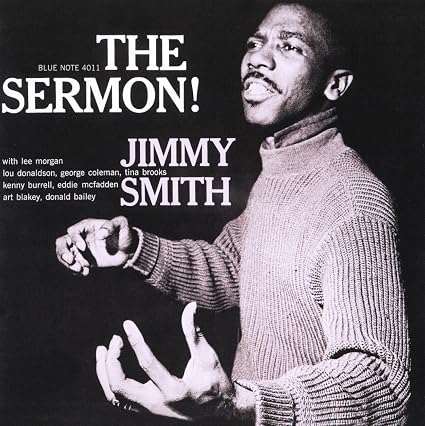
The Sermon


Jimmy Smith - The Sermon

The title track, a 20 minute affair, is what is says it is: a musical sermon. It's a relaxed affair, founded on an insistent back beat of the kind that Jamerson and co. would later pepper all of Motown with. It's not overbearing; the preacher is in his prime and knows what he's doing. It ebbs and flows as the message is delivered full-throated by the choir. The soloists let their hair down and the music builds up. It's an all-star cast on the church floor. The intent is to make people start yearning for the promised land. Exclamations and outbursts proliferate and everyone has ample opportunity to shine. The solos on the rest of the album are in the same vein, demonstrating to all and sundry that, with the Hammond organ on hand, there was no one quite like Jimmy Smith.

Hallelujah. Amen.

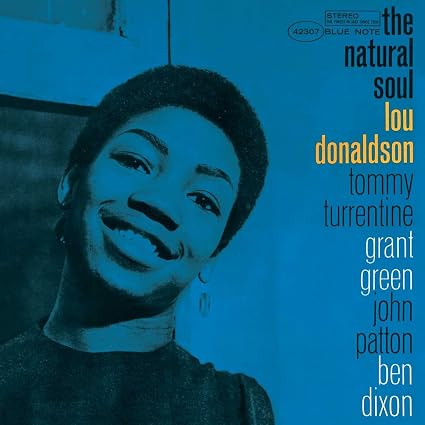
Natural Soul


Lou Donaldson - The Natural Soul

Mixed in with shaking works like Nice 'n' Greasy and Funky Mama are fluid and inventive approaches to old standards by Gershwin and Rodgers and Hammerstein. Lou Donaldson is a wonderful musician full of humour and here everything flows easily as befits a natural soul.

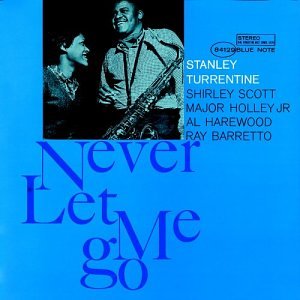
Never Let me Go


Stanley Turrentine - Never Let me Go

Stanley Turrentine's artful saxophone and lazy organ courtesy of Shirley Scott makes for heavenly jazz. For those late nights...

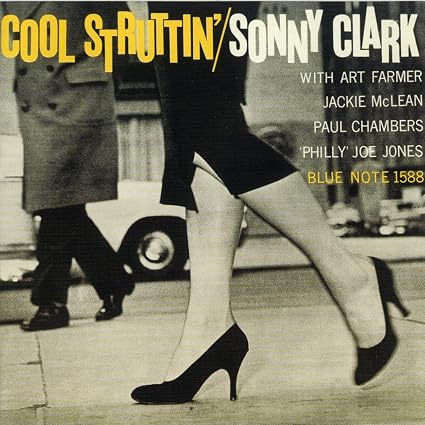
Sonny Clark


Sonny Clark - Cool Struttin'

This is the closest to staightforward hard bop as you'll get from this playlist. But the sounds of this album speak to that transcendant "feel" that is soul. It's not a blowing session but the musicians are in a playful mood. All the ingredients combine and the core of the genre is plainly evident.

Ready for Freddie


Freddie Hubbard - Ready for Freddie

Earlier albums like Hub Tones were about displaying the fireworks and technical mastery of his instrument that put him in the league of the best jazz trumpeters of all time. Ready for Freddie is Hubbard's most cohesive album and shows his virtues as a band leader and composer. Those who think that Miles Davis was the end-all on the trumpet need to consider the likes of Lee Morgan, Clifford Brown or Donald Byrd and, on the evidence of this album, Freddie Hubbard. Trading with Wayne Shorter on tenor sax and rythymn section of McCoy Tyner, Elvin Jones and Art Davis, this is a portrait of a band in full. A decade later, firmly established as an all-star, he could go on to the much-beloved Red Clay. But in the music of this moment, the world was ready for him and Freddie was a monster.

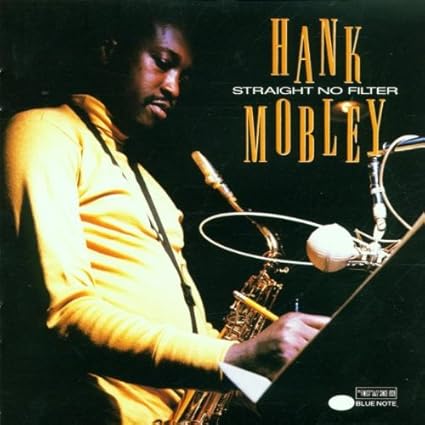
Straight No Filter


Hank Mobley - Straight No Filter

Whereas Soul Station is his consensus masterpiece, this posthumous release of the sessions that comprise Straight No Filter is a great introduction to the rarefied sounds of Hank Mobley. For a decade, everyone worth his salt in jazz knew that a gig with Hank was just the right thing. He made no apologies with his compositions and was game for revisiting standards in interesting new ways. "Yes Indeed" could well stand in for a sermon and Donald Byrd, Herbie Hancock and Philly Joe Jones turn it up a notch. The aura of these sessions is mellow crepuscule.

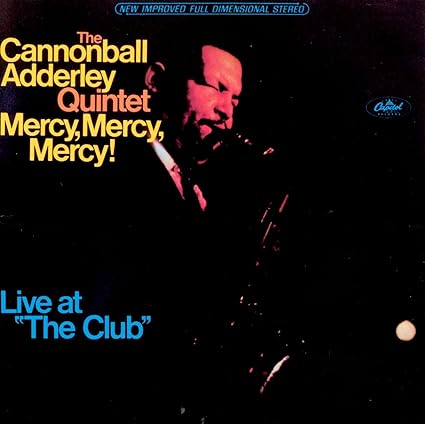
Mercy Mercy Mercy


Cannonball Adderley Quintet - Mercy, Mercy, Mercy!

Although sub-titled "Live at 'The Club'", this was actually a studio affair. The album aimed to recapture that loose club feeling with friends showing up for a good time and free booze. And it works. There's Fun, Games, and even a Sack O' Woe as the Adderley brothers (Nat and Cannonball) do their thing. Joe Zawinul's compositions also played an important part in the way in which this group gelled.

Alternatively you can go for the Country Preacher album which was indeed recorded live at a revival for Operation Breadbasket and which features a young Jesse Jackson exhorting the appreciative audience onwards and upwards. But trust me, you can't go wrong with Mercy, Mercy, Mercy!

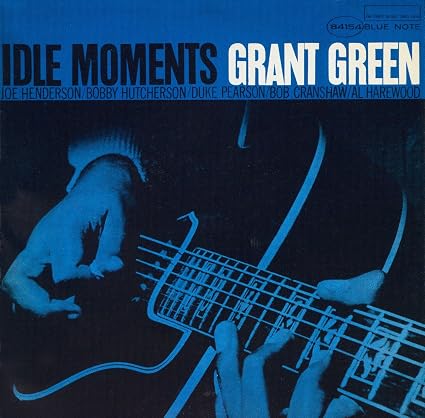
Idle Moments


Grant Green - Idle Moments

Is this the greatest jazz guitar album ever? Well it's a close-run thing. Maybe Smokin' at the Half Note gets the edge, but I wouldn't be so presumptious. Idle Moments captures Grant Green and company making magic. Bobby Hutcherson is on the vibes, Joe Henderson growls on the tenor sax and Duke Pearson is all empathy on the piano. They didn't plan for the title cut to be that long but sessions like these are supposed to be unhurried affairs. Simply inspirational music that we have the great fortune to be able to listen to time and again. This is about as good as it gets.

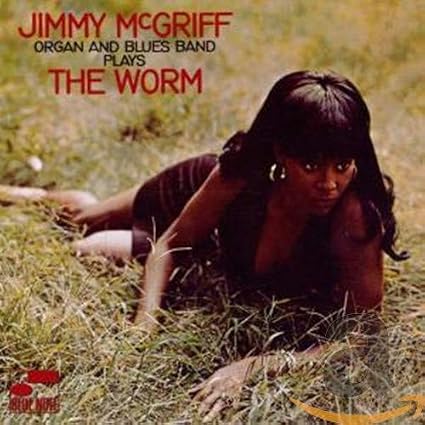
The Worm


Jimmy McGriff - The Worm

An organist who followed in Jimmy Smith's path, McGriff found his own style and took the instrument in a different direction. It's more percussive and danceable, he's aiming towards the funky edge of the continuum. The liner notes defy you to sit down through this album. I can testify to their veracity.

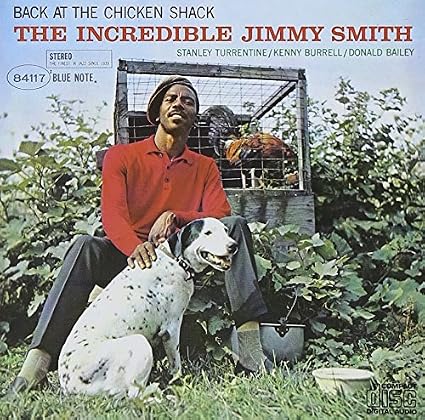
Back at the Chicken Shack


Jimmy Smith - Back at the Chicken Shack

And finally we're back where it begins, at the blues shack. This album is one of my favourites from Blue Note and Jimmy Smith's finest moment. Cratediggers like DJ Shadow are forever enthused by the album cover but for me it's the music inside that matters and, when it comes to that, the guns are drawn from the first note: insistent, intelligent and nasty fun ensues.

I can see Jimmy hunched over the organ. Kenny Burrell on guitar, and Stanley Turrentine on saxophone are egging him on and trading funky licks and hard-bop runs. He's sweating profusely yet he's still cool enough to wink to that sister in the corner table to seal the deal. Smiles and loaded looks are exchanged.
Later on baby. There'll be time enough afterwards. For now, just lay back and listen to this. I'm in the cut.
I miss you Jimmy. Wherever you are, stay locked into the groove.

A Soul Jazz Thing, a playlist


File under: , , , , , , , , , , , ,, ,