Notes on reading the novels of Alain Mabanckou.
I. Restraint
A writer who shows restraint on a topic that is prime for exuberant fireworks is a rarity. When that topic is the dislocation of a civil war, you start to wonder. When the writer is known for splendid wordsmithing atmospherics, you take notice at the muted tone you encounter. As you read and can palpably feel the wrenching of the conflicts that the Republic of Congo (Congo-Brazzaville that is) was subjected to, you are even more surprised by the self-effacing prose. As you observe the contrast between the close and personal observations - the subtlety in short of the text, and the groundswell of manic viciousness that sweeps a country, you ask yourself if he can keep it up. When the voices of the female characters are realized so poignantly, you scratch your head thinking back to the author's reputation for shrewd depictions of male worlds. What do we have here, you ask yourself? All is not quite what it seems.
When you are branded a young lion, it takes restraint to not growl. When you have been feted as a stylistic innovator, it takes restraint to write within the margins. And so I came to read Alain Mabanckou's
Les Petits-Fils Nègres de Vercingétorix. And so I was drawn deep into his world. I had previously read his debut novel,
Bleu Blanc Rouge (1998), a bravura work for sure (and more on that anon) and had already placed him in the vanguard of modern African literature. Reading Les Petits-Fils Nègres de Vercingétorix simply marked him as a singular talent tout court. I was plainly impressed by his remarkable restraint. Would that more African writers follow his lead; too often we aim for the epic when the delicate touch would be just as ambitious.
There is a certain virus that afflicts human societies that's ostensibly to do with identity - sometimes it's couched as nationalism, sometimes as tribalism, oftentimes it's plain jingoism. Demagogues feed on it, and sadly many politicians find it hard to resist. It's a seminal disease whose symptoms at its worst involve people who had previously been living alongside each other erupting into murderous violence. The last century was a particularly bloodthirsty exemplar of this. The former Yugoslavia was a notoriously teachable moment about the endurance of such tribalism (Europeans don't seem to like the word for whatever reason). Africans of course are not immune to this disease; indeed, some often paint the continent as a great incubator of vicious innovation in this sphere. In the politics of Congo-Brazzaville of the last thirty years, militias were its expression. Whether it was those favoured by Denis Sassou Nguesso or some of the other rogues that the country had the misfortune to be afflicted with, militias wrought havoc with gruesome efficiency.
The most interesting question to the reader in me is the form that the artistic response to such events takes. How does one write about topics as loaded as what we now brand as ethnic cleansing? And what kind of literature emerges in the wake of these uncivil wars? Surveying the scene - since similar tragedies have been plentiful in Africa, the literature, on the whole, has aimed for the epic. Sometimes the emphasis has been on the absurdity of the goings-on, other times writers have gone for sober reflection, always, however, the stories come out epic. Think of
Ahmadou Kourouma's Allah n'est pas obligé, think of
Emmanuel Dongala's Johnny, Chien Méchant, and, less successfully,
Uzodinma Iweala's Beasts of No Nation in recent times as takes on the warlordism and child soldiering. On the other hand, I'd advance as paragons of epic sobriety
Helon Habila's Measuring Time,
Yvonne Vera's The Stone Virgins and, on Biafra,
Chimamanda Ngozi Adichie's Half of a Yellow Sun. Standing essentially alone, Alain Mabanckou's strategy is restraint.
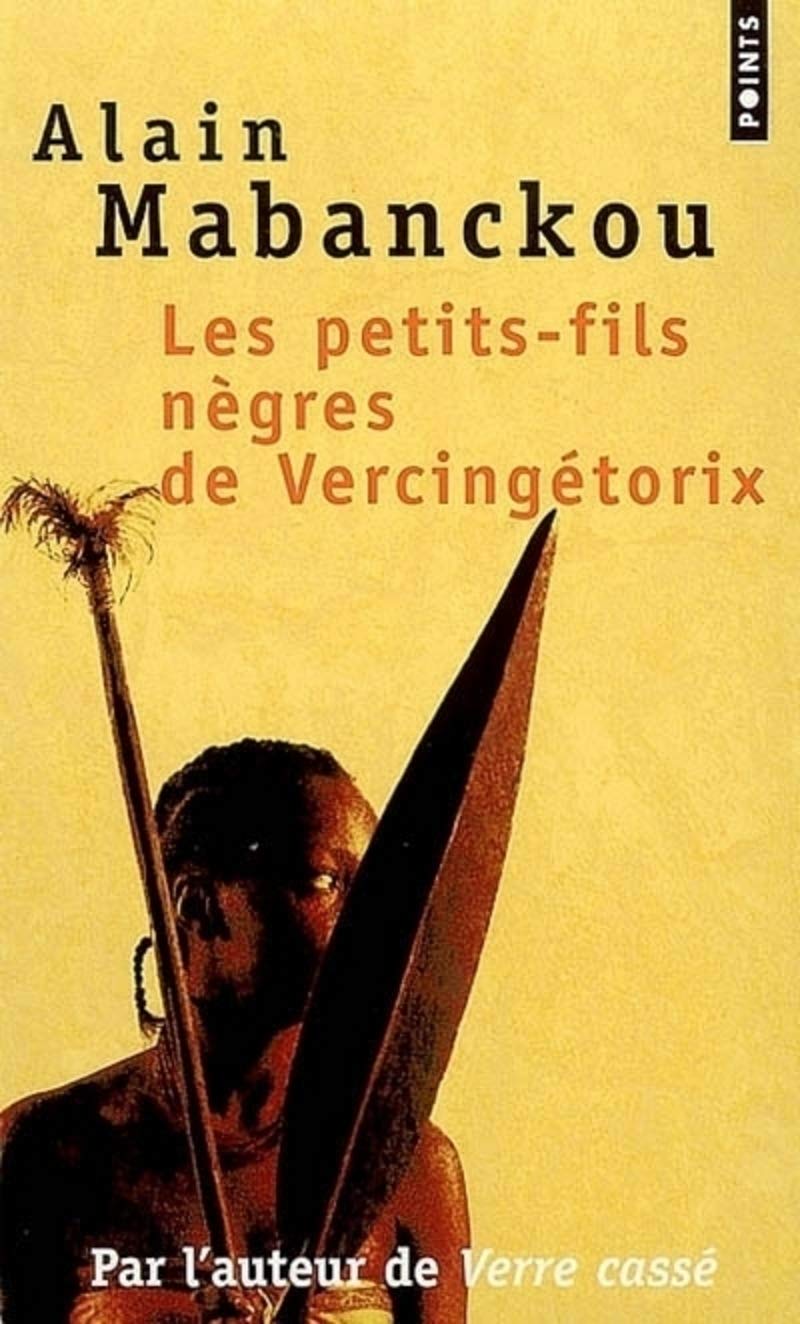
Perhaps the most telling choice he makes is to do with the question of form. Les Petits-Fils Nègres de Vercingétorix is an episodic novel, written in the form of notebooks that a woman is writing to try and make sense of a life that has been upturned. It is about a barely disguised Congo-Brazzaville - a country placed into upheaval by militias and a North/South divide that affects families even to the extent of turning a man against his wife and even his own daughter. The inspired choice of diaries is at once a constraint - it almost obliviates grand storytelling and a kind of epic sweep - and a release, the narrower focus brings a intimate immediacy to the fore. The form allows for ellipses and the gaps are always telling, for when do we have the time and discipline to return to one's notebook? What is left unsaid can be inferred without much work on the reader's part, and, sometimes, the implications are so ominous that you wish that he had inserted a scene to salve the tension you feel.
Here is an African writer eschewing nativism and metaphorical excess a la Ben Okri. There is no fat, there is nothing to trim in the narrative. He doesn't traffic in arch constructions and just gives a story plainly told. The emphasis is on small scale journeys. Restraint in the form then serves to accentuate the dislocation that occurs.
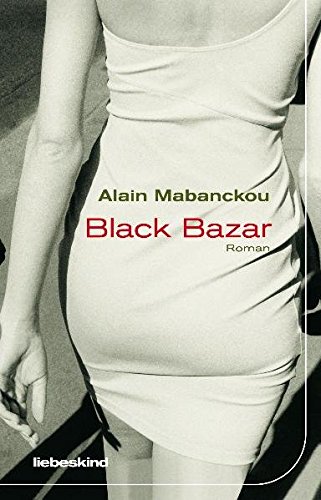
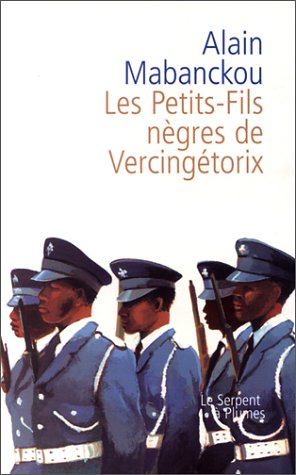
It is a deeply felt book, I'd hazard even that it is the most personal of his books and it is the one in which he discarded the customary humourous mask he proffers. It is also the least 'literary' of his works which it makes it more satisfying to my mind - as he has been embraced by the academy, his novels have taken on more academic concerns. The novel considers what family and friendship mean when ethnicity becomes paramount and driven by parochial concerns. The lens is focused on two families that have crossed the ethnic divide and the repercussions they face as politicians ratchet up tensions. Perhaps the tale is best expressed by considering the two covers of the different editions: the one focusing on a woman and the other on a military parade. The latter, with the military in their shiny uniforms, perhaps representing the dissipation of so much of the continent's promise and energy. The cruelty of the militias that form is unrelenting and ugly and weighs on everyone.
It is fascinating that Mabanckou manages to give entire histories of these cruel militias and the men who used them as shock troops within the constraints of the novel's framework. You wouldn't expect that kind of pointillist historiography from mere diaries. It's as if Anne Frank's limited perspective from her Amsterdam hiding place grows to encompass the entire sweep of the world war. You don't notice it at first because there isn't an omniscient narrator at work, but all the players in Congo's madness are indelibly sketched, and vividly so. They could have been caricatures but instead are characterized with economical writing and steady accumulation of close observation.
I marvel at the power of this elegiac novel. Reading it, we learn that, with restraint, the tales of displacement that are part of the African story can be written with such delicate reflection. How does a seemingly clear-eyed society rend itself so thoroughly? And what are the costs to family and friendships? Restraint, indeed, is what that sterile modern phrase 'ethnic cleansing' deserves. Such is the way of the porcupine.
II. Empathy
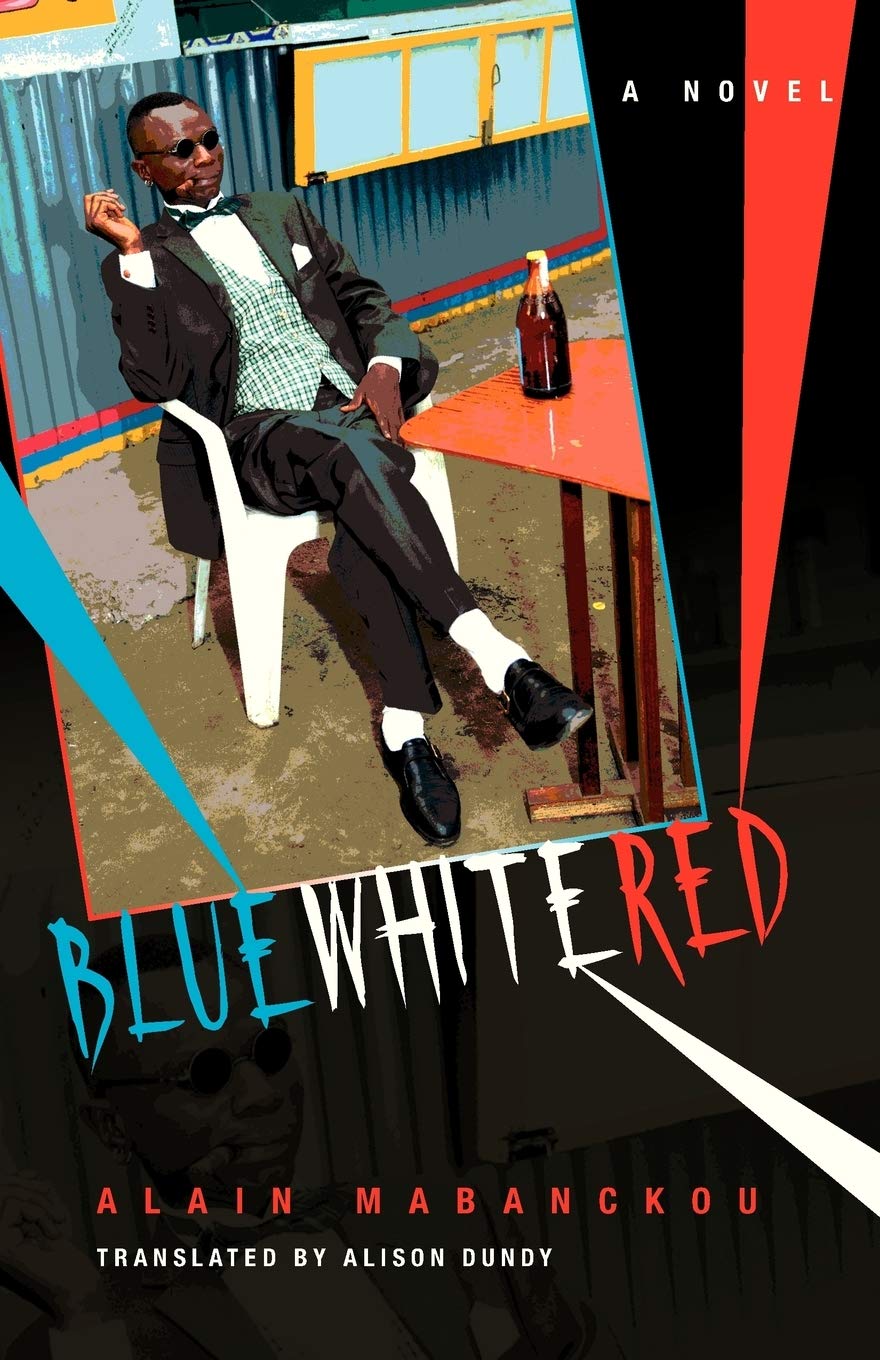
All that glitters is not bleu, blanc, rouge. That, in brief, was the message of Bleu-Blanc-Rouge, my introduction to the writings of the man I'll call the porcupine. And what a debut this 1998 novel was. I can't praise it highly enough, for it contains multitudes within it. Read it as a novel about yearning, read it as a novel about immigration, revel in the fond portrait of Congo - wrinkles and all, enjoy the comic set pieces, and laugh, above all, laugh. In all these ways, you will encounter a very assured writer who found his voice early on. In many ways, it is a testament to the anglophone myopia in African literature that this wonderful book is only now seeing a translation into English as Blue White Red.
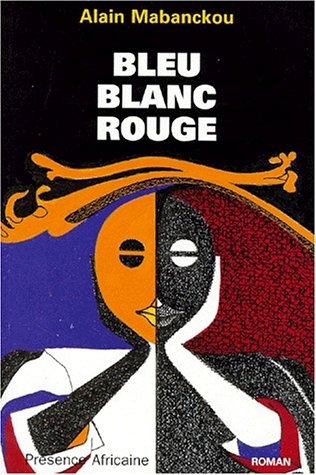
Bleu Blanc Rouge of course refers to the French flag; its embodiment in Parisian streets serves as a stand-in for the promised land (at least for those growing up in francophone Africa). Ostensibly then, there is this loving pull to leave one's land and head to streets paved with gold. "Abroad" is a message repeatedly hammered home to young Africans, and, along with its counterpart "The City", it has been one of the irresistible forces in post-colonial Africa. Our literature has followed accordingly, and the best treatments have always stemmed from authors who have great empathy.
The story of the African diaspora in France has universal echoes and, much like the story of any diaspora amidst their erstwhile colonizers, has built-in drama and comedy (the tension of exile, nostalgic longing and the process of adaptation to the funny ways of the locals etc.). The stories of Africans in England, Spain and Portugal touch on all these areas. Still I relate what Mabanckou does in Bleu Blanc Rouge most closely to what Samuel Selvon did in writing a great comic novel with sharp edges about the Caribbean diaspora in
The Lonely Londoners, and with similar humour. Beyond that, Mabanckou appears to do what
Krzysztof Kieslowski's Three Colors trilogy does in a different medium, illuminate an entire society. He is not content to simply concentrate on what happens once you leave your homeland, he intends to fully explore the life you were leading in said homeland. Indeed he captures so many textures you'd suspect him of being a seasoned anthropologist.
Structurally and thematically we can read the novel in three broad sections.
- Bleu - the blues of aspiration. Why is the lure of going abroad so strong even when there isn't political exigency driving things?
- Blanc - the color of snow and the cold life abroad with the Caucasian natives. The hustle of immigrant life is examined.
- Rouge - the red of conflict and disappointment, in this case dealing with the quiet return home and even deportation.
The young narrator, although ostensibly middle class, has given up on his studies and is making do in his own desultory way. Presumably it is a measure of the futility he sees of getting highly educated only to join the ranks of the hordes of graduate unemployed on the lookout for patronage in a country where cronyism is how things run.
He is inevitably drawn to those who affect to be gentlemen of leisure. What makes the novel indelible is its
portrait of the
culture that we know as La
Sape. The first part of the book might well be the most complete account of the rise of the sapeurs of Congo. La Societé des Ambianceurs et des Personnes Élégantes (La Sape) is the star of the novel.
Mabanckou grew up among these iconoclasts. Their sartorial choices were a brazen reaction against the Authenticité campaign that Mobutu had embarked on next door (a campaign echoed initially by Sassou Nguessou close to home). At the same time in their lifestyle, they had taken to heart the dictator's more direct edict:
Débrouillez vous. He describes with considerable humour (and without judgment) their seeming cult of materialism, their love of designer labels, of style over substance perhaps, their playful way with language and their dedication to living by their wits.
He regales us with fond descriptions of the origins of the sapeurs, he is especially acute about the difference between the sapeurs of Brazzaville and Kinshasa. We learn about those who lived that life, and their effect on those who grew up among them. The sapeur lore is recounted: the exuberance of their competitions, the mixture of hubris and bravado at work in their core... The set pieces that punctuate the book are a comic delight.
The seduction is quite real and embodied in the character of Moki - Charles Moki, who looms larger than life throughout the novel. Moki, one of those 'Aristocrates' and the most legendary of the 'Parisiens', might be considered the king of those sapeurs. They return from Paris with bags of designer clothes that they sell and exchange, spread money around town, flaunt their peacock wares, and tell tall tales about their life abroad.
There is an acute analysis of their descriptions of the promised land. The appeal of going abroad to Paris or Bruxelles lies in the perception of gold-lined streets in Babylon. A running joke in Marguerite Abouet's
Aya de Youpougon series is of the man who is always promising to take you to Paris. In her works, the response is always skeptical yet the comic hyperbole used by those who come back about how things are easy abroad (as rendered by Mabanckou) will wear down even the most skeptical. And so we head abroad.
Paris proves to be a rude awakening. The narrator finds that Moki in Paris is a quite different man and, more generally, that life in Paris is quite different (
read difficult) from what he had been led to believe. The contrast between the relative ease of life back home in Congo (even in poverty) and the squalid lives that many immigrants lead is something to behold.
Like Calixthe Beyala whose
Le Petit Prince de Belleville paved the way (translated as
Loukoum), Mabanckou depicts the reality that immigrants find hustling in Paris. Whether it is living illegally in vacant housing, sleeping in shifts on the floor of a squat, working multiple menial jobs and in the case of many sapeurs, getting embroiled in check fraud and any manner of illegality. The hardships are many and pressure of this fraught existence can weigh on you.
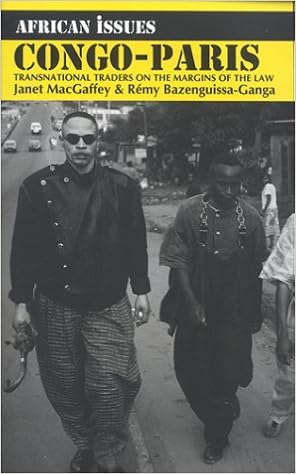
Consider a sociological text like
Congo-Paris: Transnational Traders on the Margins of the Law - a book that The Wife assigns in one of her African history classes. As an academic study of some of the same characters, it covers the same terrain exploring these men doing the gruntwork of globalization and capitalism. And yet I would hazard that far more insight, and indeed fun, would be gained by seeing things through Mabanckou's lens.
A Squatter's Tale by Ike Oguine is in the same vein, dealing with Nigerians who make it to the Bay Area in the US. A similar mix of bemusement and understanding suffuses the narrative. In another medium
Alain Gomis's film L'Afrance tackles how one oversight can lead one to fall through bureaucratic cracks into the illegal immigrant category. With Mabanckou, however, one doesn't get the sense of a didactic point being made. The question of values is certainly on the agenda and one might well read this novel as a cautionary tale, but he wouldn't push you in that direction. The reason is his evident empathy for his characters and his ability to find humour even in the disillusionment about what one finds abroad: the drab immigrant life, the hustling for identity papers, the shadow life, the turn to crime etc. Indeed, when things go awry in the inevitable third act the authorial voice remains equanimous. The fall from grace is as entertaining as the rest of the novel.
If Mabanckou was not the first of the growing number of
Immigrant Narratives in Contemporary France, he was certainly among the most assured and definitive. He revels in close observation and has a perfect ear for dialog. One finds in him a writer comfortable in his storytelling and deeply empathetic to his characters. One expects nothing less of a porcupine.
III. Provocation
African Psycho is a provocation. Try reading it in public, or leave it on your bus or subway seat, and observe the response of your fellow commuters. The title is pure agent-provocateur evoking, with a clin d'oeuil, Bret Easton Ellis. Everything about it demands attention, from the title, to the plot, the style of the prose and the inspired language. The English translation of African Psycho is serviceable although to my ear it doesn't capture the playful tone nor indeed the fireworks that Alain Mabanckou delivers in this novel.
The edition I have has a cover that showcases the madcap energy of the writing. The
covers of other editions emphasize the youth aspect rather than the emotion. Mabanckou drops zingers every so often as if to keep you unbalanced throughout your reading. There is hardly a page without sentences make you gasp at their audacity or laugh at the goings-on.
The plot, such as it is, is detailed nonchalantly. It is the story of a street kid, an orphan sent from foster family to foster family. Self esteem is not on the agenda. He thinks he's ugly with repeated complaints about his 'tete rectangulaire'. A loser prone to self delusion, he is what you'd call
minable in French. Full of resentment if not anger and poor as hell, he knows his shantytown well. Unlike many in the slums who seem to be getting on with life, he is a teeming mass of grievances. Looking out to 'le pays d'en face' across the river, there is resentment about the other Congo - Kinshasa, which is bigger and more famous than Congo-Brazaville, heck they even send their prostitutes over here. Our man's gripes echo the blind spots of Patrick Bateman's character in American Psycho although his are more legitimate than the latter's ludicrous obsession with labels, style and crass materialism.
The conceit of the novel is that he aspires to be a serial killer. You'll therefore note the explicit harkening to the themes of
Dostoyevsky's Crime and Punishment or even
Camus' L'étranger. Unlike those antecedents, the protagonist is all aspiration. He couldn't kill a mouse if he set himself up for it. He'd make elaborate plans and find repeated excuses for why the mouse escaped this time. It's rather like one of
Donald Westlake's Dortmunder entertainments. It's as if he initially decided to draw you in with the titillation of the setup but changed his mind, and rather settled to entertain you with a comic meditation on inept aspiration. After all death is far too frequent in African life and literature. The vibrant and showy language also reminds me of
Dany Laferrière's Comment faire l'amour avec un nègre sans se fatiguer. Literary young lions provoking readers and critics alike before getting down to business.
The porcupine, like the
hedgehog in Isaiah Berlin's retelling, knows one one big thing. In that vein, it is plain that Alain Mabanckou cannot tell a bad story no matter how light the premise. He is blessed as a storyteller in much the same way that Evelyn Waugh had an unerring ear for satire. Like Waugh he also had quite prodigious early works (read Bleu Blanc Rouge as his
Decline and Fall if you will). Oftentimes, however, to gain literary renown one must aim to be a fox. One never knows what critics or indeed the market will reward.
I have a pet theory that African Psycho was a throat clearing exercise, something he wanted to get out out his system before really stretching his shoulders and demonstrating his versatility beyond 'mere storytelling'. If my reading of the chronology is correct, he would next get a new publisher and start teaching literature in the US, gaining further insight into how to carve his place in the literary world. The provocative fireworks of African Psycho should then be seen as a transition or even a stepping stone. As such it has been a success, indeed, everything published since has been untouchable.
IV. Deception
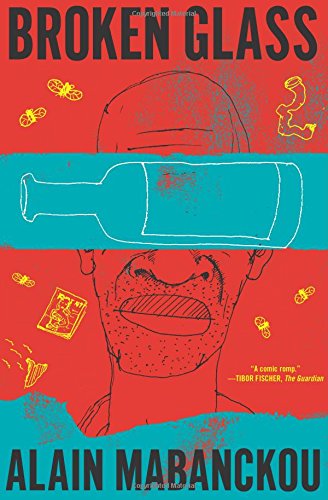
Well perhaps deception is too strong a word especially since the confounding of expectations was welcome. Call it sleight of hand and a very studied and knowing affair, Verre Cassé - now available in translation as Broken Glass, is a literary hall of mirrors, the titular broken shards of glass reflecting fabulous visions at the reader.
At first Mabanckou approaches you with what seems to be a grotesque sort of Arabian Nights - or perhaps we should refer to some of the bawdier tales spun by Chaucer's travelers in The Canterbury Tales. The nightly revelry takes place at a bar and, as you settle down for the latest story, the regulars compete to add outré twists as if to ask can you top this one. From sordid tales about cuckoldry to pissing contests, he literally leaves you in the merde.
About halfway through however, you you realize that Mabanckou is actually more interested in his narrator than in the baroque folktales spun nightly by the bar regulars. It's the David Lodge sensibility, lovingly, ever so lovingly, dragged into the gutter. Lodge's
The British Museum is Falling Down is the best model for what is at work. One could read the latter as a straight comic novel, but the real pleasure and the playfulness comes when you realize that it embeds parodies of some of the most august authors. Lodge's tome spins pitch perfect voicings of everyone from James Joyce, through Franz Kafka to Virginia Woolf and Joseph Conrad.
Verre Cassé is similarly full of wordplay and literary allusions dropped as the bar tales are told with the studied effort of seasoned drunkard. You'll find puns about
Autumn of the Patriarch (Gabriel Garcia Marquez),
The Old Man and the Medal (Ferdinand Oyono) and even
Camara Laye's L'Enfant Noir. There are no sacred cows; these influences are deployed, probed and deconstructed fluidly. The reader can bask in the oral tradition of storytelling like that of
Chamoiseau in the vein of
Solibo Magnifique.
You learn that your narrator host is someone whose head is full of literature - a stand-in for the author perhaps, who at this point had come to be teaching French literature in the US. He's drawn you in with humourous observations and is such good company that you'll want to drink at the same bar and, dare I say, read the same books. He had found the formula in this novel and the critical acclaim and major prizes started flowing his way.
The old wives' tale is that the porcupine's quills can be thrown at advancing predators and form the ultimate defensive weapons. The reality is that the prickly exterior is best adapted for camouflage. In the dark recesses of our minds, we know to crouch instinctively when the porcupine gathers himself in a ball. Most of the time however we don't notice him, hidden as he is in the foliage. Such wry deception, you see, is the way of the porcupine.
V. Comfort
Mémoires De Porc-épic is the title of Alain Mabanckou's most magisterial entertainment. No wonder he won all those prizes in 2006. The control of tone shows someone at the peak of his powers. He can be loose and discursive at will and yet turn on a dime and focus the narrative. He'll turn from literary disquisition to plot intricacies that leave you hanging on. You can't call it Congolese Gothic - even if tempted by the plot; you can't call it "magic realism" although he provokes you in passing. No, this is probing, searching and vital storytelling. And yet what do we have in this novel, now translated as Memoirs of a Porcupine? A porcupine unburdens his soul to a baobab tree recounting his life as a double nuisible - an animal double of a man who turns out to be very far from sympathetic, if not outright horrific.
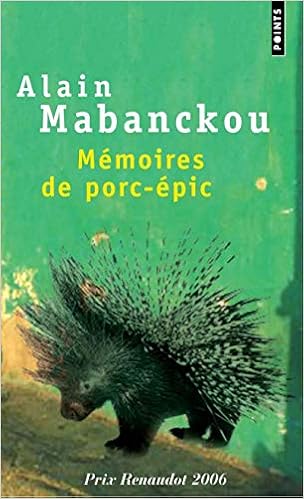
Ostensibly the novel is about the mix of rumour, gossip, jealousy that can overtake a village, the perceived slights - the accusations that poverty and faulty biology can foster. It is also about the compulsion to help one's double no matter what. The premise is surreal but all the outlandish happenings are dealt with in such a matter-of-fact manner that the reader goes along. It just happens. Think about it, a porcupine is talking to that great African confidant, the baobab tree, a porcupine moreover who is perhaps trying to make sense of things, why is he alive when his double has died?
The novel examines matters of identity (see the double motif) and the impact of rumour in traditional societies. If people in the village start dying mysteriously, there must be someone slighted. This leads to tests and various rituals in the community (for example drinking of potions). You would file this under the banner of belief systems, the kind that ethnologists from the West study - they'll call it social anthropology. The porcupine lampoons this kind of cultural subjectivity. Yes the porcupine narrator, in his sophisticated mode turns to lampooning academics. There you have it: the winking eye of Alain Mabanckou, the tall tale you've become engrossed in, the mix of pointed commentary, biting satire, observation of tradition in consonance with modernity, and then the provocation. You're in the realm of the porcupine, and a wily one at that.
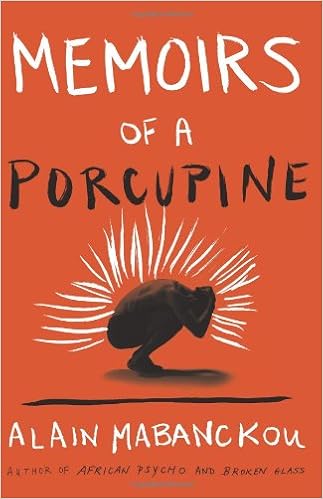
The porcupine narrator is cowardly and needs to be suborned by his other self into violence. The missions accumulate, suspicion grows and disaster falls. Do these things actually happen? Or does he really tell the truth? Identity is refracted, myths are remade, language is made malleable, reflection, humour and violence intertwine. It's the literary hall of mirrors of Verre Cassé this time elevated into a universe that is Mabanckou's own, one that only intermittently relates to our own Milky Way. The novel is destined to be studied and dissected perennially. It goes far beyond Academy bait (it won the Prix Renaudot) into its own category. It was the intense experience of reading these 'memoirs' that led me to designate Alain Mabankcou as the porcupine of these notes.
The porcupine follows his own path. Like the squirrels he is related to, but with adorned with his protective spine, he is playful at once and prickly at the other. Aware that he needs to keep his wits around him, his is careful in his movements; a hard worker, he pays attention to his craft. He's a social creature engaging with his peers and is so comfortable in his skin that the moments of solitude never lead to loneliness.
VI. Musical
There is a certain rhythm to the writings of Alain Mabankcou, unhurried by default, it meanders at times, skipping occasionally or incorporating extra ideas but always returning to the beat like the best sebene. After two very successful novels (Verre Cassé and Memoirs de Porc-é epic) largely embraced by the academy that played with all kinds of highbrow literary subtexts, he returned to the musical storytelling that characterized his debut.
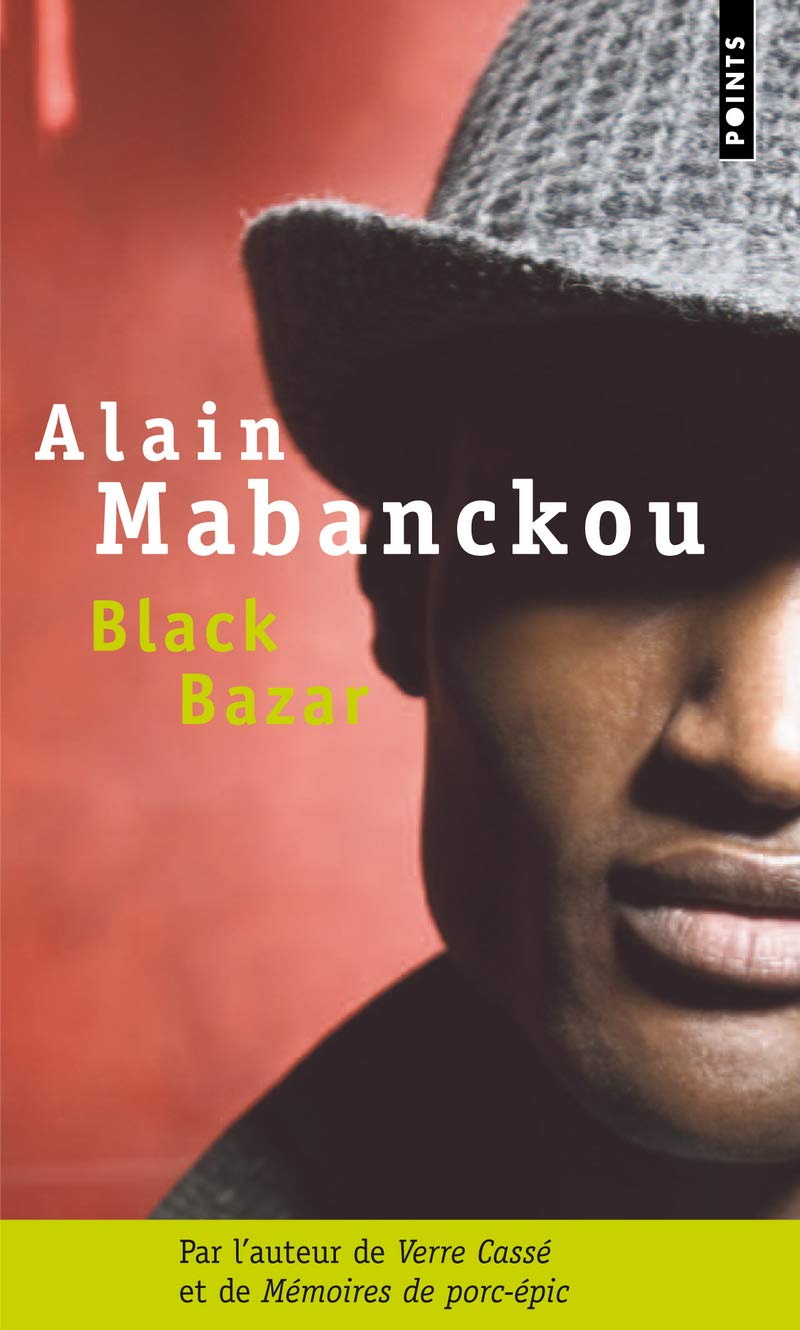
Black Bazar, the last novel of his I've read, is akin to a stroll down the
streets of Chateau Rouge. It's a return to the themes of Bleu Blanc Rouge a decade later. The emphasis isn't so much on
the sapeurs this time as on the entire immigrant community that has asserted itself at the heart of Paris.
The chief narrator is nicknamed Fessologue, which I'd rather translate as connoisseur of fine female derrieres rather than what I've seen elsewhere. Sidenote: would you translate Fessologue as Buttocks Man? Wouldn't you instead go for something more delicate: Butt Aesthetician perhaps, or Professor Gluteal Maximus? Digression on a digression: this is the dilemma an English translator faces with sharp and witty Francophone writers like Mabankcou and Patrick Chamoiseau, how does one unpack the playful language of their musical riffs. One hopes the translators come to capture the delicate humour of their knowing argot.
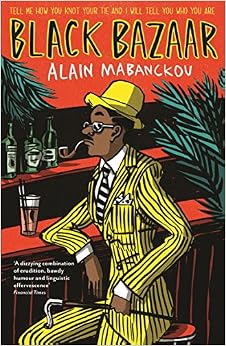
Fessologue then is a comic figure who verges on the tragicomic. A bon vivant sapeur with a heart of gold, he knows he is being used by his girlfriend - cuckolded even, as she has decamped to the Congo. Indeed he might even have been paying and caring for another man's child all these years. That betrayal is of no matter, he wants to do the right thing. The novel follows him his peripatetic attempts to reconcile the codes of his sapeur lifestyle (the constant need for different varieties of crocodile skin Weston shoes say) with the heavy responsibilities he has started to feel (making enough to send that Western Union transfer so that his daughter is cared for wherever she might be) and the pleading for his girlfriend's return. Like many of Mabankcou's characters he is no hero and is unreliable in all too recognizable ways. Hilarity ensues as one might expect. The complications do make indeed for a Black Bazaar.
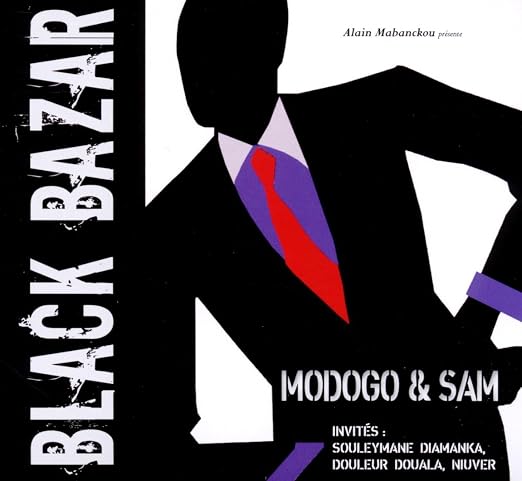
Black Bazar even has a musical afterlife with
a wonderful album and a tour of a collective of
rumba and soukous greats inspired by the novel (lots of
videos here). It is fitting since the novel's language felt alive and seemed to move to its own soundtrack.
I have only read half of Mabankcou' novels and, prolific as he is, there is much more to his catalog. Apparently also the poetry and essays loom large for some critics. He is increasingly busy these days enjoying his prime as it were. His works have been already been
adapted on the stage and Hollywood must surely be next. Recently he has translated Uzodinma Iweala's Beasts of No Nation into French,
Bêtes sans patrie in a quite serendipitous meeting of minds. A highly adept wordsmith capturing the rhythms of another. The author of African Psycho - what with its vaguely aspirational homicidal street kid protagonist, was surely the right one to take on the child soldier.
His craft is undeniable and he is one of the best living African writers. I've found that most treatments of his work in English damn him with faint praise. I suppose this is because he writes in French and is pigeonholed accordingly. The obvious antidotes will be forthcoming as it seems the translations are now coming apace. I hope he is ready for the full glare of the attention that will surely be coming his way. I offer these running notes as a marker before the crowds arrive, an attempt at a reader's quiet appreciation. My only critique is that I have found more rewarding the novels that don't explicitly emphasize his literature professor guise. In these notes then, I have emphasized the works that have felt the most naturalistic.
I want to have a drink at the Credit a Voyage bar and exchange tall tales with its owner, l’Escargot Entêté. I want to share a few beers with mon pôte le porc-épic. I want to discuss exiled souls and the quality of wist in African life. I want to joke about the horde of Congolese barbers who loudly accost you when you step out of the metro station at Château d'Eau and contrast them with the lot at Château Rouge. What gives? Is it Brazzaville versus Kinshasa in the Parisian setting? I wonder about the soukous soundtrack that they seem to dance to as they gesticulate and beckon. I can only hope that my friend
the porcupine continues weaving his tales. His latest novels are at the top of my wishlist. I'm going to savour them in the ever so fleeting moments when I can lose myself in a book. I'm digging the ways of the porcupine. A head nod in the direction of Alain Mabanckou.
File under: literature, review, writing, craft, appreciation, Congo, Africa, France, culture, observation, perception, immigration, language, Alain Mabanckou, toli