The Ziploc Factor
The most attractive aspect of patents is their expiration. Built-in expiration, that "limited times" proposition, is similarly the appealing aspect of the Faustian pact one makes for copyright. In that vein, I would venture that one of the best things to have happened since the start of this century is the expiration of the patent for the ziploc. If you frequent the same supermarkets as I do, you would have noticed the ascendance of the ziploc form factor over the past decade. At first the spread was likely due to increased licensing in anticipation of the expiration of said patent, then, of course, once the crucial patent expired, the flood gates opened and generics came into play, to the extent that these days I can barely find regular plastic bags in store aisles. Permit me to present another item as part of an occasional series on bags, this time a brief cultural history of the ziploc, a foray into the grooves of technology and hardball business. Plastic bags I say, locks, knots, zippers, all have been changed. Ladies and gentlemen, consider the ziploc factor.
I. Radical Transparency
The ziploc resealable plastic bag, sometimes called zip top, zip lock, one zip, slide lock, snap bag, zip-loc (if inclined towards hyphens) or zip snap depending on the brand or technology underpinning you lean towards, crossed the chasm of cultural inevitability in the summer of 2006 when liquids were banned on many flights due to a case of pure bureaucratic terror - call it a liquidity crisis in the skies if you will, for we were living in a era of recent non-specific general threats. Homeland Security restrictions made themselves felt, and within days the nascent ubiquity of ziploc bags could no longer be denied - indeed they were officially mandated. Air travel, already a ludicrously fraught endeavor after September 11 2001, now gained a set of extra contortions that have spoiled things for all who can't afford their private jet - and for all intents and purposes that is everyone. The ziploc was the palliative.
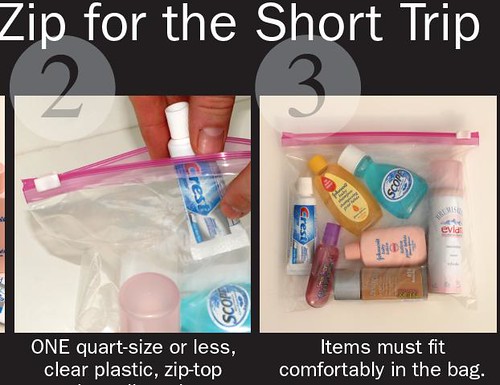
The British were the first to impose restrictions since the ostensible liquid bomb plot had British airports as their target, but it was the TSA list of permitted and prohibited items that really soured things:
All liquids, gels and aerosols must be placed in a single, quart-size, zip-top, clear plastic bag. Gallon size bags or bags that are not zip-top such as fold-over sandwich bags are not allowed. Each traveler can use only one, quart-size, zip-top, clear plastic bag.
Early versions of the TSA list mentioned zip lock although later versions now mention zip-top - as we shall see this little-noticed change in nomenclature is significant in our history, but let's not get ahead of ourselves at this stage. We'll also skip over the size restrictions for the time being and concentrate on the specification of the bag which is a technology prescription backed with the coercive powers of American law enforcement: "clear" for transparency and ease of observation if not confiscation, and ziploc for ease of opening and sealing. The snappy slogan is "Bag and zip for a short trip" and undoubtedly some poor sod had to come up with a breezy mnemonic for the public education campaign on the new requirements:
3-1-1 for carry-ons (3 ounce bottles, 1 ziploc bag, 1 bag)
The equivalent British poster from the BAA doesn't have the same marketing flair (but who can compete with American salesmanship?) and gets the essential point across: the requirement is simply "a transparent, resealable bag". In practice of course, this boils down to a ziploc bag. The Brits sensibly don't refer to a brand in the BAA rules
Customers may take with them in their cabin bag limited quantities of liquids, gels and aerosols, including travel-size toiletries such as shampoo, suntan lotion, creams, toothpaste, hair gel and hair spray. Containers holding liquids must not exceed three American ounces or 90ml.
Liquid containers must be carried in a separate clear plastic zip-top bag that does not exceed 20 cm x 20 cm or 8 inches x 8 inches or quart size. Items must fit in the bag comfortably and the bag must be completely closed.
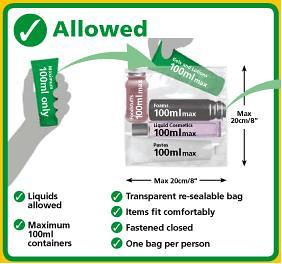
The earliest revision of the British policy noted:
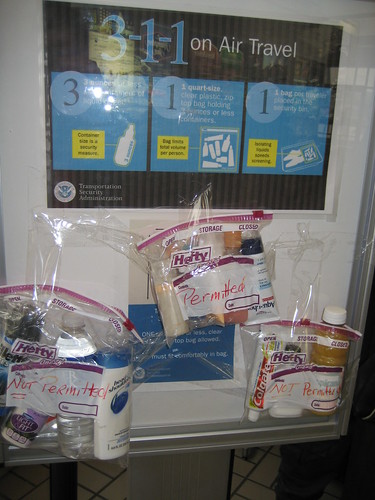
Only one bag per passenger is allowed. The bag must be clear and re-sealable, such as 'ziplock' bags or bags with pressable seals. Larger bags or bags that are not sealable, such as fold-over sandwich bags are not allowedThe ziploc regulation is one that requires constant reinforcement and it gives rise to frequently inventive exposition by TSA officialdom. Thus if you were to pass the TSA stand at State College airport, Pennsylvania, some time ago you might have spotted the following three-dimensional illustration of permitted and banned items.
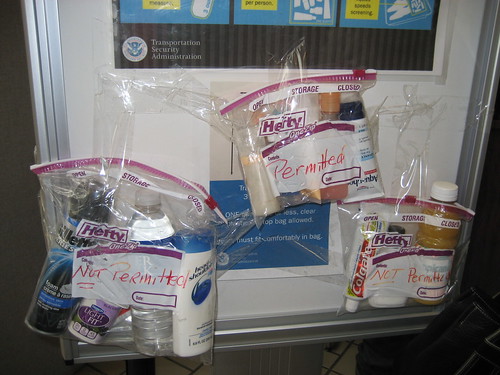
The three bulging Hefty One-Zip bags were meant to augment the above 3-1-1 poster. Presumably the security attendants got tired of having to explain the cryptic 3-1-1 propositions and opted instead to show graphically to the traveling public the sorts of items that were and were not permitted.
Again note the type of ziploc bag that was used, it is more properly called a zip top. Recently at JFK airport, there was an information officer prowling the unsurprisingly long lines at the TSA whose sole purpose was to dispense Hefty One Zip bags. I don't want to suggest cronyism in the choice of brand of plastic bag but it was interesting to me that each time I've observed such actions, the brand of bag being proffered was a Hefty bag; there really must be a marketing effort at work.
II. Deformation and Displacement
The Hefty One Zip bag has a zip handle at its top, a satisfying target to clasp as you close - a moveable stub, in short, to enforce the close action. The most widely used ziploc bag on the other hand - made not coincidentally by Ziploc, simply has those pleated, interlocking grooves. By most reckonings, the Hefty variant is the gold standard of the form yet, in many ways, the broader Hefty versus Ziploc story is a reversal of the Coke versus Pepsi narrative. Indeed the owners of the Ziploc brand seems to have chosen the better name - ziploc has become the generic term for plastic, resealable bags, and as far as adoption goes, the 'worse' technology appears to have triumphed in the marketplace. What lies behind the workings of the ziploc factor? To find the answer, we need to undertake a minor diversion into the realm of patent histrionics...
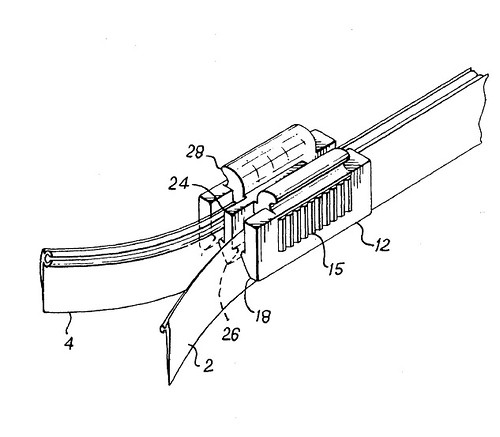
The essential ziploc innovation is US Patent 4262395 Sliding clasp fastening means. Filed in 1979, it was published in 1981. It refers to mating strips, coupling heads and sundry means of fastening through a sliding motion. Like most innovations, it didn't come in a vacuum; its inventors stood on the shoulders of giants. It builds on the work of the slide fastener, patent 4004327, filed in 1975, Japan. In the US, a further improvement was submitted in 1990 by Hefty, Patent 5007143 - Rolling action zipper profile and zipper thereof.
Broadly speaking, these devices take the notion of the zipper and apply it to plastic bags. If you read, you'll dive into a world of pairs of flexible plastic strips, reclosable interlocking male and female elements, extrusions and welding. In the US, since the 1980s, these ziploc patents stood their owners (ultimately controlled by Hefty) in good stead, and they were embodied in the marketplace as the Hefty One Zip bag which reigned supreme as the dominant resealable bag. There was, and continues to be, a hefty premium for a Hefty bag. There is a price to pay in order to get the satisfaction of that sliding, often purple, clasp fastener. The purple nub, standing out as it does atop the closing plastic strips at the top of the bag, gives a good closure indication and symbolizes the fulcrum of a conventional economic monopoly.
The chinks in Hefty's armor, the ziploc factor, as it were, came in two forms. The first weakness was in the name. The most serious competitor was the Slide Lock bag, later renamed Slide-Loc (since lock was a generic term), then still later renamed Ziploc. Simply put, ziploc is the better name for the resealable bag. The zip in the Ziploc name references the gold standard of the zipper (and the Hefty competitor), and the lock aspect identifies the sealing function of the bag.
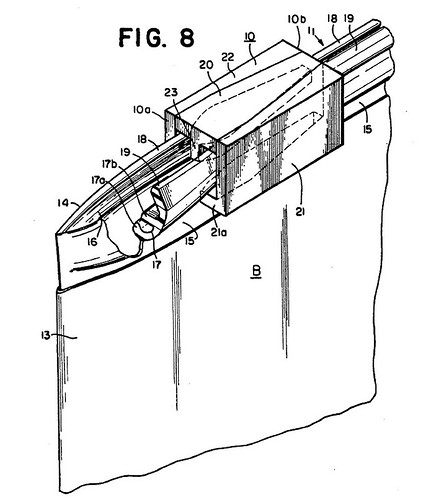
The second chink built on the insight of the plain meaning of Slideloc/Ziploc name, namely that simply sliding an interlocking groove was good enough to produce a lock; you literally did not need a zip (or zip handle) to form a lock. True, the kind of seal that you get from snapping and sliding a groove in a plastic bag is not as tight as if you applied the pressure of a zip fastener, However, you can get a tighter seal if you increase the number of grooves that formed the lock. The pragmatic solution embodied in most ziploc bags that don't use zip handles is to simply add more grooves.
Slideloc/Ziploc versions of the bags started to get wide distribution in the late 1990s as the 20 year limit on the patents on the basic technology was coming up. This being American capitalism, of course, everything would get resolved in the courts (after the lawyers took their cut). Hefty, after issuing various cease-and-desist notices to the companies that were intruding on its turf, eventually filed a lawsuit based on the later 1990 patent.
The lawsuit, Pactiv (formally Tenneco) v. S.C. Johnson & Son and KCL Corporation was decided in November 2000 and found that ziploc slider bags didn't infringe on the relevant patent. It was a simple complaint:
The manufacturer of Hefty One Zip reclosable plastic storage bags, claims that the Slide-Loc reclosable plastic storage bag, manufactured by defendant KCL Corporation for defendant S.J. Johnson & Son, Inc., infringes U.S. Patent No. 5,007,143The case turned on a matter of overreach, if a zipper handle is the core innovation of a process and a design omits that essential element, how can one claim that one's so-called intellectual property is being copied?
The fundamental difference between the '143 patent and the Slide-Loc in this regard, essentially ignored by Pactiv's experts, is that the '143 patent describes closing by a rolling action, whereas the Slide-Loc closes by deformation and displacement, with incidental rolling taking place at the very end of the process. The fact that some incidental rotation occurs does not alter the fact that the Slide-Loc closes in a very different manner than the '143 patent describes.
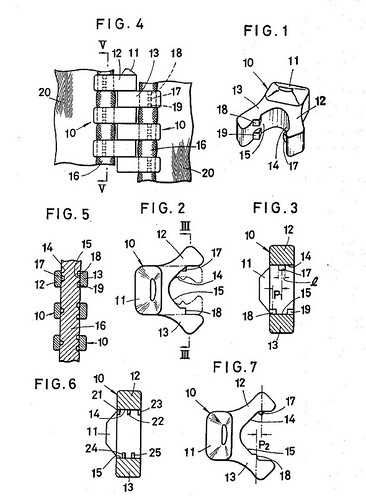
Deformation and displacement was thus the technical loophole that ushered in the era of ubiquity of the ziploc. By side-stepping the necessity of the zip handle, competitors could avoid the encumbrance of the Hefty patent monopoly. The long inhibited competition in the recloseable bags could proceed and the floodgates opened. Eagle-eyed billionaire investors sensed blood in the water long before the verdict was issued and, in 1999, you might have noted that Huntsman Packaging Corporation acquired KCL Corporation, the Indiana-based manufacturer of reclosable polyethylene bags that was subject to the lawsuit. The press release touted its "patented and proprietary technology in zipper and slider closures" and development of "patented slider technologies for both vertical and horizontal 'form-fill-seal' bagging processes".
Huntsman is of course the largest private chemical company in the US. Jon Huntsman Jr, billionaire heir to his father's fortune would go on to have presidential ambitions in 2012 - although the Republican Party ultimately wanted more red meat and less timidity. S.C Johnson & Son of course make everything from Windex, Pledge to Raid and are a veritable marketplace of consumer products. Hefty (originally owned by Mobil) is now owned by Reynolds Consumer products. I lay these items out to give a sense of the stakes involved in our ziploc contest. We have oil companies facing off against chemical companies and multinationals spun off from heavy extractive industries (oil, aluminium etc.) engaged in an ongoing battle.
The mythology of these brands is instructiveAmerican ingenuity mixed with a bit of elbow grease. Reynolds Wrap foil was invented after aluminum was no longer needed for military use... Hefty waste bags were first developed with excess material from an early plastics innovator, creating another household essential.
The rest as they say is history, marketing and execution. The big boys jumped in, you can see any number of patents by Proctor and Gamble, Glad and the like that tackle the general notion of flexible storage bags. One wonders why Velcro which specializes in touch fasteners didn't get into the act (brand dilution perhaps?)... There were also those who saw the business opportunity in marketing ziplocs as part of the packaging machinery that all manufactures use. We have specialized companies like Zip-pak, Mini-grip and GT Zip that target industrial clients.
The engineering questions were difficult ones: how to efficiently evacuate air from a bag (an important worry if perishables were to be stored in them), how to create a tight enough seal, how to track the alignment and integrity of the seal, how to tweak the manufacturing process so that the marginal cost of adding a ziploc to one's bag is negligible. There were also usability questions, what kind of closure indicator to use? How, indeed does one indicate closure? It is obvious, if a zip handle is present, to determine with a quick glance if a bag is fully closed or not; not quite so with a plain ziploc. Is an audible signal appropriate? Is paying attention to the satisfying snap sound a good approach? As evidenced by the resilience of the Snap and Seal brand I keep encountering, that is an approach that is succeeding. There's also an arms race on ziplocs, some tout double zips, sometimes there are three seals. On the most recent ziploc I purchased, I see no less that 7 interlocking grooves. Like razor blades, more grooves are thought to be better.
III. War of the Fasteners: Knots, Rubber Bands, Ziplocs and Twisties
Ziplocs (mostly without handles) have been widely licensed and have found their way into the list of household essentials. In this era of liquid threats, it is a good thing to have some ziploc bags on hand when you travel by air. Articles abound about the applications: ziploc your stuff at airport security, Camera Zip-lock to protect in wet, dusty environments, multi-port laparoscopic surgical access devices, urn for ashes and so forth.
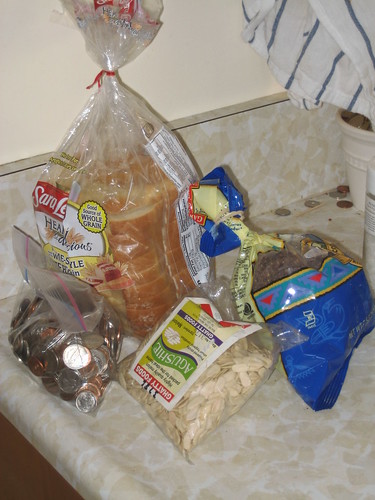
The burgeoning ziploc tag at Delicious and the ziploc images at Flickr show how far these interlocking rib and groove bags have penetrated our cultural consciousness.
The convenience of ziplocs and their reassuring snap as their interlocking grooves are conjoined has changed the nature of the fasteners we use for our containers. We are spoiled with a wide variety of touch fasteners, from interlocking rib-type seal to plastic, paper, or clad-wire ties and on. Rubber bands have never quite worked as fasteners, we use them in to shift gears and such but we not generally as bag fasteners. Where once we used knots, in recent times we have graduated to twisties and to those little jagged plastic clips that we use to close bags of bread - sidenote: is there a better name for those nubs? Bibs or chokers perhaps?
Twisties, of course, are another great innovation in the vein of the ziploc but even they have their limitations: they are separate objects and often get separated from the bags they are meant to close. Thus there is almost always a little cognitive pause as you search for the little twistie ribbon on the kitchen counter or dining room table. Where exactly did you put it? It is always underneath. How much time is wasted in the search for the twistie? Is this inefficiency the driver of the faster adoption of the ziploc. Some baggies also attempted to prescribe a way to better preserve their contents, asking you to fold over the plastic before applying the twistie.
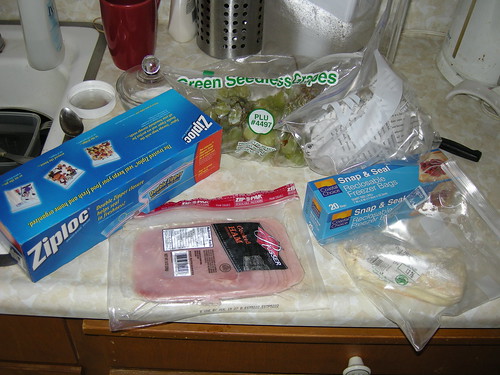
The ziploc brooks none of these limitations. Like its zipper grandfather, the ziploc has the virtue of remaining part and parcel of the container - thus there is nothing to lose. Thus although we can read about epic battles such as that of Twist-Ties vs. Plastic Clips: Tiny Titans Battle for the Bakery Aisle, I'd hazard that the ziploc will be ultimate victor.
One downside of the ziploc and that other magical innovation, Velcro, is that the knowledge of knots and crosses that humans have passed down since time immemorial is now being lost. Only sailors, sadomasochists, magicians have the need for training in knots. One should perhaps add special forces grabbing enemy combatants for erustication to the coterie of knot aficionados - and even in the accounts of extraordinary rendition that we do have, the norm is for plastic hand-cuffs - or metallic if the gloves come off and stress positions are emphasized. Other than shoe laces then, the modern man has no more need for learning the time-tested art of knots - and no, tying up the boot of your car with your weekend haul from Ikea doesn't count - I should know, I was quite hopeless a few weekends ago.
Before concluding we should return to the liquid terror that prompted the ziploc's ascendance. When exactly will we get to the end of that pesky liquid ban? There have been many false sightings on that front since 2006 and everyone keeps hoping for a revision (see for example: EU to ease airport liquids rule in security revamp) but it is hard to see sanity returning, it is George W. Bush's most durable legacy. I imagine Al Qaeda or ISIS types periodically seeing these reports and saying "Why don't we send around a few emails around mentioning liquids, bombs and planes?". Our friendly NSA will duly notify the security establishment and the security tax that the entire world faces will continue. I fear the ziploc will be mandated long after my lifetime.
In an age of radical transparency it is all about the ziploc factor. Whether it is food packaging or cosmetics, all hail the ziploc. I wonder, Dear Reader, where you stand in the Hefty versus Ziploc contest, and what uses you put your ziplocs to? Deformation and displacement, young man, deformation and displacement.
The Ziploc FactorSoundtrack for this note
- Pete Rock & C.L. Smooth (ft. Grand Puba) - Skinz
Better yet you could pass me a ziploc A bag of boom, and a 40 then some boot knock
I've always loved this fragment of Grand Puba's celebrated verse in this 1993 ode to prophylactics, Skinz - a song about the importance of contraception in which they hilariously explore options from aluminium foil to ziploc bags before returning to plain old condoms - Catholics beware. - Prince - Ripopgodazippa
Every stripper's favorite track, sexy funk that appropriately enough featured in that cult b-movie, Showgirls. The sound of the zipper
Obligatory disclaimer
In my line of work, software, expiration is typically seen as the only attractive aspect of patents.
There's a patent officially filed under my name filed from my last few months at IBM. It seemed then, as it seems now, like much ado about nothing (a tweak to the kind of auto-suggestion that you see every time you search) but I suppose technology companies like to build up defensive portfolios of patents, weaponry that they can lob over the wall when convenient. I plead guilty that I succumbed that one time. In contrast, one of the more interesting ideas I came up with back then was rather treated as an "invention disclosure" to be kept in IBM's back pocket, and was never filed with the patent office. I hope someone builds it.
File under: ziploc, bags, culture, observation, technology, design, history, plastics, adoption, security, fear, terrorism, patents, engineering, strategy, Observers are worried, toli