Drum Magazine Ghana 1969
Belatedly, some notes on the year 1969 in Ghana, as viewed through the lens of Drum magazine... (see slideshow)
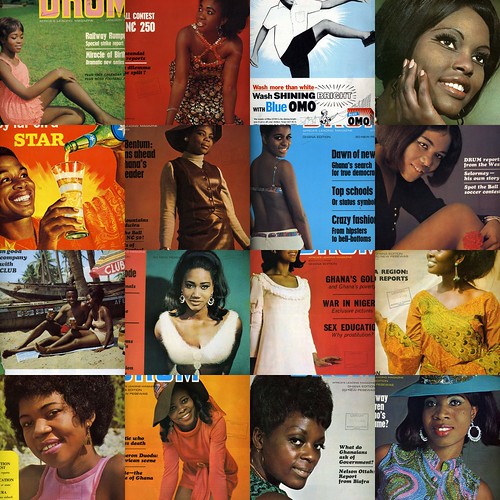
I spent some time scanning images from a year's worth of issues of the Ghana edition of Drum magazine. Truth be told, losing myself in the pages was a bit of escapism. I wanted a glimpse of my parents' world, of their aspirations and of the culture from which I emerged. Those pages were a good source of any manner of cultural artefacts and goings-on in the country. Call it nostalgia, call it social anthropology, call it a poor man's history, or perhaps I was simply fascinated by the advertisements. So. Drum Magazine. Ghana. 1969. Here goes.
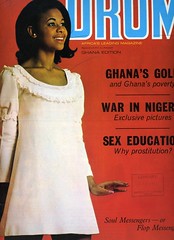
1969 was an election year in Ghana, Kwame Nkrumah's one-party regime had been overthrown and civilian rule loomed. But that was by the by - the magazine was typically focused on lighter issues. By way of background, Drum magazine is most known from its South African roots but it also had Ghanaian and Nigerian editions from the late sixties until the eighties. The equivalents would be Ebony, Jet or say Essence (alternatively think of Hello and Paris Match) ergo, none too weighty society papers. A good place to start then would be "Drum's fabulous contest to find the prettiest mini-skirt (and its wearer) in Ghana."
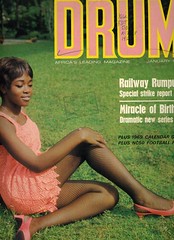
The singer Rose Small's pink mini-dress "proved irresistible". Her testimony was eloquent:
"Minis are gorgeous and I adore them. With the right figure, pretty legs and a lot of taste a girl simply looks wonderful in a well-made mini. I believe that for a long time to come minis will continue to be ravers.Dig the insouciant language of the liberated. Others however took offense, Ghana was (and perhaps still is) a fairly conservative society:
I wear minis because I feel free in them. In any case what's wrong with showing just a wee bit of thigh? For parties, for casual wear, for public outings when I appear on television or nightclubs my dress is either four inches or six inches above the knee. I have no fixed notions about the length anyway. On a day I feel gay I just slip on a six-inch-above-the-knee dress.
Of course I do not fancy very complicated fashion make-up. For the mini which won the competition I just asked a dressmaker... a fan of mine... to make me a six-inch mini with a matching long-sleeve blouse. That's all. The important thing is the poise and grace which I think I have. The mini cost only eight new cedis to make. No fuss, no mess!"
"The mini-skirt which you have so irresponsibly patronized is becoming a nuisance in the country"... "most of the girls who put it on do not have the good legs, the shape and poise to do justice to that weird dress of yours".The fashion spreads contrasted the mini-skirts and bell-bottoms of the time with the more traditional cloths (Dutch wax, batiks and other fabrics).
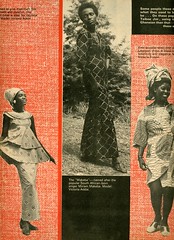
We see the marketing of the Kenyan fabric named Maridadi (from the Swahili word meaning bright and colourful) and its Ethiopian analogue.
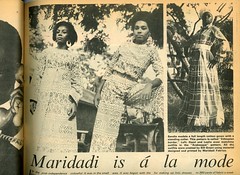
Teijin Tetoron, the Japanese polyester brand was trying to make a splash - without much success, as it turns out, cotton works best in our tropical lands.
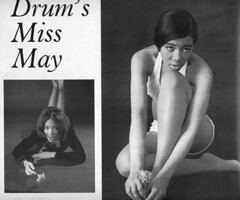
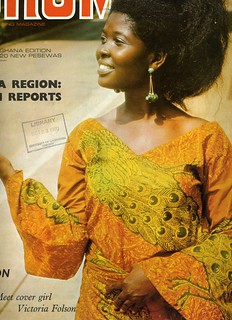
There was plenty of eye candy throughout the magazines.
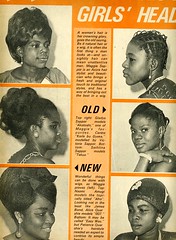
On the perennial question of hair, the influence of Motown was felt with Supremes-styling presumably taking over from the corn roll of yore.
This same dynamic is at work 30 years on, as the following posters from 1999 show.
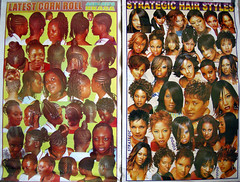
Imagine an academic paper: Tradition and modernity, the sociology of hair in post-colonial Africa.
The alternatives were afros and going au naturel of course. Wigs were for the more adventurous - brand 99's wig spray advertisement proclaimed that it was "Ghana's favourite lacquer".
Head scarves abounded, the older, traditional duukuu that had given way to European headgear before independence was now reinvented as the lappa cover cloth.

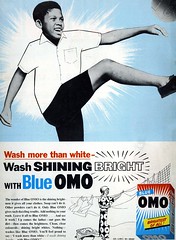
Timothy Burke made his name as a social historian studying advertisements in Zimbabwe in Lifebuoy Men, Lux Women: Commodification, Consumption, and Cleanliness in Modern Zimbabwe. There is much of the same material here. There was soap, lots of soap, Lux Soap would weigh in against Rexona and its ubiquitous cover girl. Omo competed with Surf.
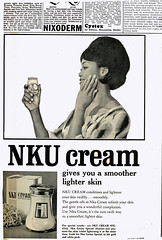
Skin lightening products were popular (well at least they were heavily advertised). Fela would sing Yellow Fever a few years hence and bemoan the extremes of the practice. It's not just Africa however and not simply old history, the same thing happens in India and China today. "You deh bleach, oh you deh bleach".
A yearlong series on sex education draws a big response from readers, dealing as it does in straightforward terms with everything from birth control and family planning, the pill and other contraceptives, midwives, child birth, relationships (pre-marital and otherwise), passion and even prostitution.
Healthcare advertising is also much in evidence. Presumably the infant formula and powdered milk of the time wasn't contaminated with melamine but the hard sell about infant nutrition was well on the way as breast feeding was deemed passé.

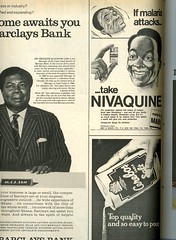
Cod liver oil remedies compete with Milk of Magnesia treatments. Vicks rubs elbows with the various potions and herbal bitters that form the bulk of traditional medicine. The same competition between modern pharmaceuticals and traditional practitioners continues to this day and all now have large advertising budgets. As one would expect, we find adverts for various malaria treatments - Nivaquine gave "sure protection", Resochin claimed to cure malaria. Bayer, Merck and others were targeting Africa.
Ghana Airways was continuing its expansion - by the mid 70s it would begin its inexorable decline (it died a few years ago) - well, we could all dream in 1969.

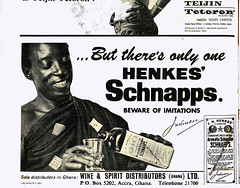
Next to ads about Westinghouse air conditioners or Fan ice cream (which had been launched on the advice of Dr Fred Sai and was instantly favoured in generations to come), you'd find much about beers of course. Star beer and Club lager had large budgets and blanketed much of the magazines. It was all about the good life. The culture and politics of alcohol have been much studied in Ghana. Schnapps was less in evidence but featured - it is used in libations and many of our ceremonies.
My clear favourite is Pepsodent toothpaste with Irium. Be progressive and dig the production values and the light skin.

There was a vigourous music scene and perhaps a golden age of music in the country. On the highlife side of things, E.T. Mensah and his Tempos competed with Jerry Hansen and The Ramblers band who were more in the vein of King Bruce's Black Beats. These newfangled Ramblers stepped things up and "brought back the boogaloo" from London and the States.
The Professional Uhuru Dance Band featured the guitar dexterity of Stan Plange. The GBC Band roughed it up with The Revellers, Railway Dance Band and the Nigerian Broadcasting Corporation Band. The Aliens Band, The Planets, the Black Santiagos rounded out the cast. The Sierra Leone Heartbeats, fronted by Geraldo Pino had set up shop in Ghana after the coup and found a receptive audience for their brand of soul music - echoes of Motown were in the air. Paradoxically The Soul Messengers' tour was judged a failure - the competition was too fierce.

Every issue featured the obligatory society puff pieces (sundry ceremonies, weddings, durbars and funerals). Memo to self: finish the long overdue toli on African ceremonies.
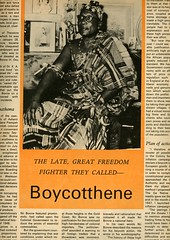
The Ga chief, Nii Bonne, the so called "Boycotthene", who made a stand against inflation and organized a national boycott in 1948 against colonial rule, died during the year and his funeral was a major marker. It was unusual for traditional rulers to feature in the independence or nationalist movements but Nii Bonne didn't recoil. You may recall, my previous commentary about E.T. Mensah's song, Inflation Calypso, which marked that episode in lilting music.
On funerals, the thinking was that "it costs too much to die". A certain Moses Ababio in Somanya bemoaned 'senseless, prestigious funeral ceremonies'. Millicent Adamafio in Sekondi chipped in:
'grandiose and extravagant preparations must be condemned in the strongest terms. Some people have become full-time mourners, showing their faces at almost all wake-keeping services. Their explanation is that the more one attends such functions and registers his condolences, the more sympathisers one gets when he is bereaved. In fact there are voluntary organizations whose sole purpose is to give moral and financial support to members who are bereaved'Others countered:
"what is wrong with a nice colourful and impressive funeral for a loving relative whose face we will not see again. The dead are an important subject in our tradition and should be accorded the due ceremony and honour they deserve".You'll see much the same debate if you read today's Ghanaian newspapers.
There's a cultural point to be made here. Those "voluntary organizations", those funeral societies are very much tied to the informal sector in the economy. This has always been true and was even moreso during military rule. It was said that during the worst of the Rawlings years the funeral industry was the only growth industry. They provided not only social comfort but financial support. Beyond that, the susu collectors that deal with money management in our markets are intimately coupled with these informal societies and their financial arrangements are our equivalent of the shadow banking system, the essential glue that underpins the Ghanaian economy. Many analysts of the Ghanaian scene seem to dismiss these cultural organizations too readily. The financing of funerals and weddings would make a great dissertation topic for a budding economist or social historian of Ghana. Those considering technological solutions such as mobile payments and the like would do well to start by examining what makes these organizations so effective.
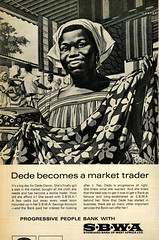
The formal banking and financial sectors were big advertisers, trying to convince the unbanked to start accounts after the hard times under Nkrumah in which banks had fallen out of favour. There was a concerted campaign targeting market women, young professionals, textile workers and entrepreneurs.
On ceremonies, there were scenes from the Oguaa Fetu Afahye celebrating the peoples of Cape Coast - the Oguaa traditional area. The headlines: custom and taboo take their turn.
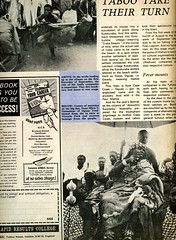
The original founders of Cape Coast were said to be the Bentsils and Inkooms who migrated from Sekyere and Techiman and settled in Effutu, nine miles north of Cape Coast. The wandering Effutus soon began to explore their new environment and through the trapping and marketing of crabs, pitched themselves a settlement in this part of Effutu Kingdom called Cabo Corso (Cape Coast) by the trading English and Swede settlers and Oguaa or Gwaa (market) by the "natives"... There were images of "top-level fetish priests" performing the annual purification ceremony (Wohyefa) at Prapratem. These were "top-level", not your garden variety fetish priests.
Closer to my family home, there are the celebrations at Aburi and the Akuapem "mountains" with welcome images of Nana Kwame Fori II, Omanhene of Akuapem, and Nana Dokua II, Queen Mother of Akropong. Family...

Jimmy Moxon was also in attendance, by then he had already spent 25 years with the Akuapems. The so-called "Gentleman Chief" had moved from England and was known by his official name, Nana Kofi Obonya. At other events, you could catch glimpses of members of the Oddfellows Lodge and of various Freemason societies dressed in their distinctive attire.
There was much about student life (the writers were not far removed, if at all from university). Siren, the journal of Mensah Sarbah Hall, University of Ghana, Legon did a satirical end of year issue featuring a cartoon strip that gave rise to the "Wankye Wankye Scandal" - and consequent student riots...
The strip was denounced as 'pornography', students were duly suspended, campaigns were mounted to have them reinstated, demonstrations were started. Things got out of hand.
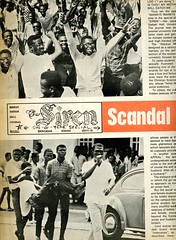
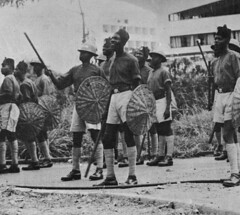
Reading closely you realize how benign the commentary was, young male students frustrated at the lack of internalists - 'internalists' being those female students who dated fellow students. There were complaints about "the young lecturers who openly fish in the limited pool of Volta Hall - and in the female wing of the controversial Sarbah hall". Student militancy prevailed however. The riot police had to be called in to calm things down. Dig the uniforms.
When the mood swings there are even looks outward to the deadly costs of the Biafra war in nearby Nigeria. Nelson Ottah termed it a "descent to the abyss" and was shocked by what he saw in Ojukwu's Biafra.
A great magician was abroad, and many things that had no relation with reason were happening. So it happened that the whole people got up like a herd of sheep and followed to their own destruction.On Ojukwu, he didn't mince words:
It was all grotesque. it was all an extravagant imbecility. It was all a gigantic political swindle. It was all first-class mass-hypnosis. But it needs an explanation.
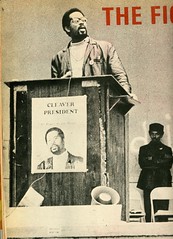
"the man is a nihilist - a nihilist uninhibited". A magician who "found it so easy to take fourteen million intelligent people down the path of folly, vanity and destruction."A young Cameron Duodu takes a trip to America at the height of Eldridge Cleaver and the Black Panthers' confrontation with The Man. One gets the sense that he was really there to check out jazz groups like the Sonny Cox Trio or watch Le Roi Jones catching the spirit in live performances but he found that there was no escape from race in his travels in the United States. As he put it: "I see the beauty evaporate". It is interesting to read about America's civil rights trauma through the eyes of a Ghanaian journalist. He titled his pieces America the beautiful with no little irony.
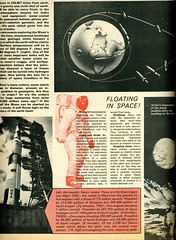
Ghana was looking towards space - playing off the Soviet achievements against the USA's Apollo prowess (the moon landing was duly celebrated) - well anyone could dream and there were even nuclear ambitions (since revived in 2008).
On Politics
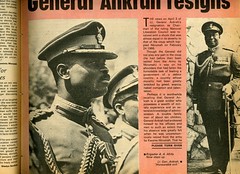
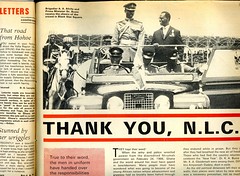
General Ankrah resigned and handed over to General Afrifa early on in the year. The die had been cast however, and the transition to civilian rule would account for much of the year's manoeuvering.
The Akuffo-Addo commision enjoined that "never again should there be any tyranny in Ghana... little purpose can be served if, having set up a democratic Constitution, we allow anti-democratic forces to overthrow or even attempt to overthrow the democracy that the Constitution ensures." A Constituent Assembly was sworn in to draw up a constitution taking into account its recommendations and those of the general public.
Lt. Gen. Ankrah would state 3 principles to inform the new Constitution:
- The freedom and liberty of the people and their enjoyment of fundamental human rights
- To eliminate the possibility of the return of tyranny and dictatorship to the country
- To prevent the abuse of the Constitution through frivolous and ill-conceived amendments to it.
There was lots of campaigning and electioneering and much of it would feature in Drum's pages.
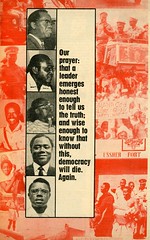
K.A. Gbedemah, finance minister under Nkrumah's CPP was exempted from the vetting conducted by the NLC and threw himself into the campaign with the National Alliance of Liberals (NAL). The association with Nkrumah would harm his performance. The "bearded, bespectacled, mystic-looking Dr. Willie Kofi Lutterrodt" didn't make an impression with his People's Popular Party. Joe Appiah broke with erstwhile colleague, Dr. K.A. Busia and the Progress Party, and founded the Nationalist Party on a platform to economic revitalization and promises to cocoa farmers. It would unite with the Ghana Democratic Party and the All People's Congress. Ex-minister P.K.K Quaidoo led the Republican Party the Dr. de Graft-Johnson led the All People's Party, these last two merging and forming the All People's Republican Party. Their manifestos make for interesting reading.
The elections would be won handily by Busia's Progress Party - the heavyweight brain-trust and shrewd electoral tactics proved overwhelming. Having B.J. Da Rocha on your side counted for a lot on the campaign trail.
Ajax Bukana, the irascible trickster, rabble-rouser and all around general entertainer launched the Mosquitoes Protection Party during the 1969 election. His platform was thoroughly ludicrous but brought some very welcome levity. The minstrel tradition had reached Africa and found fertile ground.
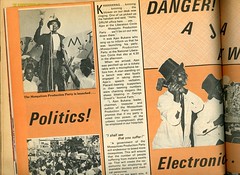
On Economics
There were complaints about smuggling - Ghana's economy was still dislocated. There were many scapegoats:
"we are asking them not to have a special liking for the Syrians, Lebanese, Indians and Nigerians who are mainly behind the illegal importation of cases of liquors, tobacco, used clothing and cotton prints".These days, the additions to the list of convenient scapegoats in the Ghanaian discourse are the Liberians who arrived as refugees over the past 15 years. If you press a little harder, some might mention the Chinese but so far their impact on the economy hasn't drawn populist rebukes.
Early on in the year there was the so-called Railway Rumpus - labour disputes with the Ghana Railway and Ports Workers trade unions going on strike. They would face harsh treatment from the NLC - a military government, even a benign one, by definition is not very sympathetic. G.K. de Graft Johnson was then General Manager of those government-run enterprises and had a hard time balancing negotiations with the unions and keeping things running.
Mark Cofie, who started an empire of car garages, becoming an agent of Japanese car companies and dealing with repairing most of the American cars in the country, was given a glowing profile. A consummate entrepreneur, he had grand visions of a Ghanaian auto industry. In retrospect, it wasn't to materialize but he at least made a go at it.

On cars... the Hillman Hunter, the Honda S 800, Peugeot 204 Brake, the Mercedes 230 S, the Ford Cortina 1300, the Rover 2000, the Volvo 144 S and of course the Fiat 125 were all available in local showrooms. I still have fond memories of my Uncle Mike's yellow Fiat 125 which somehow survived well into the 1980s. Those Fiats were as indestructible as the Peugeots.

It wasn't clear how popular, or indeed how reliable, Soviet cars like the Moskvitch 408 were - the adverts made sure to note that there were plenty of "spare parts and excellent service available". Sidenote: Ghana had turned towards the Soviet Union in the previous years under Nkrumah - socialism with an African face was the slogan.
The slogan for Chrysler trucks and vans was "Engineering in Action". These days it's more like engineering inaction - and the prospect of bankruptcy.
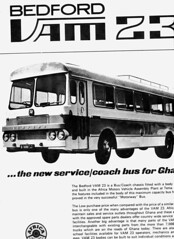
There were many articles stressing the importance of vehicle assembly in developing countries, for example the Bedford VAM 23 motorway bus assembled locally by Africa Motors. These were the successors to the venerable, bone-shattering Mammy Trucks.
The recently opened Akosombo dam was meant to enable a new era of power and support the development of fledgling industries. "Abundant power for Ghana's new industries" read the headline. Manufacturing didn't take off however, and these nascent efforts would falter in the decades to come. It is only forty years on that these same aspirations seem to be taking off in any sustainable fashion. Still there is much on the various factories that were sprouting up.
Reports on the poor and often non-existent infrastructure in the Volta region make for depressing reading: no drainage systems, no street lighting, no water supply (only 8 percent with access to good drinking water), poor feeder roads, few doctors and so forth. The proximity of the Akosombo dam seemed to be of no consequence. A few gestures were being made to promote places like the Wii waterfalls and the mystery rock of Akosombo as tourist venues but the capacity wasn't there yet - indeed it has taken decades for some of those ideas to come to fruition. Certain parts of the country were being left behind and some would exploit the resulting grievances for political gain.
The environmental degradation of Keta and the anxiety of its harried inhabitants were a concern. Those who live between the sea and the lagoon will always find grievances. In any case, some of our best poetry has come out of their predicament, witness Kofi Awonoor's wonderful poem, The Sea Eats The Land At Home.
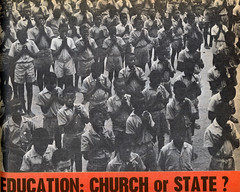
The obligatory photo of African school-children in morning prayer raises the issue of church or state. The big question was "whether the churches should continue to manage schools with local, urban and city councils or should the management of all educational institutions come under a unified system to be directed by the Ministry of Education". It was noted that
"the churches spearheaded the drive for education in Ghana... in 1737 the Danish chaplain attached to the Danish Castle at Christianborg in Accra sent two boys from the Castle school to be educated in Copenhagen. Again in 1828 the Danish governor at Osu, Accra invited the Basel Missionary Society in Switzerland to take up missionary and education work in Osu and its neighbouring districts."During Kwame Nkrumah's reign, his government introduced party politics and the notorious Young Pioneers Movement. A relevant tidbit: when "Rt. Rev Richard Reginald Roseveare, former Anglican Bishop of Accra criticised the Movement's ungodly behaviour at a church synod, he was instantly deported from the country".
The public/private conundrum is very much in the news in today's Ghana, private schools are all the rage, often funded by churches. The jury is still out as to their effectiveness and the question of standards; the Ministry of Education still has to reconcile unyielding demand for public education with limited resources; worse, everyone has an opinion. The easiest way to get any Ghanaian talking for a good hour is to broach the topic of education, we all wax eloquent about what is to be done.
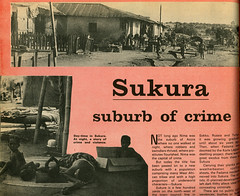
In 1969, the Sukura neighbourhood of Accra was gaining a reputation for crime and squalor even more lugubrious than Nima. Forty years on it is the aptly named Sodom and Gomorrah that takes the prize as Ghana's school of hard knocks, the place you terrify your little kids about the prospect of leaving them there. Of course this is all a matter of perception, the settlement of shantytowns always gives rise to dark hints of nefariousness by the establishment. Drum was firmly of the establishment and would editorialize about the problems of slums, runaway children and other social ills.
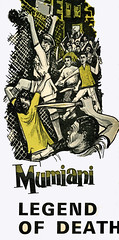
Looking towards East Africa, there is a feature about Pope Paul VI's visit to Uganda - and the story of the Ugandan martyrs. This would be juxtaposed with commentary on Mumiani, the legend of death - the blood sucking myths in Uganda, Kenya and Tanzania. This is about the "ghoulish people who murder for medicinal purposes". The feature recounts the superstition and bloodshed that swept Tanzania in the 1959. The derivation is from "the dark-coloured gum-like substance used by Indians, Arabs and Swahilis as medicine and said to be brought from Persia". Mumiani were viewed as colonial agents so the myth and that kind of mob justice began to fade in the post-colonial era. Our souls were perhaps contemplating other articles of faith.
Society Profiles
Dr Stephen Addae receives a great profile showing off his laboratory work. He was gathering materials and experience for his later opuses The History of Western Medicine in Ghana and The Evolution of Modern Medicine in a Developing Country. These tomes are bibles for historians of science and medicine, I should know, I'm married to one.
Pete Myers, the presenter of the BBC's Good Morning Africa whose "swinging career began in an Accra nightclub", was worth a lengthy treatment as an exemplar of the Ghanaian affinity with cosmopolitanism. Born in India, brought up in Caracas, Venezuela, he moved to Ghana as a teenager. He identified strongly with his Ghanaian associates and loathed the way that other expatriates conducted themselves in the newly independent country.
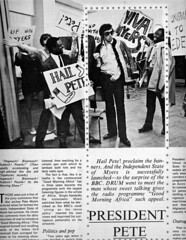
An interesting tidbit: he became a broadcaster after his friend Smokey Hesse who hosted the 50-minute Jazz Club on Ghana Radio got run over by a bus. He filled in for his friend after that tragedy and came to make a living as a radio presenter. He began to organize Friday discotheque sessions at the Metropole nightclub in the center of Accra, the club rapidly became the center for rock-and-roll and teenage fashion and even inspired mothers to write to the papers that their daughters were being misguided by the "decadence". It bears reminding oneself that Accra used to have a vibrant nightlife.
He went on to direct the Africa's first ever musical, Obradzeng, with sculptor musician Saka Acquaye and Beryl Kari-Kari, dancer and choreographer. After its initial dismissal by Nkrumah, the whole orchestra and 85 dancers were subsequently taken to Russia on one of the Premier's trips. Back in London he started working at the BBC, hoping to change its "colonial mentality" and "the way it talked down to the audience". His efforts were rewarded and the audiences responded to him.
In contrast to Myers' positivity, consider Geoffrey Bing, the former British Labour MP, who became one of Nkrumah's confidants, first as a constitutional adviser and subsequently as his Attorney General. He of course helped pass "the obnoxious Preventive Detention Act which came to rob Ghana of some of her best brains - it killed the celebrated Dr. J.B. Danquah". Unable to bring authoritarian socialism to Britain, he was glad to have an African playground to test out his ideas. A man who always operated in the shadows, we should compare him perhaps to those faceless European advisers to Idi Amin in the 1970s. After being thrown out of the country as a result of Nkrumah's overthrow, he would head home. Despite his fawning 1968 memoirs, his attempts to return to the political scene in Britain came to naught in 1969.
Baba Yara, Ghana's greatest footballer, the "King of Wingers of West Africa" would die on May 5, 1969 after sustaining a spinal injury in a lorry accident at Kpeve in 1963, three months of treatment at Stoke Mandeville hospital had done nothing to improve his health - nor had the local prophet healer, who had offered his services once he returned to Ghana, been successful. Thus his last six years of life were spent bedridden. Asante Kotoko, the Real Republikans and, of course, the national team, the Black Stars had suffered a grievous loss. The scenes commemorating his life leap off the page.
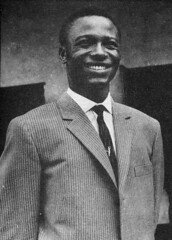
Born in Kumasi on October 12, 1936, it was in 1955, his debut year for the national team that he wore the number 7 jersey of the Gold Coast team which massacred Nigeria by 7-0 at the Accra Sports Stadium. Yara scored two goals and was the architect of four of the seven. Decades later his legend as a fearsome attacker is as glowing as say that of the magic hands of goalkeeper Robert Mensah. Those who saw him play wax rhapsodic to this day, my uncle Emma has been known to go on for a good hour about that golden era and those stars. The Baba Yara sports stadium in Kumasi is a testament to his memory.
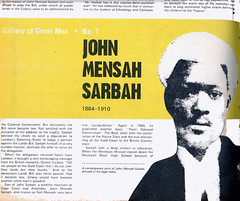
There's an interesting profile of the great Ghanaian nationalist John Mensah Sarbah, born on June 3 1864, who died on November 6 1910. A lawyer he was the first native of the Gold Coast to qualify as a fully fledged barrister-at-Law. He argued against the obnoxious Lands Bill of 1897 which would have placed all public Lands in the Colony under the Colonial Government. It was never passed after legal argument and petitions to Queen Victoria. He waived his retainer for that case saying "I seek no reward in serving the land of my birth" He wrote a treatise on The Fanti Customary Laws in 1897 and the Fanti National Constitution in 1906. The great hall at University of Ghana Legon is named after him in his memory for his educational works. This included his founding of the Fanti Public Schools Limited which eventually became the present Mfantsipim School in Cape Coast. He designing the school's crest and its motto "Dwen hwe kwan - think ahead of time".
There's all that and more - like any society magazine Drum was sometimes shallow, other times profound and even on occasion sublime. Consider this a profile of a country in transition, between military rule and democracy, full of hope and navigating between tradition and modernity.
Ghana is headed to elections in the coming weeks and, from the outside, much of the discourse is akin to that seen here in 1969: great promise amidst reminders of just how far we have to go. I can only hope that my fellow countrymen take heed of those who paved the way for them and remember the words of John Mensah Sarbah: think ahead of time.


File under: Ghana, Africa, Drum, magazine, media, culture, politics, history, observation, photography, fashion, 1969, memory, Observers are worried, toli