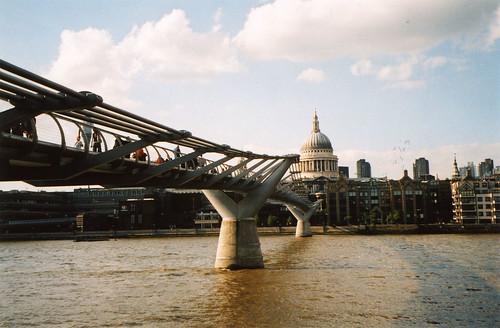
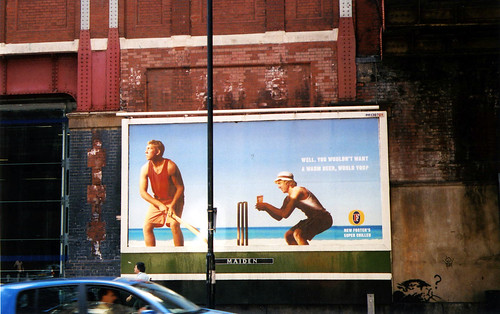
Showing posts with label travel. Show all posts

Tuesday, May 12, 2026

African Travel Narratives

I've been thinking of The Traveler's Africa; the view from the Torrid Zone. Some readings beyond Equiano's Travels taken from my bookshelf (oh, and a playlist...)

African travel narratives


Classics of the Genre

  • The Modern Traveller by Hilaire Belloc
  • Heart of Darkness by Joseph Conrad
  • Travels in West Africa by Mary Kingsley
  • Black Mischief by Evelyn Waugh
  • Travels with my Aunt by Graham Greene
From savage satire to the impressionistic to the documentary.

Hilaire Belloc's satirical eye is sublime. Nothing escapes his immaculate rendering of the essence of thousands of travel narratives. From antiquity to, say, the great explorers tomes (Mungo Park's travels in the interior) to near-contemporaries like Stanley and Livingstone. All that and more are highlighted in The Modern Traveller.

He dismantles the kind of writing lionized in the prose of empire by Kipling and others. Where we'd now say God, Gold and Glory, Belloc straightforwardly put it as Blood and Sin in vicious light verse. The cover by Basil Blackwood is apt. All the tropes of travel writing about Africa are outlined, the mystery at its heart, and all that made it evocative. Writing at the height of empire in the wake of the British victory at the battle of Omdurman in 1898, there is much to deflate in Victorian triumphalism and he sets about it avidly. The Modern Traveller is his early masterpiece.

Oh! Africa, mysterious Land - the modern traveller


The Journalistic Impulse


The journalistic impulse weighs heavily on travel narratives and Africa gives great material for the genre.

The travel writer ofen emerges jaded from the encounter with Africa despite the initial optimism. The people steal your heart but also destroy you. You might start to merely document but hallucinations often follow, such is the burden of the heart of darkness. Joseph Conrad, of course, had great influence on popular perceptions of Africa, and for good reasons: metaphors and urgent storytelling will always strike a chord.

It would take more than half a century and Chinua Achebe's own urgent storytelling to begin to change the perspective and to show that African voices need not be drowned out in the travel narratives and treated as mere backdrop. Indeed, they can lead the way.

A Burnt Out Case is probably Graham Greene's most focused entry, a lush hatchet job of the Conrad template, but Travels with my Aunt is his purest distillation of travel writing. An entertainment, perhaps, it captures the fecklessness and the roving eye. The kind of observed behavior that Evelyn Waugh savages with vicious fun in Black Mischief.

Contrast with the relatively sober yet similarly roving eye of Mary Kingsley. Hers is rooted in her search for botanical specimens but there is a richness to what she uncovers in the process. She was genuinely interested in the place she traveled to and the culture of the people she encountered. Her observations make for a treasure trove for historians and sociologists alike.

In a more literary bent in the 1920s, consider André Gide's Travels in the Congo and a delightful memoir Then I Saw the Congo by Grace Flandrau. The book covers tend to follow a distinct pattern.
  • The Shadow of the Sun by Ryszard Kapuściński
  • Report in Africa by Oden Meeker
  • Call Africa 999 by John Peer Nugent
  • Stringer by Anjan Sundaram

(I hesitate to brand Kapuściński as a journalist, he was so much more. The journalistic impulse is, rather, what I'm getting at when it comes to the tenor of his writings. Denis Johnson in Seek treads much of the same terrain as Kapuściński but with a stronger punch).

How to take to the tropics is a delicious survey of travel writing in Africa by Oden Meeker. His and John Peer Nugent books are recent discoveries, wide ranging as befits these restless souls. Anjan Sundaram's Stringer follows Conrad by way of investigative journalism, archetypal of the mold of journalists that have had to report on conflict (e.g Fergal Keane).

African Perspectives


The Wife has long taught an African Travel Narratives course; we, each, have our favorites and trade new finds as we discover them. Our modern canon:
  • An African in Greenland by Tété-Michel Kpomassie
  • By the Sea, Desertion and Paradise by Abdulrazak Gurnah
  • Everyday is for the thief by Teju Cole
  • A Stranger's Pose by Emmanuel Iduma
A semester length course will cover readings in many styles and from many perspectives. The ones we tend to find most engaging highlight the African perspective. And things do change once African voices are in the mix.

An African in Greenland is revelatory, Tété-Michel Kpomassie's story is so engaging, he grabs you with the force of his personality, his curiousity and his drive.

Abdulrazak Gurnah, of course, in his brilliant body of work inverts the perspective and the frame that Conrad may have set and, with this freedom, makes it his own. I've lost count of how many copies of By the Sea I've had to buy as I keep recommending and gifting it to others. I'm thankful that the academy have rightly rewarded him and I no longer need to be on the street team.

A novel like Tayeb Salih's Season of Migration to the North contains a lot travel observations but doesn't read as a traditional travel narrative and indeed there is far more sophistication in it.

Our blog era has produced two perfect little books in the genre. Teju Cole aims for close observation in Everyday is for the Thief while Emmanuel Iduma goes for the poetic in A Stranger's Pose. They are both lyrical writers with dauntingly sharp eyes.

It's fun exercise to contrast, say, The Moor's Account by Laila Lalami with Mimi and Toutou's Big Adventure: The Bizarre Battle of Lake Tanganyika by Giles Foden. The one written from the ground up and periphery, the other taken with main character energy.

And the narratives ripped from archival material carry a heavier burden that the typical travel dispatch, I'm thinking of The Two Hearts of Kwasi Boachi by Arthur Japin or say Ama: A Story of the Atlantic Slave Trade by Manu Herbstein - there's no lightness to be found in the slave trade or the earlier patterns of exchange in the colonial era.

I never quite got into the former Peace Corps memoirs although I keep reading them for what they reveal despite themselves (and George Packer's clear-eyed Village of Waiting - and Central Square which I loved, doesn't excuse his later hubris see: Iraq war).

Still I much prefer Packer over Paul Theroux's Dark Star Safari. And in the same vein, I favor Graham Greene over V.S. Naipaul.

I also can't resist missionary and explorer narratives, even as I read them in the same vein, mostly for what is left unsaid or for the people that linger in the background. Sometimes, however, you find gems in second hand bookstores: Cowboy Boots in Darkest Africa by Dr Bill Rice is an all-time favorite. But that one, like Belloc's Modern Traveller, deserves its own tale.

There's all that and more in The Traveler's Africa. And to close, a cautionary note to the would-be readers of travel narratives; not all is as it seems:
T
for the Genial Tourist, who resides
In Peckham where he writes Italian Guides

Moral
Learn from this information not to cavil
At slight mistakes on books on foreign travel

A Moral Alphabet by Hilaire Belloc

What are your favorite Africa travel narratives?


Ayuba Suleiman Diallo


African Travel Narratives, a playlist


A soundtrack for this note (spotify version)

Bonus beats: Searching by Roy Ayers

cecil rhodes astride africa From Cairo to Cape Town


See also Types and Faces and The Stereotype

File under: , , , , , , , , , , , ,

Writing log: November 2, 2025
Saturday, December 30, 2023

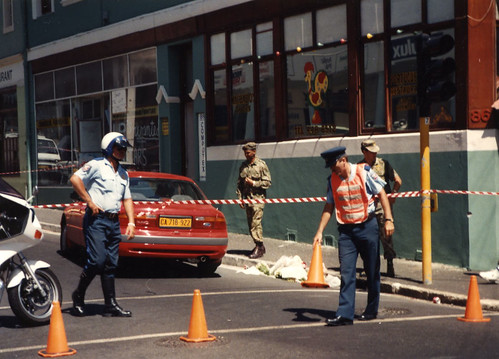
Heidelberg Tavern Massacre

We'd passed the tavern on the same night
   but decided to go somewhere with more color
We woke in the morning to hear on the shortwave radio
   about an overnight massacre

As a good journalist,
   Mum grabbed her microphone and tape recorder
As a journalist's son,
   I made sure to grab my notebook and camera

No breakfast, we made our way to the scene
   from the university guest house
Checking the maps, we parked the rental car
   as close as the police allowed

The news didn't make for the best start
   to tomorrow's New Year
Ominous really, indeed,
   the country was in a state of suspended fear

It wasn't how we were planning to spend our short vacation
But the journalistic impulse is a lifetime occupation

Then again it was South Africa, forever on the verge of doom
There were elections planned in April, 1994 loomed


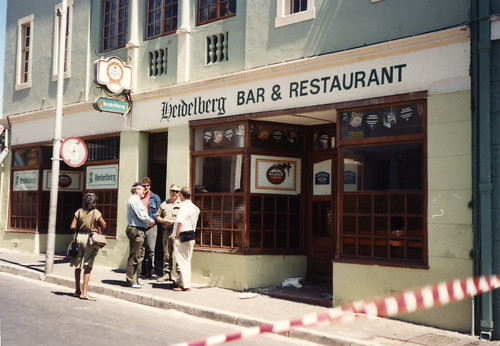
Heidelberg tavern massacre Cape Town


The BBC didn't have anyone in Cape Town,
   no boots on the ground
For things had not been as heated there as in KwaZulu-Natal

But now we could see the commotion,
   the heavy police presence
Flashing lights, weapons everywhere,
   and the sounds of sirens

Truth be told, it really felt as if we were in the middle of a war
Darn it, I had run out of film.
   Luckily, I spied a convenience store

Walked in briskly and asked what kind of film they had
Noting that I preferred Fuji but would gladly take Kodak

Taken aback, the shopkeeper,
   it felt as if I was integrating the shop
Ah right, should have known better,
   they'd never served black people before

The way he was startled, as if I had come in the wrong door
Was in the wrong place, an affront, and sullying his shop floor

It was so over my head.
   Had they really never been ordered around by my kind?
Well anyway, their countrymen would soon be doing the same,
   it was about time

"Where are you from?",
   a latter-day attempt at small talk over the counter.
"I'm on holiday, Sir. Came from the States.
   But I'm originally from Ghana."

"Ghana." "Yeah, West Africa."
   Rands proffered gingerly, patterns of exchange
I picked up water and a Twix bar.
   I told the owner to keep the change

Dad used to regale us with stories
   about his cohort of African diplomats
Integrating New York right after independence.
   This country was a throwback

I loaded the roll of film,
   would the memories I'd record be paparazzi gold?
Well it was South Africa, 1994 beckoned.
   Who knew what life would hold?


heidelberg tavern massacre - mum


Mum had already walked up beyond the security cordon
Her microphone a kind of spear that opened all doors

Looks of grudging respect from the soldiers and police officers
Badged as she was as a live representative of the foreign press

There was a local journalist on the scene
   who seemed to appreciate a colleague
It's not everyday that this kind of carnage
   comes to your quiet streets

It was only as she drew nearer
   that it struck me that it was a near miss
That it was only a matter of luck
   that we weren't yesterday's victims

This was the enlightened part of town
   where races supposedly mingled every day
Surprising really that the tavern would be singled out,
   a real case of dismay

An hour away, Khayelitsha had been rough,
   but this was quite different
This was the day, I guess,
   that Observatory had lost its innocence

Elsewhere, of course,
   Buthelezi's people and the ANC were going at it
That was the background of disquiet
   that was giving most of us fits

True, there were rumors of the apartheid death squads,
   the rearguard action
By and large however, on the ground
   there was a lot of empty posturing

Albeit we were learning the vocabulary of bloodletting
The country at large becoming connoisseurs of necklacing

But this was a terrorist attack plain and simple
Shooting up a bar out of some misguided principle

Students and others winding down the year
   with music and alcohol
Left for dead, maimed or injured,
   and now a cautionary symbol

Disconcerting,
   it's not that I'd discounted her war stories about being shot at
Sobering,
   even as I was well aware of journalists' occupational hazards

This was the new South Africa
   whose leaders were lawyers who spent time debating
At inordinate length, the finer points
   of the mooted constitutional provisions


heidelberg massacre - mum inspects damage


"It's bad." Onlookers murmuring, sidewalk symphony
"It's bad. They seemed to have shot up outside."

She gestured for me to come past the police tape.
"Come, you're my photographer."

"It's bad." What a refrain
"Oh it's bad. Damn." "It's bad." A chorus of pain

"Three dead at least." "How many?" "Three at least"
"It's bad. We don't know if the others will make it."

"It's bad." "What a shame."
"No responsibility declared." No one to blame.

"I counted ten, oh god. What a scene, it's bad."
"They found a bomb, it could have been even worse."

"Bomb squad was here. It didn't detonate. It's clear now"
"They say... You don't want to see inside. Believe me, it's bad."

"Come closer, take some photos."
   Not quite as intrepid, I was staying behind the tape.
Unabashed, she came and lifted the tape,
   pulled me over to the front. "Go on"

"Right here in Obz". Afrikaner accent
"Terrorists. I can't believe it."

"They should clean up the blood. It's bad, it's upsetting."
The broken glass dispersed, shards everywhere.

"It's bad. Oh, it's bad. I tell you. It's bad"
"Station Road. Right here in Obz. Oh, it's bad."

"Who was playing last night?" "Josh... so sad."
"Is he okay? I wonder." "Oh, it's bad"

There was blood on the ground and this was the aftermath
"Oh, it's bad", I couldn't help but join in with the refrain.


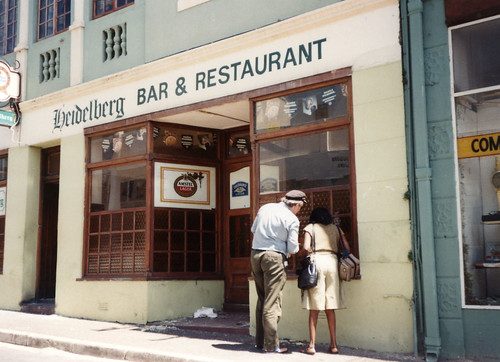
heidelberg tavern capetown


It took hours to interview everyone and talk to the police
Bystanders and witnesses, shocked
   yet wearing that mask of normalcy

Later we went to SABC, to the main studio, to call in her report
Filed for the African service, and then filed another for Focus

We weren't sure how the story would go over,
   the party line from Bush House
The news cycle doesn't afford the complexity
   that a long report allows

This wasn't the kind of story that anyone wanted to receive
No hearts would be warmed
   by this tale of blood on New Year's Eve

We decided to not get the film developed.
   Her copy would have to do.
By the time we finished reporting,
   it was late afternoon

We'd been so caught up that we'd forgotten to eat
   and now we were hungry
Thankfully I remembered my Twix bar,
   the cheap snack came in handy

We drove past the tavern again
   on the way back to the guest house
Canceled any nominal plans for the night,
   we'd had more than enough

Back in our rooms, it was time for some quiet reflection
Malevolence.
   We were shaken by our proximity to this unseemly action

Cape Town devoid of music, and turned into a place of hurt
Pain unbounded, the whole country holding its breath

The broken glass at the Heidelberg Tavern,
   death at the barrel of a gun
We would bring in the New Year very quietly that night,
   mother and son


heidelberg tavern cape town

Soundtrack for this note


The great guitarist Josh Sithole was holding court as ever at the Heidelberg Tavern on the night of the massacre. He was lucky to escape with his life but some of his audience, and someone from the next door checking in on what was happening lost their life. Casualties of a senseless deed.

...

Thirty years ago, I filled my notebook with some of the above impressions, I had yet to take everything in. I am still to write about the rest, what I later learned about the victims, the families and indeed the perpetrators. Having published my photos of the tavern online, I was often contacted as the legacy of the trauma was debated and processed over the years. All in good time, I suppose.

[Update]

Lost in Obs is an artwork commemorating the tragic events.

See previously: Truth and Reconciliation

Next: Bound Together, (a surprising aftermath) and First Responder

I nominate this slice of life for The Things Fall Apart Series under the banner of The Rough Beast, which asks: who is writing the script?


File under: , , , , , , , , , , , , , , ,

Writing log. Concept: December 31, 1993. February 3, 2022

Tuesday, August 08, 2023

An Hour Away

Cape Point. Near the southern tip of the continent
From the cliff, we watched the famed seascape
The blue waves that were said to rival Zanzibar
Then, the Cape of Good Hope.
Tourists. Escapism.

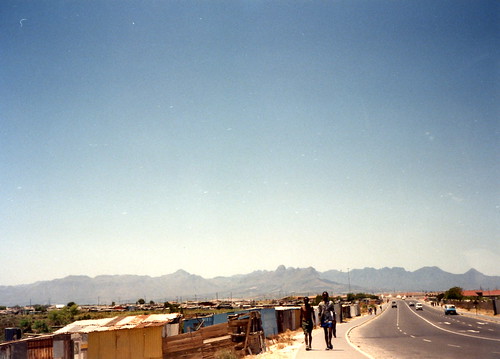
Later, an hour away lay the township
Punishing. We took in the juxtaposition
Apartheid painted from its drab palette
Khayelitsha.
Slum life. Journalism.

(South Africa, Christmas 1993)


capetown capepoint

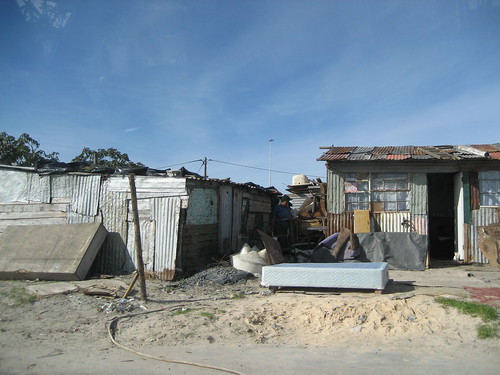
capetown khayelitsha slum


Put all this behind you, the scripts were being readied
The recent unpleasantness was all ancient history
Welcome to the New South Africa, they'd started to say
After all, you know, the elections are only months away

A Temporary Inconvenience, a playlist


Some sounds from South Africa. (spotify version)


File under: , , , , , , , , , , , , , ,

Writing log: December 30, 1993, December 1, 2021

Tuesday, March 21, 2023

Coyote Point

It was a brief encounter, a coyote sighting in the urban jungle
Just the other day on our walk, it was quite exciting
It brought to mind a time of my life that I'd blocked from my memory
A time, long uninterrogated, that I've thought best left forgotten

But once the beast darted out, I could hardly help myself
The memories of those 18 months at Coyote Point returned
The whims of memory lead one to arbitrary endpoints
And so let me try to recall the tale of Coyote Point...

There's a long line of hotel-like establishments
In the mile stretch that leads to Coyote Point
They range from the upscale Holiday Inn hotel
To the lowest of the low, the by-the-hour motel

As to the motels, suffice to say, there were gradations
I guess you could call it a full spectrum of cockroaches
Thankfully providence lifted me out of the worst situations
I eventually settled on the Best Western Plus

A correction, the high end was a Holiday Inn and Suites
Let me not, on this point, Dear Reader, mislead
I lost my driver's license at one of them,
   was it the San Mateo SFO Airport Hotel?
Or rather America's Best Value Inn,
   where the pimps had so many stories to tell?

The Best Western Plus was quite swank in reality
But the first time I arrived, my eyes were rather bleary
The Nigerian hotel receptionist took one look at me
And assigned me to room 419. Well played, young lady

The Plus in the name makes quite a bit of difference
As our now 9 year old observed, a couple of years ago
We made the mistake, one weekend, in San Antonio
Of staying at a vanilla Best Western. Lesson learned

Those 18 months were trying, it was hard to understand
I was dealing with the whims of a Never Never Man
Who seemed to sabotage my every want and desire
And enjoyed raising the specter of me getting fired

He wanted me, he was adamant, to work in person
Said he absolutely needed me in the office
Yet I was working with people in India and Boston
Why couldn't I go with the remote option?

It was a strange kind of life if you ask me
But you make your own bed, your own destiny
I'd run headlong into an immovable object
And all I could do was protect my neck

Tuesday morning before dawn I'd get on the SuperShuttle
And head to Austin Bergstrom airport before the morning bustle
Four hours on the plane, find a rental car, drive to the office
Then, to add insult to injury, mostly attend teleconferences

I'd call it a day getting to five,
   and make my way to my provisional home
It was always a gamble,
   for I could never remember which was this week's abode
I hadn't expected this to be a permanent situation,
   I didn't plan this contingency
Nevertheless, living on a week by week basis,
   I kept pushing on grudgingly

What is there to say about those 100 days of dismay?
The traveling salesman life I lead, groundhog day
Leaving The Wife with infant and toddler in a new town
33 trips, I counted, before finally I threw in the towel

But back to Coyote Point, I only observed the place after work
After checking in, I'd find the Chinese restaurant
   where I got my roast duck
Because the motel food was little to non-existent
   and, quite frankly, sucked
Some rooms had a fridge, and a microwave for reheating,
   at others I was out of luck

The Mother-in-Law visited once,
   when she was passing through the Bay Area
Checking in on her wayward charge,
   seeing how I was dealing with this hysteria
That week I'd missed a booking,
   and was staying at a rather low rent joint
She might have been less alarmed
   if I'd shown her the best of Coyote Point

Ah right, the lost license, I shouldn't leave that dangling
It's another sad story that doesn't bear remembering
Ever walked up confidently to the TSA counter and opened your wallet
To pick out your license only to realize that it's lost.
   Woe is me, instant regret

Was it in the rental car? Or at the motel?
   Which one? Or was it at the office?
I checked my bags and pockets ten times,
   goddamn, I must have dropped it
The panicked calls to the rental company and the low rent motel
No time to get back to the rental and no ID even then. Well, hell

I'm still surprised that they let me get on that Thursday evening flight
With barely any identifying document, save my company badge,
   what a fright
It must have been the doctor's note that I carried, and my insurance card
Or was it that I looked so broken by that stage, man, times were hard

True they did give me the full TSA treatment
Examined me more closely than my wife after ten
Quadruple searched my bags, my clothes,
   and damn near every orifice
Yet I was so grateful this agent let me on the plane,
   I could have kissed him

Thankfully at the motel, America's Best Value Inn, the one with the pimps
They'd found my driver's license - phew I had escaped an identity crisis
But they were cheap, Mrs Singh and son, they were fixated on getting paid for its return
Man, I sweet talked her, gave a massive reward, paid for the Fedex courier, talk about heartburn

Oh, and after I totalled my car coming out of Walgreens
   in Hyde Park one night
I scrambled and managed to rent a Zipcar for the week
   to placate The Wife
And, at dawn the next day, it was back on the SuperShuttle
   to get on my flight
Praying that Never Never Man and the insurance company
   would do me right (He didn't)

With hindsight this was all plainly ridiculous, the kind of life I was leading
For the exiled soul and the immigrant, diffidence reigns,
   it's a self imposed precarity
Pride and vanity is all,
   we hold on to whatever scraps we hold of the American dream
There's none of the boldness of the American, born-and-raised,
   unafraid to cause a scene

I never once ventured to Coyote Point proper,
   my life was quite circumscribed
Now with Google Street View available,
   I can behold the luxuries I was denied
The motels were only a few blocks south from the edge of the golf course
Virtually browsing vicariously, I daresay I missed out on pleasant walks

It was all work and no play,
   the motels were the extent of my event horizon
Thus I missed out on a good location
   for aircraft spotting and birdwatching
But let me not continue in this vein, I assure you there was only trauma
A liminal life as a theater of the absurd piece,
   or something worthy of Kafka

For whatever reason, perhaps the poorly equipped minibar in those joints
I didn’t drown my sorrows. I remained equanimous, and never got drunk
The only photo I took in 18 months
   was in the hotel parking lot at Coyote Point
It was of a curious normally nocturnal visitor,
   I believe it was a civet, racoon or skunk

grilled fish

No Time, a playlist


A soundtrack for a strange kind of life (spotify version) Bonus beats: I Left My Wallet in El Segundo by A Tribe Called Quest

...

Timing is everything
Observers are worried

File under: , , , , , , , , , , , , , , , , , ,

Writing log: May 6, 2021

Tuesday, December 08, 2020

Hypertext Dreams

I dream in hypertext.
It happened almost imperceptibly
And hypertext thoughts and practice crossed over,
And begat liminal links to the undercurrents
   that move the slumbering mind.

And now the surreal order is met with page transitions
As the mind navigates the context switches.
Thankfully, there are no spinning cursors
In the nightly realm for this impatient searcher.

The saving grace also is that the back button endures in that territory,
And no gremlins inject popups of misfortune obscene.
Nor do parasitic trolls invade
   with their Greek chorus of chaos and anxiety;
Their robot armies, the comment farm factories, are nowhere to be seen.
I count my blessings.

As yet untainted, these hypertext dreams of mine,
They remain the soul's consolation.
Solace for the mind's edifices at rest
Defended in depth,
And readied with deperimeterization strategies
Contra clickbait and worse.

The last time my dreams were of any interest was when I was nine,
After about six months of living in exile in France,
When I realized that I had started to dream in French.

The content of dreams is, of course, of no great import,
But changes in form do merit the occasional navel gazing.

So for me it has been French (per Ghana must go)
Eros (a few years later, circa the onset of puberty),
And, sometime in middle age, hypertext.
My life in dreams, as it were.

The belated realization of my latter day tendency
Towards hypertext dreams confounds as a matter of neurology
But perhaps it might also explain a lot, goes a school of thought
If we consult the Austrians about the interpretation of dreams.

I'm a hypertext thinker, an aficionado of the link.
I believe that the search and the journey is its own reward.
I mint references willy nilly and forge connective tissue
Like my tribe of fellow travelers and glue layer people.

I craft ballads to the link,
Odes to that moveable feast of attention.
Never mind the perils of broken links
Or the dead ends of referential integrity,
I believe in failing fast and code on demand.

At scale, I trust that the density of my thoughts
Is served by promiscuous reading and widespread referral.
The joys of private annotation at once
   and curation in public at the other.
That the hypermedia imperative prevails is all that matters.

My chosen canvas is thinking aloud in overlay networks.
I'm unafraid to send readers on discursive journeys,
Trusting that the sorting hat and those oracles of insight,
The great rankers of pages and web sites,
Will properly value the worth of my thought.

So I'm unapologetic about the intertextual heft of my brand of toli.
It's liberating too that hatchet jobs can mingle with whimsy.
Those who can handle conceptual whiplash
   will appreciate my dark matter.
Pick and choose your fare from my buffet,
   slice and dice at your leisure.

I remain comforted that form is not destiny,
For at night when I slumber and lie in repose,
The pineapples and elusive beaches of yore
Continue to appear in my hypertext dreams.

The wayfarer's path is marked only at inception
There are no boundaries, there's only conception
Streams of thought effusive, how my heart sings
In dreams I revel in the joy of small things.


... The next night ...


Hypertext Dreams Part II


I now welcome these hypertext dreams of mine
The journeys to the far regions of the mind
Staccato episodes of nighttime discovery
The torrid zone meets manifest destiny
Cross ephemeral boundaries of trancelike impressionism
An elegy to fever visions unconstrained by euphemism
Passionate mantras sound while navigating lush sites
Caution, take heed of our insatiable appetites

Fugitive memories that escape the corporeal
With lucid logic, prehensile limbs grasp the surreal
Intangible connections made with timeliness and prescience
The gift of prophecy, your networks adapt with resilience
The poor beasts culled by the pandemic are farm raised mink
All protocols observed, behold the ballad of the link

The medium equates the message, it is said,
A typographical error made serendipitous truth
In dreams, reversals of fortune are rather the rule
Gremlins and parasites dance with abandon in consonance
With nymphs and angels their counterparts providing balance
Elaborate nocturnal scenarios staged for interactive display
Vivid experiences immediate yet forever elusive in the light of day

In dreams, we forge the outlines of the myths we serve
The connective tissue salves and the mesh protects
We discard the waking realities we daily observe
Storytelling as restoration, deserved relief from stress
Deliverance from troubles, these bite-sized victories
Dreaming wide awake on the pathways to normalcy

hot summer by amos amit

Dreaming, a playlist


A soundrack for this note that starts off with the quintessence of dreamlike songs, Prince's ineffable The Ballad of Dorothy Parker. As for the rest, I did mention eros in passing, obsessions are many. (spotify version)


Links of a Native Son


I'm a child of the web and came into maturity when Berners-Lee, Andreeson and Fielding's creation was unleashed and shaped, it is no wonder that I've succumbed to the hypertext temptation in my work and, indeed, in my creative process.

There is no set formula to what I write but I do sometimes discern a few trends in my writing. Liminal links play a role.

Annotating with links is akin to writing in code and laying down references and pointers. Hypertext serves to flesh out an informational mesh, a network of thought. It admits that one is not definitive but, also, that the story builds on prior iterations and arguments.

A carapace of insight built incrementally and revisited anew. An exoskeleton of wordplay and affirmation. Such is my asylum.

The archetypal toli intervention consists of snap judgement, changing the frame, case studies, and arguments by analogy. When weaving these strands together, I tend to play with which aspects I emphasize and, of late, satirical parables serve my purposes.

When it comes to form, however, the typical bit of toli might have some prose, a photo, and a playlist. Sometimes it's a poem or a play instead of prose. Sometimes a poem augments the prose or serves as counterpoint. I'm not wedded to form and the muse indulges my roving mind.

Oftentimes I don't get to a photo, I'm not very visual or much into aesthetics. Mostly though, I do seem to require a playlist to resolve things satisfactorily in my mind and consider matters closed. Photos and music seem to soothe things, a balm for both this writer and the reader.

A few times, I've found that the playlist says it all, and might be both the starting and the end point - the prose, if any, is mere decoration in those instances. Perhaps it's a pathology, but writing sometimes comes so easily that I might spend more considerably more time crafting the playlist.

This multi-media and hypertextual approach poses a dilemma if one presents onself as a "writer". Perhaps this is why writer is sandwiched between "omnivorous reader" and "music lover" in my bio.

Thus I'm comfortable presenting myself as a web native writer rather than a book "author". My terrain is hypertext and my "books" of toli so far have been online affairs. I remain seduced by the immediacy of hypertext.

A frustration that editors have with me is that my brand of toli seems to linger in cyberspace and often refuses to be caged to the printed page. Blame the link, I'm resigned to dense hypertext and the judicious link. The temptation of the annotation.

I've noticed, per server logs, that photos seem to help in the popularity stakes. It's not that I sometimes tackle harrowing topics that need trigger warnings or that my writing is especially challenging, readers like photos.

So. Photos might be a better way to get whatever point I need across concisely. Picture, thousand words... yada yada. Still, I'm not a visual person hence I'll always lose in the acquity stakes... collages and juxtapositions are the most elaborate I get. And as for video creations, well those are the stuff of dreams.

But maybe I'm fooling myself crafting narratives, most people simply don't read much or, indeed, deeply - we're all busy and attention is scarce. The metaphor of surfing the web endures even if the majority these days are rather scrolling through feeds and video entertainments. I count mercies that anyone engages with what I offer.

And I even got two poems out of it, such is my asylum

But enough of the navel gazing, my purpose with the foregoing was only to lay down a mood marker, to note the wayfarer's change in routine in this season of migration to the torrid zone.

File under: , , , , , , , , , , , , , , ,

Saturday, December 17, 2016

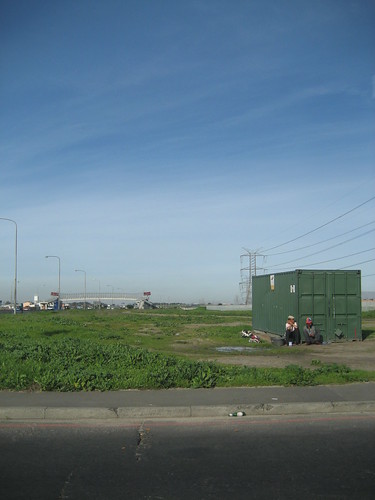
Waiting for Godot (Khayelitsha)

Waiting for Godot - Khayelitsha, South Africa

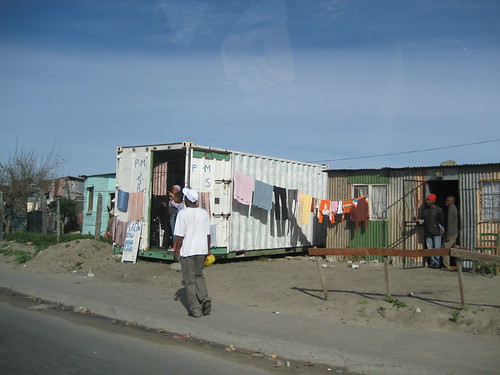
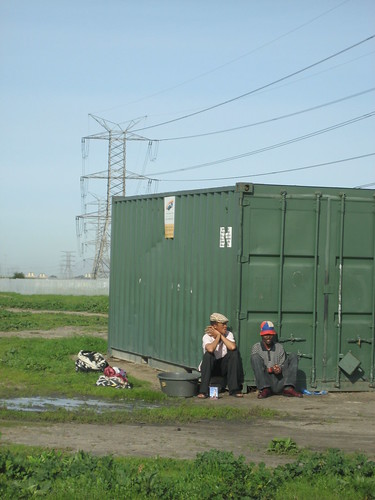
The two men sit outside a container waiting there in the middle of the field. There is an ease about them. We've caught them at a comfortable lull in the conversation or perhaps they are pondering a fond memory or the whereabouts of so-and-so. Their posture is relaxed, their clasped hands are mirrored. They've shared many stories, they'll share many more.

The one, perched on a couple of cement blocks, sports a plaid cap, a light pink polo shirt and slightly loose black trousers. Second hand. The other's multi-coloured off-brand Kangol bucket hat underlines the point. They are not rich obviously, for it goes without saying that the rich do not sit waiting outside containers in the middle of fields.

The power lines loom overhead, the hum of Tesla's crucifixes perhaps crackling occasionally to punctuate the high voltage cancerous flow. A basin sits to their right and there are a couple of piles behind them, clothes, it appears, that they are in no hurry to wash. The puddles of (dirty) water we assume do not disturb them now if they ever did. They are at ease in their patch of the the world. If it weren't for their skin tone, one would be tempted to call them Vladimir and Estragon, for indeed they do appear to be Waiting for Godot.

Waiting for Godot - Khayelitsha, South Africa

The earlier photo, taken at a further remove, is more classical. With its wider angle it captures more of the bluer sky, and places the men in their proper scale and perspective: insignificant like the discarded beer bottle at the curb, twenty meters away from the faded green container. Although it was winter in South Africa and it had snowed in Johannesburg for the first time in years, the environs of Cape Town could count on the milder weather that the men are enjoying. I understand why the photographer zoomed in, however. It's those details: that package at their feet, that blue plastic bag stuck under the locked container, the expressions on their faces, it's not so much resignation and despair as wist. Rather than the theater of the absurd, call the scene a mere portrait of modernity. I welcome other readings.

...

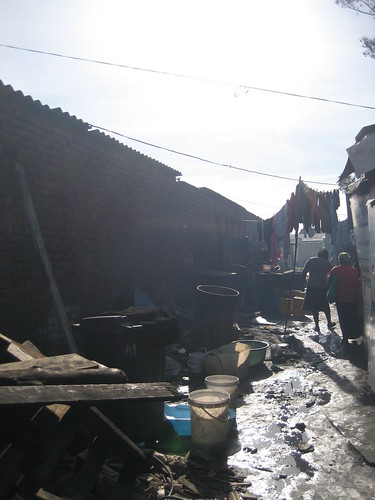
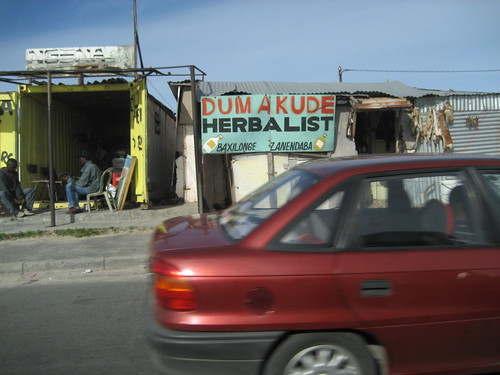
The Khayelitsha township near Cape Town, South Africa remains a foreboding place: poor, underdeveloped and a visible reminder of the lasting legacy of apartheid.

Khayelitsha slum

Still, even among the informal slum surroundings that might depress the most hardy,

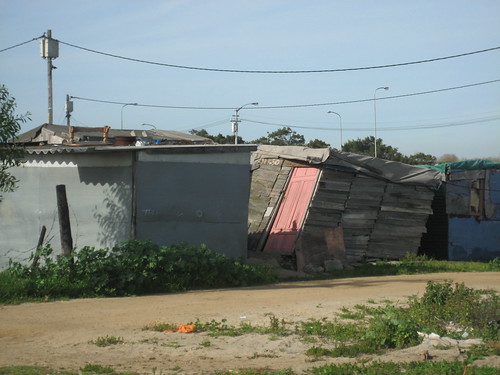
Khayelitsha shacks precarious

there is a dynamism among the people that live here that belies the script that many have written for them.

Amidst the tin shacks (these days without the asbestos roofing of yore)

Khayelitsha shacks

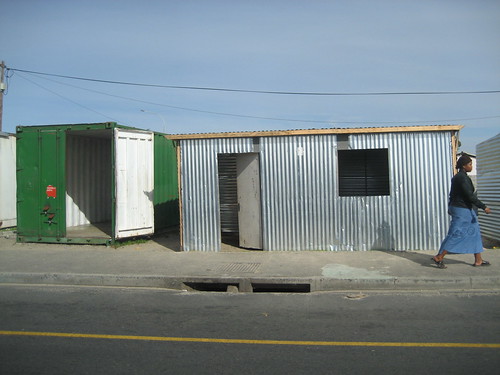
and the containers

Khayelitsha containers and housing

those improvised, repurposed and ubiquitous containers

Khayelitsha container housing

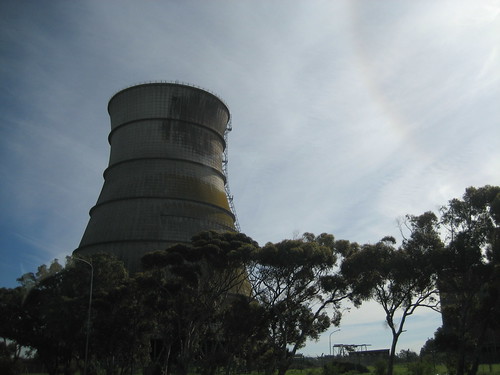
and under the shadow of the electrical pylons and power plants,

Khayelitsha tower

you'll find shops,

Khayelitsha containers Dumakude herbalist shop

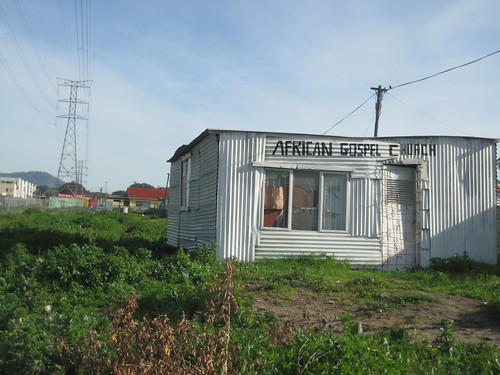
churches of sorts

Khayelitsha african gospel church

and, more importantly, the people with more ideas than you can absorb.

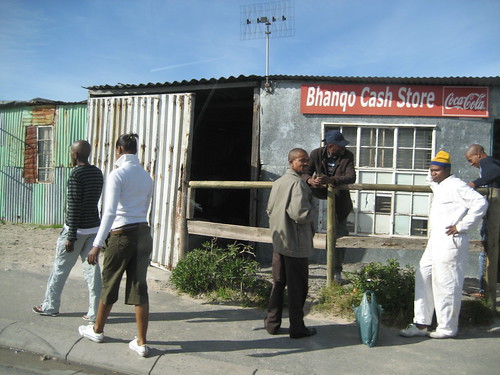
There's no time to dwell on any notion of nostalgia or the tragicomedy of poverty. This is the terrain of the hustle.

Khayelitsha bhango cash store

I trust the future is being written in Khayelitsha.

Soundtrack for this note


As is my custom, a playlist to augment this thoughts.

Obligatory disclaimer: I skipped the obvious songs about waiting since I was aiming for optimism rather than the blues (Prince's Still Waiting, Bob Marley's Waiting in Vain or say George Michael and Aretha Franklin's I knew you were waiting for me etc.) Also: these photos were taken by The Wife during a research trip in July 2007. I still haven't geared up to write up my own observations from my time in South Africa.

File under: , , , , , , , , , , , ,,

Wednesday, December 21, 2011

Road Trip

It was a mere road trip to fetch my grandmother from our family's village in the Volta region for the New Year, yet it ran the gamut of emotions. Some impressionistic travel toli from the archives...

I. Sick


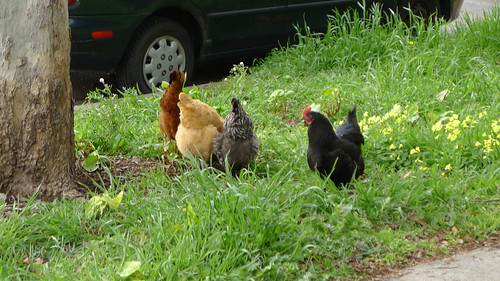
The motorcyclist didn't even try to avoid them - indeed it seemed as if he sped up to reach them. Coming up behind him, and taking furious evasive action, we barely missed adding to the desolating impact. A contest between a Honda motorbike and a hen and her four chicks will always be unequal. A week-old chick, half the size of a tennis ball was the fatal casualty, collateral damage to glib insouciance. The reaction to the death was all too familiar. The hen felt the maternal loss - there was that squealing sound, and the mortified look at the crumpled flesh was a recognizable universal. Yet there was no time to dwell on the damage and she gathered the remainder of her brood to continue crossing the road - presumably she would return later if at all possible, braving the traffic. We all felt sick in the car; we all felt angry. What kind of man enjoys running over a chick? As we overtook him, the wrathful thought crossed my mind, a slight swerve and it would be the same kind of competition between our four-wheel drive and his motorbike, roadkill revenge on this chick murderer on the main street in Anyiwarase. Such are the conflicted musings of a backseat driver... Instead, we mournfully averted our eyes as we passed: they say that, much like revenge, wrath is for the weak. In any case, the next town was coming up.

the chickens of berkeley - call them free range

II. Sour


The mood in the car turned eerily reflective as we drove through the village of D. It took me half a minute to remember that its townsfolk had attempted to murder my uncle in the last elections, which explained the pregnant silence of his brother, who slowly drove the car through its only paved street - he'd had to retrieve him back then, bloodied and all, and the stillness of his 89 year old mother, who is still feeling the wound to this day. Try as I might, and I tried twenty times in a row, no pictures that I took would come out right. It was as if the Gods of Nikon decided to forbid me a photographic record of this hamlet of trauma. Oh well, it would have to live on in my memory, live and not Memorex.

We noted that the electricity that my mother had sought to have delivered to the village had indeed been installed, and that the school now seemed well appointed and equipped and even had a fresh coat of paint. It was their just reward, a shower of love. The village is a religious settlement, home to an evangelical sect; the unkind call them a cult, but surely brands do not matter in Ghana's new Christianity. "Welcome to D. City of God. A holy town", proclaims the sign at the village entrance. "One whose folk do unholy things", I thought to myself...

Nothing was said for a long while in that car; call it group therapy for three generations. A commemoration of a town we must pass whenever we want to see loved ones.

To salve myself, I remembered a lyric, nothing hits your heart like soul music, and contemplated a playlist - the lead track would have to be Portishead's Sour Times. My thoughts then turned to the climax of that Clint Eastwood b-movie, you know, the one in which the avenging gunfighter makes the all-too-fallible members of a town paint it entirely in red as if to commemorate the blood that spilled on the ground. Oh, and in that vein perhaps Gil Scott-Heron's Paint it Black, would fit the bill. And so forth... There was perfect silence until we reached the bridge.

digable planets

III. Sweet


We stopped after we crossed the bridge at Atimpoku. As we slowed, thirty-five or more traders, mostly young girls, scampered in our wake and surrounded the car, arms outstretched, wares on the head, and tongues wagging. Some insistent, some seductive, some combative, the whole, a joyful cacophony.

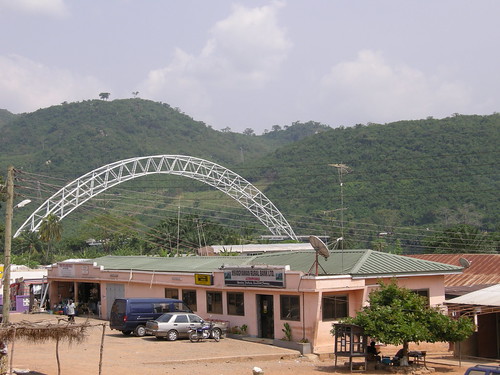
Atimpoku bridge

They shouted, "Papa-le, Novi, Big Man. Hey. Honey. Over here..." Rolling down the window, I could see and smell the alluring prizes they presented: abolo and the red lobster, shrimp and crayfish - freshly caught and smoked from the river. And the pears of course. Indeed some shoved their wares into the car. Well the bargaining began in earnest. In Africa, a market forms wherever there is slowed traffic; one's car window becomes a temporary shop, the products thrust in your hands for brief evaluation. You have to bargain hard even though the prices are ridiculously low from your dollar-based standpoint. It is expected that even big men will barter; as they say, markets are conversations.

Stopping at the bridge to buy abolo and shrimp was a ritual my uncle and I have always performed. I remember especially vividly the roadtrips the two of us took in the late 80s and early 1990s. Back then, with the poorer roads and cars, we were guaranteed to break down and the food would prove essential as we waited at the roadside for someone to stop and help. As the bundles of food produce were handed over, the thought vaguely crossed the mind that most of these girls should be in school rather than hawking their wares. The warm, breadlike abolo — baked rice flour wrapped in fresh plantain leaves, smelled and tasted as I remembered: at once sour and sweet. And the shrimp! Well... There's a reason we always ate them even during the cholera scares of a decade ago... Ah foolish me, forgive me for thinking that cholera scares were a thing of the past, apparently they're back these days.

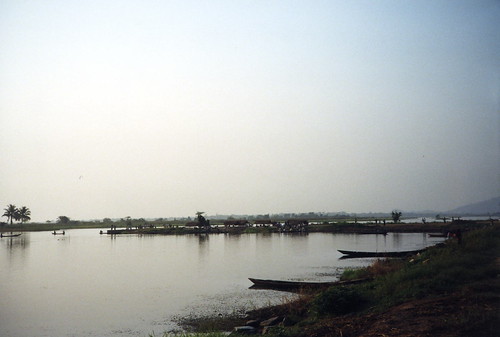
volta river boats

Of course the packaging of the food wares on hand recalled the eternal tension between tradition and modernity. On the one hand, the organic plantain leaves that no one can imagine buying abolo without, and, on the other, the now-ubiquitous plastic bag or cling wrap surrounding the shrimp. Or indeed consider the sachet water industry that the young girls, the kayaye, that ply our streets embody. You can't avoid plastics it seems; the populace has seeming voted with its pocket books for sachet drinking water and the cottage industry it has spawned. We really must challenge ourselves to do better when it comes to packaging of our foods. The market hasn't changed in over a century except perhaps with this non-biodegradable detritus that mark out our modern age.

Newly repaired and resurfaced, the bridge looked better than I'd ever seen it. Deferred maintenance is the usual fare in our lands but some enterprising soul had managed to secure the funds to rehabilitate this bridge, allowing it to escape the lot of the numerous road and construction projects that have simply stalled in the past few years - even as they had been budgeted for. My uncle regaled me with the toli that the drivers of some of the very heavily loaded trucks that we saw parked nearby in the town, which are ostensibly forbidden from using said bridge, were known to lie in wait and pay lucrative bribes to pass during the night. Everyone knows it but no one does anything about it. Plus ça change, a routine story of law and disorder in Ghana.

The mood lifted as I took in the sights, sounds and smells of life around the river Volta. I remembered the great, restful feeling of earlier in the day. There's a reason everyone who visits loves this part of Ghana.

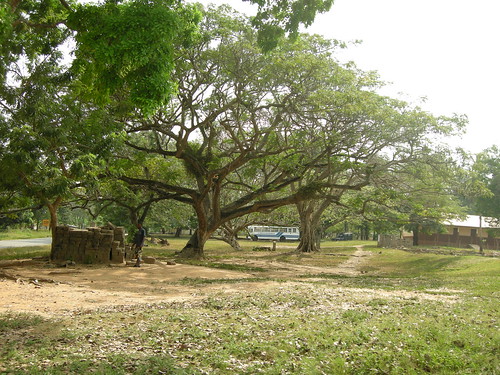
There's a certain freshness of the air once you cross the bridge and officially enter the Volta region. It's not that development has passed the place by but it does feel more unchanged. The nearby Ho hospital after all is testament to state-of-the art living (even if we discount its notorious 150 percent overhead - white elephant election gifts that World Bank directors would prefer you not to bring up in conversation). I recalled the majesty of the trees in our village commons, near the EP church (Evangelical Presbyterian that is). The trees that used to serve as facilities for the primary school all the way until 2002.

tree in village commons

I remembered the sight of my grand aunt standing in line to vote in the day's district assembly elections, proud of doing her civic duty even amidst the shambles - the ballots had only arrived at 2 pm, and only in our village, not in the three surrounding villages. Her early-bird attempt at 9 am had been fruitless but hopefully by now she would have managed to cast her vote. Listening to her complain about the Electoral Commission and disorganization. I reminded her that she was the one who always said that democracy was a process, that we always had to fight for it. "Well it's getting tiring".

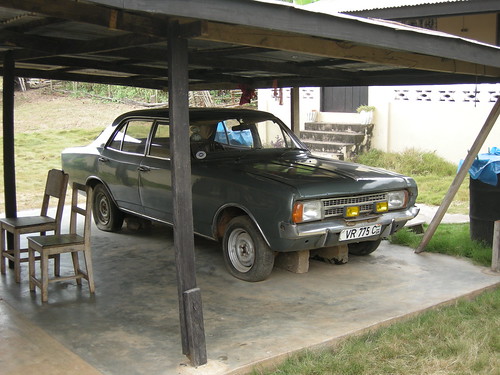
I was minded of the uncanny places you might come across a 1969 Opel, a vintage collector's item that deserves to be in a museum if not on the road.

1969 opel

I wondered about the lives of those who decide to retire to Ghana's villages. The old men sitting under the canopies throughout the day. Do they have places to go and people to talk to? Elder care ought to be a growth industry in Ghana, and professionalized too. Those traditional bonds that we have long prided ourselves as differentiators are a thing of the past.

old men sitting in abutia

But it was all about talking to family, young and old, and hearing about the changes we'd been going through.

mother and daughter

Our village is always restful.

main path abutia

abutia village

The once dense forest in the Abutia hills is slowly recovering from the depredations of the nearby human settlements.

abutia view hills

Our houses are mostly unchanged.

abutia house

We work with millet and maize in the same immemorial manner as if a little technology couldn't help.

abutia working with millet

Heading back home we reached the Tetteh-Quarshie roundabout, named after our country's famous scion (he brought cocoa, that other black gold to Ghana). Formerly miles of unused land, and notoriously the dumping ground for some of the laziest of Rawlings's deathsquads in the early eighties (the Affram plains being too far for their cargo of bodies), it has seen development - they now call it an interchange. On its margins still sits the unfinished hotel that the owner of Shangri La started against advice until the marshy soil sank the buildings as if in rebuke. But there are now additions and, well, the sour memories are being eclipsed by the new additions to its environs, the new sweetness of Better Ghana.

We passed the Accra Mall that, much like Citizen Kofi's, is an attempt to bring an upscale Southern California aesthetic to Ghana. The middle class of a recently declared middle income country deserve their Apple i-shop and finery. Vlisco proudly display their new creations and Woodin had just opened a branch doling out their fabulous fabrics. A store manager would later admit that too many people were window shopping over the holidays. And so we have the mall as a youth hangout, thoroughly normalized in other words. In just a few years, we have developed a mallrat culture worthy of New Jersey. Globalization as the Mosquito Principle.

stunning dress and fabric by Vlisco

We are living multiple realities it seems.

abutia scene

We passed the Villagio sky scrapers under construction that expats are buying sight unseen - rumours of up to a million dollars for the upper floors. The bit about these being all-cash payments makes one wonder about where the money is coming from.

tower construction

Some things are unchanged, mud huts compete with steelworks.
abutia mud hut

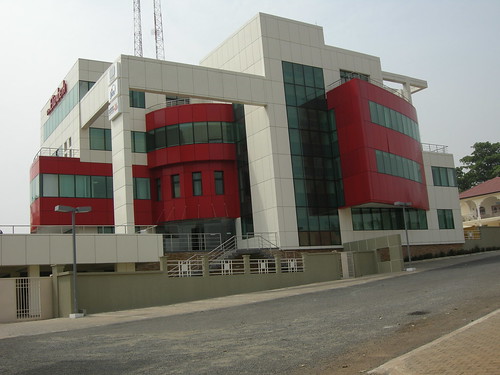
Just a few minutes later we passed the gleaming office building that my cousin's husband designed just a few doors down our street. The quite malicious toli is that it was a monument to Mum, that she was behind it, that it was proof of her millions. It's the name you see, The Elizabeth. If only they could see her bank account and what fleeing your home at your prime into 18 years of exile can do.

the elizabeth designed by esem quartey

Shacks overlap with shinging glass.

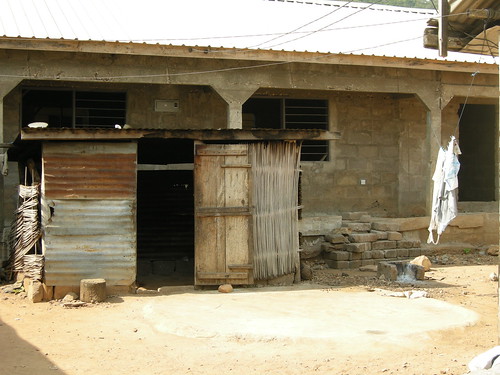
abutia shack

the elizabeth designed by esem quartey 3

Life is sweet in Ghana (for some at least).

abutia shack 2

We came home that's all.

Soundtrack for this Note


A playlist for this road trip as is my custom

File under: , , , , , , , , , , , ,

Wednesday, May 16, 2007

Public Nuisances 63 and 64

Travel this past couple of weeks and considerable jet lag prompt a few entries in an occasional series...

Public Nuisance Number 63


The single greatest improvement in the quality of life for the traveling masses of humanity will be the abolition of those public announcements about "cars left unattended (being) subject to towing". The seven and a half minute frequency of said announcements is a blight on society.

It must drive airport employees mad to hear this business. No wonder bags get misplaced and creative thefts occur. I'd rebel if I had to hear it 72 times a day, 360 times a week, 10,000 times a year. And that is at the laidback airports I've been patronizing where a few hours of flight delays prompted my timing investigations. What, I wonder, is the typical frequency of such announcements, say, at Logan airport in Boston where guilt about terrorists attacks past reigns. Good Lord.

Really, does one need to warn about towing? If you come out on any street and don't see your car, well yes, it's probably been towed, if illegally parked, or stolen, or borrowed if you're lucky. Regardless you're either stupid and/or unlucky. Such is life. Why do you need to be warned? Or is the message intended for a different audience? Is it simply a piece of security theatre deftly designed by security experts to heighten a sense of vigilance, in the best reading, or fear, in the more probable reading. Or is it one of those vestigial announcements that no one questions but that spread inexorably out of bureaucratic inertia. Somewhere a soul dies every time that recording plays. I know that my fortitude was tested...

I can understand the "be on the lookout for suspicious __" or the "don't accept packages" items but that business about towing cars needs to stop. It pollutes our ears. It pollutes our minds. It's that simple. Stop it. Erase that message from the system. Please. Pretty please.

Public Nuisance Number 64


Is there a more diseagreeable verb in the English language than deplane? I believe it is beyond objectionable, nay it is simply indecent in any good company.

Deplane indeed. What's wrong with disembark? The sole saving grace in this sad tale is that board or embark have fewer or the same amount of syllables than emplane which has consequently not seen the same adoption as its obverse (although a Delta employee used it on a recent flight).

But back to deplaning...

May catastrophic bankruptcy befall all airline companies that deploy that verb as part of their linguistic arsenal. Moreover, may the authors of the style guide of said airline companies, those syllabic bean counters who foisted those words on humanity be consigned to a sojurn of no less than six months and a day working at the most gruesome meat rendering factory — I can think of several if consultations are required. Further, may all airline personnel who utter said verb and follow the airline scripts be ignored by their progeny come Mother's or Father's Day.

Deplane! No wonder one hears about air rage even in this post 9/11 world, forget alcohol, I'll deplane you. United Airlines, consider yourself on probation. Continued toli patronage is hanging on a very frayed thread, indeed Jetblue beckons.

Sigh... It's been far too long since my last boycott day. What are you boycotting today?

File under: , , , , , , , , , , , , , ,

Sunday, July 24, 2005
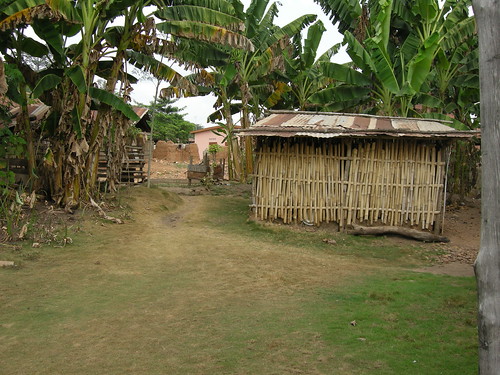
Bullet From A Gun

I give you the Toli Remix of Derek B's Bullet From a Gun, a hip-hop photo essay in the vein of South London's vibe. Part II of the London's Got Soul Trilogy.

South London Brew


I lived in North London for 5 years in the late 80s and early 90s joining my mother during her 18 year stretch of exile from the insanity of Jerry Rawlings' Ghana. More precisely we lived in the "civilized" part of London, that's the Hampstead, Golders Green, Hendon and Brent Cross Axis of Civility. Throughout that time, I only made occasional forays into South and East London. It all seemed strangely alien to me: all hustle and bustle, poorly served by public transport, schools and local governments in disarray etc. Certain parts seemed more like Accra, Karachi or Lagos, in a word: messy. As an example, in all my time in North London I never walked into an argy-bargy (pub brawl) or got harassed by roving youths at night. Since I've left though, I've come to think of those parts of London as more interesting and certainly more vibrant even if they are indeed more difficult to live in. A lot of the cultural energy of the city comes from these less telegenic parts.

Thus I give you a photo essay on South London, This time however, your narrator will be Derek B who was there at the False Dawn of UK Hip Hop in the 1980s. Derek B truly is a Bad Young Brother with braggadocio and inventiveness to spare as you'll see from his wordplay. As a rapper he had impeccable taste, for example sampling the Oh Yeah bit from Prince's Sign O' the Times recognizing its importance long before others. The music scene in England at that time had a lot of soul (artists like Mica Paris, Omar, Neneh Cherry, Soul II Soul and Loose Ends), jazz funk and rare groove (Paul Laurence, Courtney Pine) from which the Acid Jazz movement emerged, as well as the beginnings the house and rave scene. DJs like Pete Tong and Westwood kept things moving. There was a lot of cross-pollination and the music produced had a multi-faceted sensibility. Other notables on the hip-hop side of things include Monie Love (Monie in the Middle and It's a Shame being the standouts) and the much-overlooked Cookie Crew who really put it on the line with I Got To Keep On, that hyperactive Old School joint.
Give them the proof that
We're down by the South Side
So you can confide
In the Cookie Crew

I got to keep on
I can't sleep on
Gaining respect
With a cool british dialect
Bad Young Brother is Derek B's most popular song, a fiercesome groove as befits the title; it even crossed over to this side of the Atlantic. For me however, Bullet From a Gun, the title track of his debut album, made a greater impression. It is a song firmly in the vein of Kool Moe Dee's Wild Wild West or great posse cuts like The Juice Crew's The Symphony. Its lyrics threw down a witty and theatrical challenge to the rest of the world affirming the existence of a soulful vibe in London. There is a direct line from Derek B to influential groups like Massive Attack or Portishead and latter-day poets like The Streets and Dizzee Rascal. He speaks to a youth culture that continues to make London the most exciting city in Europe. Although he is an East Londoner, we'll relocate him to Catford for the purposes of this post.

[Update May 2020, I've made video version you can find on Youtube]

For the musically inclined, you can sample the song here. I'll leave the mp3 up for a few days before slipping it back into the Long Tail of music and file sharing networks. Allow me then to do what the Cookie Crew suggested and
Grab the mic tightly
Serve the crowd rightly
Cause we were born
To keep it on
South London style.

Bullet From A Gun


Narrator: First There Was A Dream...
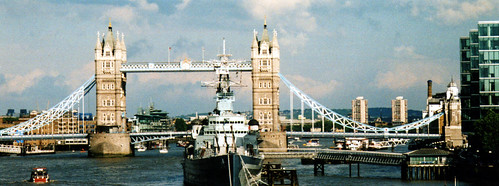
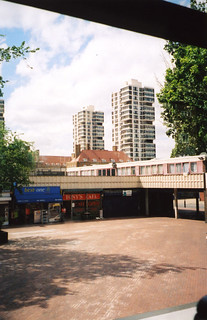
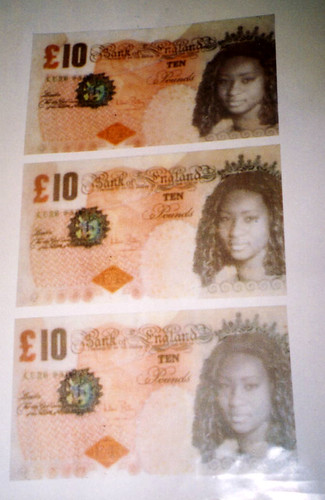
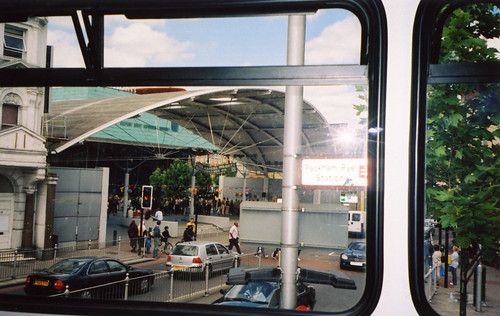
london-bridge-tower-glory


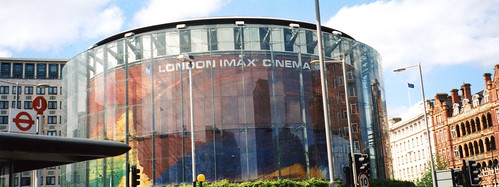
waterloo-imax
Narrator: Now there is reality...
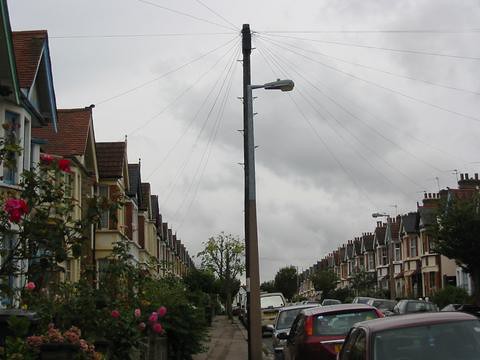
elephant and castle
[Sound Of Footsteps]
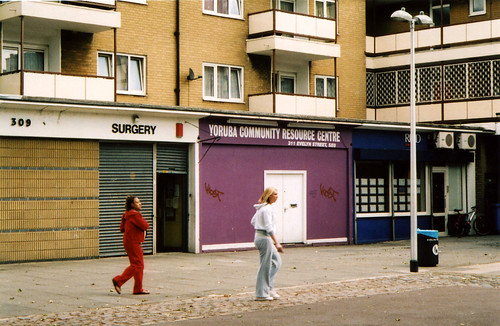
Deptford Yoruba Community Center

"My Name Is Q. Easy Q"
"Who is Number One?"
"I Am Number One"

[snippet of James Bond theme, Bullets fire and ominous break beat begins]
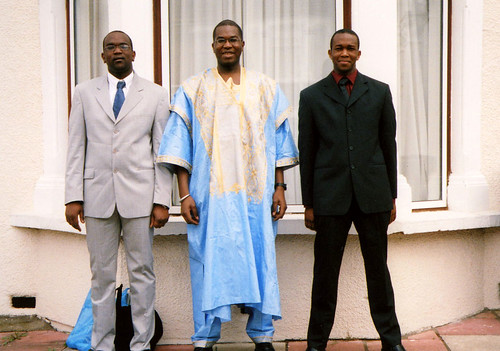
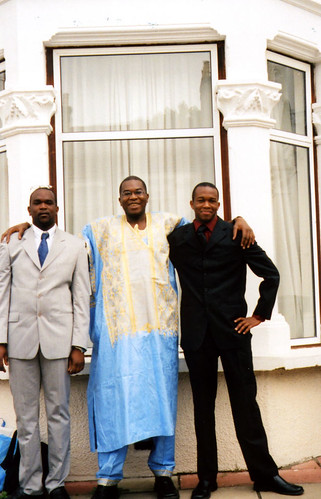
delali-me-duanyo-brothers
James Bond 007
Licensed to kill
Easy Q, Derek B
Licensed to ill
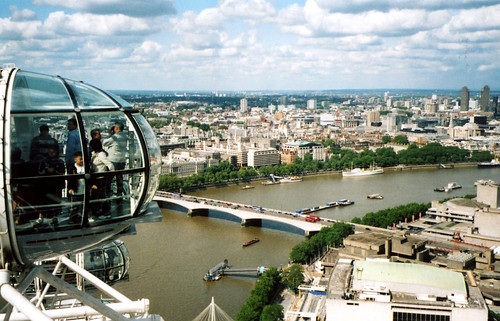
london-eye-london-bridge
On Her Majesty's Secret Service of rap
America, you're under attack
From the Crown Prince of poetry
The Man With The Golden Mic is me
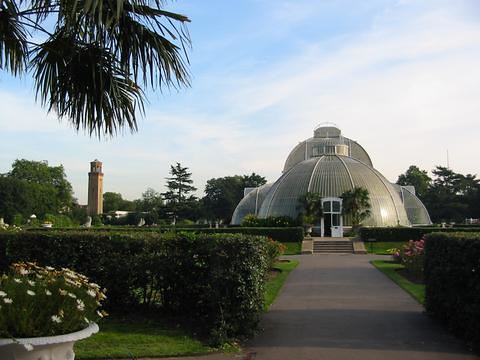
kew gardens
You thought you'd never hear
Anybody with the gall
But Easy Q and Derek B
Got Thunderballs
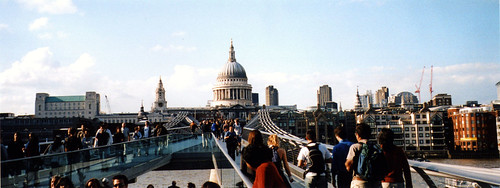
millenium-bridge-panorama
I'll Never Say
Never Say Never Again
I'm not Russia With Love
You see I'm from England
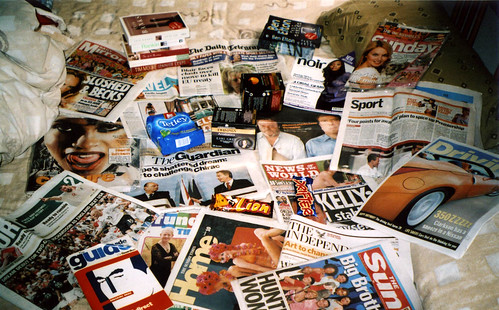
london loot collage
I'll Live And Let You Die
Your soul will get cold
Your body paralyzed
As my rhyme unfolds
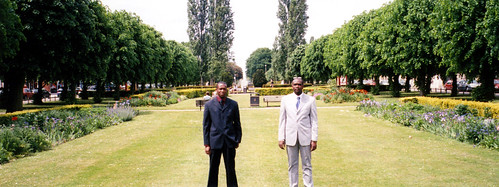
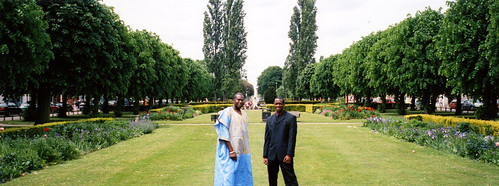
duanyo-delali-wellyn-garden
A billion dollar brain
Ticking inside my head
Like Diamonds are Forever
And I've got street cred
peckham-shoppers
From the East End
Always say it loud
Def B-Boy
Black and proud
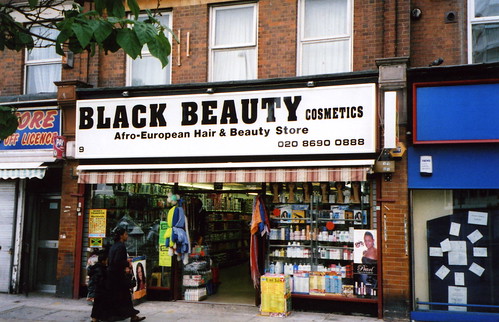
catford black beauty
I'm a warrior
Like Attila the Hun
That's why my posse call me
Bullet From A Gun
Derek B Bullet From A Gun
(South London Chorus)
"Who's Number One?"
"Bullet From A Gun"
"My Posse Having Fun?"
"Yeah Bullet From A Gun"
"You're Sure Gonna Get Some"
ebo pose
East London Posse
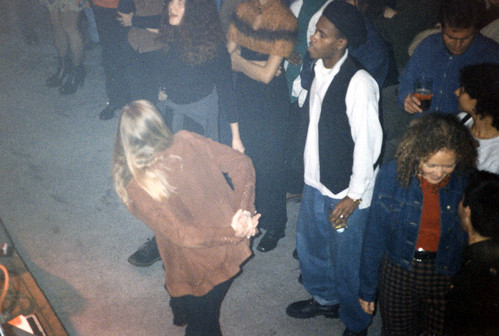
Raving all over town
Not invited to the party
We break the door down
Here comes trouble
Cooling with my homeboys
To a real lame beat
As the girlies stand around
About to fall asleep
little yuppie eaterie
16 Strong, my posse takes over
D on the decks, Easy Q mic controller
punkature
All of the sudden the party starts to rock
To the def beats and sounds of my hip-hop
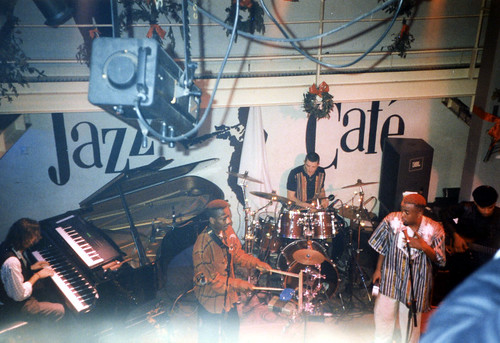
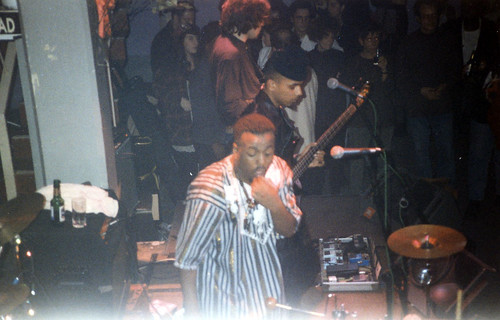
Jazz Cafe African Jazz Funk
The volume increases
Your ears wanna bleed
kweku-plays
B-boys going crazy
Suckers doing speed
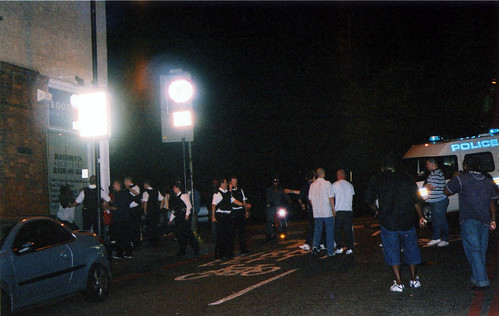
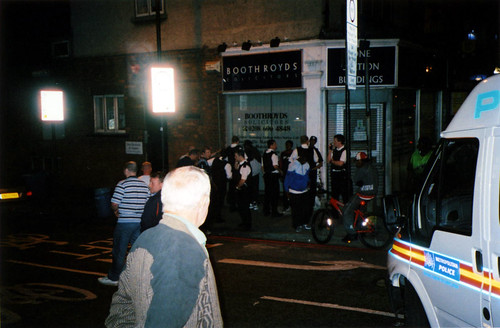
catford-bridge-fight-police-take-charge
Fight breaks out
Place gets wrecked
Don't bother me boy
You'll only get decked
Catford bridge fight police doing their thing
Out
at the speed of light
We came to party
Not to fight
candy-slide
So the fridge gets raided
Brew and Tennent's gone.
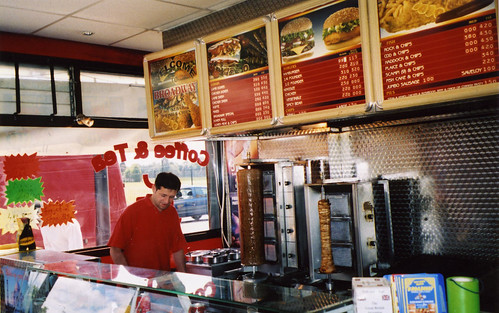
Doner Kebab joint owner
The quiet start rocking
The sensi smells strong
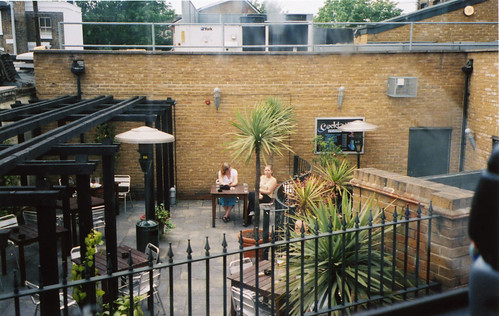
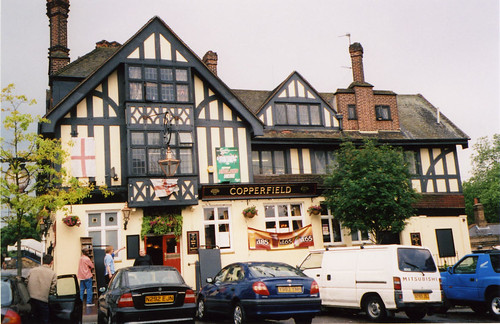
Catford Copperfield Pub
Shuffling and shaking
Speakers start to pump
The amps overload
The party's gotta stop
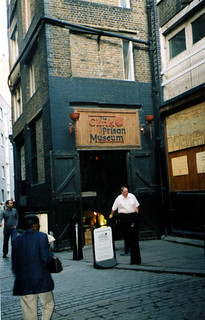
the-clink-prison-museum
A roar from the posse
With the gold around the neck
Each one against the wall
With the girlie in check
kukua-nika-style
Mate
The game's over and won
We're out of here
Like a Bullet From A Gun
me-leaving
South London Chorus (x2)
"Who's Number One?"
"Bullet From A Gun"
"My posse having fun?"
"Yeah Bullet From A Gun"
"You're sure gonna get some"

Word
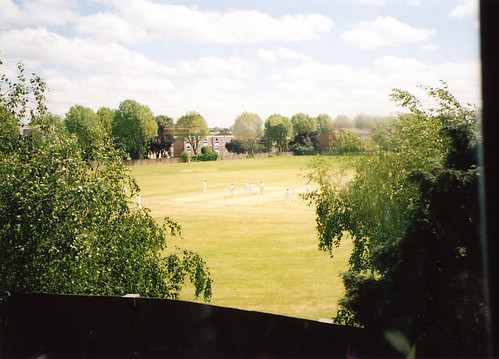
Catford cricket
Take a trip through a park
To see an mc battle
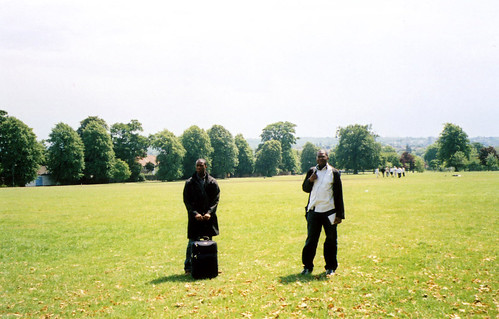
hendon-park-me-duanyo
Hot sunny day
Skeezers like cattle
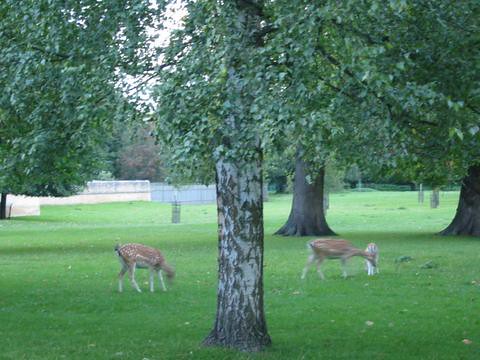
deer
The E.L. Posse
All over the place
Like government agents
No time to waste
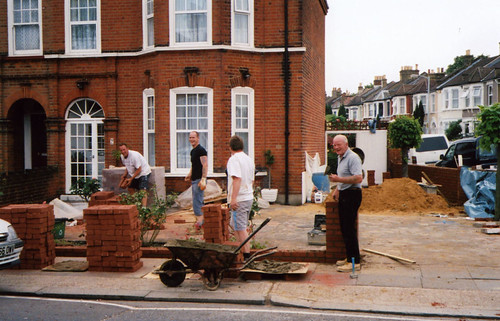
Catford dodgy bricklayers
Standing in the corner
With my arms crossed
Laughing at the rapper
Who just lost
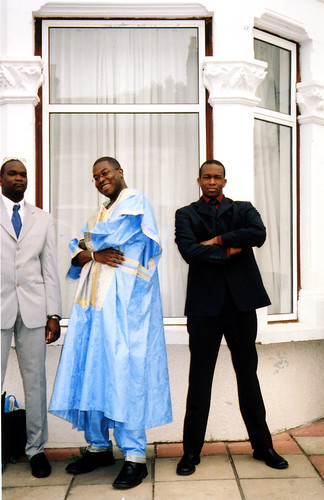
delali-me-duanyo-posers
Sucker taken out
And I guess it's kind of funny
'Cos he's rapping for nothing
While I'm making the money
Queen Portia
Now he comes over and asks me what
He has to do to get all the way to the top
I said, "I'm a funky junky of the hip hop sound
I take this shit serious, no messing around"
east london
"My rhyme's like a bull
And oh so strong
I wear the freshest clothes
Like Louis Vuitton"
duanyo-me-wellyn-garden
"I get to jams early,
You get there late.
Then set up cold ambush
On the 808"
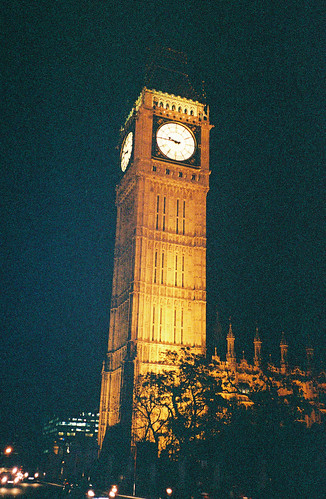
big ben
"I'm a Pro, Bro
And when it's time to go,
I make sure I'll let the people
Know who's running the show"
Peckham market
"When out on the mic
I make sure I rock the night"
jazz-cafe-5
"Make the girlies go crazy
Throw their panties on stage"
dayla
"One more thing
While you're listening son
Make sure the rap's delivered
Like a bullet from a gun"
delali-me-duanyo-freres
"Who's Number One?"
"Bullet From A Gun"
"My posse having fun?"
"Yeah Bullet From A Gun"
"You're sure gonna get some".
Jazz Cafe - African Jazz Funk
That's right I am Number One
And I'm here to stay.
I ain't going no place no way

One more time

South London Chorus
"Who's Number One?"
"Bullet From A Gun"
"My posse having fun?"
"Yeah Bullet From A Gun"
"You're sure gonna get some"
millenium-bridge-approach
That sounds right to me. You like that?
"Yeah!"
OK let's chill
fosters-advertisement
[bullet fires]

Fade out with breakbeat.


See also: Catford Bridge and London's Got Soul.

Bullet From A Gun - photoset

Derek B - Bullet From A Gun on Youtube

My man Derek B passed away in 2009. I am priviledged to know that he approved of my toli tribute. Rest in peace, soul brother

File under: , , , , , , , , , , , , , , , , , , , , , ,