Showing posts with label aging. Show all posts

Tuesday, July 11, 2023

67

Well, well, well, guess who turned 67 just the other day?
A neighbor distributed a flyer right at our doorway
Inviting us to a gathering to celebrate
   near the benches just before dark
Plum center, a photo of the birthday boy,
   the old man who lives in the park

Sadly, I couldn't rally to make it to the happy event
Even though I would consider myself one of his friends
Life intruded, parenthood and the pandemic's dismal reality
Meant that I missed out on the trappings of that ceremony

What do you give the man who has nothing but wants nothing?
I racked my brain:
   what could possibly be an adequate contribution?
Moreover, would he really want to be celebrated
   or, rather, left alone?
After all, when the party's over,
   the park would still be his humble home

At his age, one would traditionally be prime for retirement
Clearly though, besides his clothes and blanket,
   he has no safety net
Despite the gestures we've made
   to maintain a modicum of community
For all we know, he may not even be collecting social security

It can't be easy this life of his, being homeless
Street life, the whole world watching all your business
The soul of the neighborhood was the flyer's consensus
67, this old man. Think first, of the least of us


zinnias flower garden

The Old Man Who Lives in the Park (Redux), a playlist


A soundtrack for this note. (spotify version)

See previously: The Old Man Who Lives in the Park


This note is part of a series: In a covidious time.


File under: , , , , , , , , , , , , , ,

Writing log: September 11, 2021

Tuesday, April 25, 2023

The First Time

The first time I stepped on a plane, it took a bag of candy
The first time I stepped off a plane, my stomach learned what my mother held, namely that I shouldn't be greedy

The first time I made to kiss
The first time, I do believe, I missed

The first time wasn't the greatest
The first time was about togetherness

The first time the blow came towards me on the playground
The first time I beheld that turning the other cheek, as a practical philosophy, stood on shaky ground

The first time I held someone back, and said cool down your temper
The first time I myself exercised restraint, that one I remember

The first time I practiced what I preached
The first time I was well and truly deceived

The first time I made a lasting friend
The first time, as god is my witness, I realized there would be no end

The first time I had no shame
The first time I played that game

The first time I heard you sigh
The first time I made you cry

The first time I swallowed my pride, and tried to conjure a smile
The first time something small inside me irrevocably died

The first time I bore the strength of my convictions
The first time I betrayed my heart, it was confounding

The first time the car flipped and I pulled my cousin as he tried to leap out of the window
The first time I saw someone die, and learned that no one is promised tomorrow

The first time the dam broke, unbidden, and out poured the torrent of tears
The first time I remembered the feeling and cried harder, even after all those years

The first time I revealed something of myself, I felt as if I was nude
The first time I broke the veil was really just a prelude

The first time I heard my daughter's cry
The first time my son broke that mischievous smile

The first time the customary pay raise to beat inflation was summarily denied
The first time they called it a resource action, the coinage letting me know that I was fired

The first time I trafficked in fictions
The first time I mastered the art of misdirection

The first time the soldiers came to the house, I was nine years old
The first time exile beckoned that dawn in the Amsterdam airport, good Lord, it was cold

The first time that class of five year olds burst into laughter at how I pronounced pipe in French
The first time, months later, this 9 year old skipped four grades, and exacted a kind of revenge

The first time I was lampposted I thought it was quite rude
The first time I lampposted someone, it was I that was being cruel

The first time I was plagiarized I was outraged and furious
The first time Ghana beat the USA at the World Cup I was delirious

The first time I laughed so hard I couldn't believe the extent to which I was amused
The first time the full weight of human malevolence left me feeling abused

The first time I faced overt racism I was quite confused
The first time I faced microaggressions I was rather bemused

The first time I visited a zoo was in London, 1980, the special exhibit was a white man in a cage
The first time I was taunted about my race, I retorted that "You, yes you, are the ignorant savage"

The first time I run unthinking towards the burglar coming up the stairs I couldn't believe
The first time I rushed my son to the emergency room, like him I could hardly breathe

The first time I failed, there was a mountain of regret
The first time I made a conscious decision to forget

The first time a reader said thanks for what you're doing
The first time my dad said my poetic gestures were improving

The first time I grew something successfully from seed
The first time I wrote a poem that I thought I could keep

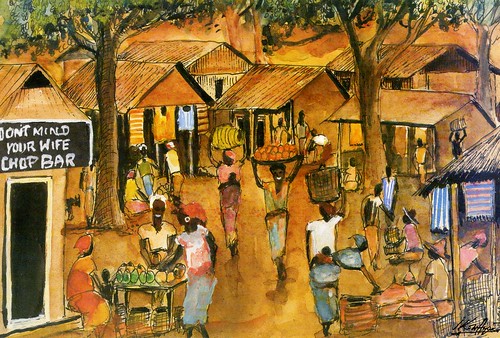
don't mind your wife chop bar at the local market

The First Time, a playlist


A soundtrack for this note (spotify version) Timing is everything
Observers are worried

File under: , , , , , , , , , , , , , , , , , , , ,

Writing log: May 8, 2021

Tuesday, October 18, 2022

Milestone

It had been creeping up on me quite gradually
But the irrefutable sign that made it official was the diary entry
(To be precise, the Google calendar reminder, more formally)
That read, in black and white, on the little screen:
"Schedule colonoscopy"

I guess this was a watershed, call it a milestone
There was no mistaking what I read on my phone
The doctor's recommendation that one inspect my nether zone
Lest, like the dearly departed actor, you know
The one who starred as Black Panther,
I succumb to preventable misfortune

I suppose the statistics for those of my race in America
Must have been suitably ominous when it came to colon cancer
For the public health officials to have advanced by a number of years
Their recommendation for check ups to avoid a trail of tears

Demography and mortality statistics being what they are
For those, quoth the soul singer, darker than blue in America
I celebrate daily the small things, and that I have made it thus far
With loving family, relative wealth, and unscathed in police encounters

I still wear my mask of civility and bottle up my outrage
Except on the occasional lyric verse that I apply on these blank pages
But here, I count my blessings even as I must acknowledge
The bleedingly obvious: that I have become middle aged


guerilla crossing

Milestones, a playlist


A soundtrack for this coming of age (spotify version) ...

Timing is everything
Observers are worried

File under: , , , , , , , , , , , , ,

Writing log: May 3, 2021

Monday, January 04, 2021

The Old Man Who Lives In The Park

The old man who lives in the park now has a dilemma
That's causing you and your neighbors further heartache
Not, paradoxically, that he sleeps under the benches,
For he's blessed, he always says to confound any pity
"I'm blessed to live in this here world"
"The Good Lord watches over all his creations. He is indeed my witness"
No, it's that Parks and Rec, just weeks ago, removed the porta potty
That has been serving as his bathroom and privy
For what seems like the past couple of years
And now, with no stand pipe or running water,
We can only expect a trail of tears

The park was ostensibly closed at the outset of the pandemic
But this new development ups the ante of discomfort
The practical questions mount: where will he relieve himself?
You're all facing the pressing matter of public health
You wonder if the flying toilets of Labadi Beach
Will make their appearance on these Austin Texas streets
Well, at least the garbage is still being regularly cleared
Appearances must be kept up, even as lockdowns take their toll
The prospect, however, is of walking through discarded toilet roll

He's always kept himself clean, tidy and well dressed
Dignified, with a sense of possession and no trace of stress
One has always wondered: where does he take his showers?
Still it's a consolation that the park benches
That he sleeps under at night are still there
For what it's worth, they provide some protective cover
He moves out early in the morning from this place he shares
To allow the yoga and exercise crowd to take them over

He had a good run this summer by every measure
The birthday party crew were stymied by the park closures
Thus he could sleep in, even on the weekend mornings
No anxious parents trying to stake out the benches
And mark their territory with prefab themed balloons
And other plastic decorations with which they festooned
No disposable tablecloths that they would tie down
No cups, coolers and fluffy pom poms
No banners and photo booths nor burgeoning cheer
For the show they later planned to put on
No bouncy castles, at least for the first few months
No barbecues, the smell of which draw out a great longing
Indeed for those months there were no gatherings
Of friends and family and their spawn

He must do odd jobs during the day for the folks at the restaurant
Perhaps they repay him in kind with their choice soul food
The sign says that they even serve meat from alligators
Or perhaps it's just his company that they enjoy that makes him a fixture
The owner raises a weary eye and his expression grows stark
Whenever you happen to mention the old man who lives in the park
There's a pause, then a sigh, born of longstanding concern,
A shake of the head, it's really a long story
Believe me, we've long since involved social services
At this point, it's not even a matter of charity
Interventions galore, there's no doubt a fraught history
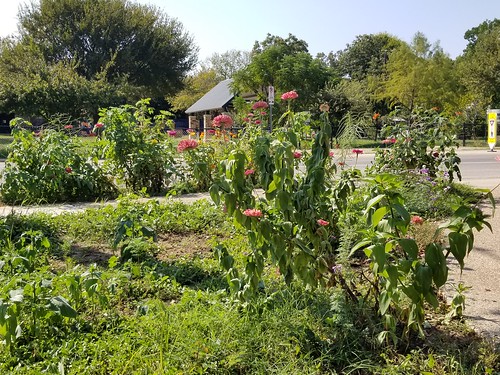
zinnias flower garden

When he disappeared for a month,
You wondered if he was lost to the pandemic
That was back in July, when that new urban soundtrack
The near constant sound of ambulances, almost made you panic
The Governor, despite the positivity rate,
Was hell bent on the grand reopening
You could only hang your head in dismay
At the fecklessness, will they ever learn?
So it was the most misbegotten kind of relief
When the old man who lives in the park made his return

We'd circled each other uneasily ever since we moved in across the park
The real estate agent couldn't have known he'd be our neighbor
The head nods proffered were only occasionally returned
There was indeed recognition, but always a pregnant silence
I later learnt that he was half blind
Which perhaps explained the diffidence
And his uneasy and languid way with locomotion.
Albeit he has a white cane that he twirls merrily,
But he seems to only use it as decoration
Thus he crosses the street willy-nilly
Invariably causing near crashes and commotion.

Came to find out that he was a veteran
There's a hardness under what you observe
You wonder which was the American
Foreign misadventure he was drafted in to serve
The word on the street is that his sister takes all his benefit checks
Such is the mystery of the arrangement, for he seems quite happy
And even compelled to spend his nights sleeping under the bench
So perhaps it's not about money but rather about penance
For sins past. Who knows the backstory of this kind of repentance

We first talked one August evening
As I watered my flowers and plants in the front yard.
Limping, he'd crossed the street from the park
As usual, ignoring the passing cars
He approved of my low tech approach
But suggested installing a sprinkler system
I didn't have the heart to show him the one right there under his nose
Given that I preferred getting out and about with my garden hose
Back to basics, Nyame had suggested, choose manual over automatic.
Such were the nuts and bolts guiding me through this pandemic
So while we live in this digital world, I prefer analog connections
The necessity of touch and meaningful conversation

Nevertheless he approved that I was taking care of the earth
And digging up and weeding on my hands and knees
"If all goes well, young man, with the passage of time
There'll be plenty of monarch butterflies and bees"

There's a musical quality to the cadences of his speech
As if, in another life, he could be moved to preach

"I'm blessed, Sir. I have two young ones, I couldn't be prouder.
The Good Lord is in control, don't mind that weather forecaster
You know, he had it wrong, claiming rain and thunderstorms
But what could he know about His ways and directions?"

"It surprises them when you call them Sir, but it doesn't cost you none.
Keep doing what you're doing, above all, be true, young man"...

"I see you have a couple of children, I can tell they bring you joy.
I'll be off now. Pleased to meet you, Sir, my own name is Delroy."

And so I turned off the water and coiled up the garden hose
And took off the homemade face mask that covered my nose
I made to turn on the light in front of my home
And walked back up to my study thinking of a poem
I gazed across the street at the incipient dark
Thinking, as I do at night, about the old man who lives in the park.

front yard

The Old Man Who Lives In The Park, a Playlist


A soundtrack for this note (spotify version)

See also: Frank and Frances (or 500 Steps)

This note is part of a series: In a covidious time.


File under: , , , , , , , , , , , , , ,

Friday, April 15, 2005

Lights Out

So last night, right around 11:30pm, a big power surge rippled through your mid-Cambridge neighbourhood.

Your first thought as the lights went out and computer sessions abruptly ended was that Acts of God, the tsunamis of this world or, in this case, the inept dealings of NStar, the now-deregulated electricity company, with the overwhelming complexity of their power grid, are particularly apt reminders of the importance of perspective in human life.

Because after all, why exactly were you trying to get work done at midnight connecting to the corporate network and trying to figure out the remote access passwords to servers on which you were planning to test your newly-written software for the next few hours. Wouldn't it have been better to be sleeping or simply chatting with your loved ones? You are still living like a "just-out-of-college" engineer, burning the midnight oil, rather than someone 10 years on with attendant responsibilities and perspective on things. There's wisdom in the complaints from your parents, numerous aunts and especially your grandmother about why you haven't sorted your life out, bought a house or gotten married. What were you really trying to achieve?

You even start reconsidering your curmudgeonly, Luddite tendencies and re-evaluate anew the reason you haven't gotten a mobile phone even as you expound at length on cutting edge software. It would have been fun to be able to talk to The Girlfriend. After all she had just turned in the PhD dissertation this afternoon, a 5 year labour of love, blood, sweat and tears whose genesis you've been an integral part of whether through editing, printing, technical support or all those long conversations. Hours earlier she had set off to catch a plane to deliver a paper at a conference at Bryn Mawr. You don't even know if she made it. It would have been good to simply shoot the breeze and think about the grand vistas and opportunities that lie ahead of both of you. You'd at least have wanted to tell her again how proud you were and those other things.

The few things that you lean on in this mini disaster recovery period are all battery-powered: your laptop, your organizer, and the watch you use to figure out the time. You wish everything in your life had a backup battery-powered system. Living in the US, where power and infrastructure is so reliable, blackouts, or Lights Out, as they call it in Ghana, are memorable events. You remind yourself to get the UPS system that you put on your wishlist 6 years ago and also to invest in APC because even though the dollar has gone to hell these days, there's a vast developing world out there where their products would be in demand.

Some would say that Lights Out is no big deal, indeed it has been the daily bread of your Ghanaian experience. It is only in the West, where infrastructure problems were solved in this past century, that such things are memorable. Lights Out has been a singularly rare phenomenon in your 23 years in Europe and America. Still this is the second time in a few months that the Cambridge electrical system has failed so dramatically. You say to yourself that the US is becoming a Third World country.

It's a reminder though, of the things you take for granted. Almost everything you use requires a good electrical supply. No TV for narcotic effect. No internet for conversational fulfillment or information dissemination, and certainly no wi-fi nodes to point your laptop at to continue your work. Incipient thoughts about continued work are now definitively delusional. There's also no power to the fridge, you note when you fetch yourself a drink. You wonder about the economic costs of unreliable power in the developing world: the whole paraphernalia of additional surge protectors, power stabilizers, the noisy diesel generators that punctuate the sounds of any African town, the mass of broken electronic equipment, the mountains of spoilt food. That is a heavy price people pay daily, the wages of poverty as it were.

The flashlight that you remembered to place in that closet is your best friend. The fact that this is only the fifth time you've had to resort to stumbling around to bring it out says a lot. You remember the smell of kerosene lamps that were fodder for nostalgia every time you went to your mother's village as a child. These days, back home, they use rechargeable lanterns although the quality of the fluorescent light is harsher. Your Uncle Senyo fondly recalls that his myopia stems from his illicit nightly reading of books huddled under the covers with the glow of kerosene lamps during his childhood in the village of Abutia in the 1950s. Thoughts of fire hazards never cross the minds of the young.

Everything seems to require electricity these days, including your bedside alarm clock from which the lovely tones of the BBC that normally put you to sleep would radiate. You wonder why you didn't pick up that Grundig Wave Boy shortwave radio you saw advertised in the back of the New Yorker or that legendary Sony ICF-310, the gold standard of radios past. Battery powered portable radios forever changed humanity in this past century. They have impacted far more lives than even TV or this Internet thing you evangelize daily.

That's when the neighbours who've been prime material for your studies in urban anomie recover their humanity. We all gather and knock at each other's door trying to figure out what's going on, if everyone is ok, who has spare batteries or flashlights. You envy those who have the Maglites rather you scrawny plastic piece-of-junk flashlight. Another item for your Amazon wish list.

20 minutes later, the power is restored to parts of the neighbourhood. Of course when this happens, you realize that, since your apartment complex is an old building, things will be a little complicated. There are no circuit breakers to be tripped, and indeed it isn't a simple matter of replacing all those blown fuses. Fully a third of the apartments simply have no power. There's a larger electrical problem to be dealt with in coming days. Before you go to bed you position your flashlight up on top of your fruit bowl to get enough light to change the fuses. One of them didn't blow but better be safe than sorry. You replace them both. You notice you only have 3 more fuses. You might dream of circuit breakers tonight. You remember that you have the MP3 player somewhere on which you've carefully assembled a playlist called, La Freak (or African music nirvana). When you find it in the corner, you decide to press the shuffle button and instead let shuffle serendipity be tonight's lullaby.

When you wake up a few hours later. You think about the configuration of your day and how you're going to make things work, whether the electricians of NStar are going to come around or if the building superintendent, the ever elusive Charlie, will handle everything. You suspect it will be much like the 2 foot wide hole in your bathroom ceiling that took weeks to deal with a few years ago. Don't fool yourself, you'll have to make the call for an electrician yourself. Hmmm. 411 or Yahoo Local? Decisions, decisions.

Still that is only a vague complication. You decide that well, you'll to go to the office, where there's power and phone (although you remember that the bean-counting accountant types of Corporate America really did send that email around a few months back asking you to validate that you really needed your office phone since in your high-tech instant messaging life, it isn't used as much these days). You might need to let the electricians into your apartment if Charlie doesn't handle things today. True the 69 bus makes it only a 15 minutes door-to-door exercise between work and home but public transport is what we know in America. You've bravely resisted the American necessity of cars for 15 years, but as you sigh, you suspect that a cell phone, car and a better house will have to bought in the next year. Alan Greenspan and US economy are going love you. You feel ambivalent about giving comfort to John Snow or Dubya.

Then it strikes you, it's Tax Day today and as usual, things have been left to the last minute. Well you'll just have to make it work somehow. Never mind those fires you're trying to put out at work.

Still though, you think back to that moment last night, when you and your neighbours simultaneously said "Oh shit" when someone asked, "What about Frances?". Indeed, what about Frances, that remarkable 96 year old woman who lives on her own on the 5th floor? She can barely walk down the stairs at the best of times and the immediate fear is that she is now trying to make her way down in the dark. A delegation is dispatched full of concern to check on her. Thankfully she was fine through all of this, although she had stumbled and bumped her hip as she poked around looking for her flashlight. She had just about found it and had been on the verge of attempting to step out to talk to the neighbours with her microsteps.

You all count your good fortune that no ambulance had to be dispatched. You wouldn't want to be the neighbours explaining to news anchors on the News at 11 why the old lady died on your building's stairs.

In any case, this is the kind of thing Frances lives for: six neighbours at her doorstep bearing flashlights and warm smiles. She even wants to invite us in to her apartment although we demur. Still as we stand at the door and begin to exchange pleasantries at our good fortune and Lights Out of yore, everyone hushes as she starts recounting how life was growing up in the early part of the last century: her childhood during the years of the Great War (she muttered something about the Kaiser that you didn't quite catch), teenage life in the roaring twenties in Massachusetts, and then the complications and frustrations of a young adult living through the Great Depression. You all just let her talk for the next twenty minutes. She expounds on how this country is going to hell, how she doesn't like what Bush is doing to Social Security. And the theory from that article on the dollar that she was reading from the recent publication of the Federal Reserve of Boston where she spent a good 40 years of her life. God help you Dubya, an aroused 96-year old woman is not someone you want to cross.

Seeing a mind so lucid on a frame so wizened is invigorating. You start thinking that you should start working out again; your health insurance program even offers keep-fit incentives. This software life of yours hunched in front of screens is unnatural. She talks about her two sisters who have died recently in their nineties and how she misses them. She wishes the light was back on, she wanted everyone to see the poem that her niece's 11 year old son had penned for her. You remember it however. She had been clutching it in her bony hands and had read it to you when you encountered her on the stairs last week on one of her half-hour daily trips down those stairs to see the mail man. The boy was a talented writer and the way he described the quality of the snow that was falling in the yards of his native Connecticut where he grew up was inspired. You had told her as much and that the sky was limit for the boy. She had beamed in appreciation, a proud grand-aunt.

As she reminds us about her niece, someone offers a cell phone to make a call to her. Frances says: "Oh no I wouldn't want to use yours, she'll think something is wrong. Let me use my own phone". We all troop into the apartment in search of the phone, 7 flashlights beaming all around in orchestral harmony, and then say our goodbyes as she talks to her niece and explains this night's excitement. You make a mental note to yourself about the cell phone again. What about that T-Mobile family package The Girlfriend keeps talking about? Hint-hint: family. Do you really want to cough up the money for that Treo they have since you love your trusty Handspring Visor Pro and don't want to carry another gadget in your pocket? $500 is a lot even with incentives and rebates. Well think about that tomorrow.

As you all step out into the corridor and prepare to see whose apartment now has light, arrangements are made to check up on her in the morning. This has been the glorious moment when you all discovered that you indeed had a community - one you weren't even aware of. That's when first names were exchanged. That's when people's professions were revealed. Little did you know that the man who's been living right across from your apartment was actually a very interesting Geography professor, who's knows all about Africa. You always had him down as an Unabomber type. That's when the virtues of small talk paid off. You chuckle about the fact that 4 months after your last missive about her, and, as is her wont, Frances still misheard your name, Koranteng is still Frank to her. "Goodnight Frank", she had said as you took your leave.

The time is 6am on the clock at the top right of your laptop's screen. The early morning light that you so love is appearing and you can even hear the birds chirping in the background. They weren't as troubled as you that it snowed in Boston even on April 12th and that you regretted not having your wool cap to cover your head. They've seen it all before. The tree outside your window that is the cause of your annual allergies has barely begun to flower. You can't wait for the heat and the comfort of its bloom and attendant pollen. You also anticipate the sweet, sickly smell of rotten food that will slowly emanate up from the garbage bins that are under the living room windows in this your bachelor pad, the smell that The Girlfriend so often remonstrates you for when she annually threatens to dump you for your infuriating inertia.

Sure you could move and change is indeed inevitable. Still, you've enjoyed this Cantabrigian interlude. Between the Harvard Years and this past decade of professional work, you've spent almost half of your life here. You've become a true mid-Atlantic type.

As the gauge on your laptop's battery power slowly dwindles and hits 5%, you write:

There are unexpected benefits to Lights Out.
Best to shut down the laptop now though, maybe you'll post these notes to that blog of yours - the one that people of late have been allusively insinuating is taking so much of your time. When you get to the office there's bound to be electricity, phones and all those other accoutrements. There are obvious creature comforts in working for Big Blue. Remember to pack the TurboTax cd and all your tax materials. Don't forget the wool cap; the Boston spring is illusory. You wonder when the first bus 69 leaves and where the bus schedule is. Time for a shower, you've got a big day ahead of you.

Lights Out.


See also: Frank and Frances (or 500 Steps)

File under: , , , , , , , , , , , , , , ,

Thursday, December 09, 2004

Frank and Frances (or 500 Steps)

So you're all caught up in your troubles, the world's weight is on your shoulders as you round the corner and prepare to head to work in the deceptively cold Boston winter. All manner of loose ends are floating about in your head; you need to wrap them up before the year ends. And then you hear someone muttering something behind you. You turn, and then you see her: it's that old lady from your building, leaning back on a parked car, walking stick in hand. She'd probably been trying to call out to you when you passed her but her wizened voice was barely a whisper and, truth be told, you had your game face on so she simply didn't register.

She's headed to the lab at the hospital, just around the corner: a few hundred meters. But "there's too much wind" and so is considering turning back. You were a boy scout once, and have helped her and the other old ladies in your building on numerous occasions with their groceries, laundry or other odds and ends; this can be your good deed for the day. You offer to walk her over.

She settles on your arm, leans on you, and you begin to make your way. It takes a few moments for both of you to get comfortable as you shuffle along. You have to walk in the middle of the streets; Cambridge sidewalks are far too treacherous for her. Luckily, for part of the journey, there's a bike lane and so she can concentrate on staying on the right side of the white line in the road, legally protected from predatory taxis. Plus you're there as her anchor to prevent her being buffeted by the (in your view, slight) wind.

There's nothing so humbling as seeing someone disarmed and perplexed by the sight of a manhole cover on a road. It's said that the perils of old age include infantilism but in this case it's more like a renewed curiosity and bemusement. She notices the smallest deviation from her routine: the new items on her path - the empty trash cans the garbage men discarded carelessly, and the missing leaves since today's street cleaning has just taken place.

The pair of you make an incongruous sight. She's almost 90, shriveled down to just about four feet, and light as a feather. You're "six feet one, dark and lovely" like Big Daddy Kane used to boast. The traffic stops and horns blow as they consider your snail-like progress when you cross. It's rush hour. You should be rushing like everyone else.

She's gets out of breath every fifty yards, you reflect that you could have carried her and done the trip four times over. Apologetically, she explains that she doesn't call a cab because drivers hate such short trips.

Your four minute walk is turning into a half hour stroll so you settle down and exchange pleasantries about life in the building and other marginalia. You listen to her stories about the old days, like the time when old Mrs Calloway went to sleep having forgotten to turn the gas off and when she smelt it and had to call the gas company to save the day. Mrs Calloway has had to move to an assisted living community this past year just after her 92nd birthday. Or forty years ago, when she first moved in along with her husband, "this was a grand building back then". Your own 8 years of residence make you a mere amateur.

You wish you'd had the patience, back when Papa had Alzheimer's, to listen as intently as you now are, for there are pearls of experience in all her anecdotes. Best not to dwell on that though, the impatience of youth is a commonplace. Keep chatting...

You've observed her in the past embarking on her expeditions - she continues to insist on running her own errands. You wonder how much longer she'll be able to survive on her own. She doesn't have any family that you know of and has to be very frugal, relying on clipping coupons and manufacturer's specials in her dotage. This little journey "to the lab" won't be much fun once the snow and ice starts in a few weeks. You ask yourself "Do you really want to grow old in this cold country?". And all those other questions that are coming to mind. Hush. One foot before the other.

So you finally deliver her to the hospital, surviving the rush of high school students and a scare with the semi-automatic doors that threatened to bump her awkwardly. You are attentive and make sure that she settles in the waiting room and that someone knows she's here. Everyone knows her at the lab so the stress is lifted from her face, she even starts humming a little to herself. She beams and thanks you repeatedly. She mishears your name again: Koranteng becomes Frank, not for the first time with her. She's Frances of course. Frank and Frances had a nice walk today. "See you in the building".

You turn and head towards the square. Those loose ends again.


File under: , , , , , , , ,

Saturday, August 21, 2004

Merlene Ottey - ageless wonder

The Athens Olympics have been looming on for a week (well actually 10 days now since the football tournament started a few days earlier) and was the occasion for the now familiar arc of the Ghanaian junior football team, the Black Meteors (the senior team are the Black Stars): extravagant heroics, awesome skill - Stephen Appiah's goal against Italy will end up being the goal of the tournament, followed by the unlucky/inexplicable collapse (naivete perhaps) surrendering a 2-goal lead to end up drawing with Italy 2-2; then the sequel, first dominating the game against Paraguay for 70 minutes but then falling behind 1-0 with 15 minutes to go; then the exhilaration, the improbable comeback with 2 goals in 5 minutes setting up the stage for them to be considered favourites in the tournament and needing only one point to progress to the quarter finals (Meteors sure to qualify). As the Telemundo commentators enthusiastically proclaimed: "L'equipo africane esta impressionante". But then the tragedy, losing to Japan (who had already been eliminated!) 1-0 and consequently being eliminated on goal difference by the Italians who had themselves lost to Paraguay. I wasn't in Ghana but I know what this guy means: and Ghana went quiet.

Much has already been said about the awful, jingoistic coverage of NBC: the annoying build-ups chronicling the american athlete's triumph over adversity - perhaps the loss of their pet cat when they were 8 years old - one interviewer actually begun her interview asking "so what did you have to overcome to get to this stage?" The lack of depth of analysis or any real interest in the strategizing in the sports, or the camera staying on the american athlete who finished out of the medals and not even focusing on the Japanese winner let alone interviewing them, instead getting the sob story... argh! but I digresss. At least this year, they are showing more sports on the other channels and sometimes it's even live. As I remember, in Atlanta 1996 there was 5 minutes of coverage of the football tournament and almost nothing was broadcast live even though it was in America.

In any case, track and field is what I focus on and imagine my surprise when I saw Jamaican sprinter Merlene Ottey running last night. I had a crush on Merlene Ottey back during the 1984 Olympics at Los Angeles - memorable because our circle of three families were stuck with an outbreak of chicken pox and nothing to do but itch, scratch and take in the Olympics. She had that tall, regal and imperious bearing and seemed to glide with fluid movements. Was it the long legs? Was it the butt? hmmm... Or rather what it that she runs the most beautiful bends in the 200 meters - perhaps second only to Evelyn Ashford in the annals of sprinting. She was also labeled as the Silver queen since she never won Olympic Gold (her career was nevertheless illustious)... What got to me is that if you do the math, this must be her 7th (!!!) Olympics. How is it possible to still be competitive? And it turns out that she's competing for Slovenia (how did that happen?).

Of course her story has not gone unnoticed: Sprinter Ottey Doesn't Act Her Age - Much Decorated 7-Time Olympian Continues Chase For Elusive Gold.

It's not just that Merlene Ottey is old at 44; it's that she's 44 and an Olympic sprinter. It's not just she's 44 and sprinting; she ran the second-fastest time Friday in the first round of qualifying. It's not just that at 44 she has sprinted into the Olympic semifinals in the 100 meters; it's that she's running past women less than half her age, teenagers who were born after she had competed in her second Olympic Games.

Ottey was pleading with reporters here earlier this week not to make age an issue. [..] Nobody can get past her age, and probably nobody should.

When she ran 11.14 Friday morning and finished second in her heat, it meant Ottey officially had competed in her seventh Olympics. We're talking Moscow in 1980, Los Angeles in '84, Seoul in '88, Barcelona in '92, Atlanta in '96, Sydney four years ago and now Athens. Thirty of the 63 women competing in the 100 here were born after Ottey made her first Olympic appearance. There has to be a portrait of her aging in an attic someplace because she looks like she moves, like someone half her age. And with world class competitors including Marion Jones, Kelli White, Torri Edwards and Katerina Thanou out of the field for one reason or another, Ottey has a chance to win a ninth Olympic medal. She's already the oldest Olympic medalist in track and field.

And while Olympic tennis player Martina Navratilova is older at 47, it's easy to argue the 100 meters trumps doubles tennis. The 100 meters requires the extreme burst one never has associated with age. So, four years after being essentially told she was too old to continue running by the officials in her native Jamaica, Ottey is back as a citizen of Slovenia, where she was living much of the year to train with her coach. It was impossible to miss during the second round of qualifying Friday night the irony of her qualifying by running in a lane between Sherone Simpson and Aleen Bailey, both Jamaicans.
The web being what it is there's no surpise that there's a Merlene Ottey fan club (or two) from which I snipped part of her impressive medal history:
Olympic Games (8)
3 silver 1996: 100 m, 200 m; 2000: 4 x 100 m
5 bronze 1980: 200 m; 1984: 100 m, 200 m; 1992: 200 m; 1996: 4 x 100 m

World Championships outdoors (14)
3 gold 1991: 4 x 100 m; 1993: 200 m; 1995: 200 m
4 silver 1983: 200 m; 1993: 100 m; 1995: 100 m, 4 x 100 m
7 bronze 1983: 4x100 m; 1987: 100 m, 200 m; 1991: 100 m, 200 m, 1993: 4x100 m; 1997: 200 m
And so the story continues... I'll be watching with avid interest over the next week.

File under: , , , , , , , , , , , , , , , , , , , ,