Showing posts with label process. Show all posts

Saturday, June 15, 2024

Mortgage Refinancing in a Covidious Time

A brief note on mortgages in a covidious time...

Back in June 2020, we refinanced our mortgage to take advantage of lower interest rates - never let a crisis go to waste and all that. For what it's worth, we went from a 4.5% 30 year mortgage to a 2.5% 15 year loan, saving something like $200,000 in interest payments.

This being America, perhaps with the savings we've made, one of our children will be able to afford a year of university when the time comes - or hopefully a semester, one can always dream (stay on topic, man, tackle spiraling higher education costs another time).

This was at the height of the pandemic and although lockdowns were lifting, vaccines were not in sight, the whole world was in upheaval. Luckily, The Wife and I still had jobs and were working from home - albeit I had taken a 20 percent salary deferral as The Company sought to preserve cash and cancelled all chip orders and such, snarling up the supply chain in the process (but I digress yet again - car company executives are not often lionized for their financial savvy, call it herd mentality in a time when we were all seeking herd immunity).

Anyway... we saw interest rates at historic lows and tried to act.

Sidenote: I had never seen a faster reaction than that of my previous mortgage broker at my "Looking to refinance" email. Left to him, we'd have sealed the deal that very day. He was hungry for my business; the global pause had brought about a great financial shock, it really seemed to be a buyer's market.

There were a few glitches, however, and where there are glitches, there is toli...

A Live Human


The first issue we encounted was when the mortgage company wanted to verify employment.

I asked my manager and he pointed me to GM's official process for employment and wage verification. As a large company, it employed a vendor to automate this process. I went along and set things up at the vendor, The Work Number, and provided it to the mortgage company.

I got the following response from the broker. Apparently, enough of the 40+ million newly-unemployed Americans had applied for mortgages just after being laid off, that all mortgage underwriting companies were tightening requirements. They were now requiring to speak to a live human to verify things.

"Unfortunately, we can't use automated verifications. The system is not current... meaning up to day to day. So the HR person will just need to verify that you are an active employee 2 days before closing. Again, it's a Covid guideline so we have to make sure you haven't been laid off."
In other words, mortgage fraud was rampant. Mortgage servicers weren't trusting any of the automated systems that were in place. A live human was needed for verification.

This was also one of my first encounter with that felicitous phrase, covid guideline. A phrase that quickly become a catch-all and authoritative, even when said guideline was sometimes questionable. Middle management and frontline staff alike could just allude to a covid guideline and all manner of nuisant rules would manifest themselves.

(Covid Guideline also sounds like the name of an indie band.)

I didn't want to put my supervisor or assigned HR partner on the spot by giving out their contact details to verify employment. That would be wrong and I didn't want to go against The Company's process.

But I was in a bind if all mortgage companies were now wanting to contact a live body in light of the pandemic. I wondered if I should try to find a different mortgage company, if one existed, that would proceed with the automated process. From what I understood however, all other underwriters were in the same boat. I briefly considered feigning cold feet with my broker just to see him sweat a little (so keen was he for my business).

The news reports indicated that this was a widespread issue

WSJ Says Banks Can’t Determine Who Is Credit-Worthy: More COVID-19 Fallout
‘Flying Blind Into a Credit Storm’: Widespread Deferrals Mean Banks Can’t Tell Who’s Creditworthy

Millions of Americans are out of work and behind on their debts. But, in many cases, the missed payments aren’t reflected in their credit scores, nor are they uniformly recorded on borrowers’ credit reports.

The confusion stems from a provision in the government’s coronavirus stimulus package. The law says lenders that allow borrowers to defer their debt payments can’t report these payments as late to credit-reporting companies.

Lenders that are having a tough time spotting risky loan applicants are approving fewer borrowers for credit cards, auto loans and other consumer debt. They are also hunting for new data sets that could indicate who is in financial trouble and how much they need to set aside to cover soured loans. The Federal Reserve last week said the biggest U.S. banks could be saddled with as much as $700 billion in loan losses in a prolonged downturn.

“Without accurate information, their only option is to pull back on credit,” said Michael Abbott, head of banking for North America at consulting firm Accenture PLC. “Banks don’t know who is going to pay and who isn’t. It’s like flying blind into a credit storm.”

Banks started tightening their underwriting standards in March, when the first wave of coronavirus layoffs began.
A year later in 2021, this low trust environment still persisted
Lenders are calling employers to confirm that the homebuyer will have permission to work remotely when the pandemic ends. Rates are lower for loans on primary residences, and the lender also wants to make sure the borrower actually plans to work after getting the loan.
Luckily for me, after some back and forth between the broker and my employer's human resource department, things worked themselves out. I was able to be verified. Our HR department found itself staffing up virtual call centers to do the work that they had previously paid good money for an automated solution from an external vendor. Live humans were indeed needed.

Attestation


Our closing ceremony was quite eventful as I've previously recounted. Interestingly, a curious document manifested itself during that process - a "Covid-19 attestation" that the notary insisted that we sign. The financial situation of millions was in upheaval; the breakdown in trust across society was complete, and mortgage companies sought to protect themselves by adding whatever they could to the closing process even if of dubious legal standing.
Covid-19 attestation


I affirmed that the income documentation (my last paystubs) I had provided was unaffected by "the COVID-19 resulting economic impact, and I am not aware of any future changes in my employment status and/or income that will affect my ability to repay my loan".

As I signed, I questioned how the mortgage company ever hoped to enforce that attestation and what value it would have if indeed my income did change dramatically. Perhaps someone can enlighten me. What actual use is that Covid-19 attestation in legal terms? Force majeure is what it is, attestation notwithstanding.

From what I understood, the majority of fraud in the US during the covid years concerned repayment of covid relief PPP loans. I was a little surprised that even garden variety real estate mortgages were similarly precarious.

I believe things are stabilized four years on, and that there has been a return to the normalcy. The credit environment and the mechanics of the mortgage process have adjusted. Higher interest rates will cool excess exuberance, I suppose. Colleagues that refinanced last year inform me that our company's automated employment verification solution was accepted. The Covid-19 attestation endures however...


...

The New Process


Speak to a live human
And sign the attestation
So go the covid guidelines


Attestation, a playlist


A soundtrack for this note (spotify version) ...

(I'm revisiting some of the notes I jotted down in the first years of this ongoing pandemic, do let me know if you find them useful)

This note is part of a series: In a covidious time.


File under: , , , , , , , , , , , , , , , , ,

Writing log: June 21, 2020. January 13, 2024

Wednesday, July 01, 2020

Version Hell Revisited

A surprisingly large proportion of the issues a working software engineer deals with on a daily basis turn out to be cultural. My theory is that this is because software ultimately amounts to people problems, and that it's all about coordination costs and human factors, as I've written about previously. This is not to say that we don't deal with the hard problems, but perhaps the "soft" in software hints at the lingering craft aspect even as we try to escape from Deadwood and leap into our industrial revolution.

This is one reason that I've found that, similarly, a large proportion of the best software engineers I've encountered in my now 25 years experience have not been traditional computer scientists. The linguists, historians and even that rare anthropologist, some of whom picked up the profession on the side, or out of expedience as the web has allowed, have been the real dark matter of technology. The web with its radical simplicity, has allowed mass amateurization to prevail. Now mind you, you do need your stereotypical straight ahead just-the-facts engineers with blinkered and relentless nerdy application, and, increasingly as software becomes more professionalized, the guilds and dark factory mills have started appearing. But hold that thought for now, I have another story to tell, indeed you may call it a technology folktale.

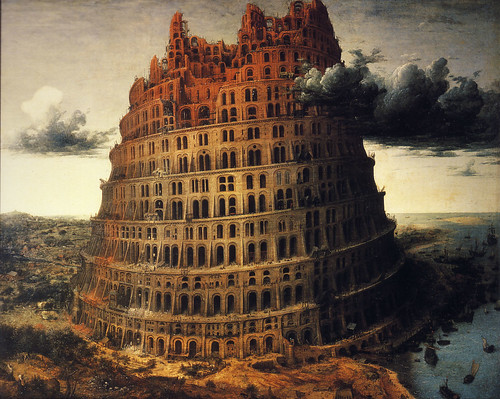
Tower of Babel

I came across this memo written a long, long time ago, in a far faraway land, (to be truthful, it was a Friday afternoon and I was fed up). Certain names have been changed to protect the guilty, and don't assume the anachronistic references mean that it is of recent vintage. Consider it perhaps a glimpse at the way the software sausage is made and we all know the scandal of slaughterhouses although we now call them meatpacking plants in polite society.

The context is some wrangling where at least 6 teams were pointing fingers at each other about who was responsible for uploading some tools that The Company was using. The flow of data through the system had at length been established, and it was now a coordination problem more than a design and architecture problem. The problem was that different teams were responsible for different components. The email chain had been playing out for months it seemed. I was stuck in the middle making arbitrary decisions mainly by virtue of having written a core piece of the system. I kept asking and everyone kept dodging my increasingly pointed questions. And so I wrote the following:

Previously in the same vein: Version Hell


The Memo


From: Koranteng@Toli
To: A long list of interested parties
Date: Friday afternoon, a long, long time ago
Subject: Toolchain versioning Re: provide version number Re: Signing Re: [snip]

I want to tease out the various strands because I'm finding it hard to serve the competing masters here.

Let me pitch it as a folktale, it's a pandemic and we all need comforting narratives.

Master Johnson, my director, would be paraphrased as follows:

Our current process is the moral equivalent of taking a USB stick dropped by our Vendor in our parking lot, and placing that software in our august data centers to sign our Crown Jewels. Now this may be what we're reduced to, but don't blindly use any old tools we are given, let's at least make sure that we track and bless known versions of this toolchain.

There were stronger words said at the outset back when we had our deep dive on our last integration project late last year.

Master Security Team pitched in, again paraphrasing...

Well, in this sorry business, we've normally done integrations of these tools for a given year. We're already overtaxed and busy and we burn weekends to get the integration working. But once we've got it working, we've got clean hands. We don't touch it anymore unless there's an error using them. We're not happy with this but ye olde signing tools ultimately come from the Ministry of Information team. We're middlemen here and the Signing and Software Release teams are the ones that integrate these tools into The Company's IT solutions.

Master Ministry of Information Team is also in a pickle. He receives vendor builds and has to produce release builds with the help of Butler Jenkins. These blasted tools are just one piece of the overall puzzle (you should see what else is on his plate). His main requirement is to be able to reliably sign and update this software for the lifetime of The Product, a decades long quest.

His junior sister, Miss Android Team actually works closely with Messers Qualcomm, Broadcom and Intel, and gets periodic updates from Vendor Google who changes signing requirements at a pace of its own choosing, those Mountain View people move at the speed of the web.

I'll omit the other players who are also similarly overtaxed, although I should make special mention of Mistress Software Release Team who actually owns the official release process and is always playing catch up integrating with Information and with Signing and other things I'm not even aware of.

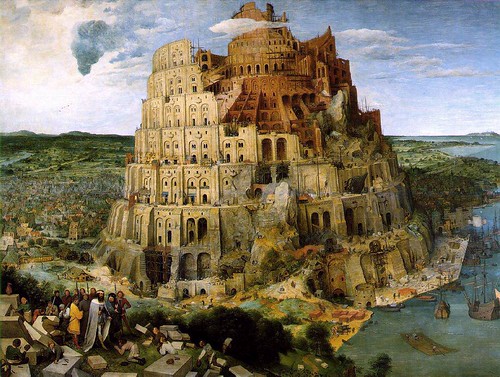
Tower of Babel

Meanwhile I'm sitting like Ananse the Spider tending to my farm in the land of Signing and perhaps you can see the roots of my dilemma:

Each build could have a new version of the dismal signing tools.

Per Master Johnson, I can't blindly just sign with any old version of the Signing tools I am presented with. That man signs off on my annual review, so I cross him at my peril.

Per Mistress Software Release Team, I have a frozen API in place which doesn't specify the toolchain version. In any case, there is a long chain between Android, Information, Software Release to Signing, and the lead time to change things is measured in the cost of "Projects". We are booked for months, nay years ahead and agility is a problem here at The Company - The Company's initiatives on agility and the cloud native adoption notwithstanding.

Anyway my solution, as it is, is that I will support "blessed" versions of the toolchain. All that is left is for someone to upload these versions.

Now I'm stuck in the middle of all this, and so far it has been yours truly that is arbitrarily uploading versions of the toolchain based on what I've seen coming through in our test environment. I actually don't know what is a significant version and I don't really want to be in this loop. Further I am making decisions above my pay grade without any domain knowledge of these dismal signing tools.

The details matter and someone needs to own this and solve my riddle.

Again
  • Who is it that uploads the "blessed" versions of the toolchain to Signing?
  • More fundamentally, who decides what is a blessed version of the toolchain?
I'll end by invoking my friend Sam Ruby's Postulate
The accuracy of metadata is inversely proportional to the square of the distance between the data and the metadata.

I am clearly furthest from the data, so somebody closer needs to make the call. Perhaps I'm reading from the wrong playbook, but I'm merely trying to add value here.

Koranteng
--
Chief Toli Monger
The Company

[snip distressing long chain of emails going back 5 months of people passing the buck]

Tower of Babel

Postscript


I'd like to think that my late Friday email did have the clarifying effect I intended with its visions of Ruby's Postulate and The Tower of Babel. There were certainly calls for action, and immediate action at that. I learned that I had underestimated the extent of the dysfunction at The Company. There were actually at least 8 other teams that I might have added to my folktale, and they each had their own sorry origin story. The list of people inside The Company who I learned had read my missive was impressive and growing.

There were ruffled feathers however. People who should have dealt with the underlying organizational and communication issue were upset that I had revealed it so starkly. Lots of meetings were called. Action items were issued and so forth. I was advised to let others handle things at this stage. I was also reminded of John Kenneth Galbraith writing in The Great Crash of 1929.

... the rite of the meeting which is called not to do business but to do no business...

One of the oldest, most important - and unhappily, one of the least understood - rites in American life.

Men meet together for many reasons in the course of business. They need to instruct or persuade each other. They must agree on a course of action. They find thinking in public more productive or less painful than thinking in private. But there are at least as many reasons for meetings to transact no business. Meetings are held because men seek companionship or, at a minimum, wish to escape the tedium of solitary duties. They yearn for prestige which accrues to the man who presides over meetings, and this leads them to convoke assemblages over which they can preside.

Finally there is the meeting which is called not because there is business to be done, but because it is necessary to create the impression that business is being done. Such meetings are more than a substitute for action. They are widely regarded as action.

Everyone remembers the story of The Emperor's New Clothes, I should note however that Hans Christian Andersen didn't write the sequel about what happened to that little boy and his family six months later when The Authorities could finally deal with them.

Slightly related, the Gambian proverb goes "Words are like bullets, once you release them you can't call them back.

It is said that a prophet is never recognized in his own country and the verdict was still out on if I was to become The Company's John the Baptist. I won't tempt fate and leave it to the historians to make that determination. In closing, I'll again turn to Belloc

It is always a relief to believe what is pleasant, but it is more important to believe what is true.

— Hilaire Belloc

Office Tales


I'd previously pointed to this juxtaposition, a survival guide to life in any workplace

Office life, office politics, the organization man, managing humans, the bad child's book of beasts


Soundtrack for this note


File under: , , , , , , , , , , , , , , , , , , , ,

Thursday, June 08, 2006

Boycott and The Gospel of Toli

I received a note that I almost discarded so slight was it. It was quite troubling at first glance and I reproduce it here in full; make of it what you will.

Part 3 of the Boycott Day Trinity

The Gospel of Toli


Recently scholars unearthed a scorched parchment underneath a library located in bowels of the slums of Nima, in Accra, Ghana. It was found by a young child, Wednesday born, who was playing football (also known as soccer to our American brethren). Barefoot and wearing a tattered Stephen Appiah-labeled Black Stars jersey and khaki shorts (he was skipping out of the library early), he stumbled over a wooden plank that was jutting out of the side of the adjacent chop bar, Mama Opus's Spot. At the sound of his alarming cries (something to do with nails or something), the elders were summoned to investigate the stigmatized youth and they uncovered a heavy wooden chest that led to a serpentine series of catacombs that run under the library and the nearby compound, owned by a wizened retiree who refused to give his name "What is a name after all?", but who, we have since learned, goes under the moniker of Kweku Ananse.

The paths delineated by these tunnels run along the Prime Meridian. It is well known that the line of the Greenwich Mean Time runs from fair London to the heart of darkness in Africa and passes through Nima, that dank armpit of the Dark Continent. Inscribed on the last page of the scrolls that were later discovered was a barely decipherable scrawl that handwriting experts now believe reads: The Gospel of Toli. After painstaking forensic investigations over the past 33 years, including the delicate removal of 6 films of Palm Wine, Schnapps-encrusted dust, and several layers of used kelewele oil, National Geographic is proud to exclusively announce the preliminary findings of this extraordinary and idiosyncratic document which will cause humanity to question its received wisdom. We intend to serialize the scholarly findings in the magazine.

Apparently negotiations are in progress and several Nollywood studios are leading the bidding for the inevitable film treatment. Samuel L. Jackson has been said to desire the role of Papa Ananse and that well known former child star Jamie Bell was also said to be seeking a role portraying the Messiah figure. It was unclear who the frontrunners were for the female leads, the Proud Marys of the plot although Tina Turner and Patti Labelle were whispered to be in the mix. Do note that any leaks on this topic in the so-called blogosphere should be treated as Gnostic misdirection.

The text of the Gospel hews quite closely to the Torah although there are some striking divergences in parts. The first discrepancy in this Apocryphal Gospel concerns Genesis Chapter 2 which has long been thought to read:
Thus the heavens and earth were finished, and all their multitude, And on the seventh day God finished the work that he had done, and he rested on the seventh day from all the work that he had done
Verse 2 has been radically transformed in this "extraordinary rendition" (termed for some reason in this arcane script: erustication). The verse now reads
Thus it was written that on the seventh day God grew so frustrated with things that she engaged in a boycott of all the work that she had to do.
The Good Pope, the erstwhile Cardinal Ratzinger, was said to be studying the issue closely, and his spokesman assured us that an encyclical would undoubtedly be forthcoming from the Holy Church.

Anonymous sources close to the papacy, who asked for anonymity because they wanted a Rove/Libby style protection, were quick to weigh in on the matter to our intrepid reporters.
"First of all, there's the issue of the gender of the deity. If the "s" is confirmed to not be an oily smudge, it would challenge 20 centuries of past practice, and cause us to re-examine the previously thoroughly-discredited Magdalene Propositions in a new light. Further, the notion of a boycott could be construed as an existential threat to the very authority of the Holy Church, a challenge on the order of Martin Luther's Ninety-Five Theses. About the only constructive insight I can find in this tendentious note is that God still has work to do for humanity. Lastly, I am very curious about one of the hieroglyphic symbols that is used throughout the text. The best translation seems to be a biblical concept similar to modern day voice mail. That is deserving of further study and this is where we are concentrating our efforts".
The remainder of the chapter is reproduced exclusively below. Further epistles will be featured exclusively in National Geographic and accompanying DVD and official website.

The Boycott Parable


That's it. I'm opting out. I've had enough. How the hell am I going to remember this many passwords, changed this frequently, at these irregular, staggered and idiosyncratic intervals, with these many different, obscure and undocumented restrictions, with all these different regulations on how often one can repeat said passwords and usernames? Oh sure I can, and do, use Password Safe to manage these things but still, having reached 50 different passwords for the various applications and databases I use, I might be changing things every week...

And now this insanity is being applied to the voicemail systems, increasing the length of the passwords beyond comprehension. I'm supposed to type this absurdly long and ever-varying chain of alphanumeric characters on a numeric keypad? Usability right? It might have made sense on paper to "strengthen password requirements" but did someone actually try to enter that many characters on that small a device?

I give up.

The figures are there I'm sure; someone deep in the bowels of the corporation can calculate the amount of help desk incidents devoted to resetting passwords. Or maybe not, that could well be an outsourced component. In all likelihood this same recipe is cooked in all companies

The Regulation Twist

  • Apply some IT Corporate security standard or other. The actual standard doesn't matter, the most important component is the security bit.
  • Lather with some bureaucratic bromide from the ivory tower, "Operational execution" or similar
  • Rinse with an outsourcing and "efficiency" rationale, belt tightening "to beat this quarter's numbers".
  • Sit back and watch employees do the regulation twist.
I'm working on a toli remix to update the song and dance with a funk break beat; I never realized that the phrase and phenomenon of breakdancing was an ironic commentary on modernity and ludicrous "traditions".

The Great Game of Sarbanes-Oxley, Homeland Security or IRS regulatory arbitrage proceeds apace - a typically American corruption of process that leads to dysfunction, to sleaze at the seams, and absurdity in general.

I know I'm tilting at windmills here but I thought that we were about emphasizing the people while paying lip-service to the process. (Cheers Coté).

Arrggh.

To all correspondents (and that includes my managers and co-workers), don't bother leaving me voice mail messages any longer. It's not worth it, I can only get my password reset so many times before I get disheartened. My job description didn't include daily chats with the help desk - at least I can't recall that in the pitch twelve years ago. I can hear it in the voices: "It's him again... let's take bets on how long until we speak to him". I can only be apologetic or suitably shamed so much and I've long passed that threshold of woe. I have some sense of honour, even if I'm always smiling and nodding my head... From now on try instant messaging or email or something. And even with this last I can occasionally find your signals amongst the noise of spam and officious notes. As I look at the inbox, I note:
"Your action required!"

"Your [redacted] password is about to expire"

"Your [redacted] security token will expire in 14 days"

"Important - Please read [redacted something or other in breathy tones] ...
Sidenote: I wonder why the inbox still stands at around 3,000 unread. Hmmm.

"They", that amorphous they, have finally made the barriers to entry too great and I'm demurring. I thought we were championing Sign-on Simplification in one of our Great Initiatives ™. That can't come soon enough.

I can pinpoint the moment Lotus stopped being Lotus. It was a gradual process and ironically "process" was the culprit. Was it the computer security requirements? Was it that "mandatory legal training" thing to which one needed to breathlessly comply "by tomorrow" (on top of the Business Conduct Guidelines we sign off on every year without fail)? Are we like the American army in Iraq, 3 years into a war and now having to undergo "values training" and re-education about "quaint" Geneva conventions? After a while all these processes became overbearing and I knew I was no longer in Kansas (or Cambridge) anymore. Oh sure I do get work done and I've installed those compliance-checking software thingimijigs (a.k.a. corporate-sanctioned viruses) on (one of) my machines. Still this whole Trusted Computing rhetoric sounds Orwellian...

That layer stripper Bill DeHora was going on recently about web frameworks, terraforming and such and the technical arteriosclerosis analogy is apt for organizational behaviour
It's remarkable that something like a website can have a geology, layer after layer of frozen accidents. Integrators will be used to seeing that in non-web systems. But the difficulty is you can't terraform this kind of site - reskinning means editing every single page.
We seem to be freezing processes in place as part of some intelligent design scheme, I'm hesitating here in believing that it is accidental evolution, it's rather a terraforming (or is it terrorizing?) of corporate peons. There must be a reason that that show called Office Space has been so popular or that Dilbert speaks so deftly to the world every morning.

In queuing theory and operations research one of the key things we try to measure is the balking rate, that is the proportion of users in a system who refuse to join the line or perform the task, and leave for whatever reason. In physics the analogous concept is branded as dark matter and apparently the majority of our universe is made up of this substance. It's been over a year and I still haven't finished writing that article on the dark matter of communities but it looks like I'm accumulating source material daily in my company conclaves. If you want us to use tools to get work done, don't make the process so overbearing that we balk. Or perhaps that's the strategy, as in politics, if you make things distasteful enough, perhaps you can appeal to apathy in your opponents and your motivated base will be the only ones that show up on election day.

Then again, and I repeat myself here, there was that email that I received a couple of years ago asking me to validate that I really did need my office phone (Bean Counting on a mission to Planet Absurdity). And while repeating myself, this is a matter of community dynamics:
The identity of a community is to be found in the most unlikely of things. The things that draw people together to form a cohesive whole are not the explicit things that one thinks, it's not a kind of warlike territoriality or dedication to some mission statement or other, it is rather in small insignificant items that the tribal instinct is articulated.
What are we saying to ourselves when we let patently-ridiculous processes run our lives, when we live in fear of an amorphous "them", when we huddle together and decide not to make waves.

Ben Hyde who makes it his business to study organizational politics and networks recently pointed to an old piece about Exit, Voice and Loyalty that is worth repeating
Members of an organization have three broad choices about how to respond when the organization goes into decline.
  • Exit - They can leave.
  • Voice - They can argue for change.
  • Loyalty - They can remain silent and loyal.
It would be a stretch to say that a company is in decline based on contortionist password requirements for voice mail and I hope I'll be taken to task for even indirectly suggesting as much (for the record, and for gospel readers who can't get by the rhetorical filter, I'm not suggesting so). Still what is it that they say about canaries and mineshafts?

Having read The Organization Man, I am mindful of leavening my dissenting voice with the necessary amount of honey or satire to make it go down well, and agitating for sanity by considered argument, running code, and the occasional call to arms. Still when you focus on small things as your strategy you often loose heart at the repeated losses in your daily battles. I do try to choose my battles with care and I hope this voice mail business isn't my last stand, last straw, or tipping point following Mr. Gladwell.

The Boycott Epistle


  • Elmore Leonard - Last Stand at Saber River

    Elmore Leonard - Last Stand at Saber River

    This is one of "Dutch"'s great westerns, taut, stark and poignant. Like the major protagonist, I just want to be left alone minding my flock and family or something and getting work done.

The Boycott Hymnal

  • Jerusalem (traditional)


    My second favourite hymn is Jerusalem with words by William Blake. My family is fairly secular in its religious traditions with an interesting mix of the devout and the dissolute. The one thing we have in common is a love of hymns. Even the Fabian Socialist types will sing along with the Presbyterians, the Anglicans (Episcopalian for the Americans), or even the normally sedate Quakers and part-time African traditionalists. It is quite interesting that Jerusalem unites us, especially given the lyrics.
    And did those feet in ancient time
    Walk upon England’s mountains green?
    And was the holy Lamb of God
    On England’s pleasant pastures seen?

    And did the Countenance Divine
    Shine forth upon our clouded hills?
    And was Jerusalem builded here
    Among these dark Satanic Mills?
    In boarding school in England I had a friend, Adeel, from the United Arab Emirates, who used to chafe about being forced into our daily chapel services. He was becoming quite a devout Moslem and used to get into furious arguments with House Masters and such about his attendance. The Brits don't believe in separation of church and state and, in an independent school, we know well what force his words carried. We had fought similar battles to no avail but we watched the conversation with amusement over the two years we were classmates. It was always incongruous to me, that my Third World crew of friends would spend our days learning about the outrages committed against our ancestors in the colonial past and post-colonial present and that we would then gather every morning to sing about fair England and the like. Those missionaries got us with their hymns, psalms and that Song of Solomon business. As a sidenote: currently, one of the most popular ringtones in Ghana is the Hallelujah chorus.

    The funny thing is that both of us, Adeel and I, loved this hymn and we could often be found singing it aloud in the most inappropriate of places, sad fellows that we were, we lost a lot of credibility especially with the fairer sex... For some strange reason we loved the line about England's mountains green. I still do.

    I've been thinking seriously of late about this notion of pleasant pastures and perhaps I've been lucky to have found Lotus's equivalent in the community I've been working with over the past decade. On the other hand, blue industrial soot is looming large these days and reviving my childhood asthma... Still I take heart in Blake's protestant work ethic and existential defiance
    I will not cease from Mental Fight,
    Nor shall my Sword sleep in my hand,
    Till we have built Jerusalem
    In England’s green and pleasant Land.
    I must want to build Jerusalem or something...

    The dark Satanic Mills are password requirements and version hell.
  • To Hunt the Wren

    This traditional was the other standby around Christmas time at Aldenham although this was more properly a Boxing Day song. As I remember it, the lyrics were
    Where are you going?
    To Hunt the Wren
    This Christmas morning
    Calls for hunting them

    How will you kill him?
    With sticks and stones
    Hatchets and cleavers
    Honouring his bones.
    It's quite a bloodthirsty song but, sweetly sung, it is as soothing as a Spanish Inquisition. And why not bushmeat or grasscutter, I always wondered, even as I sung Alan Vening's arrangement? When was the last time an African hunted a wren? Still I feel like a wren these days with these passwords being the hatchets and cleavers honouring my bones. Not to mention that the song didn't conclude on an upbeat note, the bit at the end was about
    Yea and Requiem
    Yea and so Amen
    All together now.
  • Michael Jackson - Man in the Mirror


    Keeping things on the gospel front with a soulful tinge, we turn to Mr. Jackson's great anthem, one of my favourite songs of his.
    I'm starting with that man in the mirror
    I'm asking him to make that change
    If you wanna make the world a better place
    Take a look at yourself and make that change.
    There was a performance at which he was so in the moment that he dropped to his feet dramatically during the energetic chorus and split his shins which meant that he couldn't do all the usual moves and limped during The Way You Make Me Feel which followed.

    With regards to my theme, it is sad that MJ changed his appearance and that I'm now boycotting my voice mail. I don't quite think that that was the underlying message of the song but perhaps the Corporate Song booklet could be augmented with this track, especially that "take a look at yourself and make that change" line.
  • Al B. Sure! - Had Enuff


    Have you had enuff? Swingbeat ebonics from the great Al B. With his exclamation point on the Sure! serving as a precursor in punctuation prolixity to Yahoo!, this is an offshoot of the irritation playlist.
  • Prince - Golden Parachute


    This song, on the unreleased High album, is the current soundtrack of my low life. I do wonder about the faceless executives who signed off on the changes to the voicemail password requirements. I wonder about the nature of their pastures. Are they still with us in the commons? Do they have assistants that handle their telephony arrangements? Or am I the only one struggling with this? Can I get a golden parachute to cushion my forthcoming fall?
  • Abide With Me by Henry Francis Lyte (traditional)

    My favourite hymn hands down is Abide With Me, it has everything you could ask for, the lyrics, the melody, the comfort provided by the performance etc. Thelonious Monk did a 55 second rendition at the start of Monk's Music and that was when I knew that I loved Mr. Sphere. On that album, it was followed up with Well, You Needn't and that's the right idea for a boycott especially the point at which the exuberant Monk shouts "Coltrane". The rest is history and Monk is the truth.

    Thelonious Monk - Monk Music

Today is Boycott Day in this joint and with this, the third part of the Trinity, the Holy Ghost can be assuaged. I suspect that I've gone on entirely too long and crave your indulgence if you've read this far. Thankfully the World Cup beckons so maybe I'll shut up about these small things (for the next month or so)... Perhaps...

So dear toli readers: can I get a witness? What are you boycotting these days? Or to put it differently, when was your last boycott day? And when is your next one?

Boycott!

The Boycott Day Trinity is a minor diversion in the Things Fall Apart series.

File under: , , , , , , , , , , , , , , , , , , , , , , , , , , , , , , , ,

Friday, February 17, 2006

Version Hell

In the beginning we called it "CoolCodename". But that was then... That was before fate stepped in. A one-act play...

[Demosthenes is lying on his chaise longue, eating grapes, he appears to have been in this state of lassitude for a long time. Ctesiphon enters stage right in a hurry, he appears dishevelled.]

Demosthenes: [between munches] So what's bothering you, Ctesiphon? Software got you down?

Ctesiphon: The software's no problem, it's the naming thing. Those Gods are capricious beasts.

Demosthenes: [puzzled look]

Ctesiphon: I mean its the version thing. It's the fact that there is no longer an XYZ 2.5, it's now ABC 2.5.

[he continues, gesticulating wildly]

Did you know that the ABC 2.5.1 stream into which I've checked in 8 bugs was renamed on Wednesday to be the ABC 2.6 stream?

Demosthenes: Slow down a little, let me get it straight. There's a 2.5.1?

Ctesiphon: Slow down? Demo, 2.5 was last month's story, it's all 2.5.1 these days. And 2.6 of course. Yes. Well...

[slowly now, pausing to collect himself]

The ABC 2.5.1 project was renamed to ABC 2.6 after people like myself had been checking things into it for weeks. Ergo, post-facto crapulum.

Demosthenes: Hmmm. Ipso facto absurdum.

Ctesiphon: Greek not Latin, where's your classics, you anachronistic orator. This means that I have to recreate all my activities and redo the check-ins into whatever project is now supposed to be ABC 2.5.1.

Demosthenes: But I heard from the Oracle that the latest thing was XYZ 2.5, I mean JKL 2.5.

Ctesiphon: Rebranding they call it, that's the thing with Delphic Oracles... [pauses] Then they pretend that we were always calling it ABC 2.5 and not XYZ 2.5 and that we were always calling it JKL 2.5 and not CoolCodename. But that's a seperate issue. Don't get me started.

[he starts pacing up and down the stage, suggest crackling thunder in the background as he enumerates each point]

What gets me steamed is that

  1. They only told us now (Friday night) that the ABC 2.5.1 stream is open for submissions, and
  2. All submissions are due by Sunday, and
  3. The ABC 2.5.1 stream is now the ABC 2.6 stream, and
  4. The place to check in the ABC 2.5.1 fix is the old XYZ 2.5 stream which was not renamed to ABC 2.5.1
  5. And... oh forget it, who knows what the ABC stream is for....
Thus when I check in for ABC 2.5.1, I have to remember not to use the streams I had created, named ABC 2.5.1, but rather the old stream called XYZ 2.5. Reductio ad absurdum.

Demosthenes: [After winking at the audience] But I just read this week's scrolls, it was all about 2.6. What's going on, Ctsey?

[Ctesiphon becomes manic as he replies, perhaps his toga starts coming loose]

Ctesiphon: Which 2.6, I ask? Which 2.6, Demo? Let's not mention that we are going to have a new release of XYZ. They only tell you later. As you know XYZ 2.6 is based on CoolCodename, I mean JKL 2.5, but they'll be wanting some of the fixes from ABC 2.5.1.

[louder]

So this Saturday, after I finish merging my work into ABC 2.5.1 in the old XYZ 2.5 streams, I'll have to find the new streams for JKL 2.6, whatever they are named, because they won't do automatic merges. Then I have to diff the 2.5.1 code against the JKL 2.6 base (I mean the XYZ 2.6 base) and take only those changes that are in ABC 2.5.1 and hand-merge them.

[Even louder and faster]

But of course, they made some security fixes for that Trojan issue in JKL and so the security model has changed because the SMB market you aren't guaranteed to be using DBO instead it's XBO or SBO. And of course, there is no machine to test any of this stuff whether ABC, XYZ or JKL. Come to think of it, I've only ever tested my patch on a old build of ABC 2.5 that was using DBO, I never tested with...

Demosthenes: All right, all right... [winking again at audience then patting Ctesiphon on the back]

You better get some sleep, sounds like you've got a busy weekend ahead of you.

Ctesiphon: That Sisyphus had it good, the boulder always rolled down the same hill.

[Demosthenes walks him out stage right. Comes back alone, pours himself a goblet of wine, sips it and sighs... looks straight at the audience.]

Demosthenes: That's the thing about managing engineers, you've got to tolerate all this background noise. [Picks up a grape and sits down]

[Curtain falls.]

Note: the foregoing is a work of fiction, any resemblance to actual persons or products is entirely coincidental. Your mileage may vary. Always fasten your seatbelts when on a chariot. Objects in the mirror may be closer than they appear. Do not drink and drive.

Further reading

Soundtrack for this dialogue

Playwright's Note


A number of people have been reading themselves or their products into my little tale of version whiplash and confusion and I've even been asked to decode ABCs and JKLs. I rather thought the point was that the three letter acronyms didn't matter and indeed will change without notice until something sticks in the market place (ESB, SOA etc)

I will admit that almost all the lines of dialog sounded vaguely familiar to some, "verbatim" was what a friend said. But really, it's just fiction...

Still one might well construct a parallel universe in which CoolCodename might be "Portal" or "Workplace". Lotus Workplace (LWP) might become IBM Workplace and then might morph into Workplace Collaboration Services (WCS) for a while. Product managers might get the idea to attack the SMB market and turn a "lightweight" WCS into a CoolCodename-d PortalX which might in turn become Workplace Services Express (WSE) and then you might need to get version so-and-so out for... Well you get the picture.

It's all Greek to me.

See also: Version Hell Revisited

File under: , , , , , , , , , ,

Friday, March 11, 2005

The Long Tail of Software

It's always gratifying when people independently grapple with the same ideas as you and come up with different perspectives. Even better is when this becomes a conversation such as the blogosphere can serve up and aggregators can monitor...

I've recently been ruminating about People, Processes and Things and so, I was immediately drawn to Joe Kraus, erstwhile of Excite and Jotspot founder, who delivers a wonderful essay and insightful presentation (PPT) about The Long Tail of Software. Read it for the concentrated insight and great care with which he makes his argument - borne of the practice he's gained pitching his company for the past few months.

Handwaving a bit here, he essentially takes on Barry Briggs' notion of The Decade of Process - anointing the primacy of processes in business, and adds the key insight of the necessity of lots of customization (since no two businesses do things the same way) and also that processes continually evolve. Then he melds it with one of the most successful memes in technology of the past year, The Long Tail concept, lovingly detailed in Wired, pondered in a blog and due, for a book, and triumphant tour ala Malcolm Gladwell or Jared Diamond real soon now.

Having seen great demos of Jotspot and the way it handles schema evolution, about the only thing missing in the product is an explicit addition of tagging and metadata ala del.icio.us for it to be buzzword nirvana. It's almost there. I'll try not to be too flippant nor indeed, something of an echo chamber, since I obviously think there's the kernel of a very powerful notion here. Annotating and customizing business processes seems to be an interesting space in today's software world.

Suffice to say that this bears attention especially since the venture capitalists haven't drenched this sector as yet. I'd hazard though, that a pitch like Kraus's could well be the spark that makes things combust, especially when there are so many memes to mine. The big integrators and consulting firms have long been in this space as have any of the platform vendors and they will be tenacious competitors. I'd hazard that Jotspot or SocialText are already keenly watched by those who do strategy and marketing, if only so that sales teams have a response ready for competitive bids.

For larger businesses, it has always been ease of integration with existing infrastructure that matters when it comes to purchasing decisions. The insight of the Long Tail though is that there are huge opportunities in targeting small and medium businesses, the kind that the big guys only pay lip service to. It's more than enough of a market even if you don't get the WalMarts. Incidentally, Paul Graham touches on this almost in passing recently.

All this of course is predicated on accepting the primacy of the "process" view of things, I've argued that the "people" view (communication and group-forming) might be another lucrative area to focus on, and a viewpoint potentially more exciting or motivating for developers. Tradeoffs like these are the stuff of engineers or historians, entrepreneurs or CEOs, however, have to bet on something.

Lastly, wearing my prediction cap, leverage will be everything in this oncoming scramble. Web-native software (i.e. software that is easily addressible and customized) will be the fastest mover in the space. The usabilty issues in evolving schemas and handling annotations are going to be the key differentiator. There should be lots of give-and-take in the software that ensues because real world processes are forgiving. There's always someone who knows how the process is meant to work no matter what the rulebook says. Our research folks and product development teams are going to be burning the midnight oil and that's a good thing. Kudos to Krause and others for the exhilarating glimpse of what is to come. Like Miles Davis said, "I love tomorrow".

File under: , , , , , , , , ,

Monday, February 21, 2005

People, Processes and Things

A product I worked on a few years ago had as its mantra: "people, processes and things". As a marketing message, the slogan's usefulness left a lot to be desired; the catch-all "things" seemed an imprecise cop-out at best. The product dutifully died a quiet death even if it is being reinvented these days. As a rough taxonomy of software applications however, the slogan was a serviceable description of the different areas we focused on. Software architecture is difficult to articulate in any case so fuzzy handwaving of this sort is the norm.

Two recent posts gave me cause to revisit these notions. The earlier one, from Barry Briggs, was a speech wherein he anointed this era the Decade of Process. The second was Jamie Zawinski's takedown of "groupware". Both are interesting takes on these different approaches to software.

On People


Writing in his ever quotable and blunt way, jwz packs a lot of insight into why it's a case of "Groupware BAD... Users Good".

On why people want to write software:
Our focus in the client group had always been to build products and features that people wanted to use. That we wanted to use. That our moms wanted to use.
Adam Bosworth similarly talked about the Mom factor in the design of applications.

More generally, he comes around to one of the pithiest definitions of social software.
So I said, narrow the focus. Your "use case" should be, there's a 22 year old college student living in the dorms. How will this software get him laid?...

"Social software" is about making it easy for people to do other things that make them happy: meeting, communicating, and hooking up.
There's lots more in this vein: why words like workflow or enterprise make his eyes glaze over, why groupware is an albatross, how that kind of software is not sexy etc.

The wider insight however is that Zawinski's argument is about focusing on people. It's a recognition that human beings are simply very social beasts and that we place a premium on communications. That's why phone, email and instant-messaging are the big applications of the day. When designing applications in this space, it's mostly a matter of getting out of the way and letting exchanges and interactions occur. Browsers and the web servers are some of the best software incarnations of this principle.

This focus on people, on connectivity and on simple communications is all part of longstanding historical trends in transportation and communications systems. This has been covered most fully by Andrew Odlyzko you can read him on read on why Content is not King, or more exhaustively on the history of communications and its implications for the Internet (pdf).

Among the core architectural principles of the internet are things like the "end-to-end" principle and internet transparency. I like to think of these as engineering tradeoffs in network design that are premised upon the virtue of connectivity. The network "laws" that apparently grow out of these design principles are things like Metcalfe's law on network utility or Reed's law on group-forming. These ideas embody more than mere connectivity however, and the software that builds on top of them is similarly diverse.

Once you move beyond simple person-to-person communications and information sharing, you get into what is the daily bread of those folks at CUE and Many-to-Many and begin to consider the ways in which humans organize themselves. You very quickly start talking about interaction trends in families, clans, tribes, groups and more generally about communities. This "stuff", the cement of society, if you like, is something that sociologists or anthropologists have greater facility in describing and something that software developers have, on the whole, done a poor job of translating.

When you consider how organizations operate there's lots that is implicit and most software has been a blunt tool where a light touch has been required. Just as an example, in most software, things have to be explicitly stated: I'm a member of this group, so-and-so is my friend etc. And even when software can infer or recommend things, oftentimes it is inexact and requires much fine-tuning and/or constant training.

If you take a wider view, you move from the realm of sociology and begin to talk about economics, about commerce, about capital and about ultimately about power. Once business and money comes into it, you understand that are vast quantities of software that address the needs of these other entities. It's obvious that not everyone will be able to write software like Zawinski has (Netscape) that has indeed changed the world and can be strictly focused on users, connectivity and communications. What makes users happy often doesn't coincide with what makes businesses happy - and as for the matter of motivation of software developers, the most salient fact is that businesses tend to pay large and regular amounts.

On processes


I'd argue then that the picture is wider one than simply "people" and that's where I'd return to Briggs' piece on processes. I didn't know Briggs when he was at Lotus but it's clear that we've drunk from the same Kool-Aid: I've used similar examples as he in presentations in the past year, working as I am on forms technology, namely:
Five thousand years ago on Crete people wrote documents in a script we later termed Linear B. When Sir Arthur Evans at the turn of the last century unearthed the tablets at Knossos, the world wondered at them, but for decades could not read them. Then, in 1940, a British scholar named Michael Ventris announced to the world that he had, in fact, deciphered the tablets and that they were in a form of archaic Greek

The world held its breath. Were they previously unknown epic poems, like the Iliad or the Odyssey? Were they great plays by some long-forgotten ancestor of Sophocles or Aristophanes? Were they philosophical discourses by a forebear of Socrates or Plato?

No. They were lists. Lists of sheep. Cows. Horses. Slaves. What we would call today inventories, bills of lading, invoices. To our chagrin, we realized that then, at the dawn of history, these citizens of archaic Greece -- like those of Sumer in the Fertile Crescent of Mesopotamia, like those in Egypt -- lived in a rigidly bureaucratized dictatorship.

They were empires of accountants.

Why do I recount all this? Because our little tale highlights something important, which is that commerce, trade, and the documents that record them lie at the core of the human essence. We are creatures of commerce; it is innate to the very notion of humanity.
Brigg's point is that even though we have wonderful things like literature, it is likely that the invention of writing systems was prompted by mundane bureacratic concerns. He goes on from there to sketch a vision of the type of software that can be created in this area. As befits a speech, there's a little hyperbole in what he says but also an essential truth: process isn't the sexiest of things - but it's an integral and necessary component of society.

As we translate increasing amounts of processes into software, one hopes that we can learn the lessons of the most satisfying aspects of software. At its best, process should be frictionless and unobtrusive like most infrastructure. Why spend an afternoon at the registry of motor vehicles going from queue to queue, filling one form after the other when much of that you can be automated in software? What I fear is lost as we create this software are things like institutional memory and the people-component (the man who explains what that checkbox really means, being able to scribble in the margins of a form, what happens when the next person in a "workflow" is out of the office, or his mail quota has been exceeded etc). There's lots of room for innovation and improvement here.

The terms that have been used about software that aids collaboration have all been unsatisfactory. They have been mostly opaque terms (groupware, knowledge management etc) overloaded and hyped by marketing teams. Correspondingly also, lots of software in this area has been unsatisfactory even if very useful for some groups whether it's mailing lists, usenet. The flight to a quality term like "social software" that people like Clay Shirky have spurred in recent years is an exercise to escape the stigma of the reigning software. I heartily endorse that effort but when I pass the hungry salesmen in the corridor that are trying to sell software for my company, I know that that effort will be in vain. If it's between their year-end bonuses and calling something "social software", you know what's going to win. Thus I predict that our vocabulary for software that supports groups, organizations and communities will continue to be contaminated.

But what about the reality of social software? What collaboration software will be likely to be successful? For me it is clear that one has to start with the platform consideration and from that standpoint we are dealing with the internet and the web and browser clients. Web-native applications, things like wikis for example are going to be part of the picture, not necessarily because they are better but because being based on the most dominant and scaleable platform that we have is virtue enough. More generally, it is going to be applications that take into account the architecture of the web and the internet that will succeed. These will be applications that understand the proposition of identifying resources, the virtue of URIs etc. Those who ignore the lessons of Roy Fielding do so at their peril.

Software that is targeting people will live and die by usability. Those who design software that underlies processes tend to think that they are immune from this but I believe that the same basic principles of interaction design will ultimately apply. No one particularly likes the bureaucracy of process but there's a trait of subversion and resistance in human beings that will undermine any poor tools foisted on them. Paying attention to this will be an important part of success.

On Things


I'll be delphic and try to weasel out of defining what those elusive "things" are. For me, they are a convenient proxy for everything that doesn't fit within the people and process views of things. For businesses, it's relatively mundane things like "documents" that need to be "managed" or keeping track of assets or items we manufacture. Another way to think about 'things' is to consider that people are creative and exist in a culture; software can be applied to the creative process and to establish a sense of place and shared context in society. Some term it "content", more generally it's entertainment, it's the music, the movies, the books that people are interested in and want to participate in and discuss. There's also that whole segment of the software industry, games, that is highly profitable and which seems to be driving things of late - the virtue of idlenesss I suppose.

I'll end by reiterating: people need to communicate so get out of their way and let them collaborate and exchange. Groups, communities and organizations often embody processes, and when using software in support of them, aim for unobtrusiveness and, most crucially, leverage this great network architecture that we have. As for the rest, well that will sort itself out, Darwin and Adam Smith have a lot to say here.

File under: , , , , , , , , , , , , , ,