Tuesday, February 22, 2011

He of The Little Green Book

Events are fast outpacing the best laid plans of both dictators and mere toli mongers, thus, although the theme fits the bill, I have had to bring forward the piece I promised almost four years ago as a follow up to the theater of that secret video of Gaddafi that was leaked to me. The current atrocities and low rent circumstances however necessitate light verse, or even doggerel, rather than the intended prose poem. Thus I give you another entry in the Things Fall Apart Series, file this under the banner of Fallen Angels.

I. He of The Little Green Book


He of The Little Green Book was in Paris the other day
A grand tour, part of an awakening some might say

Hospitality and social graces were extended his way
Amnesty International had to make do with dismay

Inconvenient topics, blood and sin, never to be discussed.
He went hunting, or, as his hosts put it, faire la chasse.

The tumult of the entourage and the ceremonial band
The customary bodyguards, as always, were close at hand.

He pitched his travel tent on the lawn of the Grand Palais
And lectured his hosts on human rights throughout the day

An oasis of oil and gas under his land
He'd built up a legacy of blood-soaked sand.

Self-importance, one can always understand
The revolutionary principles, however, damned the man.

Epigrams, ludicrous even without translation
And with translation, worthy of the blandest corporation.

Claimed to be a Guide with revolutionary notions
To life, the Brother Leader presented solutions

You've heard no doubt about the "Third Universal Theory"
And of course "The Solution of the Problem of Democracy"

"The Authority of the People" was his starting point
His modus operandi however was blood, from joint to joint

The social and economic basis of this here distributed theory
Was, in practice, a political axis of corruption, not the first in history

Newspapers throughout Libya were organs of adulation
He of The Little Green Book, officially venerated as a philosopher-king

...

Back home in Ghana at the depth of our despair
When books were scarce, and food shelves were laid bare

He of The Little Green Book made a donation
A token of the good Colonel's appreciation

A thousand copies of The Little Green Book
Brotherly solidarity, extended to the Ghanaian pocketbook

The generosity of his wisdom, to be shared far and wide.
Our universities, the recipients of his vacuous bromides

We'd learned heavy lessons about what he called revolution
"Crush the dissent", "Don't brook any opposition".

Thus, ever since the Flight Lieutenant's arrival
We'd had to develop a new philosophy of survival

At markets, we would fight over corned beef and sardine tins
Throughout I kept asking myself: why are these men laughing?

Rawlings and Gaddafi on cover of Talking Drums magazine 1986-01-13 - Ghana stands by Libya in US dispute - Doe pledges reconciliation


...

He of The Little Green Book was in Italy the other day
Introducing good old Silvio to a rarefied kind of play

Bunga bunga parties were on the menu
Gas and oil deals discussed, and matters of revenue

On Putin's bed, it was eroticism incarnate
Sexual gymnastics, the orgies very intricate

They were men who thumbed their noses at everyone else
Impunity their lifeblood, they were enamoured of self

A cushy life, lived surrounded by buxom Ukrainians
They were gremlins and parasites, or rather, rogue authoritarians

Mercurial, the journalists would call him, and I think it was a cop out
For he was severe in the application of power, of that there can be no doubt

Adept at the shell game of diplomacy in latter times
Don't forget the expedient dumping of allies at the drop of a dime

There's even an opera about him, Gaddafi, do take a look
Although it points out inconsistencies in The Little Green Book

Fear not, in the pantheon where Chairman Mao had his Red Book
You can share the luminous thoughts of He of The Little Green Book

A slight never forgotten, that's what brought him here
The clannish sensibility of a cold-blooded dictator

He of The Little Green Book thus always made it clear
He'd kill you and your family no matter when or where

Stories of plots to bomb dissidents in Kenya, Egypt or Saudi Arabia
Only made it clear to everyone that the world was his oyster

In newspapers, the subject was always elided:
The khat, and other drugs that made him funeral minded

Conspiratorial notions were his living condition
He ascribed drunkenness and drug-taking to any opposition

...

He of The Little Green Book met Vladimir Putin the other day
It was the usual circus, the large retinue come what may.

Luxurious modesty was how he liked to call it,
He lived for the bustle around him, confident he could take Putin's judo hit

Like a palm tree rising in an oasis surrounded by blight.
The other leaders would be shown in their proper pedestrian light.

The desert savvy, the endurance of those who were truly able
By sheer will to conquer the shifting sands, of that he was quite capable

For months at a time he would go out there on a bend
Then emerge seemingly untroubled if not exuberant.

Men of will who forced their views on clans and the whole world.
The caliber of revolutionary, visionary men on the road to hell.

Take The Little Green Book - a blueprint for life itself,
To be studied and internalized, it even dealt with public health!

An unbroken chain of leadership, he outlasted Chairman Mao.
Who else had such a claim? He even beat Omar Bongo.

And that kleptocrat, only the French cared about him
The real prize, as you know, was to indulge in blood and sin.

No, it was only right, he belonged in the history books.
In any gathering he would stand out, opinions as sharp as his looks.

And he had put them down - the opinions that is,
Distilled them for present and future generations.

The Little Green Book, the wisdom for the ages.
A guide for the world, a guide for revolutions.

Battle-tested in countless countries, comprehensive and worldly
Luminous as only the folk wisdom of desert guides could be.

...

He of The Little Green Book met Tony Blair the other day
That sad sack, for whatever reason, again thought he'd have some sway

He of The Little Green Book couldn't believe the ease of the bamboozle
Of course, we could have told him he was dealing with Bush's poodle

Then later, remember, there was an audience with Condoleeza
And a call subsequently for a United States of Africa

US policy to the dictator was clear: coddle and let's make nice
His gifts, in return, were choice to the talented Miss Rice:

Diamond trinkets, a locket, and a copy of The Little Green Book
A sidelong glance, oil and gas contracts were the inevitable hook

Those Swiss bank accounts, how prosaic wouldn't you think?
Well, even an uncommon criminal needs money to drink

A bloodthirsty murderer that we indulged like no other
Willing to shoot children before their own grandmothers

He'd even bomb bystanders, he didn't believe in innocence
The legacy of a pariah devoid of all human sense

Months later it was declared, and this was no small thing,
Colonel Gaddafi would be the king of kings

Thus, among traditional leaders on the continent, he was elected
Well, according to his bank statements, he was rather self-selected

Gaddafi king of kings


...

But back to that time period I alluded to earlier
In a Ghana fraught with dubious revolution and political theater

Perhaps I should not venture into matters eschatological
As indeed my doggerel rather tends towards the scatological

Let me not lose the rhyming meter, indulge my light verse
I'm congenitally incapable of engaging in anything terse

My father, the law school dean, was very precise
And, truth be told, what he recalled back then wasn't very nice

Thankfully it flew under the radar of Rawlings' dispensation:
It was about the application of the good Colonel's donation

In Ghana's scarcity, nothing went to waste:
'Twas a grim outlook

He'd photocopy his lecture notes for students;
They'd have to do as a textbook

As he thumbed through thousands of the Colonel's pristine pages
He was minded that, in our country, there were even paper shortages

We really had no time for this Third Universal Theory
It was a undoubtedly a low moment in all of Ghana's history

The memory, then, should come as no surprise to you, Dear Reader:
The pages of The Little Green Book were used as toilet paper.

...

The Little Green Book  is dismantled


II. Excellent Discussions


The issue was blood and sin.

III. Lest We Forget


Field notes on a legacy of blood...
Prosecutor: Was there ideology taught in the camp?

Witness: Yes, what we learned in the Mataba was about how to share the wealth of your government - about the distribution of wealth.

Prosecutor: This Mataba, did you receive any books or lesson papers in that ideology?

Witness: The ideology was taught in Mataba itself. They had a school to learn the ideology. You learned about the Green Book. How governments are cheating other governments.

— Taylor's former vice president: governments of Libya, Burkina Faso and Ivory Coast supported Taylor's 1989 invasion of Liberia

Prosecutor: At what age do you say you were abducted by the RUF?
Witness: 11 years.
Prosecutor: Had you been to school up to that time?
Witness: Yes.
Prosecutor: In what languages were you taught at school?
Witness: English.
Prosecutor: From what age did you attend school up to the time you were abducted at age 11?
Witness: I don't know the age at which I went to school. I don't know the age.
Prosecutor: How many years had you been in school by the time you were abducted at age 11?
Witness: Six years.
Prosecutor: After you were abducted, at some point you have told us in evidence you had some lessons from the RUF. That's right, isn't it?
Witness: Yes.
Prosecutor: Were you at some time made to read passages of Colonel Gaddafi's Little Green Book by the RUF?
Witness: The Green Book. They called it the Revolutionary Green Book. They said it was from Libya, from Mohamed Gaddafi. Yes, I read that one.
Prosecutor: In what language?
Witness: In English. Everything was in English.
Prosecutor: So you speak good English, do you?
Witness: The English that I can speak is what I am speaking here. I don't have any other English. As you hear me speaking I don't have it above that and I don't have it below that. That is what I am speaking here.
Prosecutor: So, what was taught in English apart from the Green Book?
Witness: The Green Book when they read it they would read it in English and they would interpret it, because there were people who did not understand English and so they would interpret it into Krio to them, but some of us who were able to read a little bit when they spoke the English we would understand. That was why I said everything was in English.

— Transcript of child soldier's testimony. The special court on Sierra Leone, 22 August 2008

[Moses] Blah testified about the first time he met [Charles] Taylor during his military training in Ouagadougou, Burkina Faso, and Tripoli, Libya. In Libya, he trained with a group of Gambians, as well as a group of Sierra Leoneans led by Foday Sankoh. Blah testified that Sankoh referred to Taylor as "chief." Blah recounted that the first time he saw Taylor, Taylor introduced himself as "chief" and named the soldiers the National Patriotic Front of Liberia. Taylor also appointed Blah as Adjutant General of the NPFL.

— Charles Taylor trial report (pdf), May 2008

After listening to 91 prosecution witnesses over the past 18 months, Taylor said people had referred to his forces as if they "were brutes and savages: We are not. I am not."

Still, the former president acknowledged that skulls of Liberian soldiers were displayed at strategic roadblocks in 1990.

"They were enemy skulls and we didn’t think that symbol was anything wrong," he said. "I did not consider it bad judgment. I did not order them removed."

Taylor, who earned an economics degree at Bentley College (now University) in Waltham, said he had seen images of skulls used in many "fraternal organizations" and Western universities.

He also acknowledged that atrocities were committed in Liberia by "bad apples" and renegade soldiers, but said he had taught his small band of rebels - from their initial training in Libya - to abide by the laws of war.

"We found out that they were taking place, and we acted to bring those responsible to justice," he said. Rebel soldiers who committed excesses were court-martialed and sometimes executed, but civilian judicial institutions were left in place in areas under rebel control, he said.

— Taylor defends displaying of human skulls at roadblocks, Associated Press / July 17, 2009
He of The Little Green Book and his brothers in blood will not be missed.

Soundtrack for this note


File under: , , , , , , , , , , , , cruelty, , , , , , , ,

Friday, January 28, 2011

All Available Indignities

As the ghosts of numerous tyrants, from Julius Caesar to Benito Mussolini will testify, people are very hard on those who, having had power, lose it or are destroyed. Then anger at past arrogance is joined with contempt for present weakness. The victim or his corpse is made to suffer all available indignities.

— The Great Crash 1929 by John Kenneth Galbraith

The growth of his power and fame was matched, in my imagination, by the degree of the punishment I would have liked to inflict on him. Thus, at first, I would have been content with an electoral defeat, a cooling of public enthusiasm. Later I already required his imprisonment; still later, his exile to some distant, flat island with a single palm tree, which like a black asterisk, refers one to the bottom of an eternal hell made of solitude, disgrace, and helplessness. Now, at last, nothing but his death could satisfy me.

— Tyrants Destroyed by Vladimir Nabokov
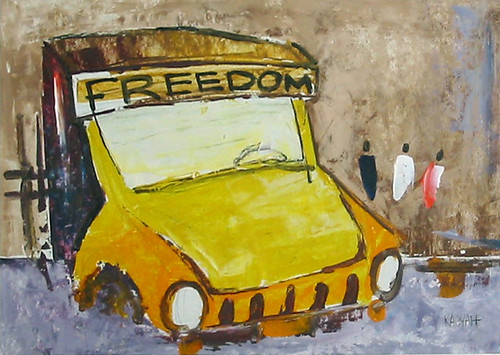
freedom kagyah
"The widespread anarchy and the disillusion of the masses... made this revolution necessary. In the years since independence, fundamental human rights were brutally violated by the government. People were denied the right to live in freedom and with mutual respect. They were not allowed to have their own opinions. Organized political gangsterism and the politics of falsehood turned all elections into a farce. Instead of serving the nation, politicians were busy stealing. Unemployment and exploitation were on the rise, and in their sadism toward the population, the small clique of feudal fascists in power knew no bounds."...

Optimism quickly turned to disenchantment and pessimism. The people's bitterness, fury, hatred was now directed against their own elites, who were rapidly and greedily stuffing their pockets.

— The Shadow of the Sun by Ryszard Kapuscinski. Here, he quoted a statement by a youth movement and observed the aftermath of Nigeria's 1966 coup.

There is no one, or hardly any one, so wicked or so stupid as to deny the democratic ideal. There is no one, or hardly any one, so perverted that, were he the member of a small and simple community, he would be content to forgo his natural right to be a full member thereof. There is no one, or hardly any one, who would not feel his exclusion from such rights, among men of his own blood, to be intolerable. But while every one admits the democratic ideal, most men who think and nearly all the wiser of those who think, perceive its one great obstacle to lie in the contrast between the idea and the action where the obstacle of complexity - whether due to varied interests, to separate origins, or even to mere numbers - is present.

The psychology of the multitude is not the psychology of the individual...

Look at a crowd when it roars down a street in anger — the sight is unfortunately only too rare today — you have the impression of a beast majestic in its courage, terrible in its ferocity, but with something evil about its cruelty and determination. Yet if you stop and consider the face of one of its members straggling on one of its outer edges, you will probably see the bewildered face of a poor, uncertain, weak-mouthed man whose eyes are roving from one object to another, and who appears all the weaker because he is under the influence of this collective domination....

Now it is peculiar to the French among the great and independent nations, that they are capable, by some freak in their development, of rapid communal self-expression. It is, I repeat, only in crises that this power appears.

— A Force in Gaul by Hilaire Belloc (from On Something)

As the Tunisians, and now Egyptians, are currently demonstrating, this quality of "rapid, communal self-expression" is certainly not a Francophone singularity. History, contra Belloc, has forever shown that crowds can turn from inchoate to determined in mere hours. All tyrants and their Lady Macbeths are on notice. Still, a little sweat on their part, and the dismayed sensitivities of onlookers at the sight of turmoil in their marriages of convenience, are, all things considered, a small price to pay.


He who tests the depth of a stream with both feet must be prepared to swim.

— Ewe proverb, Ghana
File under: , , , , , , , , , , , , , , , ,

Monday, January 24, 2011

Best of 2010

My customary list of things that moved me in 2010...

Truth be told, I was mostly consumed by the World Cup last year especially since Ghana were bona fide contenders and could have/should have gone further/won it outright. Well the boys did great: Andre Ayew, Asamoah Gyan and all. I still haven't recovered from the Ghana-Uruguay match...

So, the year in numbers: I read 37 books, watched 100 movies (blame Netflix) and attended 12 concerts and 1 play.

I didn't write as much as I hoped and one reason is that I now also subscribe to about 1300 feeds; the resulting onslaught of information coming my way makes me lean towards consumption rather than production. Here's hoping for a different balance in 2011.

Books


Novels led the way in the 37 books I read (Incidentally two of these were e-books: Hilaire Belloc's essays and Charles Dickens's serial novels were great reads for the mobile phone moments, the interstices of modern life). The highlights in print were the young African writers.

  • Nii Ayikwei Parkes - Tail of the Blue Bird

    Call it a case of deep empathy; it was the shock of the familiar. It's not often that I recognize myself on the book shelves. It was bracing to read a young Ghanaian writer, a modern traveler, equally at ease in London, the US, and my childhood neighbourhoods in Accra, and even someone who'll head up to the mountains near Aburi and make them the setting for his novel. Nii Parkes loves language and plain storytelling. My friend isn't afraid to take his time and tell stories and let them take us where they may, with humourous anecdotes and elliptical discursions thrown in for good measure. The genre and the form - the crime procedural, are almost unimportant even if finely detailed, it's the underlying story that matters. We are children of Ananse, lovers of social living, and the stories we can share. I have a deep and specific connection with his artistic impulse even when I disagree with him. To cap things off, The Makings of You, his poetry collection finally got its release in the US. Needless to say my man had a great year. I dig his brand of toli and recommend it to you. A head nod in your direction, brother.

  • Petina Gappah - An Elegy for Easterly
    Brian Chikwava - Harare North

    "They" kept saying that I should read the new crop of Zimbabwean writers, that life in the shadow of Robert Mugabe was proving to be a fertile artistic ground, that the future of African literature lay in their palms. And there was a lot to their argument, these two wrote of dark matters and it was a tonic to read them. With a blast of furious energy, their voices asserted themselves immediately. Where Gappah was wry and humanistic, Chikwava's tone was utterly bleak, filled with irony and the darkest humour. Mugabe's victims are manifold but we can always fall back on this artistic response to his reign.

    Let me digress about book covers for a minute - as you may know I have an interest in the types and faces that represent writing about Africa. Consider the journey from the cover photo in the English edition of a London market

    Brian Chikwava - Harare North cover of English edition

    to the following illustration in the US Edition

    Brian Chikwava - Harare North cover of US edition

    "Fine", you say, there's a transformation from the photo of a street scene to a quite clever montage in the illustration that further manages to throw in a few more references to London: Big Ben, tube signs and all. "I get it".

    But look closer, if you will, at the bottom corners of the latter, and note the giraffe on the right and the tree in the savanna that has materialized on the left.

    Chikwava's book is a novel about Zimbabwean immigrants in London. True, there are plenty of predators in the book but they are all too human - there is no wildlife to be found in its pages. What scenes there are in Zimbabwe are all urban.

    (Incidentally, I can understand that the same tree and savanna appear on the cover of Gappah's book since at least one of her stories has that kind of backdrop.)

    Apparently it isn't enough to have Harare in the title, and the black head and anomic eyes of the main protagonist as a signifier; that would be too subtle an indicator of Africa. I wonder if that giraffe and savanna detail was part of the cover artist Yuko Kondo's initial vision or whether it was the publisher who needed to remove any doubt about provenance. I wonder, must every African novel face the world with wildlife or the savanna as its backdrop? I'm not a big fan of the safari quotient.

  • James Ellroy - Blood's A Rover

    I am a big fan of Ellroy's Underworld USA trilogy and the intricate worlds of bad men (and women in this final part) that he has constructed: "a new myth from the gutter to the stars". Indeed I read this twice in a feverish haze. He didn't disappoint; the trilogy will stand as one of the most ambitious and resolutely executed works of the past 20 years.

  • Geoffrey Philp - Who's Your Daddy? and other Stories

    Call it Jamaican Gothic, a collection of stories full of wit and perception. His roving eye and his sharply attuned ear for dialog make for vivid reading. I also happen to love Geoffrey Philp's poetry.

  • Heinrich von Kleist - The Marquise of O and Other Stories

    Luminous stories that linger in the mind. Plots that swirl every which way, with turns at once startling and engrossing. Writing that leaves you breathless, von Kleist was peerless as an artisan of literary tectonics.

  • Geoffrey Household - Rogue Male

    A story so stripped down and spartan that the reader wants to apply metaphor to gain comfort. On the surface it's a hard-boiled thriller about life at the extremes, I came to read it as a prescient warning about the relentless challenge that Hitler's fascism would pose. What is your interpretation?

  • Meja Mwangi - Going Down River Road

    A deep dive into the slums of Nairobi. An exacting and brilliant novel that manages to find soul and brotherhood among the futility. Gappah is to Chikwava - and Kenya is to Zimbabwe in our millennium - as Going Down River Road is to Thomas Akare's The Slums.

  • Alain Mabanckou - Black Bazar

    Reads almost like a follow-up of his 1998 tour de force, Bleu, Blanc, Rouge, wonderful writing all around.

    See also: The Ways of The Porcupine

  • Emmanuel Dongala - Johnny Chient Méchant

    There's a fine translation, Johnny Mad Dog of this look at child soldiers and the damage they leave in their wake. I read also that it has been made into a film that is about to be released. I have a pending piece on the novels about child soldiers in Africa. Powerful stuff indeed.

  • Sarah Ladipo Manyika - In Dependence
    The Nigerian writers are making us all of us proud. I thoroughly enjoyed this love story full of missed opportunities.

Theatre


The sole play was Marcus Gardley's ... and Jesus Moonwalks the Mississippi, a funny gumbo of a play with soul food, slavery, Greek choruses, and Michael Jackson's Billie Jean song and dance routine at its core. Homeboy's got a unique vision.

Movies


Two trilogies brought forth the heat in my film watching.
  • Carlos the Jackal

    Olivier Assayas's take on that gremlin of terrorists featured a startling and dizzying performance by Edgar Ramirez as the eponymous Venezuelan revolutionary. There was no higher achievement in cinema.

  • Stieg Larsson's Millenium trilogy saw Noomi Rapace embody that girl with the dragon tattoo with her singular talent. Actress of the year
  • State of Play

    This BBC Miniseries was so engrossing that we had to watch all 6 hours in one sitting. Fodder for those with the journalistic impulse.

  • Prince of Broadway
    Sean Baker's vibrant take on the hustle of Ghanaians in New York is almost too realistic.
  • The Death Of Mr Lazarescu
    Quietly devastating and Kafkaesque.
  • The Secret of the Grain
    I want to eat some couscous with everyone associated with La graine et le mulet.
  • Boardwalk Empire and Treme
    The Wife and I fell for these HBO series, what can I say.
  • Bela Fleck: Throw Down Your Heart

    A great documentary on musical exploration. For me it stepped into high gear from the moment when Oumou Sangare picked him up at the airport. I saw him in concert with Toumani Diabete the previous year; it was a great collaboration, banjo met kora and all was well.

Music


I attended 13 concerts - but only blogged about one - adding to the pile of lost reviews that I keep meaning to publish.
  • Amel Larrieux

    The highlight of my year was watching Amel Larrieux perform for two magical nights in August. I still have an orange glow from those sessions. Her 2006 album, Morning, has proven to be a fantastic bed of creativity, reinvented on stage. It was the album of the year in 2006 and, well, let me not beat around the bush, it is one of my two favourite albums of the decade - the other is Voodoo. The listening statistics seem to bear that out. The songs she previewed from next year's album ought to bring her to the wide acclaim she richly deserves.

  • Van Hunt gave a solo performance almost exactly a year ago. He playfully alternated between acoustic guitar and grand piano and treated us to a tour of his soul songbook. It is deep and his musical vision is captivating.
  • José James and Jef Neve For All We Know
    José James - Blackmagic

    Hands down the most romantic thing I did was to attend the concert José James and Jef Neve gave at the Gould Theater at the Legion of Honor in San Francisco. The classic setting, and the music, mon dieu, the music. I stand by my immediate reaction:

    Impossibly talented, extravagantly empathetic, lushly lyrical: the golden voice meets the angular piano. Loved it.
    It was really hard to believe that they had only played together twice before stepping into the studio. I'll have more to write about these young lions - José James especially (he had a busy year) deserves considerable critical attention, for this is the future of jazz.

    jose james and jef neve
  • Dwele - Wants World Women

    Dwele still has that swagger - he deserves it needless to say. This year in addition to the seductive poses he struck on stage - a Dwele concert in Oakland is an event to behold. He brought some social observation into the mix - as ever it was over an infectious beat. Consider his take on our ongoing Great Recession in How I Deal

    See, I was employed
    But not today
    See Bush came and made all that go away
    Now I'm the crib with the fakest grin
    Waiting for Obama to kick in

    The chorus starts aptly enough with "I'm losing my power, chasing the almighty dollar". With unemployment at 10 percent and underemployment pervasive, we are all "waiting for Obama to kick in".

    dwele and banddwele singing in the crowd
  • Bilal - Airtight's Revenge

    In concert he was wild and fabulous and the new album was solid. It's great to have him back. The one-two combination of Restart and All Matter was exhilarating, Bilal went into a trance and we followed

  • John Legend & The Roots - Wake Up!
    These guys deserve the Grammys they will be getting in the next few weeks.
  • Hindi Zahra - Handmade

    We managed to catch Hindi Zahra live at Le Bataclan in Paris and thoroughly enjoyed ourselves. I guess you'd call it world music, it was worldly, grown folks music. Norah Jones watch out.

    hindi zahra at le bataclan 5hindi zahra at le bataclan 3
  • Sharon Jones & the Dap-Kings - I Learned The Hard Way
    How can one not love The Game Gets Old?
  • Eric Roberson put the Music Fan First and continued to build his independent soul movement.
  • Corinne Bailey Rae, mourning her late husband, found a way to sing again and released a set, The Sea, full of elegiac balladry.
  • It was a year of returns. Massive Attack gave us Heligoland, Sade was a Soldier of Love and Gil Scott-Heron said I'm New Here - his take on Me And The Devil rocked hard.

    Erykah Badu came back to us and even went nude for the love of the music.

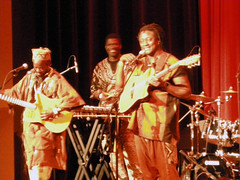
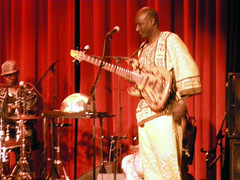
    Habib Koite and Bamada were mellow men as befits a band that has been together for 25 years. Like Sade, they were a seamless unit.

    habib koite and bamada smileAbdoul Wahab Berthe - bassist for habib koite and bamada

Finally two acts I caught at the end of the year who will be making waves in 2011:

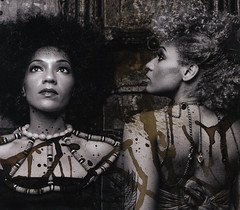
  • Les Nubians will be giving us a Nu Revolution in coming months. We caught them live as they readied a new stage show.
    Les Nubians 2010
  • I'm looking forward to Rhian Benson's Hands Clean, her first album in 7 years. Asked why she made us wait, she explained, "I had to do some living that I could then put in the album". She gave a short set at her release party in Accra - and even had a couple of wardrobe malfunctions, but it was worth it to hear her sing Say How I Feel and preview a few songs from the new album. Valentines Day is only weeks away.
    Rhian BensonRhian Benson

Song of the year: Bilal - All Matter

Dearly Departed


In letters, Ferdinand Oyono, Robert Parker and gold old José Saramago passed away and are sorely missed.

In music, we lost Teddy Pendergrass - black masculinity incarnate, Gregory Isaacs - the cool ruler with the golden voice, Willie Mitchell one of the best music producers we have known, the ever versatile Lena Horne. The loss I took most personally was Abbey Lincoln; I'll forever miss her vibe.

For a playlist in memory of these greats, consider these albums: Joy, Night Nurse, Let's Stay Together and A Turtle's Dream.

File under: , , , , , , , , , , , ,

Thursday, December 23, 2010

Electoral Fictions

Shamelessness is an essential component of the how to hand over to yourself blueprint but, as our Ivorian brethren are currently demonstrating, there is still room for innovation within that framework, and depths of crassness that can yet be plumbed. We live in a world of politics as theater and where elections are the ultimate in stage-managed human drama. Suspension of disbelief is essential in any fiction, and disingenuousness mandatory in electoral fictions.

I write this of course after watching events in Côte D'Ivoire over the past few weeks. The initial emotion was bemusement and indeed laughter - how can one not laugh at the spectacle of someone literally tearing up election results to prevent them from being declared. Still the inept antics only brought back the automatic, unrequited cringe I've had at Ivorian politics for the past decade. I remembered that I'd even awarded Laurent Gbagbo, his wife and their death squads an award of sorts, and looking over their 2004-5 citation, all the elements were there: the needless waste of everyone's time, the hubris, the threats and the violence. Still I have been holding my breath, a neighbour's house is still on fire.

Of course we've long since moved beyond laughter to the realm of tears. It's the usual litany, the West African yearning for normalcy: why should the conduct of elections be cause for fraught headlines? Why seal borders? And those death squads and the obligatory evacuation of foreign nationals? And so forth, it's a depressing lament. Most Ghanaians are gearing up to receive the refugees who have already started leaving the place. Sidenote: if refugees are leaving Côte D'Ivoire to go to Guinea and even Liberia, a country recovering from 14 years of civil war, how many more can we expect in ostensibly stable and oil-producing Ghana?

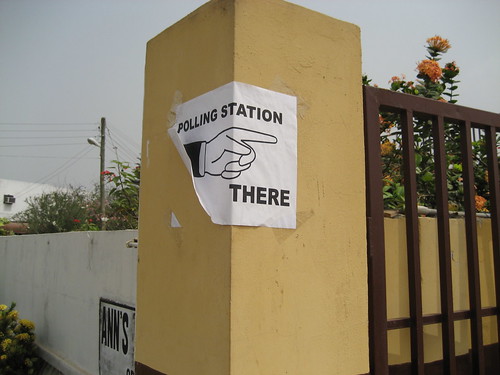
polling station there

Incidentally, we were on notice as to how ugly things might turn out. Recall if you will, the September story about that Ivorian man arrested in California attempting to buy arms to smuggle in contravention of the UN embargo. The salient quote:

"$1.9 million wired to the US as a 50 percent downpayment on the weapons... the shipment of 4,000 handguns, 200,000 rounds of ammunition and 50,000 tear gas grenades to Ivory Coast."
As you watch the distressing news footage, imagine the additional damage this consignment would have wrought in light of the violence, reports of militias, mercenaries and nighttime disappearances. The fact also that millions of dollars were so readily transferred surely indicates the importance the old government placed on the military option and indeed the kind of planning that was involved (the International Criminal Court should take note). But anyway all that is a matter of ruthlessness, let's deal with lighter topics: shamelessness, political theater and electoral fictions.

We have seen problematic elections in this season - consider Burma as the archetype, or might you prefer the thuggish Egyptian variant held on the same day, or perhaps even the Belarusian just this past weekend. It is striking that Ivory Coast takes the cake even in such abject company. The usual saying goes that "It's not who votes that counts but it's who counts the votes"; we are witnessing new clauses being added to that formulation. Call the Ivorian innovation on this front the Gbagbo Imbroglio, if you will. Their singular contribution to the body of electoral fictions is nothing less than the fictitious election.

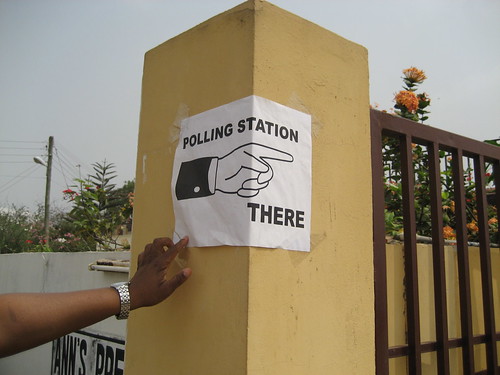
polling station

The usual practice when handing over to oneself is to hold back declaring results in your strongholds and wait until you know how many votes you need. In Chicago or Kansas City in the past, this was a matter of figuring out how many cemeteries to mine for the requisite ghost names. In Ghana in the 1990s, results from the Volta region always came in suspiciously late, later even than the Northern regions, and 98 percent votes in favour of the incumbent and 100 percent turnout (or more) would be the norm - shades of Mobutu or perhaps referendums in Stalin's time.

Gbagbo and company couldn't manage to do this, indeed the electoral commission that this sitting government had put in place took its job seriously and was remarkably independent - as well it should since a tremendous amount of effort had been put in place by Ivorians and the international community to stage these elections. The resort, then, was to say that the electoral commission did not have the right to declare the results. Which brings me again to that video clip I noted earlier that I've been stewing over ever since (and hopefully the BBC won't mind my using their image, I recommend to everyone their closing line: "the elections have been canceled six times in the past five years."). I haven't seen a more perfect piece of political theater in years. Every actor played their part brilliantly.

tearing up election results

When the next day, the head of the electoral commission did manage to sneak out and declare the results, the Gbagbo camp would remark that the declaration was invalid since it hadn't been made within the requisite timeframe. In other words, the declaration that could have been made the prior night had turned into Cinderella's carriage once midnight had passed.

What then followed would clearly demonstrate that Ivory Coast has had a fictitious election.

It would only be after the election results were declared that a 'Constitutional Council' would throw out the votes of 12 percent of the country so that the "results" would be in Gbagbo's favour. Surely this must be the most innovative response to an electoral contest. I can't imagine a greater slap in the face short of actual physical slaps in the face - and these have since been forthcoming.

First for 15 years ago, you say that a large part of your countrymen are not Ivorians, then you say that they are but that they can't register, then you delay for 5 years, then you allow only some to register as you then delay registration and again delay the vote. Then the whole country votes and even your folks vote against you so that the opposition win. And now you go and nullify their votes even though most of the irregularities were in your strongholds. Words fail me.

When Laurent Gbagbo would wrap himself in the flag and declare himself president, it would only bring to mind coronations of yore.

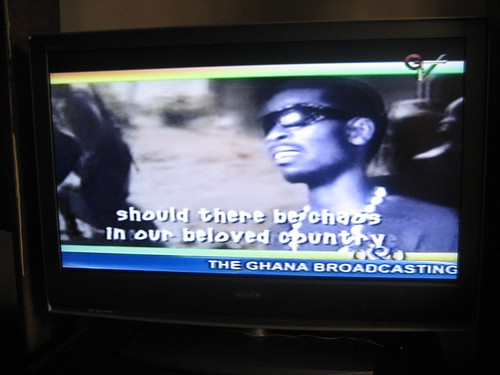
should there be chaos in our beloved country

The question at the outset was whether Gbagbo's generals would follow the Burma blueprint and make his opponent, Outtara, an Aung San Suu Kyi of sorts. Burma of course outdoored its own electoral fictions recently - said elections were timed to occur while the Nobel laureate was under house arrest serving her expediently conferred and lengthy sentence. Just to make sure of the outcome, her party was essentially banned in any case.

Earlier on, one wondered if it would it be the Algerian Algorithm that would be applied: simply don't hold the second round since you know how it would go.

There was also the option of the Abacha Abrogation - with Nigerian bluntness, simply call things off.

The Baker barrage - I'm referring to the slickness of the Bush-Gore 2000 business where James Baker was consigliere: run the clock down. Recall that group of Republican lawyer types that stormed counting offices in Florida. Then the Supreme twist - a legal opinion that should not be construed as a precedent, mutterings about irreparable harm notwithstanding.

A close counterpart is the Mugabe Mutation, a variant of the rope a dope: lose in the first round of elections and resort to the 'or else'.

Finally I suppose there is the Lukashenko option

Perhaps six out of nine Belarusian presidential candidates were in jail. One of them, Uladzimir Neklyayev, was beaten unconscious and then dragged away from the hospital wrapped in blankets.
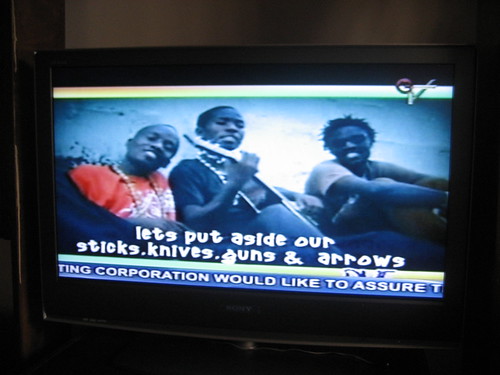
let's put aside our sticks, knives, guns and arrows

Laurent Gbagbo has already served an extra term as President - five whole years beyond the end of his mandate. We have been on notice as to his willfulness and are watching in almost despair as he does his worst, hoping against hope. I have a pet theory that someone who has been a political prisoner will do exactly what he wants to do (pace Mugabe, and Mandela notwithstanding). It is vain to think he will do otherwise.

The irony is that Gbagbo was on the receiving end of a famously rigged election. When I wrote my 1993 piece, I was in awe of the slick manner in which Houphouët-Boigny had used his considerable powers of incumbency and dealt with his opposition in 1990.

Given all the precedents one had expected a certain finesse or perhaps panache in the electoral strategy. As a Wikileaked cable from the US embassy in Abidjan put it in July 2009, "There will not be an election unless President Gbagbo is confident that he will win it -- and he is not yet confident of the outcome."

As well he should have been. The cable also noted that it was unlikely the elections would be held in early 2010 as expected since Gbagbo would undoubtedly want to preside over the jubilee ceremonies of 50 years of independence. "The prestige and celebrity that goes with hosting such an historic event" was insufficient as we have seen.

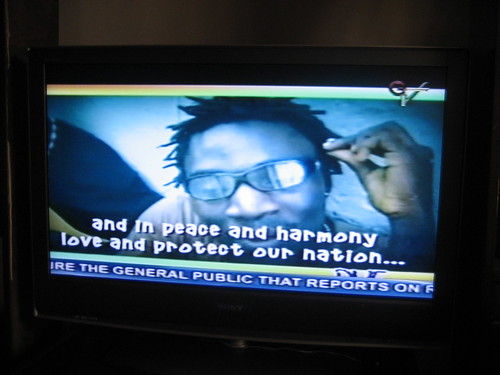
in peace and harmony protect our nation

All of that came to pass. This was a long game and Laurent Gbagbo has never missed an opportunity to disappoint. The exasperating and novelistic playbook has been followed to a fault. Delay, suborn, browbeat, bludgeon, deny, wrap yourself in the flag, bluster, and, if need, be suppress and kill - those death squads.

We tell ourselves stories about elections, but it isn't often that the reality surpasses the myth. It has been a colossal waste of everyone's time. We have gone from electoral fictions to fictitious elections.

File under: , , , , , , , , , , ,

Thursday, April 01, 2010

The Codes of Martial Music

Earlier, the officers threatened to kill the PM if his supporters continued street protests in his defence...

National radio interrupted its programmes to play military music, which correspondent say is code for a coup.

— Guinea-Bissau army head 'seized', April 1 2010


After a day of gunfire, explosions and nonstop military music on the radio in Niger’s capital, Niamey, the whereabouts of the president, Mamadou Tandja, remained unknown...

As of Thursday evening, the government had made no announcement about its status, even as martial music continued on the radio. A wrestling program replaced the evening news broadcast on state television. The streets were deserted and shops shut early.

— Palace in Niger Is Attacked by Soldiers, February 18, 2010


Bands of soldiers ransacked the homes of several ministers and gunshots rang out, residents reported. The junior officers were apparently tightening their grip on strategic buildings, with their supporters ensconced in the national broadcasting headquarters across the street from the American Embassy. There were no immediate reports of casualties.

The national radio station blared martial music. Many shops across the city were closed, though street vendors continued to sell mangoes, bananas and pineapples.

— Confusion After Guinea Coup Attempt, December 24, 2008

I have many memories of the two coups I lived through in Ghana in 1979 and 1981-82. Like many of my compatriots, I have chosen not to dwell on them and instead have noted simply that we are very discriminating in what we choose to remember and forget. The safe detail that lingers, however, is of the martial music that consumed the radio, and then the TV, airwaves in the ensuing days. We were treated to waves after waves of martial music on Ghana Broadcasting Corporation (GBC) that were only occasionally interrupted by the rantings of someone who claimed he was coming to protect us. Suffice to say that I have a visceral reaction to military strongmen and their rhetoric - I am blinded by the accompanying blood.

More interesting perhaps is that I have a deep appreciation of the codes and nuances of martial music. My first response to the news of any coup is to wonder whether this time-tested ritual, the playing of military music, had been followed. And then my curiosity and propensity for musical obsession takes the best of me: I ask around about the exact pieces of music that were played. When I do manage to get the nitty-gritty details, it is almost always disappointing: in the main, a few olde English paeans to blood-lust. The Francophone coups tended to run with more folksy arrangements and the North African had a rather elusive quality - the Arab influence perhaps. The martial music of our coups all had this alien, otherworldly aura - as if to remind the listener that the military in Africa were one of the most ruinous of our colonial inheritances.

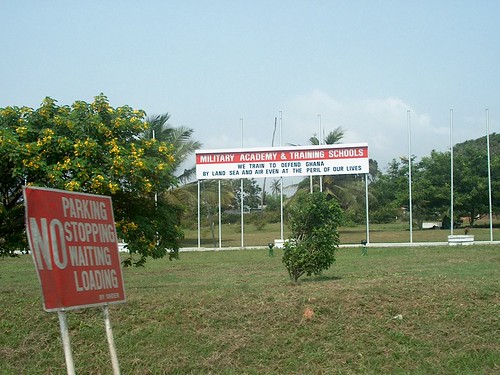
military - we train to defend ghana by land, sea and even at the peril of our lives

I am left to wondering why in this day of of digital music and ipods, the savvy aspiring military junta couldn't come up with a more inspiring playlist. And in the context of Africa, didn't our warriors of old have fearsome praise songs written for their exploits? Couldn't some talking drums have the same effect? why not a "Made in Africa" soundtrack? But perhaps this is missing the point; martial music in the context of a coup is simply a code, a social signifier, and the disrupted programming an intimation of an enduring, if disastrous, tradition. The journalistic descriptions are always about 'blaring military music'. In contrast, in my memory, the dissonance is not really about volume but rather about unfamiliarity and annoyance: the horns were especially grating coming through the modest speakers of the portable radios we gathered around. The irritation was that you couldn't avoid this music even as your favourite news broadcast was preempted. The screeching horns resonated with the tinny sounds of your Grundig Waveboy and made for a rather somber nuisance.

Coups in the past century mostly seemed to follow the same blueprint and martial music was no mere footnote, I'd even wager that they were a critical ingredient. But have there been innovations one wonders, global guerrilla adaptations of the noisome strategy? Reading closely the above news reports, what is one to make about the detail of the 'wrestling program' that preempted regular programming after Niger's coup month's ago? Was it a case of l'appel de l'arènes. And was the continued selling of "mangoes, bananas and pineapples" in the streets after the Guinea coup a flourish of journalistic colour or merely a blasé signifier about the prospects of that grim lot.

I have friends who study the history of coups and military-civilian relations and who will wax poetic on when exactly it was that the airport became a necessary target for a nascent military junta. In Francophone Africa you always had to worry about a flight of French paratroopers swooping in to restore the current client dictator. Not so with coups in Anglophone or Portuguese Africa. Technology also changes things, these days a successful putsch in a healthy media market requires that you deal with those pesky communication networks and pay a threatening visit to mobile phone operators so that your opposition can't organize countering maneuvers.

During the struggle over the abolition of the monarchy in Nepal a few years ago, the reactionary forces tried to shut down the cell phone networks. They managed — for a day, and the enduring damage was done to their cause. The monarchy is no more. Aspiring military juntas should take note that one messes with the mobile phone networks at one's peril. The communication imperative is keenly felt. Even in the bloody aftermath of Iran's last election, the authorities didn't dare take the drastic step of shutting down the mobile networks. The day I read that headline, I'll know that they are done for.

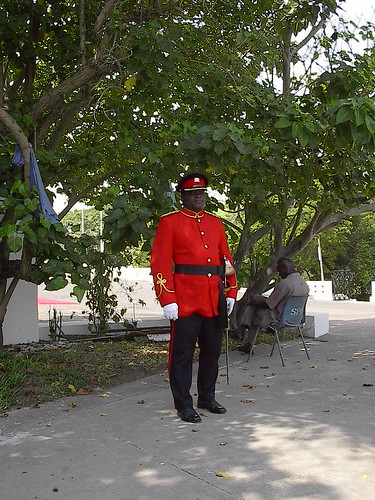
Presidential Guard

Africa will be in the news a lot this year, and not simply for uplifting reasons like the World Cup in South Africa. It doesn't matter that many African countries will be celebrating 50 years of independence, brace yourself for some dismaying headlines even if natural disasters don't dominate. A major part of the narrative is going to be about coups and military/civilian relations. Throughout, it will be about how civil society fights against encroachments on the democratic gains made since the 1990s. Watch for slippages and authoritarian thuggishness on freedom of speech, watch for arbitrariness and vendettas resurfacing, watch for soi-disant democrats averting their eyes to due process. Consider Gbagbo dissolving the government in Cote d'Ivoire - and crucially the electoral commission. Take a look at Sudan in coming weeks for example. Muse on what Mugabe will come up with in Zimbabwe this year. Worry about why North Korea arms shipments are headed to Congo-Brazzaville. Observing the twists and turns in the African story can be very trying.

What are the necessary and sufficient conditions for a coup to succeed in 2010? What is needed in this modern age of citizen journalists, the internet, a web of global voices, cheap digital cameras, Twitter, Facebook, Ushahidi, ridiculously simple group forming and ubiquitous mobile phones and such? Is it enough to capture the radio and TV station as in the past? Should you even bother to threaten the newspapers? Surely the gadfly editors will be watching which way the wind is blowing with alternate headlines at the ready. Do you need to secure the army barracks or just the airport and the country's borders? What about a show of force? Send some tanks into the street? Should one surround the American, British, French and now Chinese embassy - the Chinese are big in Africa these days? In Guinea-Bissau today, soldiers were sent to surround the United Nations compound. Remember that some of the first targets of the Rwandan genocide were the Belgian UN blue helmeted peacekeepers. Or is the current fashion of targeting cabinet meetings the most expedient?

I suspect that the key feature in all this is playing martial music on the radio or TV. The dismal tones of the ironic playlists of authoritarians are symbolic laments of sorts. A dosage of aural intimations of the prospect of bloody streets, these military anthems are set to fierce drums and harsher horns. The lyrics, if any, are a celebration of fisticuffs, eviscerations and strategic disembowelments. Such are the codes of martial music.

A few more nuggets of note:
  • During the 2008 coup in Mauritania, "the first indications of a military coup came as state radio and television were taken off the air amid reports of unusual troop movements in Nouakchott". Note if you will that there was no mention of martial music and that the authors of this coup are still standing. Serious (if bloody) men that they are.
  • During the 2009 coup in Madagascar, there were no reports of martial music on the radio. Perhaps this is because the major beneficiary of the coup, Andry Rajoelina was then "a 34-year-old former disc-jockey". In constrast, there were suggestions about the army targeting the mobile phone networks. Everyone has gone on to condemn the Madagascar coup but Rajoelina is still sitting pretty a year on, his was a 21st century coup: he knew all about the playlist. Threaten the cell phones for sure, monitor Twitter, but don't mess with the radio programming.

I continue to ask, can't they get a better playlist? And dear readers, what constitutes a good martial music playlist? What tunes would you pick for your coup d'état? And what of this here musical theory of coups? Does it adequately model the gracenotes of African coups?

Soundtrack for this note


File under: , , , , , , , , , , , , ,

Sunday, March 21, 2010

The Polyrhythmic Temptations of Erykah Badu

"What good do your words do when they can't understand you?"

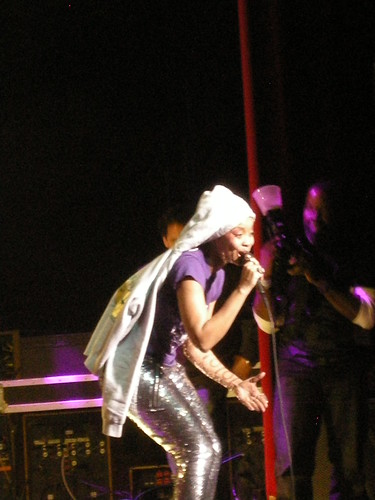
The above chorus seemed to have rhetorical heft midway through Erykah Badu's recent concert at the Fox theater in Oakland. You see, she seemed about to escape the song form, en route to dissolving into a polyrhythmic ether of sorts. Just when lift-off appeared inevitable however, hip-hop brought her back to earth, then, after a short tribute to Michael Jackson, the soul returned. Standing in the audience nodding my head as I observed the proceedings, I started thinking about the relationship between artist and audience. What happens when your muse takes you off the beaten path? What concessions, if any, should one make on the one hand, and, on the other, how much should you, the audience, indulge the performer? Because it was a close run thing you know.

erykah badu finale

This polyrhythmic temptation, this polyphonic inclination, has taken up much of her last two albums. Indeed during the last two concerts I'd seen of her, there was no attempt made to coddle the audience. During the earlier one, in support of Worldwide Underground, she was in the throes of a liquid type of electronic soul music and had began drinking from the polyrhythmic fountain. During the last one - in 2008 in support of New Amerykah Part 1 - polyrhythms possessed her completely. To compound the musical dissonance further in this latter instance, she had made the mistake of following The Roots onstage - a frequently lethal decision on the best of days, and definitively so if the audience isn't ready to be a guinea pig for one's new directions. I enjoyed myself - to my ear it sounded much like a Funkadelic affair, a beautiful mess in short, but I'm not sure that everyone felt the same. For example, The Wife had some words later on - and she wasn't cooing. This past February's concert was fun and more audience friendly (the band was gearing up for the big push in support of her new album). She has pulled back, it would seem; one still wonders however.

Let it first be stated that I dig Erykah Badu, that on the strength of Baduizm and especially Mama's Gun, I will follow her to the musical ends of the earth and beyond. As we wait for the new album to be released in short order, the question most of her audience is asking is whether she will reign in the demons that she wears on her sleeves. Musically also, we're asking whether she'll submit to a sonic conception that is more recognizably song-like and whether melody and old fashioned soul singing will feature. The snarky will ask how long can a soul singer be post-song. The music these days is all riffs, beats, polyrhythms. Blame the sampler (that new accoutrement that has been accompanying her of late), blame Jay Electronica perhaps for a carnal and musical temptation. At times she seems consumed with sonic tics and mannerisms reminiscent of Michael Jackson after 1993. It's no doubt very exciting in the studio but rendered live, it can be challenging.

When someone like Giles Peterson hails her as the Nina Simone of our time, I think to myself, hey, I too am an aficionado of Sun-Ra and believe that the creator has a master plan, but which Nina Simone is he refering to? Does he mean the outsized musical talent or is he alluding to the late era eccentricity and mannered diva stylings? When Sly Stone is invoked, is it apropos her recent funk excursions or... well, let's leave the Sly comparison alone.

erykah badu vibe

Erykah Badu is self referential in the extreme and takes these kinds of cultural perceptions in her stride; she's all about multiple identities and musical schizophrenia. From Lowdown Loretta Brown to her other personas, she's a Kool Keith of sorts, presenting a hyperlinked conundrum asking you to stare at the performance while grooving with her. She demands attention and makes clear she will only do what she wants. It's the kind of creative freedom that few other artists have. It's also part of her mystique. In concert, she sheds skins, and is continually reincarnated. Costumes morph repeatedly as if to underlie that you can't pin her down, you shouldn't even try. To harken to the cautionary lyric that opened this note, I'll only add that there's a fine line between being elusive and being unapproachable. I was minded to call in Stevie Wonder and ask him to sing Have A Talk With God to her.

Let's not go too far and damn her with faint praise, Erykah Badu after all is a student of the great performers, and will jab and feint with the best of them. She remains very successful commercially even though the singles that are released now bear little relation to what you get when you buy the album. In the last album, Honey and The Healer, her tribute to J Dilla, were just about the only songs that moved the crowd and that were heard on the radio. Fair enough you may say, 'radio suckers never play me' is a refrain from Public Enemy on. She always makes sure to throw in a club banger, a unique video and moves units as the say. Who's to argue, right?

The earlier overt homages were to songsmiths: Roy Ayers, Chaka Khan, Midnight Star. These days however it appears that songs don't interest her, rather it is grooves, riffs, beats in short. She takes scraps of rhythm, drum and bass and forms sonic collages. The last two albums have been full of dense polyrhythms, loop backs, staccato effects, overlays and, crucially, very little concessions to the song form or indeed her audience.

Orchestre Poly-Rythmo de Cotonou The Vodoun Effect

I'm no musicologist but as an African I know all too well about polyrhythmic conceptions. The Congolese with their sebene (and the Ivoriens of late) have long prospered on these changes in their music but their inclinations are rather ecstatic. It's about the dance, the audience is constantly in mind, not so with our analog girl in a digital world. The closest analog to Erykah Badu's current game is the vodoun effect of T.P Orchestre Poly-Rhythmo de Cotonou. Think Benin. Think musical voodoo. It's the same aesthetic: funk underneath, musical mysticism, dense polyrhythms, polyphony and frequent changes. It's meant to be hypnotic at its best, I can only hope she reaches these heights as she continues to experiment. And if not, someone should hip her to Poly-Rhythmo.

A typical concert moment will have her holding up her hand, stopping the band just as they've built up a groove. "Hold up. Wait a minute." It's a tic if overused and you sometimes wonder if she can give it to you straight.

erykah badu wait a minute

When performing I Want You, it is almost a dissolve into liquid incorporality but then she pulls back and gets it together as if she has returned from a spell. There are commercial repercussions to how she handles these polyrhythmic temptations. Erykah Badu is by most measures the most popular soul singer of her generation (I'll skip her elder Sade in this comparison and ignore Amy Winehouse and Alicia Keys - call them pop). The soul crowd simply appreciates the voice and the songcraft. The hip hop crowd love her because she has genuine love for that aesthetic. She also happens to make rappers lose their minds such is her aural and sonic seduction. The bohemian are drawn to her mystical stick. All should be good if she holds it together.

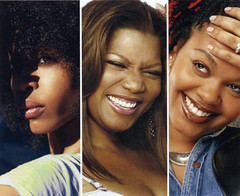
erykah badu queen latifah jill scott 2005

I can recall fondly a joint tour with Jill Scott and Queen Latifah in 2005 when they appeared all-conquering in friendly competition. It is instructive to see how her contemporaries have dealt with fame. Jill crossed over into acting where her evident warmth is welcomed - her music hasn't been as strong since, but there are mutterings that she's hungry to get back on top - viz the forthcoming album and tour with Maxwell. Latifah? Well she's escaped music entirely - I was given the hard sell over Christmas about a Queen Latifah perfume.

I know I shouldn't, but I'm going to compare her to Amel Larrieux if only to contrast their live performances. Amel will joke that she is 'the queen of long endings' and I believe that this is an interesting way of dealing with having to sing the crowd favourites. She'll sing most of the song straight up and then go an excursion at the end and no one can tell where the song will wind up. This strategy allows the song to be different every time, depending on the mood of the band, the vibe of the crowd and so forth. Erykah's heart doesn't seem into her back catalog, she's experimental from the get go, the song doesn't interest her, it's more a mood that she's searching for and she'll add layers and rhythms. The result is that the audience doesn't get even the benefit of being moored to familiar ground.

erykah badu points

The new album, Return of the Ankh, is about to be released in few days. I suspect that the first singles won't sound anything like the rest of the album much in keeping with her modus operandi. Erykah Badu continues to be tempted by polyrhythms, this is not a temporary flirtation. Let's hope that she manages to navigate the tension between her muse's direction and the commercial imperative.

Erykah Badu at the Fox Theater Oakland, Friday 19 February 2010

Opening Act: Goapele

Goapele opened the show with a short set mostly of old favourites. She also introduced a slow and moody new blues: Tears on my pillow, capped off with a lovely organ solo. Oakland gave her love.

Here's my illicit footage of Goapele performing Closer.

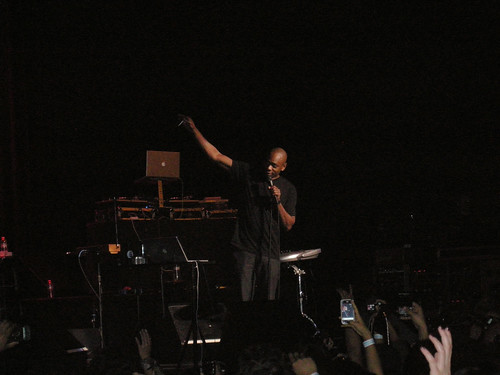
Dave Chappelle showed up, drawing a great cheer, to introduce the main event.

dave chappelle

Setlist
  • 20 feet tall (from the new album, psychadelia itself)
  • The Healer
  • Me
  • My People
  • On and On
  • & On
  • Appletree - done as an electronic boogie joint
  • Michael Jackson medley finishing with Off the Wall
  • I Want You
  • Didn't you know
  • Love of my life
  • Hip-hop interlude:
    • Friends by Whodini
    • Lodi dodi by Slick Rick and Doug E. Fresh
  • Large Professor interlude showcase for the dj
  • Bump it
  • Back in the Day (Puff)
  • Muddy Waters sounding joint
  • Other Side Of The Game
  • Soldier
  • Next Lifetime
  • Orange moon (snippet)
  • Tyrone
  • Bag Lady

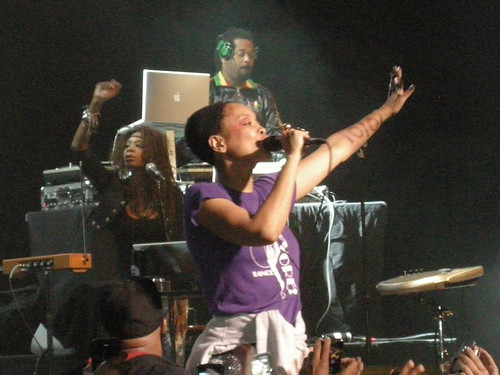
Obligatory blurry photos: Erykah Badu Live

File under: , , , , , , , , , , , ,

Friday, March 12, 2010

Juicing the Books

My greatest acknowledged vice, according to two of the women most dear to me, is that I drink too much fruit juice. Rather than dwell on this marital and maternal complaint over what is surely a most benign addiction (compare the problems of keeping a fridge full of orange, pineapple and mango juice to alcoholism, the perils of nicotine, drugs, sex, or say dodging bill collectors due to gambling debts with loan sharks and their ilk), I thought that acknowledging it upfront would help explain how I worked myself into a state of righteous indignation over the following article. Well partially at least.

Tropicana Orange Juice Raising Prices

PepsiCo said it was shrinking its most popular size by about 8 percent, while maintaining its price, and raising the price on another size starting in May.

The 64-ounce container of orange juice will drop to 59 ounces. The suggested retail price will remain at $3.59. [snip]

Food and beverage makers react to changing ingredient costs by raising prices, changing products sizes or both. It is a way to protect their profit margins, and in the case of shrinking packages, offer less to shoppers so they can still buy products without having to pay more money at once.

Now far be it for me to complain about my suppliers raising prices. It's not a case of hell hath no fury like a juice lover squeezed. I do understand, after all, that the Florida winter damaged crops this year and that there's supply and demand and all that. Like Bubbles in The Wire, I accept what a working man has to do to make a living. It's all in the game right? No, what got to me was the disingenousness of the thing. That last line in the article is a prima facie lie, an attempt to disguise a price increase with weasel words. Well I started feeling like Bodie: the game is rigged.

You may recall me discoursing on The New Formula - the propensity of companies to tweak processes and often worsen their products in furtherance of the bottom line, a pathological hallmark of latter-day capitalism. I even had a case study showing how spikes in the prices of soybeans directly led to me losing out on my trusty Oil of Olay body wash as, first, the oil maleation process was removed and then, when there was nothing to be tweaked in the manufacturing process, soybeans were removed and the product was relaunched and relabeled "new and improved". Such is life right? Make lemonade when life gives you lemons.

But that was tinkering with process, now they're even messing with my lemonade. With commodities like juice, one would think that there is only so much you can do to process to wring out efficiencies. You can only pay the illegal immigrant labour force so little to harvest, even they need basic food and shelter after all. The gains from fertilizer are diminishing and runoff issues are quite literal. Even the politics of it are confusing; banana republics are expensive these days. Ecuador's going mildly 'socialist' to the dismay of old fashioned Texas businessmen. In all seriousness, the economics of modern day agriculture are fairly well studied and there's precious little slack.

pineapple

No. It's the package shrinking that gets me. The Tropicana deception, as I called it, this juicing of the books is only the latest in an interesting trend of manufacturers increasing prices but retaining the same size packaging. Bottles or containers are made more convex, given revamped designs to fill the same physical dimensions, the spouts are shaped to pour out more than previously. Throughout the sticker price remains constant in order to fool the indiscriminate consumer into thinking that they are receiving the same product.

This orange deception is the result of literal bean counting in the spirit of airline companies in the 1990s that literally started saving peanuts (reducing the number of peanuts per package distributed in flight - and these days you're lucky to even get any complimentary snacks). We're being nickeled and dimed to death. The sole concession to honesty is in the small print of the labels on supermarket shelves - the per unit price that generations of consumers had to fight for. Regulations that are often meaningless in the marketplace.

Consider liquid detergent in this vein. There is a fine interplay of fluid dynamics between the design of the spouts of modern liquid detergent bottles and the viscosity of the liquid they contain. And this is an engineering and marketing decision, when you pour, sometimes things come out faster than you expect. At other times, it is rather that you have to be quite lithe of hand to steady the bottle as you try to stop pouring - call the result excess runoff if you will to keep with the fertilizer analogue. It's a minor irritation to be sure but the net effect is to make you use more of the product than you expected, a cynical nod towards planned obsolescence. And I've experimented you know, I follow these things closely - for a couple of years I even kept a collection of old bottles of Ivory, Palmolive, Tide and the like. Results? Well each brand tweaked their bottle design and consumer convenience was never in mind.

But let's broaden the perspective here on this mania for manipulation, this drive to extract surplus value. We see this in strategies adopted in modern agriculture - or should I rather say agribusiness: piling on the fertilizer, force feeding animals substances that should alarm even the most jaded, corn everywhere, herding in crowded cages, top-ups with antibiotics when expedient and so forth. No wonder modern farms or say your local meat rendering plant are desolate places. But this imperative has broad applicability. Airline travel is now seen in its true light - convenient perhaps, but an exercise in stress and physical discomfort. The space in economy class of ye regular airline is now so circumscribed as to be cattle tested. The logic indeed is that we're only cattle. "Buy something you stupid consumer" as that poster goes.

But I can understand the perverse incentives. I know that there is a push at the end of each quarter to close deals and I've felt it wherever I've worked no matter how low up the totem pole I might rest. You don't need studies of companies manipulating earnings to consistently beat expectations to know what all this means. When we read about Lehman Brothers doing the Repo 105 dance, it is much the same attitude towards truth in advertising at work. The current encomiums to "do more with less" have their counterpart as we have seen, "sell less for more" is Pepsi's slogan. As someone who owns stock I can understand the profit imperative, as a consumer however, I know it will come back to bite me and in this case, it will bite me in the form of a 59 ounce juice container lovingly designed to fill much the same shelf space as its 64 ounce predecessor.

It's all a shell game and there are now so few scales left to fall from my eyes. I am now eagerly awaiting the new juice containers in May to add to my collection of deceptive latter day capitalist artifacts - an archive of products engineered for the express purpose of juicing the books.

Soundtrack For This Note


Anyone have any further examples of these newfangled "advances" in packaging?

Disclaimer: I should note that of late I've been mostly buying a brand of juice that is often sourced from South America (typically Brazil) rather than juice from Florida or California - I wonder if I'll return to Tropicana or Minute Maid after this fiasco - can't they have the nerve to simply increase the price? And while digressing, I should also again note that I've started to see pineapple juice from Ghana making it to the supermarket shelves in these California climes. I do applaud the wonders of distribution in this modern age. It's the packaging and advertising that gets me down. Deception innit?

File under: , , , , , , , , , , , , , , , , , , ,