Showing posts with label griots. Show all posts

Tuesday, June 24, 2025

Near the Weeping Trees

Poetic license, a grove of weeping trees
Is said to mark the spot where Babatu's wife perished,
Abandoned by his retreating raiders

Vitellaria paradoxa, the botanists would precise
The creeping shea tree takes 15 years to start to bear fruit
The site of her execution, an arboreal memorial of resistance

The historians would argue about the accuracy of oral history
Questioning how these stories have come down through the ages
That the battle of Sandema most likely took place
Somewhat at a remove from where we now celebrate it
That the invention of tradition prevails

That, yes, Babatu was the prime slave raider in those times
But that the invocation of Samory was a touch of artistic license
Embellishment by the griots,
Born of his fearsome reputation
For the record shows he confined his empire's reach
To the west of the coast

Thus, while Samory's troops did overrun Bole,
They never made it to Sandema
No, Babutu was the prime mover
In what is now northern Ghana

The Zabarima depredations he led
The forced marches, the trail of dread
Spilling over from the East and North - Niger
Shackled, back to the market at Salaga

It follows; the dread that the Gonja faced
Was in the same vein as what the Bulsa bore
The specter of their adversaries
Commingled in the tales of the griots
For it was the same threat, the same suffering,
And the same wounds

And, yes, Bulsa children should run
At the mere mention of either foe
The griots had it right:
What is 200 miles in the grand scheme of things?

So, Salaga market
Or Kasana market near Tomu
Ominous since their founding
The former now a tourist site a century later
With a few exhibits

The footpaths trod by captives,
Marched from Bulsa and Kasena areas
And shackles, so many shackles, symbolic,
And other items that bear reflection
Earth shrines in modern times,
Northern doors of no return

...

We leave faint traces in our stories,
Signposts of intimate legacies
Fumes marking cautionary tales,
The touchpoints and the villains
And heroes too.

Years later, we gather and celebrate the victories
Feok they call the annual festival,
Harvests, and a "time of plenty"
Where warriors gather in performance
And recount the shared memories
And it all happens - historians may debate,
Not too far from the weeping trees


Builsa Feok Festival Sandema


Near the Weeping Trees, a playlist


I recall when the then 3 year old entered the daycare center singing Burning Spear's refrain: "Do you remember the days of slavery?". The looks from the front desk, of those proper, Southern Texas ladies... I decided to keep things light with my playlists going forward. Still, these are living histories, the legacies of men.

A soundtrack for this note (spotify version) Bonus beats: a few live and dub versions of these joints

See previously Running Away, my first piece on the tales of Northen Ghana and, just to confuse things, Samory's Old Camp

This note is part of the Things Fall Apart series under the banner of The Bulsa Way.

File under: , , , , , , , , , , , , , , ,

Writing log: September 10, 2022

Tuesday, March 25, 2025

Running Away

The lyrics in the songs always mentioned running away. Flight, escape, danger in its many variations. Embedded in the outlook, punctuating the very choruses was a sense of precarity. And yet these were not dirges, these were not laments. They'd long made their peace with the world as they'd found it, nay, they were comfortable even if clear-eyed about this existence.

And they watched.

Running away, heading for the hills and the rocky terrain. Running away, heading for higher ground, for those parts that only those close to these lands would know. The caverns where they could hide, holding their breath, stifling all sounds, covering the mouths of the infants.

And they waited.

Holes in the ground, the entrances disguised, dark caverns where the ancestors were said to have sought shelter from previous predators. At most a dozen could fit in the largest ones so you had to be prepared to seek out other spots, ever calculating as you ran up over the rocks how many had already made it, and if you would be able to use this particular refuge.

Oftentimes it was a gamble.

To enter the hiding places, you crouched, crawled and wriggled. The earth would envelop you, surround you with its embrace. You could expect to taste the slightly acidic crumbs as you pushed your way in, to smell the faint trace of clay. The earth would resist the touch, implacable and stern, until it would yield all of a sudden, plunging you forward into the void of the cavern.

You hoped, you wished for a soft landing.

You had to be methodical even in the heat of the moment, deliberate even as the senses were heightened by the danger. First, to dislodge the covering by pulling at the right spot, the intricate branch structure that only careful hands could pry open, and then to preserve its camouflage so that it would appear undisturbed to the raiders in pursuit. The architecture of escape, the provisional sanctuary.

And they prayed.

No matter how many times they had practiced, no matter how many warnings, no matter how many songs they had sung, no matter how much advance notice they'd garnered, they knew that there would be something lost, that there would be someone lost. It was the nature of life in those times. Something, someone would be snatched from you. Pieces of yourself dispersed, shredded away, leaving only the memories.

And they wept.

Farmers and pastoralists, they never had a standing army. Millet and maize in small fields, custodians of the northern territories, eking out enough to support the clan, to trade some guinea fowl and kola nuts, to enjoy the gifts of the earth, to husband it. This patch of land on the lower Sahel was unforgiving but it was theirs.

And they stayed.

But, at length, there had to be some edge they could wield to surprise the raiders. Running away might ensure survival for many, but more was needed. They taught the youth about all the plants and their uses. Those they ate, those they treated with as part of aromatic bitters, those with properties that were prized, their nighttime potency recounted, astringency debated, and medicinal effectiveness evaluated. And once they proved adept and facile with the identification of the flora, they would learn about what in extremis could be used in the poisoned arrows that were always reluctantly fashioned. Weary, wary, reluctant but necessary.

And so they studied.

The elements of survival were well known. Swift recall, preparation, decisiveness under threat, knowledge of topology, and luck. For the gods were capricious. Even the fleetest of foot, the strongest, and the most agile could be brought low and fall prey to the human hyena that roamed the lands. And Babatu's men were implacable and determined trackers. Tears would be for nought when in their grip. Best to fight when caught, to resist with all one's heart. But, above all, to flee when attacked, to live to see another day, to rebuild and restore when these interlopers would leave, for they would surely leave as these lands only yielded bodies to them.

And they ran away.

Taboo. A famous dirge recounted how one of the twins was unable to stay silent, a hard demand of a toddler, let alone in the darkness of the cavern. Their position having been given away, tough decisions had to be made. Father and the one would give themselves up hours later, when it became clear that this set of raiders would wait them out, they were a patient lot. Mother and the other twin would retreat further into the second chamber, deep in the dank bowels of the earth and stay for three days. It was hard to breathe, it was hard to stay silent and still, and there was only one gourd of water and the few nuts hidden in the fold of her cloth. They clanged to each other, charged with the burden of loss, of memory, of survival. Pieces of themselves lost for good. But they lived to tell the tale, to recover possession of the land.

And they survived.

Strangers have come into our land
Raiders have come for our bodies
Take heed, my brother, and run, run away
Caution, my sister, and run, run away
For we will all, someday, be turned into sand
And all that will remain is our story


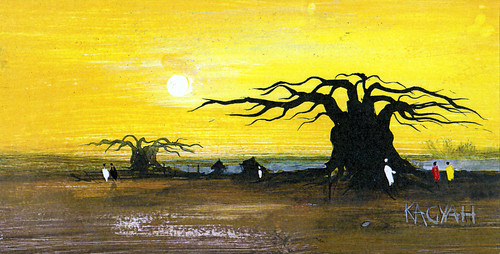
baobab by kagyah


Running Away, a playlist


A soundtrack for this note. (spotify version) Further reading:
A later discovery: Beyond Elmina: The Slave Trade in Northern Ghana by Joachim Jack Agamba mined similar terrain to great effect.

Next: Near the Weeping Trees

This note is part of the Things Fall Apart series. Do let me know what banner might be appropriate.

File under: , , , , , , , , , , , , , , , ,

Writing log. July 24, 2022

Tuesday, February 25, 2025

Maroon Creed

Long before those edifices of past sorrow were erected
They moved with the poetry of resistance
Disdaining the fraught burden of a label
Freedom and defiance, they owed allegiance to liberty

Naturalists by inclination, observers of the earth's promise
They found strength in conversation and community
The playfulness of the language, the meandering turns of phrases
Luminous idiolect that harkened to ancestral lands

By necessity navigating the contours of cultural interplay
Recognition in the names, a heritage weighted with history
They carried in their tongues the tales and the traditions
Fragments of identity, the métissage of their found society
The maroon creed, independence of thought, purity of faith
Sacred links, bonds forged in renewed nighttime ceremonies

To stand straight even amidst insecurity
To laugh when confronted with precarity
To flow around obstacles, resilient as a river
And always hewing to escape, shackles discarded
Sounding the alarm with conch shell at the ready
Intent, moving with purpose, their destination is history

Bearing traces of scars still lingering that speak to society's ills
Not beholden to the legacy of those days in the hills
Yet embodying by one's very existence the remembrance
Of the enduring shame of what man would do to fellow men
To strangers and neighbors alike, out of the wages of blood and sin
Charting a path then, spears burning, ever mindful of this proud legacy
Cast in this vein as living emblems of cultural memory


masks of civility


Maroon Creed, a playlist


A soundtrack for the Nèg Marron. Caution, take heed, behold a spear burning over yonder. (spotify version)
In memoriam Aba Cecile McHardy


See previously: Until Such Time, Traveling Light and Forgiveness and Love

File under: , , , , , , , , , , , , , , ,

Writing log: July 3, 2022

Tuesday, March 19, 2024

Traveling Light

We descended the hills,
  Walking down the slopes,
   Meandering
And skirted the border,
  The imposition and the scrutiny
For it was manifest that we controlled our own destiny

We stayed close to the land
  And paused to mark the signposts
These last barely disguised
  But concealed to all but the practiced eye
Our story would be imprinted in the wood,
  The dark matter of history

South of the river,
 We found shelter
  And crafted refreshments
Spirits were summoned for this,
 Our season of migration
And our songs, the sounds of freedom,
  A taste of welcome relief

Troubles may follow you
  But these borderlands were our sanctuary
The healing started as we crossed
  The bothersome boundaries
We took in the scale of these human monuments to fraught identity

Still, the lingering sense
  That others would be confronted with tiring demands
While, with our vocation, we evaded
  The tyranny of stamps on paper
Moving slowly, as we did,
  To the other side of the barriers,
We remembered why we traveled light


Aburi tree


Borderlands, a playlist


A soundtrack for this note (spotify version)
Liminal, subsurface unseen.

See also: Until Such Time

File under: , , , , , ,

Writing log: April 5, 2022

Tuesday, December 05, 2023

Forgiveness and Love

Scars unforgotten
Marked the liminal landscape
Monuments of loss

We sought redemption
Escape from the memories
Refuge in the hills

Out there at night time
Relief in the melodies
We sang without end

Nature's comfort suites
Sleeping chambers of welcome
Forgiveness and love


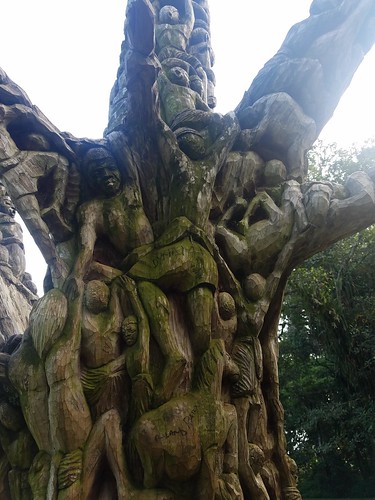
aburi carved tree detail sculpture carving


Soundtrack for this note


See previously: Bloodbath, South Carolina and Until Such Time

File under: , , , , , ,

Writing log: January 16, 2022

Tuesday, August 22, 2023

Until Such Time

Mystical spirits loom
Natural healing will soon come
Bringing justice promised us

Maroons, these searchers roam
The men of the hills journey
With rhythms of defiance

Crossing effervescent streams
Marking sanctified borderlands
Truths disclosed in light of day

Guidance duly salves the soul
It's the force of freedom
Protection until such time


aburi-garden-view

Until Such Time, a playlist


A
soundtrack for the maroons courtesy of that griot Burning Spear (spotify version)
File under: , , , , , ,

Writing log: December 7, 2021

Saturday, November 13, 2021

Land of Concern

The urban griots in their wisdom kept things simple
The virtue of a simple question: what's going on?
Or alternately, some pithy advice: check out your mind
They'd sound the warning that change would not be televised

Early to despair, they recognized the nature of the emergency
And how difficult it would be to shake the audience from complacency
For most would rather look firmly backwards and embrace nostalgia
Or anaesthetize themselves with cocktails of selective amnesia

They spoke with the urgency of those familiar with the shape of dread
A visceral reaction in our grief houses in the aftermath of bloodshed
The torrid zone presented as fait accompli so many dark matters
Best, in light of this, to attempt to forestall disaster

To the urban griot as to the physician, there's a duty of care
Felt all too keenly this compulsion as a moral cross to bear
Heed the message from your leader and first do no harm
The imperative, nay the onus, is on you to raise the alarm

Scout's honor, in trying times they'd say people get ready
Or go for the aspirational, someday we'll all be free
Long before this community reaches the point of no return
Such is the survival strategy for life in a land of concern

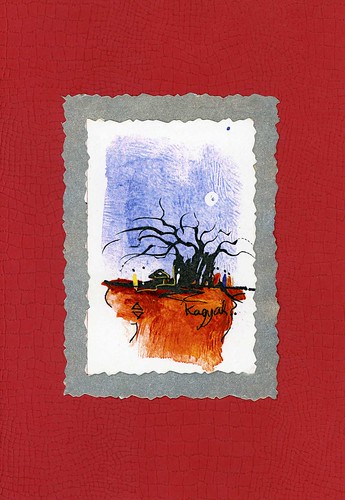
kagyah tree card

Land of Concern, a playlist


For this soundtrack we head to the griots. Listen up. (spotify version) There are any number of remixes of Salif Keita and the great Oumou Sangare to round out the playlist.

Illustration by Peter Addae-Kagyah

This meditation is part of a series: In a covidious time

File under: , , , , , , , , , ,

Writing log: March 21, 2021

Monday, October 19, 2020

The Muse Wills What She Wants

The muse wills what she wants, I've found it pays to listen
Capricious as she is, she moves to her own tune
I daresay she's happiest dancing on stage by her lonesome
But I jump anytime she deigns to dalliance

Oh lucky man I am when her juices flow
Sweating, and nearly out of breath,
I'm consumed by the creative glow
Furiously scribbling the snatches she whispers
Fragments iridescent become scrolls of fanciful flight
Exhilaration at the fleeting steps in directions unexpected
The floor expands, the lights focus the mind
Pupils dilate and we continue gliding
Capillary action in these narrow spaces
Twirling in synchrony as if promised a return to Xanadu

There's only the dance, I move to draw closer
But it's not a tango, Spanish or Argentinian
There's a fundamental swagger and liquid consonance
The next movement, a dancehall from the islands
I can almost taste her essence, it's the nectar of the Gods
Her siren call is that of Mami Wata, a mid-Atlantic trance

The memory of the drought now firmly behind us
Butts shaking, you're released from writer's block
Ignore the panicked calls from the broker of your stocks
Market collapse be damned, you're with your Nubian Goldilocks
Her name, she says, doesn't really even matter
All the while you're hoping for a repeat encounter
We know that she remains a restless searcher
For now momentarily joined at the hip to this modern traveler

Enjoy the ride, give her a twirl,
Undrape the lace, and all those frilly sections
Dancing is expressing in the perpendicular your horizontal intentions
It's as if you've got no choice, you've got to move
The world can wait, don't disturb this groove

The muse wills what she wants, her intent cannot be missed
Before all this is over they'll be calling you afrofuturist
It's astonishing the directions she's taking you in
Leading you out of Babylon to God knows what section

Pushing you to explore all the boundaries
Of form, who knew that you had all these stories
Your folktales were written in the Ananse tradition
The Guvnor described them as crazed African magical realism

It's a matter of lineage and perhaps of ambitions
Allusions proliferate as you make intuitive connections
Glue layer people, conversation, your tribe's connective tissue

The muse wills what she wants, she's demanding compositions
At the back of your mind is Coleridge's interruption
Stay focused on the groove, release your inhibition
Her point of call is not that famed Atlantis
No, and not even the Gulf of Guinea
No, her essence can be found in the river Volta
Near Akosombo dam therein lies her still water
Sing the hymn of the big wheel or, rather, magic

The muse will what she wants, her intentions are stark
She loves being a girl, like the soul singer remarked
A Caribbean queen or Liberian girl
Friend, lover, sister, mother, wife
She's all of these, if only for one night
Sadly though, she ignores your plea to turn off the light
Still you're soul satisfied, that you cannot deny
Her shawl of shimmering lace and green kente simply out of sight

Mami Wata

The muse wills what she wants, you dare not question her.
She leads the way and takes you under
"Taste", she suggests a light repast
Smiling all the while with those subtle hints
You trust her in the moment, she knew how to give a kiss
Her raspberry beret and oh those lips
The prospect of a forbidden encounter
A fall from grace, you will not be denied
Between the sheets, a glimpse of paradise
Her concerns are earthy, romance be damned
If that's your girlfriend, she wasn't last night
The fallen idol who roams the land
Her moon is a harsh mistress
"Can I come up for air?"
Return to the land down under

The muse wills what she wants, every moment you should treasure
Her hands are invitations causing frantic gestures
She's only holding pieces of a man
You're in Eden, you'll never leave this place
Paradise lost, a trip on the Selective Amnesia Express
Parental guidance advised, this is adult business

The muse wills what she wants, she draws outside the lines
There's a craving for touch especially in these covidious times
Reach out for sensation denied by this baleful social distancing
Your strategy is empathy, and that old faithful, social living

Shall I compare thee to a Bukom beauty
All ebony curves jiggling yet toned with the strength of mahogany
Azumah Nelson's ring savvy, she strikes with fierce intent
And parries our opponent's jabs of adversity
Her fundament gives core strength to face blows to the body
Dodging the blows of providence at the ready
We trace the contours of her patterns but write our own stories

The muse wills what she wants, I too shall not want
You'll gladly be infected by her novel virus
The spring break party, Freaknik, without the hangover
Got your heart racing, what happens with her stays in her confidence
There's no walk of shame or frantic morning after
There's only the moment, capture it and share
Luxuriate in her coat of pink cashmere
Write divine folktales full of twists and turns
Reversals of fortunes, moments of disbelief
You see the shape of the narratives
Emerge fully formed, an instant conception
There's no labor or caesarean section
You may serve multiple masters
But there's only one muse and she demands action
She knows your name, the contours of your face, you feel stronger
After all, she billed you as the chief toli monger

The muse wills what she wants, you've become a dream weaver
Yours truly forever her partner in the dance
Her words loom large, "Leave nothing to chance"
The end of the affair or rather a brief encounter
Do not be presumptuous, there's only the dance
Her gifts, she bestowed freely and without concern
You've gained what you never had at conception
A taste of eternity, you belong to me.
If I ever lose this heaven, mercy, mercy me
The song begins to fade in the room.
You will the DJ to mix in another tune
Beat matched so she'll not skip a beat
Relax with pep, she's your lady mahogany

Mami Wata

The muse wills what she wants, you've inherited her chosen mantle
Draw closer, the last bars explain it all
The stories that will buoy you back to your kith and kin
The journey's reward is the real odyssey.
Her revelations the key to unlocking
Collapsing narratives or romans-a-clef
Like a highlife band that plays on all night
Eschewing slumber, such are her earthly delights

The muse wills what she wants, this is no swan song
Her pearls are not of received wisdom
Proverbial zingers and quintessential abstractions
Wist and nostalgia, grateful that you are tonight's selection
She leaves you like Tantalus,
Poised on the verge of getting it on
Her gateway drug was inspired direction
Your village moves and dancehall stylings bring forth a laugh
The book she wrote also includes forgetting
Was that a twerk? Now this is interesting.
Tonight it seems like there'll be no slim pickings.
But turns out it was really only a tease
There's no catching a social disease
Your muse is personal, your font of gratitude
For inspiration and her wild attitude

The muse wills what she wants, you accept her direction
Sign the liability waiver and accept any peril
However these early signs of a new dawn
Intimate the impending loss of your writing apparel
The ink is fading as you scribble in the margins
Still you daren't call it quits, the words are too few
Just be good to me. She turns to you.
Panicked, you fear the cold shoulder
Instead there's only one word: Darling.

The muse wills what she wants, enjoy this moment
You wonder if you'll ever get one more chance
To perhaps engage and build a romance
But you know your heart has been stolen
To be returned at a time of her choosing
Hold on to your soul, we've got a long way to go
'Twas an easy conversation and precious leisure
The long thief in the night, a hint of carnal pleasure.
The act of creation without the attendant fall from grace
A thought movement and taste of lyricism incarnate
The impending absence almost renders you disconsolate
But again, as if she senses your need
That word again gets a repeat: Darling. Indeed.
Mami Wata

The muse wills what she wants, and she's engaged your full attention
Intercourse by other means, your entire disposition
"I choose you", the chant comes from Paris
London's got soul, it's all in the function
Whimsical musings, like a bullet from a gun
Interstitials present themselves at all levels
Liminal spaces where she conducts modern travelers
Fellow immigrants and mid-Atlantic selves

Oh devil woman, like Mingus would have you be
Bewitching me with your sundry charms
Moving me to excess as you prance

I seek your embrace, bosoms worthy of Lake Bosomtwi
The ancestral heartland. The butt aesthetic
To revisit an earlier flirtation with google infamy
Like a tribe, my current quest is dedicated to the art of moving butts

This joint, social interplay and words that make you
Get off the wall and turn this mutha out
Wordsmithing my craft for your own entertainment
I know it's a shell game, with your sleight of hand
And deft footwork, but I have no shame.
I come to you unvarnished and matter of fact
My loin cloths made out of dutch wax
And the occasional Chinese counterfeit prints
The sleep cloth my grandma gave me soft against your skin

The muse wills what she wants, it's becoming a mantra
Tantric and irresistible percussion, she's got street cred
The Low End Theory's here, let's sample some bass from Ron Carter
Or back to basics some Fela: Original Sufferhead
Amoulanga's groove cannot be denied even with the Casio keys
I'll take out my white handkerchief and follow you in the circle
We'll dance bobobor even after the zoom funeral
You've got me writing my own Ballad of Dorothy Parker
A fever dream oh muse, this fateful encounter

Ayikoo oh muse you'll give me trouble
Having me up at all hours composing grace notes at the double
I'm writing in the dark, I dare not wake this sleeping beauty
By my side, yet the prose poem you've conceived is my duty
Visions of grace, but I'm no Absalom
Pride and vanity, caught by the branches of fate
No rebellion for me, to be discovered by King David's men
Your willing servant instead, or, rather, faithful friend

The muse wills what she wants, you've packed your bags already
Got your passport stamped for the reception with Her Majesty
The tale you wrote was Ghana must go versus Louis Vuitton
Then that reporter surfed in with her roving ambition
You documented the case of plaids bags and plagiarism
When confronted, The Telegraph's blame was shifted to "our researcher"
Who came across your intricate patterns and their sensuous textures
Those others can copy your words, they are a gift from the Gods anyway
They write articles, books, all manner of publications
There's hardly a month without a new missive, it's a hustler tradition
You've lost count of the copies, it's a fatal attraction
The careful few cite, but most don't, and some have mercenary ends
Chalk it down to the ecstasy of influence
The virtue of a link, telling your story is a soothing balm
"Throw it away", she sang, hearkening back to Abbey Lincoln

Mami Wata

The muse wills what she wants, trust her proverbial wisdom
Writ large and dispensed in Adinkra symbolism
The ancestral messages encode African electronics
Messages passed via Talking Drums and lush fabrics
We have a different approach to mathematics

Our discourse is of cultural universals and particulars
Quoth that famed cosmopolitan and august philosopher
But that comes from a society that hews to consensus-oriented politics
Not like the United States where symbolism detracts from comfort narratives
Shell games instead of reconciliation are the American dream
And so mercenary disgrace trumps regret or shame, it seems
Paper over the cracks in the cement of society with the hard sell
Buy something you consumer, go back to work in this earthly hell.

The muse wills what she wants, it's a sensuous whisper like that diva sang
Little Stevie Wonder couldn't resist that vision named Chaka Khan
He forsook even Syreeta in musical pursuit
Of conversation peace and golden voices
We were gifted with winsome rare groove
And considerable comfort food
You know the words of the song, sing along with me,

Tell me something good
Tell me, tell me, tell me

Tell me that you love me, oh muse tell me

Back in that hallowed garden, I tasted the fruit of knowledge
It's about retention, all those books, long have I read
Mate masie: knowledge - I have heard and I have kept it.
Us Akans are known for proverbial thinking
An awoof conception, it takes two to do the corruption tango
The rough beast lies next to me as I awake on the beach at Beit Lahiya

The muse wills what she wants, you're flirting with danger
What with this sleeping beauty stirring from her slumber
She took you to Agotime on a weeklong visit
You talked with the kente weavers, their wares exquisite

She got you in a dispute with your paternal crew
Your house is also Aburi, you descend from chiefs in Akim Swedru
Gyasiwah's descendants should rather claim that it's all about Bonwire
Either house has narratives placing them at the origin
Don't get involved in the invention of tradition

The muse will what she wants, a conundrum like a driver of a taxi
In the morning you hope to decipher the words scribbled on the pad
Or etched out in Android words courtesy of a Samsung Galaxy
You prefer paper with its tactile sensation
The forcing function of words written with intent
The transactional cost of crossing out idle thoughts
A Tobin tax on food for thought
Further, machine learning might cause dismay
You wrote an earlier trouble ticket
About this curious artifact of software modernity:
The occasional regret of auto-correct
Also: cultural sensitivity in technology

Mami Wata

The muse wills what she wants, she deserves all the credit
You shall not stray from the discovery
Her path and her wandering ways
The road to freedom, you cherish the day
Her caresses are those of night nurses in Crystal Palace
The mind escapes to Akim Swedru, you seek solace
The Asantehene considers us a friendly kingdom
The names of our Queen Mothers
Gyasiwah, Kumiwah, Ansaa, Abia
The names you pass on to your spawn
Unbroken chains that help you breathe
Even in the anomic land of red, white and blue
Rather you revel in the red, black and green
Your black gold of the sun, the treasure was found just off Cape Coast

"You're going through a prolific phase right now,
You might want to hold something back"
Thanks, you're well meaning, but that's what the gatekeepers,
Those who use the word "content", say
To keep you on their human capital track
The muse wills what she wants, she's no Buzzfeed content
She's no Vox optima explanation factory farm
Your views are yours alone, goes your employer's disclaimer
Their search engine optimization games reek of meat rendering
Render / Rendition, you coined the word erustication
There's joy in small things, never forget your mission

The muse wills what she wants, there's joy in repetition
Find the lost stories taken by that Pied Piper of RNA
As for global narrative collapse, the toli monger's antidote
For life in a covidious time, is written deep in your DNA
Africa's contribution to the pandemic
Is to add value, you can compose prose epics
It's the great game to them, they'll soon be assigning blame
When elephants fight, at ground level it's all the same
Voices inside, like Chinua Achebe wrote
Not background scenery, we're beyond the heart of darkness
Be like the prose king of Zanzibar, deftly transplanted to Sussex
Just because a lizard nods its head doesn't mean it's happy
And so, as you ponder your narratives, don't be idle
The tomes you write for the world weary
Herd Immunity and The Mosquito Principle
And make sure to complete The Chicken Bone Theory

The muse wills what she want, she drives me to excess
No Anglosaxon brevity for me, I put it all on the line
Our town criers are unconcerned with mere notions of time
The journey as you know is the urban griot's reward
So I disdain the constraints of your meter
Those measuring sticks cannot comprehend
The fluid dynamics of African material science
Our oxidation layer covers our inner steel
This second skin is our ultimate disguise
Our mystic brew confounds the bitter roots of our confection
Your bioprospecting aims to plunder our herbal ways
Tonic and bitters, the risk factors, and medicine for my pain

Mami Wata

The muse wills what she wants, she mentioned Chamoiseau
That word scratcher, the griot of Texaco
Well your slums are in Nima, the soul of Ayawaso
Your library books bestowed in honor of that lost librarian
Now expecting a child, it's hard to be living mediated by a Canadian
Or the ways of the porcupine, turn to Mabanckou
Tails of the blue bird, weaving through an open city
The art of omission, you too can embark on the normalcy project
The perils and power of your tribes, vibes and scribes
Incognito, you move as modal minorities
Some of us have long been exiled souls, unmoored as we write
Men and women of no country, oft branded with faint praise,
The labels neo-soul, afropolitan, as if we were rootless cosmopolitans
No, we remain firmly grounded in Nyame, Nyankopon plays our siren song

The muse wills what she wants and I shall not falter
No identity crisis is at the heart of the matter
Our roots go back further than flowers of May
The pot of wisdom collected mankind's stories
And so we dispense toli and sing your glories
Like the Gyrlz, talk about a love story
You find yourself writing love poems for your queen of sanity
Why you wanna, play these games on me?
Or would you have me perform the remake, return of the mack
We can sing ghetto anthems of the young, gifted and black
But no, you say, I think I can detect
The gray hairs looming and middle age spread

The muse wills what she wants and it's a jook joint party
Risqué double entendres, indeed you'll risk everything
Wager your black soul for the promise of her bliss
Frisson de folksonomie, let's be discreet about our affair
Liaisons dangereuses, revealing of one's character

The muse wills what she wants, she put you in a trance
Transported to Haiti by the stone that the builder refused
Toussaint L'Ouverture, there's grit in the maquis
Man in the hills, our borderlands we roam freely
Internally displaced, we feel deeply this modernity
Refugee hearts betrayed by capitalist uncertainty
You'll write the toli manifesto, a monger's article of faith

The muse wills what she wants, I hope you've enjoyed this play
Like your sister-in-law sang on that happy day
Remember your marital vows, as you dance come what may
Odo nyera fie kwan, as the elders say
Love always finds its way home, even after the last dance
When the party's over, there is no shame, it was no mistake
What is the tenor of a man that he leaves love in his wake

Mami Wata

Mami Wata, a playlist


If you see Mami Wata, never run away (spotify version)

The Muse Wills What She Wants, a playlist


A soundtrack for this note, musical font of inspiration, call it an annotated prose poem. I give you six hours of comfort soul food, the foregoing thirty-odd stanzas deserve no less. (spotify version)

A Note


This note was written, as if in a fever trance, in six hours on the evening of June 6, 2020. My various computers were out of commision and my trusted moleskine notebook had disappeared. The laptop that The 7 year old normally uses was going through a Windows update, and the spyware that The Wife's university's IT department installs on hers was also being updated, hence I'd had to give up my normal writing implements to him after I wrote the first line. Instead I wrote that night on whatever loose sheet of paper I could find; envelopes, receipts, and mortgage bills played a part, although eventually I located a yellow pad. There were pauses for dinner, to put the children to bed, and to argue with The Wife. If I remember correctly, it was an argument I lost, and I was on probation that night, so I couldn't exactly leave the bedroom to continue writing as I wanted. Luckily, I noticed that The 9 year old had been doing some drawing in our room and a few more sheets of paper lay by my bedside - the back of her artworks would do. Once the beauty fell asleep, pen continued to meet paper, although, I admit, it was hard to scribble my words in a straight line without any light. I had caused enough marital trouble to risk the bedside light. I rather feared that I wouldn't be able to decipher this stream of thought when I awoke.

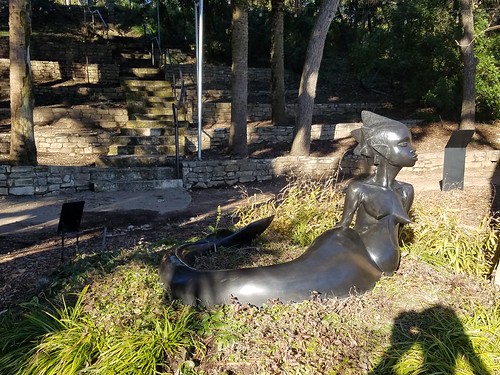
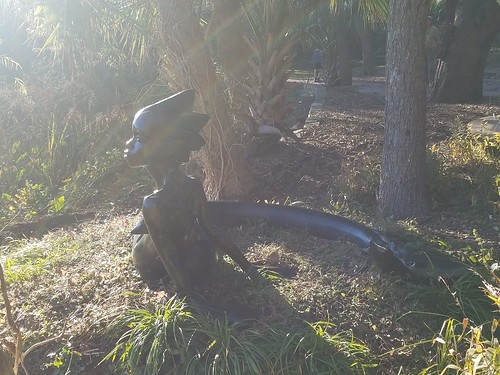
I was pleasantly surprised in the morning with the paper scraps and the pad that I assembled. I sat on what you have read above ever since, and just got around to transcribing and adding in the links - I'm a hypertext thinker. The visuals of Mami Wata are of Wangechi Mutu's Water Woman, a work we came across walking through The Contemporary in Austin, a few years back. I would normally edit ferociously for length and content - one could probably mine the many strands of the outpouring outlined here, and dole them out over time in bite-sized chunks. But, given the title and subject matter, I decided to simply publish the entire conception. I am minded of an encounter with Abbey Lincoln and her injunction to just do your own thing, write your own material, and simply get the work out. "Throw it away", like she sang, "for you can never lose a thing if it belongs to you".

That afternoon, I had reread two essays from my favorite book of essays, Hilaire Belloc's On Nothing and Kindred Subjects. The first was the opener, On The Pleasure Of Taking Up One's Pen, which provides simply luminous insight into the creative process - I aspire to one day reach those heights of lucidity. The other was On The Illness Of My Muse, which ends with what I still consider the greatest hatchet job on Rudyard Kipling, I recommend the whole book to you. A few hours later, the muse called and gave me the first and the last line. As for everything in between, I had to dance with her.

Postscript the second


There was a repeat encounter just days later. That time I was ready with the necessary notebook and computer. I published our conversation immediately; she called it Herd Immunity.


What is the tenor of a man that he leaves love in his wake
odo nyera fie kwan


File under: , , , , , , , , , , , , , , , , , , ,

Wednesday, March 18, 2009

Poetry as Cultural Memory

Kwesi Brew's poem, Ghana's Philosophy of Survival, is a curious beast, one that continues to confound even as it strikes a chord of admiration and indeed recognition. Judging by the title alone, there's no quibbling here about a pursuit of happiness, that laudable aspiration and seminal con. In this reading, the message of Brand Ghana (or maybe even the more general Brand Africa) boils down to survival, and a philosophy at that. You might be a little perplexed and expectant when you turn the page and first encounter the poem. Well, let's not get ahead of ourselves, that's only the title and you can read the rest for yourself. I thought I'd discuss a few poems and consider his notions of cultural memory: the things we choose to remember and to forget. Herewith some therapeutic toli...

Ghana's Philosophy of Survival


We are the punch bag of fate
on whom the hands of destiny wearies
and the show of blows gradually lose
their viciousness on our patience
until they become caresses of admiration
and time that heals all wounds
comes with a balm and without tears,
soothes the bruises on our spirits.

This is the mettle of invisibility.
This is how we outlast and outlive
the powerful and the unwise.
Whether it is best to wait
or engage the scarlet fury of battle
to stay the hand is for the wise to say,
and not the rashness of the moment.

But we have always been here on this land of ours.
Our country is our home and will always be here at home
To watch, listen and take our suffering
'til true happiness comes naturally and without bitterness.
Love of family kith and kin and brother-keeping
has cast us in this mould:
that while we take the blow and seem unhurt,
speechless, we also watch and wait.

Kwesi Brew, from Return of No Return (1995).
He doesn't pull any punches does he? Indeed he comes right out and gets your attention with the assertion that "We are the punch bag of fate". I admire the nerve as well as the craft. You can't help but be implicated in the "we" even if you're not Ghanaian because what follows are stark words. Phrases full of ironic caresses follow from a connoisseur of the school of hard knocks. He has thought long about the topic and is deploying his talents in plain language.

He isn't berating a culture of excess, or greed, laziness or similar human failing. He's not complaining, nor is he making any value judgments like the prophets of yore. No. Not quite. There's no moral indictment to be found here. Further, should we go looking in the opposite direction, we also won't find any praise-singing. There is merely clear-eyed reflection on a the workings of a community. We are treated to observations born of the discriminatory sensibility of a curator, observations wrapped with the detail of a wordsmith's weaponry. So, reflection it is. The mood is akin to wist, the atmosphere filled with the cosmopolitan perceptions of the weary.

It's a heavy burden however that he has set for himself. Discoursing on the lack of wisdom of the ruler or the excesses of the powerful is the first order of business. One almost expects this kind of pose of our poets. Still, turning the mirror at a society, as the cultural interpreter is wont to do, risks the weight of unpopularity. You get branded as a shrill gadfly demeaning the national character.

As an aside and recent example, it shouldn't have required much courage to criticize the opportunistic imps that landed us with wars and a depression early on in their misdeeds, but few displayed it. Now that the incompetence of that cabal is the conventional wisdom we all prefer to forget the social hysteria that prevailed and that they were able to exploit, the self-righteousness of the wounded and so forth. Cobwebs, I know, dusty cobwebs...

Carry trade - The things we carry - for love and of necessity


Returning to the poem, what are the contours of the stated philosophy of survival, I wonder? Let's start with the question of form. This isn't an essay, manifesto or political tract, it is very specifically a poem. The meter is off kilter - read it aloud and you'll see what I mean, I would hazard that this is deliberately so. He is usually very precise in his works. The chosen form is meant to disorient with its mixture of concision and paradox. The skill of the poet lies as much in the choice of words as in what is left unsaid. The tone also is very different from the exuberance of his earlier poems, the ones that excited a generation of Ghanaian writers.

There are certain phrases that are meant to heighten the tension. Consider the journey that starts with "the mettle of invisibility" and ends "the powerful and the unwise". It is worth dwelling on what we pass through: a coping strategy that helps us "outlast and outlive". If there are gems in this philosophy of survival, perhaps it is in a certain sense of community, the social interplay that Kwesi Brew describes as "love of family kith and kin and brother-keeping". Teasing out this clue, we learn that social living is the strategy. It's a protective mesh to be sure, but one that one that liberates from the peril of alienation that invisibility otherwise implies.

I keep returning to the last lines contrasting them with the first. It's an improvement, if not a reversal, with a sense of purpose. Cultural memory is the thesis. We may decide what we chose to remember and forget as individuals, what a society remembers, however, is often in the realm of the historian, who takes her cues from the raw material of the journalist, or the humble bureaucrat whose notes serve to underlie - or give the lie to, the politician or flight lieutenant's self-serving talking point memo. The hope is that a community will harken to the larger and deeper truths of a poet's lyricism, the storytelling of the griots of yore.

If it is sometimes good for a person to forget, it can be fatal for a community to forget. By the same token, it also matters what a community chooses to remember and to forget - the trappings of nostalgia, myth-making and selective amnesia mark out many blind spots in this landscape. The task then for the poet is to speak to cultural memory, to weave the dreams at once and to reflect on the messy muddle from whence we forge our society.

Kwesi Brew was perhaps the most famous of Ghana's poets (he passed away last year) although, and perhaps this is in keeping with his notion of survival, the poet in him was only one of the many lives he lead: diplomat, businessman, politician and so forth. He didn't simply witness the story of Ghana in the twentieth century, he midwifed the country and helped write its story with all its ups and downs, an active voice even when politicians and journalists would decry a "culture of silence". His declared task, and indeed his legacy, was to make sure that we never forget "the voiceless days of the past" as he wrote in another poem - contrast here with "speechless, we also watch and wait". Consider also the threat to "engage the scarlet fury of battle", and the almost Ali-Foreman rope-a-dope strategy he alludes to. Of course there is also is an element of myth making in the stories that we tell ourselves and he made sure to tell his own stories and to influence the things we remember about our small country. The lesson that Kwesi Brew's Ghana has to teach the rest of the world goes well beyond mere survival.

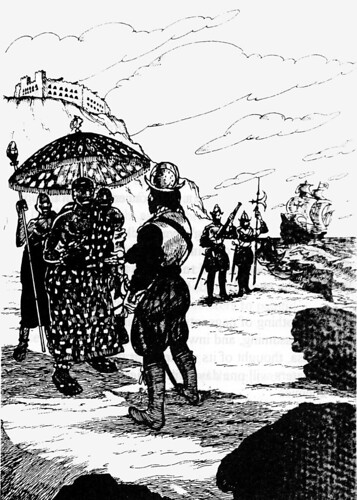
Don Diego at Edina - Elmina


The book of poems in which Ghana's Philosophy of Survival appears, Return of No Return is centered on a trio of long poems imagining the encounter of Africa with the West. The titular poem is written for his good friend and fellow poet, Maya Angelou, "No Return" was his nickname for her and a reference to the Door of No Return that is the feature of Elmina castle and the various other coastal castles on that saw slaves shipped off to the Middle Passage. Sidenote: these days the castles are tourist attractions of a mournful sort, legacy tourism they call it.

There's a story lurking here in the relationship between the two fellow wordsmiths. Maya Angelou, like quite a number of African Americans in the 1960s left the USA for safer and more hospitable climes. Some were in exile escaping J. Edgar Hoover, others the more benign recriminations of the civil rights era, and still others aiming to satisfy that longing for the motherland. In any case Ghanaian literature and arts in general benefited from the encounter - Efua Sutherland, Kofi Awoonor, Ayi Kwei Armah, Kofi Anyidoho and others would be part of Kwesi Brew's milieu.

Sidenote: by the early 1990s African Americans were beginning a second round of engagement with Ghana. The Leon Sullivans and Jesse Jacksons of the black establishment part of the seduction. No return was indeed returning.

Thus the terms of reference are ostensibly about the Return of the Native, and his note to Maya Angelou would deal with that and all the complexities of American and African interactions. He prefaces it however by considering the beginnings of that trans-Atlantic story and the centuries-long engagement with those who would become the colonizer. The two earlier poems in the series bear the title Don Diego at Edina (Elmina) and imagine a couple of meetings between local chiefs and the Portuguese. I think we'll call this poetic license but also much in keeping with Brew's own history. The Fantes were the first to encounter the Portuguese once these latter got their headstart on the high seas. Fantes are stereotypically reputed to be the most assimilated with the West. What stories indeed would they tell themselves about the relationship? His character of Don Diego Azambuja is perhaps based on his poet's notion of the first adventurers. Where does power lie? And how much foresight can we grant? This excerpt is a poet's history:
And the brown in the King's eyes thickened darkly over
The presage of gold on hands of iron, gold, gold, gold.
Will there be enough gold to dampen these fierce appetites,
Will there be enough gold, Kyeame?

- from Don Diego at Edina (Elmina)
The old chiefs were no fools but were confronted with guns, steel and the concomitant "fierce appetites". The second poem in the series, adds The Great Rebuff as its subtitle perhaps indicating the bad turn in this centuries-long conversation. In it the chief's Okyeame (his spokesman) whispers
Remember, Nana, temptation's honour is disgrace.
The stranger seeks the nether edge of your bed
To snatch your pillow for his head
when sleep overtakes your wakeful care.

Azambuja looked on.

Tell them, Kyeame tell them,
Friends who met but seldom,
Til death parts them.
Savoured the sweetness of untroubled friendship.
The nature of human heart wreaks its mischief
Upon close neighbours each smoldering with his own craving
From unfulfilled desires burst forth consuming anger

- from Don Diego at Edina (Elmina) The Great Rebuff
Again, the chief and his advisers have agency and foresight and negotiate as best they can. Perhaps this is an important point in light of the later catastrophe of the slave trade and colonization. He ends the second poem with an observation about nostalgia, moving forward a few centuries and laying the ground for his consideration of the African American yearning for return. He couldn't talk to his soul sister, Maya Angelou, without invoking the African memory of that dislocation and forging a common language. Again the entire suite is all about cultural memory, what we choose to remember and to forget.

The collection, Return of No Return, was a departure for Kwesi Brew, less exuberant than The Shadows of Laughter and less expansive than the vision outlined in African Panorama (previously discussed here). A mature meditation and a means to recapture his muse. Always clear-eyed, at times it is a simple critique. Consider:

The Force Of Evil


When bad men
Pass through a place
The way is closed
Behind them by the injured,
Even to innocent men.
When in this mood, titles such as Democracy with a Dark Face, Power Perverted should give insight into the focus of his observations. Miracles and the Message is his reflection on the 1983 drought in Ghana another sore episode and one that is rarely addressed, even as its effects linger.

In writing about these topics, he was perhaps responding to a frequent complaint about the short memories of Ghanaians. So when thugs confront us, we should meet them with our active gaze. And just to prove this point here is Kwesi Brew as Jeremiah, inveighing against the military thugs who were then in the midst of their misrule. No one can say that they weren't confronted. Consider this excerpt from A Goodbye to Arms
Where the green khaki struts and grinds
its marijuana terror into unarmed hearts,
They come as men-at-arms
badged as justice, grim of face.
And then at last, dissembling cloak removed.
A pack of common traders stained in violence
Wresting bread out the mouths of babies
only to give it back to them at a price
so kind are they who betray us.
Mothers, fathers, children, brothers and sisters
Their own shame stained blood

...

Where is our liberty, you thieves of time?
Where is your vision of prosperity, disciples of greed?
Where is your safety of life, agents of death?
Trusting in these tempers of discontent,
We shall be free again
Free from fear, the fear of fear, the worst
And forever!
A nation's life is a span of just one single bold day!

- from A Goodbye to Arms
The play on the phrase "free from fear", favoured of election observers everywhere ("free and fair, free from fear") is perhaps the sole levity in that poem, a J'accuse directed at Rawlings and his chameleon crew who were ostensibly shedding their military proclivities (hope springs eternal). The rest of the collection, however, serves to round out the picture with laughter and acute observation. We can all use some laughter to leaven life, some riddles to puzzle over and some landscapes for quiet contemplation and revival. The oral tradition that was our past might have encouraged laughter and forgetting but it was also the font of proverbial wisdom and coping strategies for dealing with tricksters. The poets and writers of our present have their work cut out for them.

There is only one aspect of Ghanaian society that Kwesi Brew's words don't fully address in his works, and that is the growing influence of the new religions. Perhaps the urbane cosmopolitan in him didn't feel the need to consider these articles of faith as he spoke to memory. His message of social living was a worldly one even as it invoked the spirit of brother-keeping. It was simply his duty as observer to hew to that message, to bear witness to an unvarnished Ghana.

He lived then "in a land flooded with ubiquitous miracles" and fought the good fight, fashioning his way in the path of a long line of cultural interpreters. I love the texture of Kwesi Brew's poems, the exuberant efficiency of his wordplay and the complications he teases out as he captures both personal and social moods. His words are a soothing balm when the temptation of wrath beckons, they have the consistency of shea butter, guaranteed to heal open wounds and I feel very close to their vitality.

I often feel impatient about Brand Ghana, the twists in the writing and the frequent setbacks. My elders counsel me that it is best to dwell on the small things, to look at the big picture. Talking the long view is a hard thing for the impatient; watching opportunities pass by as small mindedness prevails seemingly at every turn. After reading Kwesi Brew however, I come back refreshed. I no longer begrudge the sanitized fairy tales that many like to tell about Ghana - they have their uses, and, if anything, sharpen my resolve: resist nostalgia and the larger temptation of myth making. Lyricism and clear-eyed reflection were Kwesi Brew's weapons of choice. We are writing the story, we have been writing it forever.

Poetry A Playlist


This is the second of some reflections on Ghana, prompted by the recent election. Let's place this note in The Things Fall Apart Series under the banner of social living.

File under: , , , , , , , , , , , , , ,

Sunday, June 04, 2006

Jaundiced Zingers

Further nuggets for the toli scrapbook... ala Dictionnaire des Idées Reçus (Dictionary of Received Ideas) from Gustave Flaubert.

Hatchet Jobs

Choosing Denis Sassou-Nguesso over President Omar Hassan Ahmed Bashir of Sudan is sort of like passing up Idi Amin in favor of Moammar Kadafi.

— From an LA Times editorial, To lead Africa, commenting on the election of a new president of the African Union and how a gun-running rogue won out over the "slow genocide 'moderate' jihadist". The choices we have in Africa... God help us.

The anemic Mr. Shakespeare specializes in meaningful pauses and cryptic silences. A pastel watercolorist, a stylistic vegetarian, he is inadequate to the task.

William Grimes on Nicholas Shakespeare's In Tasmania

The God of Small Things is a hit with coffeehouse book clubs now for the same reason that To Kill A Mockingbird was a hit with Reader's Digest types fifty years ago. Both affirm the dim simplicities: Children are innocent; grownups are bad. Love is good; prejudice is bad.

— John Dolan on Arundhati Roy: The Goddess of Big Lies, part of the "Great Literary Frauds of Our Time" series.

Now, I know it’s customary in D.C. journalism to understand Harry Truman the way Joe Klein does: as a symbol, as a lovable, plain-spoken guy from the "heartland" largely unconnected to actual politics... So maybe it’s a little unfair of me to call attention to what Truman actually said. But Mr. Klein’s repetitive invocation of Truman, plus a little regional pride in the man, compelled me to look up the Turnip Day speech. Having listened to a recording of it, I think Mr. Klein is right in insisting that it be regarded as a model for Democratic candidates. I can also report that what Truman said in the speech is in almost every particular the precise opposite of what Joe Klein advises contemporary Democrats to say.

— Thomas Frank on Joe Klein's Turnip Day. A great piece on the fetishization of "authenticity" which apparently only Joe Klein is able to discern accurately.

Wherefore The Vicar of Bray?


I do love a good savaging of some of the blowhards that pass for public intellectuals, it keeps them on their toes - well it occasionally serves to reduce the chutzpah quotient. I am still gearing up to take on Thomas Friedman whose intellectual acrobatics, like those of David Brooks or Joe Klein, continue to be a source of wonder. When I think about the malleability of their rhetoric, I turn back to the poem and song in which the case was best laid out about willing chameleons and their agility in retooling their message for the talking point of the day, the Church of Rome and its authoritarian ways.
The Vicar of Bray

In good King Charles's golden days,
When Loyalty no harm meant;
A Furious High-Church man I was,
And so I gain'd Preferment.
Unto my Flock I daily Preach'd,
Kings are by God appointed,
And Damn'd are those who dare resist,
Or touch the Lord's Anointed.
Indulgences are many...


Cryptonomicon consisted of nerdish Mary Sues afloat in a sea of Cliffs Notes for popular science books. Angels and Demons retains the nerd protagonists but adds a layer of cack-handed James Bond stuff.

— Kieran Healy cast his jaundiced eye on Dan Brown's Angels and Demons; the result was succint and savage.

The modern Republican Party is the result of collusion between a movement to take U.S. jurisprudence to the pre-Depression era, and a movement to take culture back to the pre-Enlightenment era. It is doomed because the latter would like a theocratic state to regulate culture, and the former want to smoke dope and look at dirty pictures.

— Max Sawicky - Maxspeak Maxim IX. See also Maxim V.

Dada by way of Funkadelic

What is the source of food for thought?
Ego-munchies
Image doggie bags
A me burger with I sauce on it
A myself sandwich
A personal burger
Hamburger
And a glass of constricted cola
Out to lunch with lunch meat
The fear of being eaten by a sandwich

Low calorie logic
Muscle brain, skinny brain
Count the calories of your thoughts

— Funkadelic - Promentalshitbackwashpsychosis Enema Squad (The DooDoo Chasers) from their 1978 masterpiece One Nation Under a Groove.

Singing during a Carterian window (pre-malaise) and shrewdly antipicating a Reagan retrenchment, Star Wars, Iran/Contra, El Salvador and crack epidemics, Mike Hampton's guitar, Bootsy Collins's bass and Bernie Worrell's keyboards laid a musical soundscape that meshed with George Clinton's escapism and scatological insight. The band were at their peak and Doo Doo Chasers and Maggot Brains were on the menu. How I wish the P-Funk crew would provide a musical deconstruction of the current moment. An Emersonian transformation is sorely needed.

On Napoleon's Tooth


A priceless cab ride; you should read it all
"Funniest trip I ever had to make," said the taxi driver. "Now, you'll like this one . . ."

"So I gets a call on me wireless," he continued, "an' 'e says; 'Ere, I've got one for you.'

"I says, 'Oh, yeah,' and 'e says, 'Yeah, you're gonna like this one, I want you to go to this address, in Kensington, pick up Napoleon's tooth and take it to Swindon for auction.'

"I says, 'You what ?' 'E says, 'You 'eard. Napoleon's tooth. An' I 'ope you're insured 'cos it's worth 8,000 nicker.'

[snip further hilarity]

"Well yeah, still, I'll tell you somefin'. You gotta 'and it to his dentist, 'aven't you? 'E shoves that tooth to one side, an' e says, 'I'll 'ave that and I'll keep 'old of it till someone invents eBay.'"

Sentences I Loved Writing

You know too the stereotype about black men, that we have large... vocabularies.

The ballads alone might cause unwanted pregnancies and bring opportunist politicians into your bedroom.

I know my place in America: at the intersection of Tenuous St and Hired Immigrant Worker Alley.

Rendition also reminds one of the worst practices of the meat rendering industry which we know indubitably leads one down the path to Mad Cow Square.

A Title for Future Toli?

Being emotionally in your pajamas.
I'm not quite ready to write something that does does justice to that title hopefully that could be next year's project. In any case feel free to use it.

Delineating Dysfunction


From one of my favourite songs of the past few years that I rediscovered last Christmas.
I really love it when,
I love it when we make mistakes
Because once again,
It gives me reason to complain

I love the battle lines
The battle lines we draw and cross in the mud
I love it when we fight
Standing on the verge of breaking up or making love.

What would I do if we were perfect?
Where would I go for disappointment?

Love without pain would leave me wondering why I stay.

I think of saving myself
But with nothing to complain about up in heaven what would I do?
Saving myself, but I really want to work it out
Down here in hell (with you)

Van Hunt - Down Here in Hell (With You)
I view this beautiful song (discussed recently at Breath of Life, my Sunday morning guilty pleasure) as an update of what Prince has sung: "what's this strange relationship that we hold on to?". In troubled times, when we are all singing the inflation calypso, we are prone to anaesthetize ourselves in nostalgia. Still, artists and grifters will always find a fertile ground celebrating the dsyfunction of the B-movie theory especially in America. It is no surprise that Elijah Muhammed and Berry Gordy arose during the civil rights movement or that Iceberg Slim wrote during Vietnam and Nixonian larceny and so forth. In this vein, it stands to reason that Van Hunt's father was "a part-time painter and a pimp" as he recounts in his musical autobiography. From this springs forth his ground level view of dysfunction and the hard sell. His observations of the hustler ethic informs his music and it leaves him "curious about what it was that happened during the day that makes people do what they did at night". As he puts it, "it is the inner turmoil and struggle to remain sane that stimulates" him. A personal sign of the times and melodious music to boot. You can sample the acoustic version of the song for the next few days.

The Fluidity of Ideas


Circa 1988 or so, I could often be found saying
Dancing is expressing in the perpendicular your intentions for the horizontal.
as part of my teenage flirtation arsenal. It served to lower people's guard in parties and the occasional nightclubs. I continue to use the expression since I believe in sticking with formulas that work. I never quite figured out where I got the witticism from and, for a while, was quite chuffed at myself. Of course that was just intellectual laziness and Google being the great Oracle, it took 0.3 seconds to get the correct source, George Bernard Shaw, and formulation:
Dancing is a perpendicular expression of a horizontal desire.
I prefer the original to the toli remix but I'm tickled also by the derivation. It stands to reason that back in 1988 I directed a George Bernard Shaw play, Passion, Poison and Petrification or the Fatal Gazogene. I was even rereading said play last month and considering giving it a toli remix in the things fall apart series. The sampling of music and hyperlinking of snippets on the web are proxies for the fluidity of ideas in the modern world. We're all standing on the shoulders of giants and I wonder how many other notions are being reinvented and reinterpreted these days.

This Fanon Paddy


There aren't many who write on Ghana in the blogosphere but those that do always bring different perspectives to the conversation and with sometimes startling turns of language. I quite like this pidgin deconstruction of Fanon's ideas.
If we all start live like Americans aa, the earth no go fit handle am.

Apart from that, America too have in own problems. One of den problems be public squalor versus private opulence. Even though most parts be ok, more yards be nasty whereas some other posses dey live in fantastic neighborhoods.

That no shedaa be dangerous for a place where dema middle class be large. But transport such an idea to Ghana den trouble... Few obscenely rich people and many poor people. That just be the recipe for armed robberies and Ataa Ayis, no be so?
Be so, Paa Kwesi, it be so.

Further Proverbial Zingers


A Ghanaian proverb I discovered from a French blog now sadly disappeared from the ether. Said blog apparently doesn't believe that permalinks should be permanent - this brittle web of ours.
Si tu transpire c'est qu'il y a un motif.
roughly translated as
There must be a reason that you find yourself sweating.
If anything the proverb is reminiscent of
where there is smoke there is fire.
It sounds quite nice when rendered in French, I wonder if 5 years from now the French will be claiming it as their font of wisdom. I hope therefore that someone can fill me in on the wording in the original language (is it twi?) I don't remember running across it previously.


I recently pointed out this one
Trust God implicitly but always tie your camel up at night - proverb from Northern Ghana
Nothern Ghanaians have a quite fatalistic outlook on the world as exemplified their proverbial sayings.

[Update] It turns out that the Prophet Mohammed as noted by Al-Tirmidhi was the origin of the above saying, the fluidity of ideas again. The story is that
One day Prophet Muhammad, noticed a Bedouin leaving his camel without tying it. He asked the Bedouin, "Why don't you tie down your camel?" The Bedouin answered, "I put my trust in Allah." The Prophet then said, "Tie your camel first, then put your trust in Allah"
If I recall correctly, Ali Mazrui has a bit about how Mohammed was the only one of the great semitic prophets (following the Rule of Four Mazrui meant Jesus, Mohammed, Marx and Freud) who experienced upward mobility during his lifetime and how it coloured the resulting outlook on life. Hence the practicality and some say dogma of Islam. One of my biggest blindspots in my reading of Africa is that I discount the Islamic influences. Well Mazrui is a good starting point to rectify that and Amazon will be getting more of my money...
If God breaks your leg he will teach you how to limp - Dagbani proverb, Ghana
It stands to reason that they deal with conflict in ways that mystify their fellow countrymen.


On my maternal side, in the Volta region, they are concerned with being prepared and using the right tool
When you have a club, you don't kill a snake with bare hands - Ewe proverb, Ghana
I wonder if the nail and hammer trope sprung forth from this notion or if it is the other way around? Cultural interplay is the order of the day.

Mobile Phone Wisdom


Mobile phones have taken off in a big way in Ghana in the past five years (I am due for some musings on the topic) and, as elsewhere, they are affecting our vocabulary. Thus:
"Out of coverage area."
That was the reply to a question about whether a friend back home currently had a boyfriend. I knew exactly what she meant.

There is much in my life that is out of coverage area, we need some soothing balms for these huhudious times. As it turns out, it is a simple matter of erecting cell phone towers everwhere and building redundancy into the system. But then there's the matter of getting over the "not in my backyard" business. Someone needs to build these metaphorical infrastructural edifices to preserve the commons. I know I'm trying to build a few in this joint. Your contributions are welcome...

See earlier wistful and proverbial zingers.

File under: , , , , , , , , , , , , , , , , ,