Sunday, April 01, 2007

Articles of Faith

Let's have a look at some pop art to continue the Things Fall Apart series, this time an entry in the Comfort Suite.

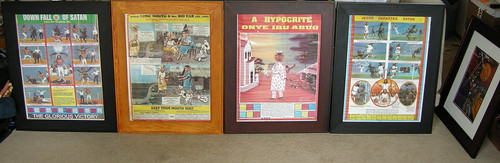
In considering the various responses to the themes of my ongoing series, I've been wondering what helps keep things together even when there is much cause for despair. Culture and art are the standard answers it seems. Another partial (if obvious) explanation in Africa is religion, and consequently the topic of this note is articles of faith. My entry point to the discussion will be a few Nigerian calendar posters that The Wife bought in Northern Ghana in 1999. Christianity and Islam are among the visible competitors in the cultural and political marketplaces of Africa and are no strangers to advocacy for our souls. Thus I direct your attention to a photoset: Articles of Faith.

The artist is a certain R. Nkwonta of CAS Creation; God's Providence Printers of Mushin, Lagos are the publishers. Posters and sign art of this sort are quite popular throughout West Africa. Nkwonta's are among the most distinctive I've seen. Religion and various social mores are his favoured topics and they are tackled with aplomb.

We are in the realm of pop art and agitprop - guerrilla marketing, in short, in the service of the Good Lord. Of late, there has been the move to digital presses but the motifs of traditional sign drawing have been preserved in these handpainted posters. The graphic style might be labeled folk art by ethnographers, or crude or primitive to certain eyes, indeed the strokes are broad and exaggerated. Much like traditional African theatre, or say the newfangled Nollywood movies, realism is beside the point. Rather it is all about the message, this is engaged art.

But less prose, let's start, if you will, with the downfall of Satan.

Fall from Grace
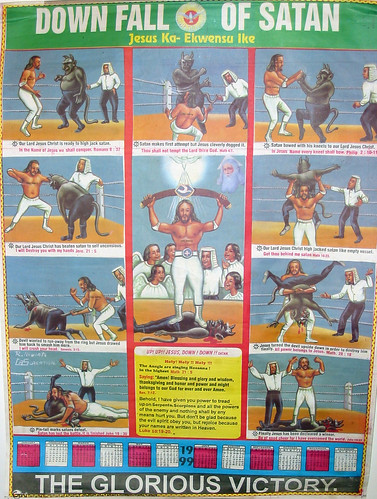

downfall of satan


The story recounted in this poster is "The Glorious Victory" of Jesus over Satan in a hard fought wrestling match. It is worth paying attention to the panels of this low brow tale of angels and demons; a close reading is revelatory.
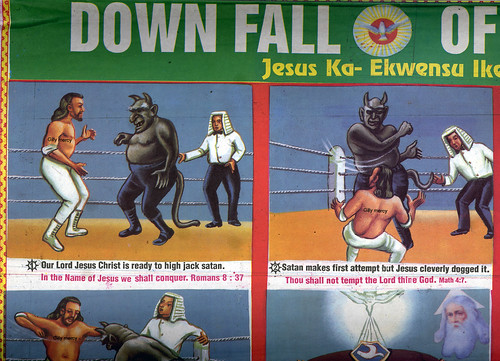
downfall of satan


Each panel you'll note is accompanied with the requisite quote from scripture. A few typos notwithstanding, the point is easily conveyed. First:
Our Lord Jesus Christ is ready to high jack Satan.
Then:
Satan makes first attempt but Jesus cleverly dodged it.
English is not the author's first language but we'll admit that the malapropisms are inspired: "dogged" is a good stand-in for "dodged" since the horned Satan is behaving like a vicious dog after all - not to mention his attire. The "high jack" spinebuster is an apt counterpoint to the "down fall" of the poster's title.

Presumably God, as the Supreme Justice, is the wigged-out referee in this wrestling bout. Also note that Jesus's tattoo, with the "Gilly Mercy" inscription, seems to shift position, from arm to back to chest, once again proving that the Lord works in mysterious ways. I hope one of my Nigerian friends can step in with a translation for Gilly (it is igbo right?).
downfall of satan 3


The fight is on and a curious dance seems to take place. It's not quite a foxtrot it's more like a capoeira. Nkwonta later explains that "Satan bowed with his knees to our Lord Jesus Christ". This is only fitting and we can treat the horned beast like the "empty vessel" he is.

Soon enough we get to heart of the matter namely: "Our Lord Jesus Christ has beaten Satan to self unconscious". This is accompanied by Jeremiah's prophetic warning that "I will destroy you with my hands".
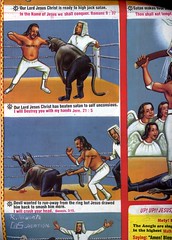
downfall of satan 4


The dripping blood from the wounded Satan is of no matter, this is an Old Testament aesthetic. We are told that "the Devil wanted to run away from the ring but Jesus drew him back to smash him more". As he drags Satan by the tail, Jesus's efforts are duly backed up with the words of Genesis 3:15:
I will crush your head.
My sunday school days of yore aren't too distant hence I would hazard that this verse refers to God admonishing Adam, Eve and the serpent.

Wrestling is a big tradition in certain parts of Nigeria. Nkwonta is undoubtedly a wrestling aficionado as are his protagonists who know all the high jacks and other sundry moves. We can only marvel at the technique displayed as "Jesus turned the devil upside down in order to destroy him".
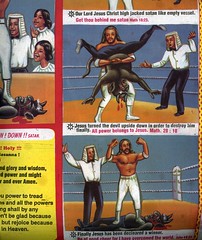
downfall of satan 7


Thus we see that a "pin fall marks Satan's defeat" and, finally Of course, Jesus is declared the winner.
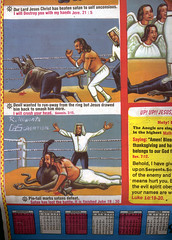
downfall of satan 6


"Up! Up!! Jesus, Down! Down!! Satan" is the ultimate message.
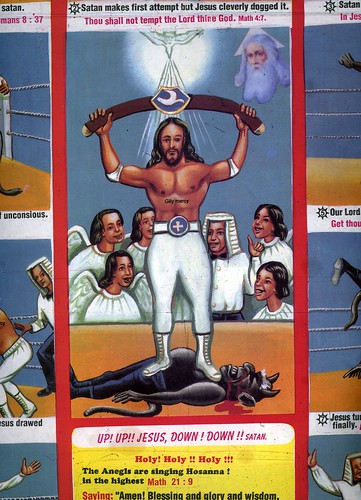
downfall of satan - victory


As the spirit descends in the form of a dove, Jesus, his six-pack abs rippling, holds his title belt aloft and delicately steps on the bleeding (and presumably permanently dealt-with threat from the perfidious Satan). Stepping on someone is about the most humiliating thing one can do; one can't understate the impact of the image is a society where respect and honour is paramount. All the time the angels smile and sing hosannas. My initial theory about God being the referee is proven mistaken, the bewigged referee is clearly part of the throng of angels. God is rather the spectral and enigmatic figure in the top right corner. The tropes of religious iconography have been duly satisfied.

Soul Struggle


We continue our discussion with a poster illustrating the ongoing competition for the soul of the African man.
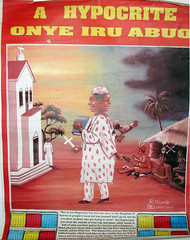
A hypocrite


No words are minced in the case of a hypocrite. The overt purpose of this exhortation is the shaming of hypocrites: those who, on the one hand, take up the the cross and bible and, the next day, turn to 'darker' matters shall we say. This is of course is often framed as a matter of tradition and modernity. There is much gnashing of the teeth in these areas and it is not just in matters of religion that this contest takes place. As an example, doctors in contemporary Africa steeped in the expensive western medical tradition often have to worry about their patients visiting traditional healers (typically dismissed as fetish priests and the like). In that case there is very real concern about the interaction of the drug regimes with herbal remedies and the plant impurities often found in them.

A hypocrite - church


After heading to Church one day the hypocrite turns to worshiping of idols the next. Note the dark clouds forebodingly pregnant with tropical rain and worse. The chicken (or rather the fowl) to be slaughtered is at hand. The skull and bones, the dead animals, the bare-breasted woman in the shrine, this is the heart of darkness one might say. This is the popular conception of fetishes, juju, voodoo and traditional African religions. It is to be dismissed as superstition as testified to here by the clay or wood idolatry of the mask.
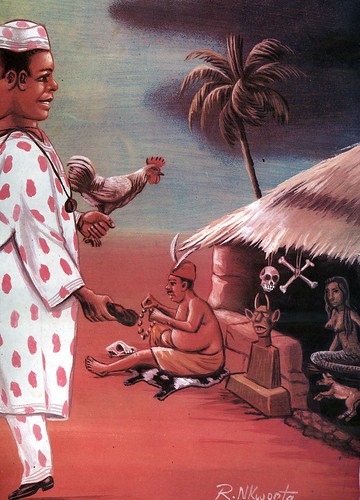
hypocrite locals


This has been a centuries old campaign in proselytizing of Africa in the encounter of Christianity and Islam with traditional African belief systems and religions. Those emblems of split allegiance are berated and ridiculed. The encomium is long
Woe to you hypocrites. You lock the door to the Kingdom of heaven to people's faces but you yourself don't go in nor do you allow in those who are trying to enter...
A sample headline in recent weeks in Ghanaian newspapers is along the same lines: Doom For Corrupt Leaders – Pastor Predicts
According to the Pastor, though this year 2007 biblically was a year of double blessings, any mischievous politician or reverend minister who intended taking undue advantage of his/her position to exploit the people especially the poor and less privileged was in for "double curses".
The accompanying image picked by the Ghanaweb editor to illustrate the devil is all pointy extremities as one might expect.
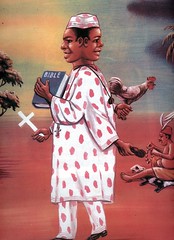
hypocrite


There is a long history behind Nkwonta's motif. Martin Meredith, discussing pre-independence Kenya, describes the oaths of loyalty the Kikuyu Central Association instituted in the 1920s:
the oath involved holding a Bible in the left hand and a handful of earth in the right hand pressed to the navel while swearing to serve the Kikuyu people faithfully.... [In the 1950s] the meat of a goat replaced the Bible... White farmers reported a mood of increasing truculence and incidents of cattle-maiming and sabotage.
Back in Nigeria, Rems Nna Umeasiegbu spent a decade respectfully documenting Igbo traditions, customs and stories that appeared to be disappearing and published his findings in his 1966 book The Way We Lived. His illustration of a juju ceremony is in the same vein although perhaps a few minutes later than Nkwonta pictured it.
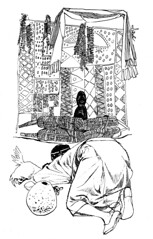
juju ceremony


The missionaries and colonists faced this intractable problem and the churches that were their legacy are still combating it and even apparently with greater fervour.

I recently noted that Busia commented on this issue when he asked "Has The Christian Faith Been Adequately Presented?". He framed the question as follows:
Some missionaries who have served overseas have unhappy recollections of trusted converts reverting, on certain occasions, to 'pagan' beliefs and practices. The experience was all the more stunning when the converts concerned were not the more recent ones, but Christians of long standing, sometimes with fine records of conspicuous service and loyalty. The problem takes on a new dimension when it is presented as part of the general problem of the encounter between Christianity and indigenous cultures.
He suggested a reversal of the typical context and advocated that the burden should be on the church to present itself as relevant to the local belief systems. In this vein, the art must reflect those themes - if only to subvert them; I suspect that Nkwonta is on board.

Match Made in Hell


A living religion must strive to be relevant to its practitioner's lives and interests hence we return to the sports motif with a football match between Jesus and Satan.
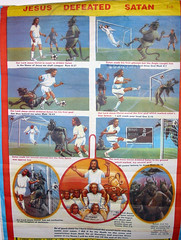
jesus defeated satan 2-0


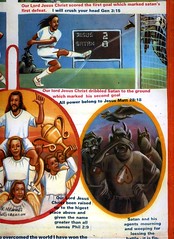
Despite the dastardly foul early in the game, Jesus dribbles past Satan for his first goal. As Matthew put it in his gospel "Get thou behind me Satan".
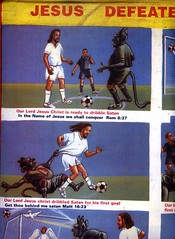
jesus defeated satan 1


A lot of fun was had in these panels and with economy in the illustrations. Observe the Angel flying to the right of the goal post to block Satan's first attempt with an athletic catch - Petr Cech would be proud.
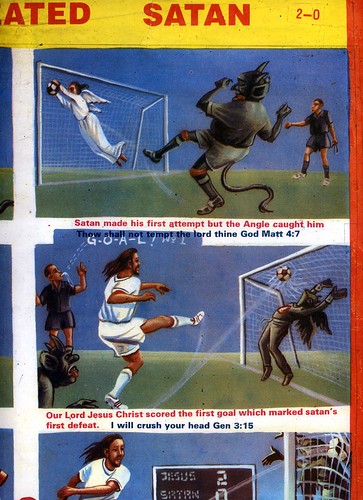
jesus-defeated-satan 2-0


To punctuate Jesus Christ's first goal we return to that potent scripture quote: the crushed head business. Others translate it as "strike your head", regardless, trash talk doesn't get more direct.

The story proceeds:
Satan then makes his second attempt but the Holy Spirit was against him.
The dove, embodying the spirit, diverts his attempt and the angel goalie, who had reacted tardily and would not have made the catch, skips happily, content at not having to make a difficult save. It pays to have friends in high places.
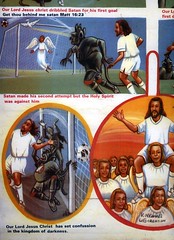
jesus defeated satan 3


Note, later on, that Jesus heads the ball over the hapless defenders of evil. Evidently: "our Lord Jesus Christ has set confusion in the kingdom of darkness". Again the style displayed is akin to that of the writers of the New Testament gospels who strove in their depiction of Jesus's acts to underline the fulfilment of prophecies with pointers to passages in the Torah.
jesus-defeated-satan-04


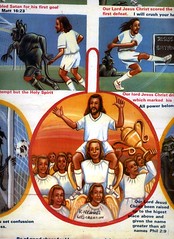
Interestingly enough there is a third goal depicted "when the Lord dribbled Satan to the ground which marked his second goal". Given that the final score (in smaller print at the top right of the poster) is 2-0 for Jesus, it must mean that the header of the other panel was disallowed by the referee. Alternatively this discrepancy might be a reference to the eternal mystery of the Holy Trinity in Church doctrine. Catechists beware.
jesus defeated satan - victory


As one would expect, a victory celebration marks the end of the match.

There is much that can be asked about these posters but we'll keep our exegesis brief. Do note, for what it's worth, that all the angels seem to be women. I won't dive too deeply into this female subtext (The Magdalene Propositions); I'll only note that the issue of female clergy and ordination of such is currently rending the Anglican and Episcopal churches apart (along with the stance on homosexuality).

Similarly I'll pass over the issue of the ethnicity of Jesus. Is he simply very tanned? And what about the nappy hair? Are those dreadlocks or just your typical semitic features? The tattoo tradition? Is this simply artistic licence in the pursuit of audience empathy or is a more subversive reading warranted?

Morality Plays


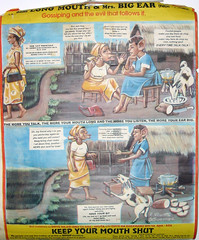
Overt religion is not the only mode that Nkwonta works in; social mores and behaviour fall under his purview - his is a complete worldview. Thus we turn to the case of Madam Long Mouth and Mrs Big Ear.
Madam Long Mouth and Mrs Big Ear


This poster is more in the vein of social commentary than religious admonition. He presents a typical morality play aimed at an audience who have recently left their rural abodes. The subject is "gossiping and the evil that follows it".

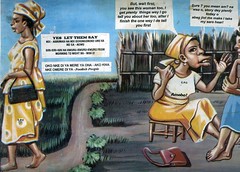
The object of her neighbour's gossip is saintly and minds her own business. "Yes let them say", she mutters to herself as she heads off to her good works.
Madam Long Mouth and Mrs Big Ear 1


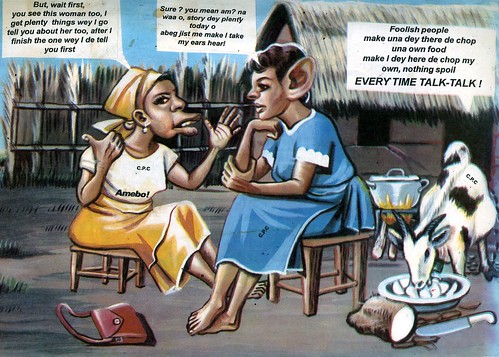
As for the neigbours, suffice to say that "every time talk talk". Long Mouth and Big Ear chat unconcernedly, neglecting their household duties, while the goat takes advantage to eat the yam from their plate.
Madam Long Mouth and Mrs Big Ear 2


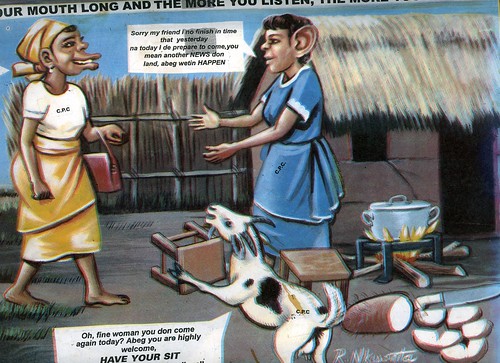
The next day Long Mouth returns, presumably for more of the same. Big Ear is glad to hear that "another news don land". She asks "abeg wetin happen?". The goat is equally happy for the visit and brays:
Abeg you are highly welcome. Have your sit [sic].
Madam Long Mouth and Mrs Big Ear 4


The subtext is clear: "The more you talk, the more your mouth long, and the more you listen, the more your ear big."

The lesson is to "keep your mouth shut", your food and more will go to waste.

Nkwonta's versatility with the poster motif has been rightly picked up by a few ethnology publications. Social anthropologists would have a field day studying his full body of work. Take for example his poster of The First Lady Wine Tapper. Social uplift is his message.

Elsewhere, and less successful artistically, similar painted movie posters have been exhibited. In those cases, instead of social commentary or religiousity, it is in service of lurid commericalism as in Extreme Canvas: Movie Poster Paintings from Ghana. To my eye those don't attain the heights I've shown here.

Nigeria, like many other countries in Africa, has been struggling to regain confidence after several lost decades. Along with the millennial implications of 1999, Nigeria was then just emerging from the suffocation of the Abacha years - waiting for an angel as it were. One coping mechanism for the years of arbitrary misrule and hardship was a turn towards these new Christianities. In a matter of a few decades, these currents are now asserting themselves prominently in the zeitgeist.

You may think the sentiment here is cartoonish, or dismiss it as crude, that it could only work in developing countries where audiences are cupid. I believe that the appeal is rather in their ingenuous charm. You know where you stand when confronted with this kind of rhetoric as opposed to some of the sophisticates we see in the West that are neither here nor there. Perhaps a certain simplicity has mass appeal in these troubled times. The spread of charismatic churches has been noted in Africa. Evangelicals and baptists are on the rise everywhere. In the US currently the arguments are over conservatism, Darwin's God, atheism and the like. The new Pope, per contra, thinks we should talk more about hell these days. Milton in Paradise Lost didn't shirk from this notion and indeed dove in with the definitive account.
articles of faith


We often dismiss the opium of the masses as dangerous, doctrinaire and simple-minded. Yet there is considerable humour when presented with this kind of whimsy. The themes are expansive, appealing and direct. The hard knock life is a staple of the Great Game. We are starved for meaning and religious types and their printing presses are quick to fill those gaps and "educate" our souls. One needs to get down and dirty to compete in the marketplace of ideas. Hilarity is a weapon of choice.

Nkwonta seems to have fully internalized those beliefs; his creations are testament to ground level pragmatism. Springing from the trenches, he produces his tokens one panel at a time, bite-sized gestures towards a certain spirituality. This is a complex piece of advocacy, an expression displayed without artifice. Low brow it may be but this is art in full, and effective at that. You certainly can't be indifferent to these articles of faith.

Soundtrack for this note


A short playlist on our theme (spotify version)
  • Stevie Wonder - Superstition
    Mr Steveland Morris jumps in
    When you believe in things that you don't understand,
    Then you suffer
    Superstition ain't the way
    The alternative of course is the black magic of the wonderful Higher Ground from the Innervisions album.
  • Wayne Shorter - Juju
    Dense, tense and full of turmoil, this is the music of conflicted souls. It features Wayne Shorter's virtuoso saxophone pouncing from the dark on Elvin Jones drums and McCoy Tyner's piano.
  • King Sunny Ade - Juju Music
    Sunny Ade's laidback juju music continues to be a touchstone in West Africa. It is a conversation that calls out to listeners to participate. There are no boundaries between the musicians and the audience. Fodder for those late nights in urban spots, seductive sounds for all night comfort suites.

Next: Faith Healing

File under: , , , , , , , , , , , , , , , , , , , , ,

Thursday, March 29, 2007

The Great Game

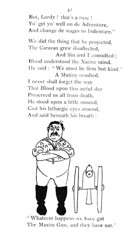
Whatever happens we have got
The Maxim Gun, and they have not

— Hilaire Belloc in The Modern Traveller, 1898

Have no fear of atomic energy
For none of them can stop the time

Bob Marley - Redemption Song, 1980
the modern traveller


Iraq isn't Africa, Iraqis shoot back.

— Robert Baer in Iraq's Mercenary King: Politics & Power, 2007

We see Africa as probably the greatest open field of manoeuvre in the worldwide competition between the [communist] bloc and the non-communist.

— President John F. Kennedy, 1962

All for you
It is all for you

E.T. Mensah & The Tempos - All For You, 1948
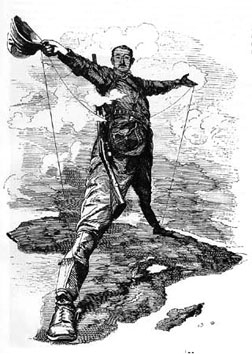
cecil rhodes astride africa
Cecil Rhodes - From Cairo to Capetown


How long shall they kill our prophets
While we stand aside and look?
Some say it's just a part of it
We've got to fulfil the book

— Bob Marley - Redemption Song

When you came you had the Bible and we had the land. Now you have the land and we have the Bible.

— Unknown 'native', 19th century

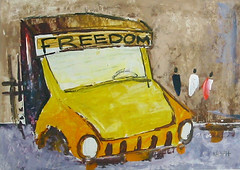
And freedom is the issue. The stakes are that high.

Ronald Reagan, 1986
freedom kagyah


There are no rules in [this] game. Hitherto acceptable norms of human conduct do not apply. If [redacted] is to survive, longstanding American concepts of "fair play" must be reconsidered... It may become necessary that the American people be made acquainted with, understand and support this fundamentally repugnant philosophy.

— Report of the United States Hoover Commision, 1950

One man struggles while another relaxes.

Massive Attack - Hymn of the Big Wheel
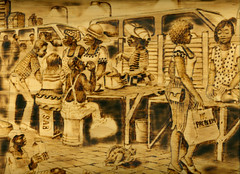
elegance and chaos
Beirut, Lebanon, summer 2006


A belligerent state permits itself every such misdeed, every such act of violence, as would disgrace the individual. It makes use against the enemy not only of the accepted ruses de guerre, but of deliberate lying and the deception as well - and to a degree which seems to exceed the usage of former wars.

— Sigmund Freud - Thoughts for the Times on War and Death, 1915

There are only people behaving, and sometimes behaving monstrously.

Ian McEwan disputing the notion of evil, 2002

Takes behaviour to get along.
Lots of behaviour to get along.
Do you really, really know that?
Social Living is the best

Do you know? Social Living is the best

Burning Spear - Social Living

Honam mu nni nhanoa
(Humanity has no boundary)

— Akan proverb, Ghana

Ex Africa simper aliquid novi
(Always something new out of Africa)

— Pliny the Elder, 1st Century Rome
No Problem by Lalelani


Cultural interplay is the name of the Great Game.
I wonder: who is writing today's script?


This note is part of the Things Fall Apart series under the banner of the rough beast.

See also: The Mosquito Principle

Next: The Modern Traveller (Reclaiming the Maxim Gun)

File under: , , , , , , , , , , , , , , , , , , , , , ,

Friday, March 16, 2007

Spotted: an HTML Button

"Good god, man... How a person can write so much about HTML buttons fascinates me." - A toli commentator

Per Google, I have an unseemly amount of clout when it comes to the subject of the HTML button born of 9,000 word folktales bemoaning its general under-appreciation and lack of use.

I've always felt guilty that I didn't offer more prescription to the 50-60 searchers who daily come across that piece. Still I thought I was only stating the obvious (albeit at length, and with tongue in cheek).

Thus I was pleased to note yesterday that Google Reader switched from its misguided use of simple hyperlinked text for its "Refresh" and "Mark all as read" functions to now use items that look like html buttons. I won't bemoan their developers not using native html buttons since they've at least recognized that it is best to have clear indicators for potentially unsafe operations. I wonder when Bloglines will follow suit...

google reader uses buttons

I'll echo Phil Ringnalda again:

Making the fire alarm look just like a light switch isn't an example of daring and innovative design, it's just dangerous.
These small usability tweaks add up to broaden the appeal of the web which after all is our great mass participation medium. My rule of thumb in systems design is that we should favour participation over control. I believe this notion extends to user interface design. Giving up full control of the user interface in favour of standards tends to benefit an application because it often meshes with user expectations. There is paradoxical joy to be found in a constrained design space.

A parting sidenote: for the past few months I've been working on the Dojo toolkit, that open source javascript toolkit. At a certain point it was vaguely suggested that I work on form widgets including developing custom buttons. As you might suspect, I immediately demurred and disqualified myself pointing to my paean to html buttons. My position is unchanged: in as much as possible, one should use the built-in browser components and lobby the browser vendors to implement XForms, Web Forms 2.0 or whatever standard can improve the experience of building form applications on the web. HTML forms have been second class citizens for too long yet they are essentially the equivalent of Mary Magdalene and the disciples - the foot soldiers of the web style (digression: Bill de hÓra has been grumbling of late that HTML forms are the original sin of the web). I am pleased to see movement on many fronts these days. Every little bit helps I suppose. Let's celebrate these small things:


Next: The ballad of the link

File under: , , , , , , , , , , , ,

Monday, March 05, 2007

The Busia Papers

Is democracy of universal application?
Not exactly small talk, yet that was the kind of question I imagined being thrown around the table in my virtual dinner party. Last year's series on Social Living didn't get very far, only personal and whimsical pieces made it past the draft stage; I never quite managed to flesh out my guided tour of Ghanaian historical engagement with that theme and didn't gave voice to my dinner companions. Which leads me belatedly to the Busia papers...

One of my side-projects, much neglected in the years since I came upon this material, is the editing of a collection of the writings and speeches of Dr. Kofi Abrefa Busia, the former Prime Minister of Ghana. In the spirit of Ghana's Jubilee Year, our 50 years of independence, I thought it would be worth sharing a few of the articles in the collection. I hope some might be of interest.

  • Is Democracy of Universal Application?
    This essay, published in 1979, is taken from a special volume of articles on democracy on the occasion of Werner Kaägi's 70th birthday. Tightly argued, it cogently distills a lifetime of insight on the eternal topic. It is one of Busia's last published works and was written in exile only months before his death in 1978.
Ghanaians seem to like grappling with cultural sensitivities. I'll note in passing that our recent great export is that world citizen: Kofi Annan. For Busia, the issue was social change and democracy, its shape and its efficacy in our environs. Similarly you'll find our philosophers expounding on cultural universals and particulars (Wiredu) or whether there is virtue in cosmopolitanism (Appiah) or modernity (Gyekye). Our writers worry about mimicry (Sekyi), our historians, journalists and lawyers about tradition, our musicians, artists and even our engineers all seem to worry about communities. It's not very sexy but it befits the outlook of a small country. Still, I suppose there are worse brands than cultural interpreters.

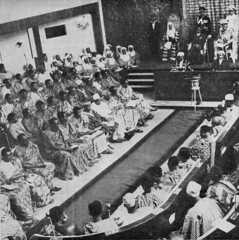
Ghana National Assembly 1971


Busia lead the country during the Second Republic from 1969 to 1972, and was overthrown by a military coup on January 13, 1972. An eminent sociologist, he had turned to politics out of necessity and his brand of conversational politics has had a lasting legacy in Ghana. His writings however have not been as widely disseminated as they should and, sadly, many are now out of print.

Busia interests me as a prime example of Ghanaians as cultural interpreters and modern travellers. His academic career was distinguished and the scholarly works were numerous. Along with the public intellectual persona, there was the family man, the religious man. Of course there was also the politician and his was a lifelong struggle for Ghana.

There was the anti-colonial struggle along with J.B. Danquah and others. There was the post-colonial struggle and disappointment - he had to live in exile from Nkrumah's one party rule watching the country decay and his friends and colleagues detained and persecuted. There was the elation of the return in 1966 and gaining power in the 1969 elections with the promise of putting the country back on the right footing. Then again, in the bitterest setback, his government was overthrown and he was exiled again. Thus he was treated to the sight of the looting and worse of his country in his dying years.

His political progeny are currently in ascendance in Ghana, and his positions have on the whole been vindicated. Still, having foresight and being right in politics while ending up on the "wrong" side is little consolation. I find comfort however in Busia's tenacity as things fell apart. He continued to question, to argue and to persuade. There was strengh in his conviction, in the words of another of his writings, that "Ghana will be truly free and happy".

The thread that runs through the writings is the working of an extraordinary and methodical mind. One sees the intellectual energy and deep thought of a great academic. It is the great curiosity of the sociologist coupled with keen political instincts. At the same time, like many Ghanaians, he was a great storyteller, he knew how to give a speech, with biting wit that cut to the chase.

Consider the celebrated lecture on The Prospects for Democracy in Africa delivered at the Eighteenth Christmas Holiday Lectures and Discussions for Tomorrow's Citizens organized by The Council for Education in World Citizenship in London on 4th January 1961. Note well the 'world citizen' motif. Here we have Busia as the ultimate cosmopolitan, advocating democracy and methodically taking apart the often spurious arguments of expedience proffered about democracy in Africa. This is fairly representative of his style, rebutting at once the opportunists at home and the faint-hearted democrats in the West that chose, then and now, to prop up authoritarian regimes.

Explaining his turn to politics:
I loved my work as a teacher, but what was the use of sitting down in the University of Ghana trying to teach people on the basis that they will go and work in a Free Society which would have respect for their ability, whatever it was, and give them the opportunity to serve their country. What was the use of doing that when I knew that they were going to go into a built-up dictatorship that would enslave their minds.
He worried that
today we have a band of leaders, some of them so anxious to strain for the big buildings, big cars and motor cycles and destructive weapons that they have forgotten that the one important contribution that the African can make to the world is to keep reminding everyone that it is out of sympathy and the love for one another that we can build eventually what is valuable and peaceful.
"People matter" was his favourite talking point. He was willing to sacrifice some measure of rapid economic development on the altar of social living. As he put it:
I am in the camp of those who place a higher value on democracy than on material value. I therefore do not think that countries should develop more rapidly, even if they could, than is feasible within a democratic framework. This is based on the belief that human beings are what matter most in the world.
His legacy is thus all about conversational politics, about maintaining an openness to participation even when it is not expedient. There's even the minor controversy he raised later on about "not ruling out 'dialogue'" with the apartheid regime of South Africa. Even if his nuanced position would foreshadow the negotiations that transpired 20 years later, it was not a popular position for an African head of state in 1971.

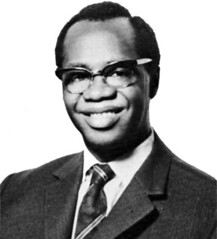
Busia portrait


As I've gone through the collection I've often found the letters and more offbeat material as illuminating as the more formal works. Discussing the encounter between Christianity and African cultures, he turns the customary question around and asks instead: "has the Christian faith been adequately presented?". Or take Ghana Since Independence - a reply for example. This was a short letter to the editor in The Friends' Quarterly (January 1965) setting the record straight about the situation in Ghana then at the height of Nkrumah's one-party rule. You get a sense of his exasperation at the amount of misinformation and cheerleading of "Socialism with an African Personality", personality cults and the like. These were stark years as I considered previously.

More heartfelt also are his reflections on one-party government in Ghana, a 1964 speech to Ghanaian students. He notes:
My political career is motivated by one thing above all. By the firm conviction that I have in my heart and my mind that all men share a common humanity. That irrespective of a man's colour he is a man; and that in Africa too, we have people who, given the right kind of leadership and the right kind of opportunity, can rise to the highest that man has risen to anywhere in the world.
The rest of that speech is full of similar insight and his appeal is very direct. It is fitting that his inaugural address would reiterate this consistent theme: a "yearning concern for every individual citizen".

The final piece I'll highlight is a pamphlet titled Judge for Yourself. It was written in June 1956 as a companion to the party manifesto on the eve of the elections that would lead to independence the next year. It laid out the opposition's position on the Constitution, raising "the issue of Moral Standards" and questioning the CPP's "unwise and innefficient administration". Months later, in a memorandum titled Gold Coast Independence, he expands on the point that "there is no provision for any checks and balances" in the political structure of the First Republic. The prescient worries that "there should be provisions in the Constitution before Independence to safeguard regional and minority rights" sadly went unheeded and Ghana paid the price.

The lengthy arguments made in the years before independence were not about the necessity of independence - that was a given. Instead Busia and others focused on ensuring that the days after independence and beyond would bear the promise of communal living and achievement that Ghanaians had every right to expect. He concluded with words that are worth pondering 50 years later:
"The eyes of the world are upon us; the rest of suffering Africa looks to us for an inspired leadership and we dare not let them down. We must be prepared to give everything, life itself, to ensure that we lay sound foundations for the future happiness, greatness and prosperity of our country. Our independence must have moral foundations on which we can build our heritage of the future."

See: The Busia Papers

File under: , , , , , , , , , , , , ,

Friday, March 02, 2007

Types and Faces

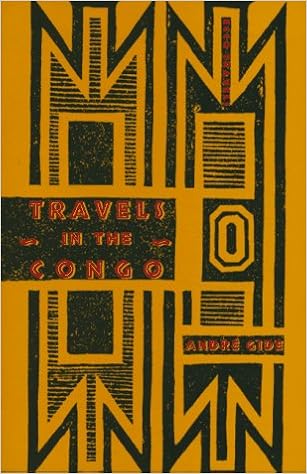
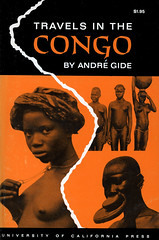
My friend Nate pointed out André Gide's Travels in the Congo to me a few months ago. We've been carrying on this occasional conversation about travel writing, perceptions, Africa, Conrad and the like.

travels in the Congo


In passing he mentioned that the book's typeface reminded him of Rob Giampietro's fascinating article on the Neuland question which discusses
"Neuland, a "display" typeface hand-carved in 1923 by Rudolf Koch but also Lithos, another "display" typeface digitally created in 1989 by Carol Twombly"...

How did these two typefaces come to signify Africans and African-Americans, regardless of how a designer uses them, and regardless of the purpose for which their creators originally intended them?
Let's have Nadine Gordimer as the token African.

Nadine Gordimer My Son's Story


Richard Wright can serve as the token African-American.

Uncle tom children


There's a discussion about the history of those typefaces and how they came to embody an authentic sense of, well, ethnicity shall we say. "Stereotypography" was how Nate put it. "Blackface" might be another appropriate pun. There's lots to say about such signifiers. I can certainly imagine further papers on "Issues of authenticity and its visual vocabulary: field lessons from Gutenberg's press".

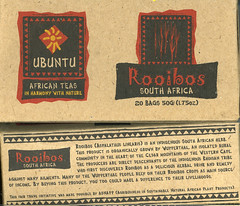
All of which reminded me of the box of Ubuntu Rooibos tea from South Africa that The Wife had picked up on her travels. It's one of those "sustainable agribusiness", fair trade, touchy-feely things marketed by an offshoot of USAID. The brand names, Ubuntu and Mpuntu, let you know what you're getting into. In case you're not convinced, the obligatory typeface is a great signifier and adds the requisite marketing frisson of authenticity: Africa. Motherland. Earth etc.

ubuntu tea


My own copy of the Travels in the Congo arrived in the mail today, and before I could turn the page and note Gide's dedication to Joseph Conrad (all travel writing owes a debt to Conrad so this was unsurprising), I was confronted by the striking cover. I realized that I'd ordered a different edition.

travels in the congo 1962 edition


Hmmm. That's more like it. Congo: breasts, nudity, enlarged ornamental lips, pygmies, natives. You don't tend to see these kinds of images on book covers any longer. They'll appear on National Geographic magazines to be sure, or coffee table books, but not on the paperback that you pull out on the bus. It appears that some cultural threshold has been crossed in the recent past, my guess is that this took place around the mid-seventies and there has been a consequent marketing realignment or adjustment.

A more subtle indicator is required and the typeface is one of the few tools product designers have, along with the product names to indicate the essence of the product they are trying to move. You need to know what you're getting but these days we don't discuss race - or at least it's always a very polite discussion. As we say in Ghana: how for do?

A theory formed in my mind that when it came time to revise Gide's work in the later 1994 edition, it was no longer culturally appropriate in the US to display nubile, big-lipped natives, even if they were all the rage back when my 1962 edition was published (that liberal Berkeley Press!). There are probably throngs of academics working on such material.

I amended the topic of the paper to "Changing mores, changing types, changing faces in representations of Africa: field lessons from Gutenberg's press". I like how academic papers seem to go with lots of sub-clauses in their paper titles.

I then remembered that Fred had discussed Then I Saw the Congo, a 1920's travel memoir by Grace Flandrau. I put in my order for that book; we all need more writing about Congo. Its cover is less exotic than Gide's. Its subtle imagery, the silhouetted rowboat of natives on the Congo river dates back to Stanley's expeditions. The mighty river Congo has great visual appeal and looms large in African iconography.

I turned around, glanced at my bookshelf and immediately noticed a couple of books that fit the visual mold. The first was In Griot Time, An American guitarist in Mali by Banning Eyre. The ubiquitous font is overlaid on his photo of Djelimady Tounkara who Teju Cole reckons as the best guitarist in the world - I won't quibble, but what about Prince?

In Griot Time


Checking Amazon, I noticed that a later edition (2002 - only 2 years on) dispenses with our typeface-du-jour and sadly also that the musician, whose face I can no longer make out, is now squashed behind the prison bar-like guitar strings tucked in the cavernous confines of a grey guitar.

In Griot Time


What should one make of the demotion of both the black-faced guitarist and our typeface? What was the designer attempting in the reworked cover? In mitigation, one notes that there is the green, yellow and red in the background to indicate the colours of the Malian flag, although one must add, the colours are washed out, perhaps to indicate the ancient status of the music, and of Mali. Authenticity is preserved, I suppose, although the ethnic signifiers have been toned down. I guess it's fair, there was no need to beat the shopper over the head as the original cover did. We could have figured things out from the subtitle.

Robert Klitgaard's Tropical Gangsters also jumped out to me.

Robert Klitgaard - Tropical Gangsters


It has the great subtitle: "One man's experience with development and decadence in deepest Africa". You don't quite need to write "darkness", "deepest Africa" gets the point across. Now of course Condi Rice and co. have no qualms dealing with the Equatorial Gangsters that Klitgaard deconstructs in his book, so I guess decadence is appropriate in the title. Kurtz's moral decay is quite apt when one reads things like the following hatchet job (Thatcher alert):
Equatorial Guinea had the bad luck to come to independence under Macias Nguema, whose rule was so terrible that a third of the population was either killed or fled. Though he had people garrotted, buried alive and beheaded (and their heads stuck on poles), the detail that sticks in my mind is his having 150 people executed to the tune of 'Those Were the Days, My Friend' played over stadium loudspeakers.
Tropical horrors continue to be our mainstay on the continent it is sad to say. Everyone owes a debt of gratitude to Conrad it seems.

Which reminds me... The best history book on Africa since independence is Paul Nugent's appropriately titled Africa Since Independence.

Africa Since Independence


If you take a look at the cover, it's as if you are out on a safari, the zebra is quietly crossing the scene in the foreground, the wide trees spread out in vistas of the savanna, you almost expect to spot a lion lazily stepping into to the picture - or an antelope perhaps. Simba. Kimba. Bambi etc. That image has almost nothing to do with the content of this brilliantly-constructed book other than to be a prime stereotype of Africa. Indeed I can't think of an image that could do more violence to the words of this sophisticated book, focused as it is on Africa's post-colonial history and the vagaries of modernity. Is that really the image of Africa since independence?

I'm fairly sure that Nugent had almost no input on his book's cover. Like almost all authors - and certainly all the ones I've pointed out in this note, let alone those South African rooibos farmers - he would have had nothing to do with the packaging of his works. Very few authors have the clout to insist on cover art, they are spent by the time the discussion over the book title is done. Still I almost disregarded his book, judging it as I did by its cover. Perhaps those purchasing history textbooks respond to different things. It goes to show that those cues can have can great influence, whether it is overt imagery or even typefaces.

I amended the paper's title: "Types and Faces: Visual Identites and cross-cultural (mis)understandings - (re)visting the Congo through fonts".

I would normally close with a playlist - and I've had requests for a Heart of Darkness playlist, but that can wait. Instead, apropos the business of not judging a book by its cover, I'll end with a Congolese proverb:
A white tooth has a bloody root.


File under: , , , , , , , , , , , , , , , , , , , ,

Friday, January 19, 2007

Lamppost

lamppost: verb. To lamppost someone is to sneak up in the middle of the night to the foot of their bed (typically along with willing co-conspirators), grip its frame and lift the bed up in a swift motion until it is fully vertical. When performed correctly, the (typically) sleeping occupant of the bed will be projected in a curvilinear flight path leaving him (victims are typically male), after the working of gravity, the rotational energy thus imparted, and subsequent collision and rebound with the back wall and/or floor (cushioned somewhat by covering duvet or blanket), lying upside down on his head, bruised by the impact and rudely awoken by this quite literal upheaval.

As far as the etymology of the term goes, the lamppost designation comes from the upright look of the bed once it reaches its final position. Lamppost thus has a sense of transformation, the repurposing of beds into utility poles and, linguistically, of a noun to a verb. It suggests movement from rest into action and a catapult effect of sorts.

Sample usage: "Why don't we lamppost Tiny Tim after lights out?"

With regard to the history of this peculiar tradition, my investigations revealed only that it is ancient. It certainly was part of the curious lore of the secondary school I attended thus perhaps this practice might extend all the way back to 1597. The name, I suspect, is of a more recent vintage.

lamppost

The laws of physics come into play when one lampposts and it becomes a matter of weight, force, materials and torque. Lampposting is best performed on lighter weight human beings sleeping on single beds, say with a metallic bedframe on lightly waxed wooden floors to lessen the friction. Thus in a dorm room of teenage boys, the youngest and leanest are likely and frequent targets. More satisfying however are the cases when the young ones combine to exact vengeance on elder tormentors although, in these instances, one has to balance the strength of the former against the size and weight of the latter - and the prospect of retribution.

If you've ever been lampposted you are well aware about how quickly friends can become enemies. That instant when you lose contact with the mattress is a signal moment of clarity in that regard. Defensive measures against the practice include feigning sleep or sleeping with one eye open - alert for the sight or sound of rushing predators, and deftly jumping out of bed before (or even as) the bed is being raised. It is good therefore to make sure that bedsheets are not fully tucked in thus thwarting your escape.

I am relatively famous in a certain crowd for having remained asleep for almost a minute post-impact in this inverted vertical posture after a quite cruel lampposting. My case was a novel twist to the practice; the victim is meant to swiftly groan, curse appropriately lamenting his misfortune (and pain), gather up mattress, pillows and blankets and find some way to bring the bed to its formerly horizontal position. The lords of the flies who dealt with me on that occasion were disappointed by the lack of reaction and worried that neither the bed nor I would be restored before the authorities might make their appearance to investigate the commotion.

Pranks of varying degrees of ingenuity occur in any playground and community. Sometimes of course, lines are crossed from rituals of sorts into, well let's be frank, bullying. Thus hazing is a commonplace from army barracks to boarding schools. Human behaviour is endlessly fascinating and we have all sorts of ridiculous traditions that seem to stick around. I suppose that this impulse could also be translated into our politics and diplomacy. Certainly certain coalitions of the willing are apt to lamppost other nations just because they can - these are affectionately called wars of choice, but I digress.

contemplating

I'll admit having lampposted a couple of people in my time. In mitigation about being an object lesson on man's propensity for appalling behaviour, I should say for what it's worth that I was a victim of said practice probably ten times (although I managed to escape half the time).

The worst lamppost I can remember witnessing was of someone whose arm had been placed in a cast just that day. To lamppost him that same night seemed a touch excessive if not cruel. It was too painful for him to maneuver out of bed even as it was lifted. I still regret not having warned the poor guy; my instinct for self-preservation had led me to leap out of my bed and, once satisfied, that I wasn't that night's target, I simply watched the rushing hordes step into action. The slingshot effect, the flight, the terrible sound...

One other irony I should mention: the most enthusiastic lampposter I knew went on to become a policeman in later life, perhaps indicating something about the likelihood of brutality and trigger-happiness in his chosen profession.

In later years I did my part in trying to curb the practice with invocations of the golden rule, love thy neighbour, do unto others etc. My results were middling. Oh well...

A few nights ago as I was falling asleep, I heard a crashing sound and rapid footsteps approaching and almost instinctively rolled out of bed. It was a false alarm, the upstairs neighbours or something and an acoustic trick. Still, I was transported back 20 years and the word returned to me. I laughed at first at the vivid memories - perhaps that was the zaniness of the act, the uplift as it were. Then I remembered the typical aftermath (picking up the pieces), shook my head and headed back to bed. I kept the sheets loose just in case.

Soundtrack for this note


  • Loose Ends - Hangin' on a String (Contemplating)
    What did I do wrong? It's all a mystery to me
    The breakthrough song from one of my favourite soul groups - a song that set the tone for the British soul that followed. The subtitle is "contemplating".
File under: , , , , , , , , , ,

Thursday, October 19, 2006

The Game of the Rough Beast

This is an open letter.
This is a game.
This is a poem.

To The Editors,
Dear Mr Reporter,
This is my second draft.

First I wrote to The Editors,
Then it was to you.
Now it's a different beast.

A parlour game in your honour.
I tried it out on a friend.
A political junkie, he likes toli.

He said it was rough,
That it needed work.
Bear with me, I'm wrangling with this thing.

I'm a child of the web.
First an adventure in hypertext
Now prose and some poetry.

William Butler Yeats.
Recall what he wrote:
"Things fall apart; the centre cannot hold"

This is part of a series.
I hope you'll play.
It's about The Second Coming

  1. Cut and Paste
  2. Cause and Effect
  3. The Game of the Rough Beast

Cut and paste

A game for you.
Simple instructions.
A test of comprehension.

Phase 1: Cut


Read the following passage.
It's from the New York Times
Some questions when you are done

In the northern Gaza town of Beit Lahiya, thousands of Palestinians mourned the death of most of the Ghaliya family and wept as Huda Ghaliya, 7, kneeled to kiss her dead father before he, her mother and four siblings were buried. All were killed when the Israeli shell struck the beach where they were having a picnic. Huda had been playing nearby on the beach at the time. On Saturday, she asked mourners, "Please do not leave me alone."

The Palestinian prime minister, Ismail Haniya of Hamas, who called the incident "a war crime," said he would adopt the girl. Later, Mr. Abbas, who called the incident "a dangerous, horrible, ugly crime against civilians," issued a presidential order adopting her.

The dead included Ali Ghaliya, 49, and his wife, Raisa, 35, and their children Ilham, 15, Sabreen, 7, Hanadi, 1, and Haihsam, 4 months. Mr. Ghaliya's first wife survived, said Ayyam Ghaliya, 20, one of Mr. Ghaliya's surviving children.

Questions (Phase 1)


  • Imagine that you wrote this passage, what title would you use when you submitted the article?
  • Imagine that you were the editor of this newspaper and received this article, what title would you use when you published it?
  • Bonus question: What page would you run this article on?

Phase 2: Paste


Read the following passage,
it's from the same article.
Some questions when you are done

Hamas fired at least 15 Qassam rockets from Gaza into Israel on Saturday, ending a tattered 16-month truce with Israel, a day after eight Palestinians were killed on a Gaza beach, apparently by an errant Israeli shell.

Later on Saturday, in Ramallah, the Palestinian president, Mahmoud Abbas, announced he had set July 26 for an unprecedented Palestinian referendum on the principles of a unified political platform agreed upon by Palestinian prisoners, which calls for a Palestinian state in pre-1967 boundaries alongside Israel.

Spokesmen for the ruling Hamas movement said they rejected the referendum decree and were studying their options, raising the prospect of further confrontation.

Questions (Phase 2)

  • Imagine that you wrote this passage, what title would you use when you submitted the article?
  • If you were the editor of this newspaper and received this article, what title would you use when you published it?
  • Bonus question. How well do these passages flow?

Cause and Effect


I made your second passage my first.
If you read the published article,
You'll no doubt see the reverse.

These were my friend's answers:
"Orphaned girl adopted by President"
"Random stuff about Palestine"

He saw two different stories:
"Death of family leads to end of truce"
"Hamas breaks cease-fire to distract attention from political confrontation with the President"

This was the published title:
Hamas Fires Rockets Into Israel, Ending 16-Month Truce
My friend then wrote "The perfidy of the press is one subject you should be used to"

It was a late night
The Wife saw me reading
Something in my face

"Why are you reading this Israel-Palestine stuff?"
Then I showed her your second passage,
I now call it the second coming.

"But they've buried it.
I would have never read past the beginning.
What page is it on? ... The whole thing is hidden..."

The Guidelines
They said:
Avoid politics

The Guidelines
They said:
Don't pick fights

Common sense,
Empirical evidence:
Steer clear of the Israel-Palestine matter

Still: I'm a journalist's son
You've given me an opening
I can't resist the temptation

The journalistic impulse
I seek out strange bedfellows
A student of editorial decisions

I'm in awe of what you've accomplished
You wrote the strongest fourth, fifth and sixth paragraphs I can imagine.
You ought to be a hero.

You covered a textbook massacre
Wrote in the strongest language
And yet: the story was buried.

A skillful presentation
You reported eight deaths
You shouldn't be accused of mendacity

And yet: the story was buried.
It's lost. Misrepresented at best.
The Reporter and The Editors.

Intentional and artful rather than inept:
The page, the wording, the images, the placement.
And calculation: the title. Best left unread.

Below the fold.
The Reporter's byline.
Those delicately arranged passages

A terrain of uncertainty
Did The Editors ask you for balance?
Were there two separate stories?

Who chose the title?
And are you proud of it?
I'd rather be wrong.

I would be grateful if you could comment
On words hidden in plain sight.
I had the most dreadful time that night.

A young girl has been taught
An awful lesson in life:
Death, the school of hard knocks

I lost faith that night
At this brutish spectacle
What kind of world is this?

A perplexing script:
Business as usual,
There go those Palestinians again.

My first draft:
Your article published on Sunday June 11, 2006 in the New York Times newspaper is by my measure the most skillful piece of journalism in the past year. I applaud the care you have taken in your endeavours, the craft with which either yourself and your editors combined to tell a story. It is so skillful that I feel obliged to write to you.
My second draft:
Your article published on Sunday June 11, 2006 on page 6 in the New York Times newspaper is by my measure the most skillful piece of misdirection I have witnessed in journalism in the past year. The phrase intelligent design does not do justice to the craft with which either yourself and/or your editors combined to bury a story of outrage. I applaud the care you have taken in your endeavours. It is so skillful that I feel obliged to write to you. You should win a Pulitzer for it.

I attempted to play your game
Exercising editorial discretion
And tried my hand at misdirection

The rest of the article
The same clarity of structure
3 paragraphs to muddy, 3 paragraphs to disarm

The Reporter and The Editors
I haven't slept since that day.
I assume someone didn't sleep round your way

The cameras must have been rolling
Slightly different story the next day
Hmmm, a new reporter.

The Game of the Rough Beast


Cut and paste.
Cause and effect.
The logical structure of perfidy.

The Reporter
The Editors
Me

Integrity
Mendacity
Whimsy

A question
An exclamation
A period

Inquiry
Slander
A fine line

Cognitive dissonance
Misdirection
Fair and balanced

Paragraphs: 1-2-3
Paragraphs: 4-5-6
Jackson 5: "ABC. Easy as 1-2-3"

I want to think the best of you.
I want to think the worst of you.
This is all a big muddle.

I want to think the best of The Reporter.
I want to think the worst of The Editors.
Resistance or deception? I'm unmoored, bereft.

Israel
Palestine
[ this space intentionally left blank ]

The beach at Beit Lahiya.
The soul of a reporter.
The policies of The Editors.

"From Gaza into Israel"
"On a Gaza beach"
First movement and action, then the passive, a mere location.

"Hamas... launched at least 15 Qassam rockets"
"An errant Israeli shell"
First actor then action, then the passive. There's no actor.

Curtis Mayfield spoke the truth
We lost him, I miss him
This is what he sang:

They're all political actors... but they all know
If there's a hell below
We're all going to go

The logical structure of perfidy.
An awful reversal of causality.
The strange architecture of misdirection.

Normally effect follows cause.
Outrage is directed at cause,
And understanding attaches itself to effect.

In the human infrastructure of misdirection,
Cause follows effect,
And cause is itself an effect.

In those middle pages of your newspaper,
Cause is buried by effect,
And outrage attaches itself to effect

All that remains is effect.
Your byline, your story, the passive tense
The Editors, The Gray Lady

Back to front, the story is buried.
Eight dead bodies replaced by abstraction
Grim reality meets editorial necessity

I can't work out this puzzle.
I don't know which facts to dwell on.
I like to play this puzzle at night.

I don't know how to order these paragraphs.
Cut and paste. Cause and effect.
I don't want to play the game.

Do you sleep at night Mr Reporter?
Do you think The Editors sleep at night?
I rewrite your article at night

Her name is Huda Ghaliya.
Her family is dead.
They died on the beach in front of her.

It was a picnic. On the beach.
A shell.
They are all dead.

She cried.
They died.
I cried.

I suspect you cried
Did The Editors cry?
And were the cameras rolling?

Did the world cry?
Errant Israeli shell
15 Qassam rockets

June 11, 2006
Page 6 of the New York Times
The title, your story: buried.

The beach, the picnic, the shell
The cameras, the family: the coffins
The rockets, the funeral, the story

June 12, 2006
Page 8 of the New York Times
New title, the story: gasping.

Night. Sleep. Day
Black. White. Gray.
The Reporter. The Editors. The Gray Lady.

New York Times.
The Reporter.
Hamas Fires Rockets Into Israel, Ending 16-Month Truce

Haaretz.
The spin.
Peretz: Gaza beach blast may have internal Palestinian cause

New York Times
Round two. Politics as Theatre.
Errant Shell Turns Girl Into Palestinian Icon

This is what I read that night
This is what I saw
This is the fog of war

Do you know each other?
Do your editors know the other editors?
This is such a muddle.

My original title: Abject mendacity of New York Times Editors
My draft title: On misdirection and injustice
My published title: The Game of the Rough Beast

I wanted to avenge her.
Instead I wrote a parlour game.
It is my only act of resistance.

I want to stare directly at the heart of darkness.
I hope I won't flinch.
I don't trust myself.

I wonder if you've come close to the rough beast.
I think you've come close to the rough beast.
Have you come close to the rough beast?

I want to know what he looks like.
I don't want to know what he looks like.
I know he's there.

I can only hope that one day you will do a follow-up story on her loss.
I can only hope that one day you will do a follow-up story on the Hamas shelling.
A follow-up story with the same editors.

I can only hope you'll play the game again
The game of cut and paste
The game of cause and effect

Then maybe I'll sleep at night
Then maybe I'll know the rough beast
Then maybe I'll make my own accommodations

I have only my pen to wield
I wonder if you've read this far
I hope you haven't read this far

He is close
I can hear him
A neighbour's house is on fire

I hear her cries.
I see her face.
I play my music

"It's 2am when the party's over
All I wanna do, all I wanna do
I wanna be with you"

Cut and paste.
Cause and effect.
The logical structure of perfidy.

Her name is Huda Ghaliya.
Her family is dead.
They died on the beach in front of her.

I want to avenge her.
Bring them back to the picnic.
Maybe it is better this way.

What kind of injustice is this?
Who is writing the script?
And who is editing it?

What are the names of your editors?
Did you have an editor at all?
I prefer to know them as The Editors.

Let's hear it from the poets
William Blake: Til we have built Jerusalem
William Butler Yeats: Surely the Second Coming is at hand.

Yeats's first cut,
A quotable sort
Everyone remembers this:

Things fall apart; the centre cannot hold;
Mere anarchy is loosed upon the world,
The blood-dimmed tide is loosed, and everywhere
The ceremony of innocence is drowned;

The best lack all convictions, while the worst
Are full of passionate intensity.

But it's about The Second Coming
The story written afterwards
And everyone forgets it:

The darkness drops again; but now I know
That twenty centuries of stony sleep
Were vexed to nightmare by a rocking cradle,

And what rough beast, its hour come round at last,
Slouching towards Bethlehem to be born?

My thesis as it is:
In the School of Hard Knocks
Things Fall Apart beats Heart of Darkness

More practical, bear with me.
Heart of Darkness: Angola, Rwanda, Yugoslavia, Congo, Chile, Somalia, El Salvador
Things Fall Apart: Soviet Union, Nigeria...

Try it again, your neck of the woods.
Heart of Darkness: 9/11, Baghdad, Al Zarqawi, Abu Ghraib, Guantanamo, Haditha...
Things Fall Apart: Katrina, Enron, Abramoff, Cunningham...

When I read your article
I was reminded of the poem
"A gaze blank and pitiless as the sun"

I seek a comfort suite
And pray for peace and quiet
The cement of my society

To be out of sight
To live out of mind
A chance to recover

I try to stare at the sun
I want to look into his eyes
Confront him head on:

The rough beast.
Observe his contours
Resist nostalgia

I hope I don't flinch.
I want to cover my eyes
I fall asleep

Help me, Mr Reporter.
Her name is Huda Ghaliya.
The rough beast, The Editors

This thing's a puzzle.
I'm tired of the game.
Where are The Editors?

I wake up on the beach at Beit Lahiya
Where are you, Mr Reporter?
And who are The Editors?

The rough beast lies next to me.
William Blake: Among those dark Satanic Mills
William Butler Yeats: Slouching towards Bethlehem to be born

Yours sincerely.
Sincerely yours.
I'd like some answers.


The Game of the Rough Beast
The Reporter and The Editors
The beach at Beit Lahiya

The Second Coming
The Ghaliya family lost four members less than two years ago when an Israeli Army shell hit their farm in Beit Lahiya. Then, as now, the army said it was shelling to try to stop Palestinian fire into Israel.
The Rough Beast

File under: , , , , , , , , , , , , , , , , , , , , , , , , , , , , , , ,

Wednesday, October 11, 2006

A Publication

Some good news, which I'll announce by paraphrasing Public Enemy's Black Steel In The Hour Of Chaos

I got a letter from the university the other day
I opened it up and read it
It said: "We wanna publish."
They wanted me for digital culture or whatever
Picture me giving a damn, I said "Hell yeah".

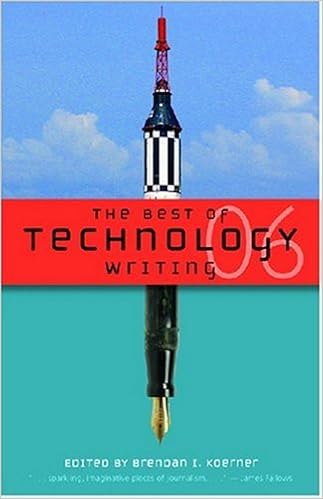
Unlike Chuck D's response to the US Government and its Army, I was elated that Cultural Sensitivity in Technology was selected to be published in Best of Technology Writing 2006 by the University of Michigan Press in its new imprint Digital Culture Books. It took a few months, as these publishing cycles go, but I now have the first ISBN associated with my name.

Best of Technology Writing 2006

There's further reason to cheer since acquisition editor, Alison Mackeen, noted that mine was the only blog post that was selected for the volume; the other contributors are mostly journalist or academic types. The web is the great leveler and I am greatful that my musings can appear along with the heavy hitters of traditional media and technology. It is rather like the way that The Humanity Critic can lie in the same folder as Malcolm Gladwell in my Bloglines subscriptions and each are equally appreciated.

Over the past year there has been interest expressed in various books of toli. It turns out that if you write as much as I sometimes do, there'll be an audience for you once you find your voice (at least on those days when the stream of consciousness tendancies are curbed). In this respect I am pleased that it is the cultural sensitivity piece that is the first to hit Gutenberg's press because it was written in a personal yet controlled voice, and I was able to navigate the tension between an entertainment and a focused monograph. The folks I like to read cross the spectrum from dry technical exposition to the satirical. One needs to cater to both education and whimsy hence my writing tends to run the gamut from small things to big ideas.

The time that was spent in editing back and forth and wrangling my conversational web style into something fit for the printed page was instructive. I am a ruthless editor of others but don't normally submit to that impulse in my own writing. Still I don't envy editors and I have renewed appreciation for the blood, sweat and tears it takes to actually make a reasonable book. In any case, I revised and expanded the article, throwing in a few bits about the human factor, the web and irreverence. Do check out the book; as befits its title, it contains lots of great writing about technology and its implications. Eminently readable and stimulating, I'll be mining it going forward and will be pointing out some of the food for thought in it.

I was asked to come up with a tagline for the article, my take:

Everything is local.

Now I have to get serious about The Pitch. Oh and I should get back to writing in this joint.

File under: , , , , ,