Monday, March 18, 2013

Blues of an Omnivorous Reader

Wherein I reproduce a couple of apparently futile musings on the announced death of Google Reader. I've always preferred that my public utterances be available in a feed and Google Plus by design doesn't provide one. Further I received a transatlantic call yesterday from The Parents who are alarmed and incredulous that such an important and incredibly useful tool - an essential part of their experience of the web, would be summarily executed, as it were. They raised a point that I hadn't considered as I've been thinking about Plan B. It is easy to say that there are other feed readers, but almost all the proposed alternatives will not be free if they operate at Google's scale, and this presents complications if you live in a country like Ghana which is a black sheep in terms of e-commerce. Although my parents are undoubtedly willing and able to pay for such a service, they will be locked out because PayPal, Google Wallet and most credit card payment systems are not available to Ghanaians. I'm going to have do the dance of getting their credentials, signing them up for Feedly, Newsblur or what have you and entering in my payment details. Now that's a workable arrangement for my family, but what about others in similar circumstances? I had posited, with some amount of hyperbole, that this was a massive destruction of consumer surplus but I didn't know the half of it.

1487 Feeds (or Blues of an Omnivorous Reader)


A belated, and certainly, redundant comment to this thread.

I suppose I am an outlier in terms of usage as Google Reader is my single most used web application (more than even search and email), but I'll have to repeat the question I've been asking myself for a couple of days now: how does one handle 1487 different content sources efficiently across the up to 10 devices that I might use daily?

The corollary question also comes to mind: how did I come to aggregate that many sources of data?

The answer to both those questions is Google Reader.

Chris Wetherell's thesis was that "feed reading is inherently polymorphic" and he would know as he designed Google Reader.

As I'm having to now export said 1487 feeds to try out various alternatives, I've been thinking through my usage of Reader and I must agree with him on that front, because what I see is a wide variety of sources organized however I want.

Some are blogs, some are news sites, some are topical, some sui generis, some polymath, some from people I disagree with, some are the web output of friends, some from family, some are photo blogs, some are podcasts, comics, or comments. Some are on current affairs, some on Africa (although that tag seems to encompass anything non-US), some on technology, some tagged as general interest, some pure entertainment.

Some are high traffic, some are infrequently updated. An example: a friend recently emerged after a 2 year disappearance in the new parent cone of silence. On his return to blogging, he seems to be no longer interested in writing about technology. No problem: simply tag him or add him to a different folder (feeds can be multiply categorized).

Some are work related. Some are very narrowly focused. Some are alerts that I want to monitor e.g. feeds in Flickr and Delicious (tags or people or groups), Google alerts. For a while I could easily monitor almost everything of interest about Ghana since writing on Ghana and indeed the Ghanaian web footprint has been so small.

Some are forums. Some are for research often more speculative than not (e.g. the two months when I mused about a dissertation on two-sided markets in technology). Some are for archiving purposes (e.g. various synthetic feeds of sorts), and of course there are the vanity feeds (e.g. the defunct Technorati watch lists or Blogdigger searhes, Friendfeed etc.) which are all filed in the Egotism folder).

Anything that could generate a feed is fair game and has an equal opportunity.

Some are full feeds (which I prefer), some only offer headlines and some have article summaries but I've found that using Reader to scan headlines and/or summaries is still more useful as a starting point to distill and decide what to open in a new tab.

The huge variety boggles and has matched my varying interests over time.

Humanity Critic can lie next to Maciej Ceg?owski who lies next to Malcolm Gladwell. Google Reader democratizes the process of information consumption.

All of these sources could be sliced and diced, categorized any which way and sorted however I want.

Each folder can be read differently since Reader accommodates different reading styles. Skimming is easy if need be. You could have a river of news with whatever filtering that you want. You could decide to focus on a particular source or topic and deeply explore.

Sort also is important, some things should be read in order e.g. Doonesbury, for others recency is more important.

Sort by "magic" used to be almost uncanny in surfacing what I found most interesting. The algorithm was changed a couple of years ago and it has suffered greatly (some of the higher traffic sites are overwhelming things) and the All Items view hasn't been as useful ever since in bubbling up interesting content. In mitigation, I've since segregated the high traffic but low signal feeds into different folders where they can be easily triaged and marked read to regain sanity. The loss of the old sharing features (and enforced move to Google+) was hard to take, and perhaps contributed to the decline in effectiveness of sort by magic. One click starring and sharing was the most wonderful thing while it lasted.

Starring and synchronization of unread state across multiple devices are of course the killer features.

The high information density is unmatched on the desktop and mobile. (Indeed the mobile web app is better than the Android app for what it's worth). Keyboard shortcuts for navigation and the visual design are the icing on the cake.

Others have explicated much of these design traits and at length.

A few other things:
  • An invaluable debugging tool for feed development.
    It's hard to remember how long it took to develop robust tools to produce and consume feeds, not to mention how contentious the process was. Google Reader was a major driver and was at the heart of this process. Mark Pilgrim's myth of RSS compatibility is one iconic example in this vein. It was hard work. Now in 2013, every software product can produce a valid Atom or RSS feed, so much so that we can almost retire the heroic feed validator service. Atom stores proliferate everywhere even if only under the covers. Feeds are essential web infrastructure and like all good infrastructure they are only noticed in their absence.
  • Archiving
    Google Reader's archives are second to none: so long as at least one person subscribed to a feed, its content was archived. This obviously includes archives of now-defunct blogs. For example, the only archive of Teju Cole's Modal Minority blog that eventually morphed into his novel Open City is to be found in Google Reader, the Internet Archive doesn't have a copy. Imagine a future, or even current, student with a mind to write a dissertation on the most critically praised blog-turned-novel that we have seen. Well that student has 3 months to get cracking or there will be no discoursing on "The artist as urban exiled soul: witnessing the Bush years through episodic flânerie". Links are ephemeral you see.
    The archiving features have saved many a misconfigured blog's data.
  • A Public Service
    In the same way that people in Iran and other countries were using sharing in Google Reader to do interesting things to route around censorship and political repression (something that came to light when Google+ forcibly became the "one true way" to share from Reader), the impending loss will be felt in other countries. It's hard to arbitrarily filter Google, it's too useful a bundle of services. Filtering Feedly? or Newsblur? Come on, let's be serious.
Arggh.. this was meant to be a one line comment namely:
Google Reader is the single most useful tool I've found "for organizing the world's information".
Not to be facetious, but asking one to articulate its value and what in its design can lead to the above sentiment is really sad. It's hard to believe that it's not obvious. It's hard to believe that it has to be articulated. Really. It's hard to believe.
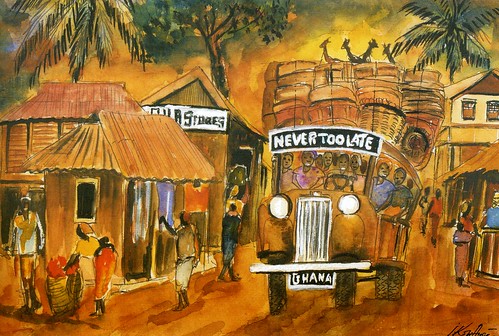
never too late by John Kofi Aryee


Fairy Tale Endings

Responding to Ben Hyde's first take on the matter: Fairy tale is the right metaphor and Google Reader's is a cautionary tale akin to the Tower of Babel. Coordination costs is the issue and what we are seeing is a vast consumer surplus being dissipated.

And it hurts even if you saw the blow coming. I made my peace with the loss of sharing features a couple of years ago and the enforced push to Google+, I made my peace with many other losses, but now I'm been in mourning for the web.

Grievous bodily harm is being done to the web ecosystem. For a good decade, tools and infrastructure were built that wrangled the web with a view of feeds as an ideal medium for information dissemination and consumption. Google Reader's role was crucial and necessary.

Unlike Les Orchard, I didn't go so far as to actually write books or move home to work on the teams that built some of these building blocks (Delicious, Flickr, Reader) but I similarly evangelized and worked on them. It's a shame.

In retrospect, Mark Fletcher (of Bloglines fame) cashed out at the right time, from what I can tell his life post-Bloglines is a lot of safaris. All power to him.

Looking forward more broadly, I can see the outlines of how the story of Amazon will ultimately play out. For a moment that will seem all too brief in retrospect, consumers had use of a vast consumer surplus as the web was built and options value flowed in their direction. Then we heard about "Spring Cleaning"...

I feel sad writing this note in Google+.

Soundtrack for this note

File under: , , , , , , , , , , , , , , , ,

Monday, March 04, 2013

New and Improved

Another case of the new formula, another case of a company juicing the books: the diaper wipes that we had settled on for The Daughter got the New and Improved! treatment last week (the exclamation mark is the usual signifier of duplicity). It's the now customary scenario: a company decides to wring out surplus value by squeezing every ounce out of its means of production, typical latter day capitalism at work.

Working in an industry that is perpetually focused on the new and shiny, I probably shouldn't begrudge innovation in a mature market, and what is more fundamental than diaper wipes after all. Furthermore The Wife suggested I should censor this particular rant - perhaps wanting me to elevate the discourse and not fall into a parental blogging rut. I had even planned initially to use the title of this piece to dissect exactly why the recent redesign of Delicious left me in literal despair, but, well, my muckraking instincts for economic malarkey would not be denied. I'm knee deep in it, so diaper wipes toli it is...

I note:

  1. The number of wipes per box is reduced, 64 rather than 70
  2. The formulation is changed - the material is different and the liquid the wipes are soaked in is different. Presumably cheaper ingredients are being used all around.
  3. The price per box remains the same.
  4. Profit!
Counteracting this, my investigations reveal that the size of each individual wipe is slightly increased now a 17.7 by 17.7 cm square as opposed to a 17.7 by 17.2 rectangle. Thus an individual wipe might feel slightly more substantial in your hand. Such are the fringe benefits.

I won't repeat my usual analysis of the costs of all the raw materials (although I was intrigued by some of the substituted chemicals) - I'll give them the benefit of the doubt that the research and development costs of this process tweak is neutral in that regard.

Doing the math however, even if the same raw material for the tissue was being used, they have managed to get a 6 percent decrease in their costs. This combined with a 8.5 percent decrease in the units per box (their revenues are assuredly tied to the total number of units moved) is the icing on the cake, or should I say, the fruit at the bottom.

And the only thing they had to do was change the packaging. The New Formula is marketed as "New and Improved"!, ostensibly "thicker, more absorbent" and the new box has been given a makeover - green graphics evoking the forest plundered in the manufacturing process, marketing copy about how it is good for the environment, bio-degradable, hypo-allergenic etc.

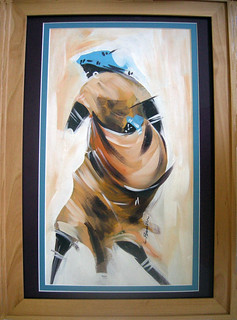
mother and son by e. bonsu

Impressionable Youth


Most egregious is that the new diaper wipes have a stenciled design of what looks like little Winnie the Poohs to make it more exciting for both the adult wipers and the toddler wipees. The owners of A.A. Milne's copyright (or is it Disney) must be smiling at both the licensing opportunity and inspired product placement, eyeballs are everything and the younger and more impressionable the better.

Some surfer of the conventional wisdom says you have to do something 10,000 times (or is 10,000 hours) before you become a pro. Diapers are in most cases a 2 to 4 year part of a parent's life thus one might approach that virtuosity. Incidentally the diaper companies quite ludicrously say that you should expect to change 10 diapers a day (it is obviously in their interest to encourage inflation in diaper changing rates). Crunching numbers as is my wont, in addition to the economic bonanza gained by the process tweak, there are all those ad impressions that can be monetized, marketed to the highest bidder.

The brand is called Seventh Generation, they must be in Seventh Heaven at this turn of events. Really, think about the impressions here. The best minds of my generation are trying to figure out how to get users to click on ads and here we have literal evidence of bottom power. Various science fiction novels and films have emphasized the permanent advertising that is in our near future. The tissues given to economy passengers on some airlines have advertisements on them; much has been made about catering to captive audiences in toilet stalls and the like. The future has long intruded in the most routine encounters, intimacy and privacy be damned.

I expect that my love for Winnie the Pooh, Peter Rabbit and Kwaku Ananse will remain undiminished, but surely one might wonder about a potential backlash. I expect however such things have been taken into account, brand managers are watching social media for signs of reaction to the rebranding. Indeed my company even markets software for this purpose.

Maker's Mark was pilloried recently for planning to dilute the alcohol content of its bourbon and other products; the company reacted by reversing its decision. Fiddling with the formula is a fine art and perilous especially with food and drink (New Coke and horse meat notwithstanding). They should really have just gone with strategy of smaller containers like the orange juice producers. For other types of product the sky seems to be the limit in this respect. Inertia being what it is, most people won't change their practice even if they notice the difference.

We are all jaded customers, used to being nickled and dimed and singing the inflation calypso - this is par for the course in this Great Recession. Anyway, I noticed and wrote it up for what its worth.

A New and Improved Playlist


A soundtrack for this note as is my custom

File under: , , , , , , , , , , , , , , , , , , , ,

Friday, February 08, 2013

A Temporary Inconvenience

Five times in the last eight years, I've woken up one day having lost the hearing in one ear (the ear in question seems to alternate). It's a matter of physiognomy I've been told: the combination of poor drainage of my sinus cavities (their perversely shaped contours apparently don't help things), small ears, and a latter-day propensity for prodigious production of earwax. These episodes of partial deafness have typically lasted from as little as two hours to a few days. The current assault on my middle ear, however, at ten days and counting, is pushing beyond the realm of temporary inconvenience.

It's not just that I haven't been able to listen properly to the new José James album - hearing his golden voice in muffled mono as if coming from a locked trunk packed with ancient manuscripts hurriedly buried in a desert backyard in Timbuktu under Sharia law, is painful enough, it's that, as the days drag on, I'm beginning to contemplate what might happen if modern medicine and my body's defenses don't resolve things successfully. Incidentally, the album is rather ominously titled No Beginning, No End. Perhaps it's in that vein that I listened blithely (with my good ear) to a doctor cheerily informing me today that my hearing will "probably come back", and "most likely after a couple of weeks". Those hedging qualifiers were what I held on to rather than the alarmingly lengthy time horizon she contemplated.

I write, however, not to bemoan my lot because, obviously, things could be worse. The surprising thing also, once you get over the bewilderment of sinusidal oppression and hearing loss, is that one is able to carry on living a quite full life. Moreover, there's nothing like a temporary disability to make you rethink things; people don't think enough these days, they just act. I'm rather inclined to take the glass half full notion to being half deaf, heck, if you choose strategically where to sit in a hypothetical meeting, you'd avoid having to hear much that annoys you - and others would be none the wiser. And ear splitting cries, to take another example of occupational hazards, can easily become mere pantomimes, even hot air. But I digress..

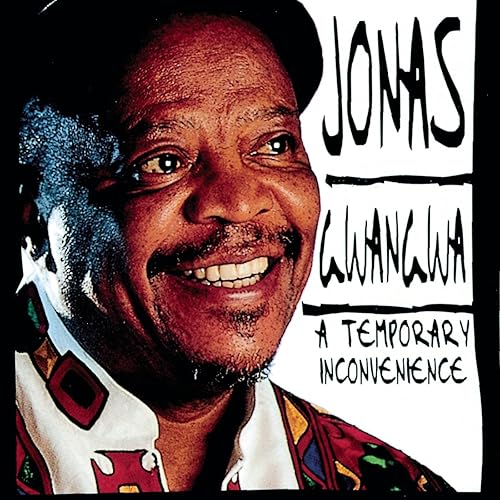
I write, rather, because my aural predicament reminded me of Jonas Gwangwa's song and album aptly titled A Temporary Inconvenience. The great trombonist's fulsome sound materialized in my imagination and got me thinking of a trip I made to South Africa in Christmas 1993, just months before the 1994 elections that marked the notional end of apartheid. Perhaps as I convalesce I'll find time to dig up my dusty notebooks and finally write up an episode that left quite an impression on me.

Jonas Gwangwa A Temporary Inconvenience

A South African playlist immediately conjured itself up. Start with the dearly departed Moses Taiwa Molelekwa, a brilliant jazz pianist whose Genes And Spirits captured the pre-transition mood - a mood akin to pre-millenium tension. Follow up with the the broken strings of Allen Kwela, fondly played wherever we went. Add in a touch of Busi Mhlongo's Urban Zulu for some funkified and righteous dance. And then think to Yvonne Chaka Chaka exuberantly singing Bombani invoking the enduring spirits of Mandela, Tambo and Mbeki père among others.

I'd like to think that the song, A Temporary Inconvenience, related to what Jonas Gwangwa and his contemporaries like Hugh Masekela and Miriam Makeba must have thought as they were first heading into exile from the apartheid state. As time passed and the temporary seemed to become permanent I wonder if they ever doubted they would return. For it was a uniquely unseemly state in world history. I'd certainly like to believe that, over the longue durée, apartheid itself will come be seen as a temporary inconvenience. That has been the challenge, I suppose, of the past 19 years, and perhaps that is the story that people were already suggesting even before Mandela was elected and inaugurated. It simply isn't the case, however, and much effort will need to be expended before that day will come. One wonders when the new South Africa will truly become "The New South Africa"...

But enough procrastination, time to summon up the courage to take that horse pill. I know the first thing I'll be listening to if, and when, my receptor cells resume their role as audio interpreters: the mellifluous trombone tones of a master musician.

A Temporary Inconvenience, a playlist


A soundtrack for this note (spotify version). File under: , , , , , , , , , , ,

Monday, January 14, 2013

The Dark Keys

Chris Ferris rants in typically vicious fashion:

It seems amazing that Newsweek has the cojones to print an article like this so soon after the administration made them their biatch for (correctly) reporting that an anonymous Pentagon source had seen in a report of allegations that the Koran had been flushed down the toilet.
The topic is Good Intentions Gone Bad, the farewell article by Rod Norlan, Newsweek's exiting Baghdad Bureau Chief which has received much skewering in the blogosphere for what it unwittingly reveals about a journalist's conception of his job (as with Judith Miller's Chalabi-exploited naiveté). The article is full of items that could have been Pullitzer material if pursued. Chris highlights this sentence in particular
The most shocking thing about Abu Ghraib was not the behavior of U.S. troops, but the incompetence of their leaders.
Chris rejoins
Actually, what is most shocking is that despite "plain as the nose on your face" knowledge that their leaders have proven to be so incompetent, is the fact that they somehow managed to get re-elected.
I'd add that even worse is that, as Brad Delong also noted - Now He Tells Us (Why Oh Why Can't We Have a Better Press Corps?), this same bureau chief was supremely supine in allowing the kind of reporting that his magazine did in the run up to the Iraq war and also ever since that that black hole began sucking up life from all those around it. Remembering your cojones only with the benefit of hindsight, once you've safely left the Green Zone and don't have to worry about getting cut off from access to highly misleading and stage-managed briefings with Pentagon and anonymous "Senior Coalition Provisional Authority officials", is mighty noble don't you think?
"Just the facts, Ma'am."
And MSNBC, which falls under that same tainted Nothing Bad to report Corporate (NBC) umbrella, is a far more malignant culprit than Newsweek in its flag-waving Pollyanna posturing. It outdoes even Cheery Neverland News (CNN) at the Fox News imitation. I actually respect Fox News because, like all Rupert Murdoch productions, it is simply an articulation of the man's parochial concerns and personality. The Sun in England taps directly into Murdoch's id but Fox News gets quite close to the heart of the matter. The things that matter to him are well known and who can blame anyone for assuming that what they like is what others would like. In much the same way, many Americans assume that what is liked or is good for America must be liked by, or good for, the rest of the world, but that's just an overblown sense of self at work. Besides media à la Murdoch is fun, sexy and exciting with enough sports to satisfy me on a weekend afternoon.

As far how the November vote went, well that's just the way of politics. One needed a savvy opposition figure who would be willing to play as dirty as the incumbent (who controled most of government) and to court all the country instead of preaching to the choir.

The cognitive dissonance of the moment, of the Greek chorus of "The insurgency is wilting! Vctory is right around the corner! We don't torture prisoners!" set against my dread at hearing what horror the BBC World Service will reveal as I wake in the morning, cries out for a sustained response and for someone to speak up incisively and engage the country because the current government has no policy clothes and is plainly what Pentagon planners would call a target rich environment - despite a fawning media.

Joseph Biden's call to Close Down Guantanamo Bay is a step in the right direction, but the critique needs to go beyond foreign policy and needs to address the real domestic and economic train wreck that even leaves that bagman we call Greenspan puzzled (Greenspan Says Low Rates Tempt Investors to Risk More). The socially regressive policies are more difficult to report but they also are interesting to consider and motivate many an interest group. Political journalists can take a look at the Downing Street memo and ask ingenuous questions about dates, people and places.

If that fails, we should remember that Al Capone was ultimately busted for tax evasion (incidentally that fellow-traveler in deviousness called Augusto Pinochet will finally be facing the music for tax fraud if he doesn't again fake illness whenever Riggs Bank or Allende are mentioned). No one expects politians to be choir boys but Dick Cheney and co make Bill Clinton look like the freshest Kuumbabe in town. Looking at the petty corruption from Tom Delay (with him you don't have to even squint) to Bill Frist, to the mismanagement of Iraq's oil revenues, or the way contracts (Haliburton et al.) are being awarded by the CPA in the abortive Iraqi reconstruction effort etc. (your tax dollars at work) should be an easy thing for a patient hack seeking to make a name for themselves. There are so many areas to look at and far more "there" there to grapple with than say something obscure as the Oil for Food program. 2 years of the War in Iraq, 18 months of the CPA or 3 years of the Department of Homeland Security has brought to light in the public domain a larger paper trail than Deep Throat ever handed to Bob Woodward and Carl Bernstein. Will US journalists ask the questions?

On political rhetoric, Dana Millbank has the right idea about the Administration's Amnesty Amnesia.
The folks at Amnesty International are practically begging for a one-way ticket to Gitmo. After the human rights group issued a report late last month calling the U.S. detention center in Guantanamo Bay, Cuba, "the gulag of our times," top officials raced to condemn Amnesty.

President Bush: "It's absurd. It's an absurd allegation."

Vice President Cheney: "I don't take them seriously. . . . Frankly, I was offended by it."

Defense Secretary Donald H. Rumsfeld: "Reprehensible . . . cannot be excused."

Funny -- these officials had a different view of Amnesty when it was criticizing other countries.

Rumsfeld repeatedly cited Amnesty when he was making the case against Saddam Hussein, urging "a careful reading of Amnesty International" and saying that according to "Amnesty International's description of what they know has gone on, it's not a happy picture."

The White House often cited Amnesty to make the case for war in Iraq, using the group's allegations that Iraq executed dozens of women accused of prostitution, decapitated victims and displayed their heads, tortured political opponents and raped detainees' relatives, gouged out eyes, and used electric shocks.
In any case, the only reason that stereotypical American voter cares about Abu Ghraib, Guantanamo or Bagram is that there is a nagging sense that it will cause blowback. Deep down, the American psyche was bloodied and wounded by the temerity of those Bin Laden cultists to attack as they did and a little frontier justice and dead-or-alive treatment is well within the cultural zeitgeist, as evidenced by those recent paens to flagellent revenge Man on Fire and The Passion of The Christ, to name just a few movies (the South Park - Passion of the Jew was better I felt).

The fact that swarthy types are being roughed up is of little matter: you can't fight Al Qaeda without breaking a few bones. Even when you tell them that that Afghan taxi driver was innocent, that he was a witness to the bombing and not a suicide bomber, and that getting beaten to death is a rather steep price to pay for objecting to being one of The Usual Suspects picked up even if said beating is at the hands of clean-cut, wholesome, flagbearing, GI types with crew-cuts that you can bring home to mom.

Showing that the current government policies, in almost every sphere, are not only wrong-headed but counter-productive with daily evidence of blowback in body bags, unphotographed caskets and deficits is only in start.

Talking in plain English about these things is the correct tactic. And the talk should not be in the weasely and vapid pseudo-senatorial lobbyist-lackey lingo. The most shocking aspect of that attention-grabber demagogue, George Galloway's dismantling of Norm Coleman's Senate Committee was that while his rhetoric was rather sober even if quotable, it seemed light years from what any American politician could come up with. From Issue A to Z it should be a matter of repeatedly saying,
  1. The policy is wrong.
  2. It's not working. Indeed it's alienating people and worsening things.
  3. This is how we would change it.
Repeat ad infinitum.

The Democrats' choice of which issues to take stands on is quite puzzling although Harry Reid is getting better. They don't even seem to get to the "It's not working plank let alone proceed fluently to the "How we would change things" aspect. The concept of a strong Whip, of getting strong ground-level organization, of articulating deep policies and positions - an agenda in short, of having a party with a cohort of thinking heads ready to repeat the party's line at every opportunity is missing. In other words what is needed is the equivalent of the work that John Smith did for the Labour Party in 1990s England before his untimely death, work that paved the way for the emergence of Tony Blair and Gordon Brown (and there were 50 others who could have assumed their roles). When Labour took the reins of power from the analagously sclerotic John Major's Thatcherite Conservatives (John Major is at the Carlyle Group along with George Bush Snr), they hit the ground running with a comprehensive program and manifesto that they can still point to today and which has won them 2 consecutive elections (even despite the UK electorate's evident distaste for Blair's embrace of Bush's apocalyptic "Because we could" Empire-building Persian folly and the consequent costs in blood, taxes and peace of mind they are bearing). And the Assyrian conquest looms.

In any case, as I've written before, how Americans chose to mismanage their patrimony is of rather minor concern to me, although housing purchases loom, it's the collateral damage that worries me.

At the risk of repeating myself, and being my father's son, I believe in the joy of repetition, let me harken again to the Ga proverb my father is so fond of recounting
An elephant which is lean is still bigger than a cow.
  • A chastened US will still dictate to much of the rest of the world
  • A lightly grazed GOP elephant could very well be bigger than a rising donkey some might say.
I was discussing with my Afro-French cousins this past weekend the way the French bloodied Chirac with a resounding non in the past few weeks. Their typically Gallic response was "Les Français sont con". Later on we read the Observer and found a quote echoing the same sentiment:
Danielle Larre is tending her tomato plants when I drop by. I ask her whether she will be voting oui or non. 'I'm going to vote yes. Now that the train is on its way, we can't simply jump off. I started reading the constitution, but I decided I had more interesting things to read. It's ridiculous to have a referendum because nobody understands it.'

Danielle's husband is a member of the chasse (the hunt), many of whom oppose the constitution because they fear it would remove their right to trample through people's gardens hunting wild boar. 'My husband, mum, son and sister will all vote yes,' she says firmly. 'We're all voting yes for different reasons. My mum will vote yes because she likes Chirac. Me, I don't like Chirac at all.' Danielle shrugs: 'Les Français, ils sont un peu con. Ils sont jamais contents.' Roughly translated: 'They're awkward sods, the French. They're never happy.'

Jean shows me a computer program he has, analysing the vocabulary of the constitution. The word 'bank' appears 176 times; 'market' 78 times; competition 174 times; and social progress three times. The word fraternity does not appear. 'Services public' appears only once; the preferred term now is services economiques d'interêt general. 'It's not just a choice of words. Services public means something very specific in France. We don't want to lose that distinction,' he says.
In other words, the French chose to vote down an inconsequential constitutional treaty but may still very well vote Chirac and his cronies back into power at the next presidential elections. In much the same way, if no US politician steps up soon to the proverbial plate, the same thing might happen and worse in the 2008 elections. If that comes to pass it will be every man for himself because the Global Goodwill Quotient ® will be maxed out like the US national savings rate is being minimized. Have you bought any euros lately, Chris?

Soundtrack for this political toli posturing:
"Holding Someone Is Truly Believing There's Joy In Repetition."
There's Joy In Repetition. Iraq and Afghanistan are plainly not working
There's Joy In Repetition. Nuclear Proliferation is not working (India, Pakistan). North Korea is not working
There's Joy In Repetition. Economy is not working
There's Joy In Repetition. Human Rights are scarce (Mr Patriot and Tom Ridge's Homeland Security beckon)
There's Joy In Repetition. Job security? Hello? Anyone there?
There's Joy In Repetition. Health care is not working (my insurance copayment is $35 and I'm a lucky camper)
There's Joy In Repetition. Affordable housing or education is a pipe dream for a growing number
There's Joy In Repetition. Retirement Funding? Will your company pay your pensions? Is your 401K safe? Well less said on that
There's Joy In Repetition. Environmental Policy? I've got some Redwood Forest, National Park and some Alaskan oil field drills for you
There's Joy In Repetition. [                             ]


The above space deliberately left blank.
There's Joy In Repetition.Let's cut taxes for the top 1 0.1%.
There's Joy In Repetition. Let's spend the loot like a Long Thief in the Night


Brand America is being flushed down the toilet along with those copies of the Koran.

More toli on The B-Movie Theory

File under: , , , , , , , , , , , , , , , , , , , , , , , ,

Wednesday, March 28, 2012

The Art of Omission

Until recently, my friend Teju Cole's public persona was that of an enigma in the guise of a sphinx. A veritable chameleon who changes identity with each project, the multiple lives and worlds he inhabits make him a true world citizen, cosmopolitan at heart. And yet he'll insist on normalcy, on being quite specific and local.

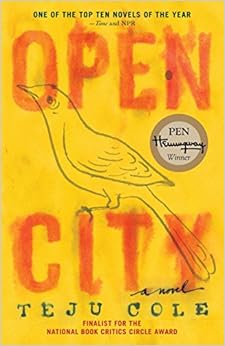
Luddite that I am, I waited until the paperback was issued to get my copy of Open City. Diaper-changing intervened to delay my immersion into this, his second project, and, further, to prevent me from scratching some words in response. Throughout, I was eager to see what the fragments I had read on Modal Minority had turned into, eager to see how ruthless editing would mold his words in the journey to print publication, eager to see if the omission of the contemporaneous photography would matter, eager to see if the blog/diary episodic feel would leave its imprint on the page. There isn't quite a Metacritic or Rotten Tomatoes for literature, but I haven't encountered such high critical approval for a novel in a long while, and deservedly so. In short, the reception to Open City brings to mind that album, Everybody digs Bill Evans - if not its title.

Teju Cole - Open City

Erasures

So, what are we to make of Julius's world - Julius is the novel's chief protagonist? Mere flanery? A roman-a-clef perhaps? Or should one simply revel in the keen sense of observation at work and, especially, the hypnotic vocal performance? Well he leaves clues all over the place, up front even. Like a Beckett (or, my favourite, Ionesco), he delights in words and worlds that are hidden in plain sight - and, to digress on a digression, part of what is most interesting about the critical response is that critics can't resist projecting their literary heroes onto him (I've heard of Sebald, Coetzee and more being thrown his way - although the Will Self comparison seemed a stretch, psychogeography be damned).

But to return to clues to unpacking Julius's world, take this:
"I learned the art of listening from him, and the ability to trace out a story from what was omitted"

It's right there on page 9. Don't call it a provocation and, certainly, don't call it an obfuscation if he hits you on the head with just what was omitted come novel's end. Focusing solely on the considerable art of listening on display in the novel while ignoring what was omitted misses much of the point. And, well, you, Dear Reader, were warned about the complications.

Julius is a great listener, a great observer of people and things and his wanderings form the bulk of the novel. Some might say that Open City is all about listening, call it a guided tour with a peripatetic cipher at its lead. The novel packs erudition in his keen musings, we get to follow him on literal (and intellectual) walks. We learn about a city, its physical embodiment and its history.

And yet, the motifs of omission, erasures and absences remain at the core of the novel and are repeated throughout; the gaps in the novel's archeology are equally interesting as what we unearth.

It's my belief that the greatest of the "post 9/11 works" was 25th Hour, Spike Lee’s paean to the same open city and its walking wounded. If one is to cast Open City in an analogous light, as a post 9/11 novel, what are its phantom limbs? If you'll excuse a political foray, life in George W. Bush's world was all about these absences: extraordinary rendition, black sites and so forth, the holes where proud twin towers once stood, a return to harshness in immigration policy, wars of choice and their associated, disappearing yet ever expanding body counts, in short a world of blind spots and selective amnesia in public discourse. The gloves came off and we, the royal we, that elusive we, were all collateral damage. But, hey, we were protected by the silences. Perhaps it is as it should be, but it is curious that Bush has been an absence, a similar erasure from our hive mind of the past few years of Great Recession (or Lesser Depression).

So then what else is omitted - well, the rush of a narrative plot for one, he's no Elmore Leonard. But this is deliberate and suits the mood. He hasn't delivered the multi-generational family narrative but Open City has similar sweep. Don’t expect overt propagandizing, rather revel in the flow, take the details in, take in the showy learning. It's a soothing balm for these days.

Normalcy

Normalcy is Teju Cole's ultimate project. It is a theme he returns to time and again. In Everyday is for the Thief, it was explicit and remains so in his recent output. He writes as an African writer, as a black male, as a Yoruba writer and as a mid-Atlantic modern traveler. But look: dig the conservative pose, Julius loves the arcana of classical music - he’s part of the academy or aspires to be. From the protagonist of Open City to his author there’s an emphasis on how completely normal they are. Perception is everything and the strategy gleaned is about changing the perspective, about focusing on small things and complicating one's ideas about the norms of society. It’s a tough project and one I am deeply empathetic with.

Although it is early in their careers for such nominations, if Chimamanda Ngozi Adichie is the Jay-Z of the recent wave of African writers, I'd project Teju Cole as the Questlove of African literature (he'd prefer Mos Def perhaps). That is, I pray, a tribute to his deep geekery and knowing and erudite normalcy, his attention to the craft and his ethic of working while others are sleeping. Apropos Questlove, I recently heard him digress on normalcy and perhaps his comments were apt:

"To be seen as normal is to be seen as equal... [it's]... the hardest thing for black people"
And so we should place my friend among those weary sons of Conrad - although stylistically he is more in the vein of Nabokov. His modern urban terrain in Open City is a kind of heart of whiteness - the title of one of the fun fragments that didn’t survive the journey to print. Consider the curious natives his main protagonist tirelessly observes as mere backdrop. Consider their city’s hidden histories as mere fodder for a searching psyche.

If Open City can be read as a work of excavation, what are we to make of the tendency to dwell on the incongruities of atrocities past, when internal displacement is part of parcel of Julius's present? Well he's written an elegy for a city and its exiled souls, surely that suffices. I admire the artful omissions and the elliptical silences amidst the hypnotic flow. The choice to not provide pat answers serves to resist characterization, further, it's good to be angular and playful and to keep some powder dry in reserve.

I settled in and read the book like a thriller, like a Ludlum joint. You've done well, my friend, I dig your sense of normalcy. A head nod in your direction.

Postscript

One of the wryest bits of humour in Open City concerns a neon sign in which two letters don't light up. I'm reminded of the climax of one of Janet Jackson's Rhythm Nation concerts in London (in 1990 perhaps). The song was The Knowledge and at the end there was a montage where some slogans would light up on the stage in call and response: "Ignorance No! Bigotry No! Illiteracy No!". The only problem was that the bulbs for "llit" didn't light up. That snafu is my favourite memory of that plastic performance. Oops.

An observation: when African writers branch out in public intellectual mode, the perils of faint praise often follow in their wake. Brace yourself.

The Art of Omission - a playlist


A soundtrack for this note File under: , , , , , , , , , , , , ,

Wednesday, December 21, 2011

Road Trip

It was a mere road trip to fetch my grandmother from our family's village in the Volta region for the New Year, yet it ran the gamut of emotions. Some impressionistic travel toli from the archives...

I. Sick


The motorcyclist didn't even try to avoid them - indeed it seemed as if he sped up to reach them. Coming up behind him, and taking furious evasive action, we barely missed adding to the desolating impact. A contest between a Honda motorbike and a hen and her four chicks will always be unequal. A week-old chick, half the size of a tennis ball was the fatal casualty, collateral damage to glib insouciance. The reaction to the death was all too familiar. The hen felt the maternal loss - there was that squealing sound, and the mortified look at the crumpled flesh was a recognizable universal. Yet there was no time to dwell on the damage and she gathered the remainder of her brood to continue crossing the road - presumably she would return later if at all possible, braving the traffic. We all felt sick in the car; we all felt angry. What kind of man enjoys running over a chick? As we overtook him, the wrathful thought crossed my mind, a slight swerve and it would be the same kind of competition between our four-wheel drive and his motorbike, roadkill revenge on this chick murderer on the main street in Anyiwarase. Such are the conflicted musings of a backseat driver... Instead, we mournfully averted our eyes as we passed: they say that, much like revenge, wrath is for the weak. In any case, the next town was coming up.

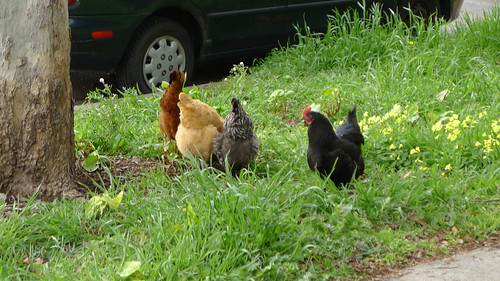
the chickens of berkeley - call them free range

II. Sour


The mood in the car turned eerily reflective as we drove through the village of D. It took me half a minute to remember that its townsfolk had attempted to murder my uncle in the last elections, which explained the pregnant silence of his brother, who slowly drove the car through its only paved street - he'd had to retrieve him back then, bloodied and all, and the stillness of his 89 year old mother, who is still feeling the wound to this day. Try as I might, and I tried twenty times in a row, no pictures that I took would come out right. It was as if the Gods of Nikon decided to forbid me a photographic record of this hamlet of trauma. Oh well, it would have to live on in my memory, live and not Memorex.

We noted that the electricity that my mother had sought to have delivered to the village had indeed been installed, and that the school now seemed well appointed and equipped and even had a fresh coat of paint. It was their just reward, a shower of love. The village is a religious settlement, home to an evangelical sect; the unkind call them a cult, but surely brands do not matter in Ghana's new Christianity. "Welcome to D. City of God. A holy town", proclaims the sign at the village entrance. "One whose folk do unholy things", I thought to myself...

Nothing was said for a long while in that car; call it group therapy for three generations. A commemoration of a town we must pass whenever we want to see loved ones.

To salve myself, I remembered a lyric, nothing hits your heart like soul music, and contemplated a playlist - the lead track would have to be Portishead's Sour Times. My thoughts then turned to the climax of that Clint Eastwood b-movie, you know, the one in which the avenging gunfighter makes the all-too-fallible members of a town paint it entirely in red as if to commemorate the blood that spilled on the ground. Oh, and in that vein perhaps Gil Scott-Heron's Paint it Black, would fit the bill. And so forth... There was perfect silence until we reached the bridge.

digable planets

III. Sweet


We stopped after we crossed the bridge at Atimpoku. As we slowed, thirty-five or more traders, mostly young girls, scampered in our wake and surrounded the car, arms outstretched, wares on the head, and tongues wagging. Some insistent, some seductive, some combative, the whole, a joyful cacophony.

Atimpoku bridge

They shouted, "Papa-le, Novi, Big Man. Hey. Honey. Over here..." Rolling down the window, I could see and smell the alluring prizes they presented: abolo and the red lobster, shrimp and crayfish - freshly caught and smoked from the river. And the pears of course. Indeed some shoved their wares into the car. Well the bargaining began in earnest. In Africa, a market forms wherever there is slowed traffic; one's car window becomes a temporary shop, the products thrust in your hands for brief evaluation. You have to bargain hard even though the prices are ridiculously low from your dollar-based standpoint. It is expected that even big men will barter; as they say, markets are conversations.

Stopping at the bridge to buy abolo and shrimp was a ritual my uncle and I have always performed. I remember especially vividly the roadtrips the two of us took in the late 80s and early 1990s. Back then, with the poorer roads and cars, we were guaranteed to break down and the food would prove essential as we waited at the roadside for someone to stop and help. As the bundles of food produce were handed over, the thought vaguely crossed the mind that most of these girls should be in school rather than hawking their wares. The warm, breadlike abolo — baked rice flour wrapped in fresh plantain leaves, smelled and tasted as I remembered: at once sour and sweet. And the shrimp! Well... There's a reason we always ate them even during the cholera scares of a decade ago... Ah foolish me, forgive me for thinking that cholera scares were a thing of the past, apparently they're back these days.

volta river boats

Of course the packaging of the food wares on hand recalled the eternal tension between tradition and modernity. On the one hand, the organic plantain leaves that no one can imagine buying abolo without, and, on the other, the now-ubiquitous plastic bag or cling wrap surrounding the shrimp. Or indeed consider the sachet water industry that the young girls, the kayaye, that ply our streets embody. You can't avoid plastics it seems; the populace has seeming voted with its pocket books for sachet drinking water and the cottage industry it has spawned. We really must challenge ourselves to do better when it comes to packaging of our foods. The market hasn't changed in over a century except perhaps with this non-biodegradable detritus that mark out our modern age.

Newly repaired and resurfaced, the bridge looked better than I'd ever seen it. Deferred maintenance is the usual fare in our lands but some enterprising soul had managed to secure the funds to rehabilitate this bridge, allowing it to escape the lot of the numerous road and construction projects that have simply stalled in the past few years - even as they had been budgeted for. My uncle regaled me with the toli that the drivers of some of the very heavily loaded trucks that we saw parked nearby in the town, which are ostensibly forbidden from using said bridge, were known to lie in wait and pay lucrative bribes to pass during the night. Everyone knows it but no one does anything about it. Plus ça change, a routine story of law and disorder in Ghana.

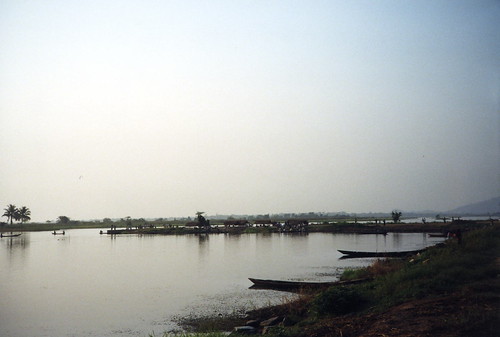
The mood lifted as I took in the sights, sounds and smells of life around the river Volta. I remembered the great, restful feeling of earlier in the day. There's a reason everyone who visits loves this part of Ghana.

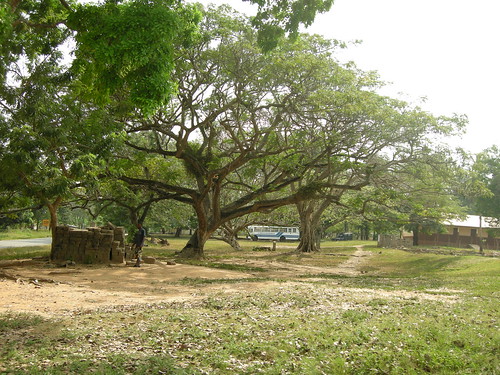
There's a certain freshness of the air once you cross the bridge and officially enter the Volta region. It's not that development has passed the place by but it does feel more unchanged. The nearby Ho hospital after all is testament to state-of-the art living (even if we discount its notorious 150 percent overhead - white elephant election gifts that World Bank directors would prefer you not to bring up in conversation). I recalled the majesty of the trees in our village commons, near the EP church (Evangelical Presbyterian that is). The trees that used to serve as facilities for the primary school all the way until 2002.

tree in village commons

I remembered the sight of my grand aunt standing in line to vote in the day's district assembly elections, proud of doing her civic duty even amidst the shambles - the ballots had only arrived at 2 pm, and only in our village, not in the three surrounding villages. Her early-bird attempt at 9 am had been fruitless but hopefully by now she would have managed to cast her vote. Listening to her complain about the Electoral Commission and disorganization. I reminded her that she was the one who always said that democracy was a process, that we always had to fight for it. "Well it's getting tiring".

I was minded of the uncanny places you might come across a 1969 Opel, a vintage collector's item that deserves to be in a museum if not on the road.

1969 opel

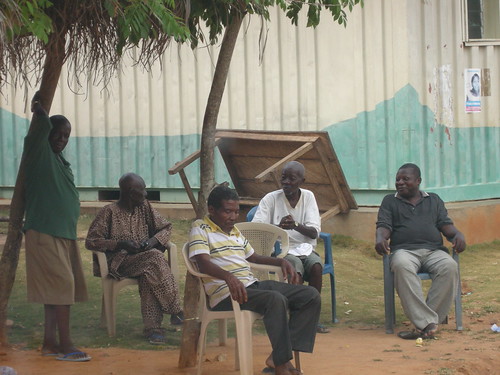
I wondered about the lives of those who decide to retire to Ghana's villages. The old men sitting under the canopies throughout the day. Do they have places to go and people to talk to? Elder care ought to be a growth industry in Ghana, and professionalized too. Those traditional bonds that we have long prided ourselves as differentiators are a thing of the past.

old men sitting in abutia

But it was all about talking to family, young and old, and hearing about the changes we'd been going through.

mother and daughter

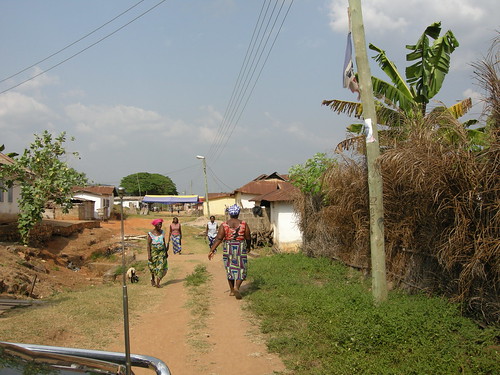
Our village is always restful.

main path abutia

abutia village

The once dense forest in the Abutia hills is slowly recovering from the depredations of the nearby human settlements.

abutia view hills

Our houses are mostly unchanged.

abutia house

We work with millet and maize in the same immemorial manner as if a little technology couldn't help.

abutia working with millet

Heading back home we reached the Tetteh-Quarshie roundabout, named after our country's famous scion (he brought cocoa, that other black gold to Ghana). Formerly miles of unused land, and notoriously the dumping ground for some of the laziest of Rawlings's deathsquads in the early eighties (the Affram plains being too far for their cargo of bodies), it has seen development - they now call it an interchange. On its margins still sits the unfinished hotel that the owner of Shangri La started against advice until the marshy soil sank the buildings as if in rebuke. But there are now additions and, well, the sour memories are being eclipsed by the new additions to its environs, the new sweetness of Better Ghana.

We passed the Accra Mall that, much like Citizen Kofi's, is an attempt to bring an upscale Southern California aesthetic to Ghana. The middle class of a recently declared middle income country deserve their Apple i-shop and finery. Vlisco proudly display their new creations and Woodin had just opened a branch doling out their fabulous fabrics. A store manager would later admit that too many people were window shopping over the holidays. And so we have the mall as a youth hangout, thoroughly normalized in other words. In just a few years, we have developed a mallrat culture worthy of New Jersey. Globalization as the Mosquito Principle.

stunning dress and fabric by Vlisco

We are living multiple realities it seems.

abutia scene

We passed the Villagio sky scrapers under construction that expats are buying sight unseen - rumours of up to a million dollars for the upper floors. The bit about these being all-cash payments makes one wonder about where the money is coming from.

tower construction

Some things are unchanged, mud huts compete with steelworks.
abutia mud hut

Just a few minutes later we passed the gleaming office building that my cousin's husband designed just a few doors down our street. The quite malicious toli is that it was a monument to Mum, that she was behind it, that it was proof of her millions. It's the name you see, The Elizabeth. If only they could see her bank account and what fleeing your home at your prime into 18 years of exile can do.

the elizabeth designed by esem quartey

Shacks overlap with shinging glass.

abutia shack

the elizabeth designed by esem quartey 3

Life is sweet in Ghana (for some at least).

abutia shack 2

We came home that's all.

Soundtrack for this Note


A playlist for this road trip as is my custom

File under: , , , , , , , , , , , ,

Tuesday, March 08, 2011

Parenthood

So The Wife and I were blessed with a baby girl yesterday. A bundle of joy, pounds of loveliness, we couldn't be more elated. We'll have the outdooring (naming ceremony) in due course. Like all new parents, it's all about change, lots of change to our life, and an abundance of love.

The Wife had also been labouring to deliver her book manuscript to the publisher and, in the race between baby and book, our child barely won by two nagging footnotes, it was a close run thing, you know. The one was all sweetness and the other is to be titled, Bitter Roots. My own role was minor: a shoulder to rest on, a hand to squeeze, a chaufeur, a cook, a proud husband, and a copy editor.

I expect to be spending lots of quality time with the new addition to the family so blogging and everything else will be fitful at best, and diaper-constrained for certain. In mitigation, I've written a whole lot already over the past 6 years and even have some toli queued up for episodic release.

In the meantime, allow me to bask in parenthood.

Soundtrack for this note


A parenthood playlist. Enjoy. (spotify version)

File under: , , , , , , ,

Tuesday, February 22, 2011

He of The Little Green Book

Events are fast outpacing the best laid plans of both dictators and mere toli mongers, thus, although the theme fits the bill, I have had to bring forward the piece I promised almost four years ago as a follow up to the theater of that secret video of Gaddafi that was leaked to me. The current atrocities and low rent circumstances however necessitate light verse, or even doggerel, rather than the intended prose poem. Thus I give you another entry in the Things Fall Apart Series, file this under the banner of Fallen Angels.

I. He of The Little Green Book


He of The Little Green Book was in Paris the other day
A grand tour, part of an awakening some might say

Hospitality and social graces were extended his way
Amnesty International had to make do with dismay

Inconvenient topics, blood and sin, never to be discussed.
He went hunting, or, as his hosts put it, faire la chasse.

The tumult of the entourage and the ceremonial band
The customary bodyguards, as always, were close at hand.

He pitched his travel tent on the lawn of the Grand Palais
And lectured his hosts on human rights throughout the day

An oasis of oil and gas under his land
He'd built up a legacy of blood-soaked sand.

Self-importance, one can always understand
The revolutionary principles, however, damned the man.

Epigrams, ludicrous even without translation
And with translation, worthy of the blandest corporation.

Claimed to be a Guide with revolutionary notions
To life, the Brother Leader presented solutions

You've heard no doubt about the "Third Universal Theory"
And of course "The Solution of the Problem of Democracy"

"The Authority of the People" was his starting point
His modus operandi however was blood, from joint to joint

The social and economic basis of this here distributed theory
Was, in practice, a political axis of corruption, not the first in history

Newspapers throughout Libya were organs of adulation
He of The Little Green Book, officially venerated as a philosopher-king

...

Back home in Ghana at the depth of our despair
When books were scarce, and food shelves were laid bare

He of The Little Green Book made a donation
A token of the good Colonel's appreciation

A thousand copies of The Little Green Book
Brotherly solidarity, extended to the Ghanaian pocketbook

The generosity of his wisdom, to be shared far and wide.
Our universities, the recipients of his vacuous bromides

We'd learned heavy lessons about what he called revolution
"Crush the dissent", "Don't brook any opposition".

Thus, ever since the Flight Lieutenant's arrival
We'd had to develop a new philosophy of survival

At markets, we would fight over corned beef and sardine tins
Throughout I kept asking myself: why are these men laughing?

Rawlings and Gaddafi on cover of Talking Drums magazine 1986-01-13 - Ghana stands by Libya in US dispute - Doe pledges reconciliation


...

He of The Little Green Book was in Italy the other day
Introducing good old Silvio to a rarefied kind of play

Bunga bunga parties were on the menu
Gas and oil deals discussed, and matters of revenue

On Putin's bed, it was eroticism incarnate
Sexual gymnastics, the orgies very intricate

They were men who thumbed their noses at everyone else
Impunity their lifeblood, they were enamoured of self

A cushy life, lived surrounded by buxom Ukrainians
They were gremlins and parasites, or rather, rogue authoritarians

Mercurial, the journalists would call him, and I think it was a cop out
For he was severe in the application of power, of that there can be no doubt

Adept at the shell game of diplomacy in latter times
Don't forget the expedient dumping of allies at the drop of a dime

There's even an opera about him, Gaddafi, do take a look
Although it points out inconsistencies in The Little Green Book

Fear not, in the pantheon where Chairman Mao had his Red Book
You can share the luminous thoughts of He of The Little Green Book

A slight never forgotten, that's what brought him here
The clannish sensibility of a cold-blooded dictator

He of The Little Green Book thus always made it clear
He'd kill you and your family no matter when or where

Stories of plots to bomb dissidents in Kenya, Egypt or Saudi Arabia
Only made it clear to everyone that the world was his oyster

In newspapers, the subject was always elided:
The khat, and other drugs that made him funeral minded

Conspiratorial notions were his living condition
He ascribed drunkenness and drug-taking to any opposition

...

He of The Little Green Book met Vladimir Putin the other day
It was the usual circus, the large retinue come what may.

Luxurious modesty was how he liked to call it,
He lived for the bustle around him, confident he could take Putin's judo hit

Like a palm tree rising in an oasis surrounded by blight.
The other leaders would be shown in their proper pedestrian light.

The desert savvy, the endurance of those who were truly able
By sheer will to conquer the shifting sands, of that he was quite capable

For months at a time he would go out there on a bend
Then emerge seemingly untroubled if not exuberant.

Men of will who forced their views on clans and the whole world.
The caliber of revolutionary, visionary men on the road to hell.

Take The Little Green Book - a blueprint for life itself,
To be studied and internalized, it even dealt with public health!

An unbroken chain of leadership, he outlasted Chairman Mao.
Who else had such a claim? He even beat Omar Bongo.

And that kleptocrat, only the French cared about him
The real prize, as you know, was to indulge in blood and sin.

No, it was only right, he belonged in the history books.
In any gathering he would stand out, opinions as sharp as his looks.

And he had put them down - the opinions that is,
Distilled them for present and future generations.

The Little Green Book, the wisdom for the ages.
A guide for the world, a guide for revolutions.

Battle-tested in countless countries, comprehensive and worldly
Luminous as only the folk wisdom of desert guides could be.

...

He of The Little Green Book met Tony Blair the other day
That sad sack, for whatever reason, again thought he'd have some sway

He of The Little Green Book couldn't believe the ease of the bamboozle
Of course, we could have told him he was dealing with Bush's poodle

Then later, remember, there was an audience with Condoleeza
And a call subsequently for a United States of Africa

US policy to the dictator was clear: coddle and let's make nice
His gifts, in return, were choice to the talented Miss Rice:

Diamond trinkets, a locket, and a copy of The Little Green Book
A sidelong glance, oil and gas contracts were the inevitable hook

Those Swiss bank accounts, how prosaic wouldn't you think?
Well, even an uncommon criminal needs money to drink

A bloodthirsty murderer that we indulged like no other
Willing to shoot children before their own grandmothers

He'd even bomb bystanders, he didn't believe in innocence
The legacy of a pariah devoid of all human sense

Months later it was declared, and this was no small thing,
Colonel Gaddafi would be the king of kings

Thus, among traditional leaders on the continent, he was elected
Well, according to his bank statements, he was rather self-selected

Gaddafi king of kings


...

But back to that time period I alluded to earlier
In a Ghana fraught with dubious revolution and political theater

Perhaps I should not venture into matters eschatological
As indeed my doggerel rather tends towards the scatological

Let me not lose the rhyming meter, indulge my light verse
I'm congenitally incapable of engaging in anything terse

My father, the law school dean, was very precise
And, truth be told, what he recalled back then wasn't very nice

Thankfully it flew under the radar of Rawlings' dispensation:
It was about the application of the good Colonel's donation

In Ghana's scarcity, nothing went to waste:
'Twas a grim outlook

He'd photocopy his lecture notes for students;
They'd have to do as a textbook

As he thumbed through thousands of the Colonel's pristine pages
He was minded that, in our country, there were even paper shortages

We really had no time for this Third Universal Theory
It was a undoubtedly a low moment in all of Ghana's history

The memory, then, should come as no surprise to you, Dear Reader:
The pages of The Little Green Book were used as toilet paper.

...

The Little Green Book  is dismantled


II. Excellent Discussions


The issue was blood and sin.

III. Lest We Forget


Field notes on a legacy of blood...
Prosecutor: Was there ideology taught in the camp?

Witness: Yes, what we learned in the Mataba was about how to share the wealth of your government - about the distribution of wealth.

Prosecutor: This Mataba, did you receive any books or lesson papers in that ideology?

Witness: The ideology was taught in Mataba itself. They had a school to learn the ideology. You learned about the Green Book. How governments are cheating other governments.

Taylor's former vice president: governments of Libya, Burkina Faso and Ivory Coast supported Taylor's 1989 invasion of Liberia

Prosecutor: At what age do you say you were abducted by the RUF?
Witness: 11 years.
Prosecutor: Had you been to school up to that time?
Witness: Yes.
Prosecutor: In what languages were you taught at school?
Witness: English.
Prosecutor: From what age did you attend school up to the time you were abducted at age 11?
Witness: I don't know the age at which I went to school. I don't know the age.
Prosecutor: How many years had you been in school by the time you were abducted at age 11?
Witness: Six years.
Prosecutor: After you were abducted, at some point you have told us in evidence you had some lessons from the RUF. That's right, isn't it?
Witness: Yes.
Prosecutor: Were you at some time made to read passages of Colonel Gaddafi's Little Green Book by the RUF?
Witness: The Green Book. They called it the Revolutionary Green Book. They said it was from Libya, from Mohamed Gaddafi. Yes, I read that one.
Prosecutor: In what language?
Witness: In English. Everything was in English.
Prosecutor: So you speak good English, do you?
Witness: The English that I can speak is what I am speaking here. I don't have any other English. As you hear me speaking I don't have it above that and I don't have it below that. That is what I am speaking here.
Prosecutor: So, what was taught in English apart from the Green Book?
Witness: The Green Book when they read it they would read it in English and they would interpret it, because there were people who did not understand English and so they would interpret it into Krio to them, but some of us who were able to read a little bit when they spoke the English we would understand. That was why I said everything was in English.

Transcript of child soldier's testimony. The special court on Sierra Leone, 22 August 2008

[Moses] Blah testified about the first time he met [Charles] Taylor during his military training in Ouagadougou, Burkina Faso, and Tripoli, Libya. In Libya, he trained with a group of Gambians, as well as a group of Sierra Leoneans led by Foday Sankoh. Blah testified that Sankoh referred to Taylor as "chief." Blah recounted that the first time he saw Taylor, Taylor introduced himself as "chief" and named the soldiers the National Patriotic Front of Liberia. Taylor also appointed Blah as Adjutant General of the NPFL.

Charles Taylor trial report (pdf), May 2008

After listening to 91 prosecution witnesses over the past 18 months, Taylor said people had referred to his forces as if they "were brutes and savages: We are not. I am not."

Still, the former president acknowledged that skulls of Liberian soldiers were displayed at strategic roadblocks in 1990.

"They were enemy skulls and we didn’t think that symbol was anything wrong," he said. "I did not consider it bad judgment. I did not order them removed."

Taylor, who earned an economics degree at Bentley College (now University) in Waltham, said he had seen images of skulls used in many "fraternal organizations" and Western universities.

He also acknowledged that atrocities were committed in Liberia by "bad apples" and renegade soldiers, but said he had taught his small band of rebels - from their initial training in Libya - to abide by the laws of war.

"We found out that they were taking place, and we acted to bring those responsible to justice," he said. Rebel soldiers who committed excesses were court-martialed and sometimes executed, but civilian judicial institutions were left in place in areas under rebel control, he said.

Taylor defends displaying of human skulls at roadblocks, Associated Press / July 17, 2009
He of The Little Green Book and his brothers in blood will not be missed.

Soundtrack for this note


File under: , , , , , , , , , , , , cruelty, , , , , , , ,